1 John 3 KJV
Children of God
1 John Chapter 3: Children of God
The chapter roots hatred in primordial evil by linking Cain's murder of Abel directly to the devil's nature as originator of sin 'from the beginning,' framing interpersonal malice as participation in a pre-Adamic cosmic conflict rather than mere human failing.
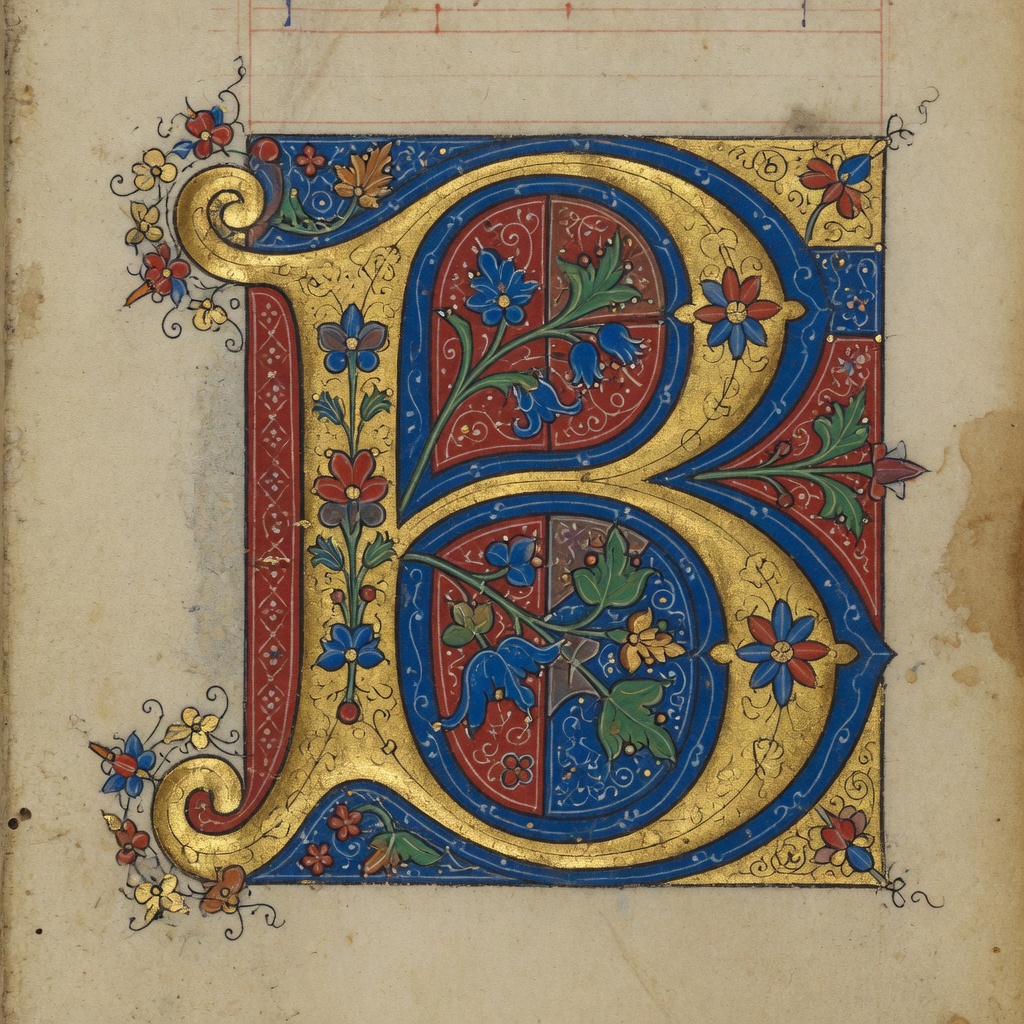 1ehold, what manner of love the Father hath bestowed upon us, that we should be called the sons of God: therefore the world knoweth us not, because it knew him not.
2 Beloved, now are we the sons of God, and it doth not yet appear what we shall be: but we know that, when he shall appear, we shall be like him; for we shall see him as he is.
3 And every man that hath this hope in him purifieth himself, even as he is pure.
4 Whosoever committeth sin transgresseth also the law: for sin is the transgression of the law.
5 And ye know that he was manifested to take away our sins; and in him is no sin.
6 Whosoever abideth in him sinneth not: whosoever sinneth hath not seen him, neither known him.
7 Little children, let no man deceive you: he that doeth righteousness is righteous, even as he is righteous.
8 He that committeth sin is of the devil; for the devil sinneth from the beginning. For this purpose the Son of God was manifested, that he might destroy the works of the devil.
9 Whosoever is born of God doth not commit sin; for his seed remaineth in him: and he cannot sin, because he is born of God.
10 In this the children of God are manifest, and the children of the devil: whosoever doeth not righteousness is not of God, neither he that loveth not his brother.
11 For this is the message that ye heard from the beginning, that we should love one another.
12 Not as Cain, who was of that wicked one, and slew his brother. And wherefore slew he him? Because his own works were evil, and his brother’s righteous.
13 Marvel not, my brethren, if the world hate you.
14 We know that we have passed from death unto life, because we love the brethren. He that loveth not his brother abideth in death.
15 Whosoever hateth his brother is a murderer: and ye know that no murderer hath eternal life abiding in him.
16 Hereby perceive we the love of God, because he laid down his life for us: and we ought to lay down our lives for the brethren.
17 But whoso hath this world’s good, and seeth his brother have need, and shutteth up his bowels of compassion from him, how dwelleth the love of God in him?
18 My little children, let us not love in word, neither in tongue; but in deed and in truth.
19 And hereby we know that we are of the truth, and shall assure our hearts before him.
20 For if our heart condemn us, God is greater than our heart, and knoweth all things.
21 Beloved, if our heart condemn us not, then have we confidence toward God.
22 And whatsoever we ask, we receive of him, because we keep his commandments, and do those things that are pleasing in his sight.
23 And this is his commandment, That we should believe on the name of his Son Jesus Christ, and love one another, as he gave us commandment.
24 And he that keepeth his commandments dwelleth in him, and he in him. And hereby we know that he abideth in us, by the Spirit which he hath given us.
← → arrow keys to navigate chapters · spacebar to play/pause audio
Did You Know?
The chapter roots hatred in primordial evil by linking Cain's murder of Abel directly to the devil's nature as originator of sin 'from the beginning,' framing interpersonal malice as participation in a pre-Adamic cosmic conflict rather than mere human failing.
It presents an eschatological reserve by stating that 'it doth not yet appear what we shall be' while affirming present sonship, creating a deliberate tension between realized identity and future transformation into Christ's likeness at his appearing.
The assurance of answered prayer is conditioned on doing 'those things that are pleasing in his sight,' which the text equates with the dual commandment to believe in Jesus and love one another, binding petitionary confidence to ethical and christological fidelity.
The Spirit's indwelling functions as the sole empirical marker of reciprocal abiding ('he abideth in us'), shifting authentication of union with God from observable works alone to an internal, given witness that verifies commandment-keeping.
By declaring that God's love was 'manifested' in sending his Son 'that we might live through him,' the chapter recasts love as a historical, sacrificial initiative rather than an abstract attribute, requiring believers to replicate that same manifested, costly action toward others.
Commentary & Study Notes Jamieson-Fausset-Brown (1871) · Public Domain Behold — calling attention, as to some wonderful exhibition, little as the world sees to admire. This verse is connected with the previous 1Jo 2:29, thus: All our doing of righteou…
Classic verse-by-verse commentary on 1 John 3 from Jamieson, Fausset & Brown (1871). Covers: Distinguishing marks of the children of God and the children of the devil. Brotherly love the essence of true righteousness.
- 1
- Behold — calling attention, as to some wonderful exhibition, little as the world sees to admire. This verse is connected with the previous 1Jo 2:29, thus: All our doing of righteousness is a mere sign that God, of His matchless love, has adopted us as children; it does not save us, but is a proof that we are saved of His grace. what manner of — of what surpassing excellence, how gracious on His part, how precious to us. love... bestowed — He does not say that God hath given us some gift, but love itself and the fountain of all honors, the heart itself, and that not for our works or efforts, but of His grace [LUTHER]. that — "what manner of love"; resulting in, proved by, our being, &c. The immediate effect aimed at in the bestowal of this love is, "that we should be called children of God." should be called — should have received the privilege of such a glorious title (though seeming so imaginary to the world), along with the glorious reality. With God to call is to make really to be. Who so great as God? What nearer relationship than that of sons? The oldest manuscripts add, "And we ARE SO" really. therefore — "on this account," because "we are (really) so." us — the children, like the Father. it knew him not — namely, the Father. "If they who regard not God, hold thee in any account, feel alarmed about thy state" [BENGEL]. Contrast 1Jo 5:1. The world's whole course is one great act of non-recognition of God.
- 2
- Beloved — by the Father, and therefore by me. now — in contrast to "not yet." We now already are really sons, though not recognized as such by the world, and (as the consequence) we look for the visible manifestation of our sonship, which not yet has taken place. doth not yet appear — Greek, "it hath not yet ('at any time,' Greek aorist) been visibly manifested what we shall be" — what further glory we shall attain by virtue of this our sonship. The "what" suggests a something inconceivably glorious. but — omitted in the oldest manuscripts. Its insertion in English Version gives a wrong antithesis. It is not, "We do not yet know manifestly what... but we know," &c. Believers have some degree of the manifestation already, though the world has not. The connection is, The manifestation to the world of what we shall be, has not yet taken place; we know (in general; as a matter of well-assured knowledge; so the Greek) that when (literally, "if"; expressing no doubt as to the fact, but only as to the time; also implying the coming preliminary fact, on which the consequence follows, Mal 1:6; Joh 14:3) He (not "it," namely, that which is not yet manifested [ALFORD]) shall be manifested (1Jo 3:5; 2:28), we shall be like Him (Christ; all sons have a substantial resemblance to their father, and Christ, whom we shall be like, is "the express image of the Father's person," so that in resembling Christ, we shall resemble the Father). We wait for the manifestation (literally, the "apocalypse"; the same term as is applied to Christ's own manifestation) of the sons of God. After our natural birth, the new birth into the life of grace is needed, which is to be followed by the new birth into the life of glory; the two latter alike are termed "the regeneration" (Mt 19:28). The resurrection of our bodies is a kind of coming out of the womb of the earth, and being born into another life. Our first temptation was that we should be like God in knowledge, and by that we fell; but being raised by Christ, we become truly like Him, by knowing Him as we are known, and by seeing Him as He is [PEARSON, Exposition of the Creed]. As the first immortality which Adam lost was to be able not to die, so the last shall be not to be able to die. As man's first free choice or will was to be able not to sin, so our last shall be not to be able to sin [AUGUSTINE, The City of God, 22.30]. The devil fell by aspiring to God's power; man, by aspiring to his knowledge; but aspiring after God's goodness, we shall ever grow in His likeness. The transition from God the Father to "He," "Him," referring to Christ (who alone is ever said in Scripture to be manifested; not the Father, Joh 1:18), implies the entire unity of the Father and the Son. for, &c. — Continual beholding generates likeness (2Co 3:18); as the face of the moon being always turned towards the sun, reflects its light and glory. see him — not in His innermost Godhead, but as manifested in Christ. None but the pure can see the infinitely Pure One. In all these passages the Greek is the same verb opsomai; not denoting the action of seeing, but the state of him to whose eye or mind the object is presented; hence the Greek verb is always in the middle or reflexive voice, to perceive and inwardly appreciate [TITTMANN]. Our spiritual bodies will appreciate and recognize spiritual beings hereafter, as our natural bodies now do natural objects.
Read all 28 notes on 1 John 3 →