Places
Mesopotamia
-
Garden of Eden
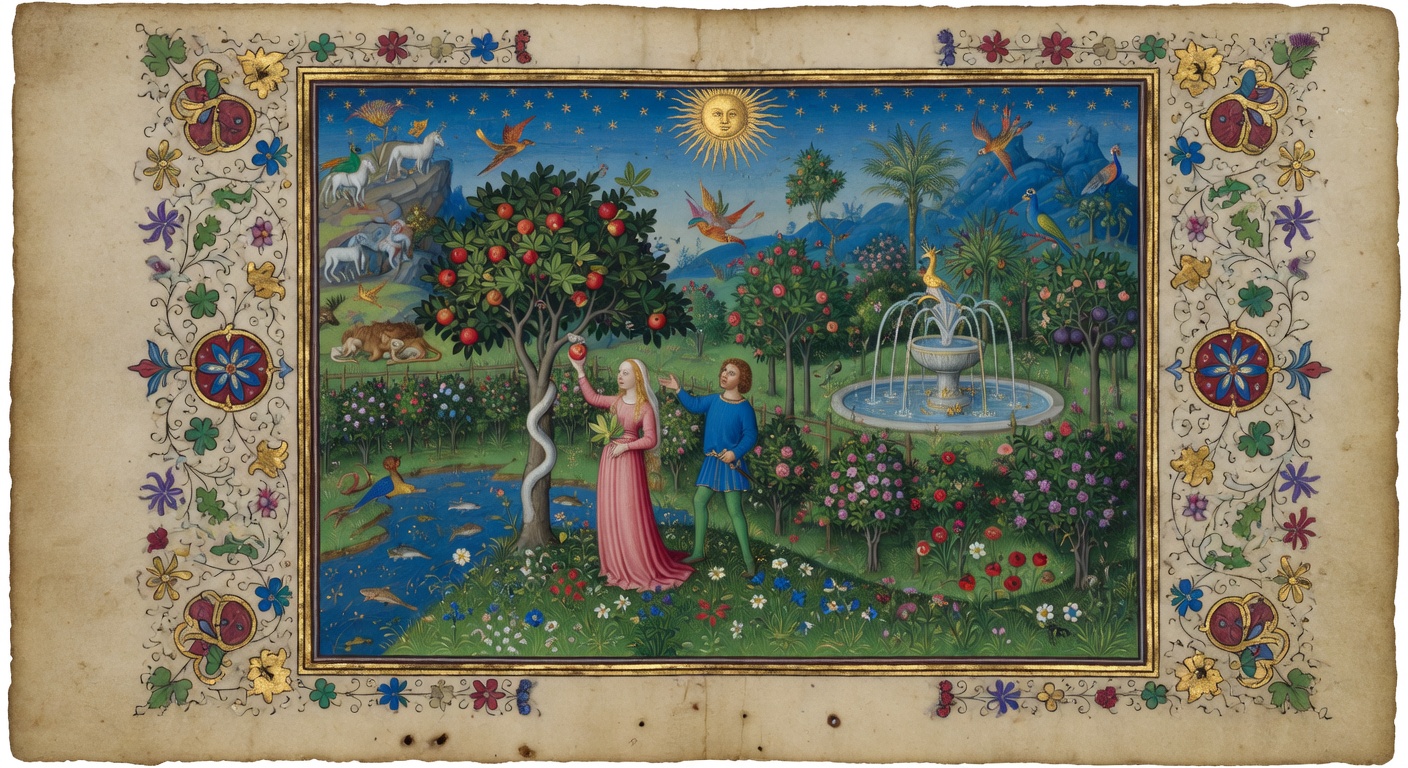
The Garden of Eden was the paradise created by God as the original home for Adam and Eve, the first humans, according to the book of Genesis. In this idyllic setting, they lived in perfect harmony with God and nature until they disobeyed His command by eating from the tree of the knowledge of good and evil, an event known as the Fall that introduced sin and death into the world. As a result, they were expelled from the garden, which symbolizes the loss of innocence and the broken relationship between humanity and God. This narrative holds significant importance in Scripture as it establishes foundational themes of creation, temptation, judgment, and the need for redemption that unfold throughout the Bible.
-
Ur
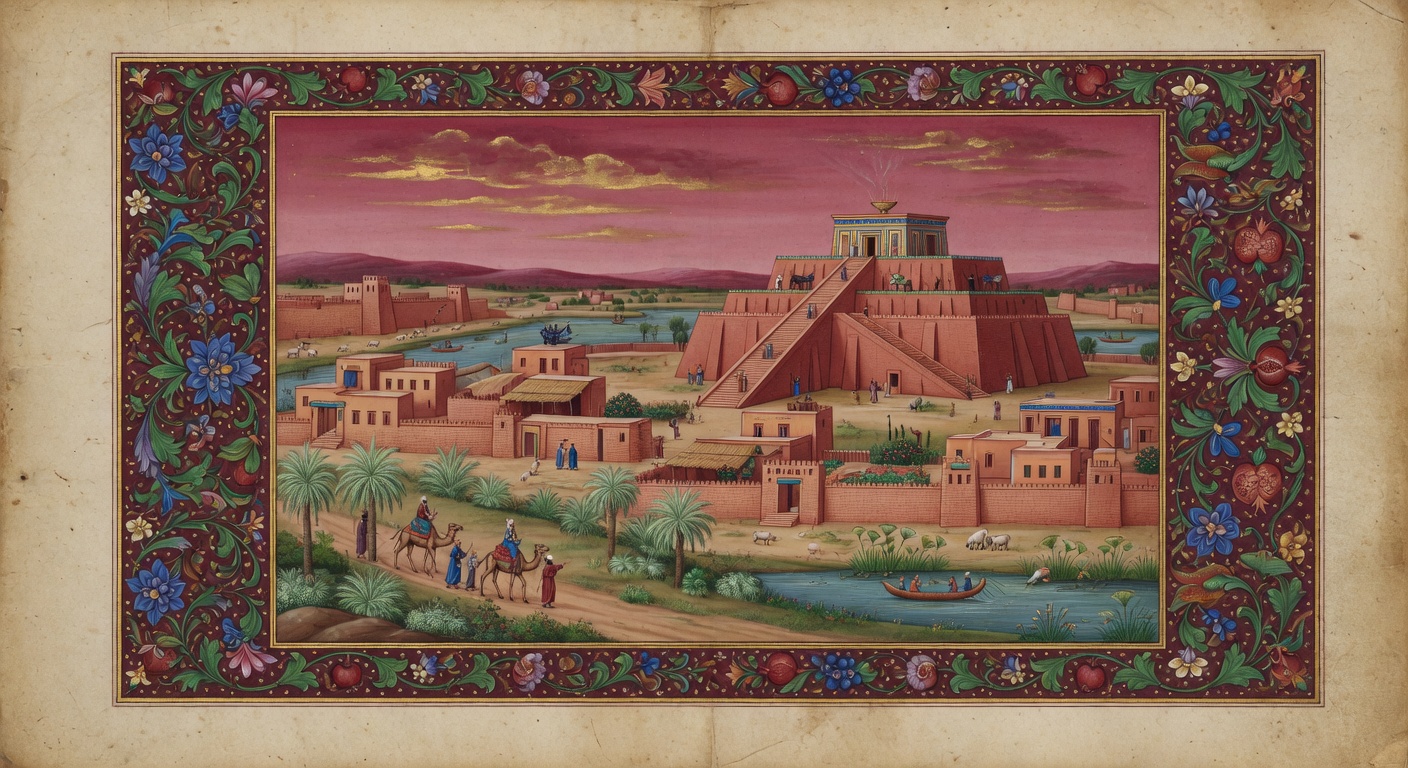
Ur was an important ancient Sumerian city in southern Mesopotamia, known for its advanced urban culture, ziggurat temples, and role as a center of trade and worship in the third millennium BCE. According to Genesis, it served as the birthplace of Abraham, from which he departed with his family after God called him to leave his homeland and journey toward Canaan. This divine summons initiated the patriarchal narratives and established the Abrahamic covenant, promising land, descendants, and blessing to his lineage. The account highlights core scriptural themes of faith, obedience, and God's redemptive plan beginning with one man's response.
-
Mount Ararat
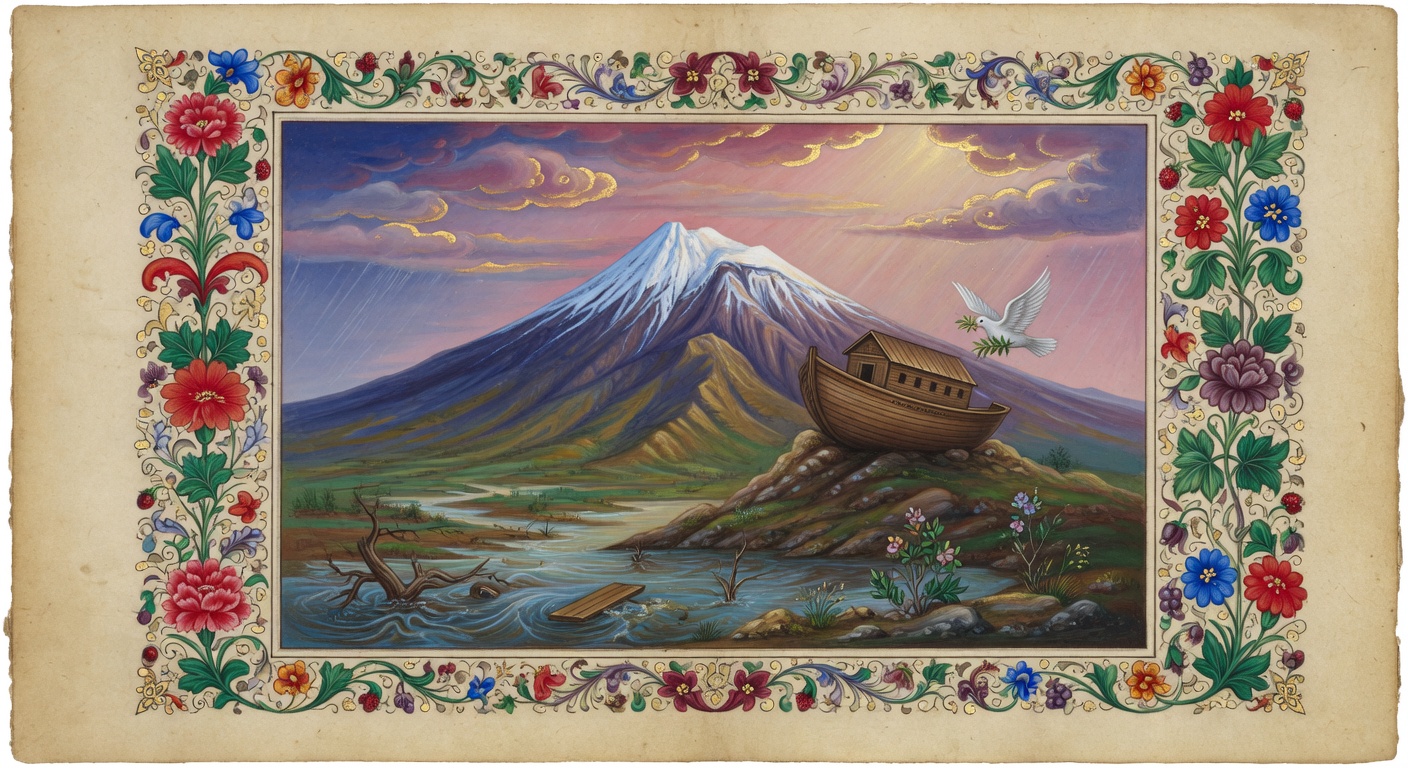
Mount Ararat is identified in the Bible as the location where Noah's ark came to rest after the waters of the great flood began to subside. According to the account in Genesis, this event marked the end of the deluge that God sent to judge the wickedness of humanity, allowing Noah, his family, and the animals to emerge and repopulate the earth. The mountain holds significance in Scripture as the site associated with God's covenant with Noah, symbolized by the rainbow, promising never again to destroy the world with a flood. This reference underscores themes of divine judgment, mercy, and renewal throughout the biblical narrative.
-
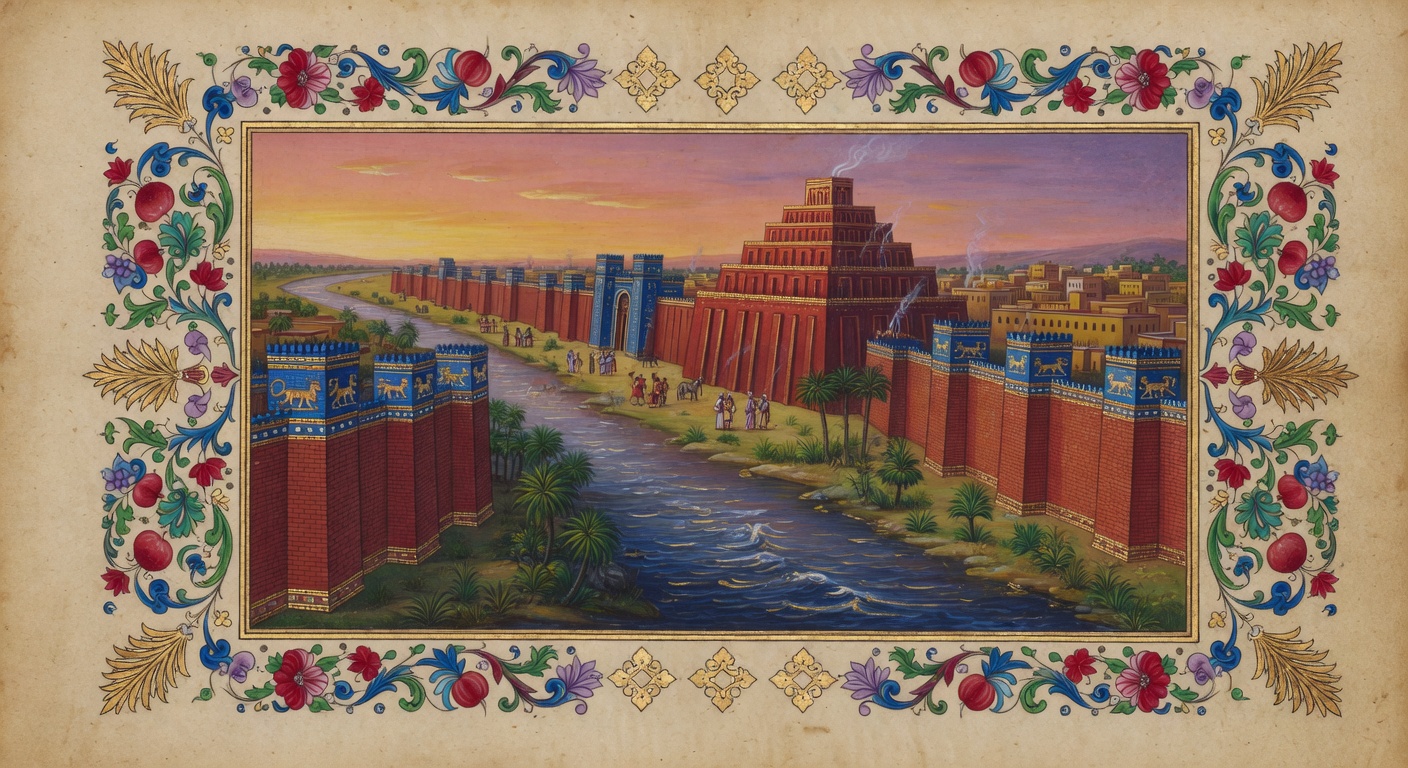
Babylon
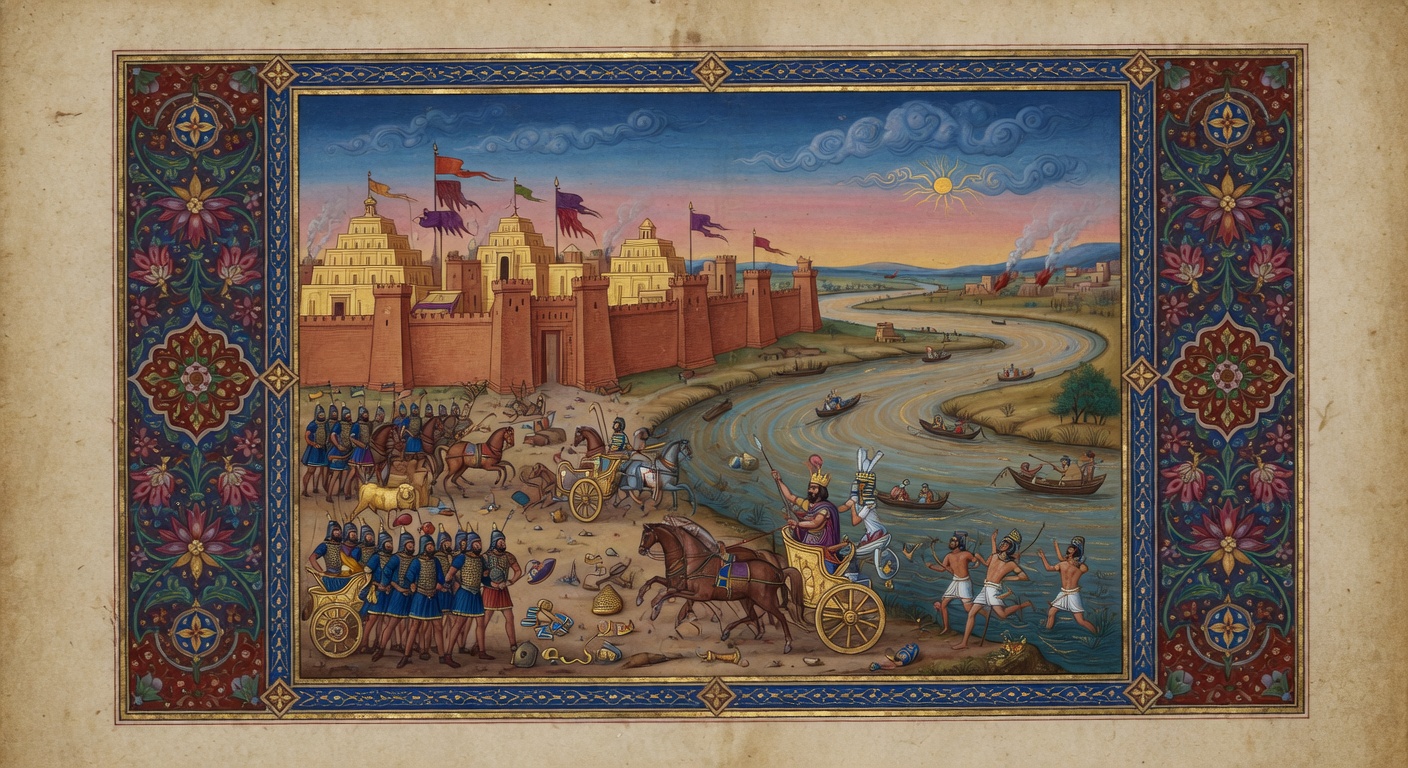
Babylon served as the capital of the Neo-Babylonian Empire and rose to prominence under rulers such as Nebuchadnezzar II in the sixth century BCE. Its armies conquered the southern kingdom of Judah, destroyed Jerusalem and the First Temple, and deported a significant portion of the population to Babylon, initiating a seventy-year period of exile that fulfilled prophetic warnings of judgment for covenant unfaithfulness. This event holds central importance in Scripture because it marked a pivotal moment of divine discipline while also preserving a faithful remnant, as recorded in books such as 2 Kings, Jeremiah, and Daniel. The return from exile under Persian permission later enabled the rebuilding of the Temple and reinforced themes of restoration, covenant renewal, and hope that echo throughout the Old Testament and into New Testament imagery of Babylon as a symbol of worldly opposition to God.
-
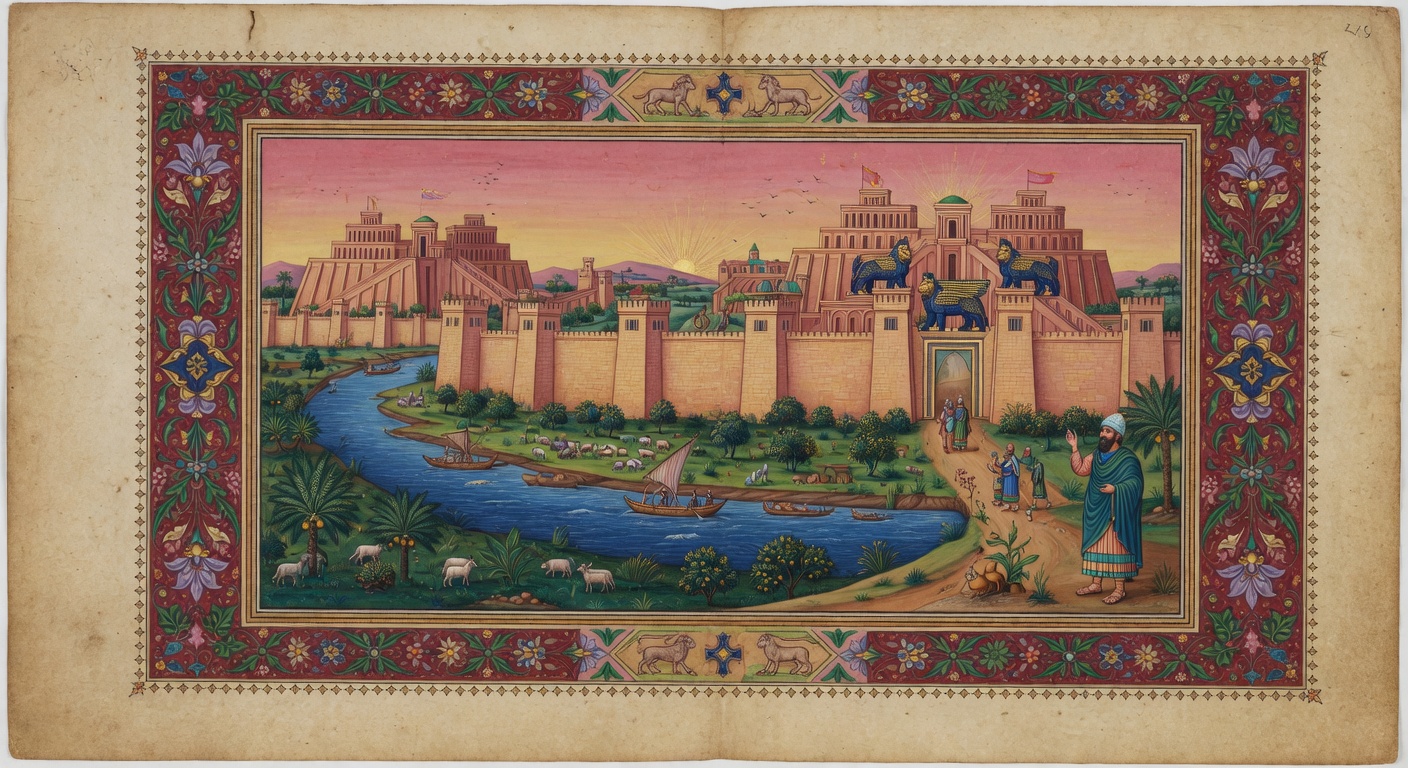
Nineveh
Nineveh served as the capital of the Assyrian Empire, a dominant ancient Near Eastern power known for its military might and often oppressive rule over conquered peoples. According to the book of Jonah, God directed the prophet to warn the city of impending judgment due to its wickedness, resulting in widespread repentance from the king to the common people and God's decision to withhold destruction. This account highlights divine mercy extending beyond Israel to Gentile nations, a point Jesus later references in the Gospels to illustrate the need for repentance. The city's eventual fall around 612 BC, as prophesied in Nahum, further demonstrates the biblical pattern of accountability for persistent evil.
-
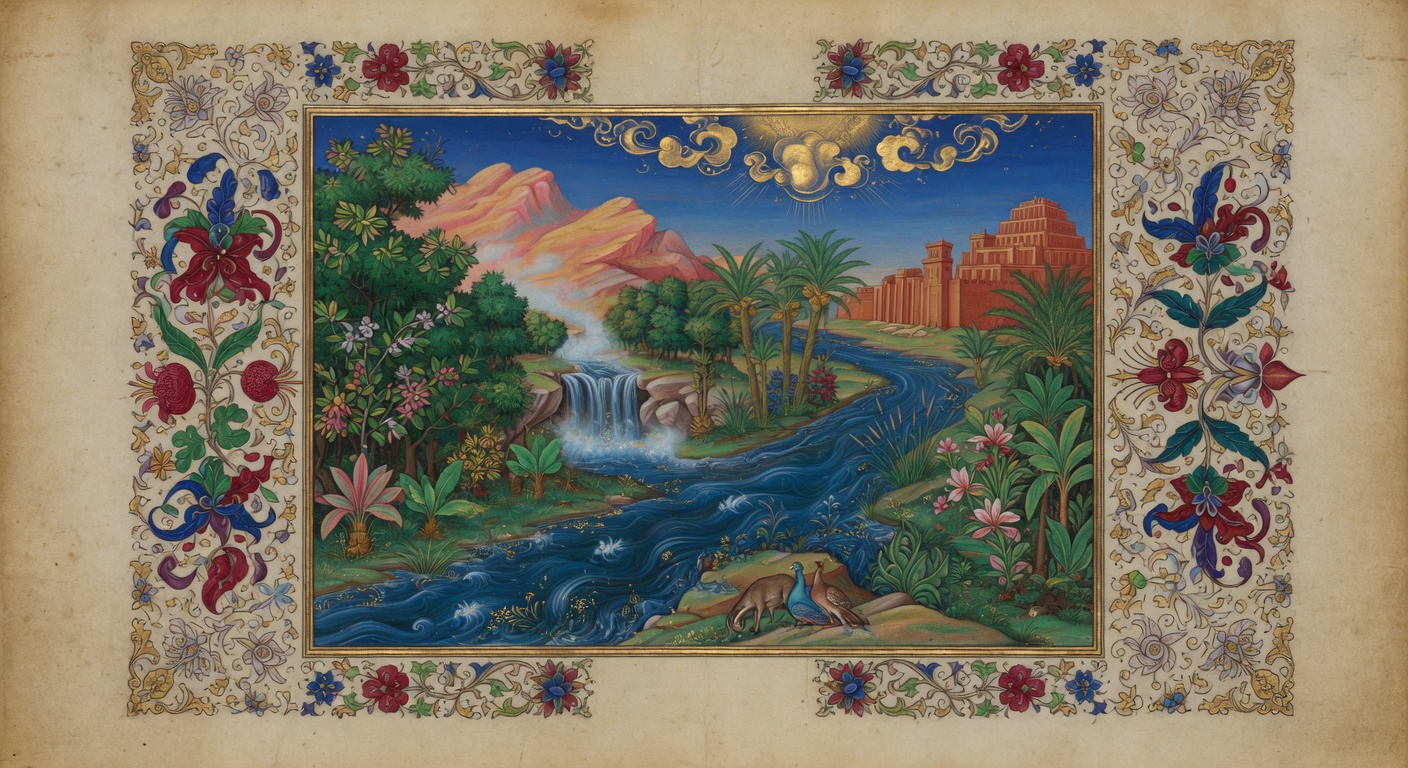
Hiddekel
Hiddekel, traditionally identified with the Tigris River east of Assyria, is one of the four rivers that flowed from a single source to water the Garden of Eden. In Genesis 2:10-14, Scripture describes this river system as part of the paradise where God placed the first humans, with Hiddekel specifically noted as the third branch flowing toward the east. Its inclusion in the creation narrative illustrates God's provision of a fertile, well-watered environment for humanity's origins and establishes a geographical framework linking the divine garden to known ancient lands. This detail remains significant in biblical studies for connecting theological themes of paradise and separation from God after the Fall to real-world topography in the ancient Near East.
-
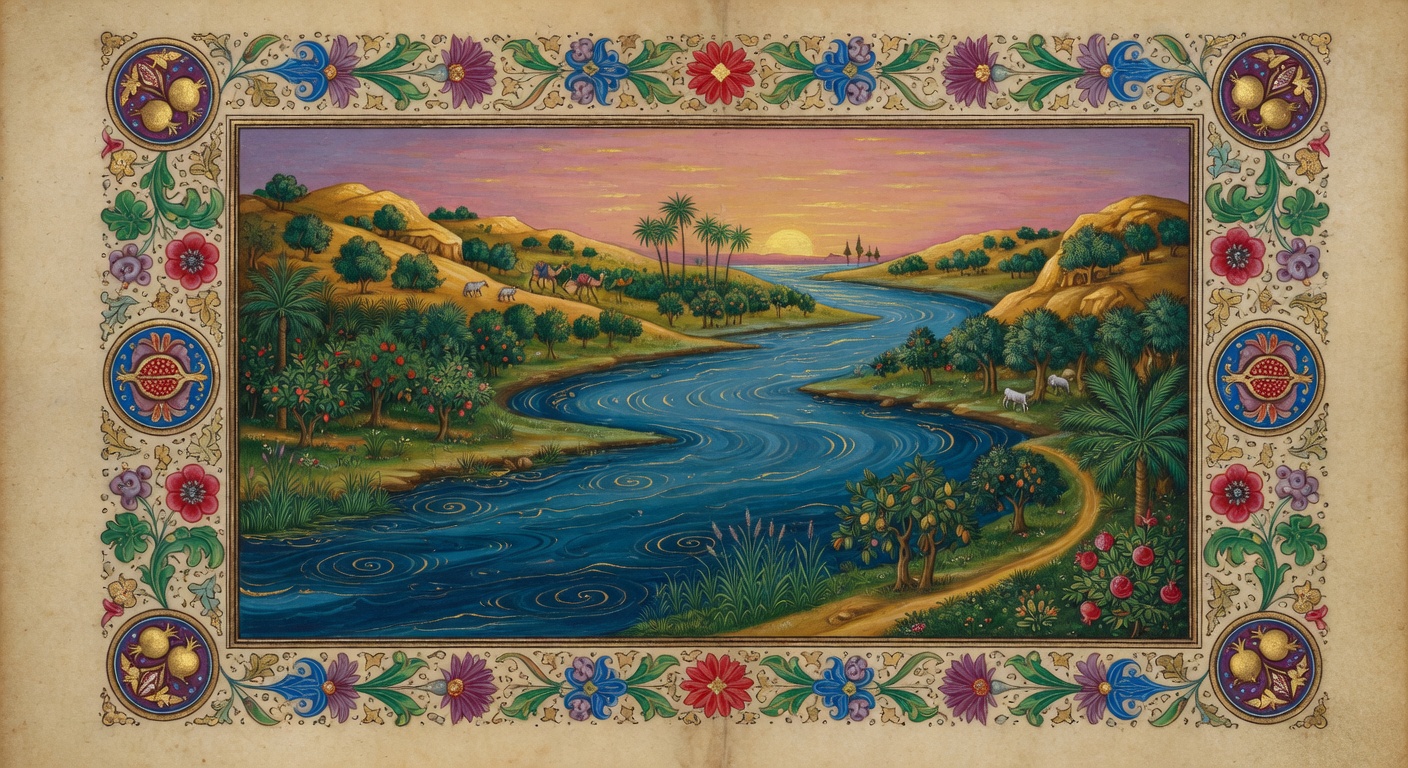
Euphrates
Flowing from the heart of creation itself, the Euphrates emerges as one of the four rivers that watered the garden of Eden, a vital artery in the paradise where humanity first walked with God. This mighty waterway later defines the northeastern boundary of the territory promised to Abraham and his seed, underscoring the vast scope of God's covenantal blessings to his chosen people. In the prophetic visions of the end times, it becomes the stage for divine intervention when its waters are dried up as part of the sixth bowl of wrath, clearing a path for the gathering of kings in the great day of almighty God.
-
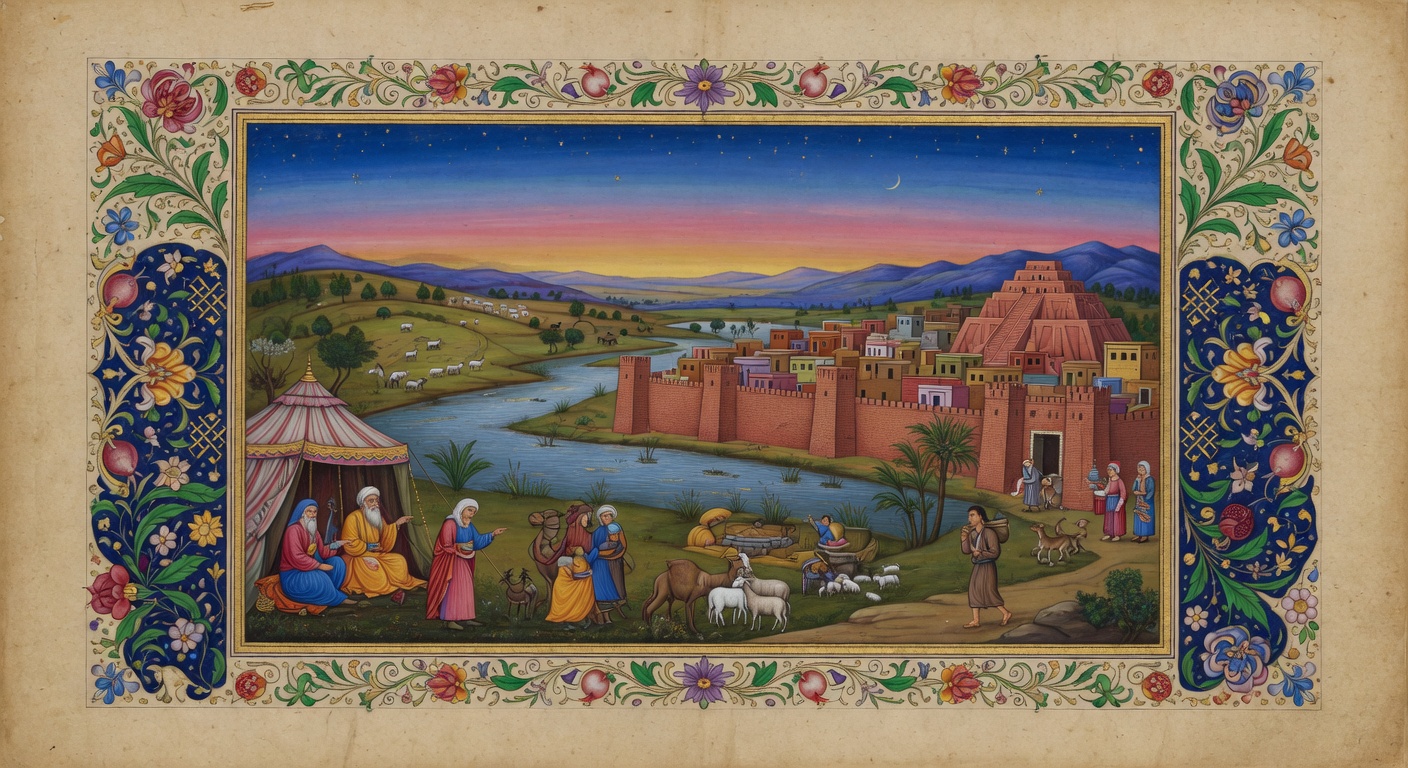
Haran
Serving as a pivotal location in the patriarchal accounts, Haran is where Terah settled with his household after leaving Ur, establishing a temporary home before his death. It was from this city that Abram heeded God's command to journey to Canaan, initiating the fulfillment of the promises to his descendants. Later, Jacob sought refuge there with Laban, experiencing God's provision and the growth of his family as part of the unfolding redemptive plan.
-
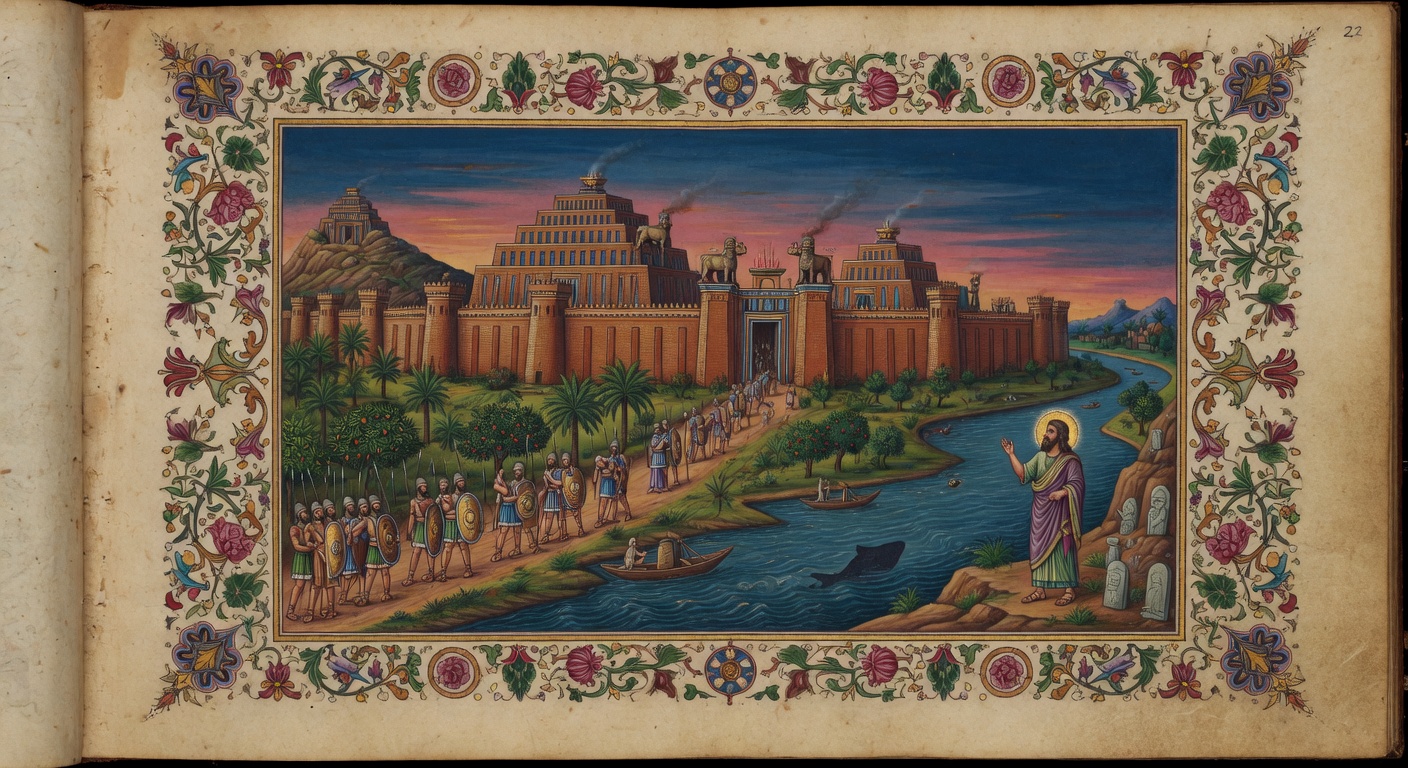
Assyria
Throughout the Old Testament, Assyria stands as a mighty empire that God wielded as a rod of correction against his wayward people, ultimately leading to the fall of the northern kingdom of Israel and the exile of its inhabitants. The prophet Jonah received a divine commission to preach repentance in the Assyrian capital of Nineveh, revealing God's sovereign concern for all nations and his willingness to extend mercy beyond Israel. In this way, Assyria plays a pivotal role in the unfolding redemptive narrative, illustrating both the severity of divine judgment and the breadth of divine compassion.
Canaan
-
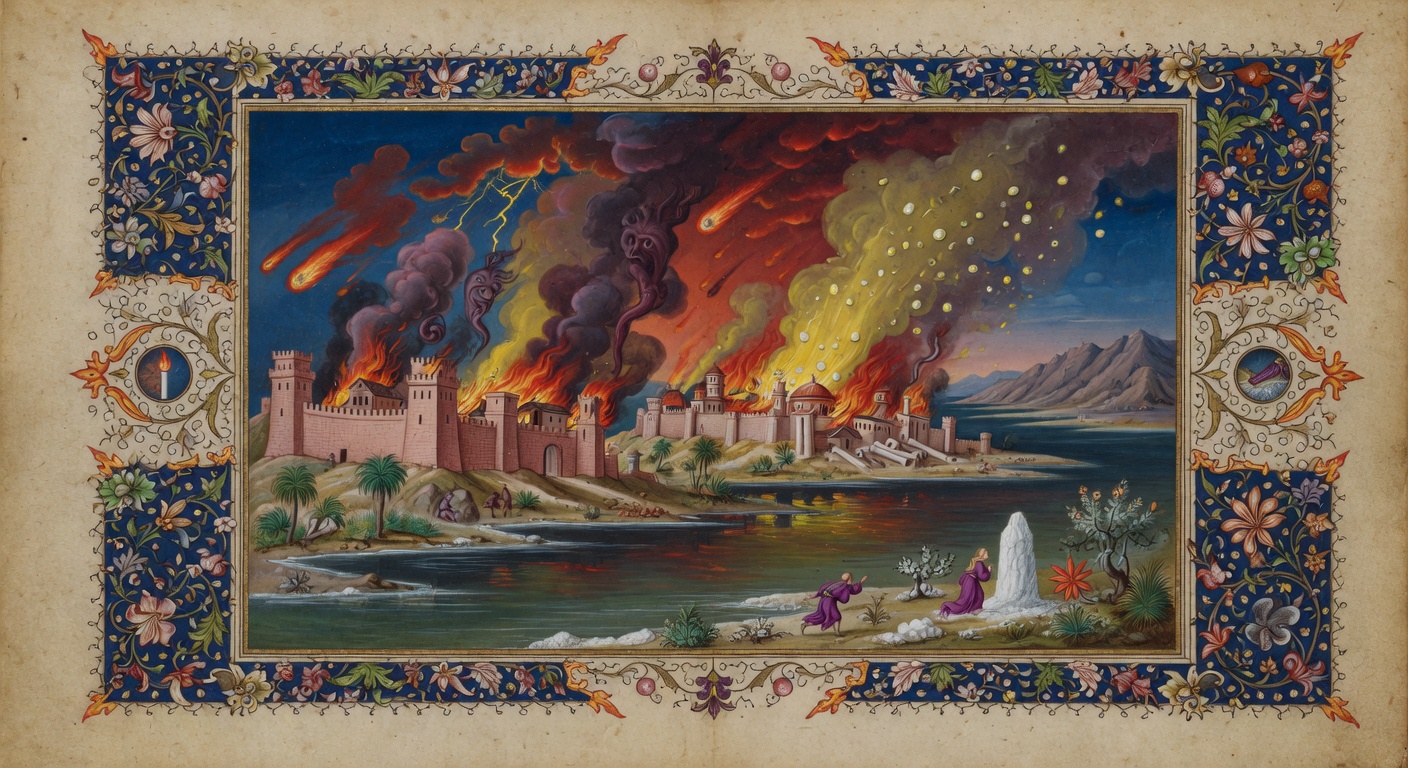
Sodom and Gomorrah
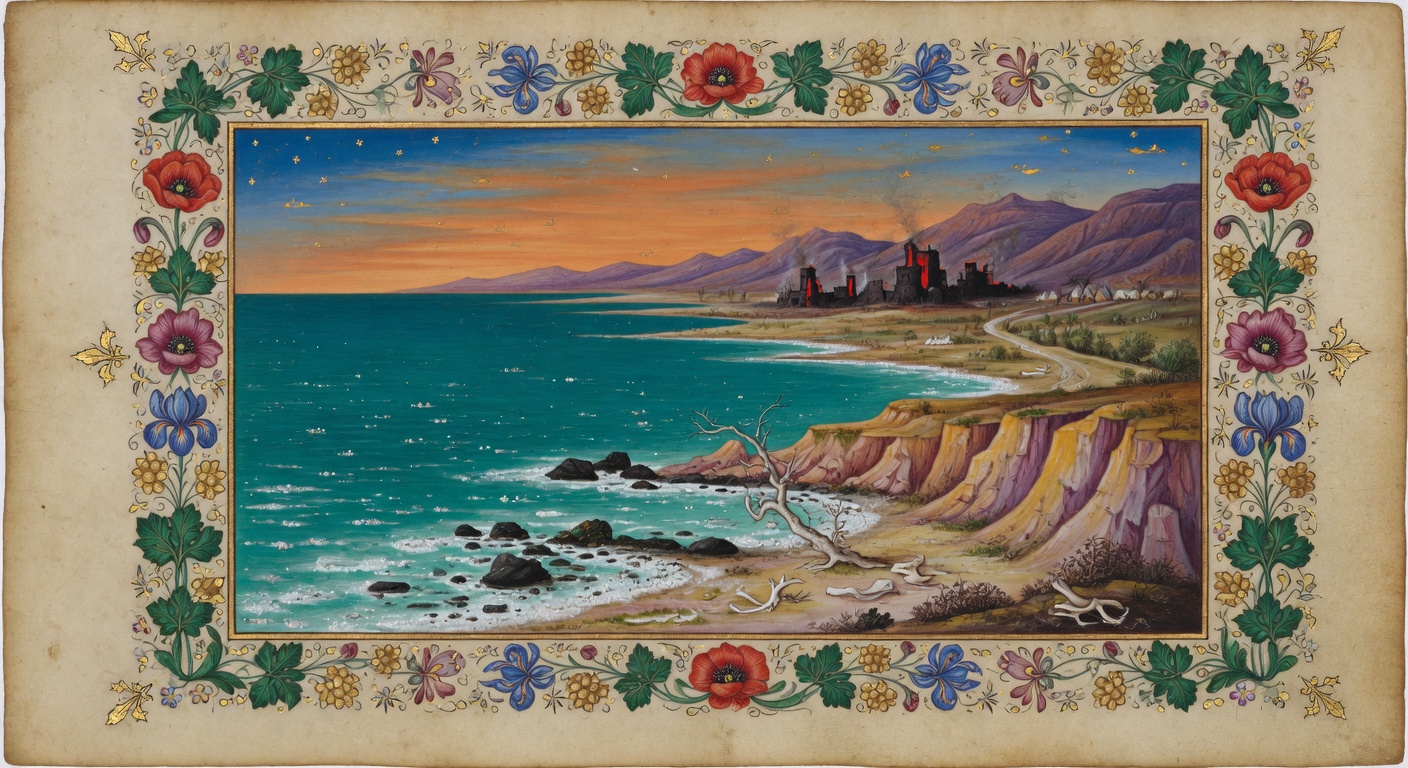
Sodom and Gomorrah were ancient cities located near the Dead Sea whose inhabitants were notorious in Scripture for widespread immorality, violence, and rejection of God. In the Genesis account, God announced their impending destruction to Abraham, who interceded for any righteous residents; angels then rescued Lot and his family before raining down fire and brimstone that completely obliterated the cities. The event stands as a foundational biblical example of divine judgment on unrepentant sin, later cited by prophets, Jesus, and New Testament writers to warn against wickedness and affirm God's justice.
-
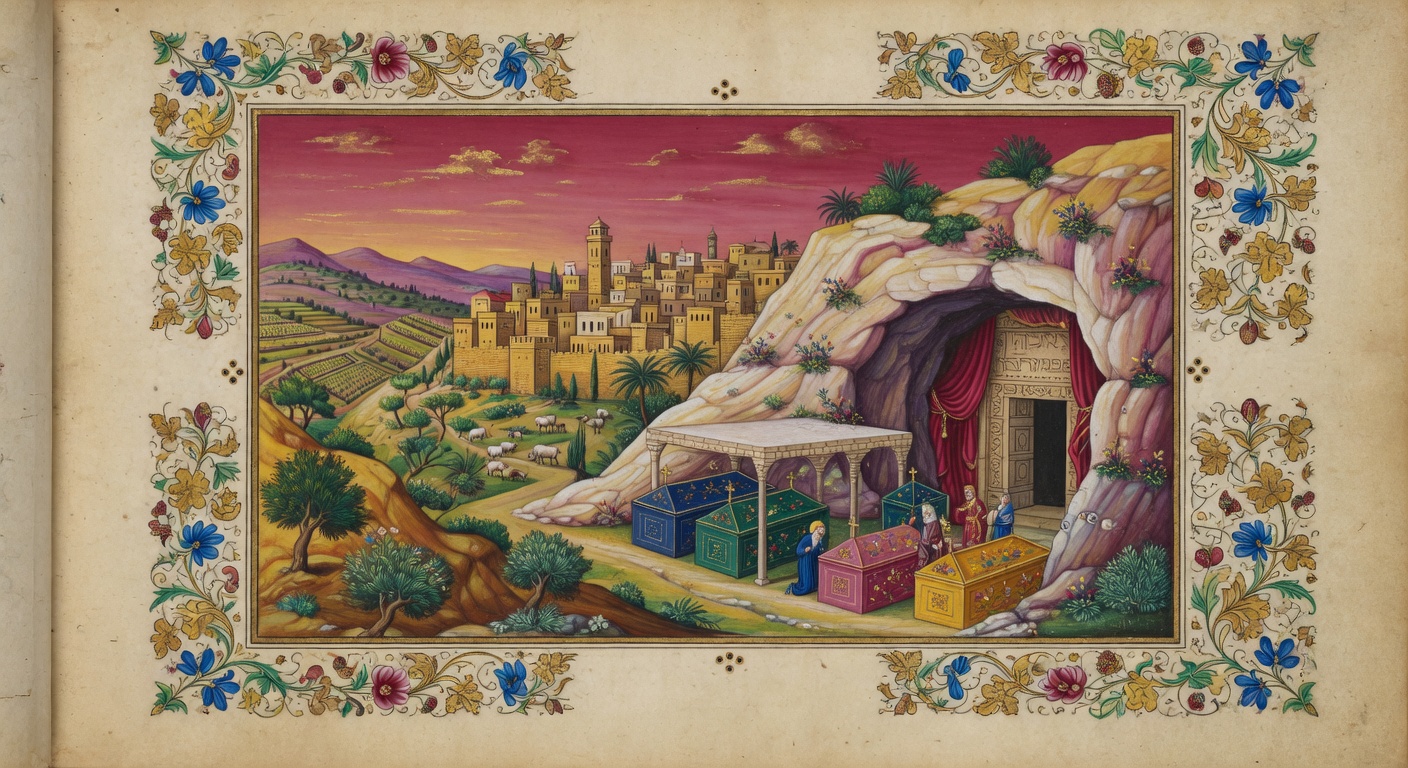
Hebron
Hebron is renowned in the Bible as the site of the Cave of Machpelah, the burial place Abraham purchased from Ephron the Hittite for Sarah and where he, Isaac, Jacob, and their wives were later interred. This location marks the first parcel of land acquired by Abraham in Canaan, serving as tangible evidence of God’s covenant promise to give the land to his descendants. Centuries afterward, Hebron became David’s initial capital, where he reigned over Judah for seven years following Saul’s death before establishing Jerusalem as the united kingdom’s center. Its recurring role in patriarchal narratives and the rise of the monarchy highlights its enduring importance in Scripture as a place of ancestral faith and royal transition.
-
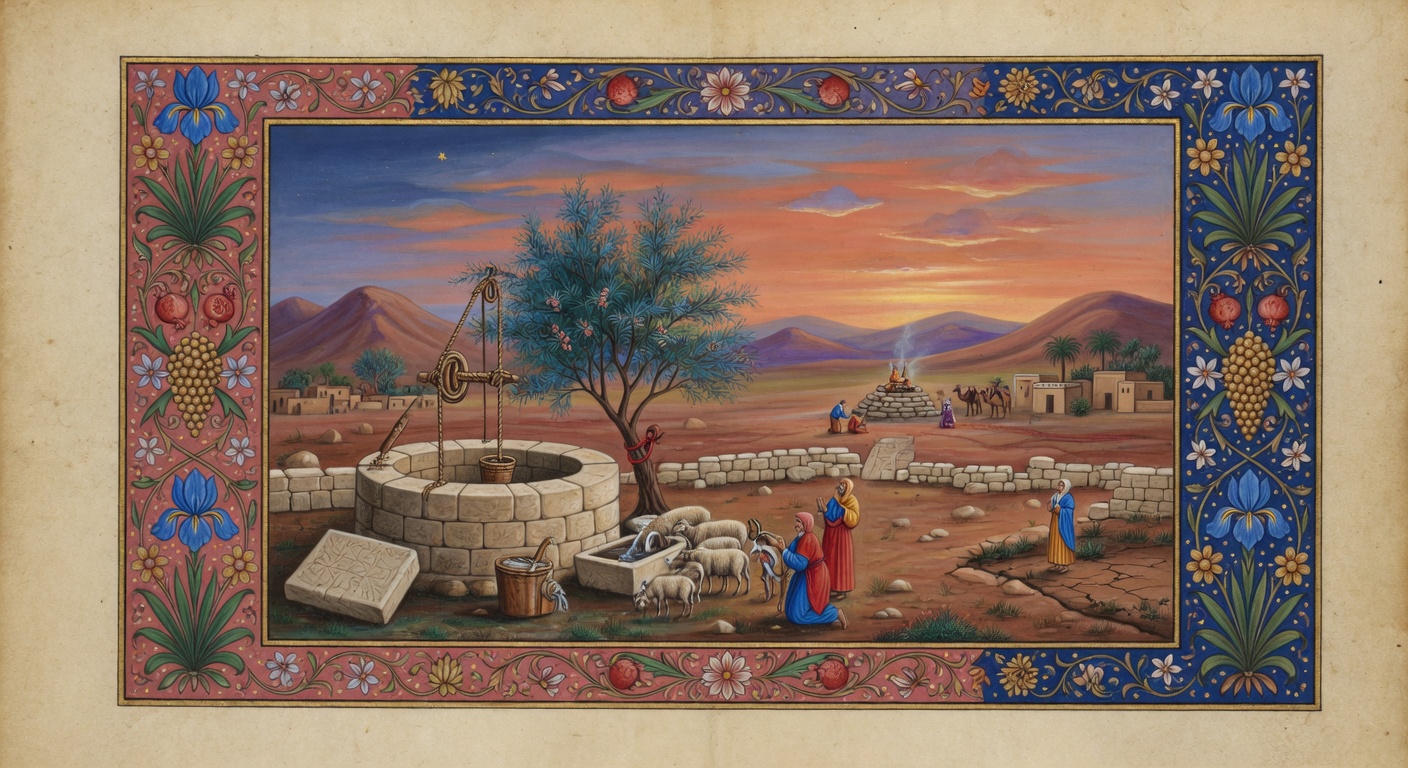
Beersheba
Beersheba served as the traditional southern boundary of ancient Israel, frequently paired with Dan in the north to define the full extent of the Promised Land. It is notably associated with Abraham, who dug a well there and entered into a covenant with King Abimelech, naming the site Beersheba to commemorate their oath. The location also witnessed divine encounters and worship for Isaac and Jacob, who reaffirmed covenants and offered sacrifices, underscoring God's ongoing faithfulness to the patriarchs. As a recurring site of wells, oaths, and revelation, Beersheba holds enduring significance in Scripture as a marker of territorial identity and divine promise.
-
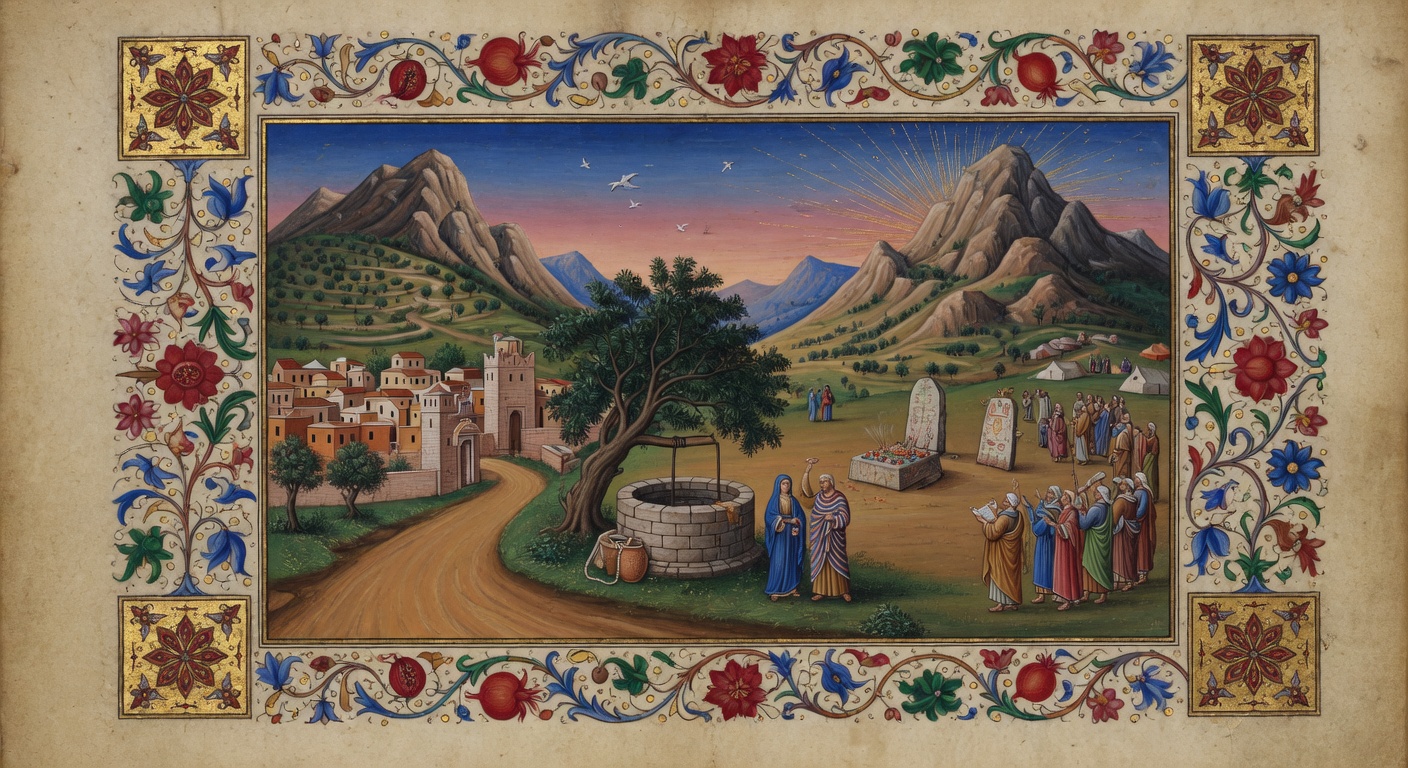
Shechem
Shechem, located between Mount Ebal and Mount Gerizim in the central hill country of Canaan, functioned as an early center of worship and covenant-making for the Israelites. Jacob purchased land there and dug the well that later became the site of Jesus’ encounter with the Samaritan woman in John 4. Joshua gathered the tribes at Shechem after the conquest to renew the covenant, setting up a stone of witness as the people pledged to serve the Lord alone. Its recurring role across the patriarchal, conquest, and monarchy periods highlights its lasting importance as a place of divine encounter and national decision in Scripture.
-
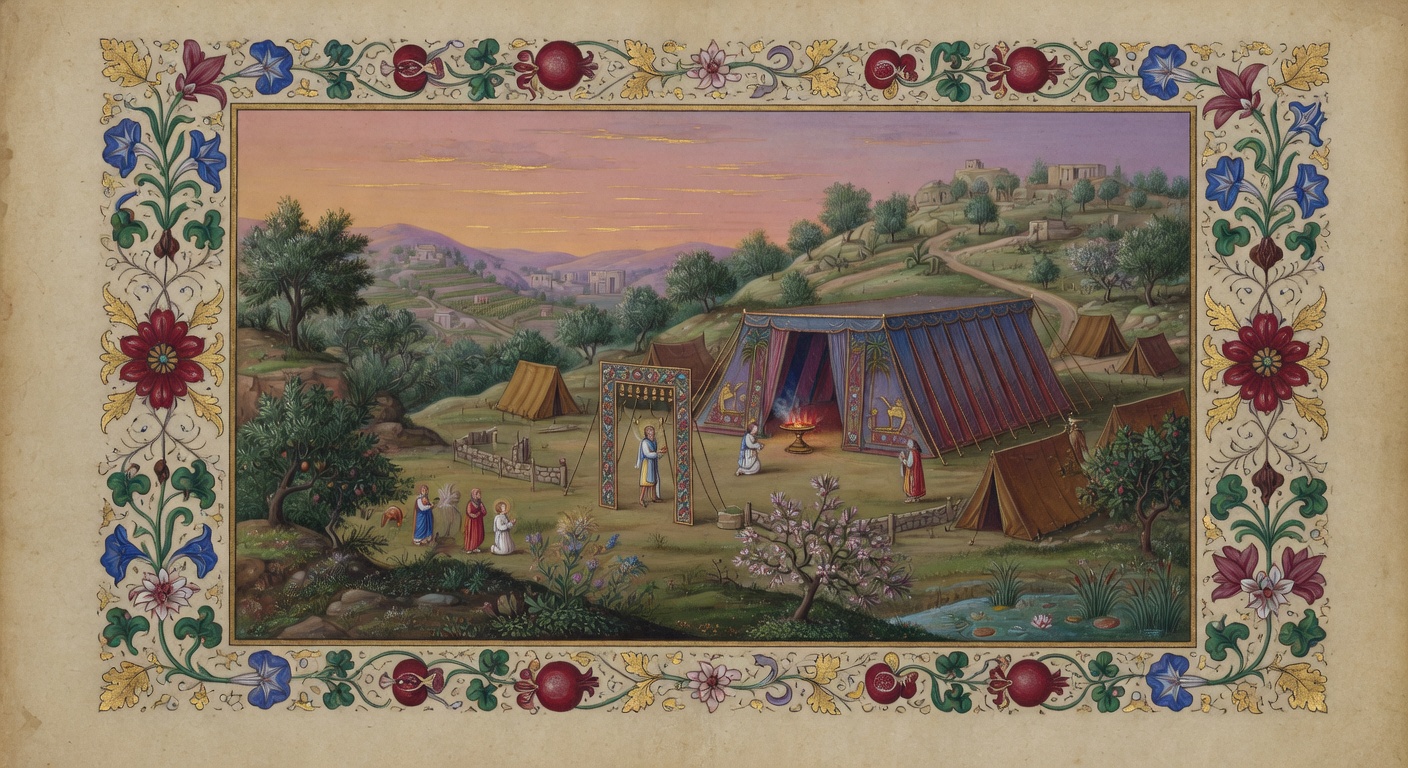
Shiloh
Shiloh served as the central location of the Israelite tabernacle for over three centuries during the period of the judges, acting as the main site for worship, sacrifices, and national gatherings after the conquest of Canaan. It was at Shiloh that Hannah prayed for a son and dedicated young Samuel to serve under the high priest Eli, where the boy received his prophetic calling from God. The city later suffered destruction after the Philistines captured the Ark of the Covenant, which had been housed there, signaling a major shift away from this early sanctuary. In Scripture, Shiloh underscores themes of God's dwelling among his people, covenant faithfulness, and eventual judgment for Israel's disobedience.
-
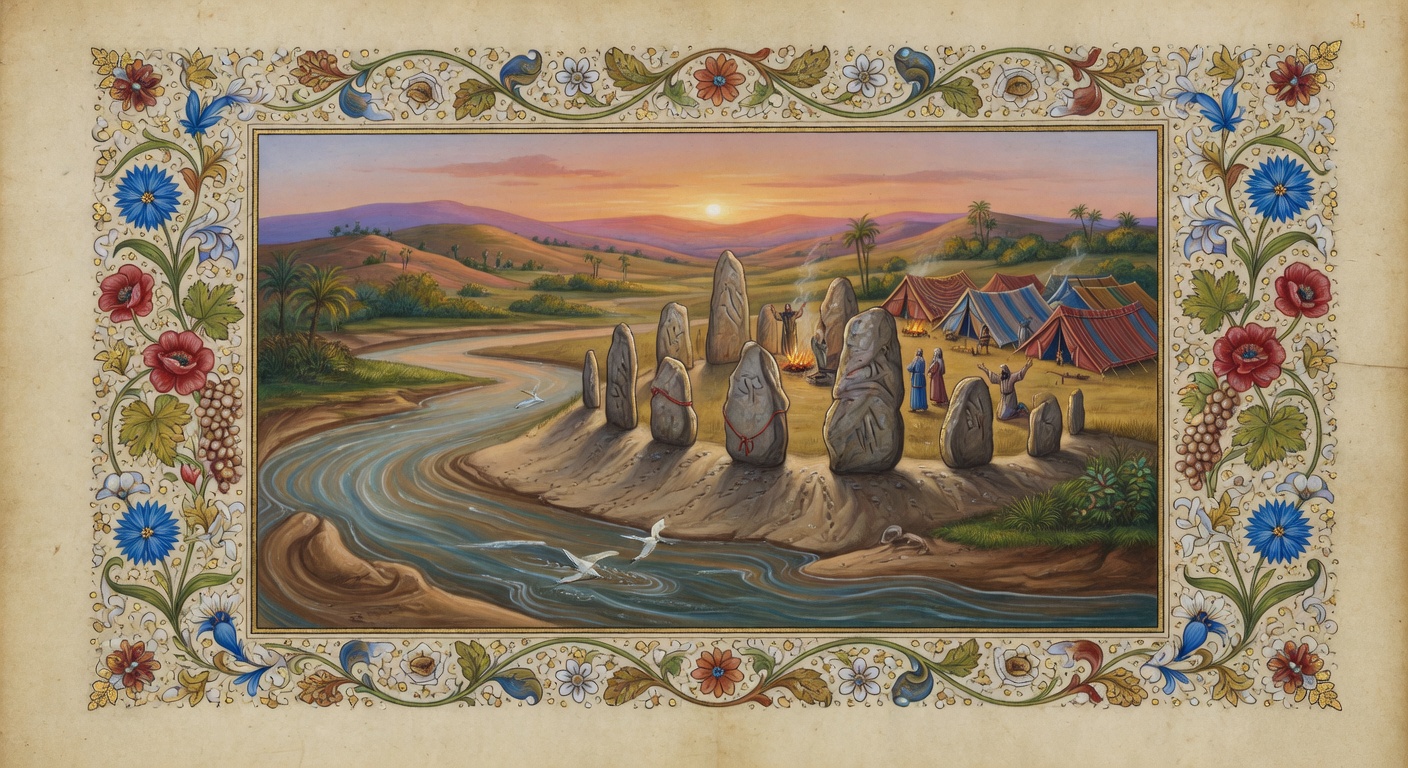
Gilgal
Gilgal was the first encampment of the Israelites after they crossed the Jordan River into Canaan under Joshua's leadership. There, Joshua erected a memorial of twelve stones taken from the riverbed to commemorate God's miraculous parting of the waters for future generations. At this site the new generation of Israelite males was circumcised to renew the covenant, the Passover was celebrated, and the daily provision of manna ceased as they began eating the produce of the land. Gilgal later served as the base camp for the conquest of Jericho and other cities, underscoring its role as a place of covenant renewal, remembrance, and transition into the Promised Land.
-
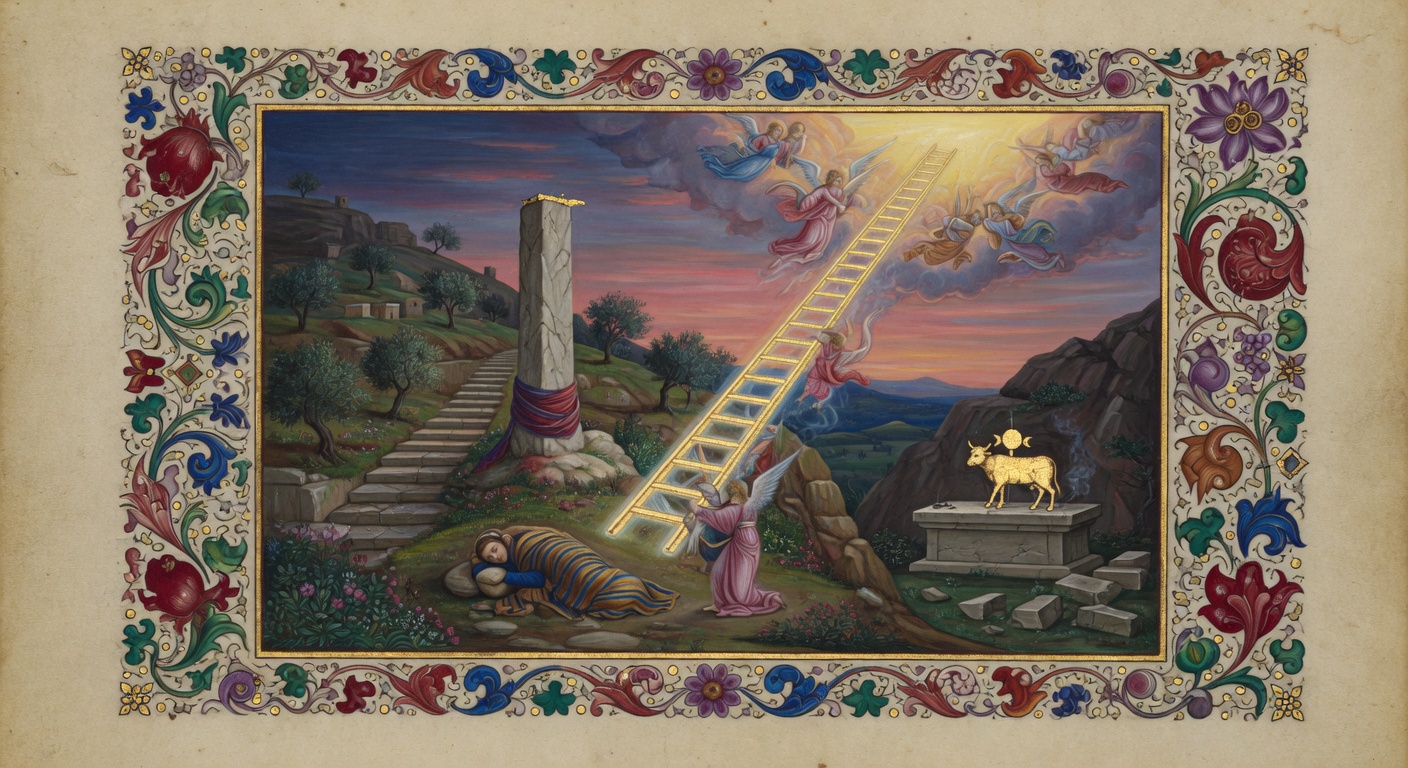
Bethel
Bethel holds a prominent place in biblical history as the site where Jacob experienced a divine vision of a ladder reaching to heaven, with angels ascending and descending, prompting him to name it "House of God" after his earlier encounter there with Abraham. This location became a significant center for worship and a symbol of God's covenant promises to the patriarchs. Centuries later, however, King Jeroboam established one of his golden calves at Bethel, turning the sacred site into a center of idolatrous worship to rival the temple in Jerusalem. This act of corruption highlighted the spiritual decline in the northern kingdom and served as a recurring point of condemnation by the prophets.
-
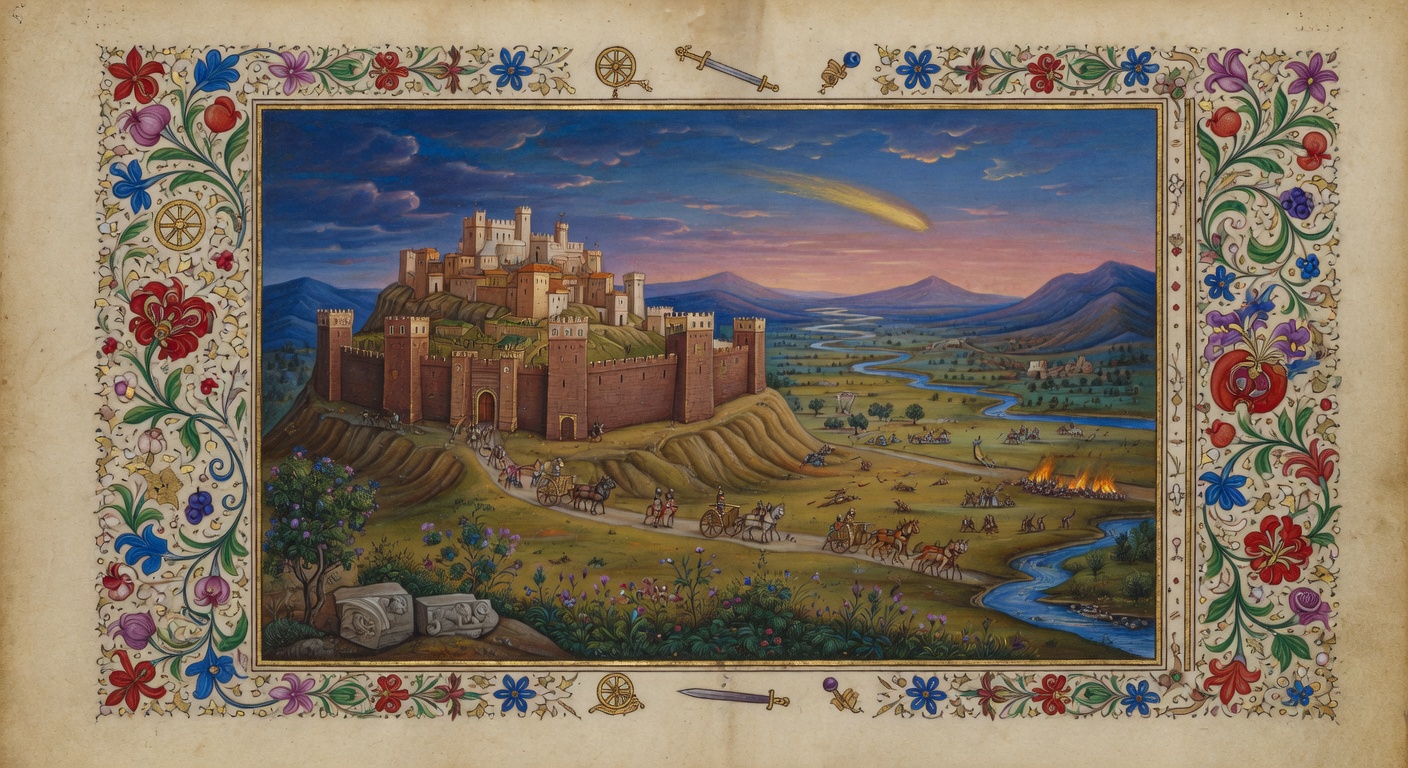
Megiddo
Megiddo was a strategically located fortress city in ancient Israel that guarded a vital pass along the Via Maris trade route, making it a key military stronghold throughout history. King Solomon fortified Megiddo as part of his extensive building projects, and the site witnessed numerous significant battles, including conflicts involving Israelite leaders like Deborah and Barak. In the New Testament, the term Armageddon derives from "Har Megiddo," referring to this location as the prophesied site of the final apocalyptic battle in the Book of Revelation, underscoring its enduring symbolic importance in biblical eschatology.
-
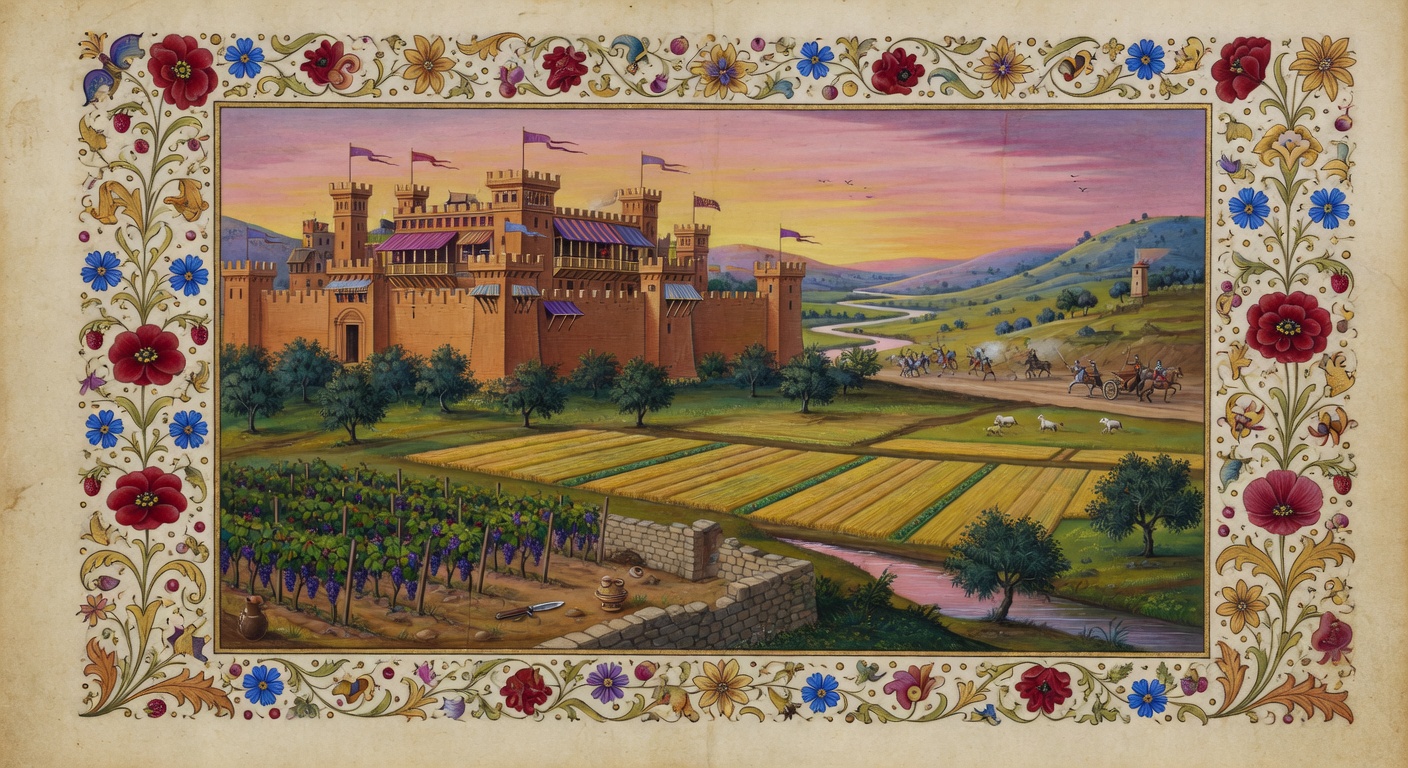
Jezreel
Jezreel was an ancient Israelite city in a fertile valley north of Samaria that served as the site of King Ahab’s palace and the vineyard owned by Naboth. According to the biblical narrative, Queen Jezebel arranged Naboth’s judicial murder so Ahab could claim the property, leading the prophet Elijah to pronounce God’s judgment that Ahab’s dynasty would fall. The valley repeatedly functioned as a strategic battleground, including clashes with the Philistines and the site where Jehu later executed Jezebel and the remaining members of Ahab’s house. In Scripture these events illustrate the themes of prophetic fulfillment, divine justice, and the consequences of royal injustice.
-
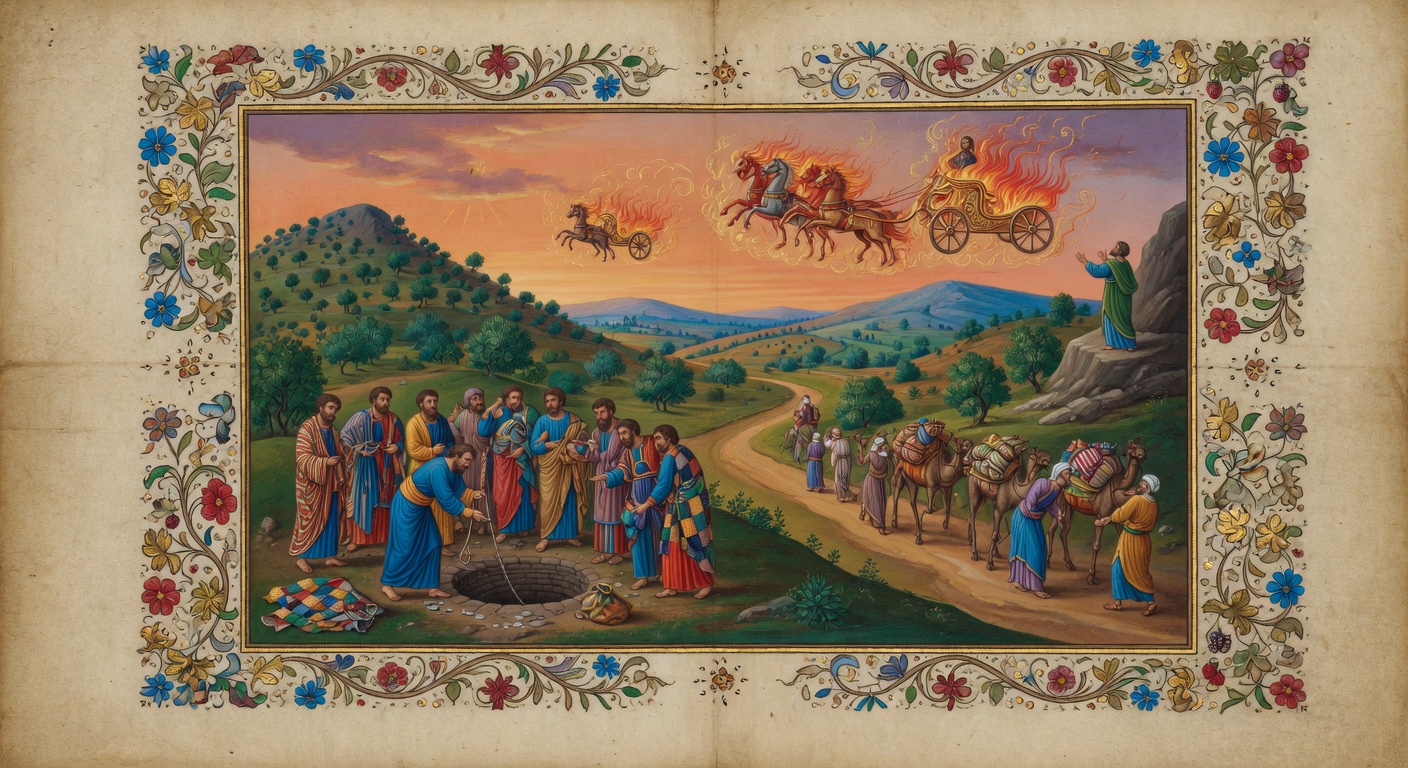
Dothan
Dothan is an ancient city in the hill country of Samaria, referenced in the Old Testament as the setting for two distinct episodes of divine intervention. There Joseph's brothers, out of envy, cast him into a cistern and sold him to passing traders, an act of betrayal that initiated his journey to Egypt and the eventual preservation of Jacob's family. Later, during the ministry of Elisha, the prophet's servant at Dothan was granted a vision of angelic chariots of fire encircling the city, demonstrating God's protection against an Aramean siege. Together these narratives illustrate recurring scriptural themes of providence, deliverance, and the unseen realities that sustain God's people.
-
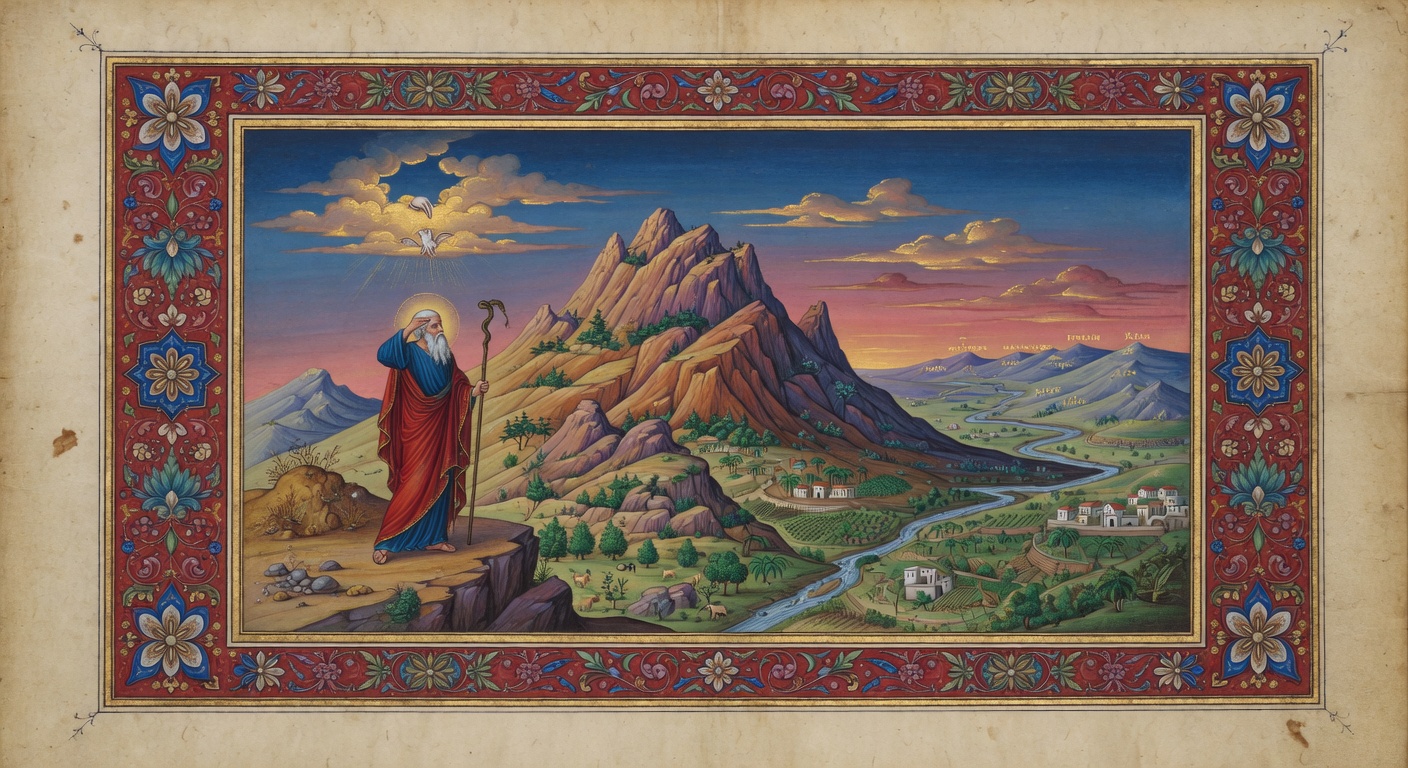
Mount Nebo
Mount Nebo is the peak in Moab where Moses ascended to survey the Promised Land, which God had sworn to give to the Israelites, though Moses himself was forbidden from entering due to his earlier transgression. From this vantage point, he viewed the territories of Canaan stretching before him, including the Jordan Valley and the hill country, fulfilling God's directive as recounted in the Book of Deuteronomy. Following this vision, Moses died on the mountain, and the Lord personally buried him in a secret location in the valley below, marking the conclusion of the Exodus generation's leadership. This site holds profound significance in Scripture as a symbol of divine promise, human limitation, and the transition of authority to Joshua for the conquest of the land.
-
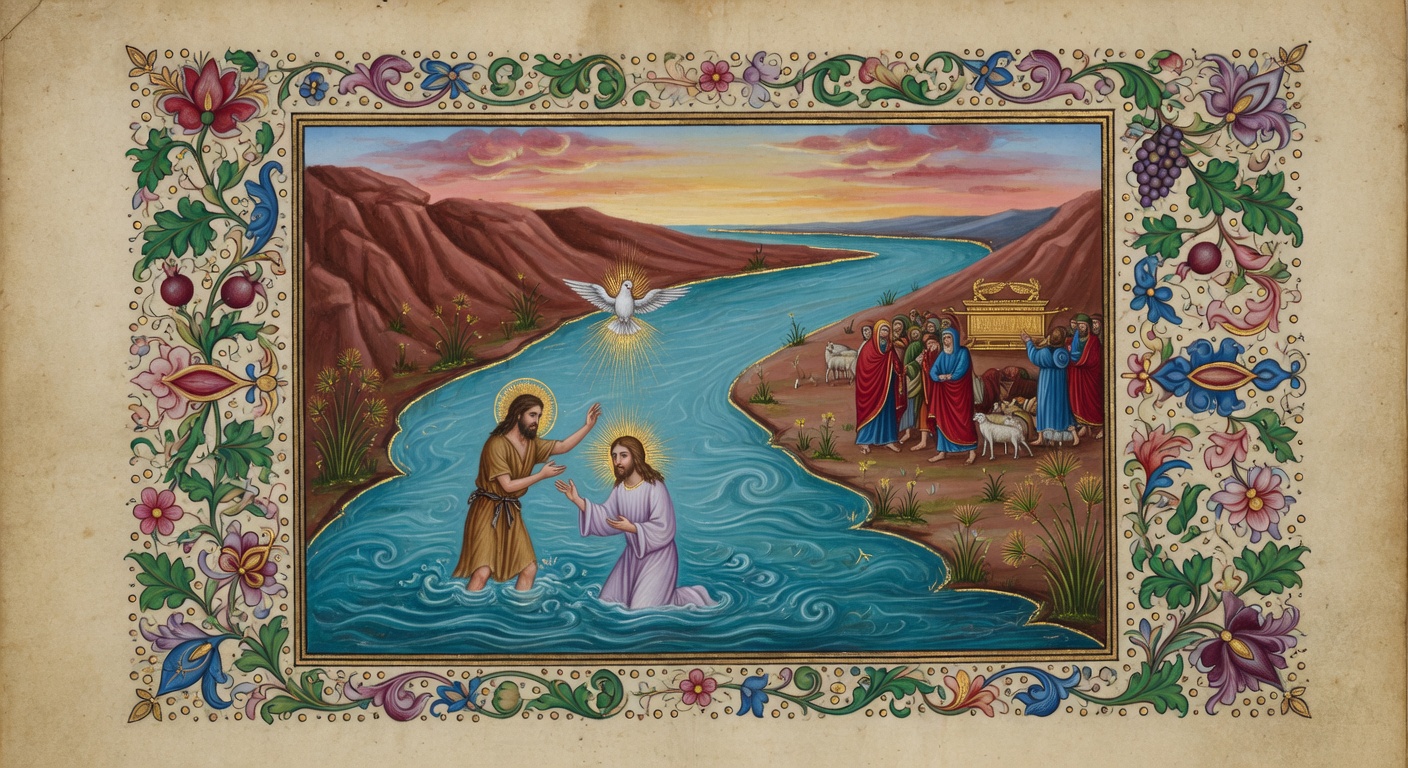
Jordan River
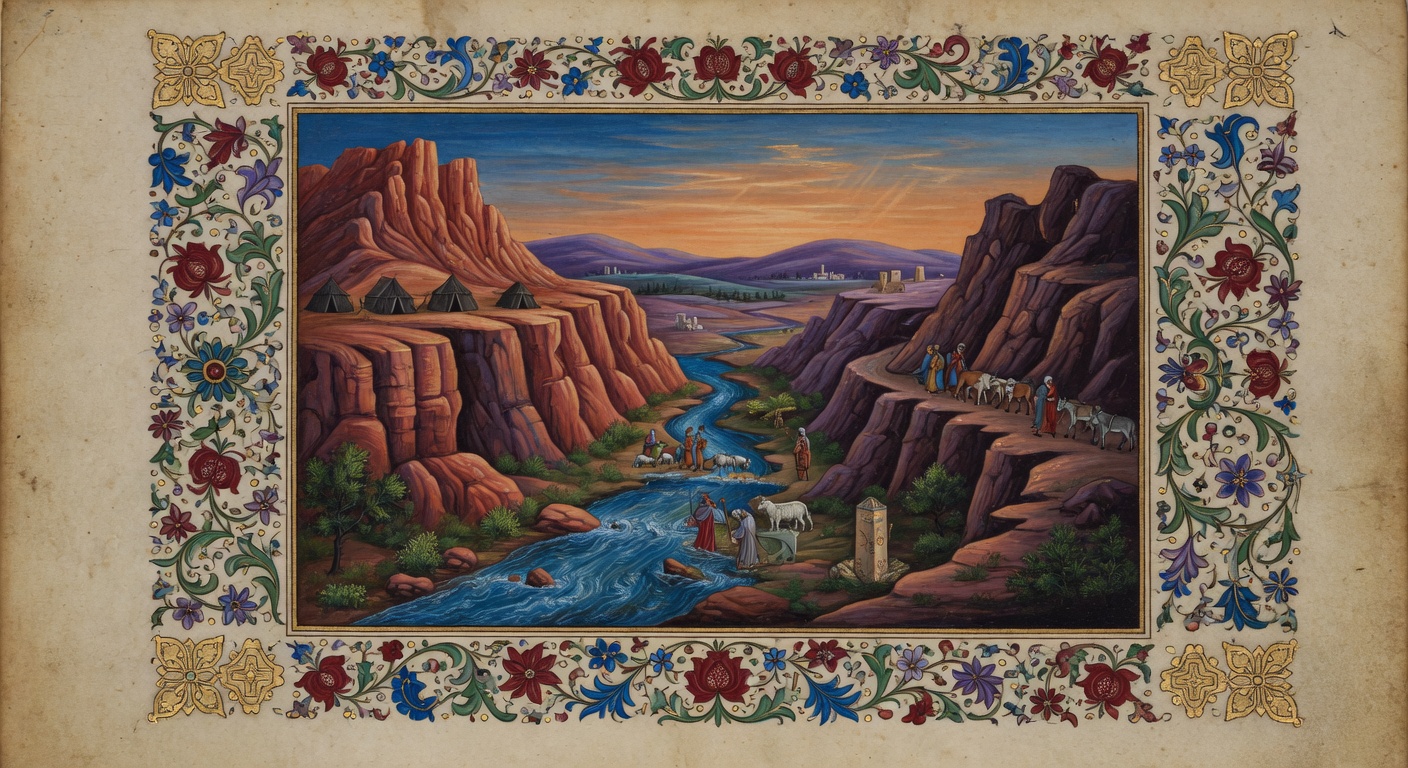
The Jordan River marked the eastern boundary that the Israelites crossed under Joshua's leadership to enter the Promised Land after forty years of wilderness wandering. As the priests carrying the Ark of the Covenant stepped into the water, the river parted miraculously, allowing the nation to pass on dry ground and thereby fulfilling God's covenant promise to Abraham. In the New Testament the same river became the setting for Jesus' baptism by John the Baptist, an event accompanied by the descent of the Holy Spirit and the Father's audible affirmation of the Son. Across both Testaments the Jordan thus symbolizes transition, divine deliverance, and the inauguration of new phases in God's redemptive plan.
-
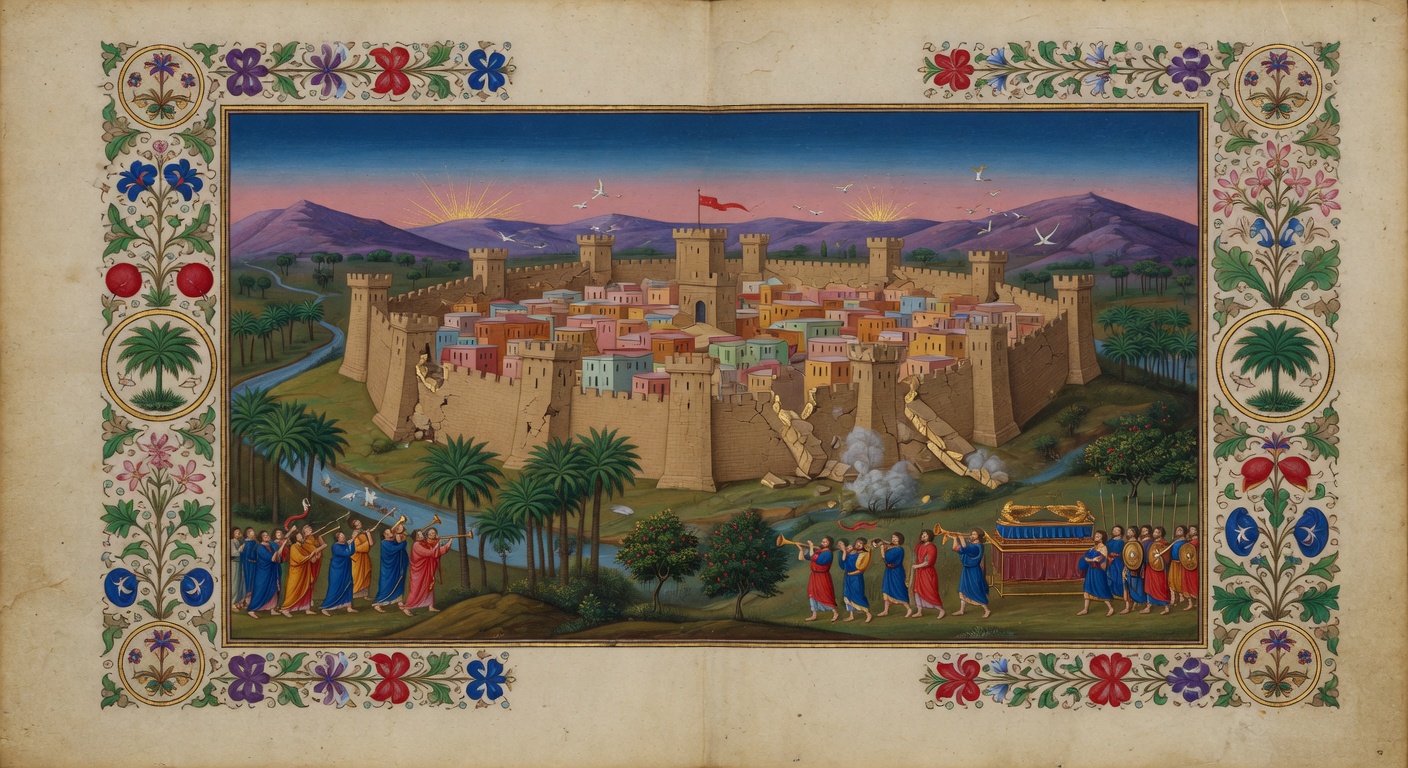
Jericho
Jericho was an ancient fortified city located near the Jordan River that stood as the first major obstacle for the Israelites after crossing into Canaan. In the Book of Joshua, God commanded the people to march around its walls once a day for six days and seven times on the seventh day, after which the walls collapsed following the sounding of trumpets and a shout, enabling the conquest without conventional battle tactics. This event demonstrated God's direct intervention and faithfulness to His covenant promises, serving as a foundational victory that affirmed Israel's reliance on divine power rather than military strength. Its significance extends through Scripture as a recurring symbol of God's ability to overcome seemingly impossible barriers when His people obey His instructions.
-
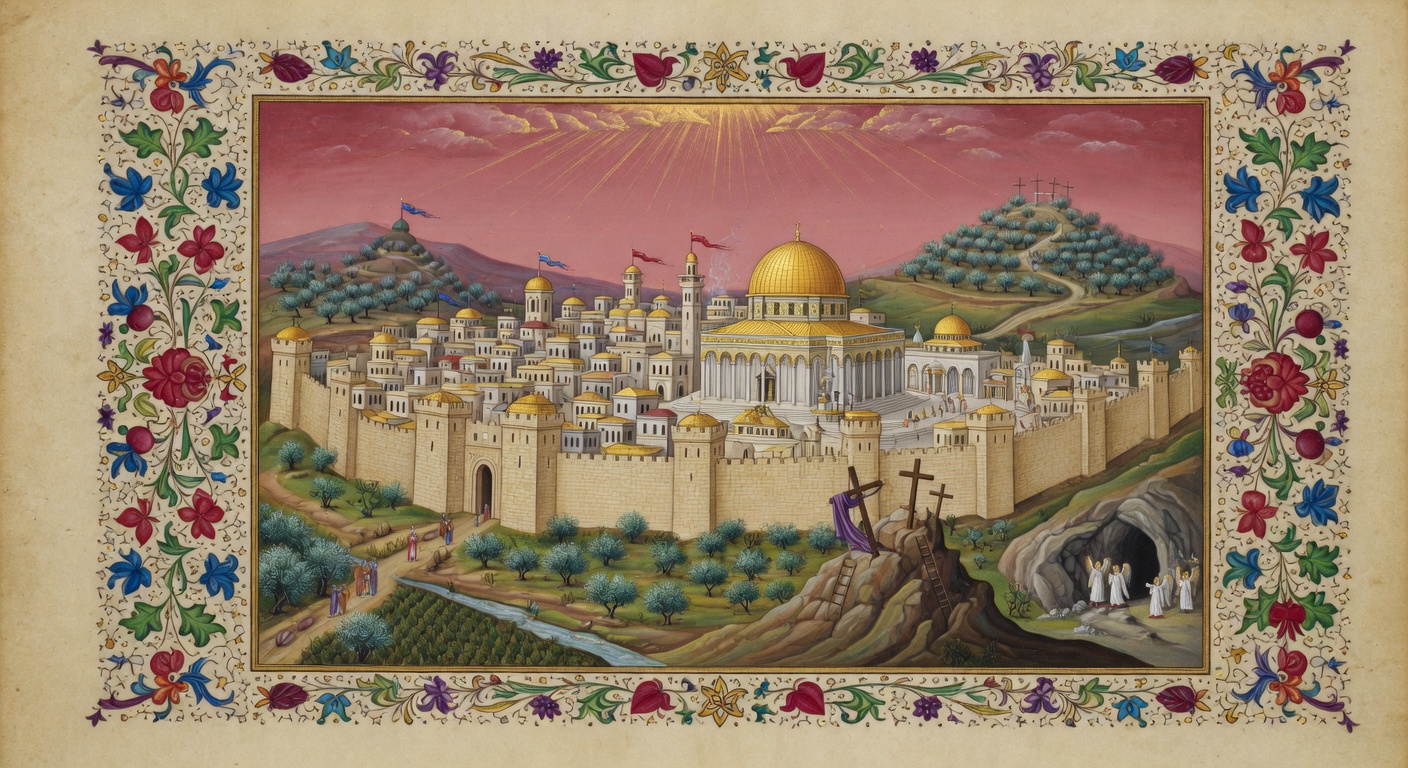
Jerusalem
Jerusalem stands as the ancient capital of Israel and holds profound religious importance as a holy city for Judaism, Christianity, and Islam. It was the location where King Solomon constructed the First Temple, serving as the central place of worship and housing the Ark of the Covenant, which underscored its role in God's covenant with His people. In the New Testament, Jerusalem is the site where Jesus Christ was crucified, buried, and resurrected, fulfilling prophecies and establishing the foundation of the Christian faith. Throughout Scripture, the city symbolizes God's presence among His people and the promise of redemption, making it a focal point of biblical history and eschatology.
-
Bethlehem
Bethlehem, known as the City of David, served as the hometown of Israel's greatest king and the place where the prophet Samuel anointed him as ruler. Centuries later, the prophet Micah foretold that a ruler would emerge from this modest Judean town to shepherd Israel, a prediction fulfilled when Mary gave birth to Jesus in a stable there during the Roman census. The Gospels of Matthew and Luke record these events, highlighting how the Messiah's arrival in humble circumstances aligned precisely with Scripture and demonstrated God's sovereign plan. This connection establishes Bethlehem as a key symbol of fulfilled prophecy and the incarnation in Christian theology.
-
Nazareth
Nazareth, a modest village in the region of Galilee, was the hometown where Jesus grew up under the care of Mary and Joseph after their return from Egypt. It was there that the angel Gabriel announced to the young Mary that she would conceive and bear the Son of God through the Holy Spirit, marking the beginning of the Incarnation narrative in the Gospels. Scripture highlights Nazareth's role in fulfilling prophecies that the Messiah would be called a Nazarene, while also noting Jesus' later rejection by locals in the synagogue, which illustrated themes of unbelief amid his divine identity. This setting emphasizes the humble, ordinary origins from which Jesus launched his public ministry.
-
Bethany
Bethany was a small village located on the eastern slope of the Mount of Olives about two miles east of Jerusalem, serving as the home of Mary, Martha, and their brother Lazarus. It was the site of Jesus' miracle in which he raised Lazarus from the dead after four days in the tomb, an event recorded in John 11 that prompted many witnesses to believe in him. This demonstration of power over death also intensified opposition from the religious authorities, accelerating plans that led to Jesus' arrest and crucifixion. The village further appears in Scripture as a frequent place of lodging for Jesus and the location of Mary's anointing of his feet prior to his triumphal entry into Jerusalem.
-
Capernaum
Capernaum was a fishing village on the northern shore of the Sea of Galilee that became Jesus' primary base during his ministry in the region after he left Nazareth. Multiple Gospel accounts describe it as his own city, where he performed numerous miracles such as healing Peter's mother-in-law, the centurion's servant, and a paralytic lowered through a roof, while also teaching in the local synagogue and calling several disciples including Peter, Andrew, James, John, and Matthew. These events established Capernaum as a focal point for Jesus' message and demonstrations of authority in Galilee. Its ultimate significance lies in Jesus' later rebuke of the town for failing to repent despite witnessing these works, underscoring themes of accountability and the consequences of rejecting his ministry in Scripture.
-
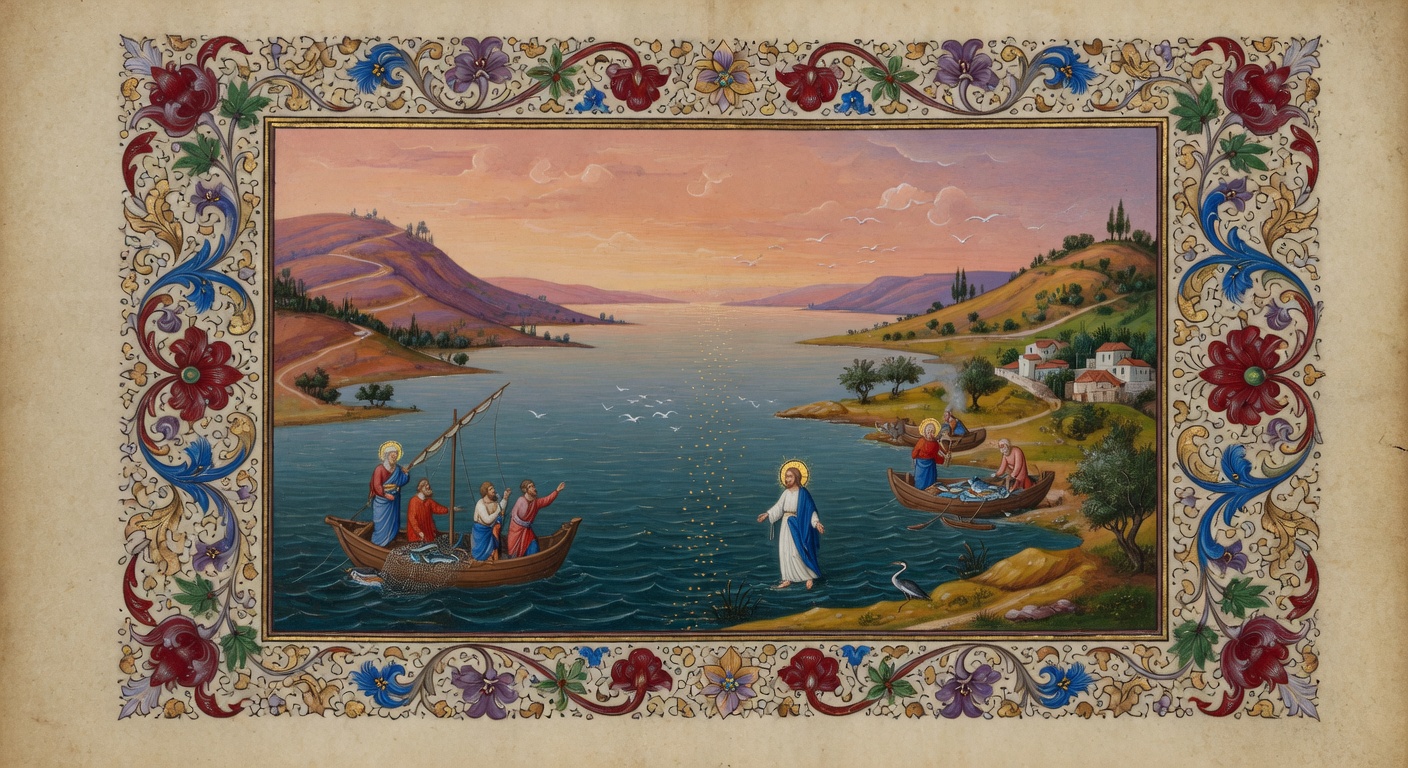
Sea of Galilee
The Sea of Galilee, a freshwater lake in northern Israel also known as Lake Kinneret, formed the geographic center of Jesus' early ministry in the first century. It was along its shores that Jesus called His first disciples, including Peter, Andrew, James, and John, while they worked as fishermen, and performed multiple miracles such as walking on water and calming a storm. Nearby events, including the feeding of the five thousand, further highlighted its role in revealing Jesus' authority over nature and His provision for the crowds. In Scripture, the lake underscores themes of faith, discipleship, and divine intervention, appearing prominently across the Gospels as a setting for both ordinary life and extraordinary signs.
-
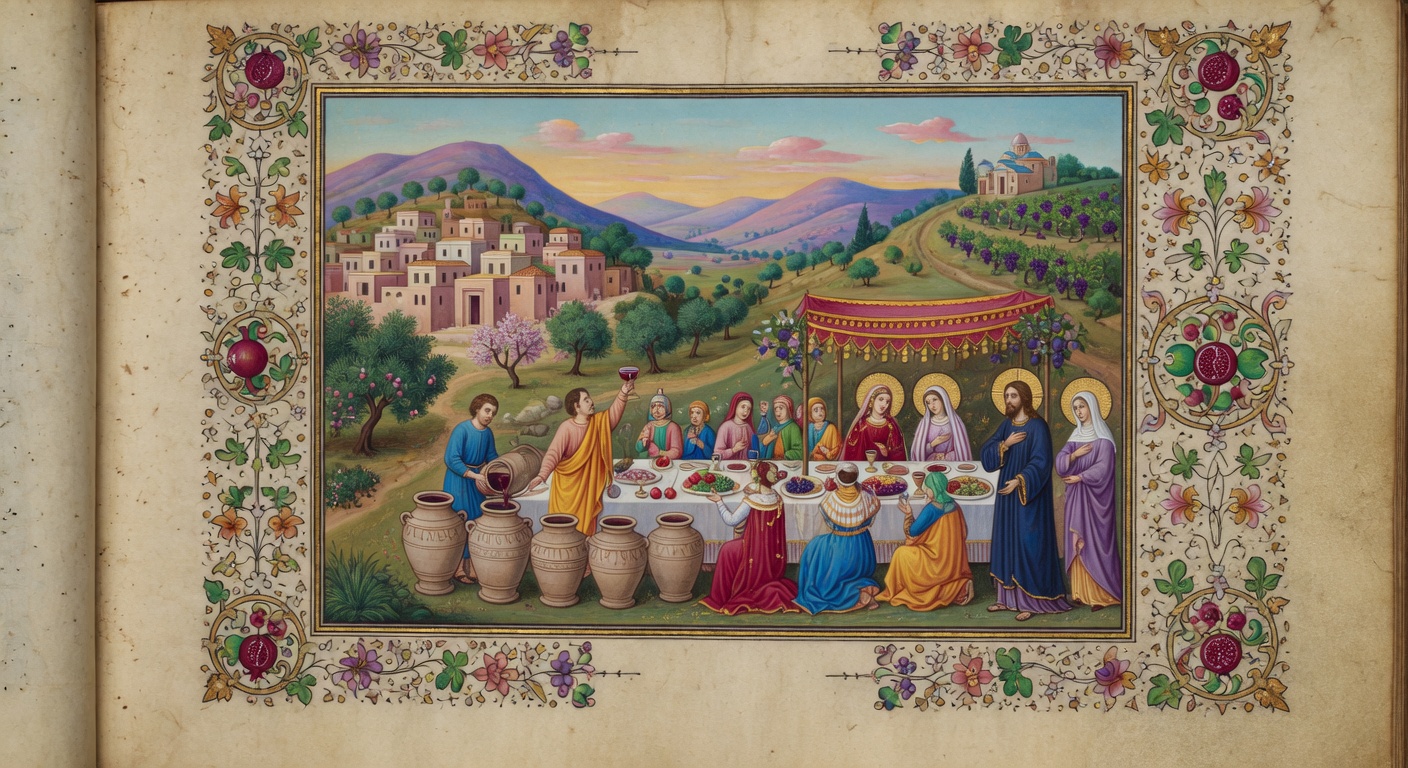
Cana
Cana was a village in Galilee where Jesus performed his first recorded miracle by turning water into wine during a wedding feast. When the supply of wine ran out, Jesus directed servants to fill six large stone jars with water, which he then transformed into superior wine at his mother Mary's prompting. This event, detailed in John chapter 2, revealed Jesus' divine authority and prompted his disciples to believe in him as the Messiah. Its significance lies in inaugurating Jesus' public ministry through a sign that highlighted themes of provision, transformation, and the arrival of the kingdom.
-
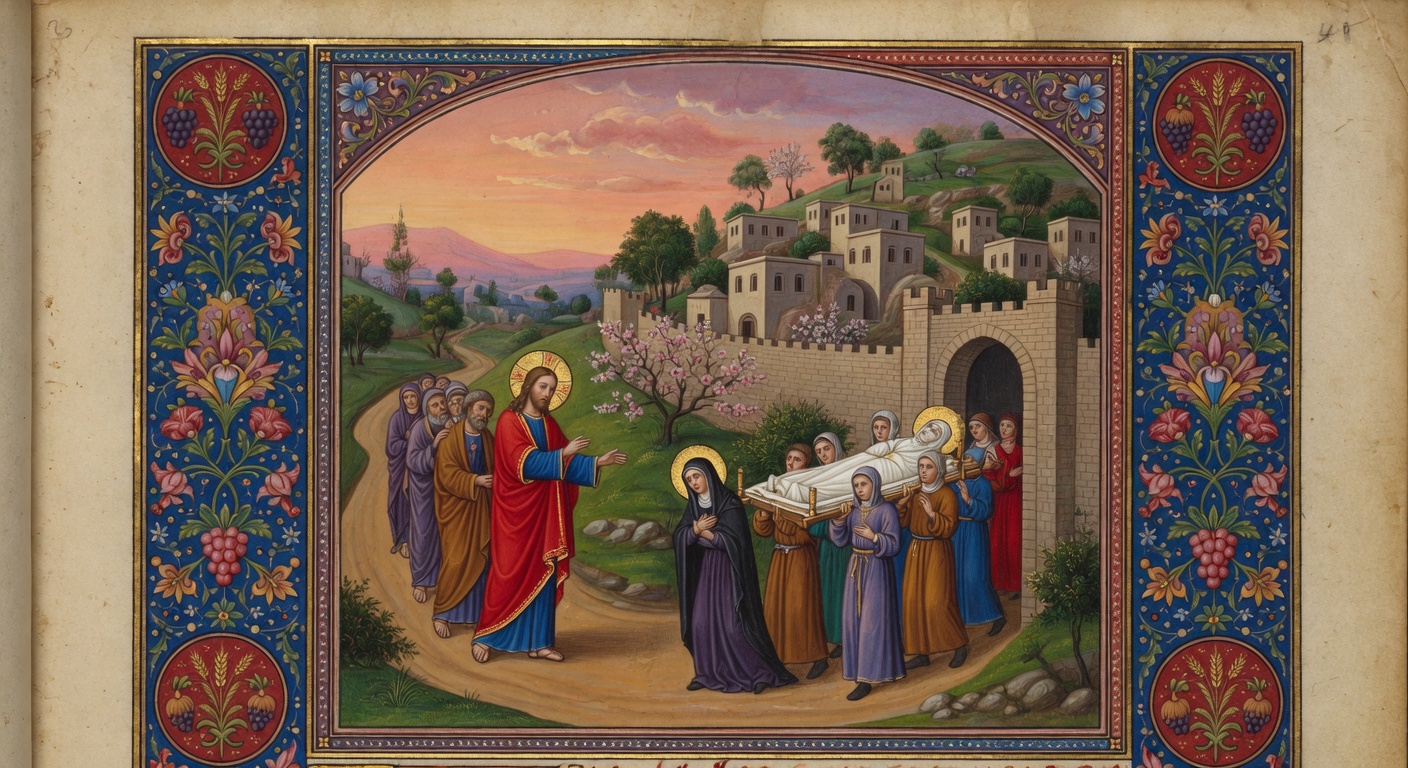
Nain
Nain was a small village located in the region of Galilee during the first century. In the Gospel of Luke, Jesus encountered a funeral procession there for a widow’s only son, stopped the bier, and commanded the young man to rise, restoring him to life and returning him to his mother. The witnesses responded by declaring that a great prophet had appeared and that God had visited his people, with news of the event spreading throughout Judea and the surrounding region. This miracle underscores Jesus’ compassion for the marginalized and his authority over death, serving as an early sign of his messianic mission in Scripture.
-
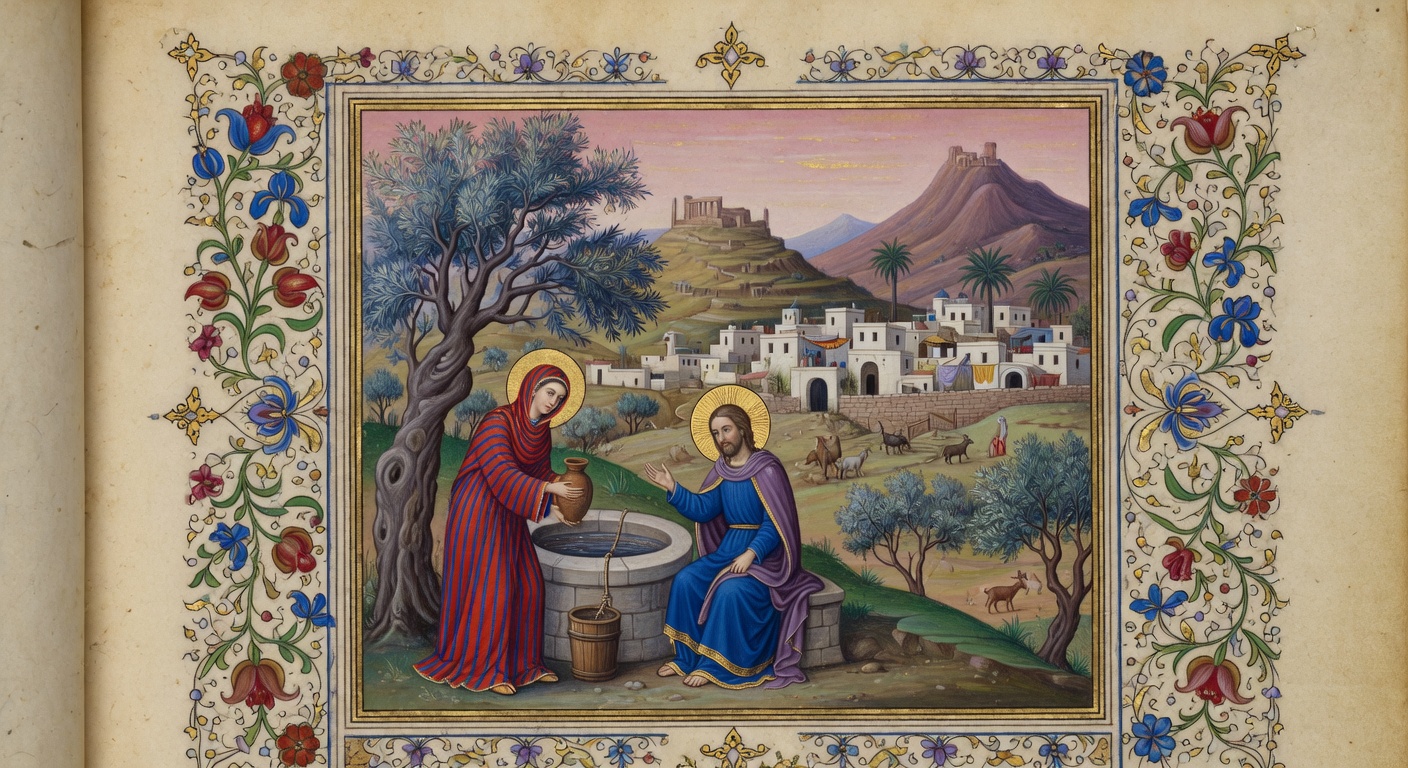
Sychar
Sychar was a town in Samaria located near the well traditionally associated with the patriarch Jacob. In the Gospel of John, Jesus paused there en route from Judea to Galilee and spoke with a Samaritan woman at the well, revealing himself as the source of living water that leads to eternal life while disclosing her personal circumstances and identity as the Messiah. The conversation prompted the woman to share her experience with the townspeople, resulting in many Samaritans believing in Jesus after he stayed with them for two days. This account holds significance in Scripture for demonstrating Jesus' outreach beyond Jewish boundaries, confronting ethnic prejudices, and modeling the spread of the gospel through personal testimony.
-
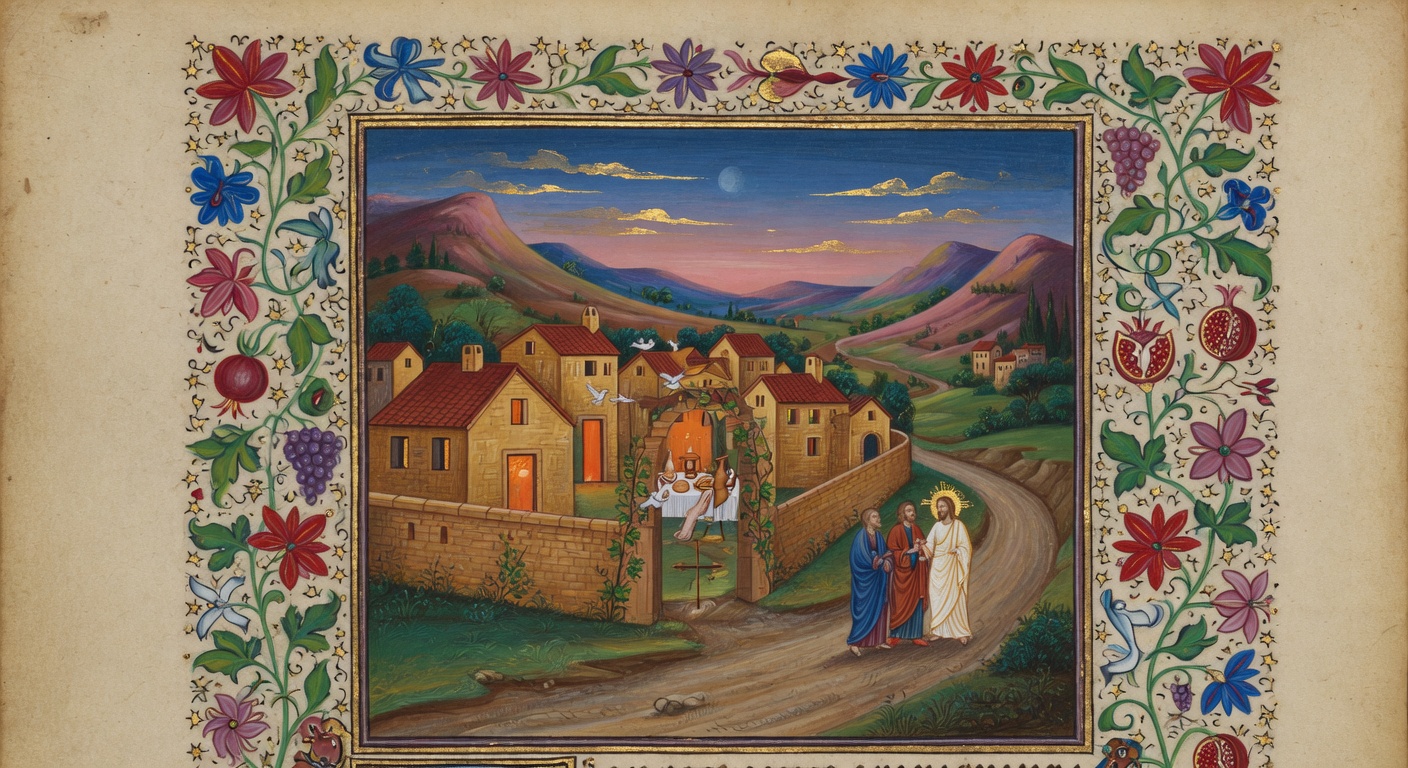
Emmaus
Emmaus refers to the village seven miles from Jerusalem where two disciples encountered the risen Jesus while walking and discussing the crucifixion and empty tomb. Unrecognized at first, Jesus interpreted the Scriptures concerning the Messiah to them along the way, then revealed his identity during the evening meal when he broke bread and gave it to them before vanishing from their sight. This post-resurrection appearance, detailed in Luke 24, matters because it confirms the reality of Jesus' rising, demonstrates the fulfillment of Old Testament prophecy, and establishes the pattern of recognition through Scripture and the breaking of bread that holds ongoing significance in Christian worship and faith.
-
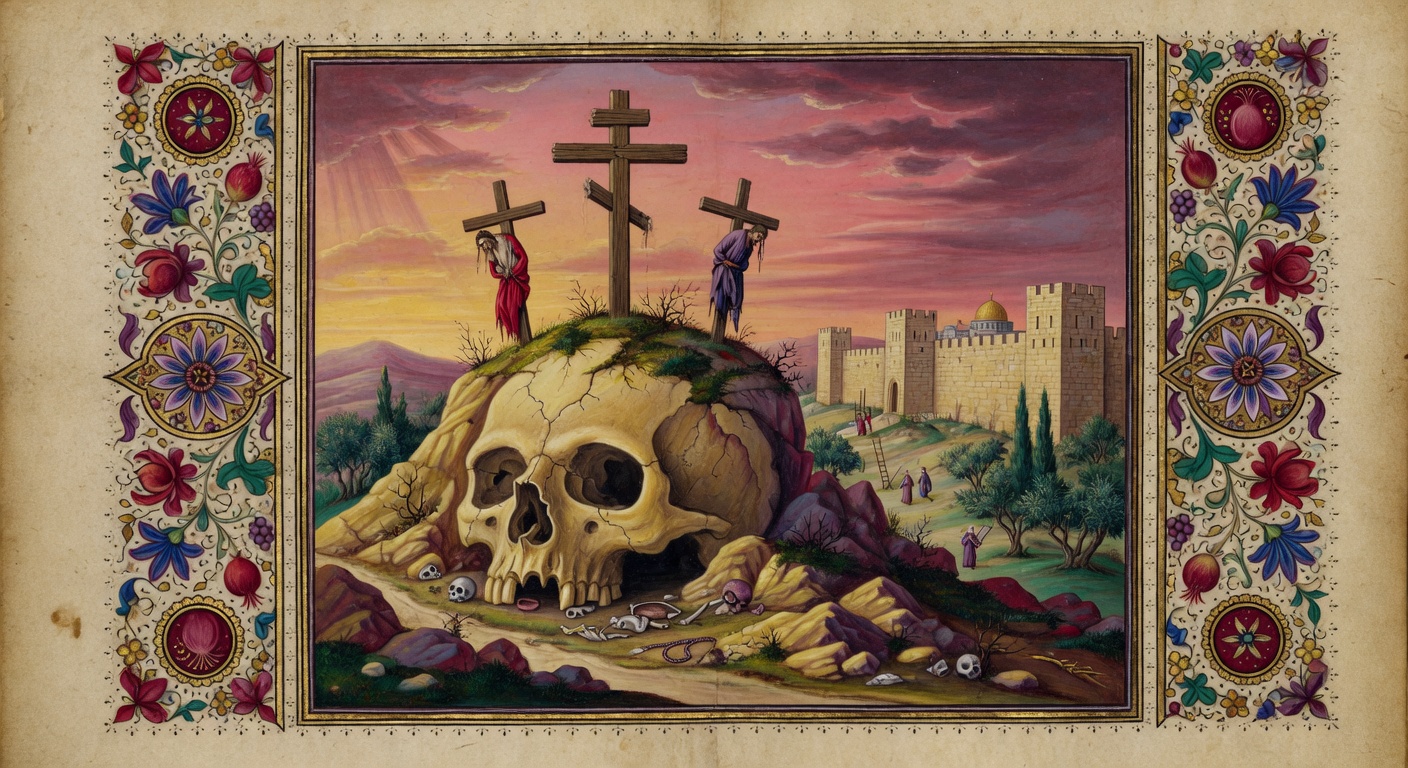
Golgotha
Golgotha, meaning the Place of the Skull, was an execution site located just outside the walls of Jerusalem during the first century. The New Testament Gospels record that Roman authorities crucified Jesus there between two criminals after his trial before Pontius Pilate, an event that fulfilled multiple Old Testament prophecies about the Messiah's suffering and death. This location holds central significance in Scripture because it marks the site where Jesus atoned for human sin through his sacrificial death, enabling reconciliation between God and humanity. The accounts in Matthew, Mark, Luke, and John emphasize Golgotha as the pivotal setting for the crucifixion, which Christians view as the foundation for salvation and the subsequent resurrection.
-
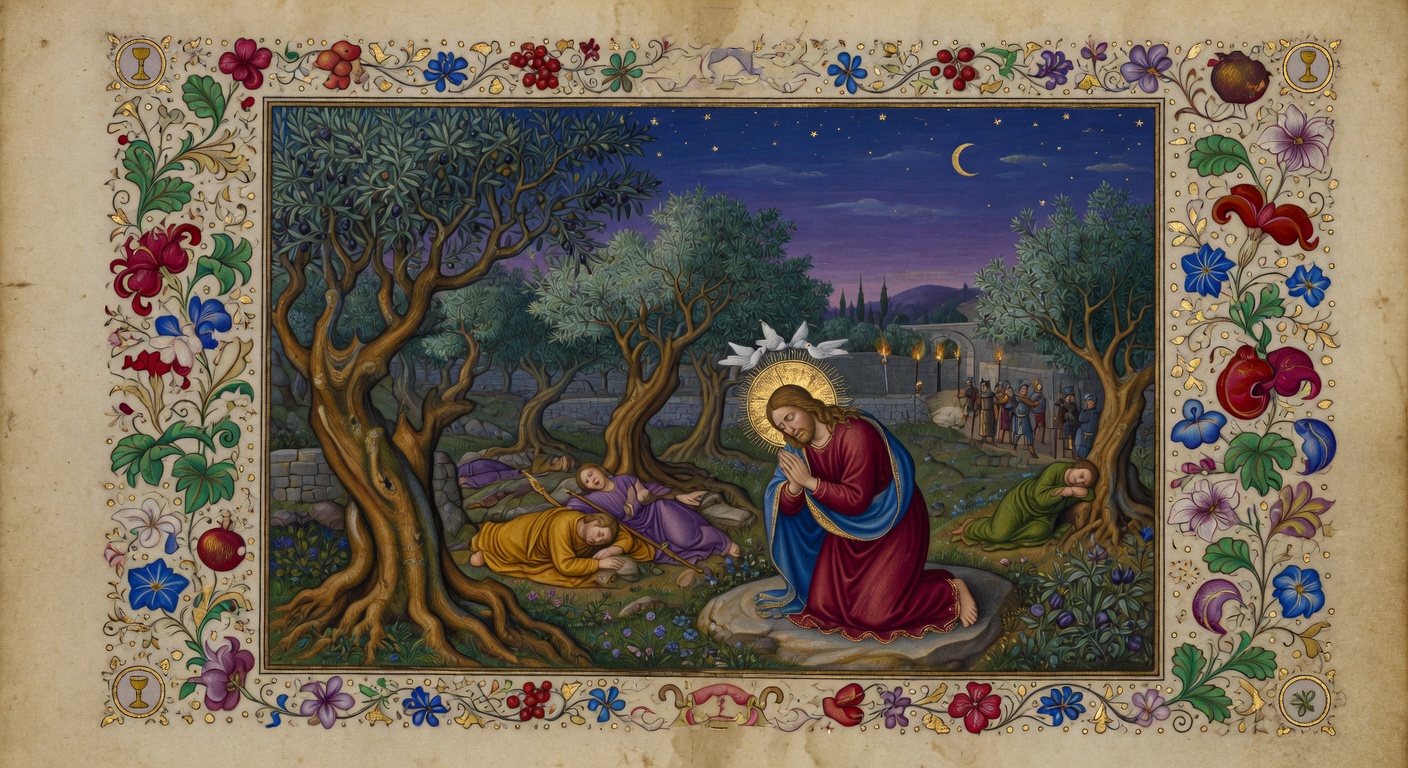
Garden of Gethsemane
The Garden of Gethsemane is an olive grove on the Mount of Olives near Jerusalem where Jesus withdrew with his disciples after the Last Supper. In this setting he prayed in anguish, asking the Father to remove the cup of suffering if possible while submitting to divine will, as his disciples slept nearby. The episode ended with Judas's betrayal and Jesus' arrest by Roman soldiers and temple guards. Recorded in the Synoptic Gospels, the account underscores Christ's humanity, his obedience amid impending crucifixion, and the scriptural emphasis on prayer during trials.
-
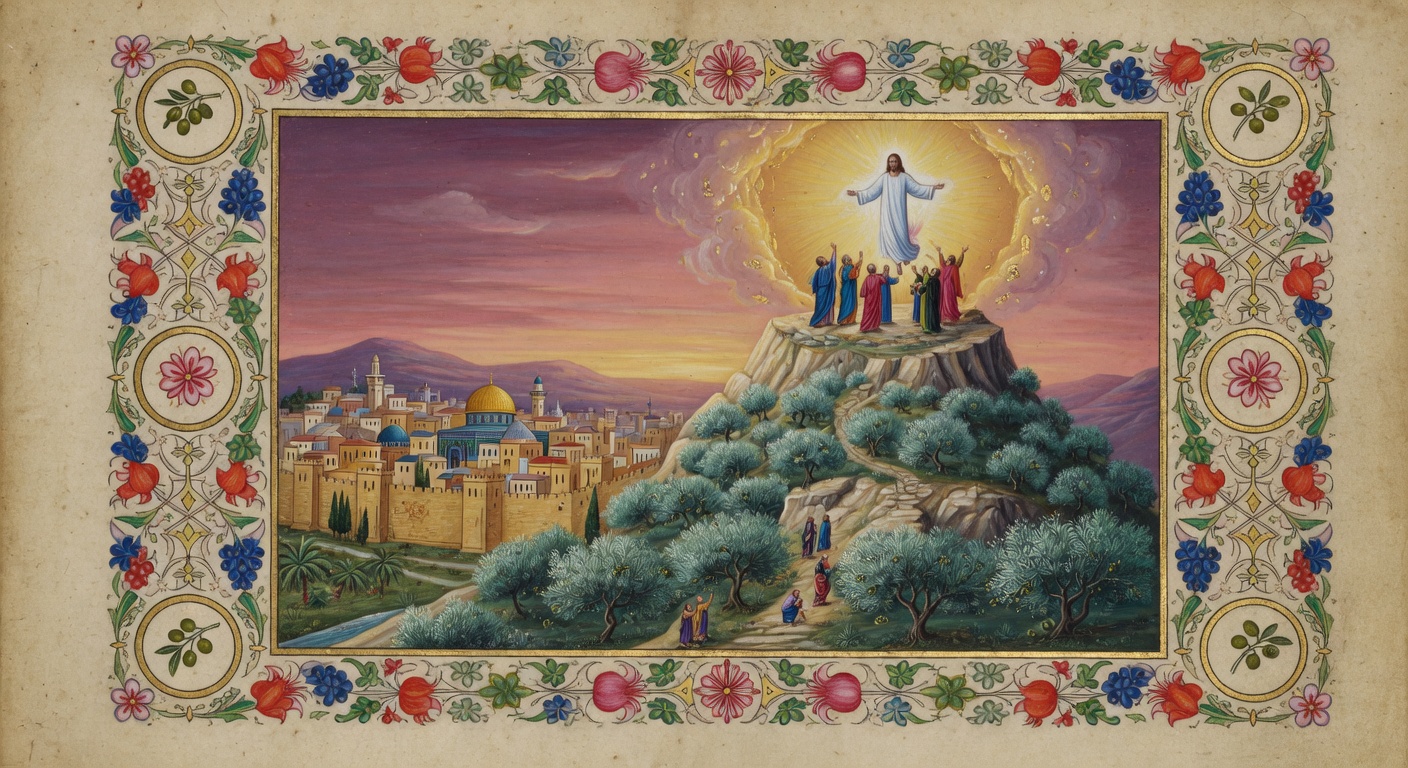
Mount of Olives
The Mount of Olives is a ridge located east of Jerusalem's Old City, separated by the Kidron Valley, and it holds profound importance in biblical history. Jesus frequently visited this site to teach his disciples, most notably delivering the Olivet Discourse about the end times, and to pray, including in the Garden of Gethsemane on its slopes where he was arrested. According to the Book of Acts, it was from the Mount of Olives that Jesus ascended into heaven after his resurrection, with angels promising his return in the same manner. This location also features in Old Testament prophecy, such as in Zechariah, underscoring its role as a place of divine revelation and future fulfillment in Scripture.
-
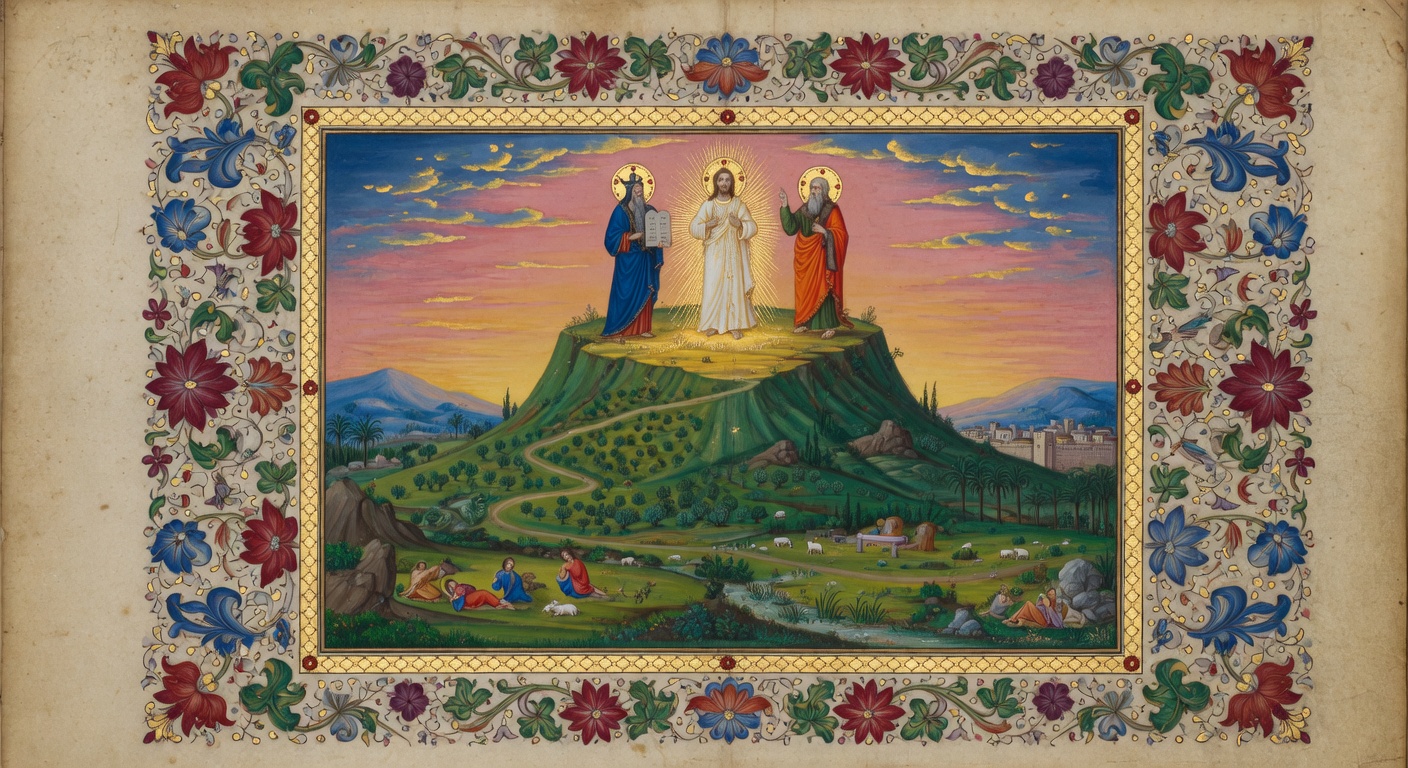
Mount Tabor
Mount Tabor, located in the Lower Galilee region of Israel, is traditionally identified in Christian teaching as the site of Jesus' Transfiguration. In the Synoptic Gospels, Jesus led disciples Peter, James, and John up a high mountain where his appearance was gloriously transformed, his face shining like the sun and his garments becoming dazzling white as he spoke with Moses and Elijah, who represented the Law and the Prophets. A voice from a bright cloud affirmed Jesus as God's beloved Son, commanding the disciples to listen to him. This event holds central significance in Scripture by revealing Christ's divine nature, bridging the Old and New Testaments, and preparing the disciples for his coming death and resurrection.
-
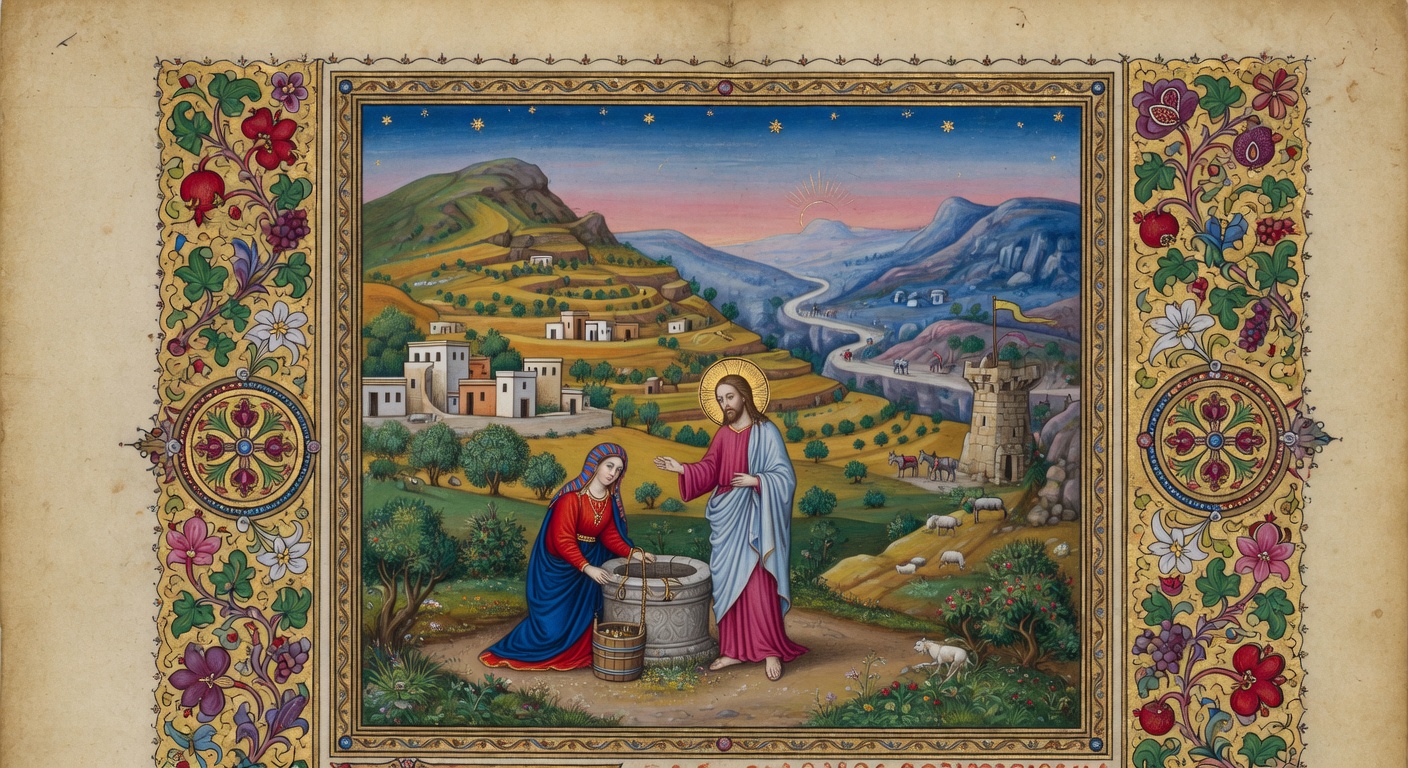
Samaria
Samaria was the central region of ancient Israel situated between Judea to the south and Galilee to the north, serving as the homeland of the Samaritans, a people of mixed Israelite and Assyrian descent who worshiped at their own temple on Mount Gerizim rather than in Jerusalem. Longstanding ethnic and religious tensions led Jews to avoid travel through Samaria and to view its inhabitants with hostility and suspicion. In the Gospel of John, Jesus intentionally passed through the area and spoke with a Samaritan woman at Jacob’s well near Sychar, offering her living water, disclosing his identity as the Messiah, and prompting her testimony that resulted in many villagers believing in him. This account illustrates Scripture’s emphasis on the extension of salvation beyond Jewish boundaries and Jesus’ willingness to cross social barriers to reveal truth.
-
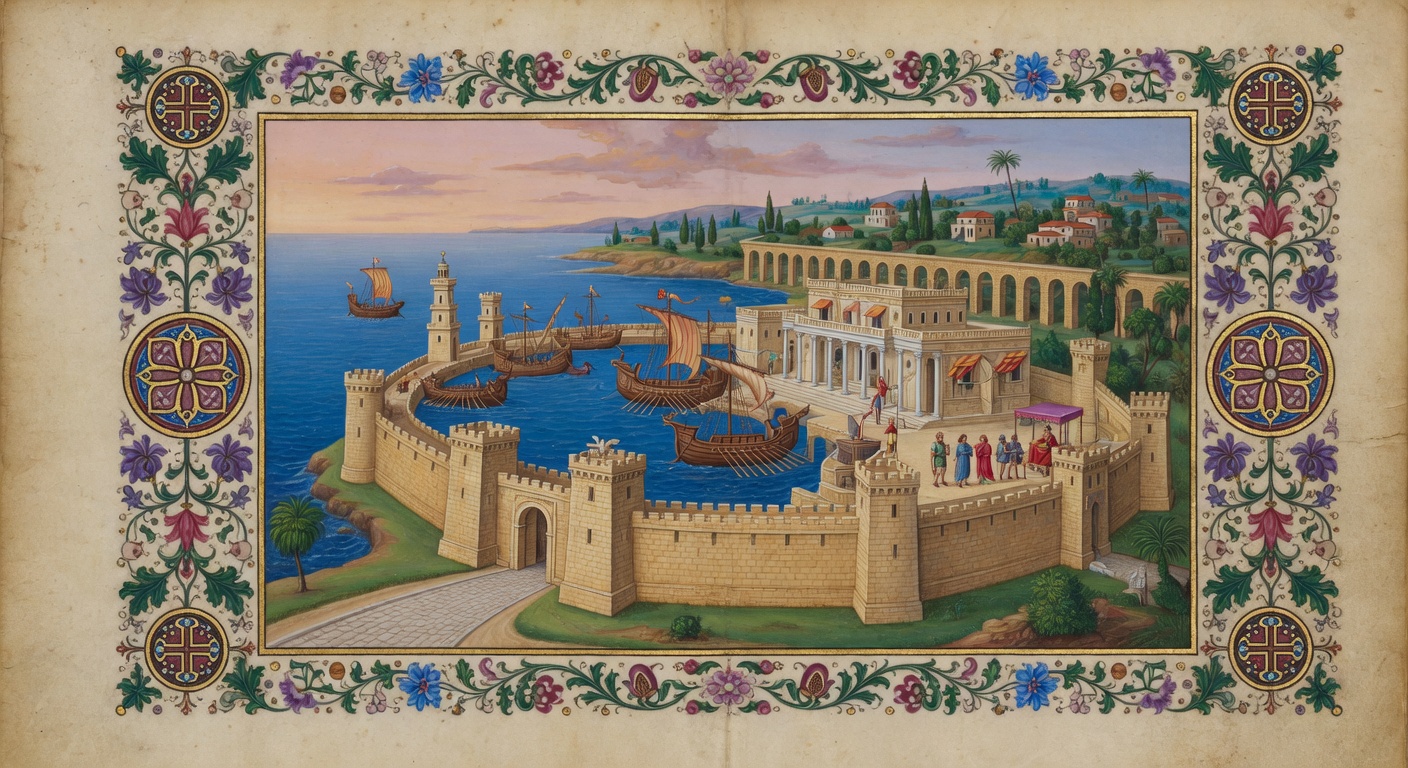
Caesarea
Caesarea served as the Roman capital of Judea and a key administrative center built by Herod the Great on the Mediterranean coast. The apostle Paul was imprisoned there for roughly two years after his arrest in Jerusalem, during which he defended his faith before governors Felix and Festus as recorded in Acts 24–26. These events proved pivotal in Scripture because they prompted Paul’s appeal to Caesar, setting the stage for his voyage to Rome and further witness to the gospel. The city also features prominently as the site of Cornelius’s conversion, illustrating the early church’s expansion to Gentiles.
-
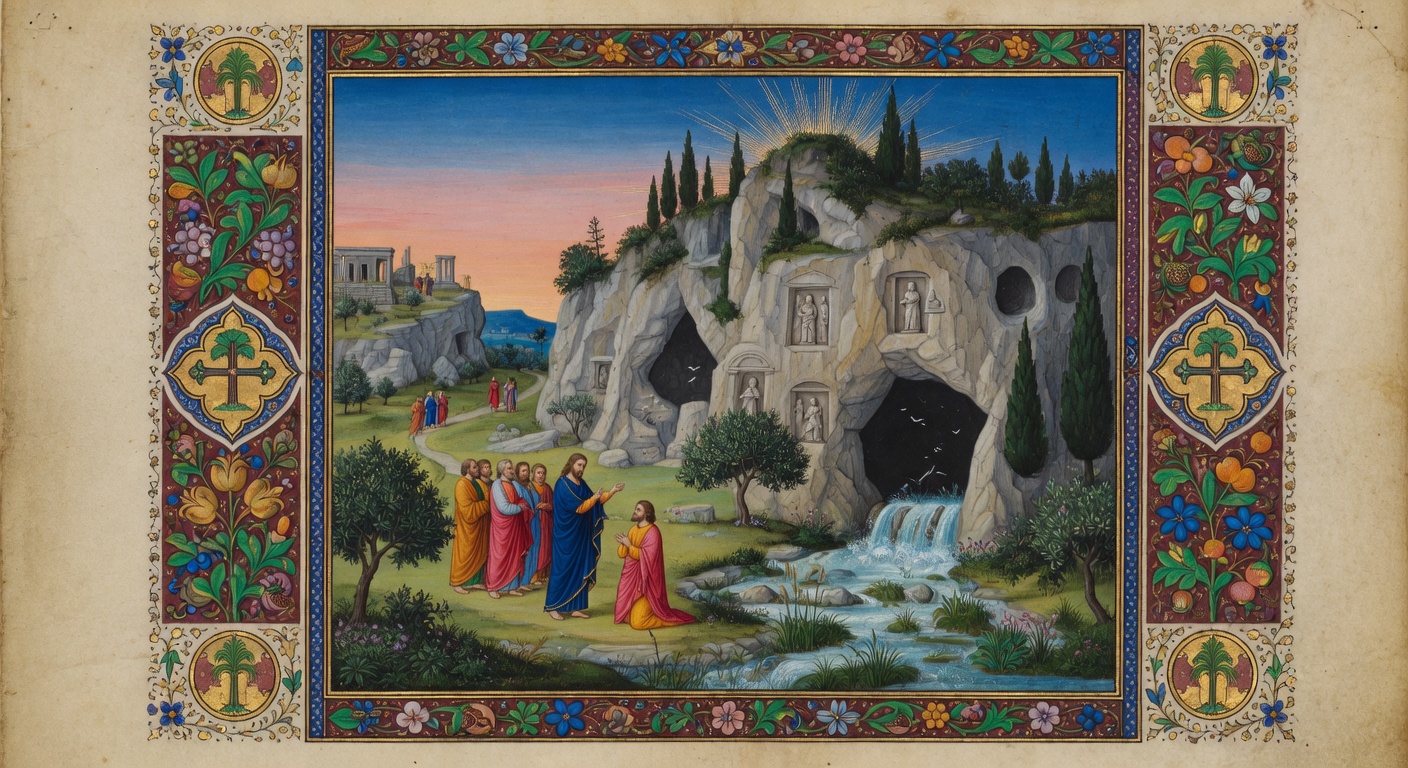
Caesarea Philippi
Caesarea Philippi was an ancient city in northern Israel near the headwaters of the Jordan River, built around pagan shrines including those dedicated to the god Pan. It served as the northernmost point reached during Jesus' ministry, where he asked his disciples who people said he was and then who they believed him to be. In response, Peter confessed that Jesus was the Christ, the Son of the living God, leading Jesus to bless him and declare that he would build his church on this foundational truth while granting authority symbolized by the keys of the kingdom. This episode marks a pivotal revelation in the Gospels, shifting focus toward Jesus' coming suffering, death, and resurrection.
-
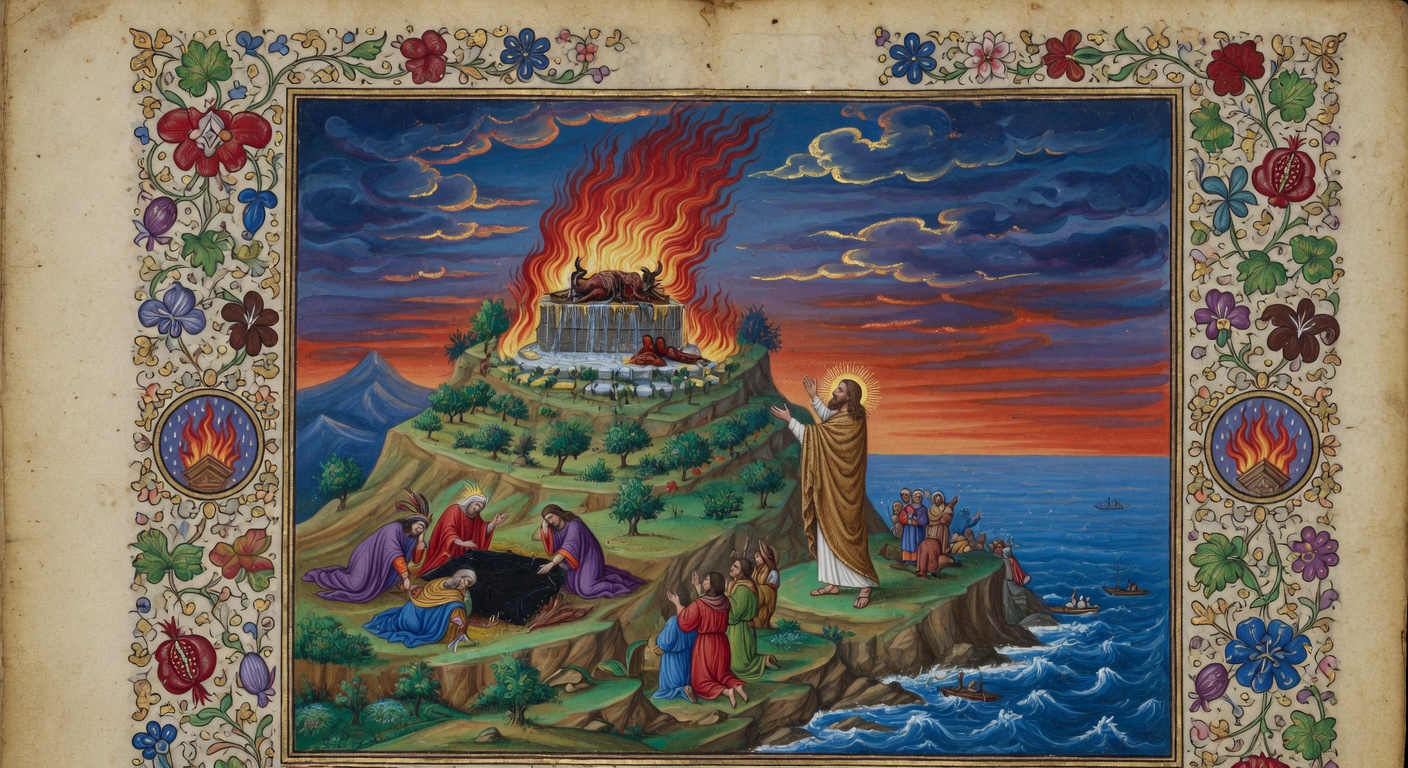
Mount Carmel
Mount Carmel is a coastal mountain range in northern Israel that serves as the setting for one of the most dramatic confrontations between the prophet Elijah and the prophets of the Canaanite god Baal. During a time of widespread idolatry under King Ahab and Queen Jezebel, Elijah gathered the people of Israel on the mountain to witness a contest where 450 prophets of Baal attempted to summon fire from their deity to burn a sacrifice, only to fail repeatedly. In contrast, Elijah's prayer to the God of Israel resulted in fire descending from heaven, consuming the offering and proving the power of the true God, which led to the execution of the false prophets and the end of a three-year drought. This event holds significant importance in Scripture as it reaffirms monotheistic faith, highlights God's sovereignty, and underscores the role of prophets in calling Israel back to covenant faithfulness.
-
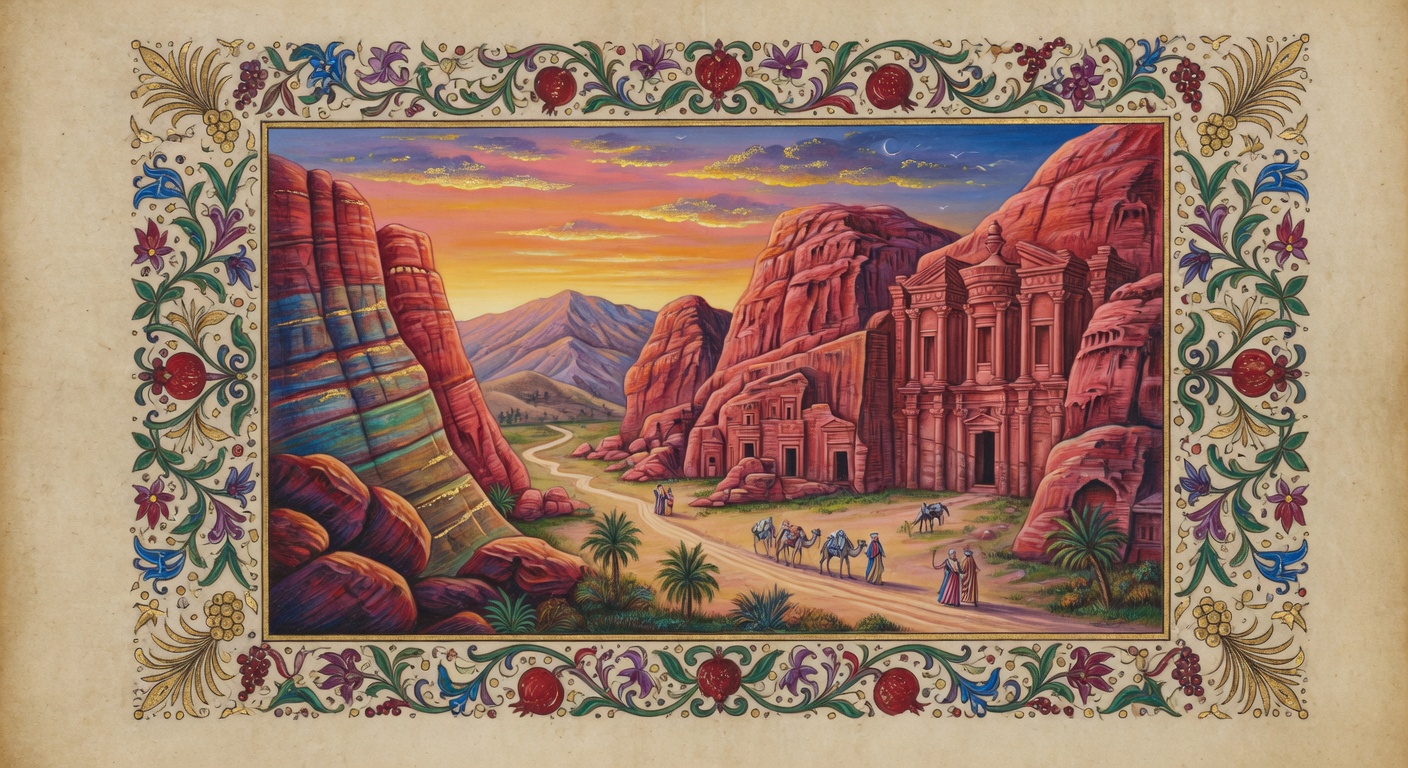
Petra/Edom
Edom was the rugged territory southeast of the Dead Sea inhabited by the descendants of Esau, who became known as the Edomites and maintained a distinct kingdom from the time of the Israelite monarchy onward. The Edomites repeatedly opposed Israel, refusing passage during the Exodus and later allying with invaders, which prompted strong prophetic denunciations in books such as Obadiah, Isaiah, and Jeremiah that foretold the nation’s downfall and desolation. The rock-cut city of Petra, later developed by the Nabataeans, is popularly identified with Edomite strongholds like Sela and served as a strategic capital whose cliffs provided natural defenses. These accounts illustrate Scripture’s broader theme of divine justice exercised against nations that harbor lasting hostility toward God’s people.
-
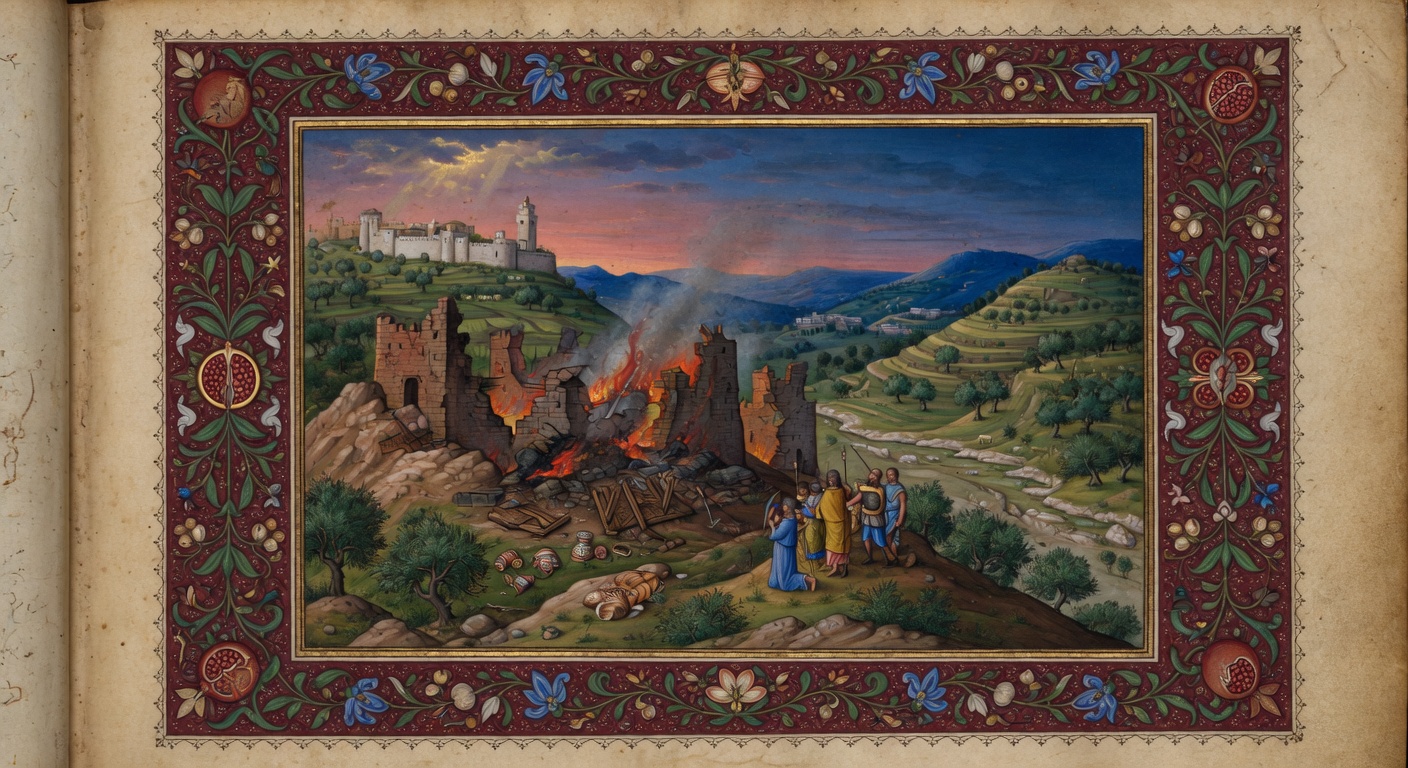
Ai
Ai was a royal Canaanite city located near Bethel in the central hill country. Following Israel's victory at Jericho, their first attack on Ai failed with the loss of thirty-six lives because Achan had secretly taken devoted items from Jericho, demonstrating how one person's sin affected the entire community. After Achan's judgment and Israel's repentance, Joshua employed an ambush tactic that resulted in Ai's total destruction and its king being hanged, securing a key foothold in the conquest of Canaan. The narrative in Joshua 7–8 illustrates the biblical principles of corporate holiness, the necessity of dealing with sin, and God's faithfulness to restore victory when his people obey.
-
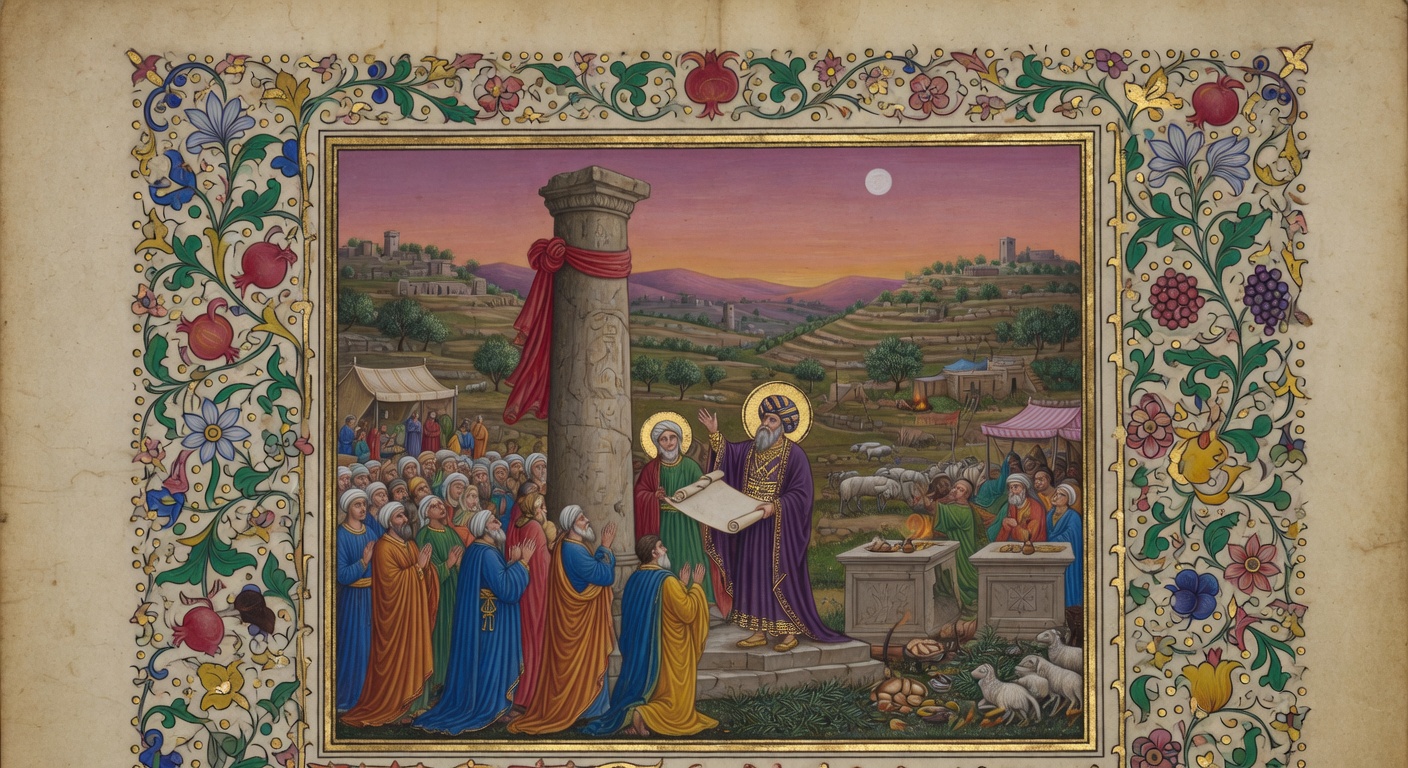
Mizpah
Mizpah served as a key assembly site in the territory of Benjamin during the period of the judges. The prophet Samuel summoned the Israelites there to fast, confess their sins, and renew their covenant with God, while also exercising his role in judging the nation. This gathering preceded a decisive victory over the Philistines, achieved through divine intervention in response to the people's repentance. In Scripture, Mizpah underscores recurring themes of national spiritual renewal, faithful leadership, and God's deliverance at moments of covenant recommitment.
-
Ramah
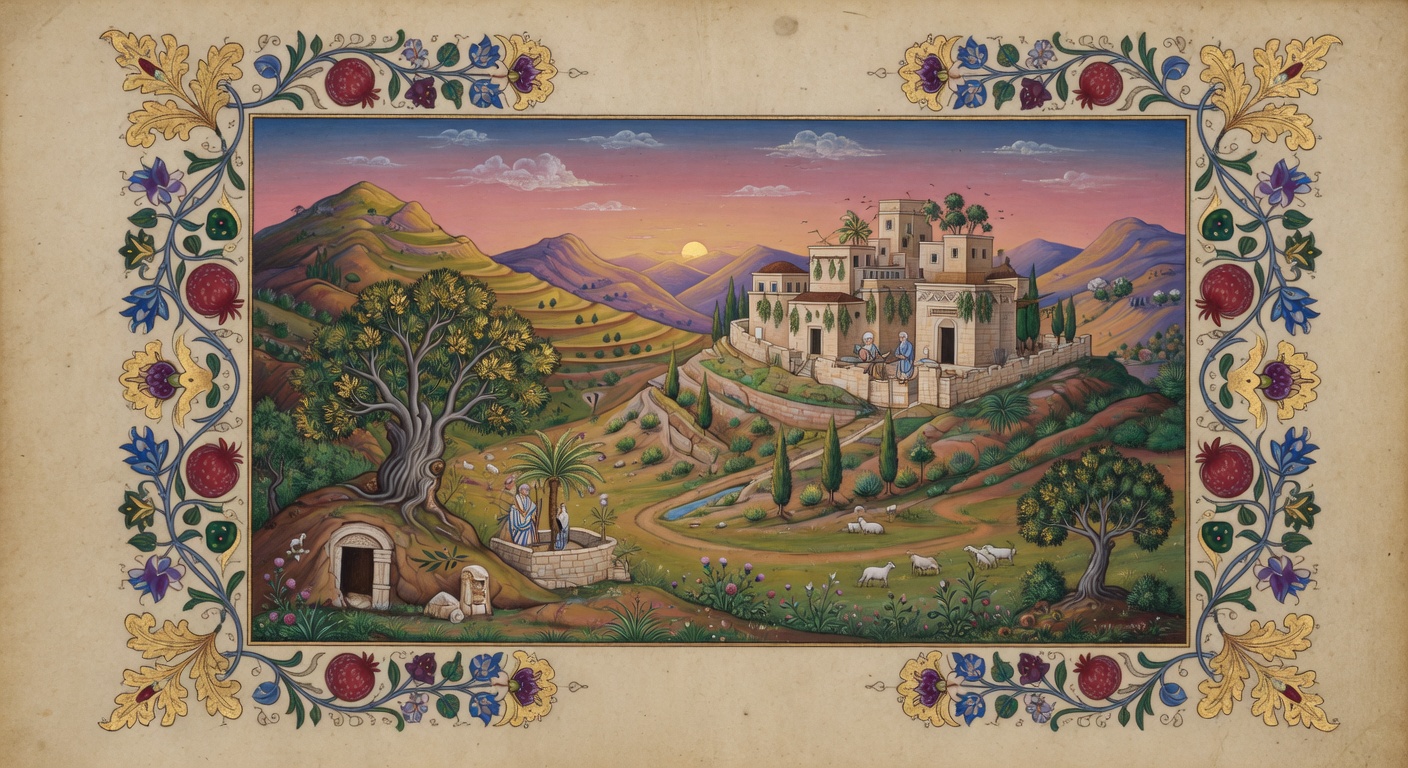
Ramah was a town in the territory of Benjamin that functioned as the primary residence of the prophet Samuel and his parents Elkanah and Hannah. Samuel lived there after his service at Shiloh, built an altar to the Lord, and judged Israel from Ramah during the period of transition from tribal leadership to monarchy. Key events included Samuel anointing Saul as Israel's first king and later David as his successor, underscoring Ramah's role in establishing the Davidic line central to biblical history. The site is also noted as Samuel's burial place and appears in prophetic texts, such as Jeremiah's reference to Rachel weeping in Ramah, later cited in the New Testament regarding the slaughter of the innocents.
-
Gibeon
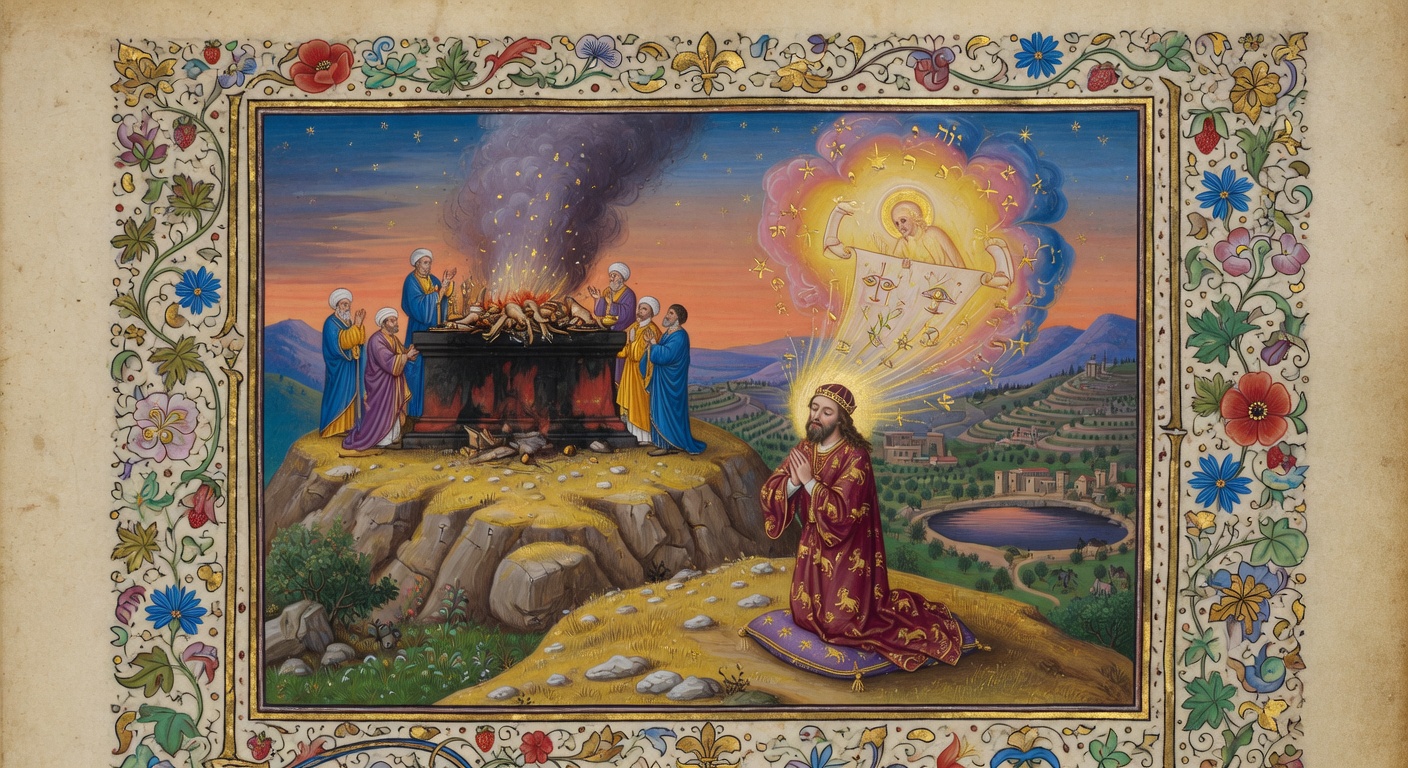
Gibeon was a prominent Canaanite city northwest of Jerusalem that became an important Israelite worship site after the conquest, housing the tabernacle and bronze altar during the early monarchy. Early in his reign, Solomon traveled there to offer extensive sacrifices at its high place, where God appeared to him in a dream and invited a request; the king chose wisdom to govern justly rather than riches or long life. This encounter established Solomon's reputation for divine insight, as seen in the subsequent judgment involving two mothers, and marked a key moment before the temple's construction centralized worship in Jerusalem. The site's role illustrates the transitional nature of Israelite religious practices and God's direct involvement in equipping leaders for faithful rule.
-
Lachish
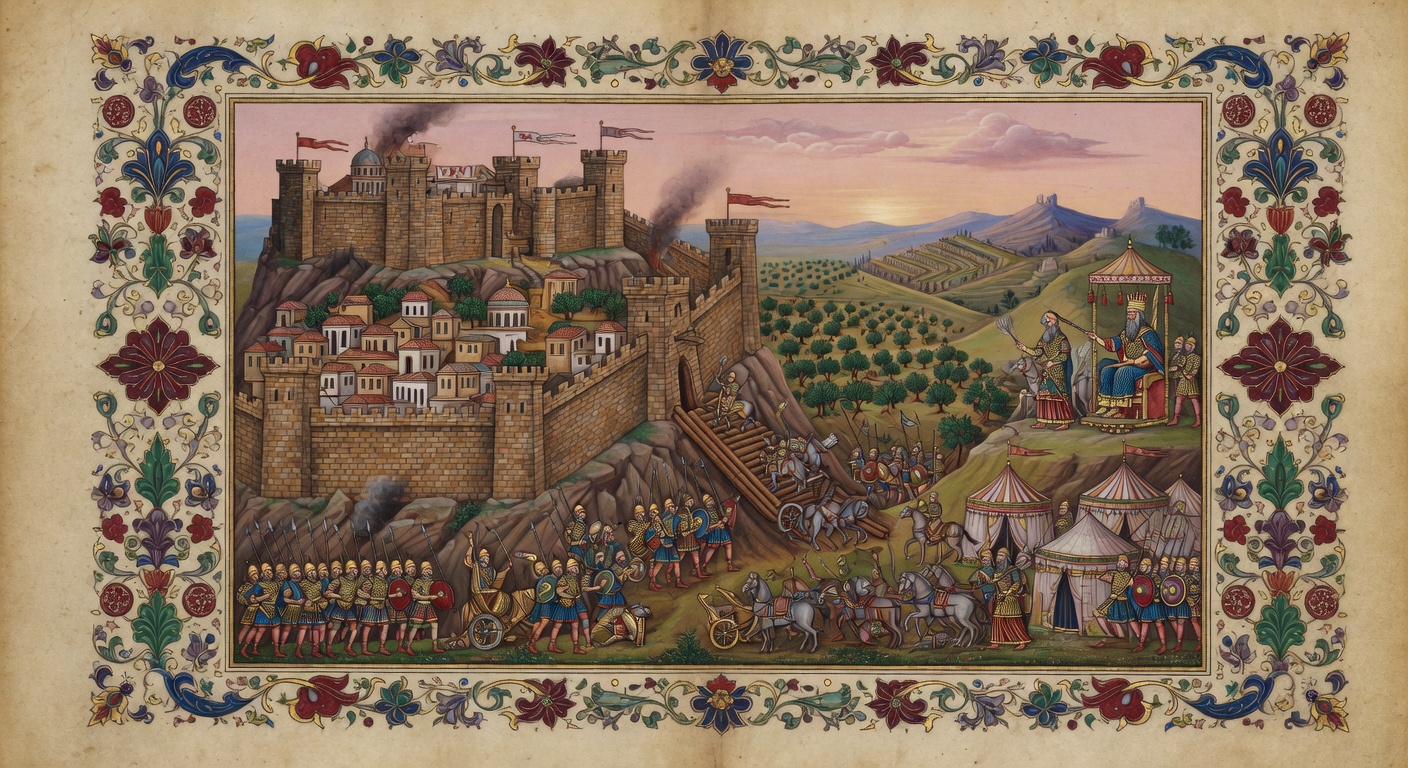
Lachish was a major fortified city in the southern kingdom of Judah, strategically positioned in the Shephelah to guard approaches to Jerusalem. In 701 BC, Assyrian king Sennacherib besieged and captured it during his campaign against King Hezekiah, an event vividly recorded in the Lachish Reliefs that once adorned his palace at Nineveh. Scripture references the conquest in 2 Kings 18–19, 2 Chronicles 32, and Isaiah, presenting it as part of the larger Assyrian threat that culminated in the miraculous deliverance of Jerusalem. The episode supplies archaeological confirmation of the biblical narrative while illustrating the military pressures Judah faced in the late eighth century BC.
-
Zarephath
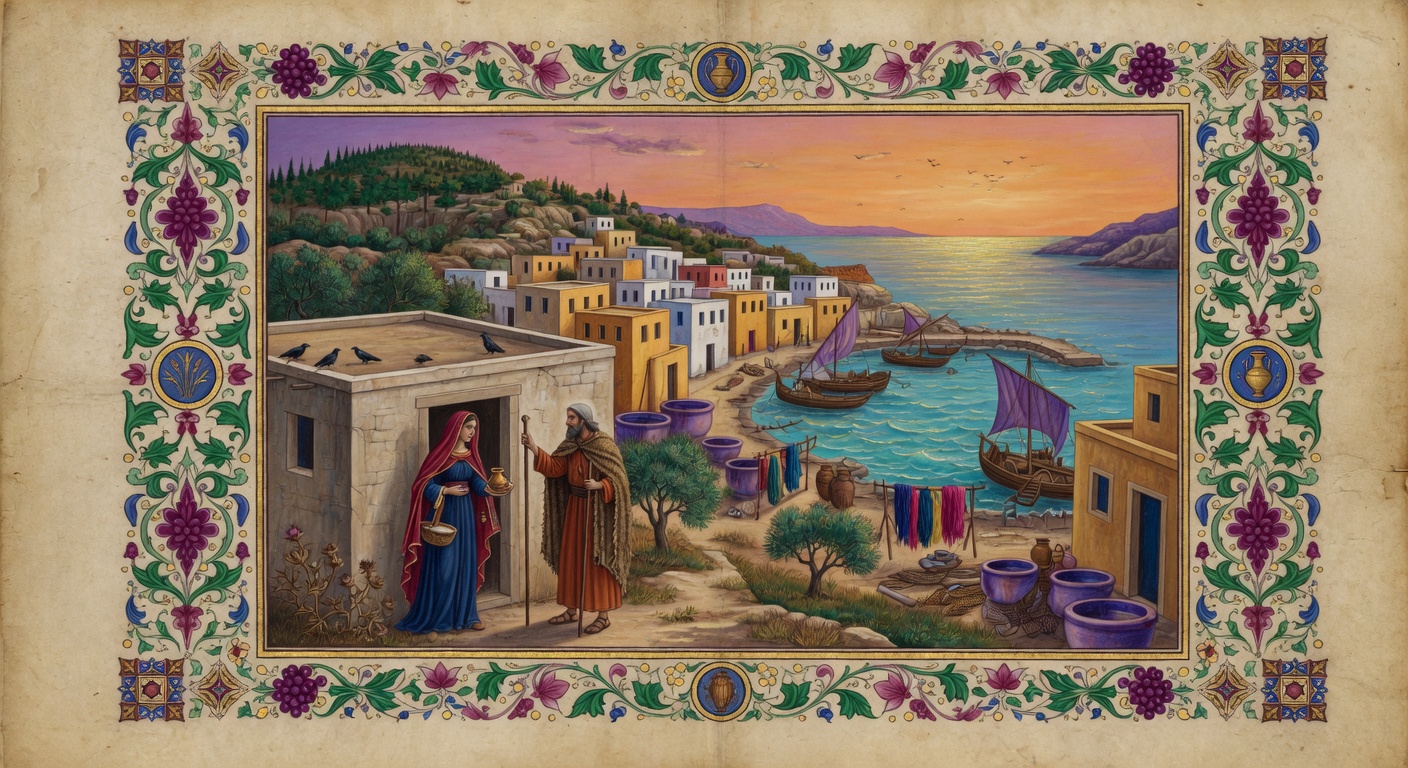
Zarephath was a Phoenician coastal town situated between Sidon and Tyre, outside the territory of Israel. During the drought and famine that God sent as judgment on Israel in the days of King Ahab, the prophet Elijah was commanded to travel there and receive provision from a widow whose jar of flour and jug of oil were supernaturally sustained until the rains returned. Elijah also raised the widow’s son from death through prayer, confirming the word of the Lord and strengthening her faith. The account illustrates God’s sovereign provision and willingness to extend mercy beyond Israel to Gentiles, a truth Jesus later cited in Luke 4:26 as evidence of divine grace toward outsiders.
-
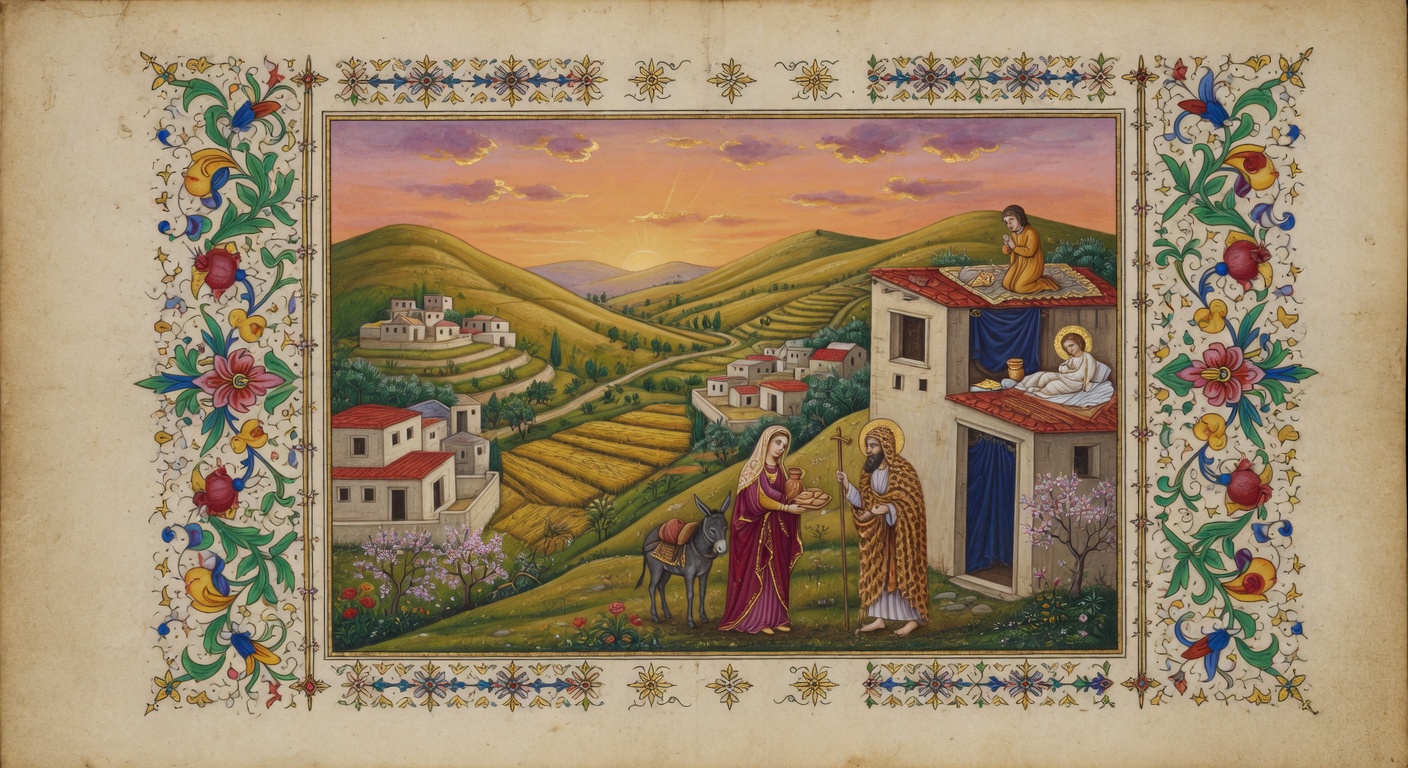
Shunem
Shunem was an ancient town in the territory of the tribe of Issachar in northern Israel, mentioned in the Old Testament as a site of significant prophetic activity. It served as the home of a wealthy Shunammite woman who regularly hosted the prophet Elisha, providing him with meals and a dedicated upper room during his journeys. In response to her hospitality, Elisha foretold the birth of her son and later restored the boy to life after he died suddenly, demonstrating God's power through the prophet's intercession. This narrative in 2 Kings 4 underscores themes of faithful service and divine restoration, illustrating the role of prophetic ministry in sustaining God's people during the divided monarchy.
-
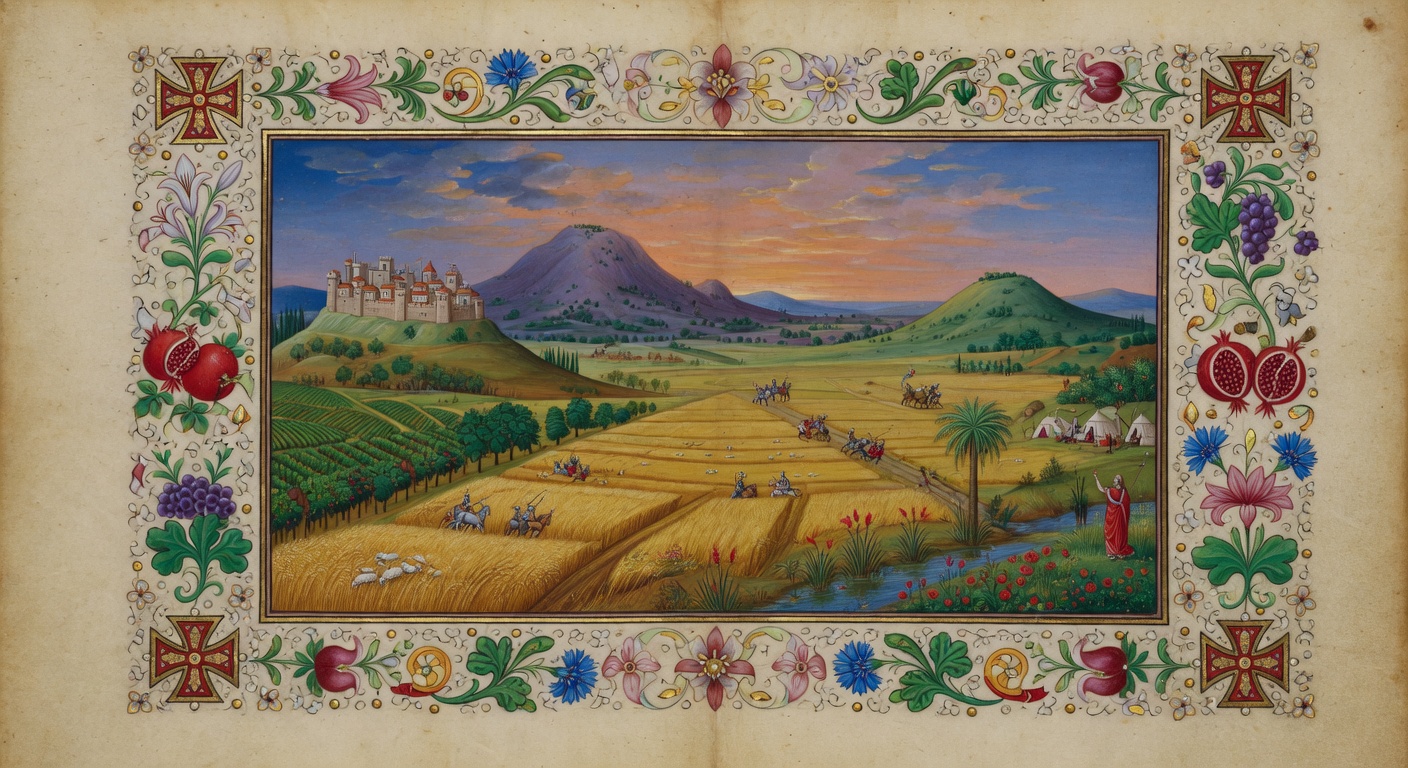
Jezreel Valley
The Jezreel Valley is a broad, fertile plain in northern Israel that served as a strategic corridor for ancient armies and trade routes. It was the site of pivotal biblical battles, including Deborah and Barak's defeat of the Canaanite forces led by Sisera, as well as Gideon's miraculous victory over the Midianite army with just 300 men. In the New Testament, the valley is prophetically associated with Armageddon, the gathering place for the final battle described in the Book of Revelation. This location underscores themes of divine intervention, judgment, and God's sovereignty throughout Scripture.
-
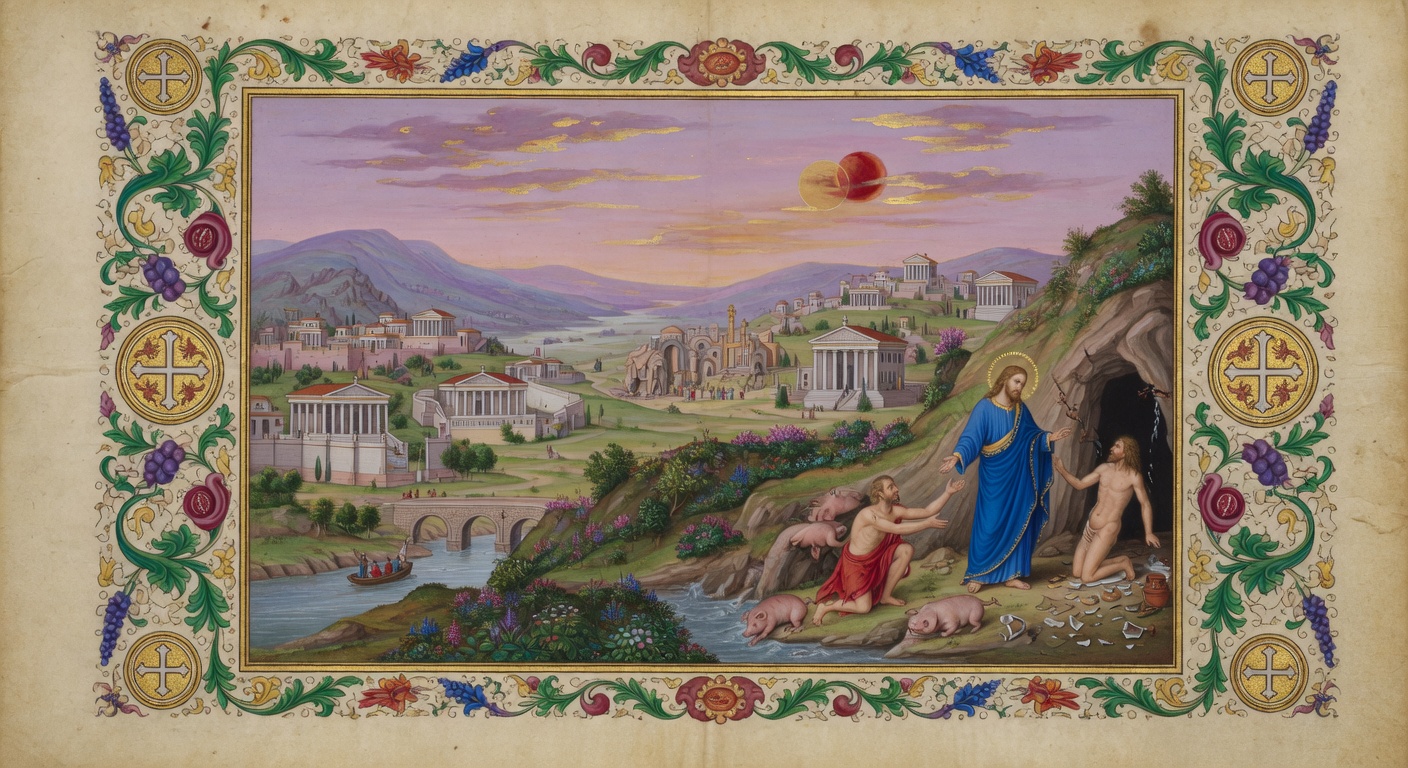
Decapolis
The Decapolis was a league of ten Greco-Roman cities east of the Jordan River, characterized by Hellenistic culture, architecture, and governance under Roman influence during the first century. Jesus ministered in this Gentile region, where he healed a man severely possessed by demons who had lived among tombs, as described in Mark 5 and Matthew 8, after which the restored man proclaimed the miracle throughout the Decapolis. This event, along with later references in Mark 7, illustrates Jesus extending his ministry beyond Jewish territories. Its significance lies in demonstrating the Gospel's reach to non-Jewish populations and foreshadowing the broader mission to all nations in Scripture.
-
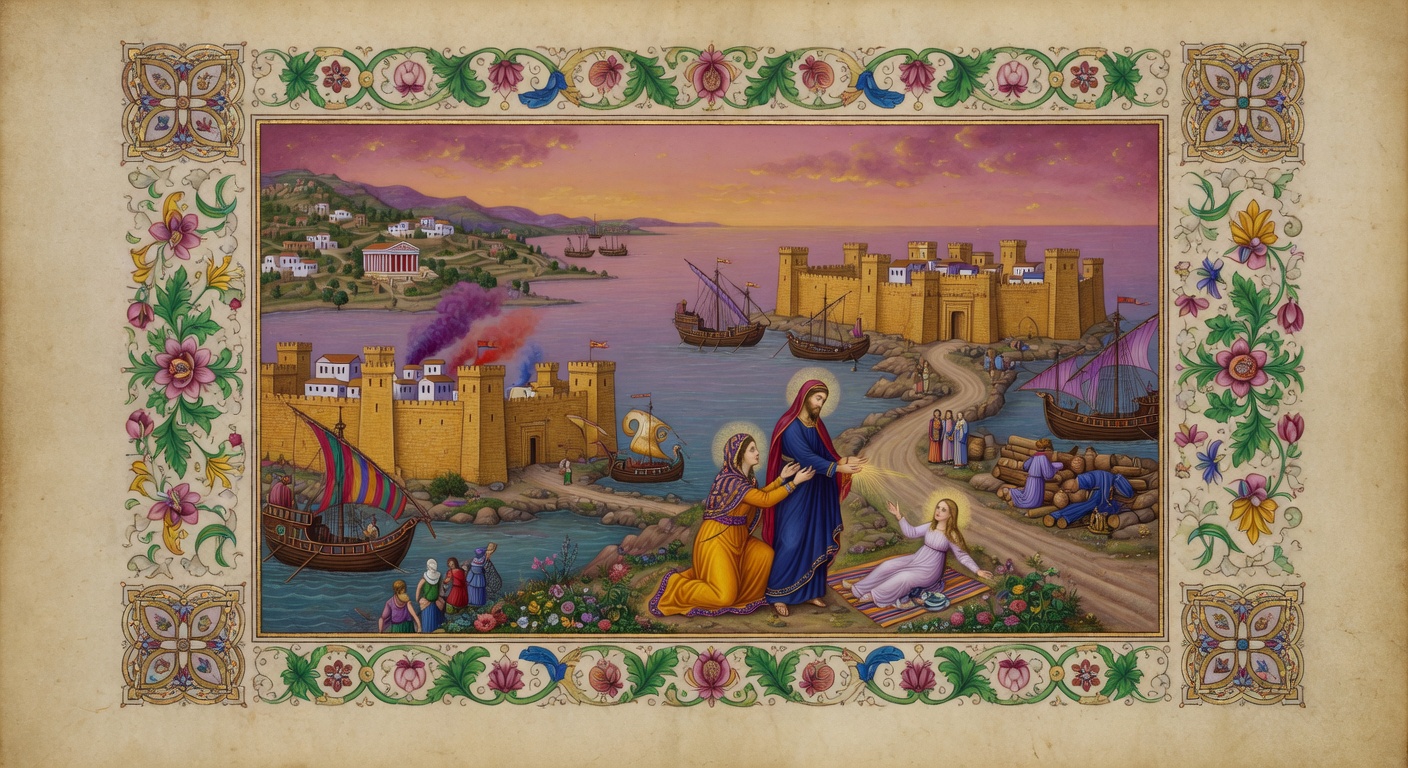
Tyre and Sidon
Tyre and Sidon were prominent ancient Phoenician port cities along the Mediterranean coast, frequently referenced in the Old Testament as centers of trade and sometimes judged for their idolatry and pride. In the New Testament Gospels, Jesus traveled into these Gentile regions, where a Syrophoenician woman approached Him pleading for her demon-possessed daughter to be healed. After testing her persistence, Jesus commended her great faith and declared the child delivered, resulting in an immediate healing. This account highlights the expansion of Jesus' ministry beyond Israel, demonstrating that genuine faith can cross ethnic boundaries and receive divine mercy.
-
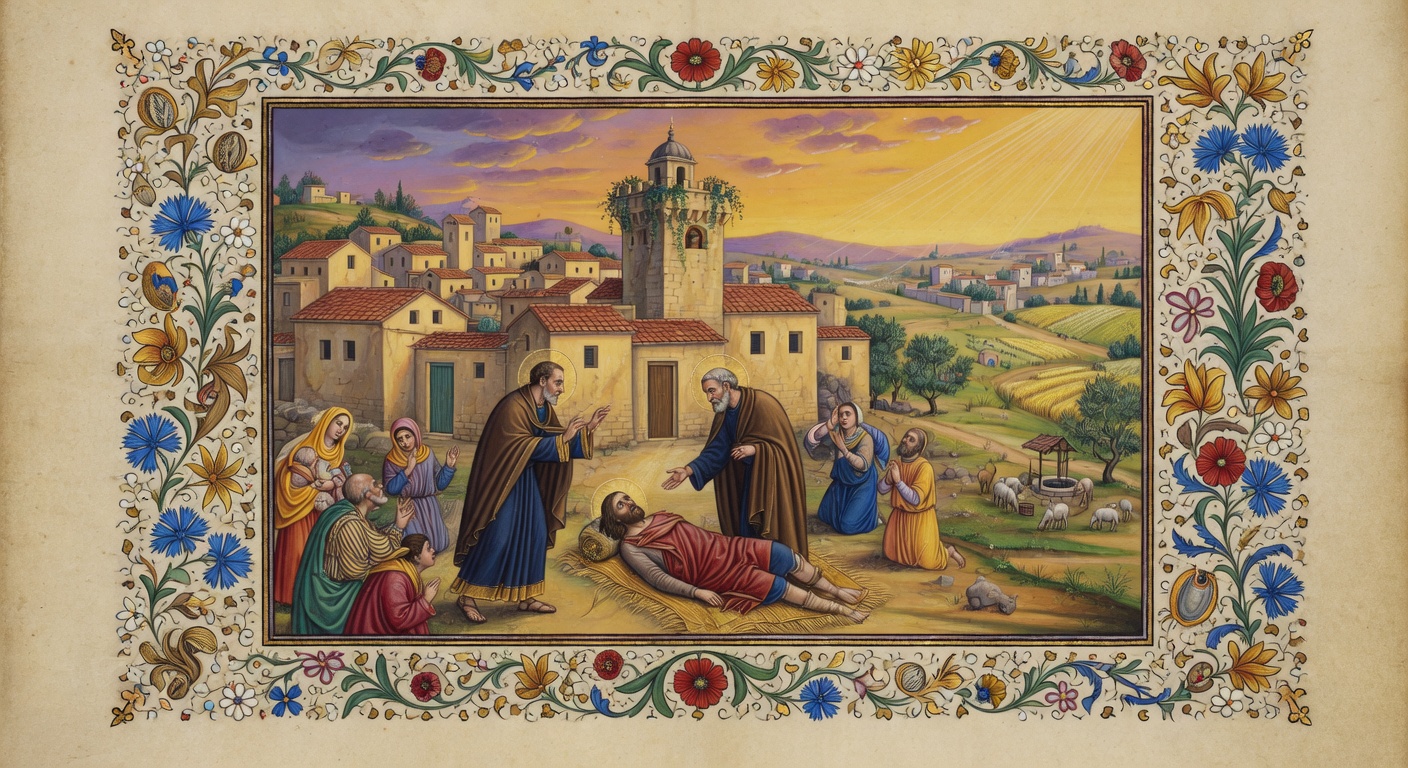
Lydda
Lydda was an ancient town in the Plain of Sharon, about eleven miles southeast of Joppa, that hosted one of the earliest Christian communities in Judea following the persecution after Stephen’s martyrdom. In Acts 9, the apostle Peter visited the believers there and healed Aeneas, a man paralyzed and bedridden for eight years, by declaring that Jesus Christ had made him well, after which Aeneas immediately stood and walked. The miracle caused many residents of Lydda and the surrounding region of Sharon to turn to the Lord, demonstrating the continuing power of the risen Christ through the apostles. This event also prepared the way for Peter’s subsequent journey to nearby Joppa, where he raised Dorcas and further advanced the gospel among both Jews and Gentiles.
-
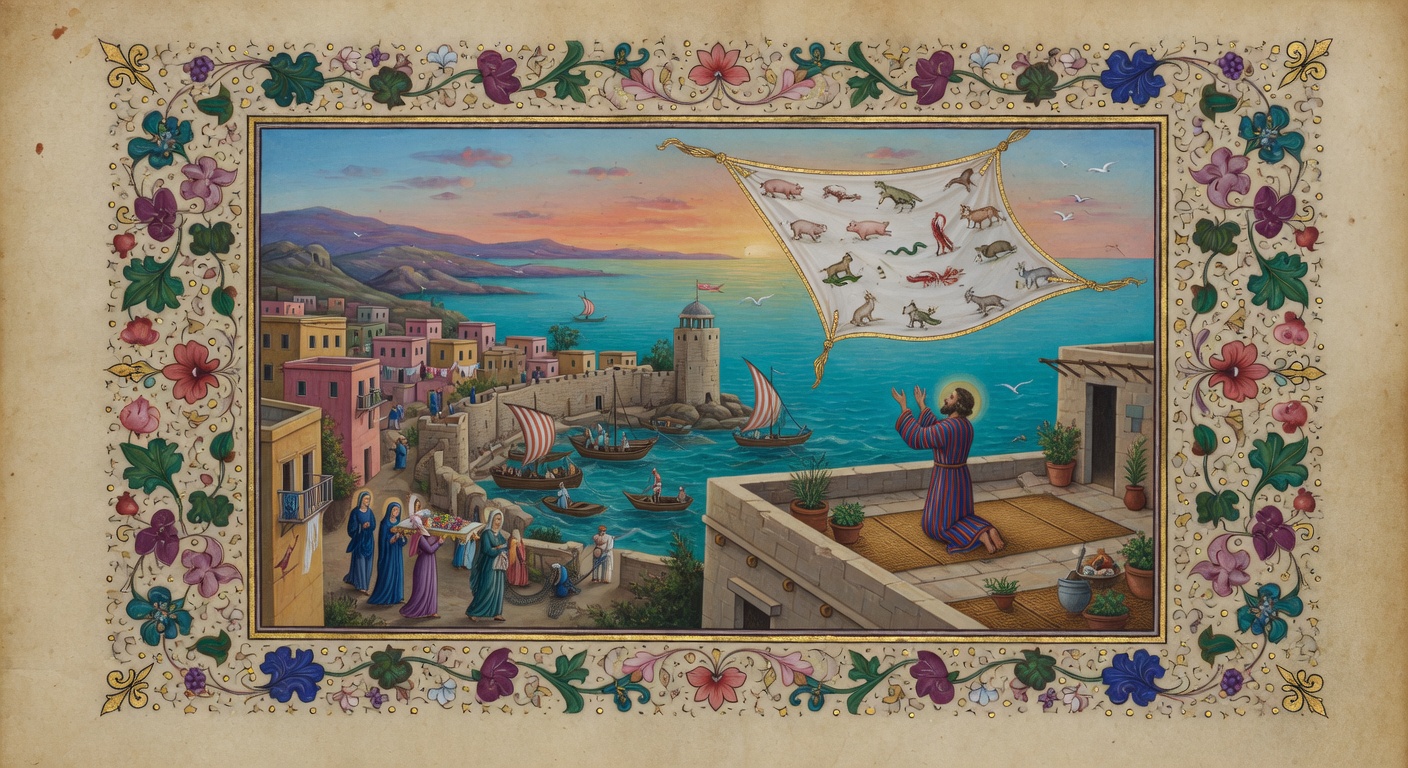
Joppa
Joppa was an ancient port city on the Mediterranean coast of Israel that served as a key location in the spread of the early Christian church. In the book of Acts, the apostle Peter traveled to Joppa where he miraculously raised a disciple named Dorcas, also known as Tabitha, from the dead after she had fallen ill and passed away. While staying in Joppa at the home of Simon the tanner, Peter received a divine vision of a sheet containing various animals, which challenged Jewish dietary laws and prepared him to share the gospel with Gentiles. This event marked a pivotal moment in Scripture, demonstrating God's plan to extend salvation beyond the Jewish people to all nations through the inclusion of Cornelius and his household.
-
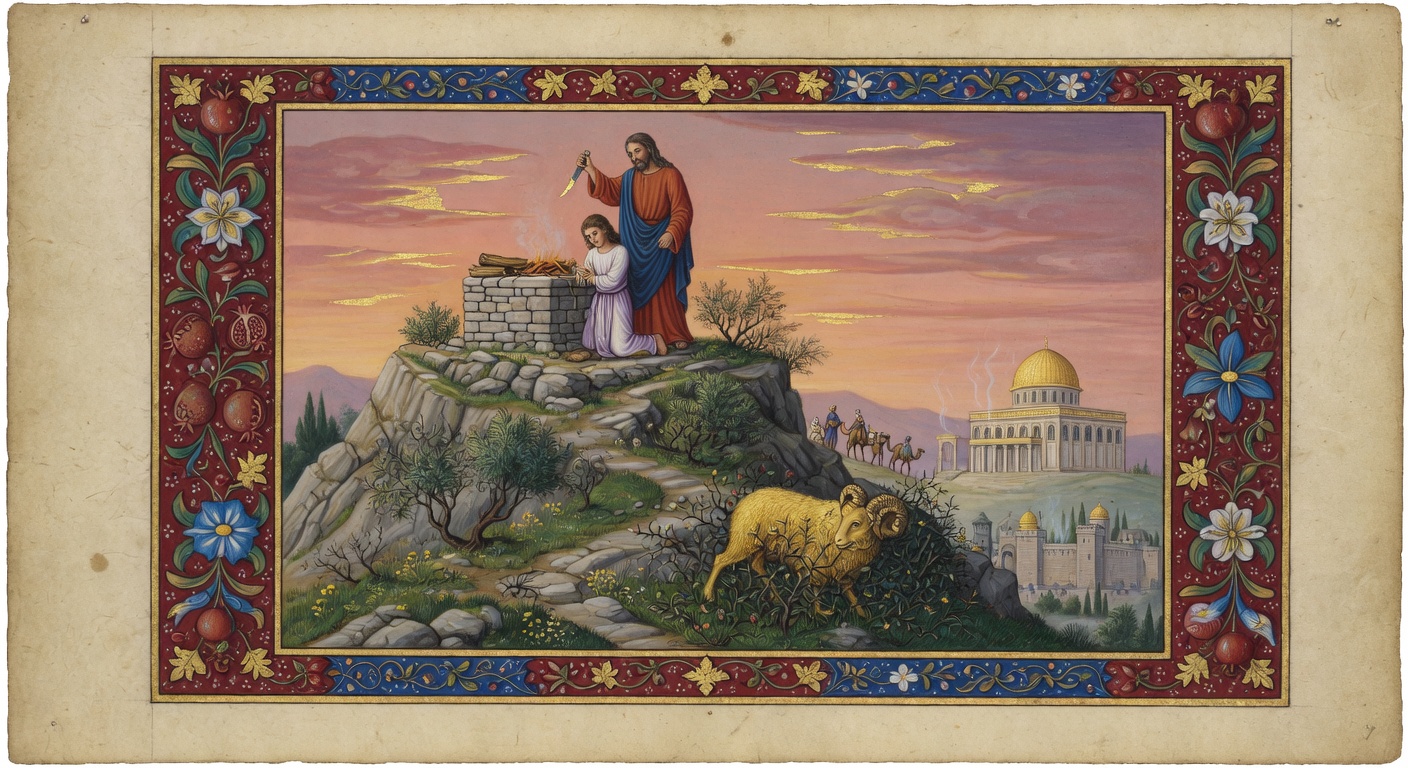
Moriah
Mount Moriah holds a central place in biblical history as the location where God tested Abraham's faith by commanding him to sacrifice his son Isaac. In the account from Genesis, Abraham's obedience leads to divine intervention, with God providing a ram as a substitute, underscoring themes of faith, obedience, and divine provision. This same site is later identified in Scripture as the location of the Temple in Jerusalem, built by Solomon, which became the primary center for Israelite worship and sacrifice. The connection highlights the continuity of God's redemptive plan from the patriarchal era through the establishment of the monarchy and temple worship.
-
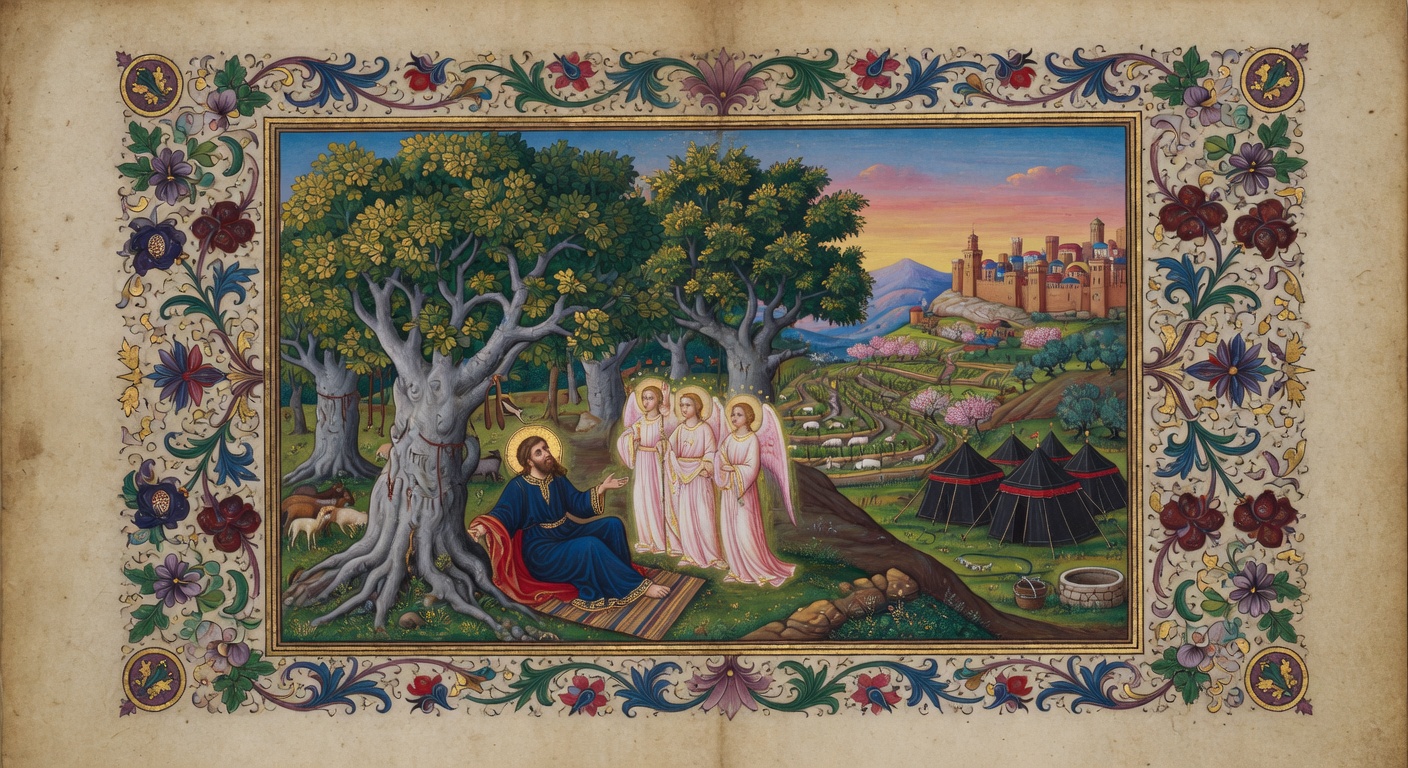
Mamre
Mamre stands as a significant location near Hebron where Abraham made his home following his separation from Lot, establishing an altar there in worship of the Lord. It was at this place that the Lord appeared to Abraham in the form of three visitors, reaffirming the covenant promise of a son through whom the blessings to all nations would come. Later, Mamre served as the setting for Sarah's burial in the nearby cave of Machpelah, marking it as a site of both divine revelation and the unfolding patriarchal legacy central to God's redemptive plan.
Egypt
-
Kadesh Barnea
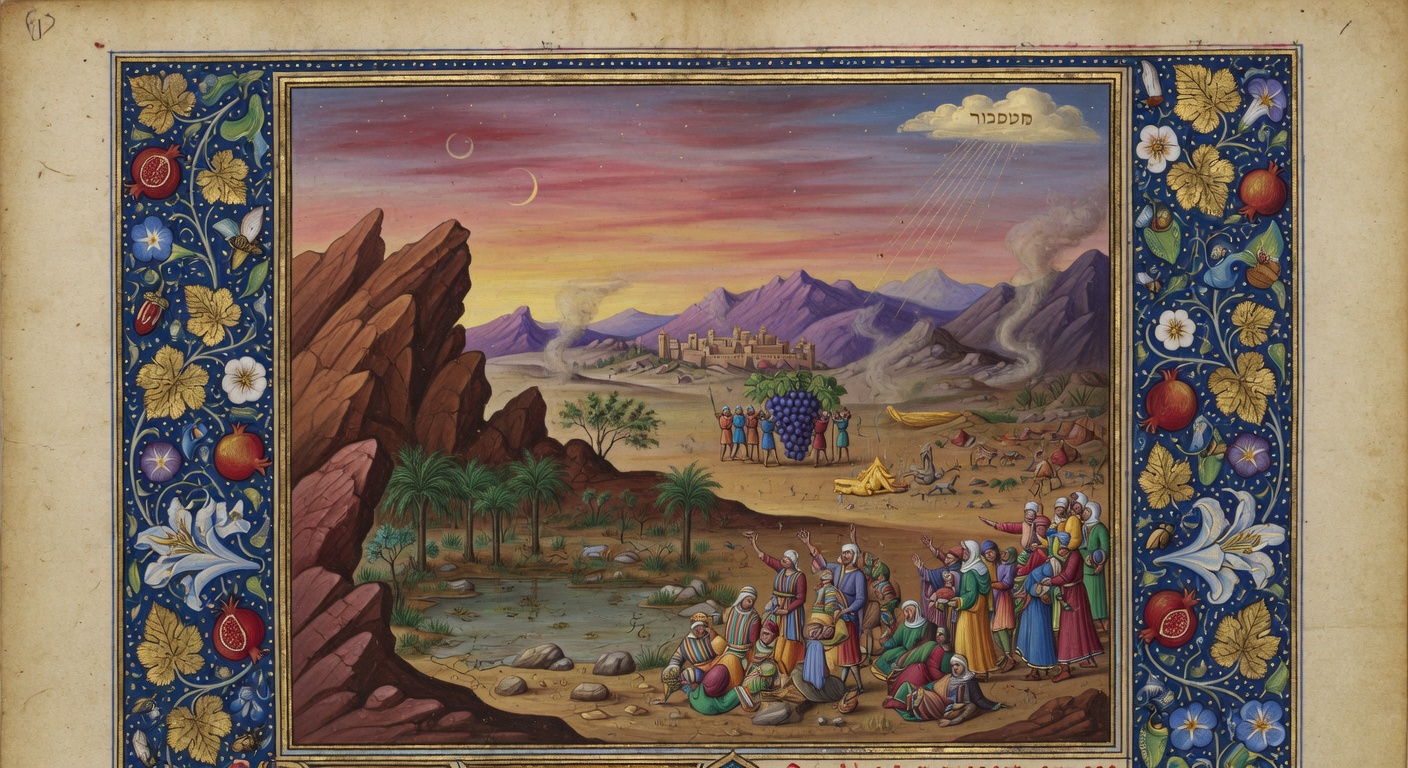
Kadesh Barnea served as a key encampment for the Israelites in the wilderness of Paran during their journey from Egypt to Canaan. From this site Moses sent twelve spies to explore the Promised Land, yet ten returned with a fearful report that sparked widespread rebellion and refusal to enter as God commanded. Only Joshua and Caleb urged trust in the divine promise, but the people's unbelief led to God's judgment that the adult generation would wander forty years in the desert until death, preventing them from inheriting Canaan. This episode illustrates the scriptural consequences of disobedience and lack of faith while marking the decisive turning point that prolonged Israel's wilderness period.
-
Egypt
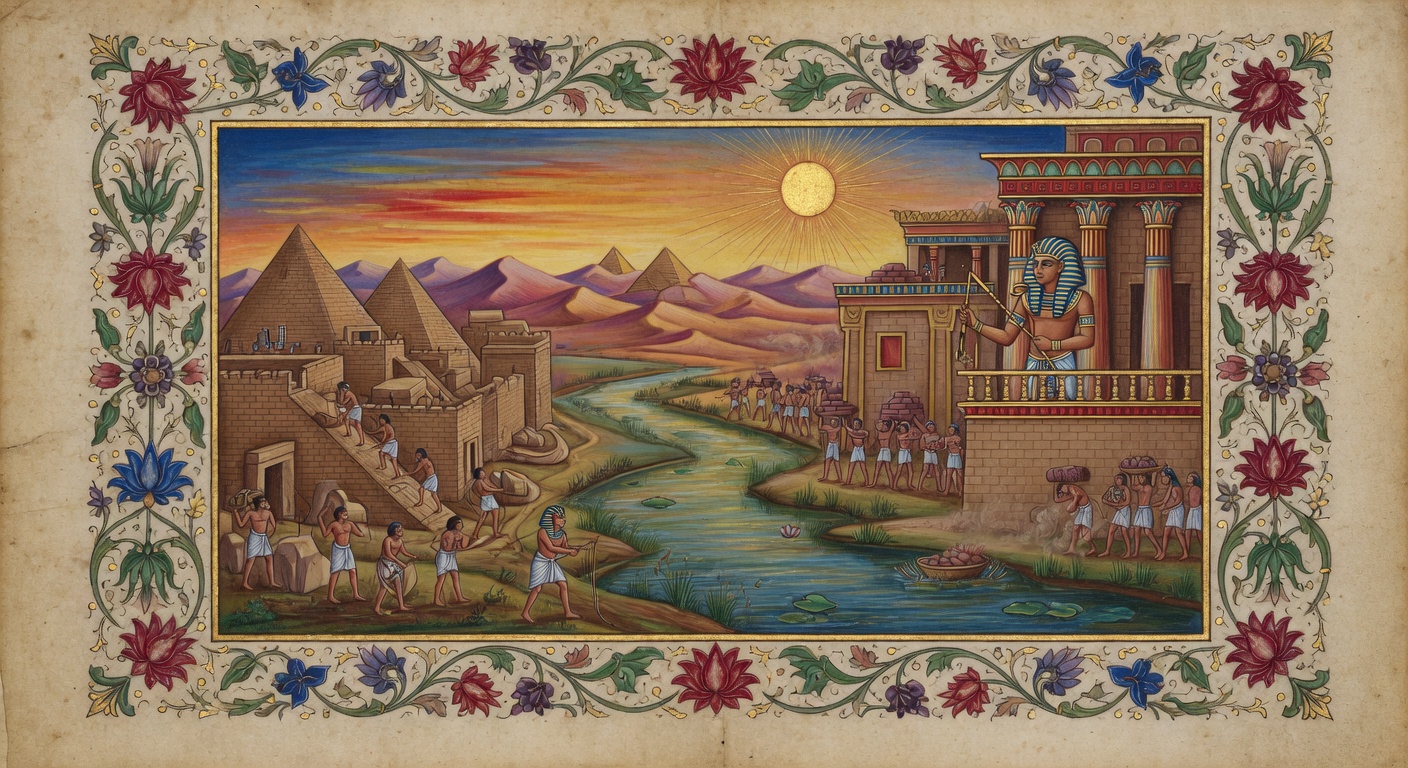
Egypt served as the place of bondage for the Israelites, who were enslaved by a Pharaoh who feared their growing numbers and forced them into harsh labor. God raised up Moses to confront Pharaoh, leading to a series of plagues that culminated in the Exodus, where the Israelites were freed and led out of Egypt toward the Promised Land. This event is central to the biblical narrative as it demonstrates God's power, faithfulness to His promises, and establishes the Passover as a key commemoration of deliverance. In Scripture, Egypt often symbolizes oppression and idolatry, contrasting with God's redemptive work that forms the foundation of Israel's covenant relationship with Him.
-
Red Sea
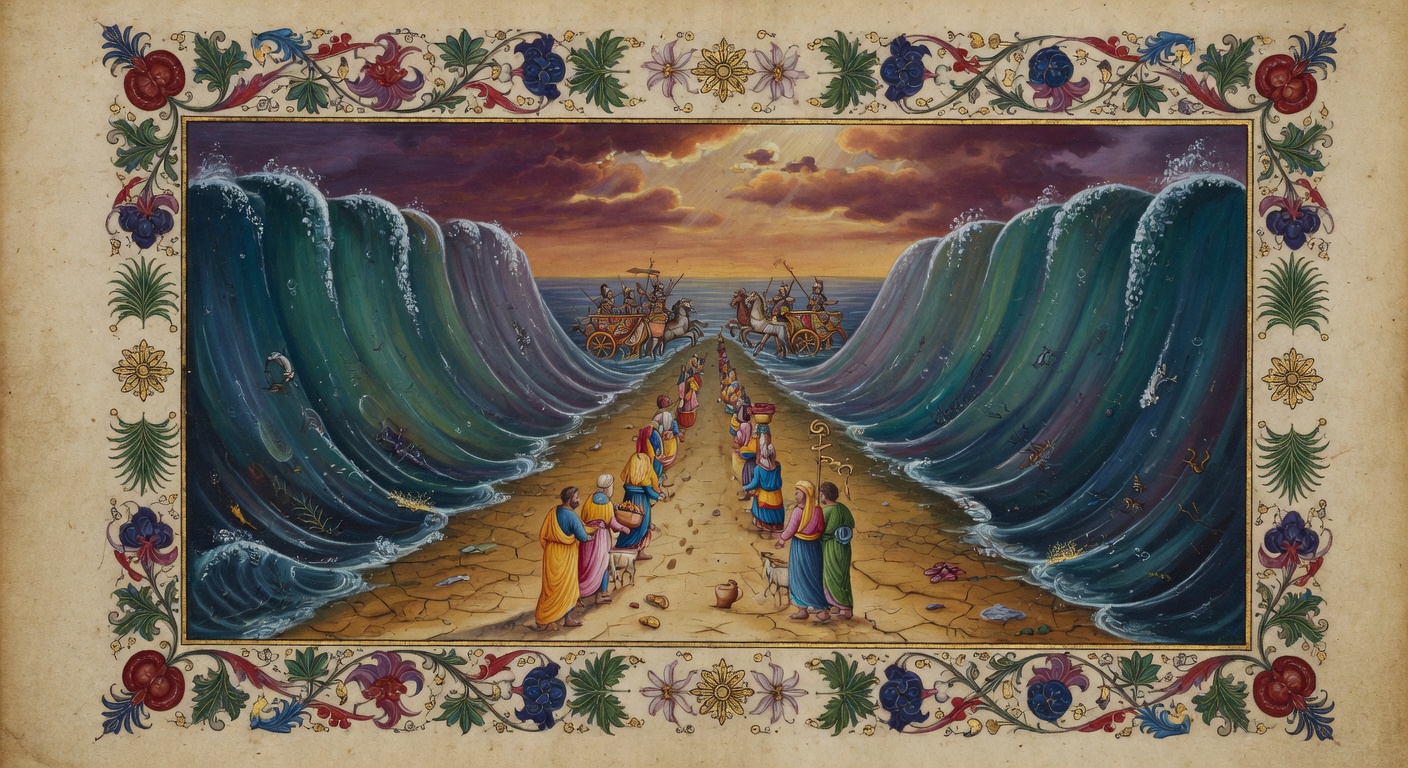
The Red Sea holds a central place in biblical history as the body of water that God miraculously divided to enable the Israelites' escape from slavery in Egypt. According to the Book of Exodus, after the Israelites fled Pharaoh's oppression, the Egyptian army pursued them to the sea's shores, prompting Moses to stretch out his staff and part the waters, allowing safe passage on dry ground. Once the people had crossed, the waters returned to drown the pursuing forces, showcasing divine intervention and protection. This event underscores God's covenant faithfulness and power over creation, serving as a foundational miracle that is frequently recalled in Scripture to affirm trust in divine deliverance.
-
Mount Sinai
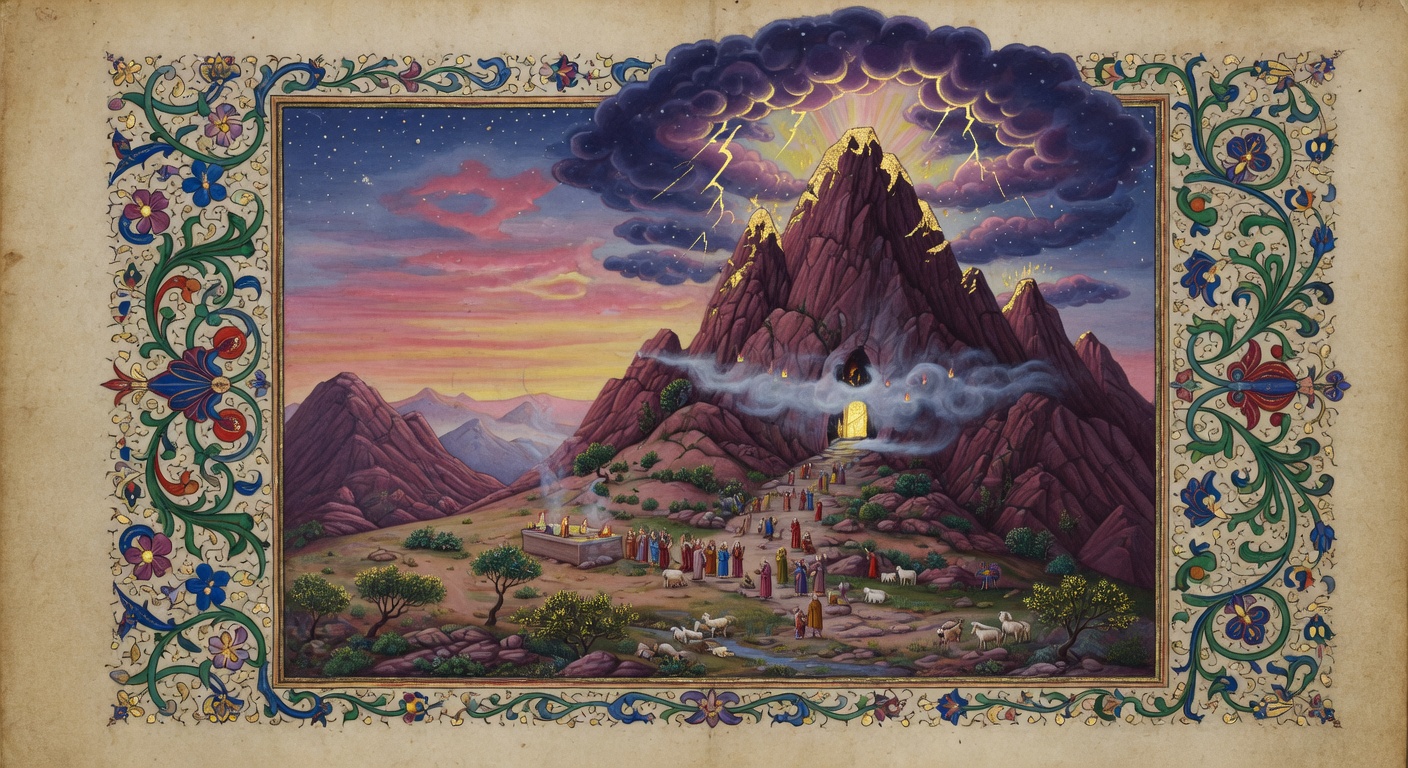
Mount Sinai, also known as Horeb in some biblical passages, is the mountain in the Sinai Peninsula where God appeared to Moses in a burning bush and later descended in fire and cloud after the Israelites' exodus from Egypt. According to the Book of Exodus, it was the site where Moses received the Ten Commandments on stone tablets along with additional laws, establishing the Mosaic covenant that bound Israel to God as His chosen nation under a system of commandments, sacrifices, and promises. This event is central to Scripture because it forms the foundation of the Torah, shapes Israel's national identity and worship practices, and is referenced throughout the Old and New Testaments as the defining moment of divine revelation and covenant relationship.
-
Nile
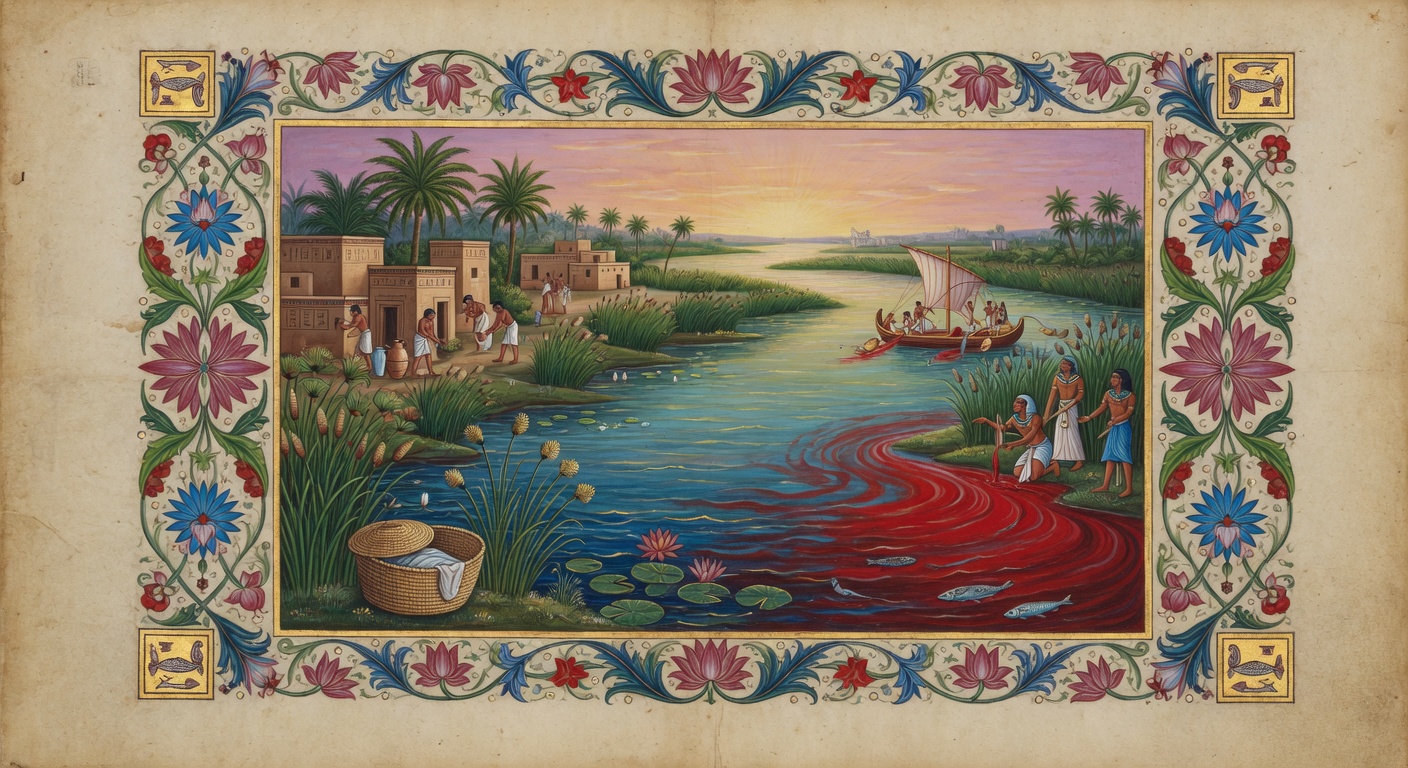
In the land of Egypt the great river served as both a source of sustenance and a stage for divine judgment during the time of Israel's bondage. It was along its banks that the infant Moses was hidden and then discovered by Pharaoh's daughter, preserving the future deliverer of God's people. When the Lord stretched forth His hand through Moses the waters of this river were turned to blood, and from its depths came forth the plague of frogs, revealing the impotence of Egypt's idols and advancing the redemption of the covenant nation.
Mediterranean
-
Tarshish
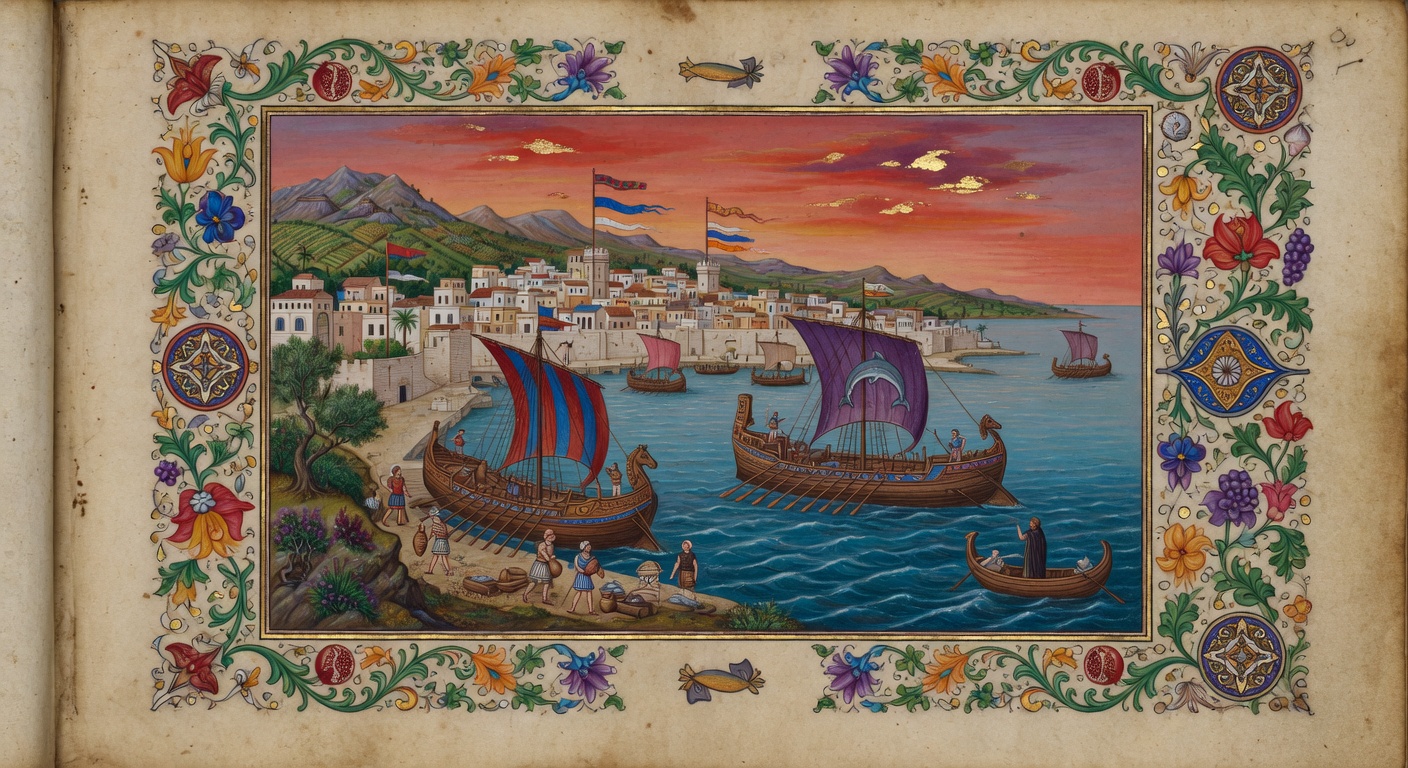
Tarshish was an ancient maritime port, likely located in the western Mediterranean and possibly identified with Tartessos in Spain, famous for exporting metals such as silver, tin, and iron. In the book of Jonah, the prophet boarded a ship there to flee God's command to preach repentance in Nineveh, demonstrating human resistance to divine instruction before a storm forced his return to obedience. Scripture also links Tarshish to King Solomon's trading fleets, which brought wealth to Israel, and to prophetic visions of distant nations acknowledging God's rule. Its repeated mention underscores themes of God's inescapable sovereignty and the universal scope of his purposes beyond Israel's borders.
-
Crete
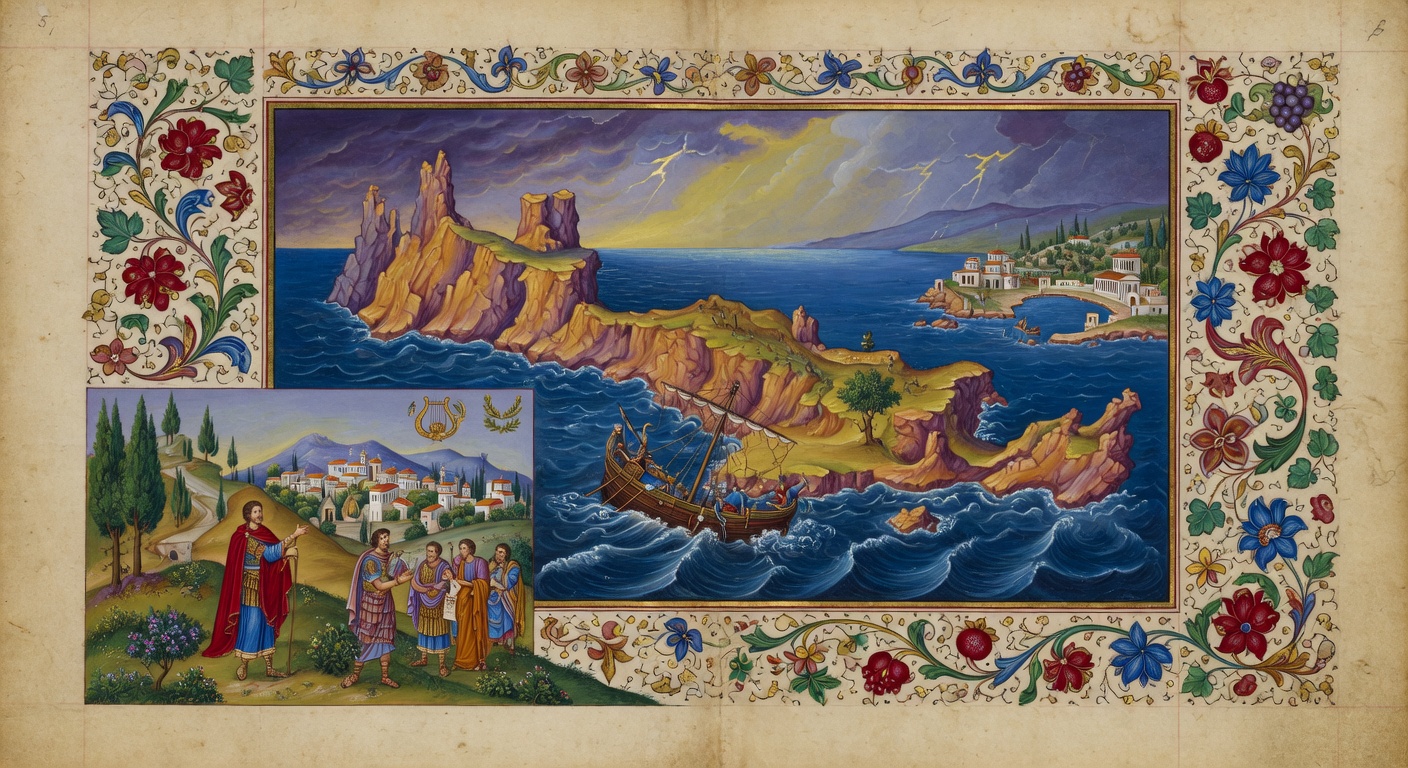
Crete is a large island in the eastern Mediterranean Sea that appears in the New Testament as a location of early Christian ministry and church planting. The apostle Paul sailed past Crete during his voyage to Rome as a prisoner, and the ship's ill-fated attempt to reach the harbor of Phoenix on Crete's southern coast led to the disastrous storm and shipwreck described in Acts 27. More significantly, Paul left his associate Titus on Crete to organize the fledgling churches there, appointing elders in every town and addressing the particular challenges of ministry in Cretan culture. In his letter to Titus, Paul quotes the Cretan poet Epimenides and instructs Titus to rebuke sharply and establish sound doctrine among believers who faced cultural pressures toward dishonesty and self-indulgence. Crete thus represents the early church's expansion into diverse cultural contexts and the need for strong local leadership to maintain doctrinal integrity.
Asia Minor
-
Damascus
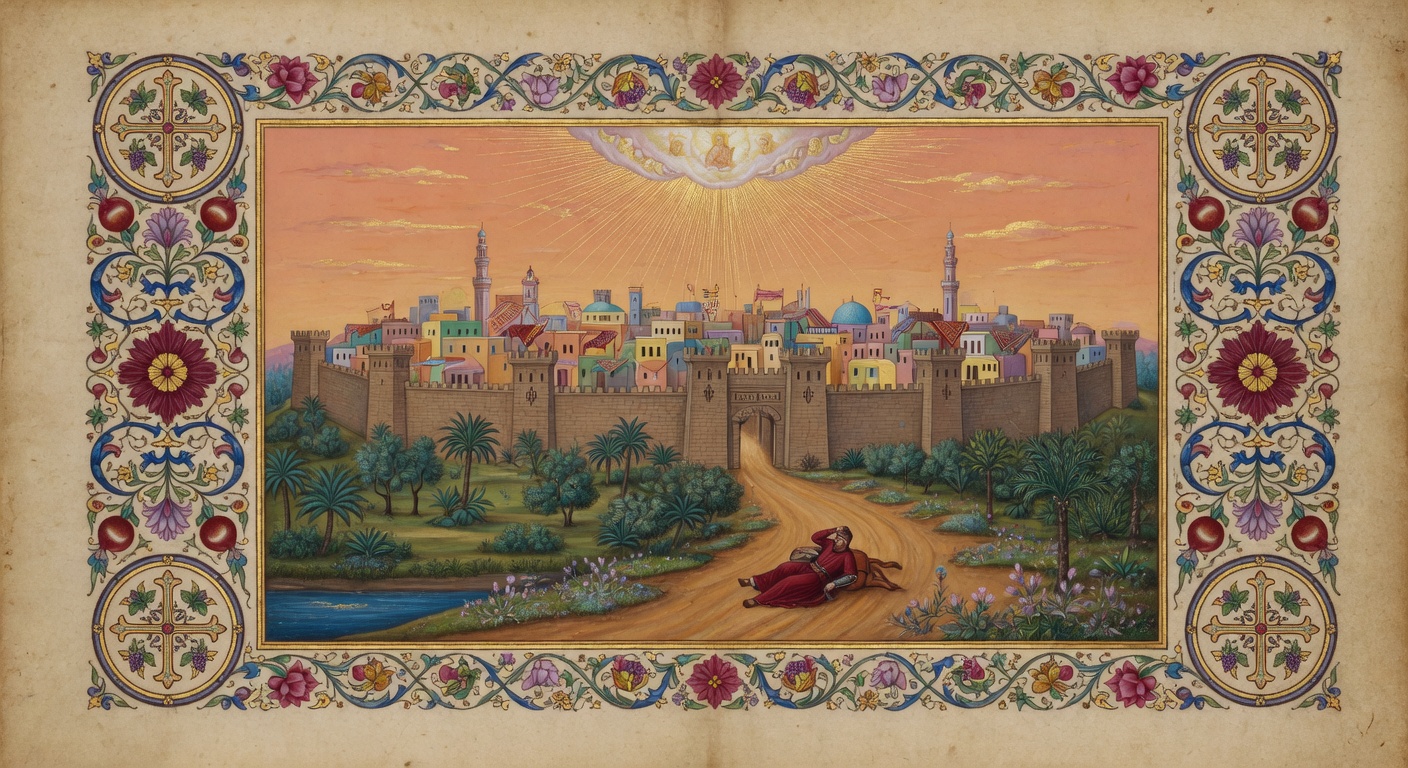
Damascus is an ancient city mentioned frequently in the Bible as a center of trade and political power in the region of Syria. It holds particular significance in the New Testament as the destination of Saul of Tarsus, who was traveling there to arrest followers of Jesus when he encountered a divine vision that led to his dramatic conversion. Blinded by the experience, Saul was healed by a disciple named Ananias in Damascus and subsequently baptized, emerging as the apostle Paul who would spread the Christian message across the Roman Empire. This event underscores themes of redemption and divine calling central to Christian theology.
-
Tarsus
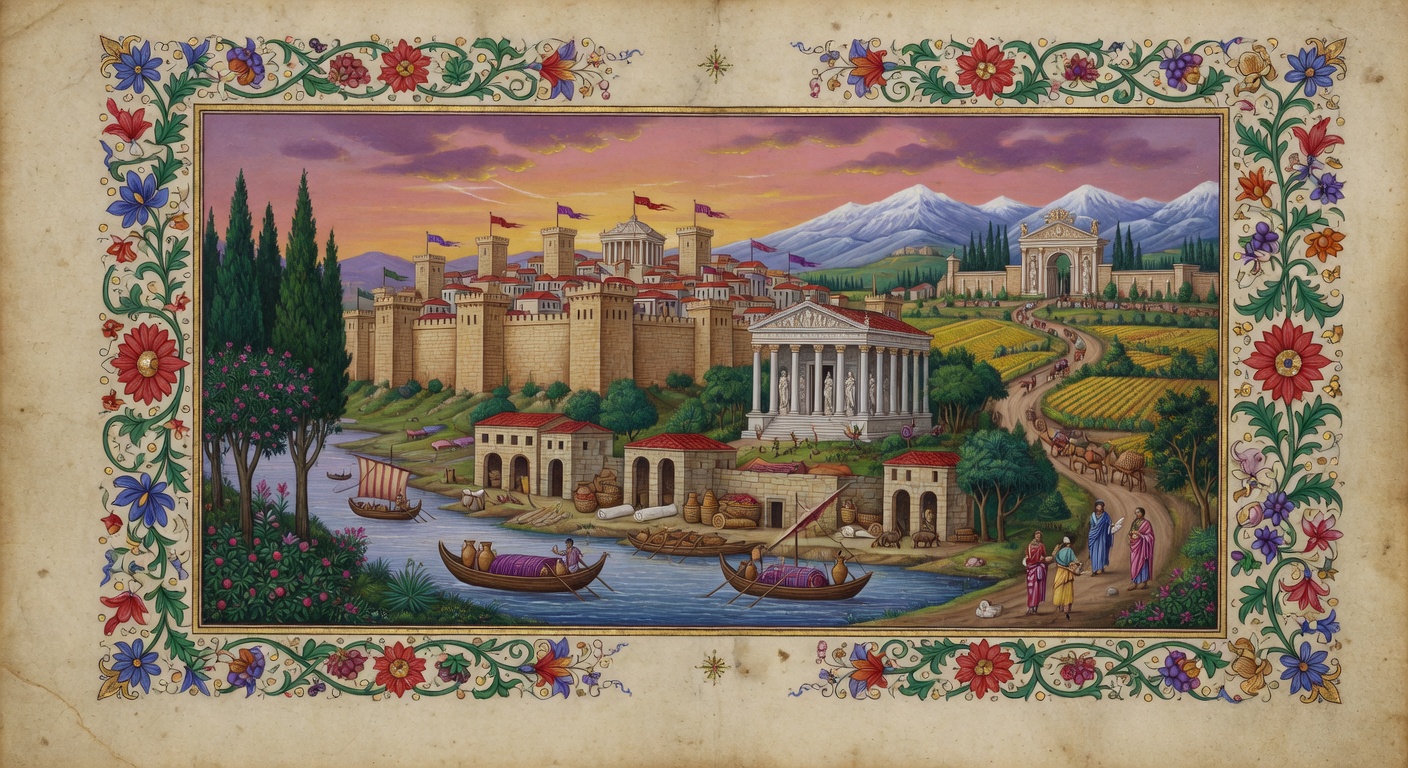
Tarsus served as the principal city of Cilicia in southeastern Asia Minor, renowned for its advanced educational institutions and bustling commercial activities along major trade routes. As the birthplace of the apostle Paul, this Roman colony granted him citizenship by birth, which later proved instrumental in his missionary journeys and legal defenses recorded in the New Testament. In Scripture, Tarsus features prominently in the Book of Acts, where Paul returns there following his conversion in Damascus and from where Barnabas recruits him for ministry in Antioch. The city's Hellenistic culture and strategic location underscore its role in shaping Paul's unique ability to bridge Jewish traditions with Greco-Roman society, facilitating the spread of the early Christian gospel.
-
Antioch
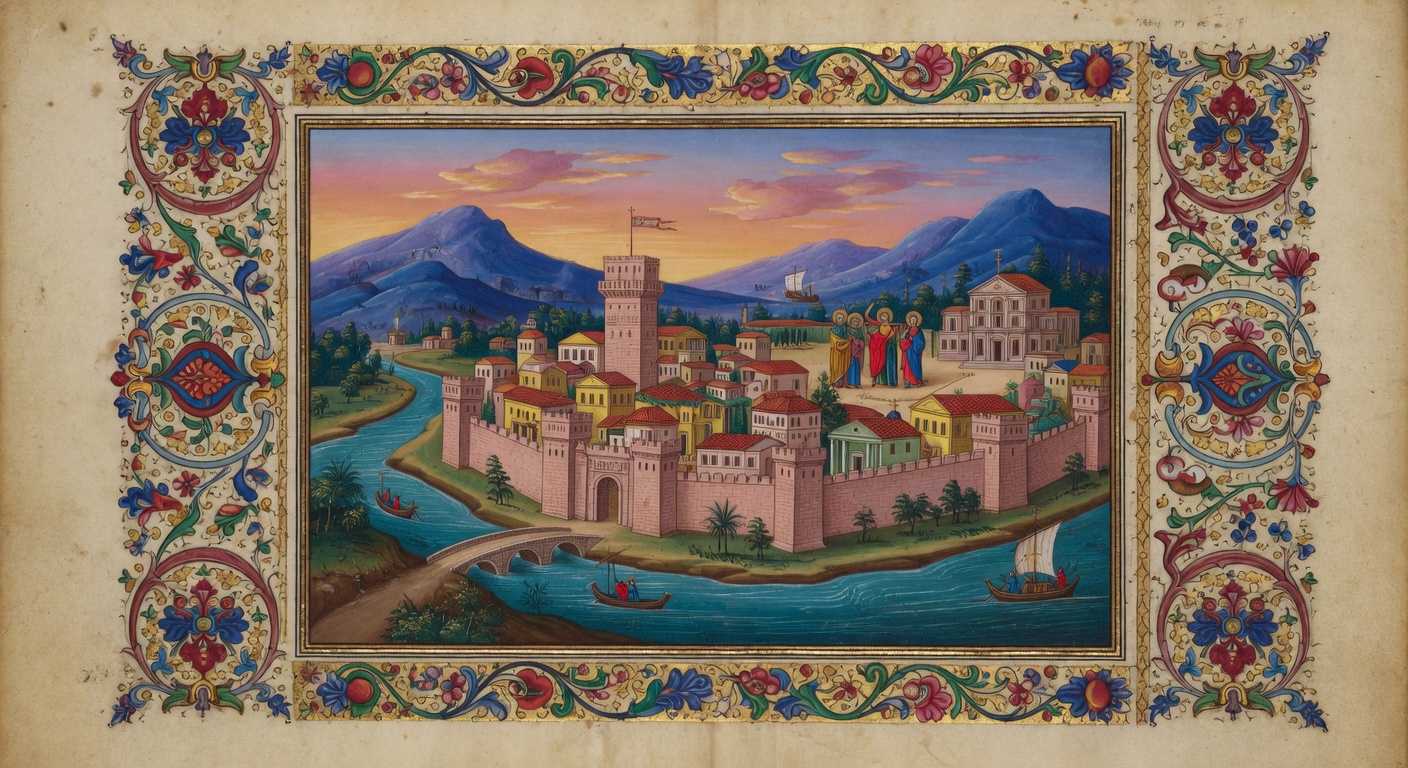
Antioch, a major city in ancient Syria, emerged as a key center for early Christianity following the persecution that scattered believers from Jerusalem after Stephen's martyrdom. In this diverse urban setting, the gospel was proclaimed to both Jews and Gentiles, resulting in a thriving church where Barnabas and Saul taught for a year and disciples were first called Christians. The congregation there commissioned Paul and Barnabas for their initial missionary journey, launching efforts to spread the faith across the Roman world. Its significance in Scripture lies in illustrating the transition of Christianity from a Jewish sect to a universal message, as seen in accounts of Gentile inclusion and church expansion in the Book of Acts.
-
Troas
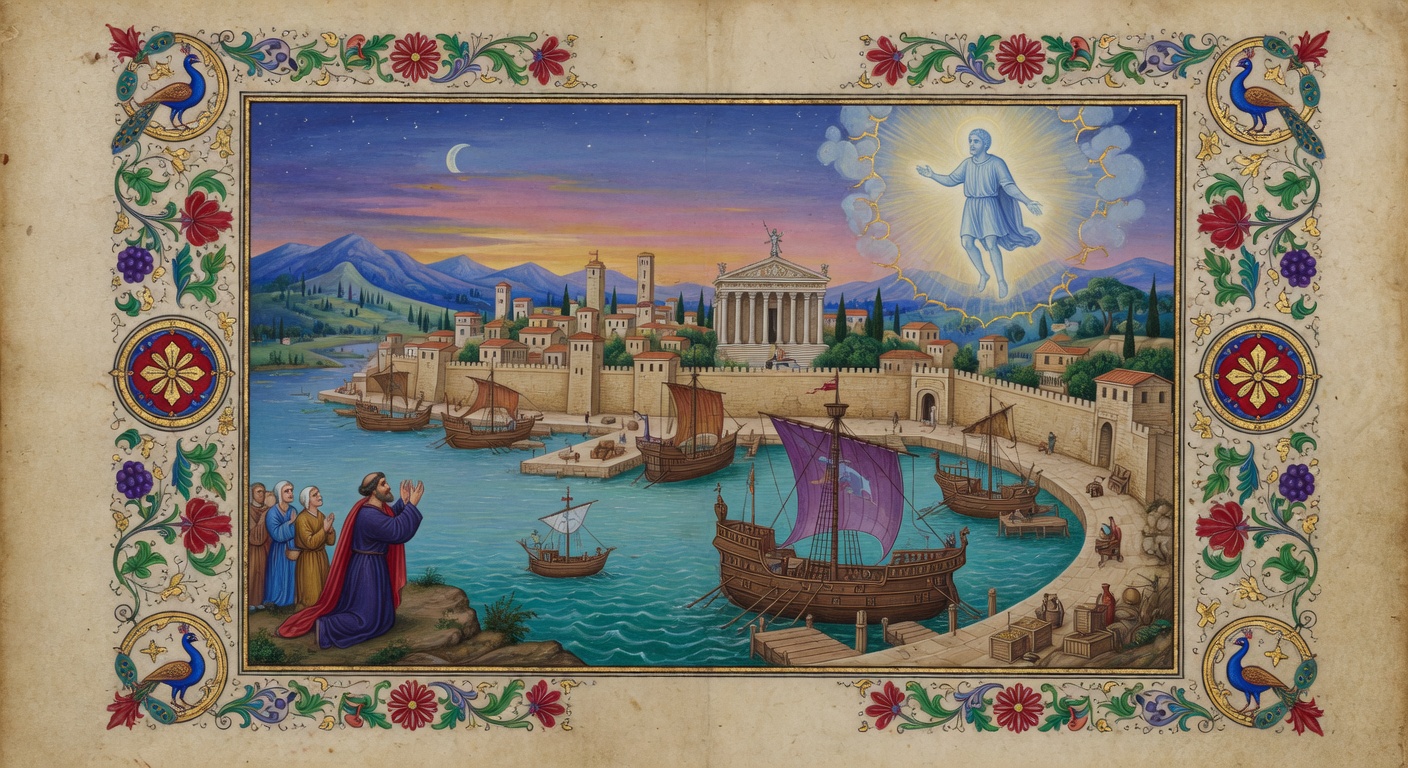
Troas, known as Alexandria Troas, was a prominent port city in northwest Asia Minor that functioned as a major hub for travel between Asia and Europe in the first century. During Paul's second missionary journey, recorded in Acts 16, the apostle received a nighttime vision there of a Macedonian man urging him to "come over and help us," which he and his companions understood as God's direction to preach the gospel westward. This led Paul to sail immediately to Philippi in Macedonia, marking the first recorded spread of Christianity into Europe. The event at Troas holds lasting significance in Scripture as the decisive turning point that redirected Paul's mission from Asia toward the broader Greco-Roman world.
-
Ephesus
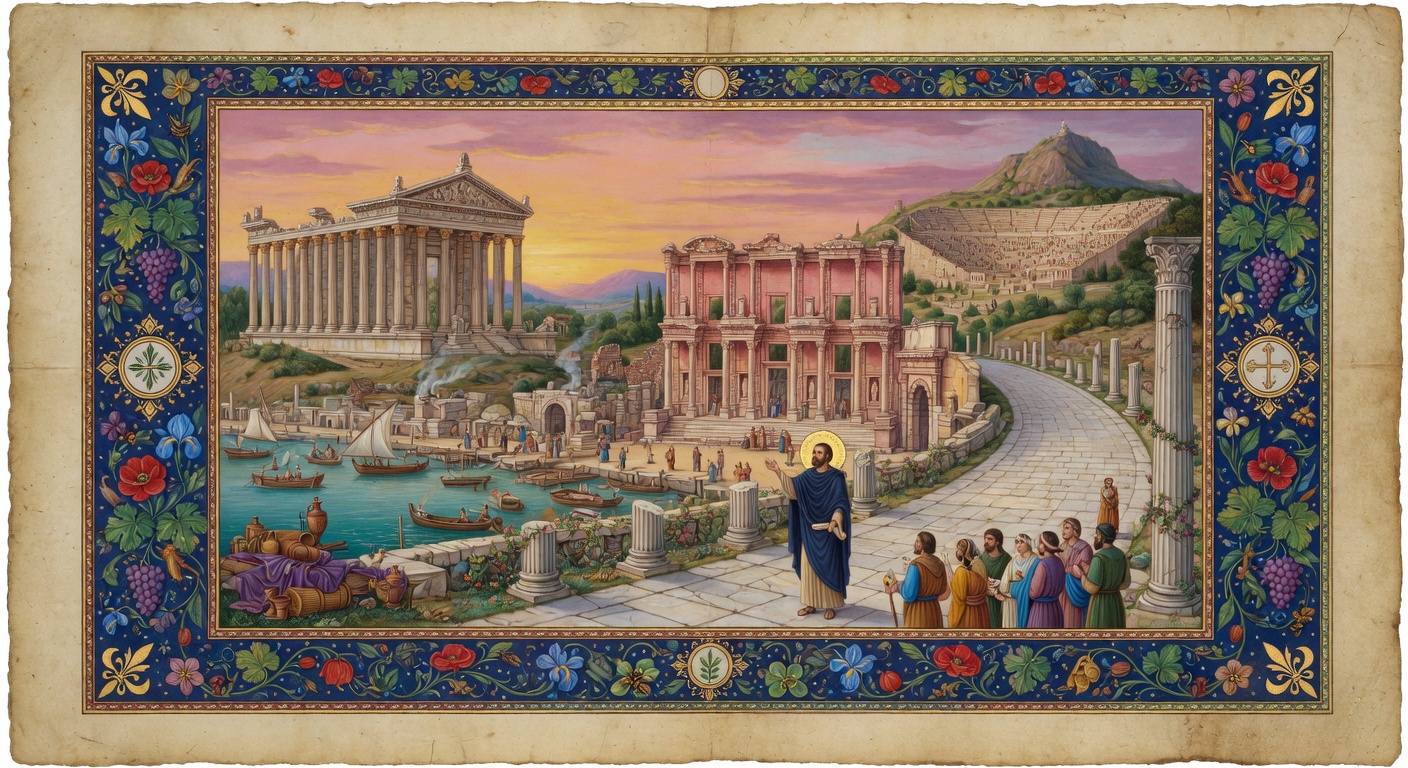
Ephesus was a prominent city in the Roman province of Asia Minor and a major center of trade and pagan worship dedicated to the goddess Artemis. During his third missionary journey, the apostle Paul ministered there for more than two years, preaching in the synagogue and lecture hall of Tyrannus, performing miracles, and establishing a thriving church amid strong opposition that culminated in a citywide riot described in Acts 19. This account illustrates the transformative impact of the gospel on entrenched idolatry and economic interests. Paul later wrote the Epistle to the Ephesians from prison, a letter emphasizing the unity of the church as Christ’s body, spiritual blessings in Christ, and practical Christian living, while the city also appears among the seven churches addressed in Revelation.
-
Galatia
Galatia was a Roman province in central Asia Minor, originally settled by Celtic tribes in the third century BC before coming under Roman control. The apostle Paul founded churches there during his first missionary journey and later addressed them in his epistle after Judaizing teachers began pressuring Gentile converts to observe circumcision and other elements of the Mosaic law. In the letter, Paul defends justification by faith alone as the heart of the gospel, recounting his own apostolic authority and the Jerusalem council’s decision on Gentile inclusion. This epistle remains significant in Scripture for establishing Christian freedom from legalism and shaping early church doctrine on grace.
-
Patmos
Patmos is a small, rocky island in the Aegean Sea that functioned as a remote penal colony under Roman rule in the first century. According to Revelation 1:9, the apostle John was exiled there because of his testimony about Jesus, most likely during the reign of Emperor Domitian. While on the island, John received a series of visions from the risen Christ that he recorded as the Book of Revelation, the final book of the New Testament. Its significance lies in preserving these apocalyptic messages about the church, judgment, and God’s ultimate victory, which continue to shape Christian eschatology and hope.
-
Sidon
Sidon was an ancient Phoenician port city on the Mediterranean coast north of Israel, often paired with Tyre in biblical accounts as a center of trade and pagan influence. The prophet Elijah stayed in the Sidonian town of Zarephath during a drought-induced famine, where God sustained him and a local widow through multiplied oil and flour before raising her son, illustrating divine provision beyond Israel's borders. Centuries later Jesus visited the district of Tyre and Sidon, healing the daughter of a Canaanite woman whose persistent faith he commended, an event he himself linked to Elijah’s earlier ministry there. These episodes establish Sidon as a scriptural witness to God’s willingness to extend mercy and miracles to Gentiles, underscoring themes of inclusion that run through both Testaments.
-
Tyre
Tyre was a prominent Phoenician seaport city renowned for its extensive maritime trade and wealth, which made it a significant economic hub in the ancient world. In the Old Testament, prophets like Ezekiel pronounced judgments against Tyre for its arrogance and idolatry, foretelling its eventual downfall. During his ministry, Jesus traveled to the region of Tyre and Sidon, where he healed the daughter of a Syrophoenician woman, demonstrating the reach of his compassion beyond Jewish boundaries. Later, the apostle Paul visited Tyre during his missionary journeys, where believers urged him not to proceed to Jerusalem, highlighting its role as a stopover in early Christian travels.
-
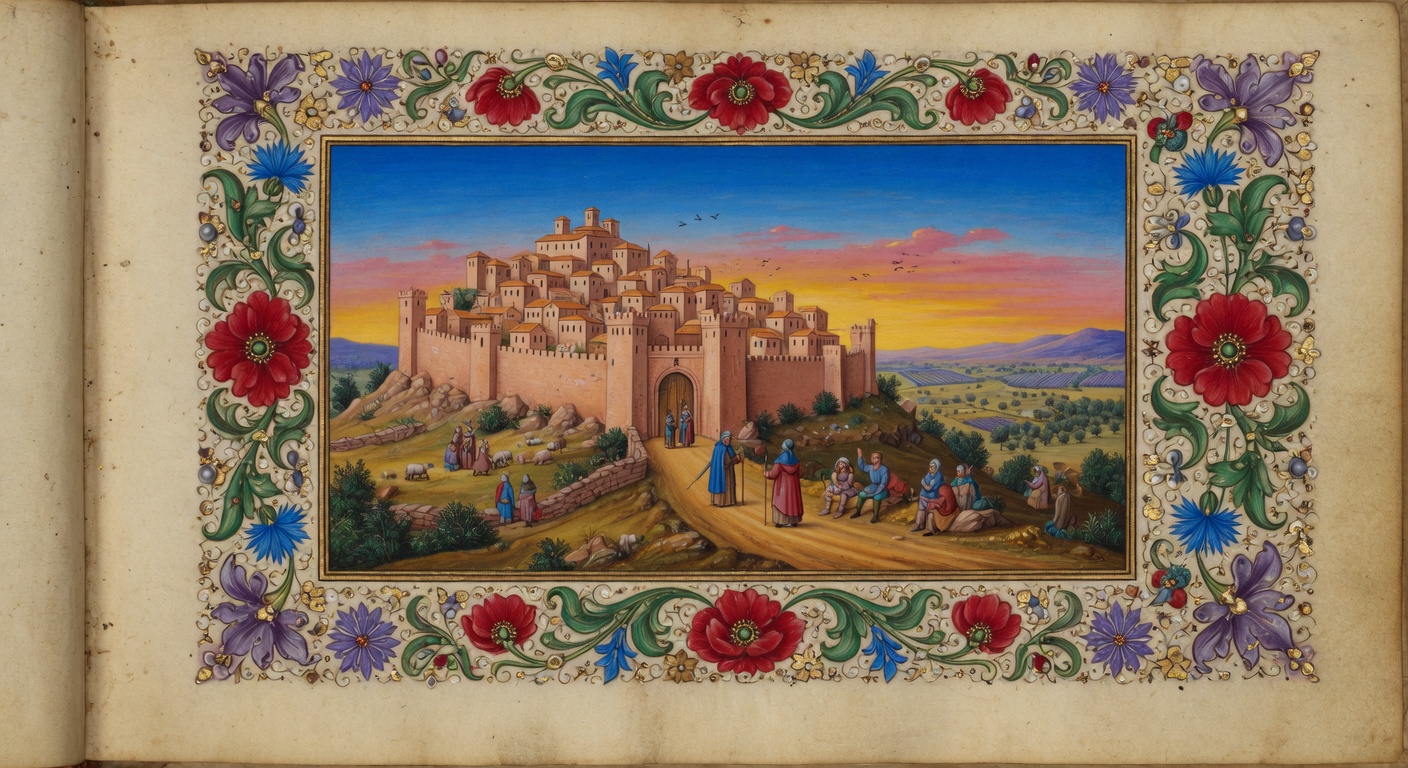
Derbe
Derbe was an ancient city in the region of Lycaonia in southern Asia Minor, part of the Roman Empire during the first century. The apostle Paul visited it with Barnabas near the end of his first missionary journey, after being stoned and left for dead in nearby Lystra; there they preached the gospel and made many disciples before retracing their route to strengthen the new believers. This account appears in Acts 14, illustrating the rapid expansion of early Christianity despite opposition. Derbe later gains added significance as the home of Gaius, a companion of Paul mentioned in Acts 20:4, reflecting its lasting contribution to the apostolic mission.
-
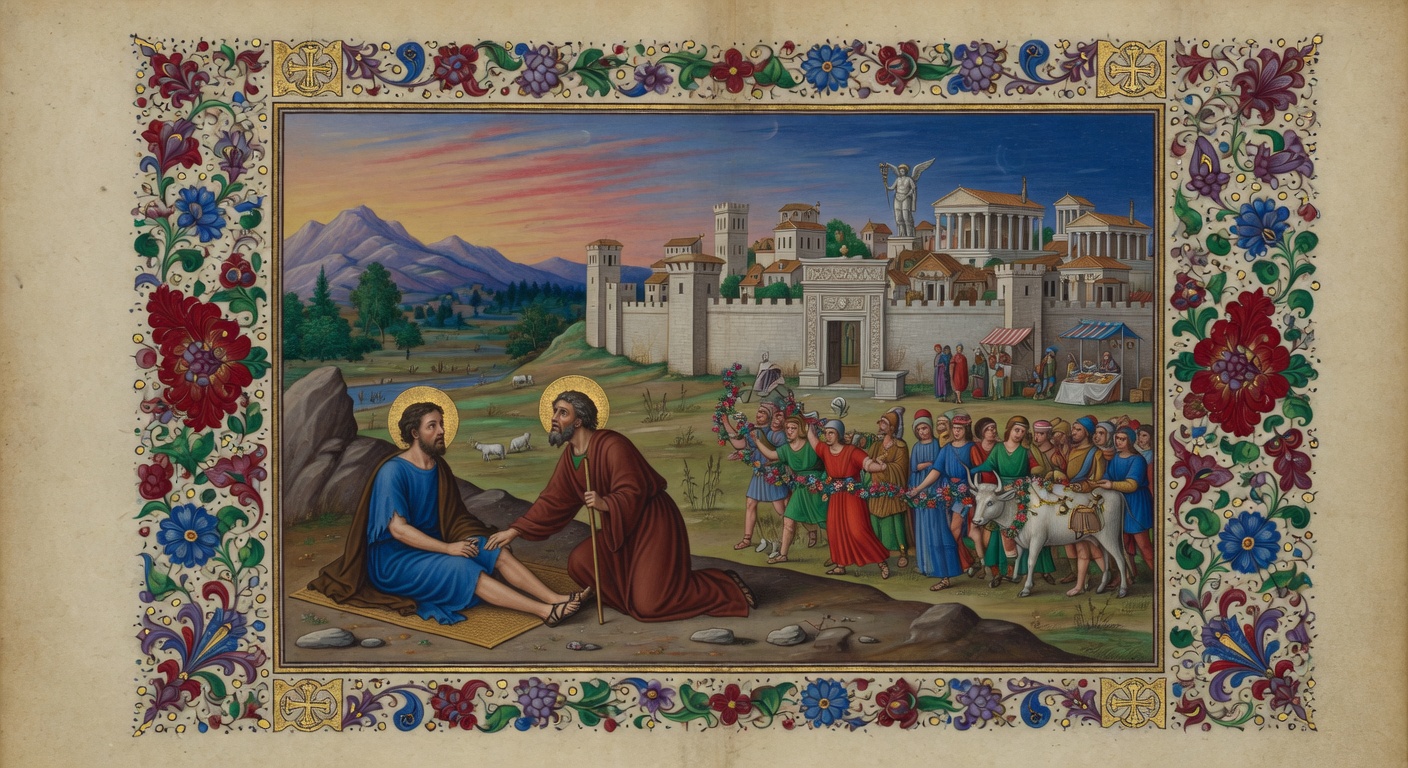
Lystra
Lystra was a Roman colony in the region of Lycaonia in Asia Minor that Paul and Barnabas visited during the apostle’s first missionary journey. While there, Paul healed a man lame from birth, prompting the local crowd to acclaim the missionaries as the gods Zeus and Hermes and prepare sacrifices in their honor, an act the two men quickly rejected by directing attention to the living God. Opponents soon arrived from nearby cities, inciting the same crowd to stone Paul and drag him outside the walls, though he survived and continued preaching. The city is further remembered as the home of Timothy, whose Jewish-Christian family became a vital link in Paul’s later ministry and is mentioned in the book of Acts and the Pastoral Epistles.
-
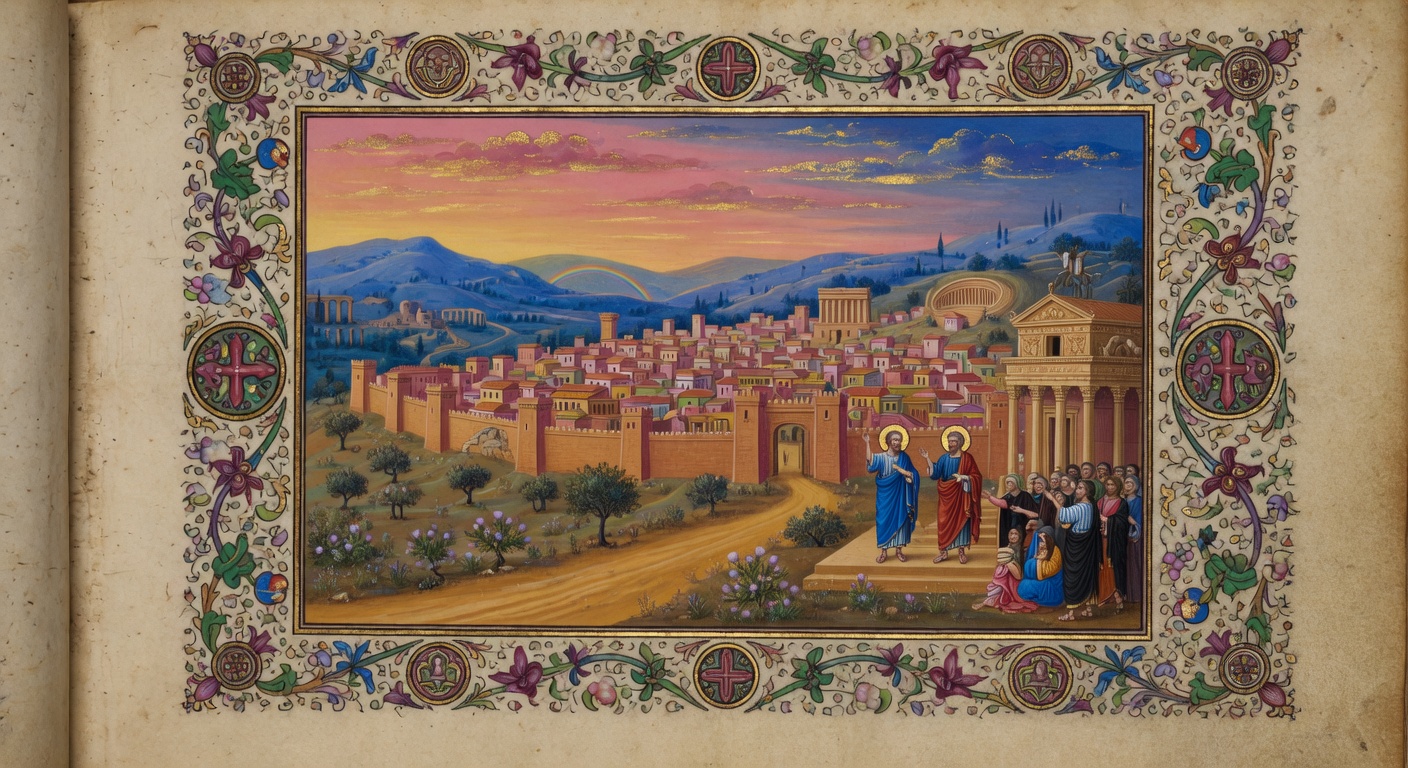
Iconium
Iconium was an ancient city in the region of Lycaonia in Asia Minor, visited by Paul and Barnabas during their first missionary journey as recorded in Acts 14. There they preached in the synagogue, leading many Jews and Greeks to believe while God confirmed their message through signs and wonders. Unbelieving Jews soon stirred up opposition among the Gentiles and city officials, creating division and prompting a plot to stone the apostles, which forced them to flee to nearby Lystra and Derbe. This episode illustrates both the spread of the gospel amid resistance and the pattern of persecution that marked early Christian mission work.
-
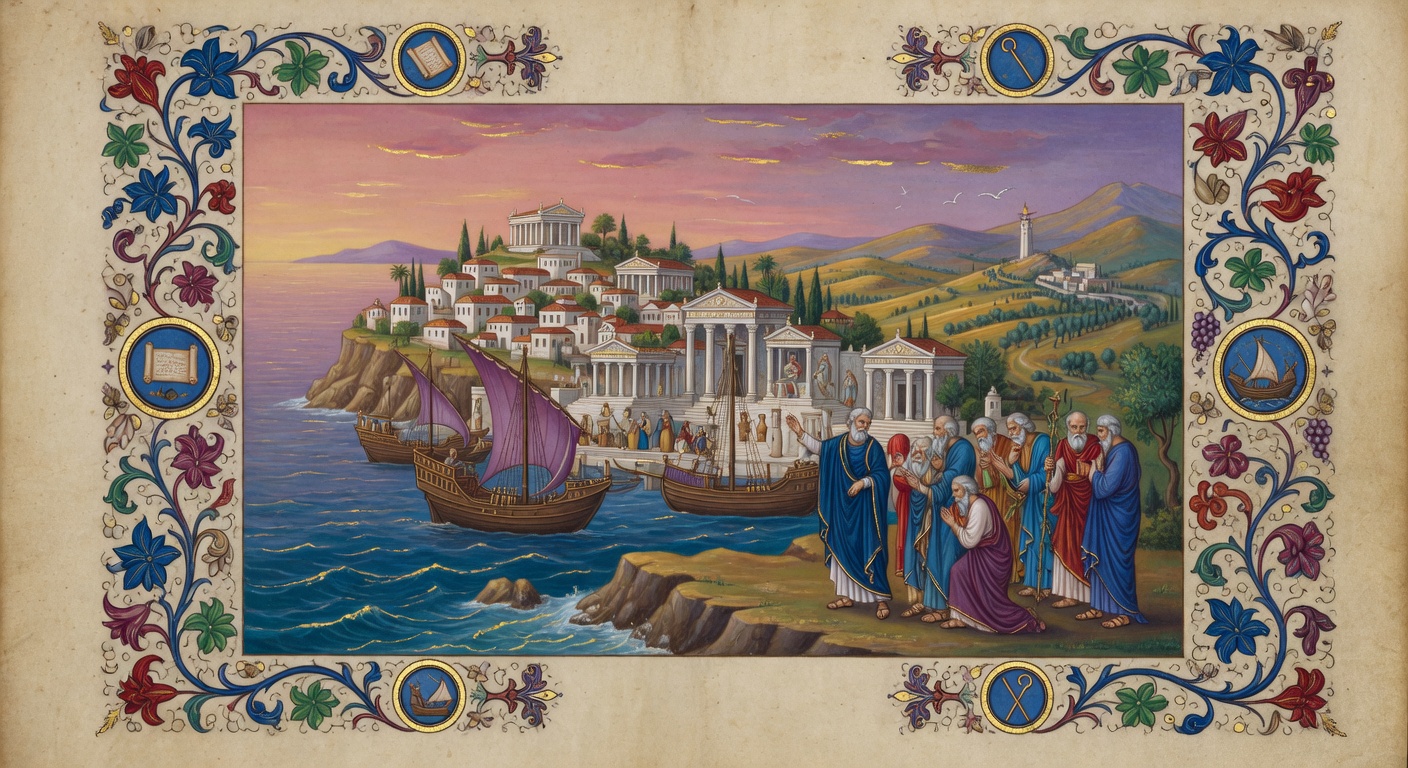
Miletus
Miletus was an important port city in the Roman province of Asia, located near the mouth of the Maeander River. During his third missionary journey, the apostle Paul paused there en route to Jerusalem and summoned the elders of the Ephesian church to join him for a final meeting. In his address, Paul reflected on his ministry among them, warned of impending false teachers, and urged the leaders to shepherd the flock faithfully, knowing they would not see his face again. This poignant farewell in Acts 20 highlights the relational bonds in the early church and Paul's dedication to proclaiming the gospel despite impending trials.
-
Colossae
Colossae was an ancient city in the Lycus Valley of Asia Minor, near Laodicea and Hierapolis, that hosted an early Christian congregation likely planted by Paul's associate Epaphras. Although Paul never visited the site, he wrote the Epistle to the Colossians from prison to counter emerging false teachings that diminished Christ's role and promoted angel worship or ascetic practices. The letter affirms Christ's supremacy as creator, sustainer, and head of the church, presenting him as fully sufficient for salvation and spiritual growth. This epistle remains significant in Scripture for its clear doctrinal statements on Christ's deity and its model for addressing theological error within local churches.
-
Laodicea
Laodicea was a prosperous city in western Asia Minor known for its banking, textile production, and medical school that manufactured eye ointment. In Revelation chapter 3, the risen Christ delivers a sharp rebuke to the local church for its spiritual lukewarmness, declaring that its members were self-satisfied in their wealth yet blind to their true poverty and in need of repentance. The letter urges the congregation to become zealous, open the door to fellowship with Christ, and receive the promised rewards of victory. This passage remains a key scriptural warning against complacency in faith and the dangers of equating material success with spiritual health.
-
Pergamum
Pergamum was an ancient city in Asia Minor known for its prominent altar to Zeus and other centers of pagan worship that reflected strong ties to Roman imperial authority. In Revelation 2:12-17, the risen Christ addresses its church, identifying the location as the site of Satan's throne due to the intensity of idolatry and opposition faced by believers. The congregation received praise for holding fast to Christ's name and refusing to deny the faith, even after the martyrdom of Antipas, though it was also warned against tolerating false teachings. This letter underscores the broader New Testament theme of perseverance amid cultural and spiritual hostility in the early church.
-
Smyrna
Smyrna was one of the seven churches addressed directly by the risen Christ in Revelation 2:8-11, situated in an ancient port city of Asia Minor that was known for its strong allegiance to Rome and resulting hostility toward Christians. The congregation faced intense persecution, including poverty, slander from local opponents, and the threat of imprisonment or death, yet Christ’s letter contained no rebuke and instead offered only words of encouragement and affirmation for their faithfulness. He specifically promised the crown of life to those who remained steadfast through suffering, assuring them that the second death would not harm them. This message stands in Scripture as a model of endurance under trial and a reminder of divine reward for unwavering loyalty amid opposition.
-
Sardis
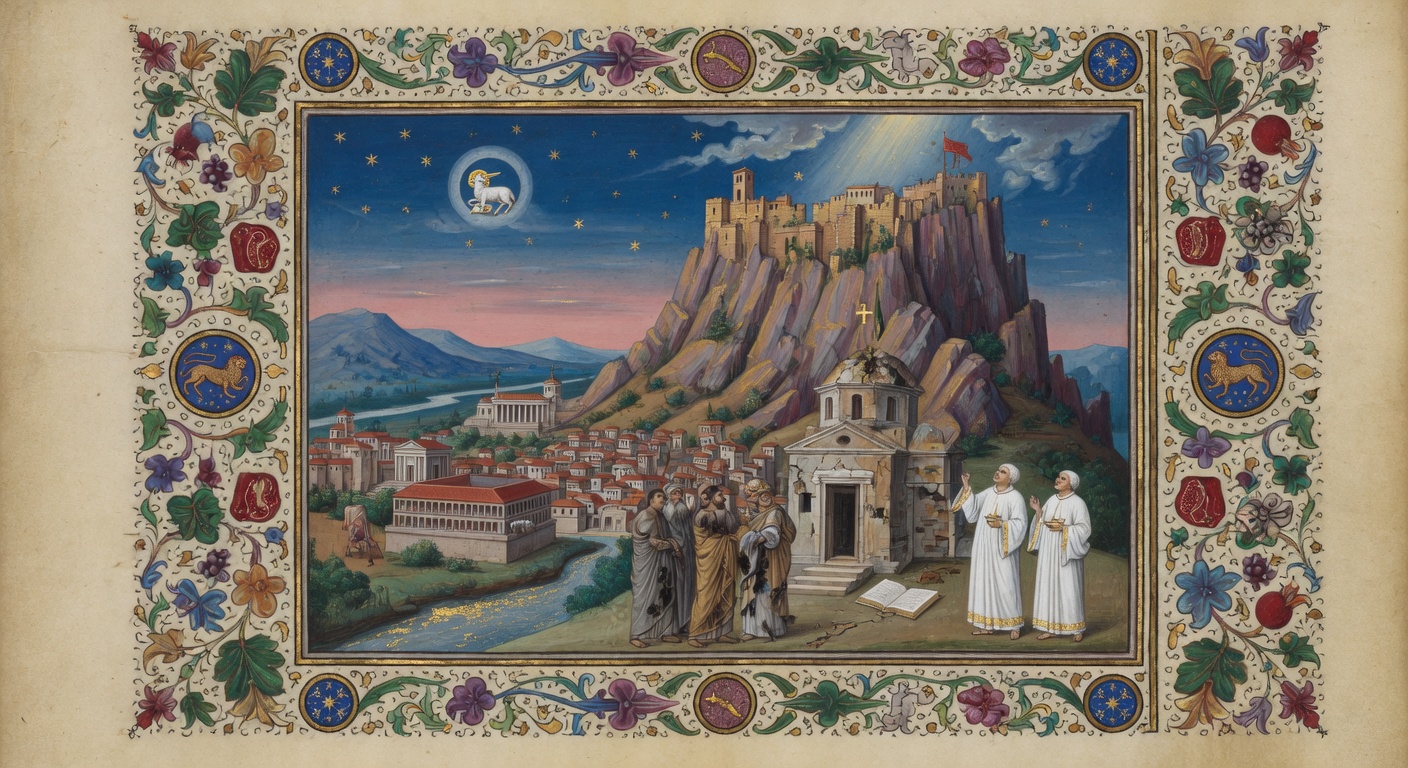
Sardis was an ancient city in western Asia Minor, once the wealthy capital of the Lydian kingdom under King Croesus, and later one of the seven churches addressed by the risen Christ in the book of Revelation. Located at the foot of Mount Tmolus with a nearly impregnable acropolis, Sardis had twice been captured by surprise attacks when defenders grew complacent, a historical irony that resonates with Christ's warning to the church there. In Revelation 3:1-6, Jesus rebukes the church at Sardis for having a reputation of being alive while actually being spiritually dead, urging them to wake up and strengthen what remains before it dies completely. Only a few individuals in Sardis had not soiled their garments, and these faithful ones are promised white robes and assurance that their names will not be blotted from the book of life. The message to Sardis serves as a sobering warning against spiritual complacency and the danger of maintaining outward religious appearance without genuine inner vitality.
-
Philadelphia
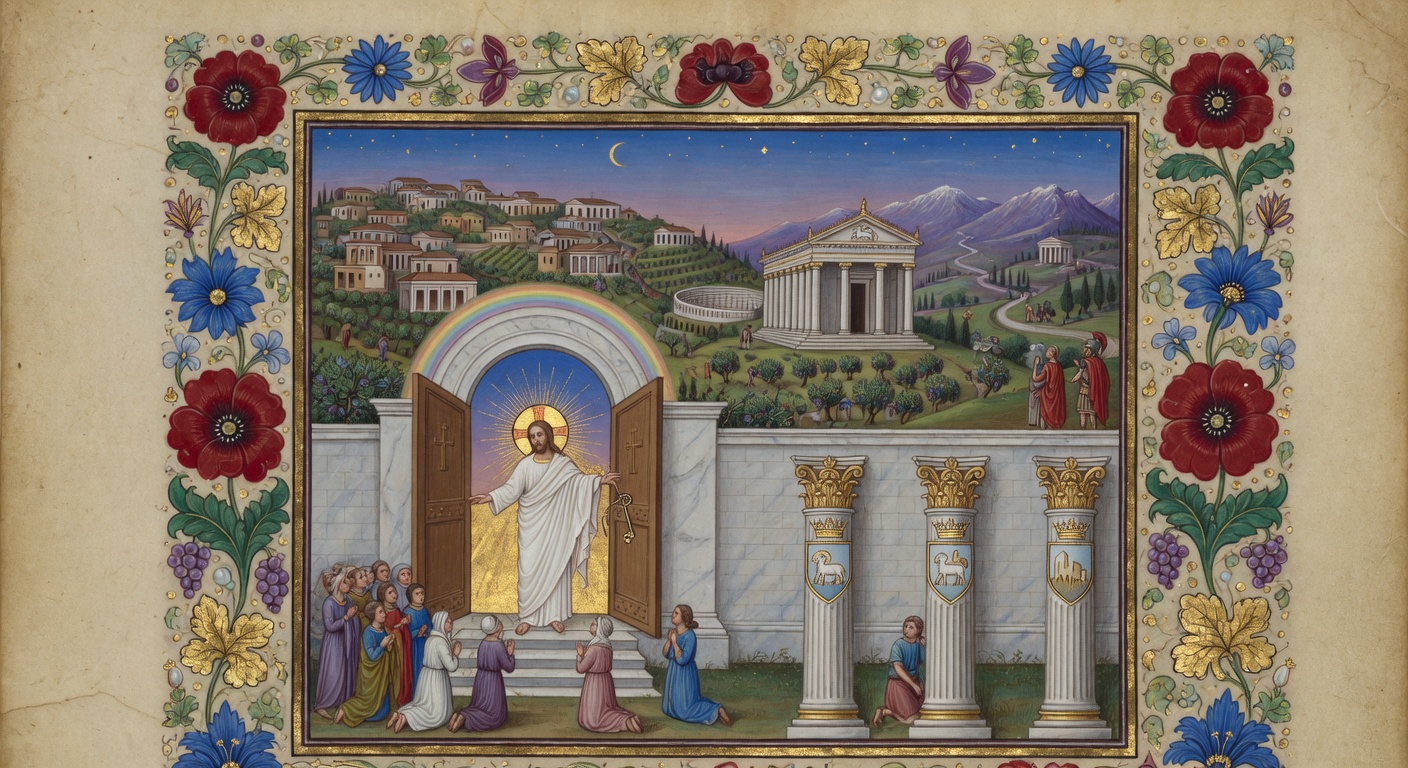
Philadelphia was an ancient city in the region of Lydia in western Asia Minor, founded in the second century BC and named for the brotherly love of its Pergamene founder. It became one of the seven churches addressed by the risen Christ in Revelation, and notably received no rebuke, only commendation and encouragement. In Revelation 3:7-13, Jesus acknowledges that the church in Philadelphia has little strength yet has kept His word and not denied His name. He promises to set before them an open door that no one can shut, to make their persecutors acknowledge God's love for them, and to keep them from the hour of trial coming upon the whole world. The faithful are promised to be made pillars in the temple of God, bearing the name of God, the new Jerusalem, and Christ's own new name. Philadelphia's message offers profound encouragement to small, faithful communities facing opposition, assuring them that perseverance in faith, even with limited resources, receives divine honor and eternal reward.
-
Pontus
Pontus was a region along the southern coast of the Black Sea in northeastern Asia Minor that became a Roman province and is mentioned several times in the New Testament in connection with the early spread of Christianity. Acts 2 records that Jews from Pontus were present in Jerusalem at Pentecost and heard the apostles speaking in tongues, suggesting that the gospel may have reached Pontus very early through these returning pilgrims. The region is also notable as the homeland of Aquila, the Jewish tentmaker who, along with his wife Priscilla, became one of Paul's most important ministry partners after meeting him in Corinth following their expulsion from Rome under Claudius. Additionally, the apostle Peter addresses his first epistle to the elect exiles scattered throughout Pontus, Galatia, Cappadocia, Asia, and Bithynia, indicating an established Christian community in the region by the mid-first century. Pontus thus represents the rapid geographic expansion of early Christianity into diverse regions of the Roman Empire.
Greece/Rome
-
Philippi
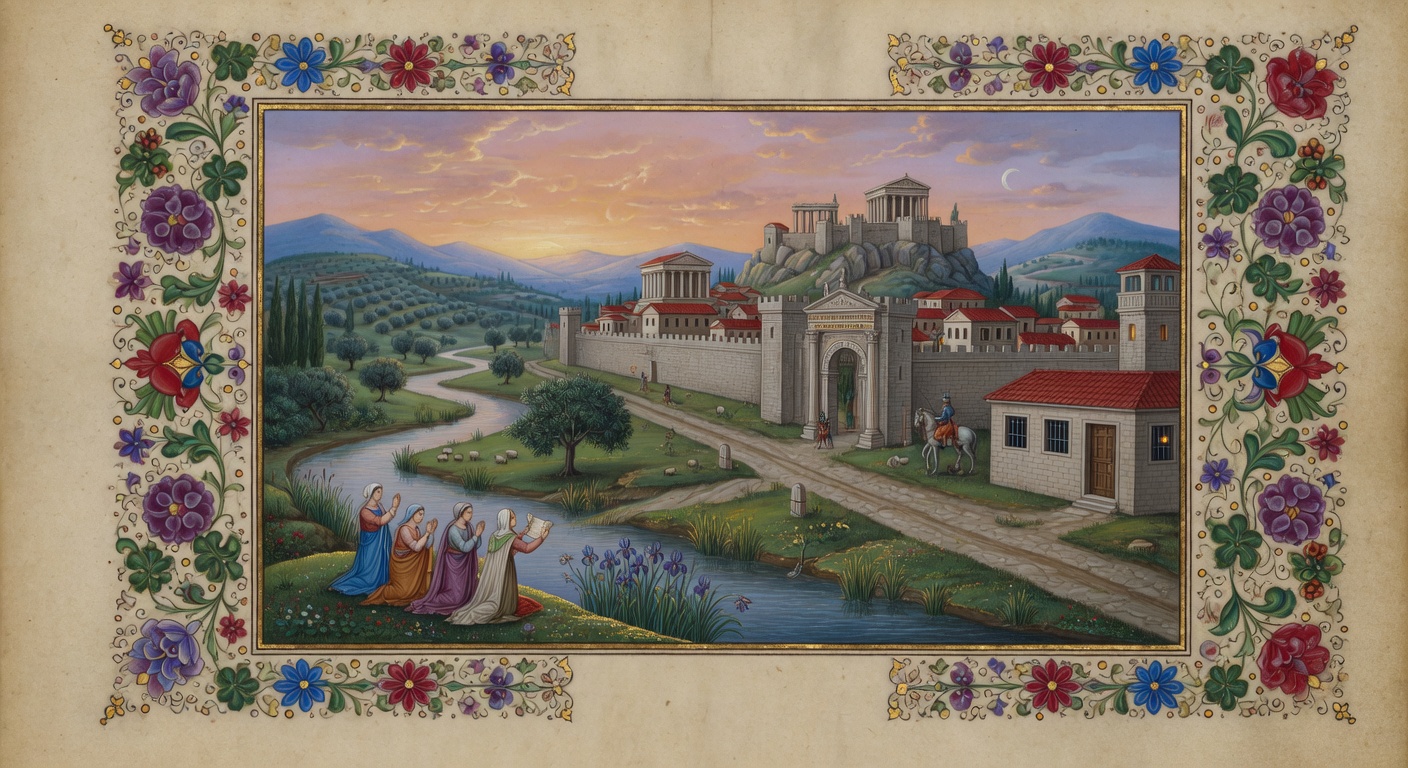
Philippi was a prominent Roman colony in Macedonia that served as a strategic military and trade outpost in the first century. During his second missionary journey, Paul arrived there after a vision of a Macedonian man and established the first church in Europe through the conversion of Lydia, a purple merchant, followed by the exorcism of a slave girl that resulted in his and Silas’s imprisonment. An earthquake miraculously opened the prison doors, leading to the jailer’s conversion and the church’s growth amid persecution. This account in Acts 16 and Paul’s later epistle to the Philippians highlight its role in advancing the gospel westward and modeling Christian joy and partnership in ministry.
-
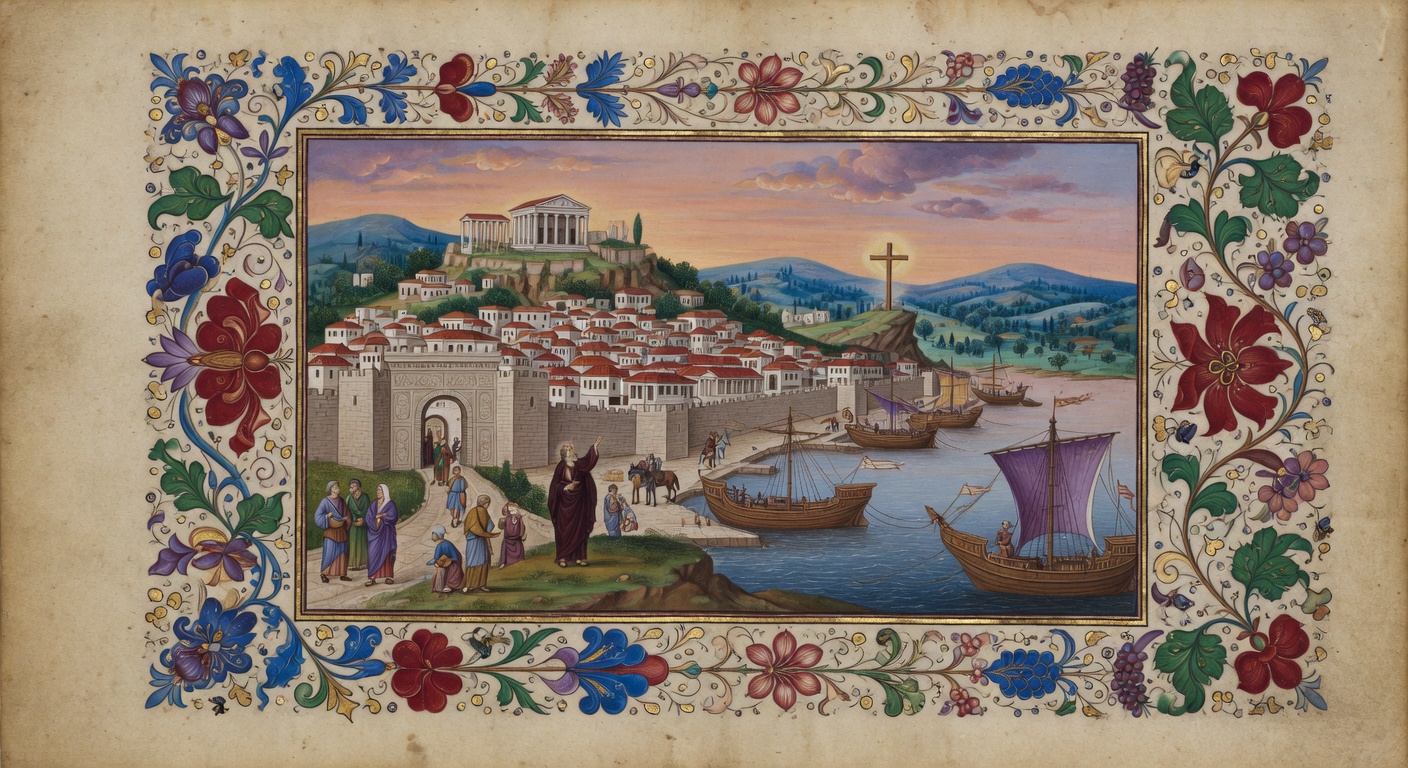
Thessalonica
Thessalonica was a prominent seaport city and the capital of the Roman province of Macedonia during the first century. On his second missionary journey, the apostle Paul preached in the local synagogue there, leading to the conversion of some Jews and a large number of God-fearing Greeks, thus establishing one of the earliest Christian churches in Europe. Despite facing intense opposition from jealous Jewish leaders who incited a riot, Paul and his companions were forced to leave for Berea, but he later wrote two letters from Corinth to encourage the young believers facing persecution and to clarify teachings about Christ's return. These epistles, known as 1 and 2 Thessalonians, hold significant importance in Scripture as they offer valuable insights into early Christian doctrine, eschatology, and pastoral encouragement for faithful living amid trials.
-
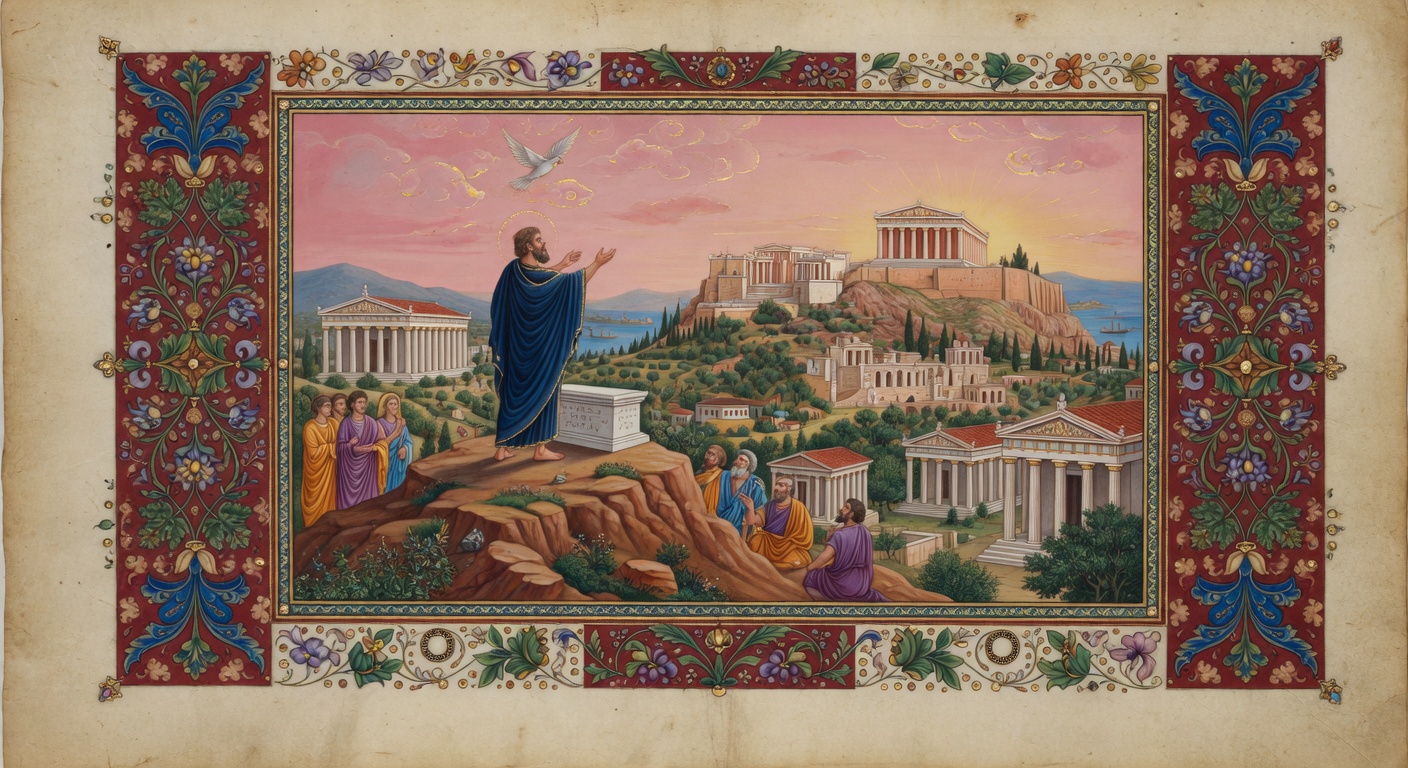
Athens
Athens served as the intellectual and cultural hub of the ancient world during the first century, filled with idols and philosophical schools that reflected its pagan religious practices. In Acts 17, the apostle Paul visited the city and delivered a notable sermon at the Areopagus, also known as Mars Hill, where he addressed the Athenians' altar to an unknown god and proclaimed the one true God who does not dwell in temples made by hands. This event is significant in Scripture as it demonstrates Paul's strategy of contextualizing the gospel message for a Gentile audience steeped in Greek philosophy, resulting in a few conversions including Dionysius and Damaris. The account underscores the early church's mission to reach diverse cultures with the message of Jesus Christ.
-
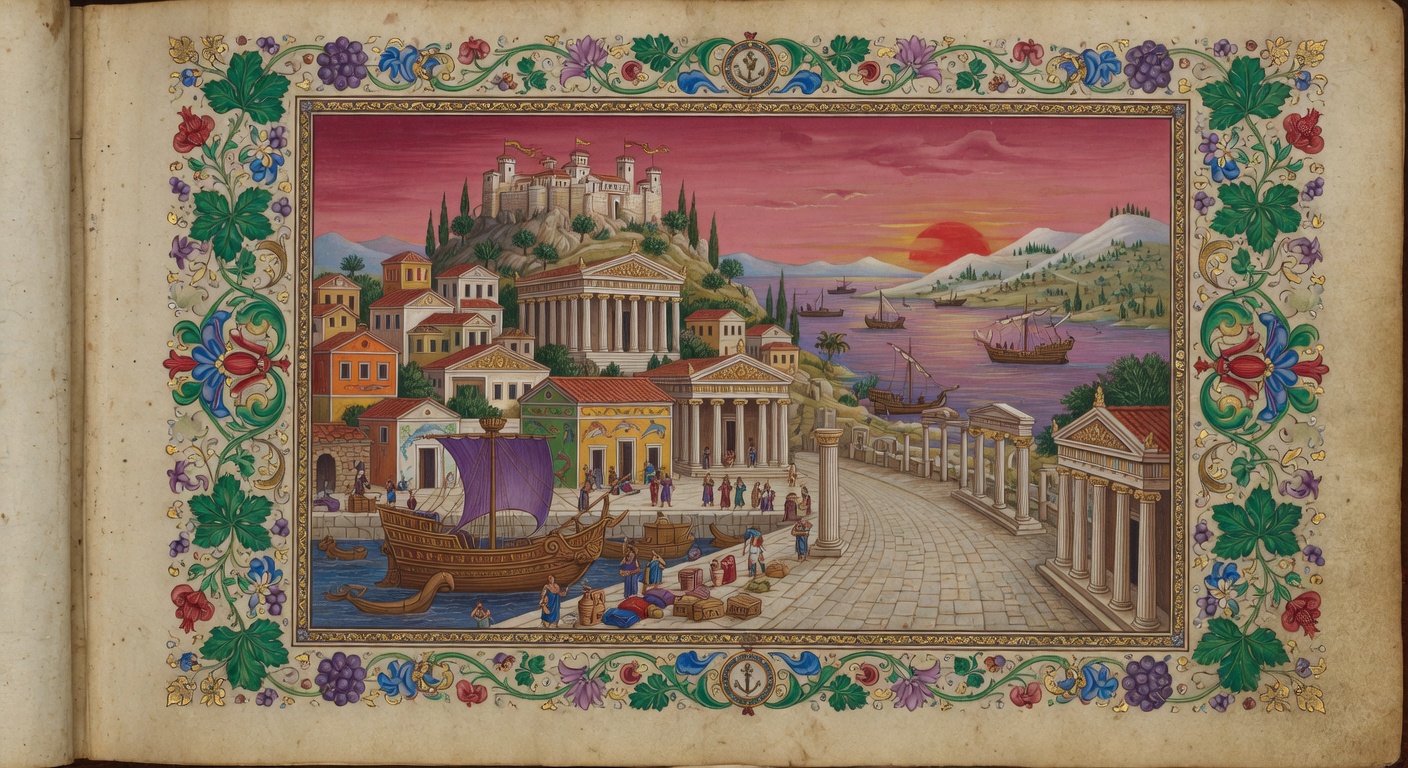
Corinth
Corinth was a prominent and prosperous port city in ancient Greece, renowned for its commercial activity and notorious for its moral corruption influenced by pagan worship. During his second missionary journey, the apostle Paul spent approximately eighteen months there, preaching the gospel and founding a Christian church amid significant opposition. Later, from Ephesus, Paul authored the two epistles to the Corinthians to address various problems within the congregation, including divisions, sexual immorality, and disputes over spiritual gifts. These letters hold lasting significance in Scripture for their profound teachings on unity, love, church discipline, and the resurrection of Christ.
-
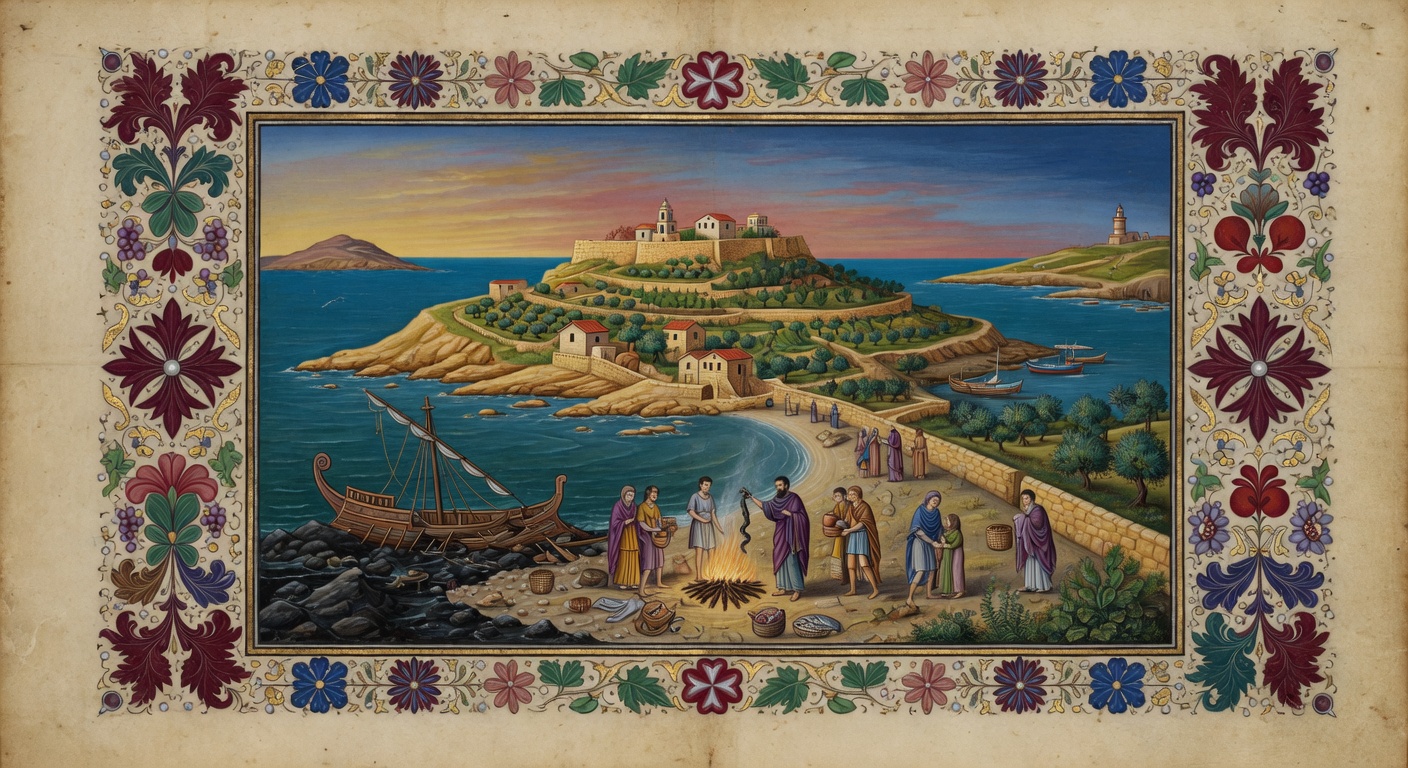
Malta
Malta, referred to as Melita in the New Testament, is the island where the apostle Paul was shipwrecked during his voyage to Rome as a prisoner around 59-60 AD, as recorded in Acts 27-28. After the ship ran aground in a storm, all 276 passengers and crew survived, and the local inhabitants provided essential aid by building a fire and offering hospitality to the cold and wet survivors. While there, Paul was bitten by a viper yet remained unharmed, an event that led him to heal the father of the island's chief official and many others afflicted with diseases, demonstrating God's protective power. Paul and his companions stayed three months on Malta before resuming their journey, underscoring themes of divine providence and the unstoppable spread of the gospel amid adversity.
-
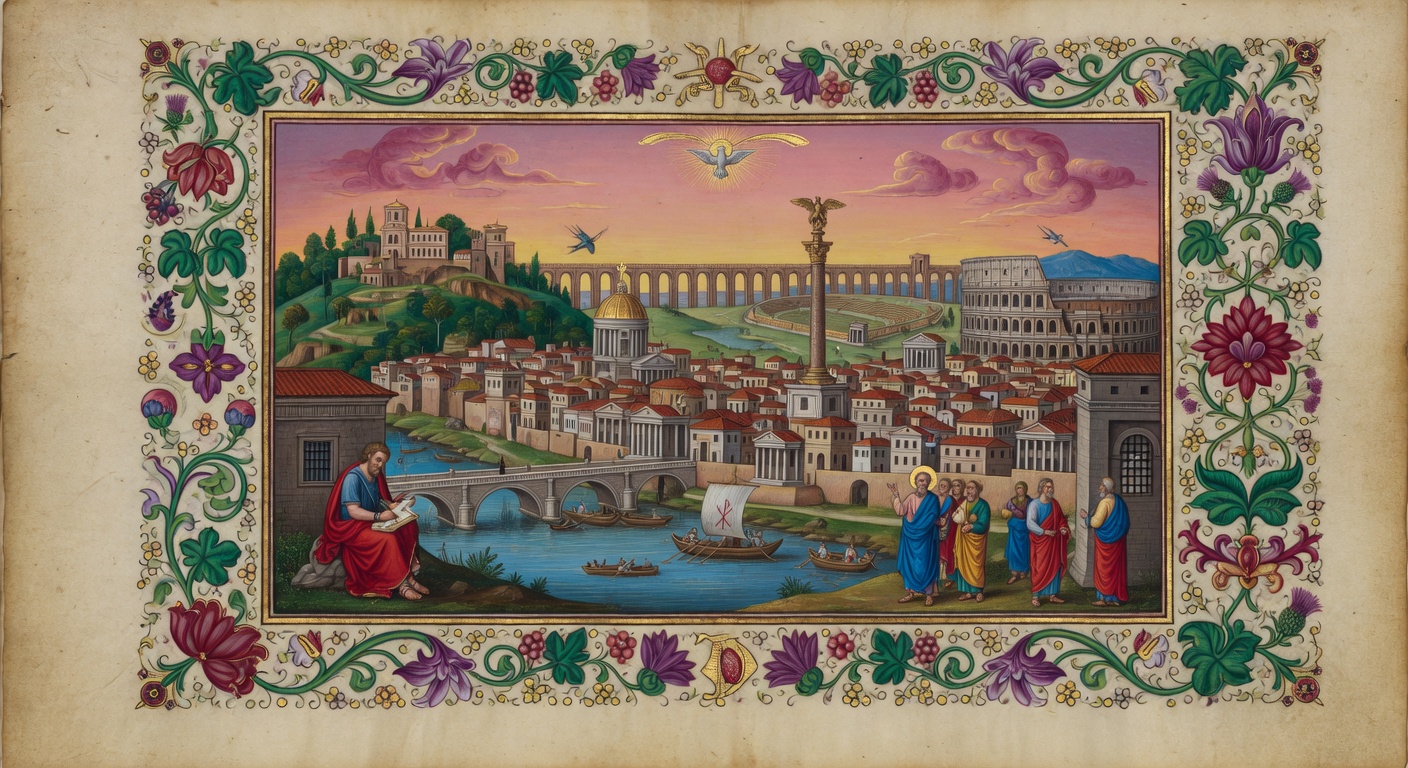
Rome
Rome served as the capital of the Roman Empire in the first century AD, functioning as the political and cultural hub from which imperial authority extended across the Mediterranean world. The apostle Paul arrived there as a prisoner around AD 60, living under house arrest while continuing his ministry and composing several New Testament epistles, including Ephesians, Philippians, Colossians, and Philemon. Early Christian tradition also places the apostle Peter in Rome, where he ministered to the growing church before both apostles were martyred during Nero’s persecutions. These events hold significance in Scripture as they illustrate the gospel’s advance to the empire’s center, fulfilling the trajectory outlined in Acts and providing the setting for Paul’s letter to the Romans, which addresses a church already established in the city.
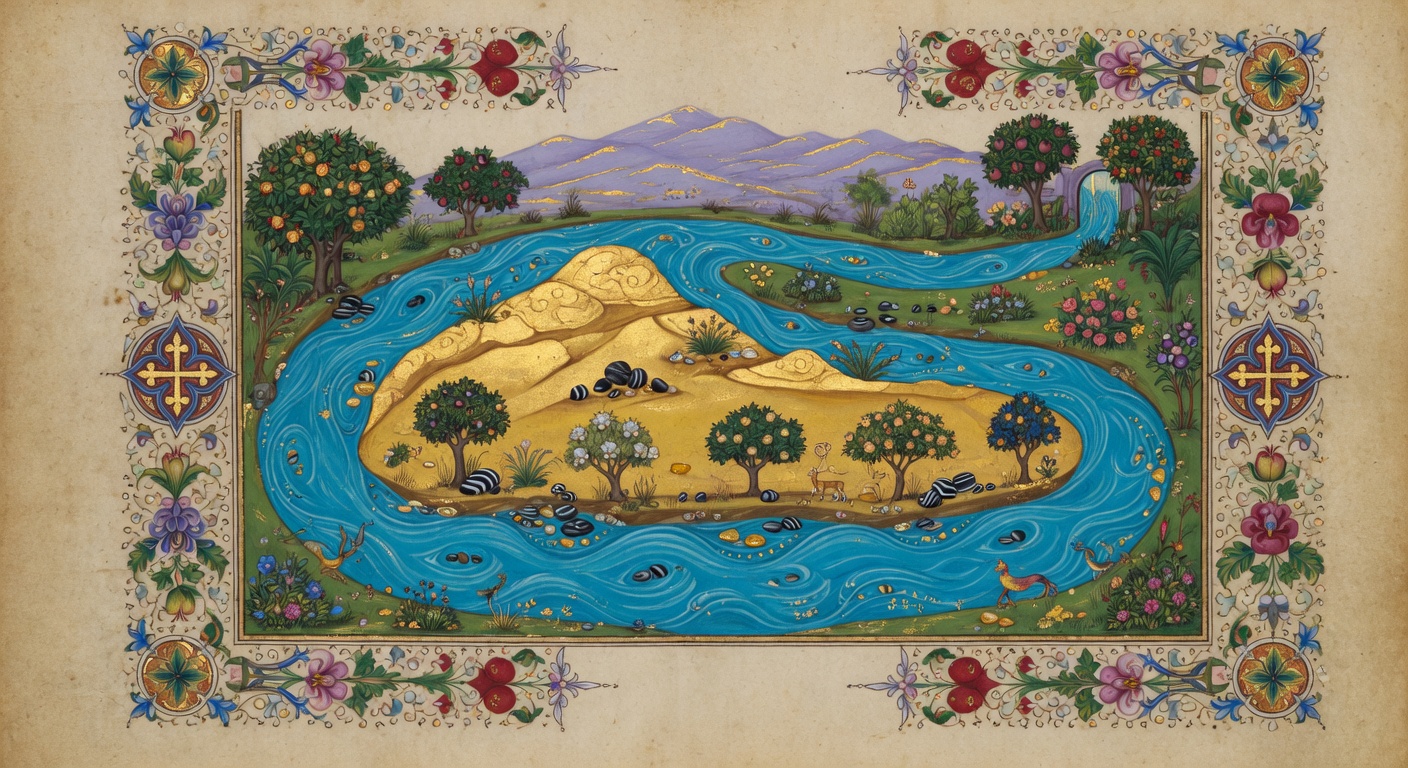
Eden
Jerusalem
-
Gihon
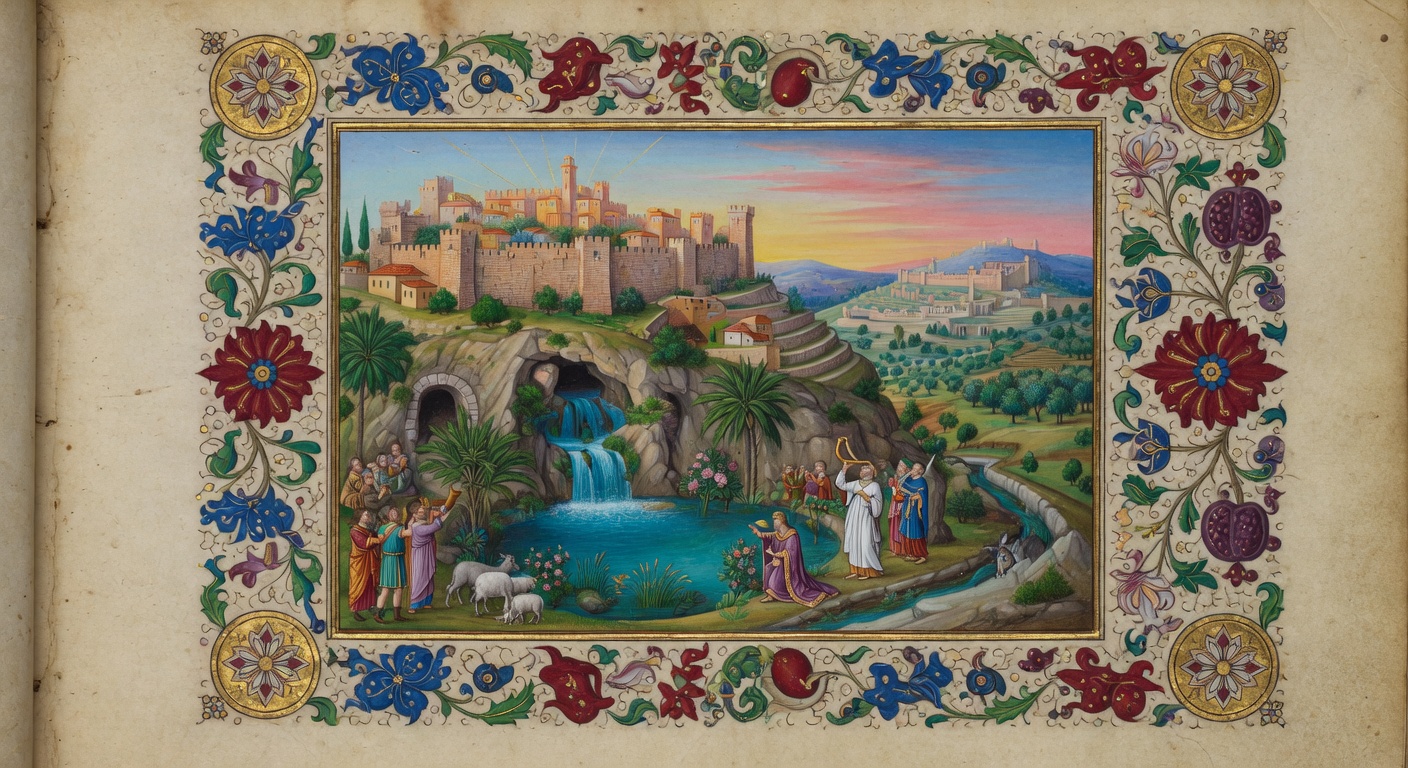
The spring of Gihon emerges as one of the four rivers flowing from the garden of Eden, symbolizing the life-giving waters that sustain God's creation from the beginning. In the history of Israel, this same source near Jerusalem became the place where Zadok and Nathan anointed Solomon as king, marking the establishment of the Davidic line according to divine promise. Later, King Hezekiah skillfully rerouted its waters through a tunnel into the city, ensuring Jerusalem's survival during times of siege and demonstrating faith in God's protective care over His people.
-
Mount Zion
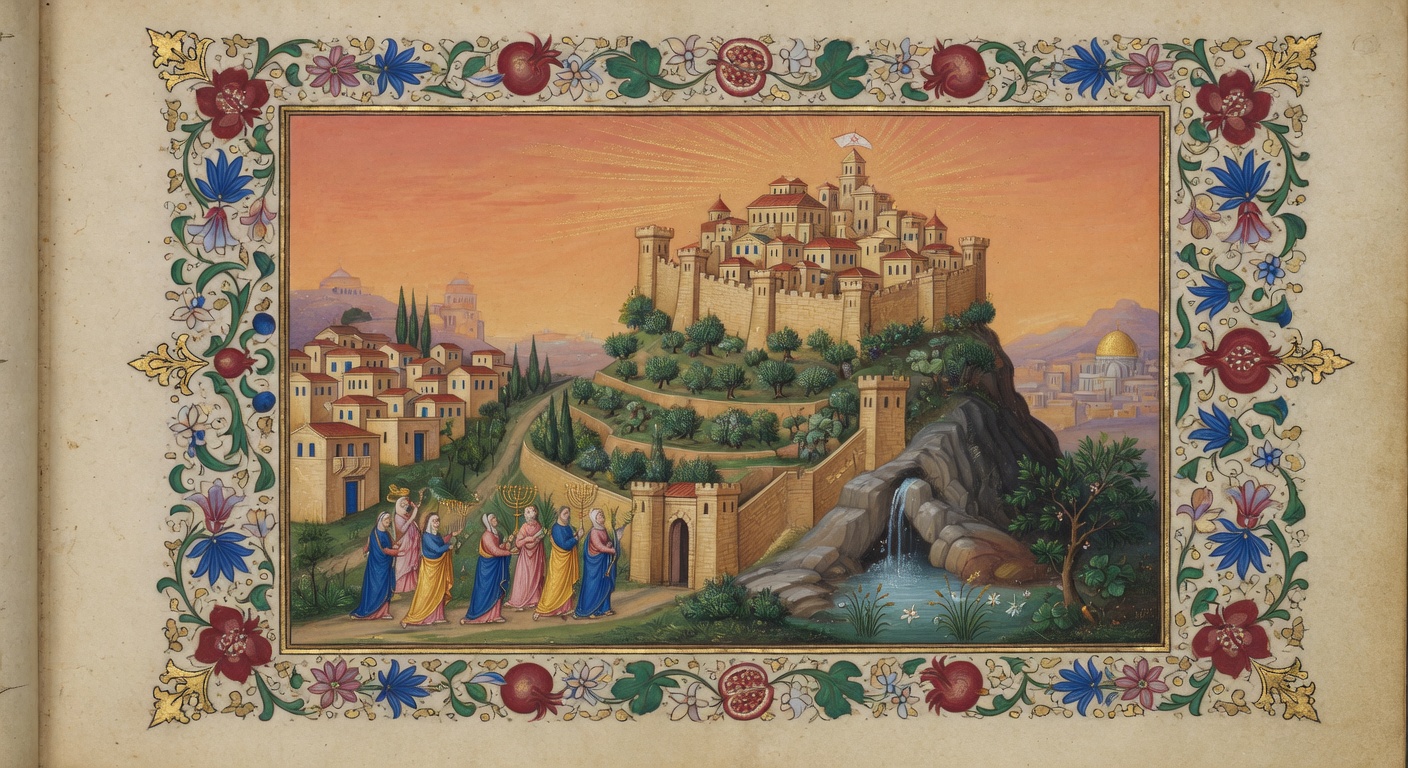
Mount Zion is the hill in Jerusalem that David captured from the Jebusites and established as his capital, the City of David, after which he brought the Ark of the Covenant there to signify God's presence among Israel. This location became the focal point of national worship and divine promises, later extending symbolically to encompass the Temple Mount where Solomon built the house of the Lord. In the prophetic writings it stands as the center of God's redemptive plan, embodying covenant faithfulness and the expectation of a coming Messiah who would rule from Zion in justice and peace. The New Testament further develops this imagery to portray the heavenly Jerusalem where believers gather to the living God.
Levant
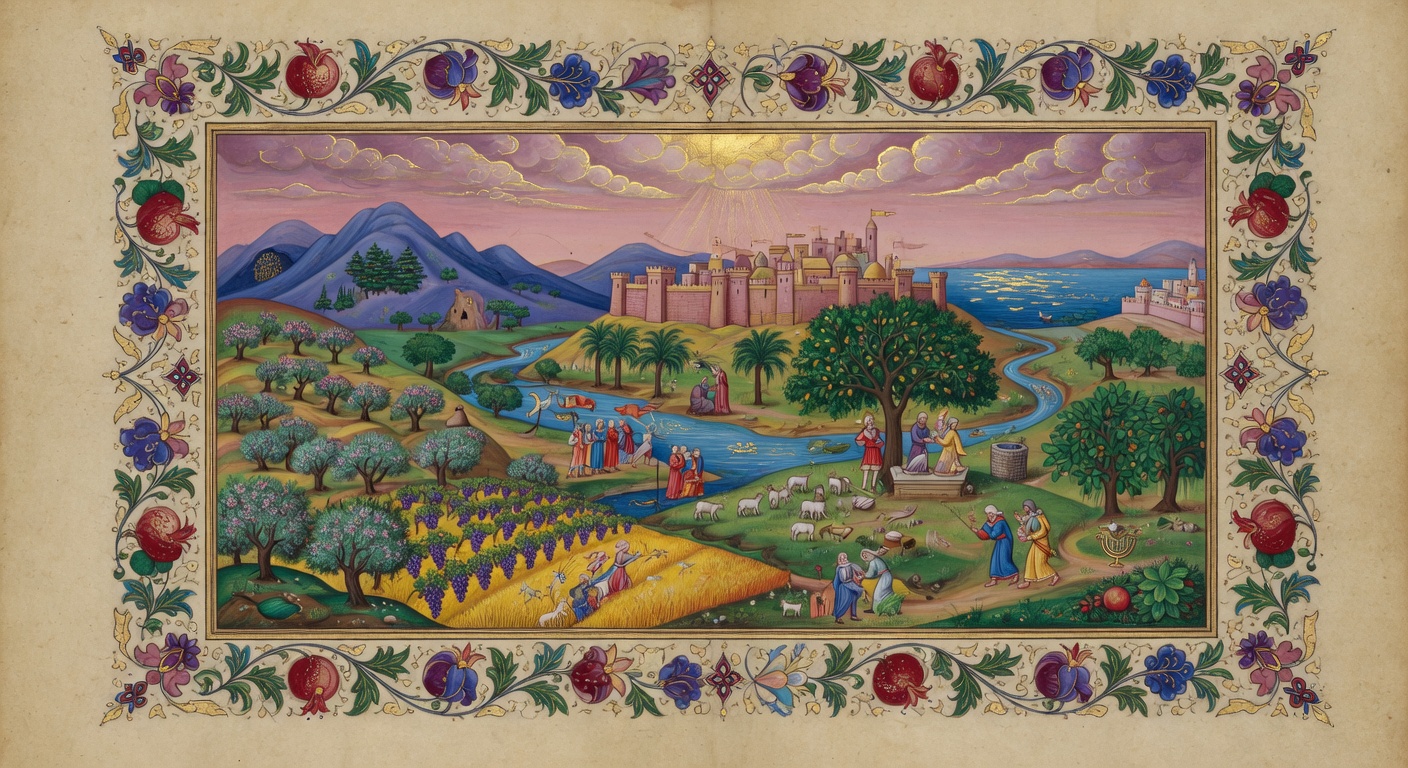
Negev
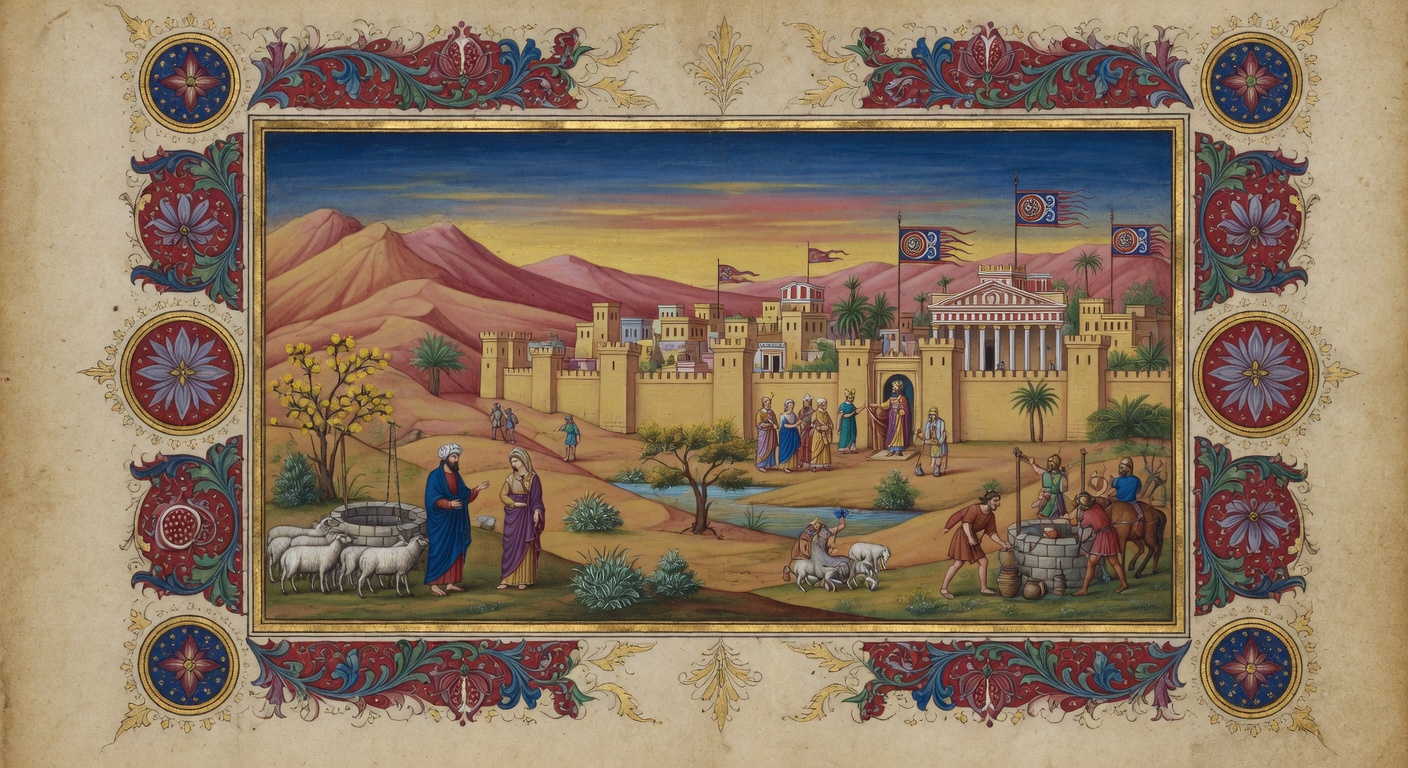
Gilead
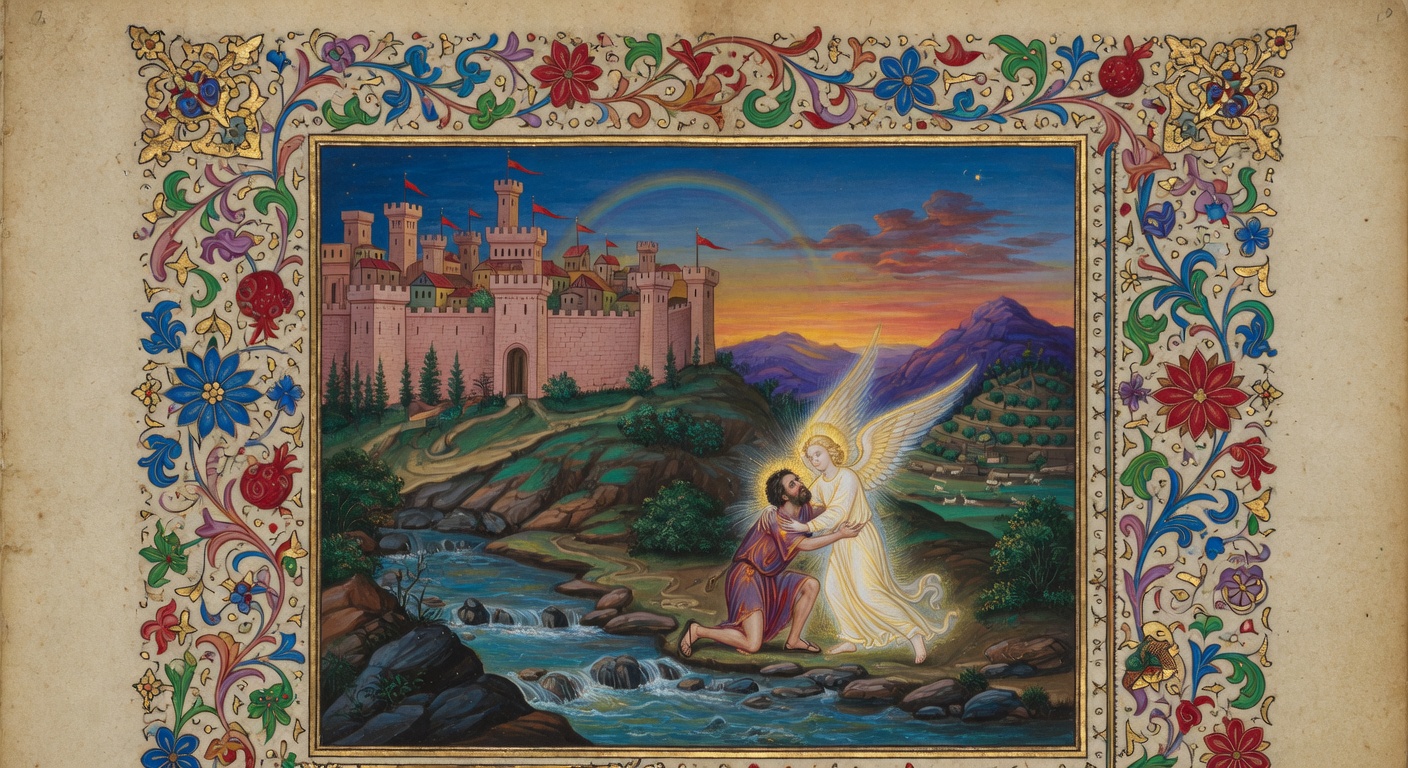
Nile Delta, Egypt
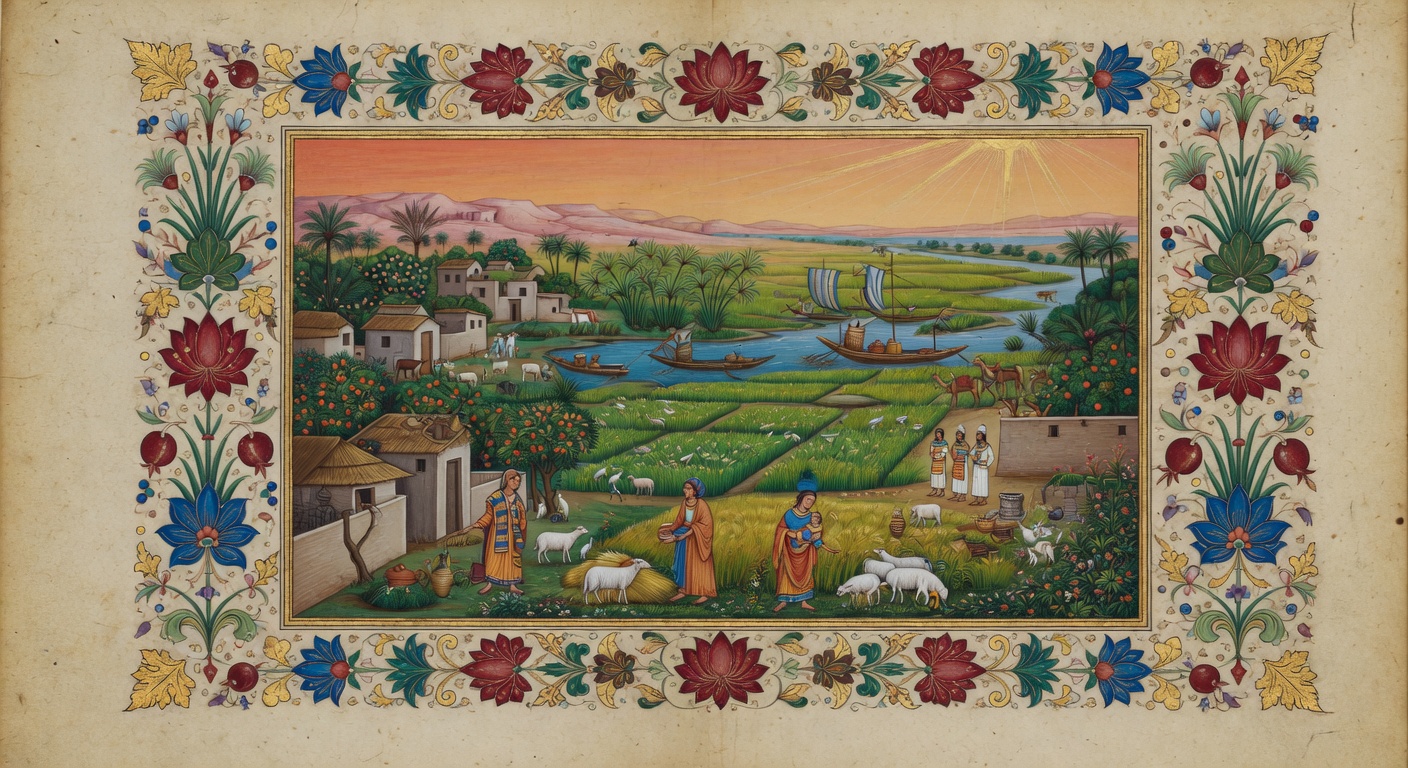
Northwestern Arabia
Transjordan
-
Moab
Moab emerged from the lineage of Lot, Abraham's nephew, whose descendants settled east of the Dead Sea after the judgment on Sodom. This land became the setting for Ruth's faithful journey to Bethlehem, through which a Moabite woman entered the line leading to David and the promised Messiah. Later it offered David a place of refuge for his parents during his flight from Saul, illustrating how God wove even foreign soil into the redemptive purposes centered on Israel.
-
Edom
Edom was the nation descended from Esau, the brother of Jacob, and was located southeast of the Dead Sea in the rugged hill country of Seir. Throughout Israel's history the Edomites repeatedly opposed God's people, denying them passage during the Exodus and later allying with invading armies, actions that provoked ongoing conflict and eventual Israelite dominance under David and his successors. These events form the backdrop for multiple prophetic oracles, especially in Obadiah, Isaiah, Jeremiah, and Ezekiel, which condemn Edom's pride, treachery, and territorial ambitions while foretelling its downfall. In Scripture Edom therefore functions as a concrete example of divine justice against nations that harbor lasting enmity toward Israel, illustrating broader themes of covenant faithfulness and judgment.
-
Gilead
Lying east of the Jordan River, Gilead represents a rugged mountainous territory that served as both a refuge and a homeland for key figures in Israel's history. Jacob sought safety there during his flight from Laban, leading to a covenant of peace, while Jephthah the Gileadite emerged as a deliverer who led his people to victory against their enemies. Known for its medicinal balm that offered physical healing, this region underscores themes of divine protection and restoration woven throughout the redemptive narrative of the scriptures.
-
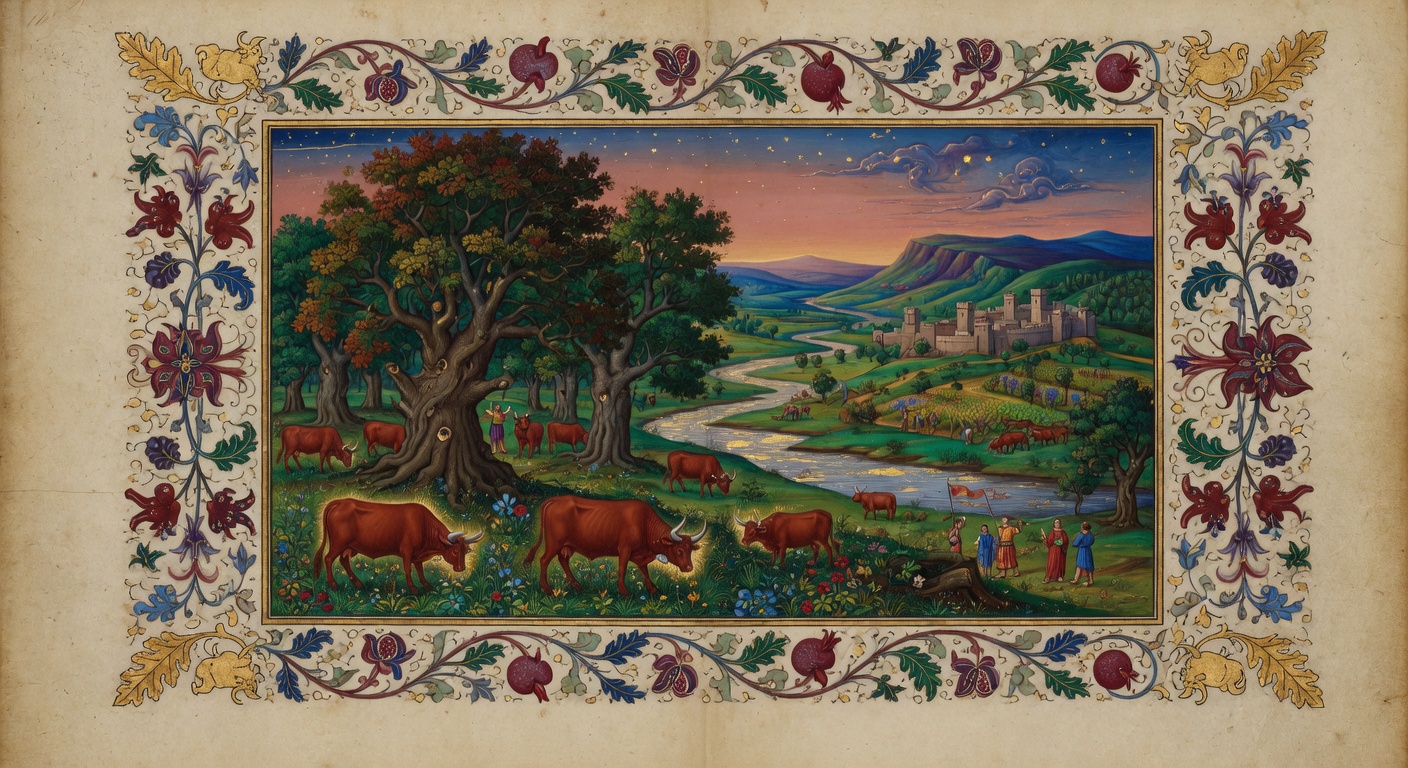
Bashan
Bashan emerges in Scripture as a fertile expanse east of the Jordan, celebrated for its oak forests and powerful cattle that symbolized strength and abundance. Israel secured this territory through the defeat of its ruler Og, whose vast kingdom fell to Moses and the people as they advanced toward the Promised Land, with portions later granted to the tribes of Manasseh, Reuben, and Gad. The region's prosperity later served as a vivid image in the prophecies of Amos, where its well-fed cows illustrated the complacency and injustice that invited divine judgment.
-
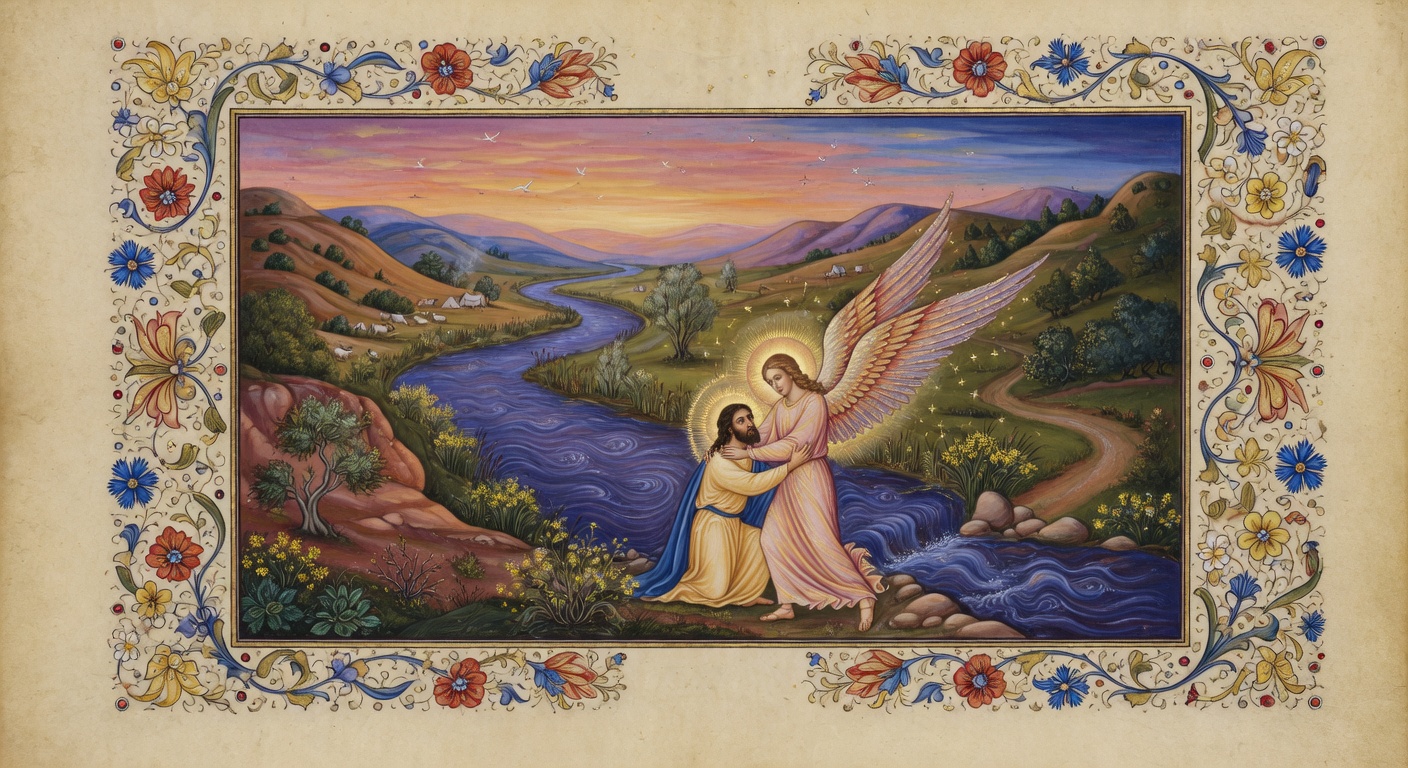
Jabbok
The Jabbok River served as a key geographical boundary east of the Jordan, delineating territories associated with ancient peoples such as the Ammonites and later marking divisions in the land allotted to Israelite tribes. In Genesis 32, Jacob crossed the river alone at night and wrestled until dawn with a mysterious figure, widely understood as an angel or divine representative, who dislocated his hip and renamed him Israel to signify his prevailing with God and humanity. This event proved pivotal in Scripture, transforming Jacob's identity and foreshadowing the nation of Israel while illustrating themes of struggle, blessing, and covenant relationship. The river appears elsewhere in the Old Testament as a strategic landmark in narratives of conquest and tribal inheritance.
-
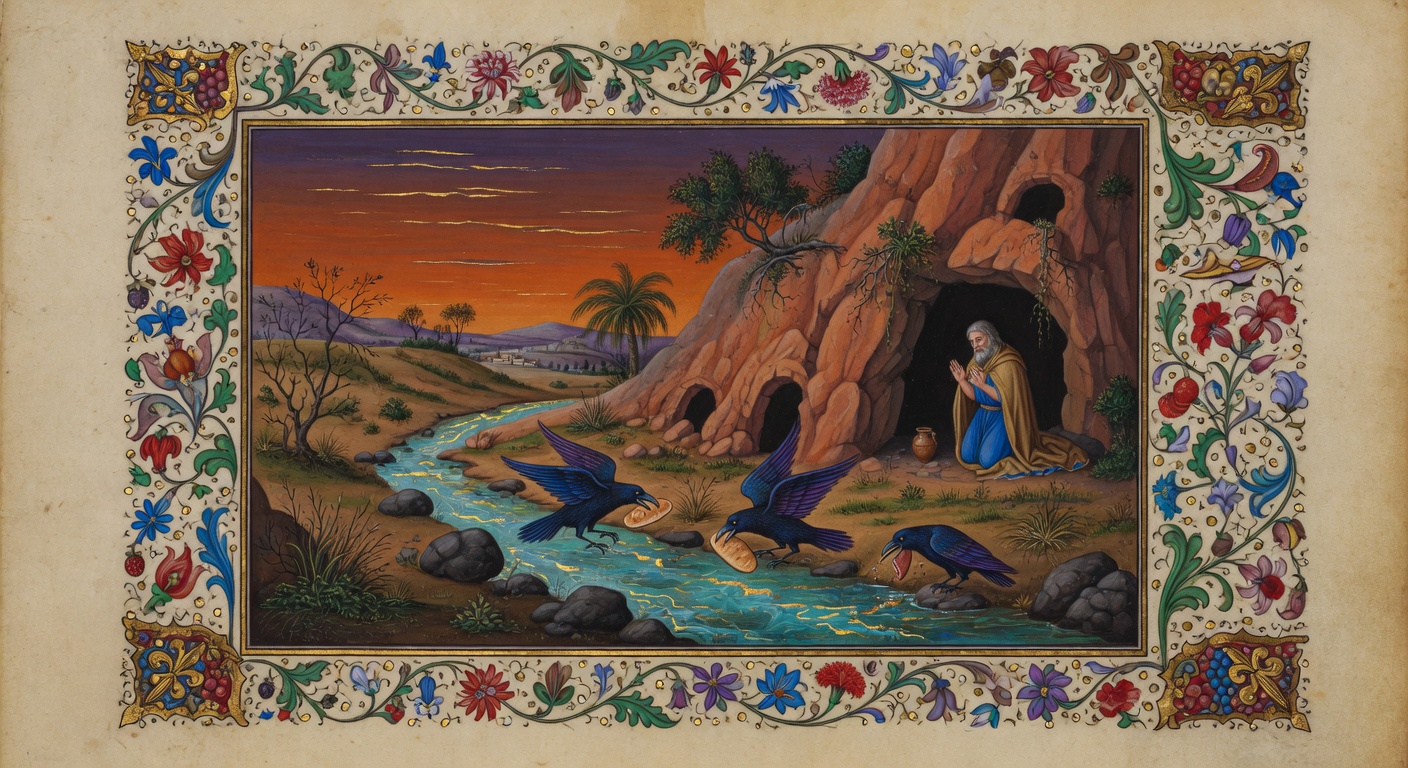
Brook Cherith
Hidden away by the brook Cherith east of the Jordan, the prophet Elijah found refuge during the severe drought that gripped the land as judgment for Israel's idolatry. There God miraculously provided water from the stream and daily sustenance through ravens that brought bread and meat each morning and evening, illustrating divine care for his faithful servant amid widespread famine. Yet when the brook eventually dried up, this temporary haven underscored the prophet's dependence on God's ongoing direction, preparing him for further acts of provision and revelation in the redemptive unfolding of Israel's history.
-
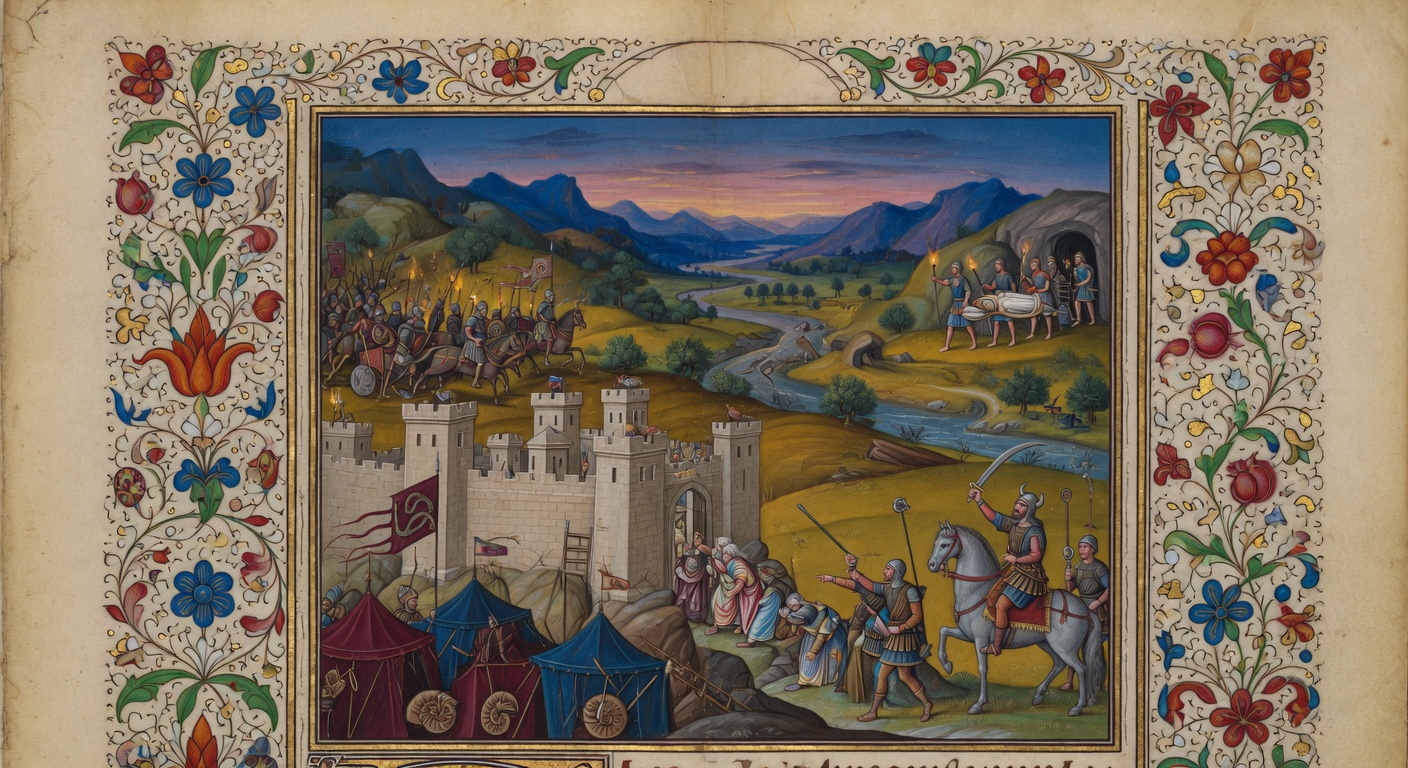
Jabesh-gilead
Jabesh-gilead was an Israelite city located east of the Jordan River in the region of Gilead, notable for its close relationship with the tribe of Benjamin and its pivotal role in the early monarchy. The city first appears in Judges 21, where its inhabitants were attacked for failing to join the assembly against Benjamin, with surviving virgins given as wives to the decimated tribe. Its most significant moment came when the Ammonite king Nahash besieged the city and threatened to gouge out the right eye of every inhabitant as a condition of surrender. The desperate plea of Jabesh-gilead's elders reached Saul at Gibeah, who rallied all Israel and delivered the city in a decisive night attack, establishing his military reputation and solidifying his kingship. The gratitude of Jabesh-gilead's people endured beyond Saul's death; when the Philistines displayed his body on the walls of Beth-shan, valiant men of Jabesh-gilead marched through the night to recover and honorably bury the remains of Saul and his sons.
Western Asia
-
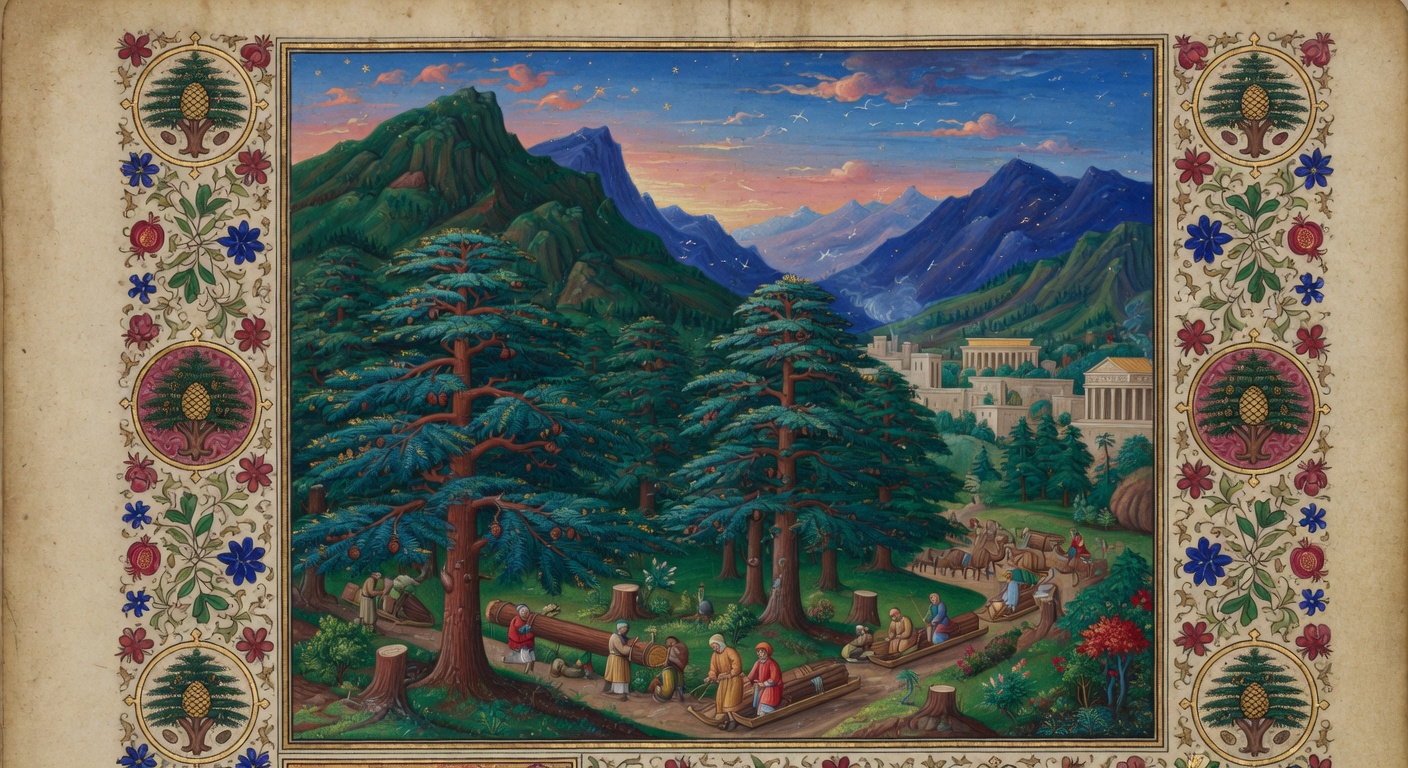
Lebanon
Lebanon held a prominent place in biblical history due to its abundant and high-quality cedar forests, which were highly sought after for major construction projects. King Solomon partnered with King Hiram of Tyre to obtain these cedars for building the First Temple in Jerusalem, as well as his royal palace, highlighting the region's economic and diplomatic ties with Israel. In Scripture, the cedars of Lebanon often symbolize strength, grandeur, and divine blessing, as seen in passages like Psalm 92 where the righteous are compared to flourishing cedars, while also representing human pride that God humbles in prophetic texts. This underscores Lebanon's role not only as a source of valuable resources but also as a metaphor for both prosperity and the consequences of arrogance in the biblical narrative.
-
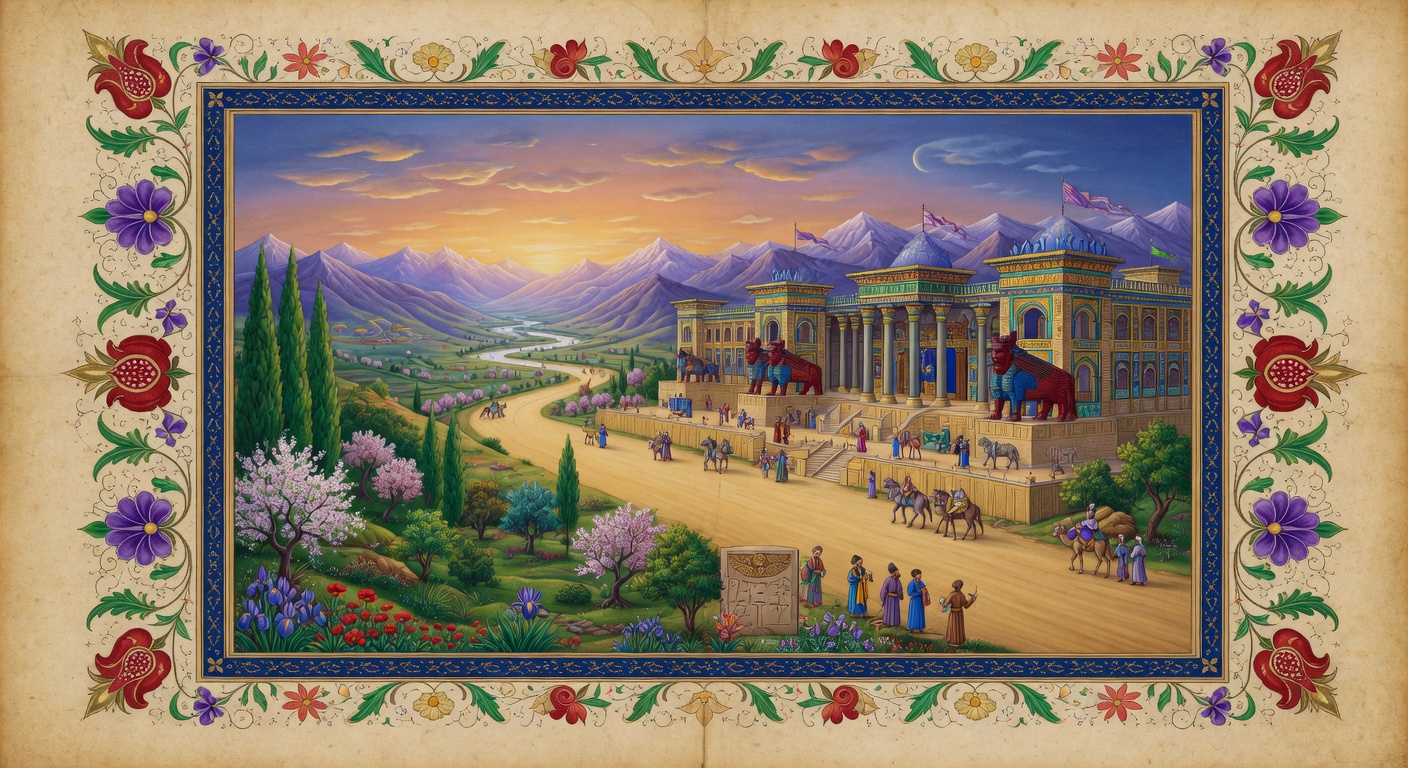
Persia
In the unfolding of God's redemptive purposes, Persia rose as the empire that subdued Babylon and issued the decree enabling the Jewish exiles to return and rebuild the temple in Jerusalem. This same realm provides the backdrop for Esther's story of courageous intercession and hidden providence within the royal court, while Daniel's vision portrays it as the ram with two horns that charges across the earth until its appointed time ends. Through these accounts Persia reveals how the Lord sovereignly directs even mighty Gentile kingdoms to preserve his people and advance the promises of restoration.
Arabian Peninsula or East Africa
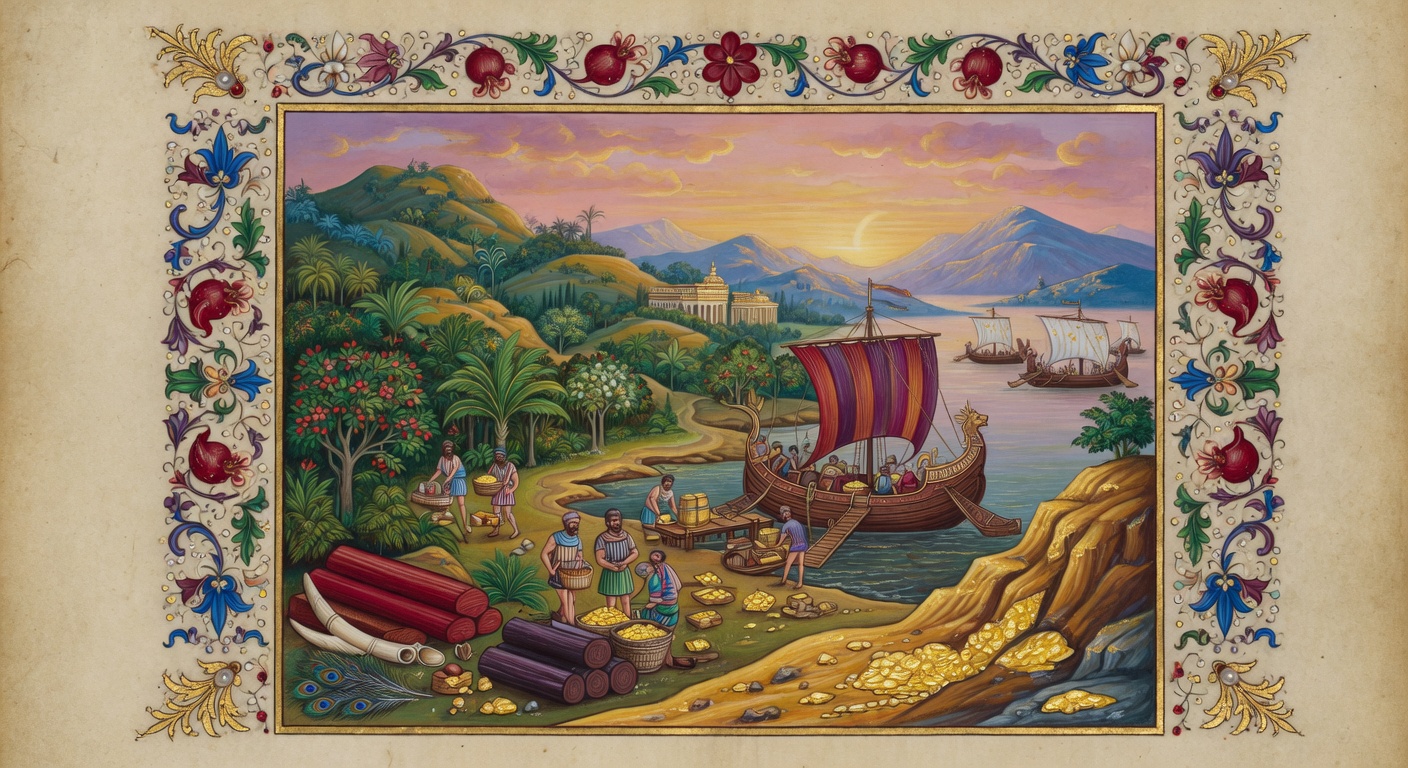
Southern Arabia
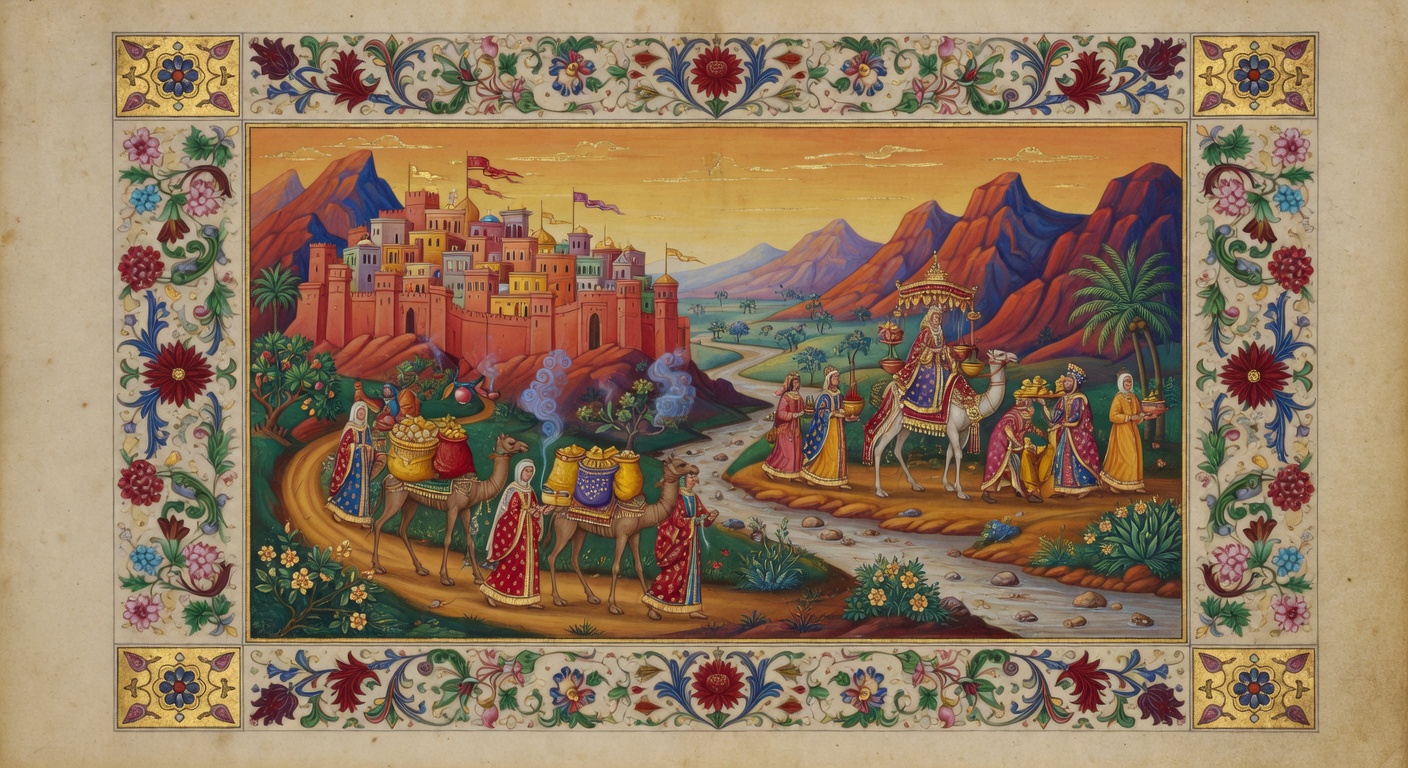
Northern Israel
-
Galilee
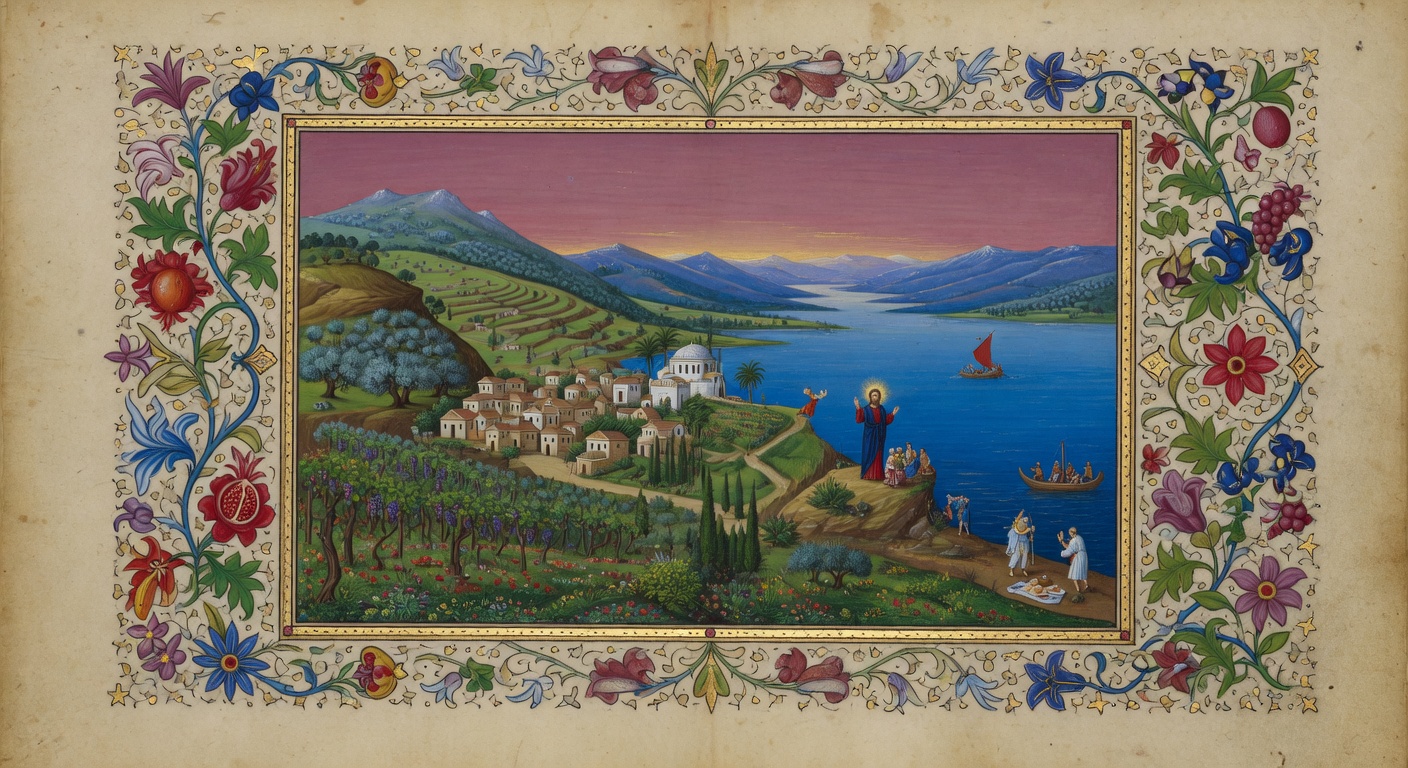
In the northern reaches of ancient Israel this fertile region served as the humble setting where Jesus grew up in Nazareth and launched the greater part of his public ministry. It was here that he turned water into wine at the wedding in Cana as his first miracle, taught the crowds through parables, and later walked upon the sea to reveal his power over creation amid the storm. Through these events Galilee became central to the redemptive story, showing how the light of the gospel advanced from ordinary places among everyday people.
-
Endor
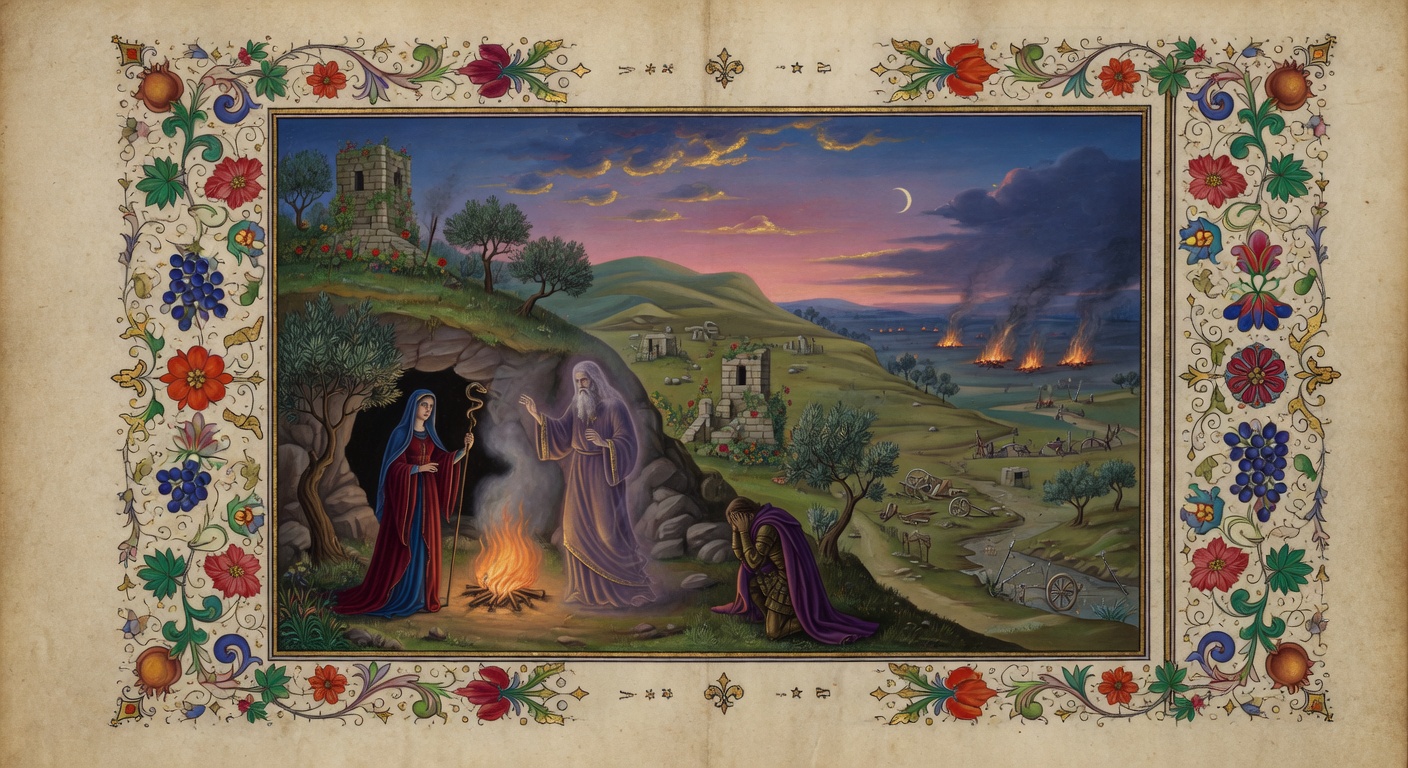
In the hill country allotted to the tribe of Manasseh, Endor became the setting for one of the darkest moments in Israel's monarchy when King Saul, facing the Philistine threat, turned from the Lord and sought a forbidden medium to summon the spirit of Samuel. The encounter confirmed the king's rejection and foretold his impending defeat, revealing the spiritual bankruptcy that arises when God's people forsake his word for occult counsel. Centuries earlier the same region had witnessed the overthrow of Sisera's Canaanite forces, a reminder that the ground once marked by divine deliverance could also testify to the consequences of covenant unfaithfulness.