Malta

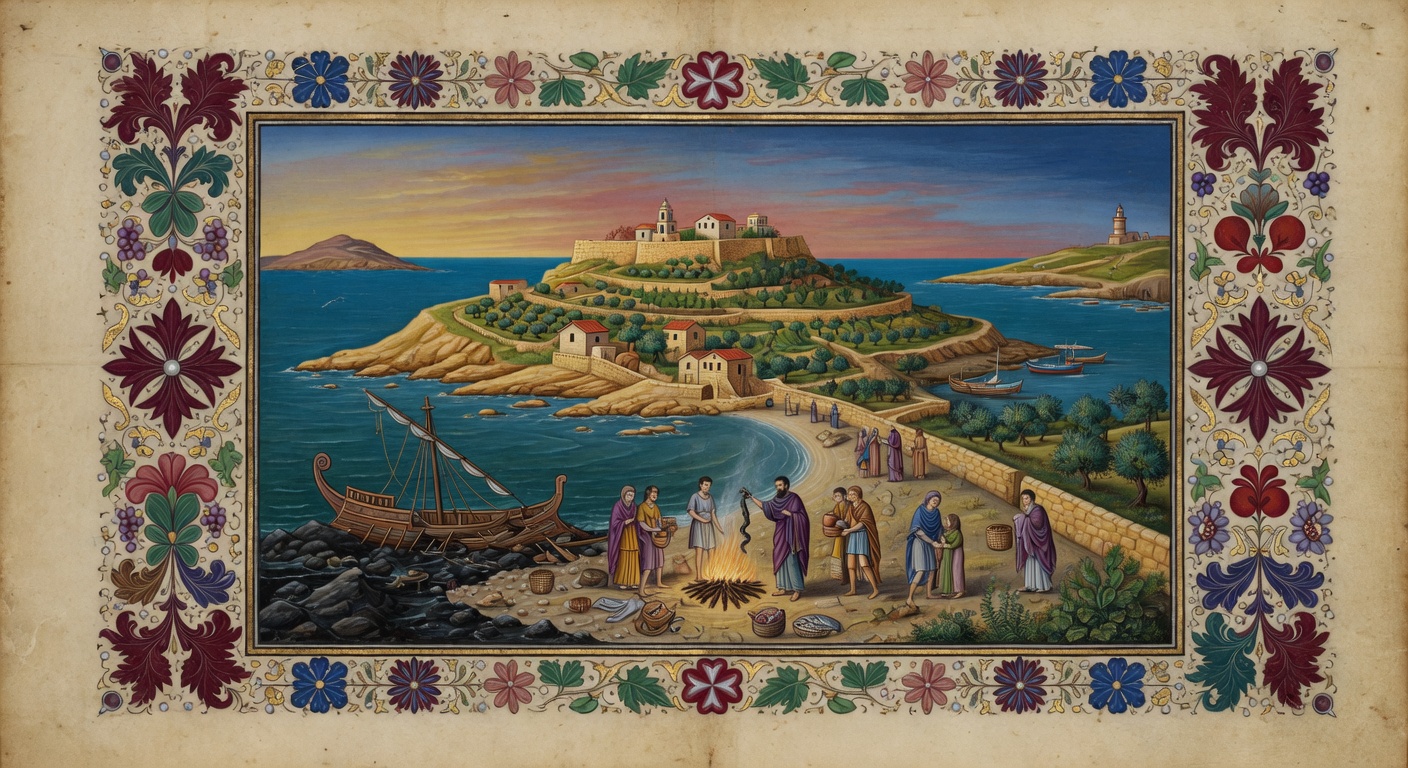
Illustration of Malta

Malta, referred to as Melita in the New Testament, is the island where the apostle Paul was shipwrecked during his voyage to Rome as a prisoner around 59-60 AD, as recorded in Acts 27-28. After the ship ran aground in a storm, all 276 passengers and crew survived, and the local inhabitants provided essential aid by building a fire and offering hospitality to the cold and wet survivors. While there, Paul was bitten by a viper yet remained unharmed, an event that led him to heal the father of the island's chief official and many others afflicted with diseases, demonstrating God's protective power. Paul and his companions stayed three months on Malta before resuming their journey, underscoring themes of divine providence and the unstoppable spread of the gospel amid adversity.

0:00

Details

Region
Greece/Rome
Modern Location
Malta
Strongest connections in Scripture

Journey Paths

Paul's Journey

Damascus โ†’ Tarsus โ†’ Antioch โ†’ Corinth โ†’ Rome โ†’ Ephesus โ†’ Malta

Key Passages

Paul's Shipwreck

Acts 28:1-10

Paul survives shipwreck on Malta and heals the sick - even disaster becomes an opportunity for ministry, and God's promise of Paul reaching Rome remains sure.
A1nd when they were escaped, then they knew that the island was called Melita.

2 And the barbarous people shewed us no little kindness: for they kindled a fire, and received us every one, because of the present rain, and because of the cold. 3 And when Paul had gathered a bundle of sticks, and laid them on the fire, there came a viper out of the heat, and fastened on his hand. 4 And when the barbarians saw the venomous beast hang on his hand, they said among themselves, No doubt this man is a murderer, whom, though he hath escaped the sea, yet vengeance suffereth not to live. 5 And he shook off the beast into the fire, and felt no harm. 6 Howbeit they looked when he should have swollen, or fallen down dead suddenly: but after they had looked a great while, and saw no harm come to him, they changed their minds, and said that he was a god. 7 In the same quarters were possessions of the chief man of the island, whose name was Publius; who received us, and lodged us three days courteously. 8 And it came to pass, that the father of Publius lay sick of a fever and of a bloody flux: to whom Paul entered in, and prayed, and laid his hands on him, and healed him. 9 So when this was done, others also, which had diseases in the island, came, and were healed: 10 Who also honoured us with many honours; and when we departed, they laded us with such things as were necessary.