🔗 Cross-References
-
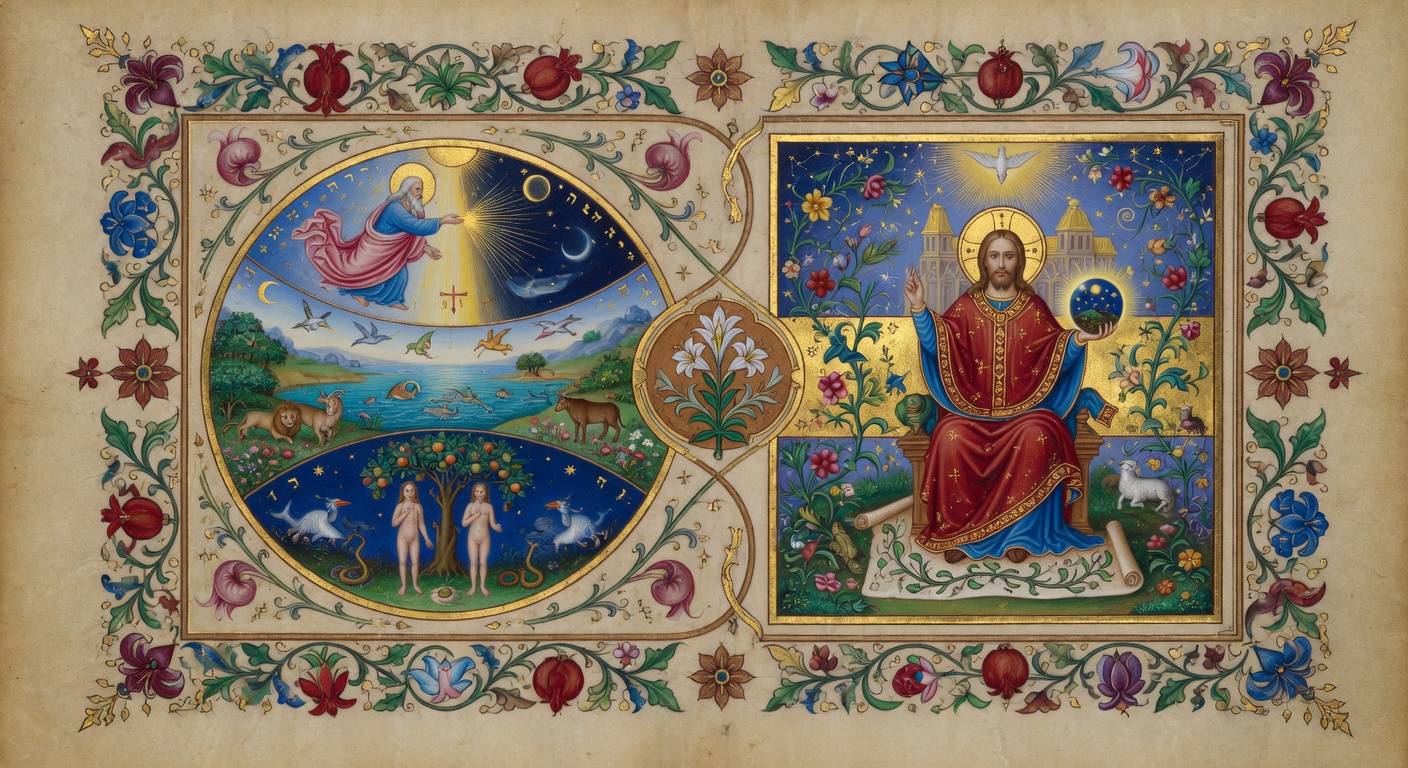
Creation Accounts
The opening chapters of Genesis present God creating the heavens and the earth by his word, laying the groundwork for humanity's fellowship with him that sin would later disrupt. The Gospel of John returns to this beginning, revealing the Word as both with God and as God, through whom every created thing came into being. In this way the scriptures present Christ not only as redeemer but as the very one by whom the world was made and in whom it continues to consist, linking creation itself to the story of restoration.
-
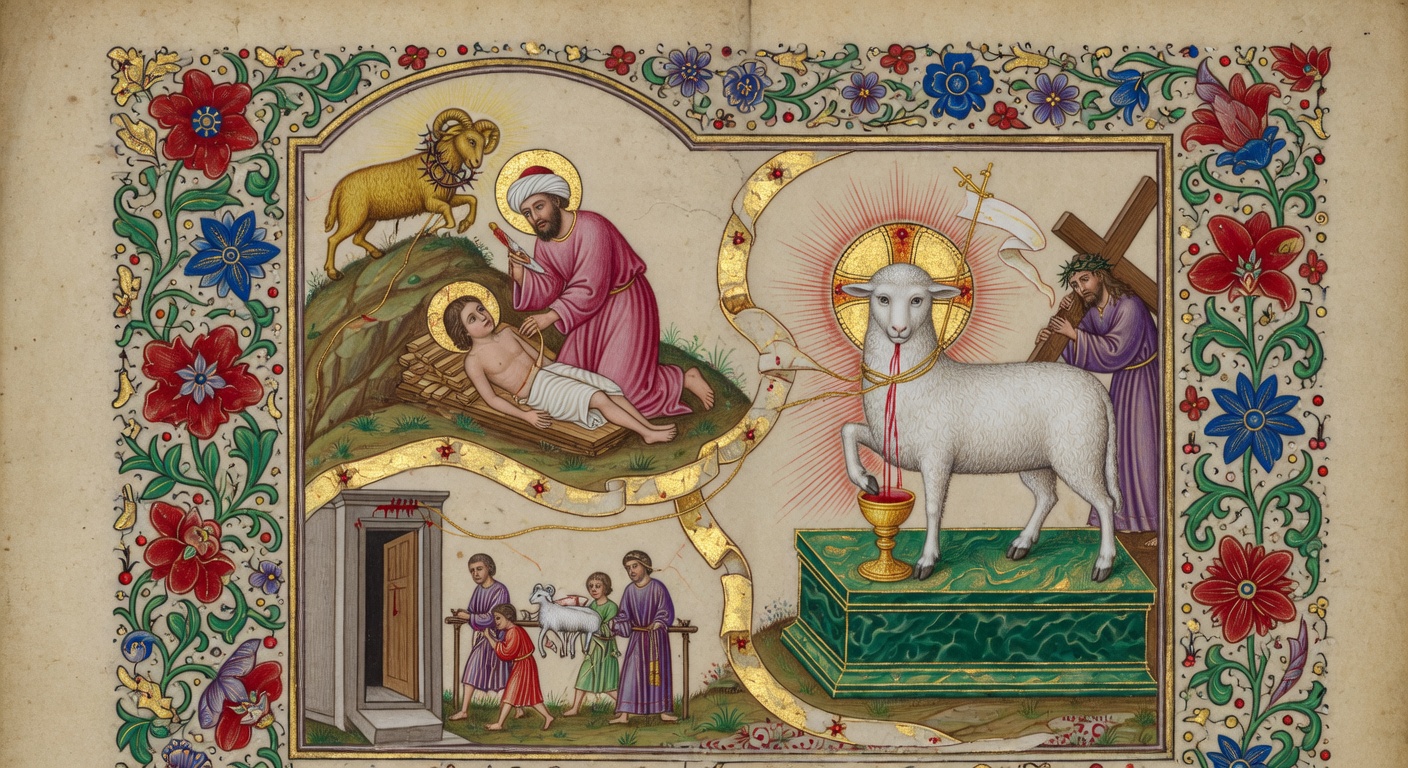
The Lamb of God
In the unfolding story of redemption, God first signals his provision of a substitute when he supplies a ram in place of Isaac, establishing the pattern of an innocent life given for another. This image deepens through the Passover, where the blood of a spotless lamb shields the people from judgment, and finds prophetic voice in the suffering servant led silently to slaughter. Ultimately it converges in Christ, proclaimed as the Lamb of God who removes the sin of the world and revealed as the slain Lamb worthy to redeem humanity.
-
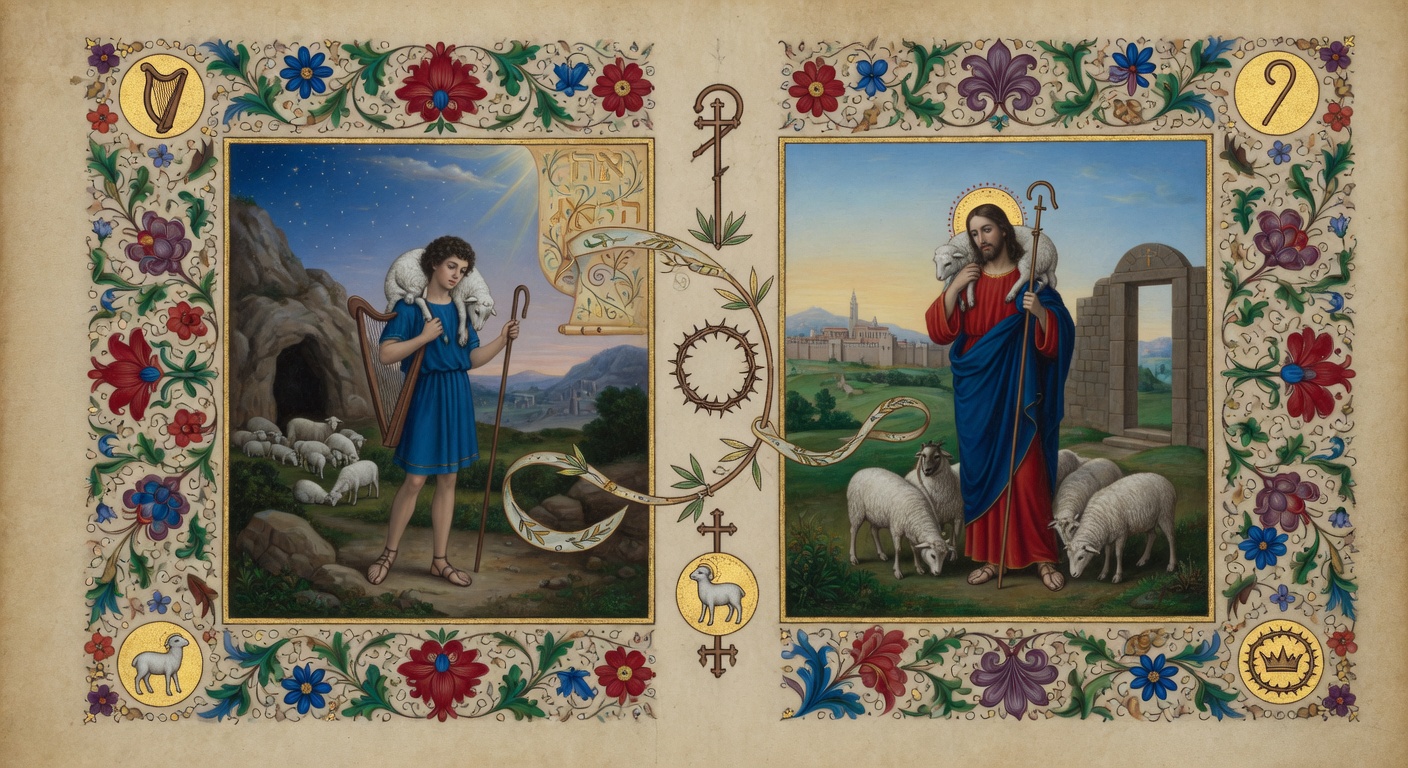
The Good Shepherd
The image of God as shepherd runs through the Bible as a picture of His protective guidance and intimate care for His people, beginning with the psalm that declares the Lord leads His own beside still waters and restores their souls. Prophecies foretell how the Lord Himself will search for His scattered flock and set over them a shepherd from the line of David to feed them in justice. This finds its fulfillment when Jesus identifies Himself as the good shepherd who knows His sheep and lays down His life for them, securing their eternal redemption through His sacrifice.
-
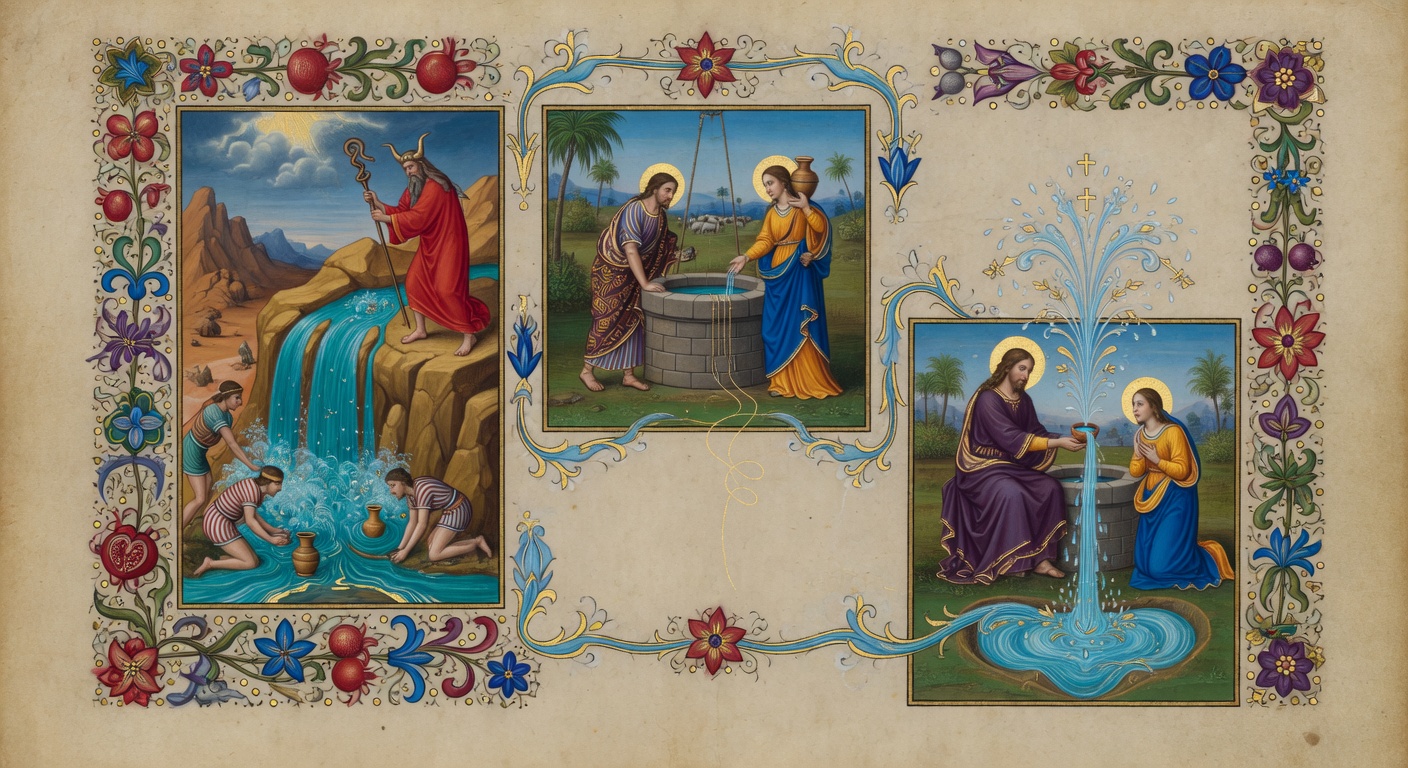
Living Water
Water flows as a symbol of God's life-giving provision from the rock struck in the wilderness to sustain his people on their journey. Isaiah issues a gracious invitation to come to the waters and drink freely, a promise realized when Jesus offers the Samaritan woman living water that becomes a well springing up into everlasting life. This same life-giving stream is promised to flow as rivers from the hearts of believers and reaches its consummation in the pure river of life proceeding from the throne of God in the eternal city.
-
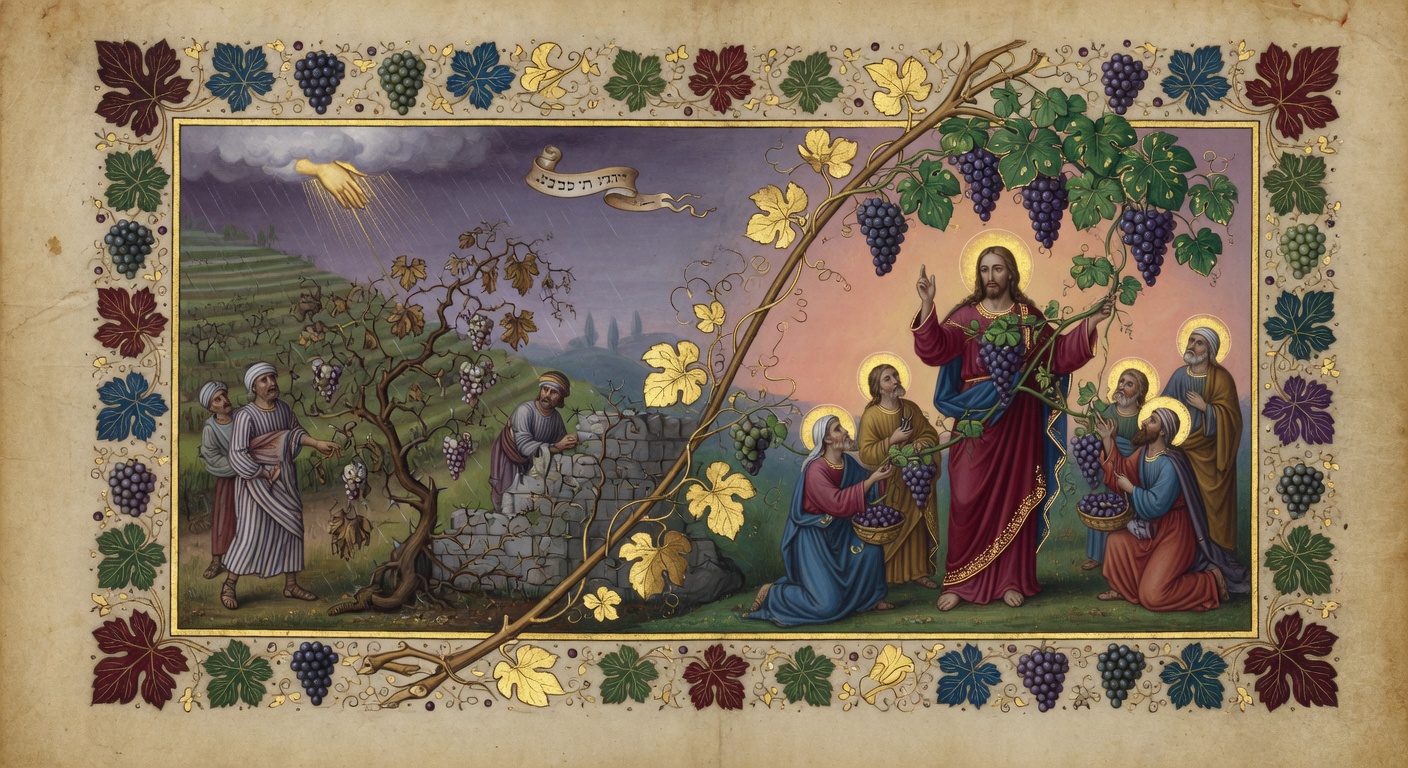
The Vine and the Vineyard
In the Song of the Vineyard the prophet portrays Israel as a choice plant set in fertile soil and hedged about by divine care, yet yielding only wild grapes that bring forth a sentence of desolation and removal. Jesus takes up this same image when He declares Himself the true vine, with His disciples as branches that must abide in Him if they are to bear fruit that remains. The contrast reveals the heart of redemption, moving from the covenant nation's failure under the old economy to the fruitful union now offered in Christ alone.
-
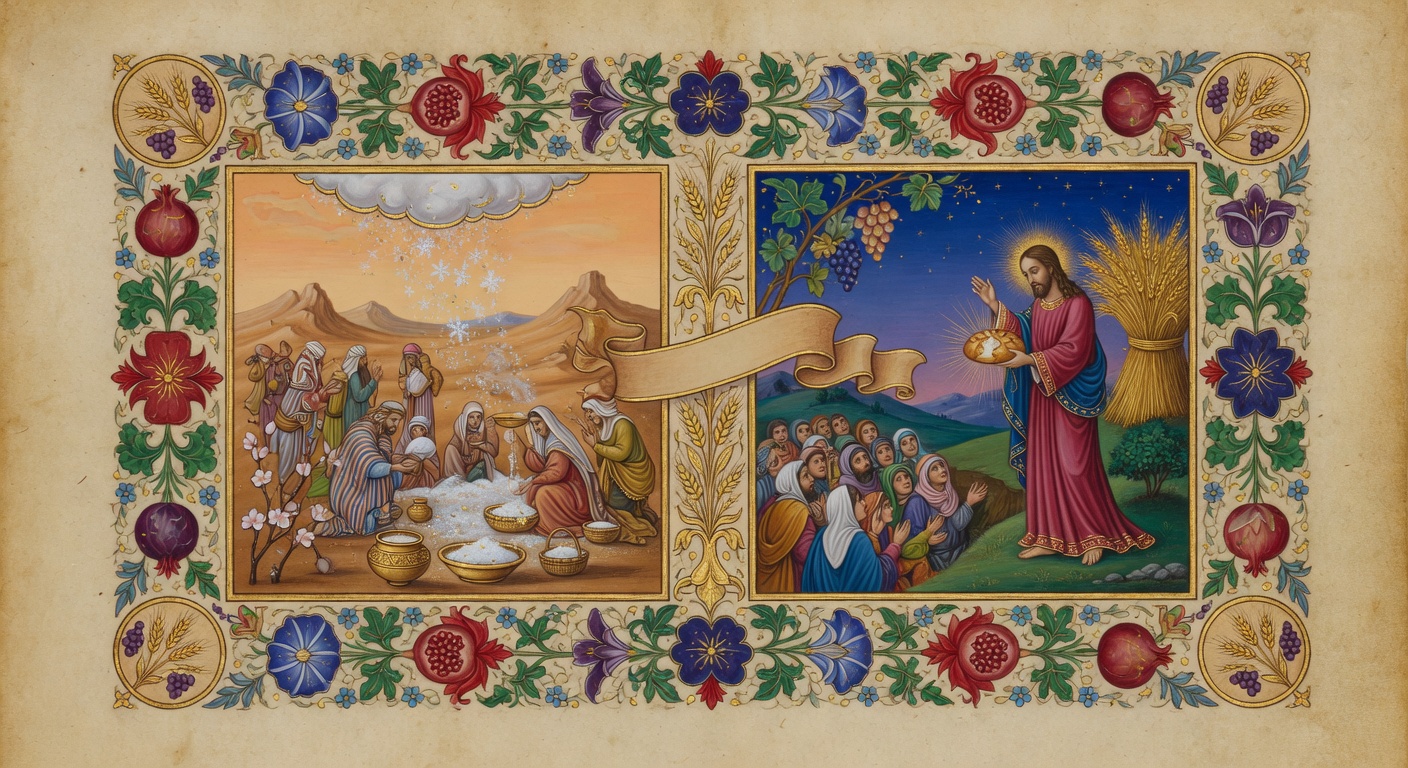
Bread of Life
In the wilderness, God rained down manna from heaven each morning to nourish the children of Israel and teach them daily dependence on his faithful provision during their exodus journey. This physical bread sustained their bodies yet served as a signpost in the redemptive story, anticipating the greater gift when Jesus identified himself as the true bread from heaven that imparts eternal life to every soul that receives him by faith. Through this connection the temporary relief of hunger in the old covenant yields to the abiding satisfaction found only in Christ, who fulfills and surpasses the ancient miracle.
-
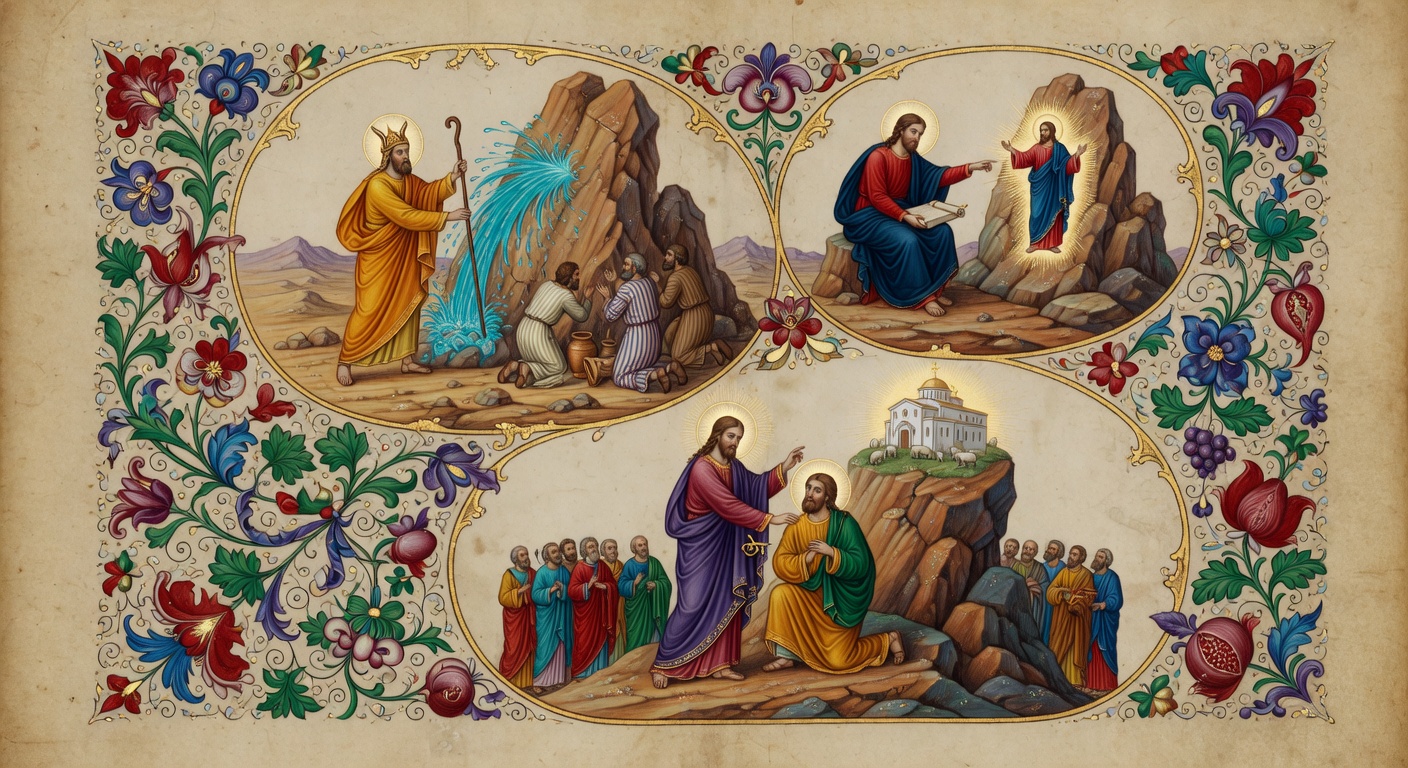
The Rock
Throughout the wilderness wanderings the Lord brought forth life-giving water from the rock to sustain His people, a provision that the apostle Paul identifies as Christ Himself accompanying Israel. Across the Old Testament the same imagery portrays God as an unchanging rock of refuge and salvation, a secure stronghold for those who trust in Him amid distress. When Peter confessed Jesus as the Christ the Son of the living God, the Savior announced that He would build His church upon this rock, establishing an enduring foundation that unites the redemptive story from wilderness provision to the gathered people of God.
-
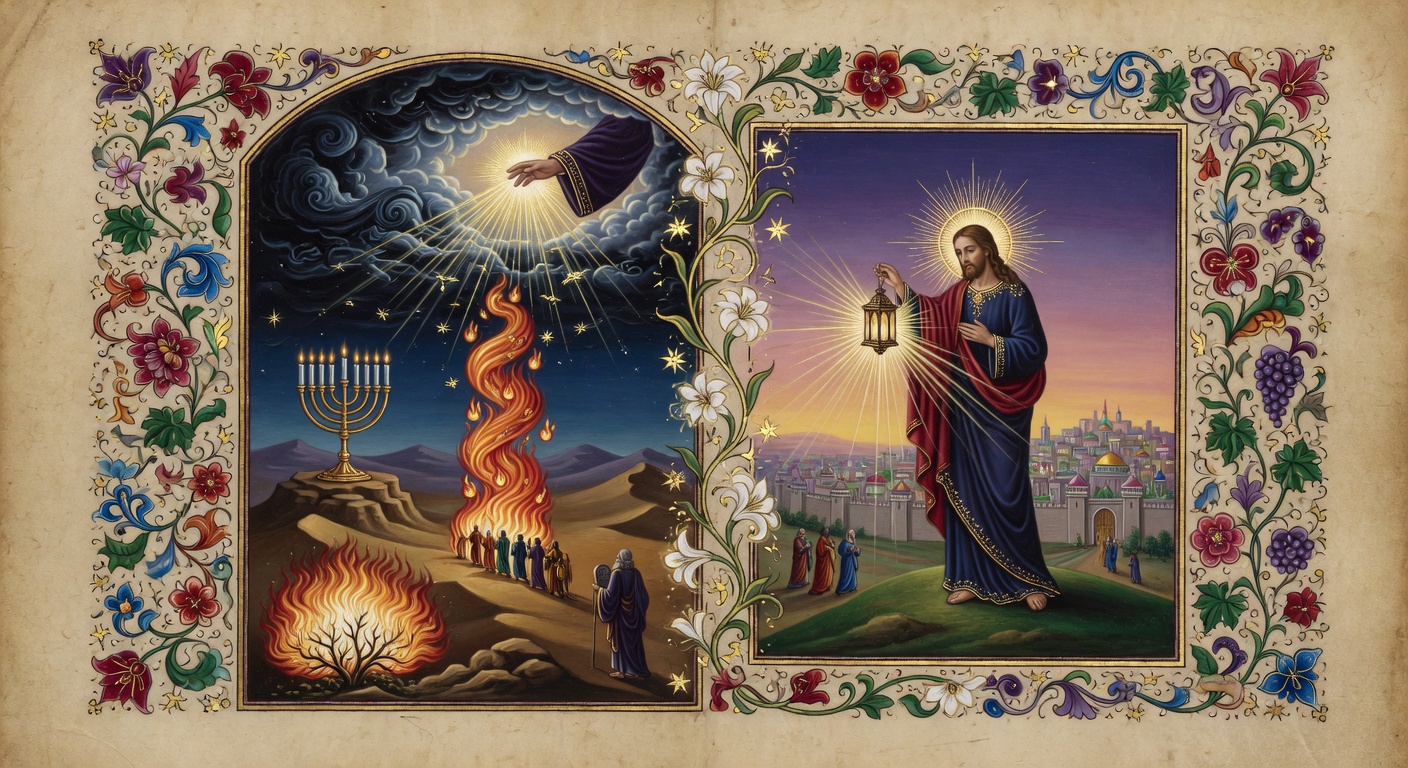
Light of the World
Light emerges at the dawn of creation when God commands it to shine forth, separating it from darkness and marking the start of His redemptive work in bringing order and life. This imagery deepens as a great light is promised to shine on those dwelling in shadow, finding fulfillment when Christ declares Himself the light of the world so that His followers walk no longer in darkness. In the final consummation the holy city needs neither sun nor moon, since the glory of God and the Lamb serve as its light, showing light's eternal triumph in the new creation.
-
The Temple of God
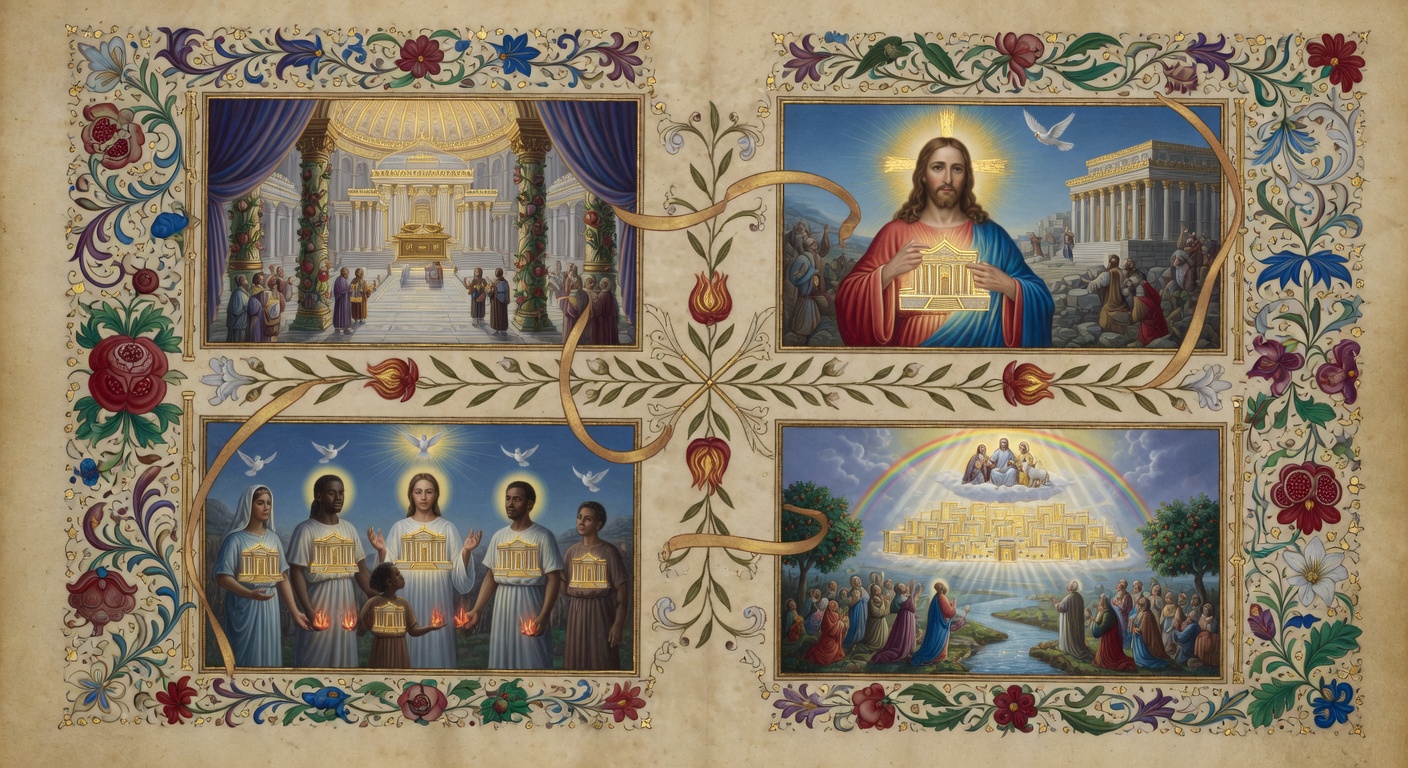
The temple stands as a central symbol of God's presence among his people, beginning with the glorious structure erected by Solomon as a house for the Lord in Jerusalem. This physical edifice gives way to a profound revelation when Christ declares that his own body serves as the true temple, destined for destruction yet raised again in three days, fulfilling the ultimate sacrifice. In the unfolding of redemption, the apostle teaches that believers themselves become the temple indwelt by the Holy Spirit, calling for holiness in body and spirit. Ultimately, the vision of the new creation reveals no need for a temple at all, for the Lord God Almighty and the Lamb are its temple, where God dwells directly with his redeemed.
-
Rest and Sabbath
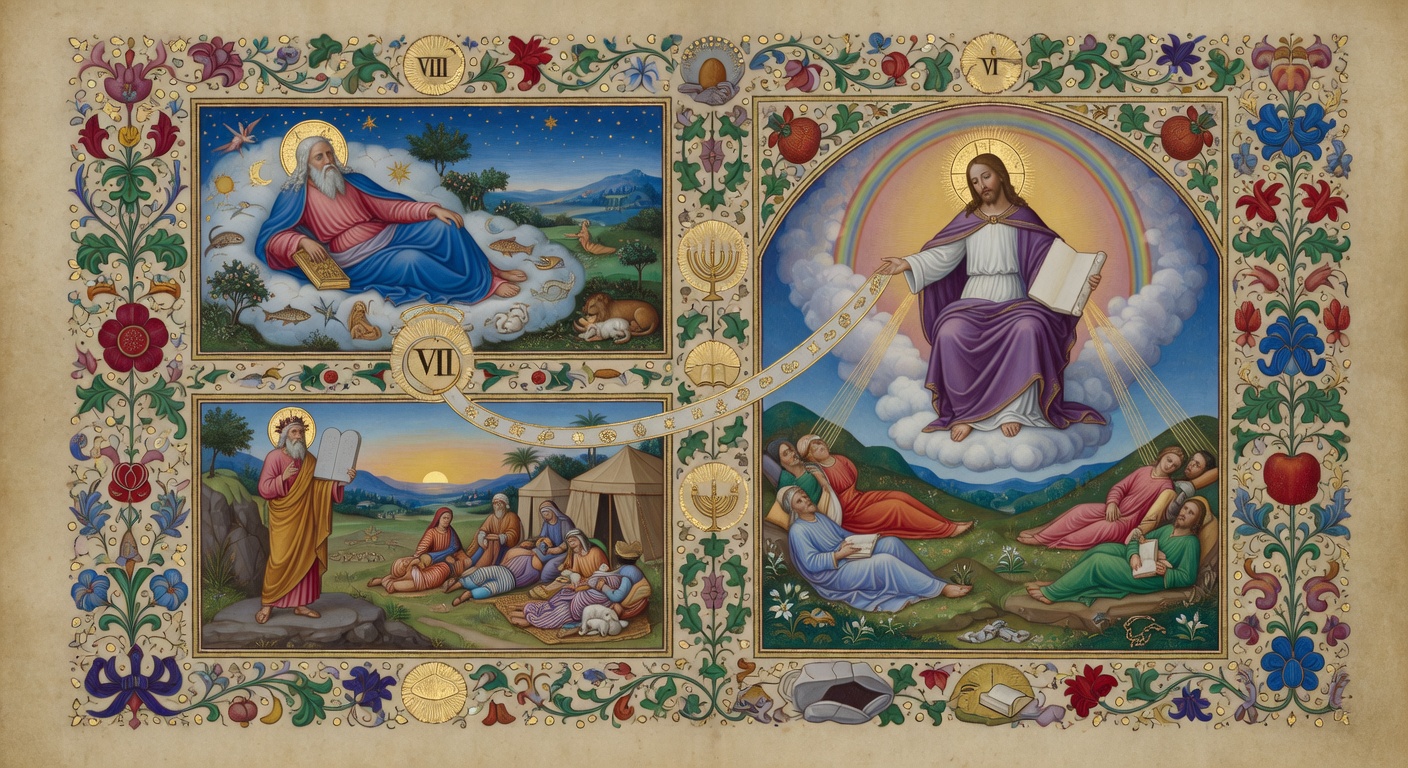
In the creation account, God rests on the seventh day, establishing a holy pattern that Israel is later commanded to observe as a perpetual sign of their covenant relationship with him. This Sabbath rest not only commemorates God's completed work but also anticipates the redemptive rest found in Christ, as the epistle to the Hebrews declares that a greater Sabbath remains for those who believe. Through faith, believers are called to enter this rest by ceasing from their own labors and trusting in the finished work of the Savior.
-
The Blood of Atonement
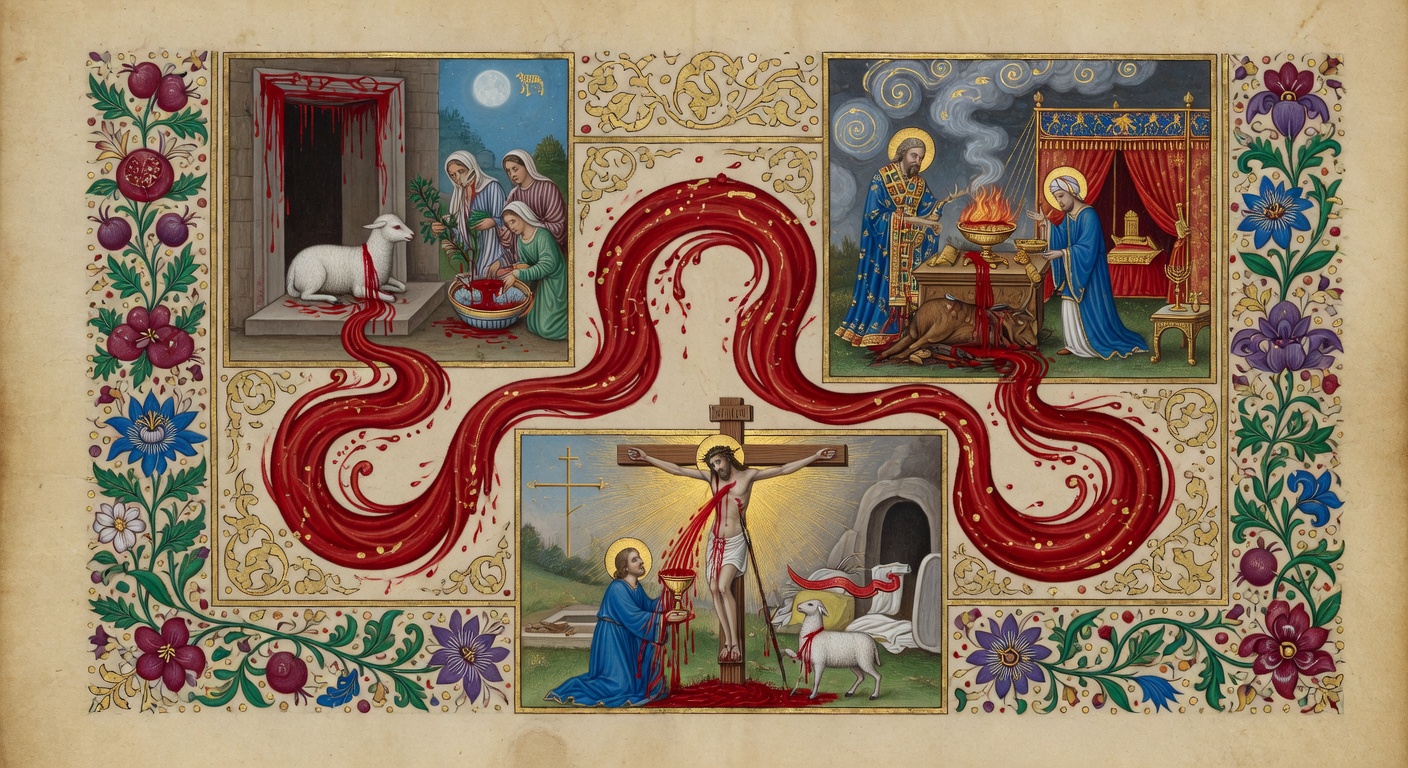
From the very beginning of Israel's deliverance the blood applied to the doorposts shielded the firstborn from judgment, revealing how the life poured out could stand in the place of another. This principle finds clear expression in the truth that the life of the flesh resides in the blood, which God appointed as the means of making atonement for the soul upon the altar. All these shadows find their substance in the precious blood of Christ, which not only covers but thoroughly cleanses the believer from every stain of sin, accomplishing what the repeated offerings could never fully achieve.
-
Faith Hall of Fame
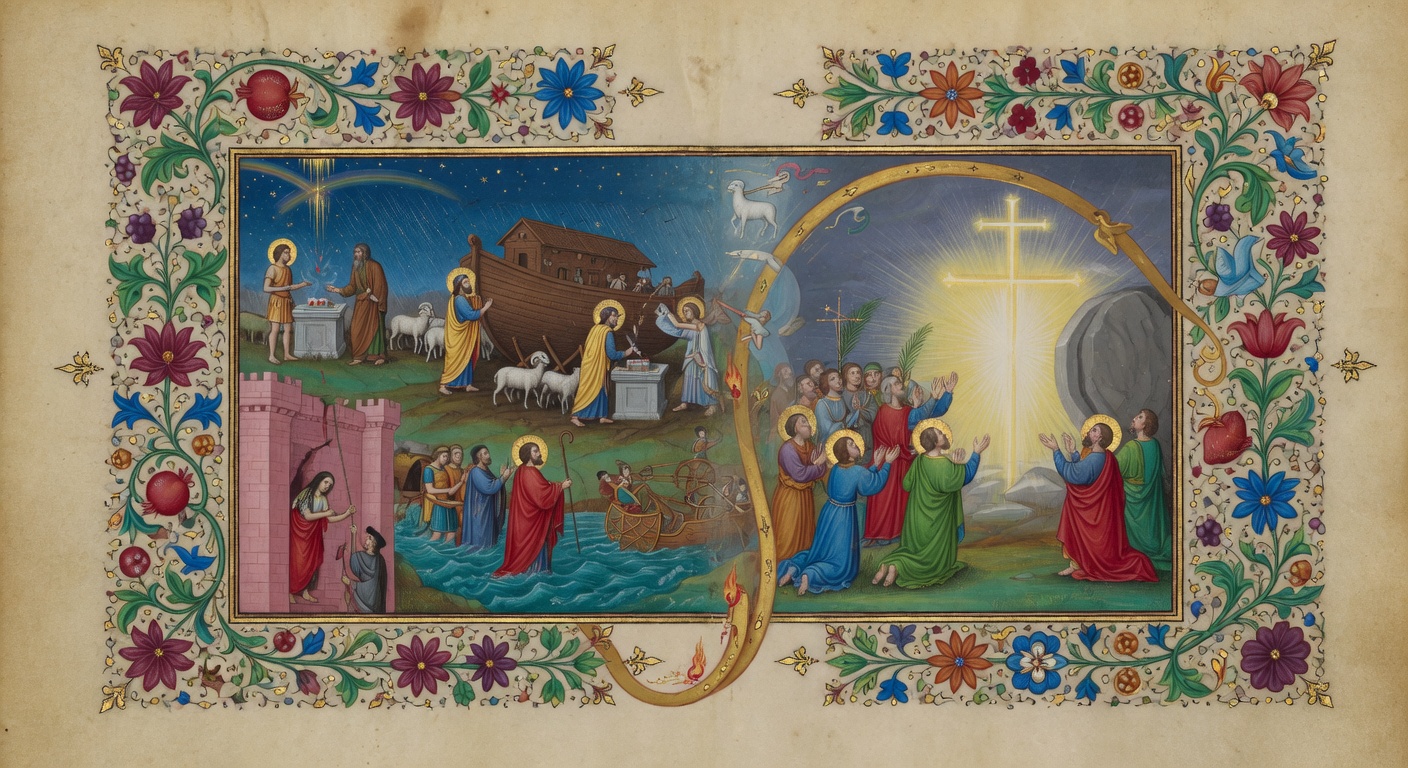
The eleventh chapter of Hebrews assembles key Old Testament examples to show how faith has always enabled God's people to trust his promises amid uncertainty. Abel offered a more excellent sacrifice, Noah built the ark to save his house, Abraham obeyed the call to depart, Moses chose affliction with the people of God, and Rahab welcomed the spies, each act demonstrating living faith that receives divine testimony. In this way the passage weaves these stories into the larger redemptive narrative, proving that faith is the evidence of things not seen and the foundation for receiving the promises.
-
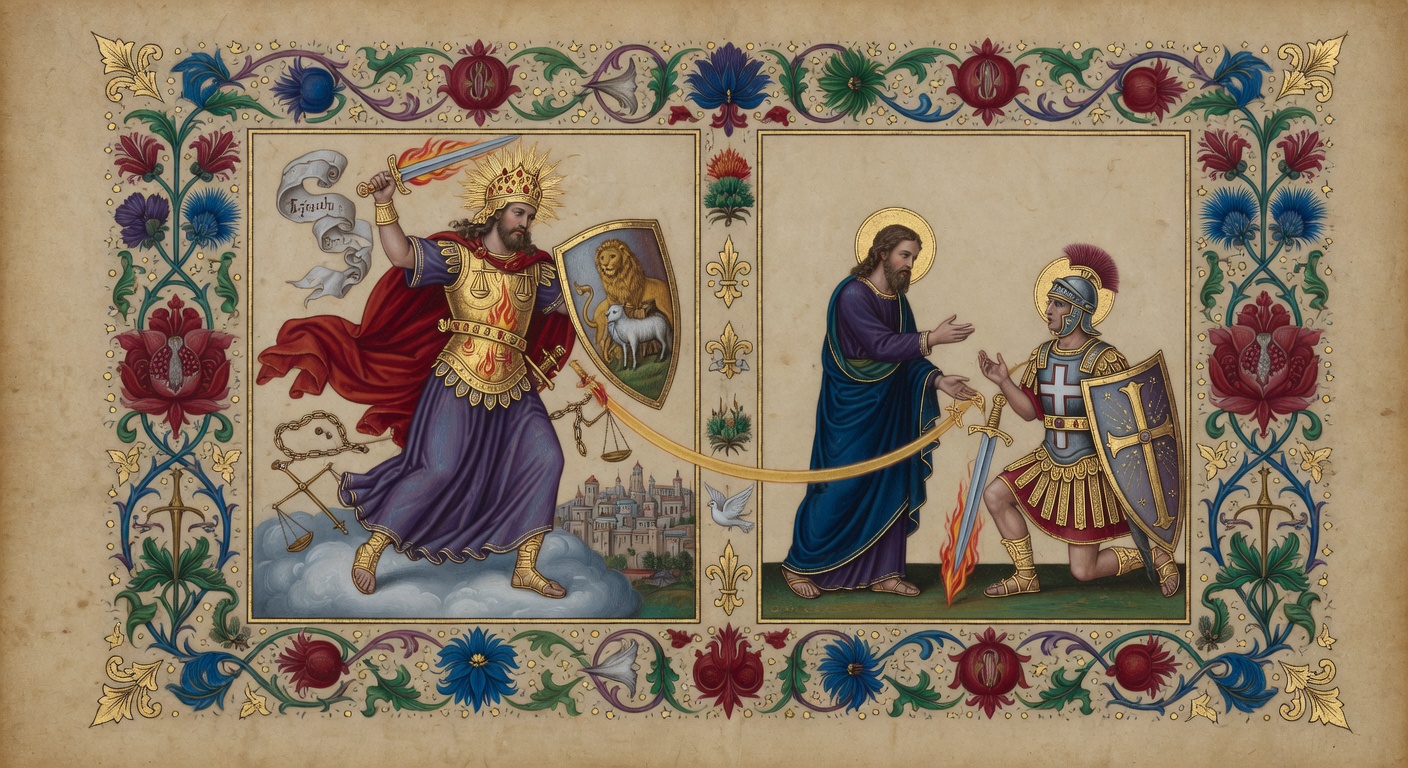
Armor of God
In the prophetic vision of Isaiah the Lord Himself is seen putting on righteousness as a breastplate and salvation as a helmet while arraying Himself for judgment and deliverance. Paul draws directly upon this picture when he urges believers to stand in the same divine armor, fastening truth about their loins, wielding the shield of faith, and taking the sword of the Spirit. Thus the imagery reveals that the church does not fight in its own strength but shares in the Lord's own redemptive warfare against principalities and powers.
-
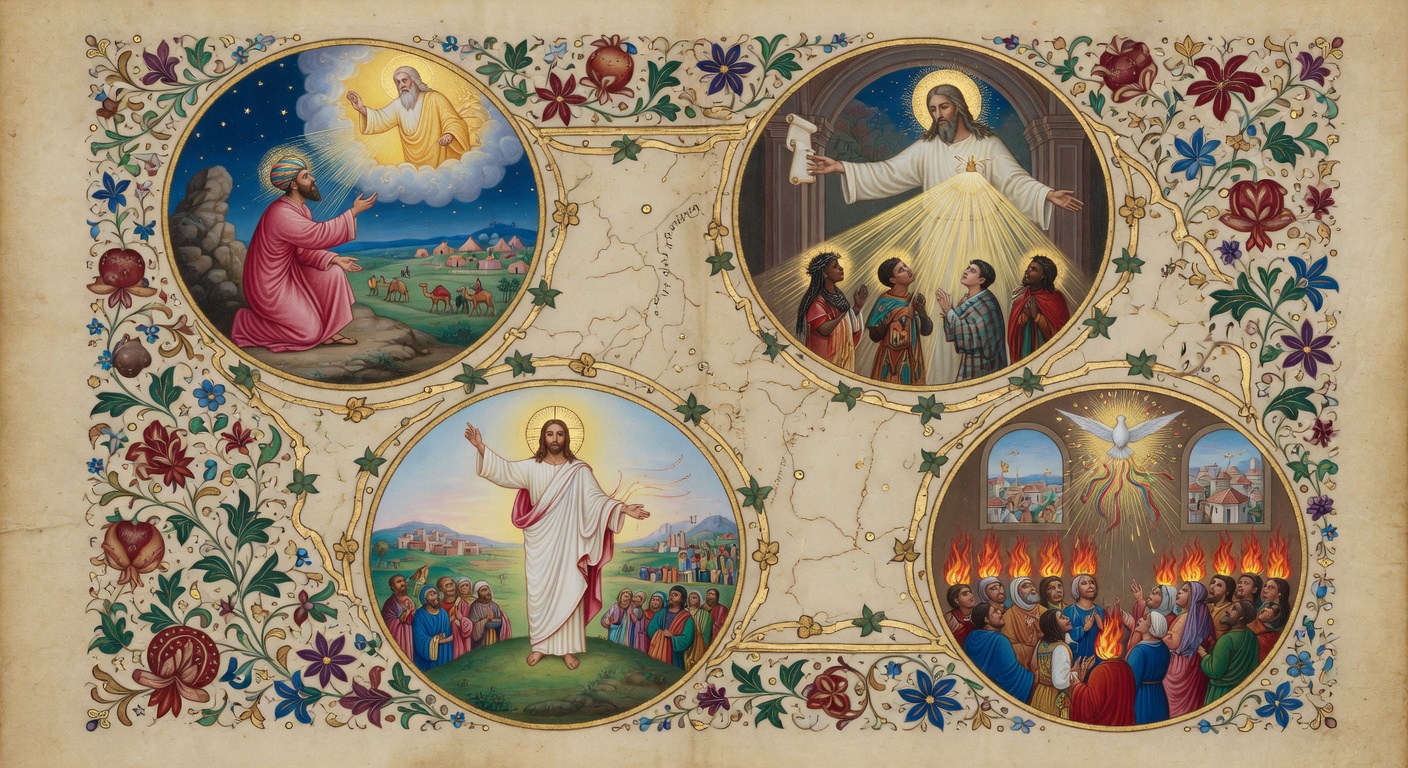
Great Commission Echoes
God's ancient promise to bless all nations through Abraham sets the course for his redemptive plan that unfolds across the scriptures. Isaiah's vision of the servant as a light to the Gentiles deepens this calling to reach the ends of the earth with salvation. The risen Lord echoes this purpose in his command to disciple all nations, while the Spirit at Pentecost empowers the church to fulfill it as witnesses to every corner of the world.
-
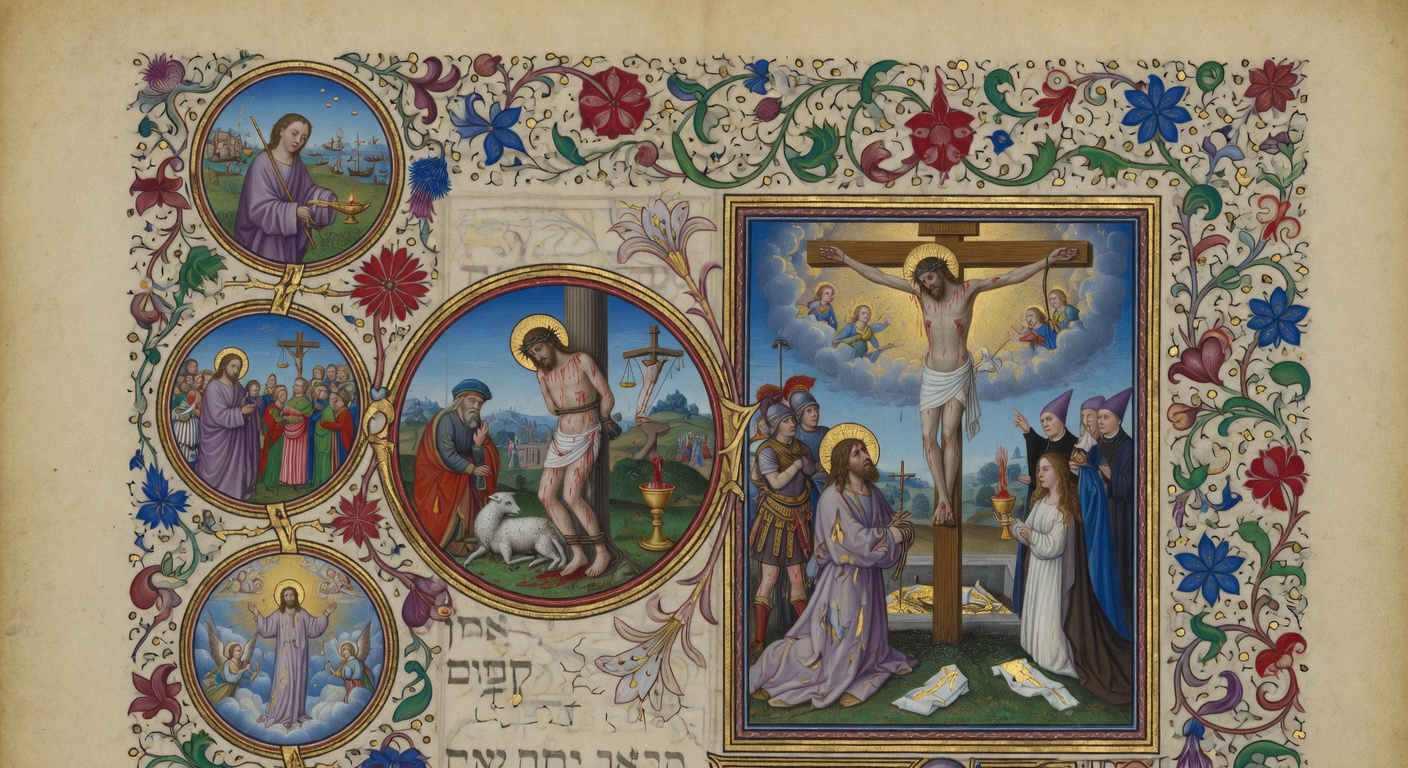
The Suffering Servant
Through the servant songs of Isaiah the figure of God's chosen servant comes into view first as one who will bring forth justice to the nations without faltering or crying aloud, then as a light to the Gentiles that salvation might reach the ends of the earth. Later songs reveal the deeper mystery of his mission, for he bears the griefs and carries the sorrows of many, is wounded for their transgressions, and is led as a lamb to the slaughter, yet after pouring out his soul unto death he is exalted and divides the spoil with the strong. These ancient promises converge in Christ, who emptied himself and took the form of a servant, suffering in perfect obedience before being highly exalted by the Father and given a name above every name.
-
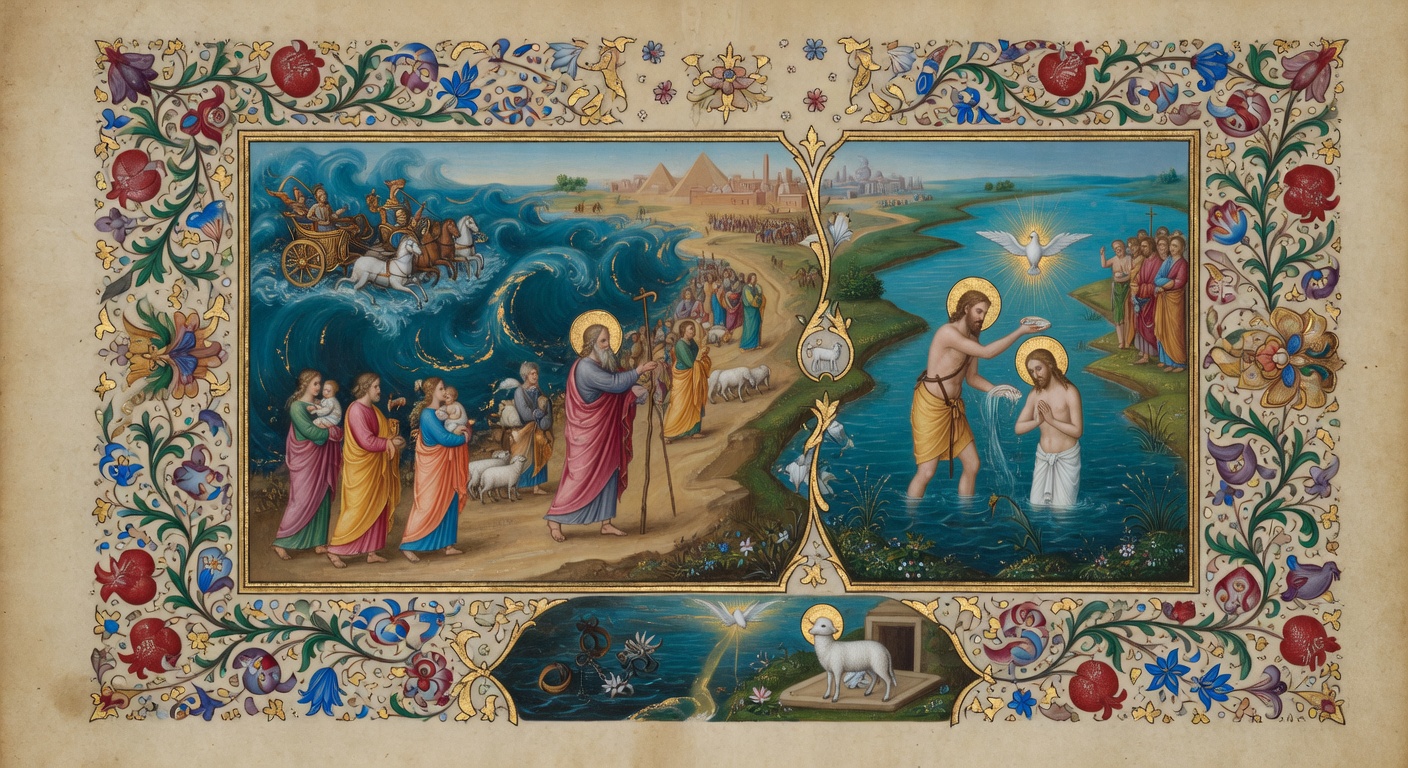
The Exodus and Salvation
The crossing of the Red Sea stands as a profound type of God's saving work, where the waters that destroyed the pursuing Egyptians became the very path of deliverance for Israel. This event foreshadows the believer's union with Christ in His death and resurrection, as the apostle describes how the fathers were baptized unto Moses in the cloud and in the sea. Through this passage from bondage to liberty, the Exodus reveals the pattern of salvation in which God brings His people out of death into life by His mighty power.
-
The Promised Land
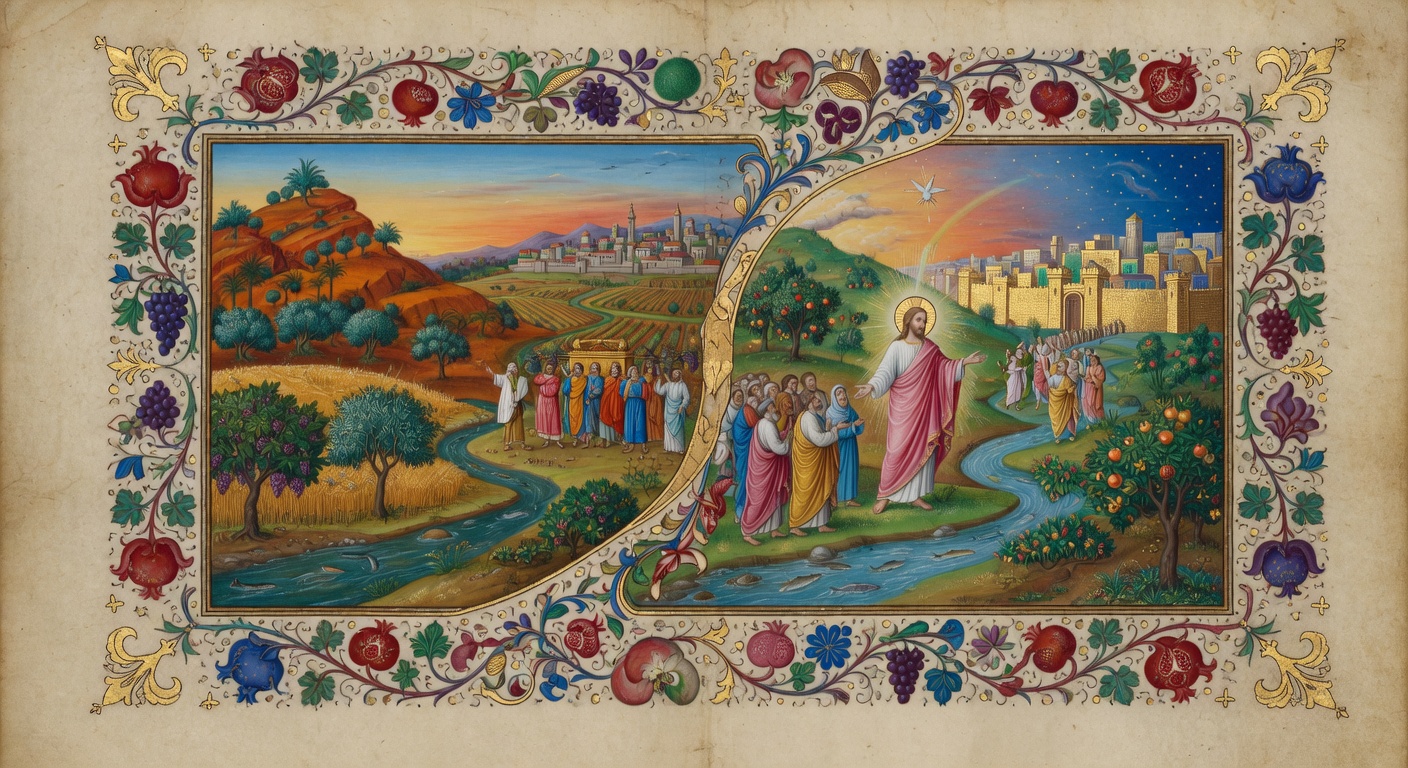
The land promised to Abraham and his descendants stands as a central promise in God's redemptive plan, urging his people to be strong and courageous in claiming their inheritance despite opposition. This earthly territory foreshadows a deeper spiritual rest that remains for those who believe, pointing beyond Israel's wilderness failures and incomplete conquest to the finished work of Christ. Ultimately this theme reaches its complete fulfillment in the vision of a new heaven and a new earth, where God's dwelling is with his people forever and every former sorrow passes away.
-
The King
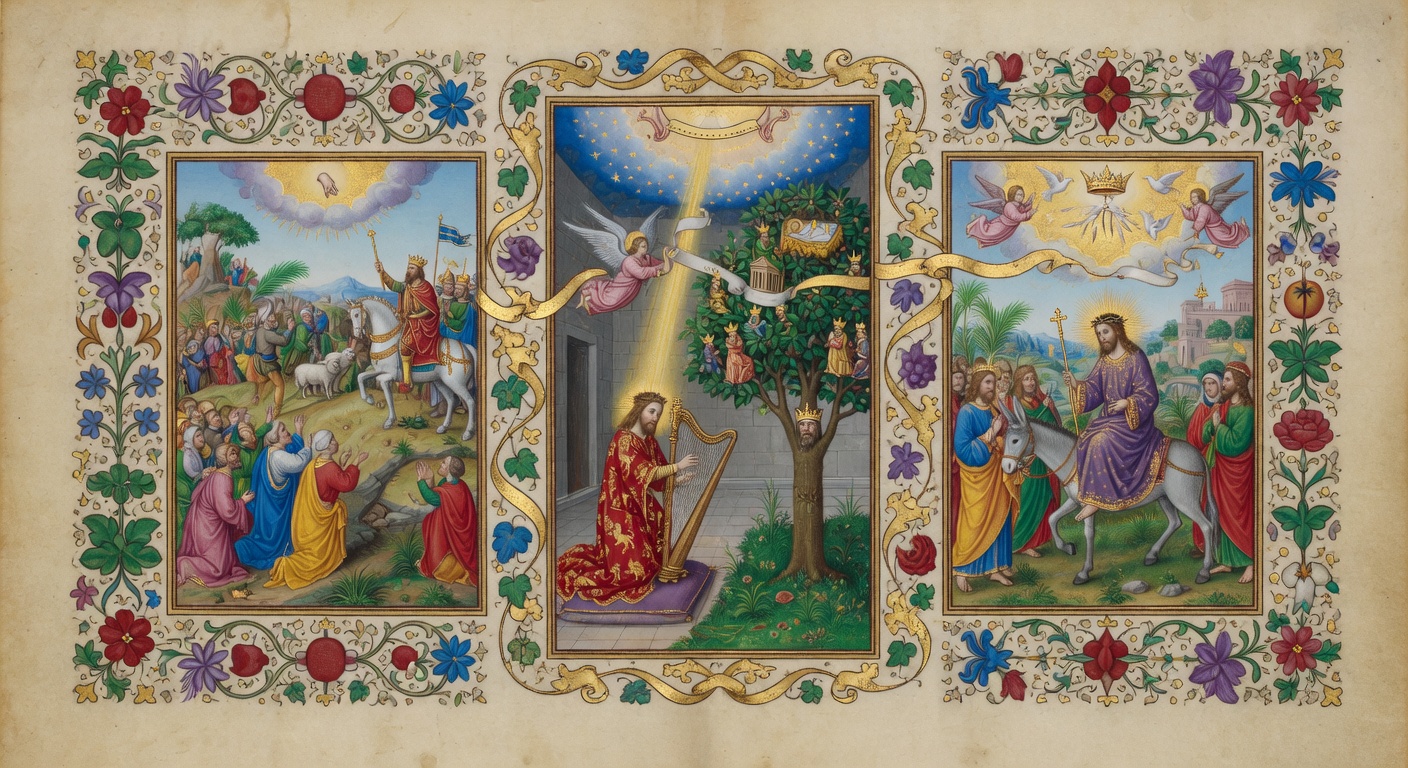
The people of Israel once demanded a king to rule over them as other nations did, yet this desire pointed toward God's sovereign plan for an eternal monarch from David's line. Through the prophets, the promise emerges of a child born to shoulder the government and establish peace without end. The wise men's search for the one born king of the Jews signals the dawn of that reign in Bethlehem, culminating in the revelation of Jesus Christ as King of kings and Lord of lords who subdues all powers.
-
The Bride
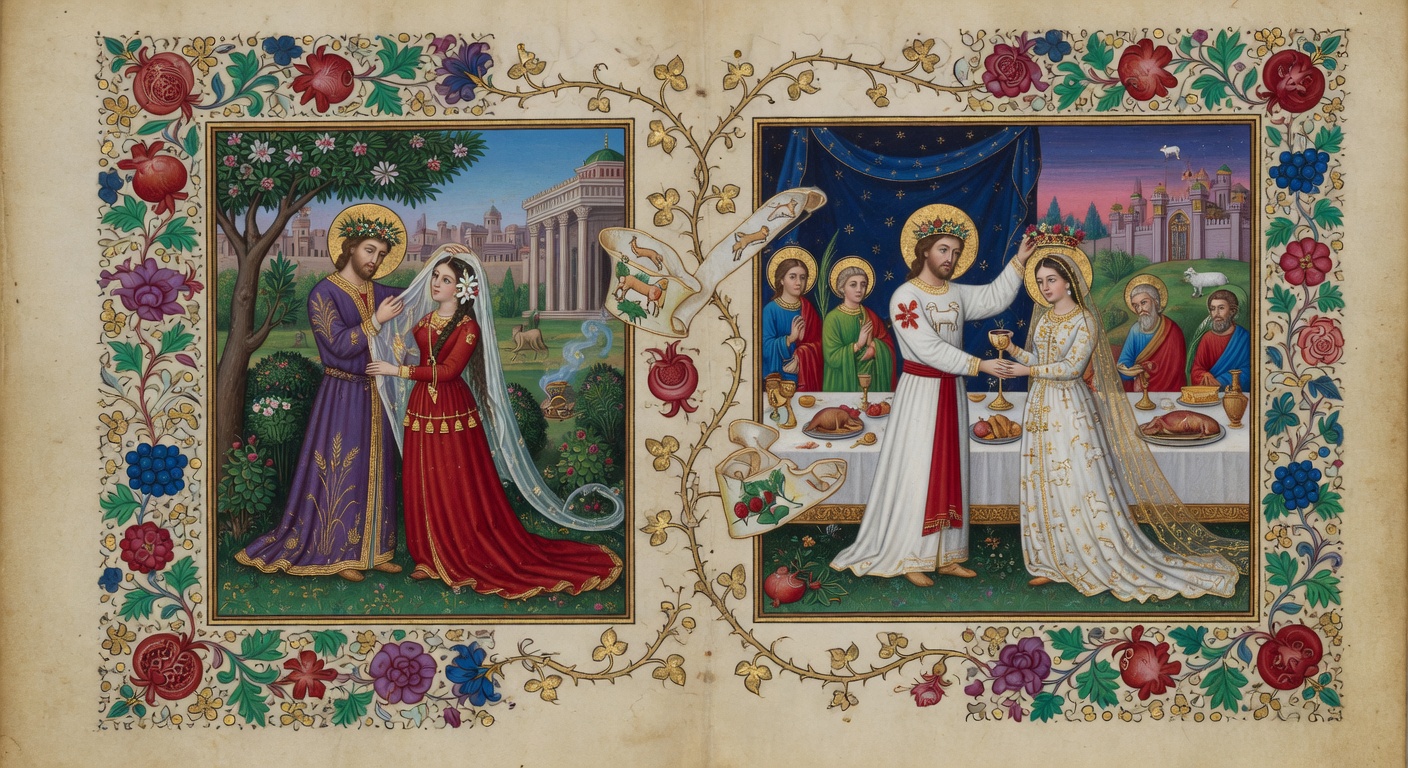
Scripture uses the bride to depict the tender and faithful love between God and His people, mirroring the devotion of a bridegroom for his beloved. This portrayal reaches its New Testament fulfillment in Christ and the church, as the Lord gives himself to cleanse and present her spotless before him. At the marriage supper of the Lamb the redeemed rejoice in perfect union, and the bride appears as the holy city adorned for her husband in the new creation.
-
The Wilderness
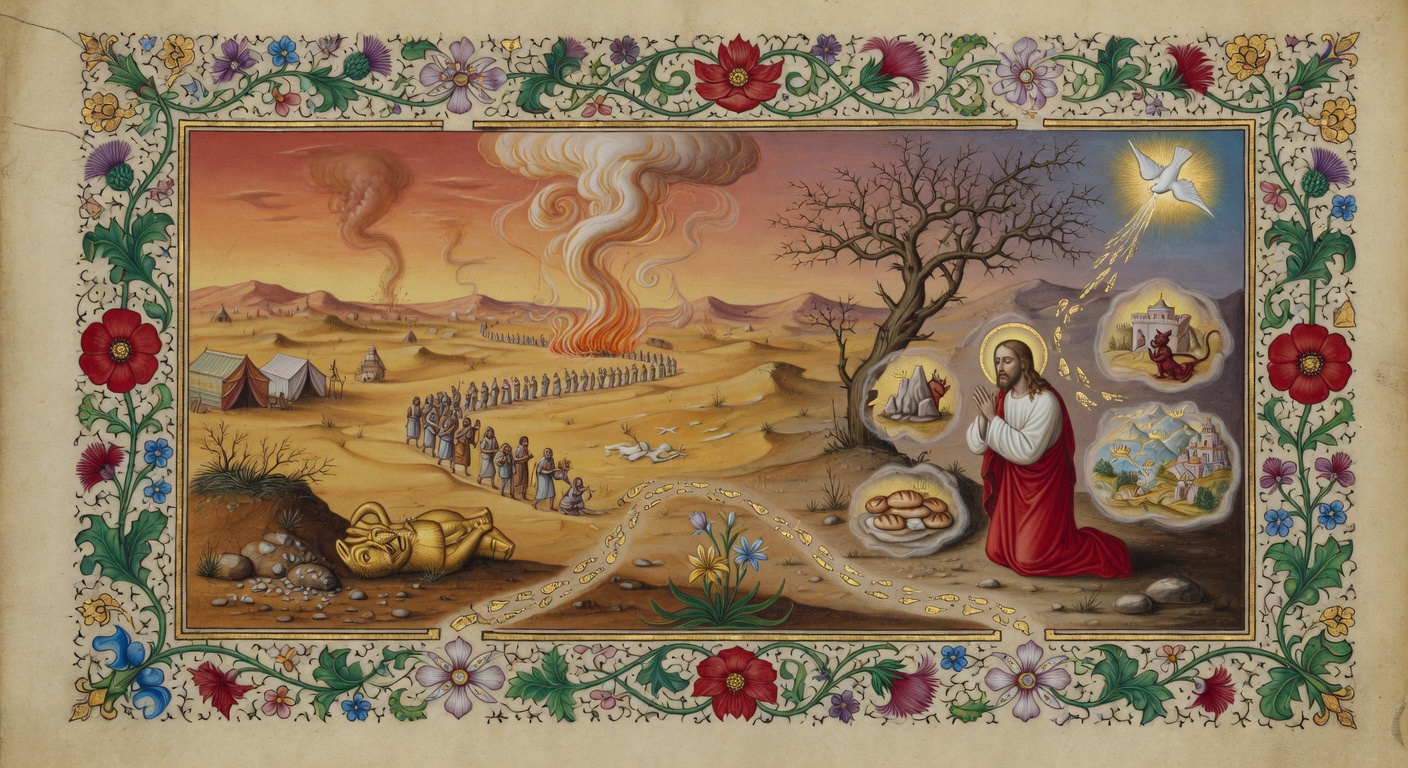
The wilderness emerges in Scripture as a realm of profound testing and divine provision, where God's people learn to rely wholly upon him for sustenance amid desolation. Israel's prolonged sojourn there, marked by the daily gift of manna yet culminating in exclusion from the promised land owing to unbelief, underscores the peril of faithlessness in the redemptive journey. By contrast, Christ's forty days of temptation in that same setting reveals perfect obedience, transforming the wilderness from a place of failure into one of victorious preparation for the salvation of humanity.
-
The Blood Covenant
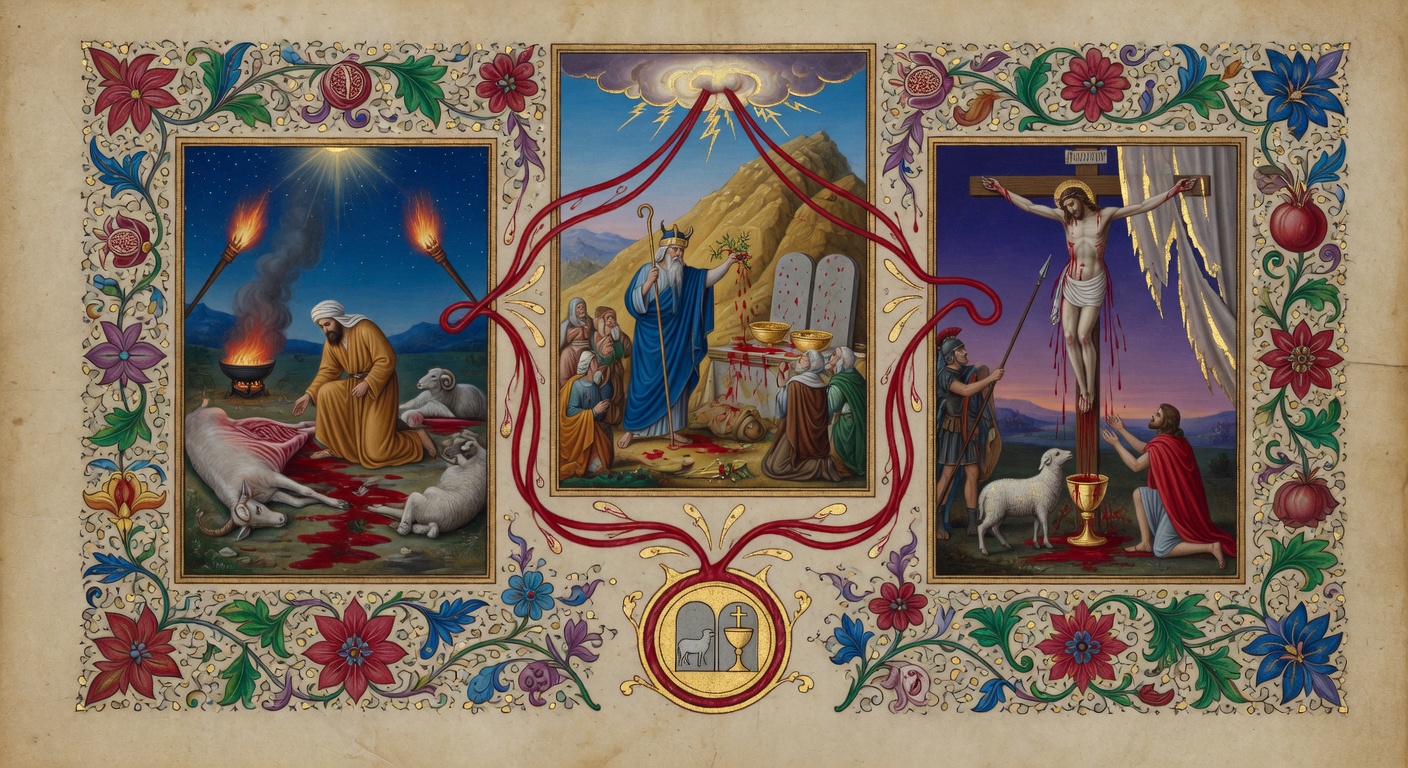
Throughout the Scriptures the ratification of God's covenants involves the solemn use of blood to bind the divine promise to human life and to seal the relationship with irrevocable cost. In the covenant of the pieces the divided animals witness God's passing presence as a smoking furnace and burning lamp, while at Sinai the blood sprinkled on altar and people confirms the nation's consecration under the law. These earlier shadows reach their fulfillment when Christ's own blood inaugurates the new covenant, poured out for the remission of sins and securing eternal redemption for all who trust in him.
-
The Firstborn
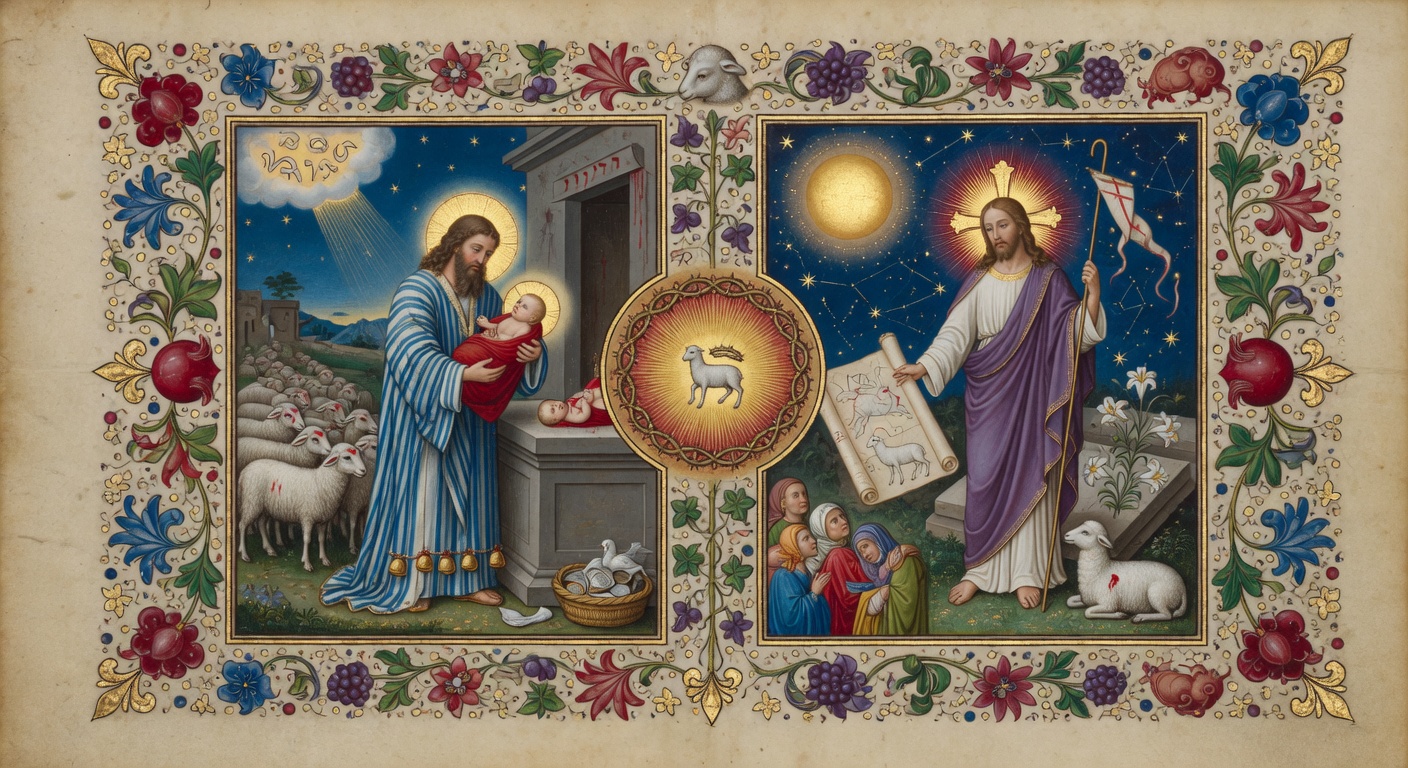
In the biblical narrative the firstborn embodies a principle of dedication and preeminence that threads through God's dealings with his people. The command to consecrate Israel's firstborn underscores their belonging to the Lord as a memorial of deliverance from Egypt and a claim upon the inheritance rights of the eldest. This pattern reaches its fulfillment in Christ, who is the firstborn of all creation and the firstborn among many brethren, securing redemption and bringing many sons to glory through his resurrection.
-
The High Priest
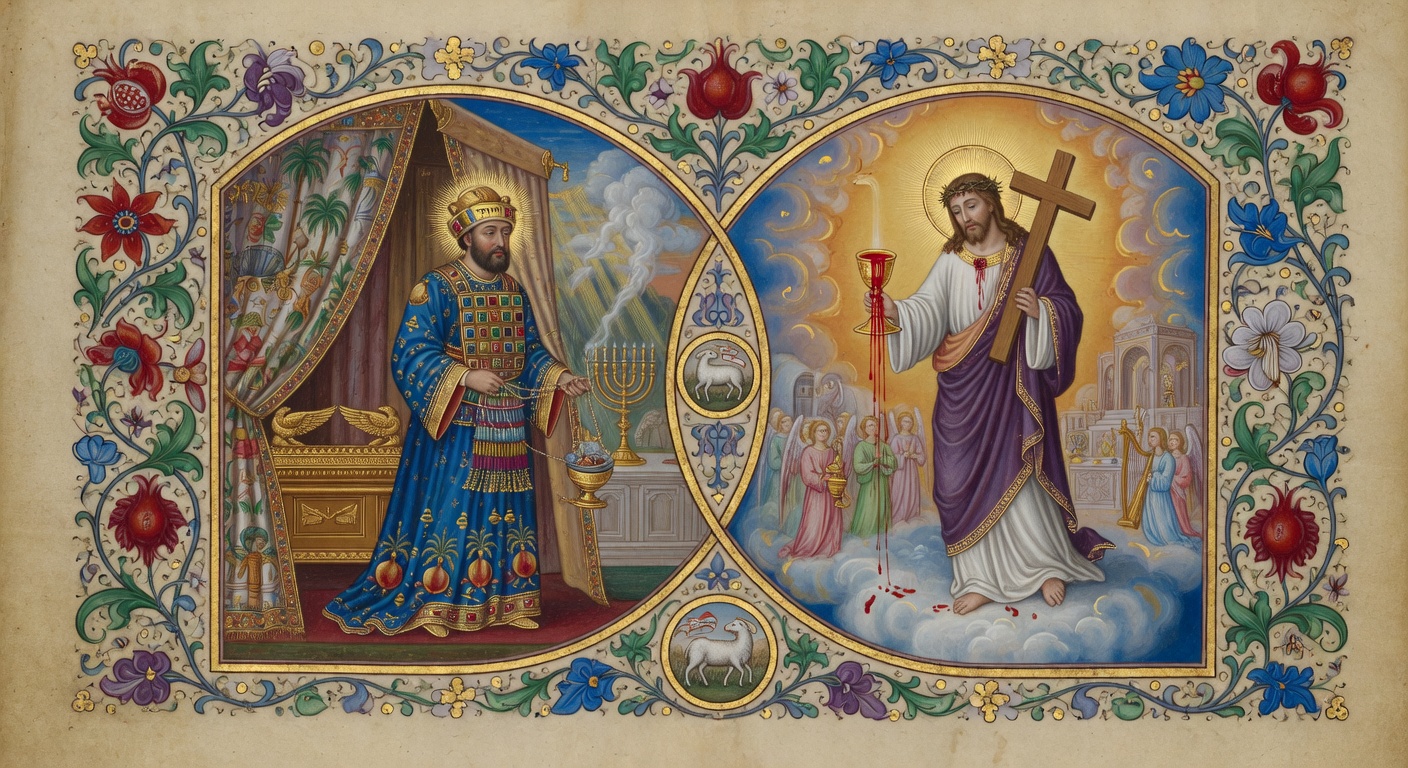
In the old covenant the high priest would enter the most holy place once each year on the day of atonement, bearing the blood of sacrifices to make atonement for the sins of the people. This annual ritual pointed forward to the greater work of Christ, who as our eternal high priest according to the order of Melchizedek offered his own blood and entered into heaven itself to secure everlasting redemption. Because he was tempted in all points like as we are yet without sin, he is able to sympathize with our weaknesses and to make intercession for us at the right hand of God.
-
The City of God
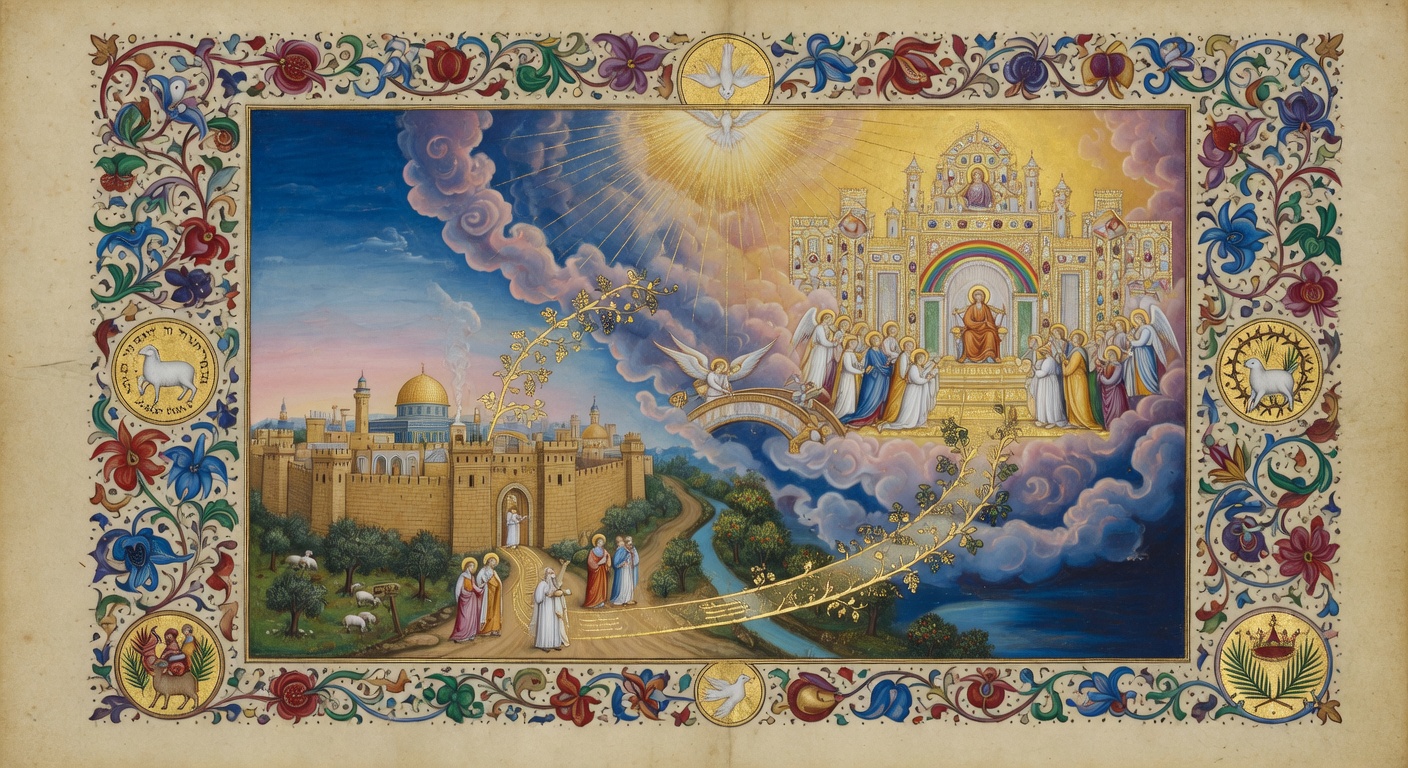
In the unfolding story of redemption, the city of God stands as the sacred dwelling where the Almighty chooses to make His presence known among humanity. Beginning with the earthly Jerusalem where God is in the midst of her, the vision expands to the heavenly Jerusalem and culminates in the holy city new Jerusalem descending from above. This progression reveals the divine purpose to restore perfect communion with His people, free from all curse and sorrow, as the eternal home of the redeemed.
-
The Remnant
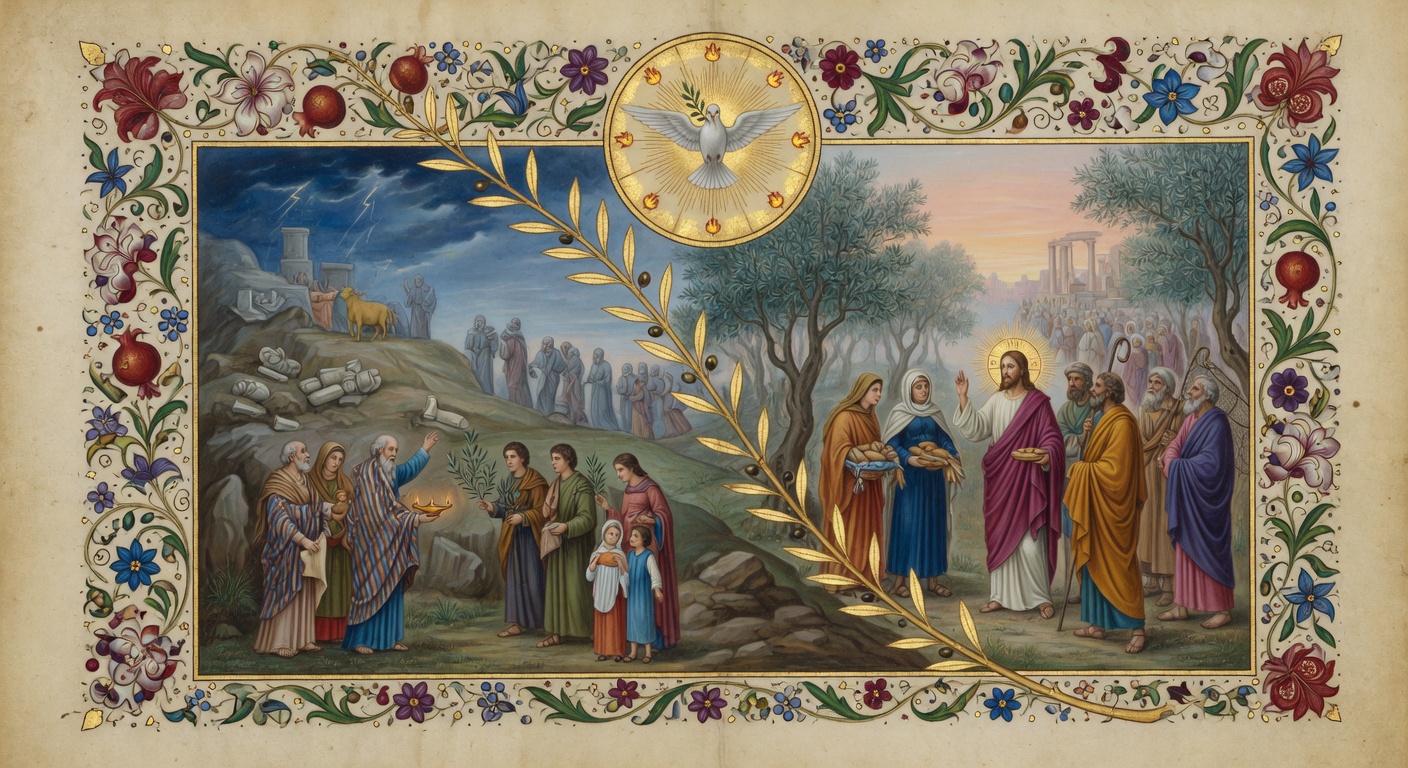
In the scriptures God reveals his steadfast preservation of a faithful remnant amid the falling away of the many. Chosen according to grace, this remnant ensures that his promises endure through periods of judgment and dispersion, as seen when a portion returned from captivity and when the apostle affirms that he has not cast away his people. Serving as a living testimony to divine mercy, the remnant bridges the old covenant faithfulness with the new covenant reality centered in Christ, highlighting that salvation has always rested on God's electing love rather than human numbers or effort.
-
Sacrifice and the Cross
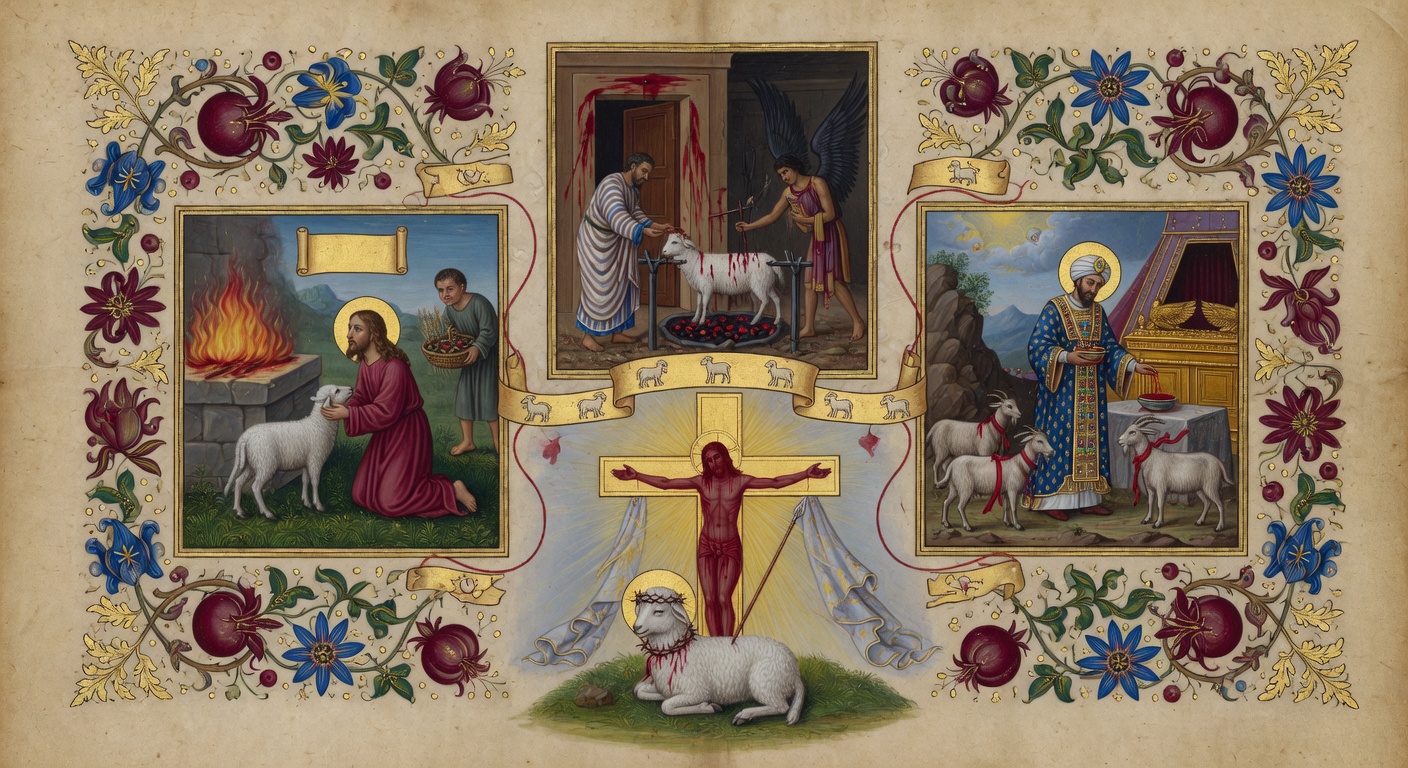
The acceptance of Abel's offering of the firstlings of his flock established the pattern of blood sacrifice as the means of approaching a holy God. This principle finds fuller expression in the Passover, where the lamb's blood protected God's people from the destroyer and marked their redemption from bondage. Ultimately these shadows converge in Christ, who as our Passover is sacrificed for us, fulfilling the redemptive story through his atoning death on the cross.
-
Faith of Abraham
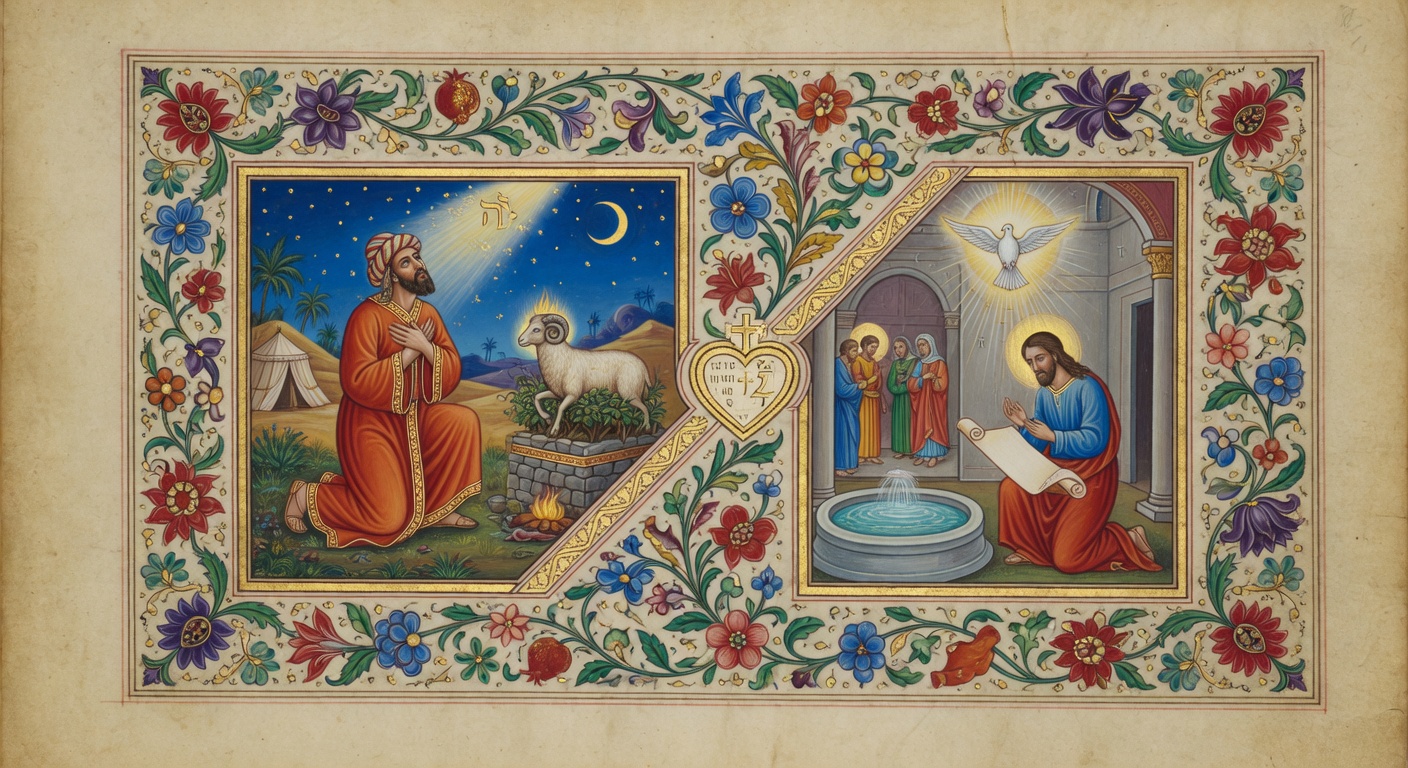
When Abraham believed the divine promise that he would father a multitude of nations despite his advanced age and Sarah's barrenness, that trust was counted to him for righteousness, revealing justification as a gift received by faith alone. This foundational act in the redemptive story positioned Abraham as the father of all who believe, pointing ahead to the covenant blessings that would flow through his seed to redeem people from every nation. The same principle of trusting God's word apart from works remains the enduring pattern by which sinners today are declared righteous.
-
The Stone the Builders Rejected
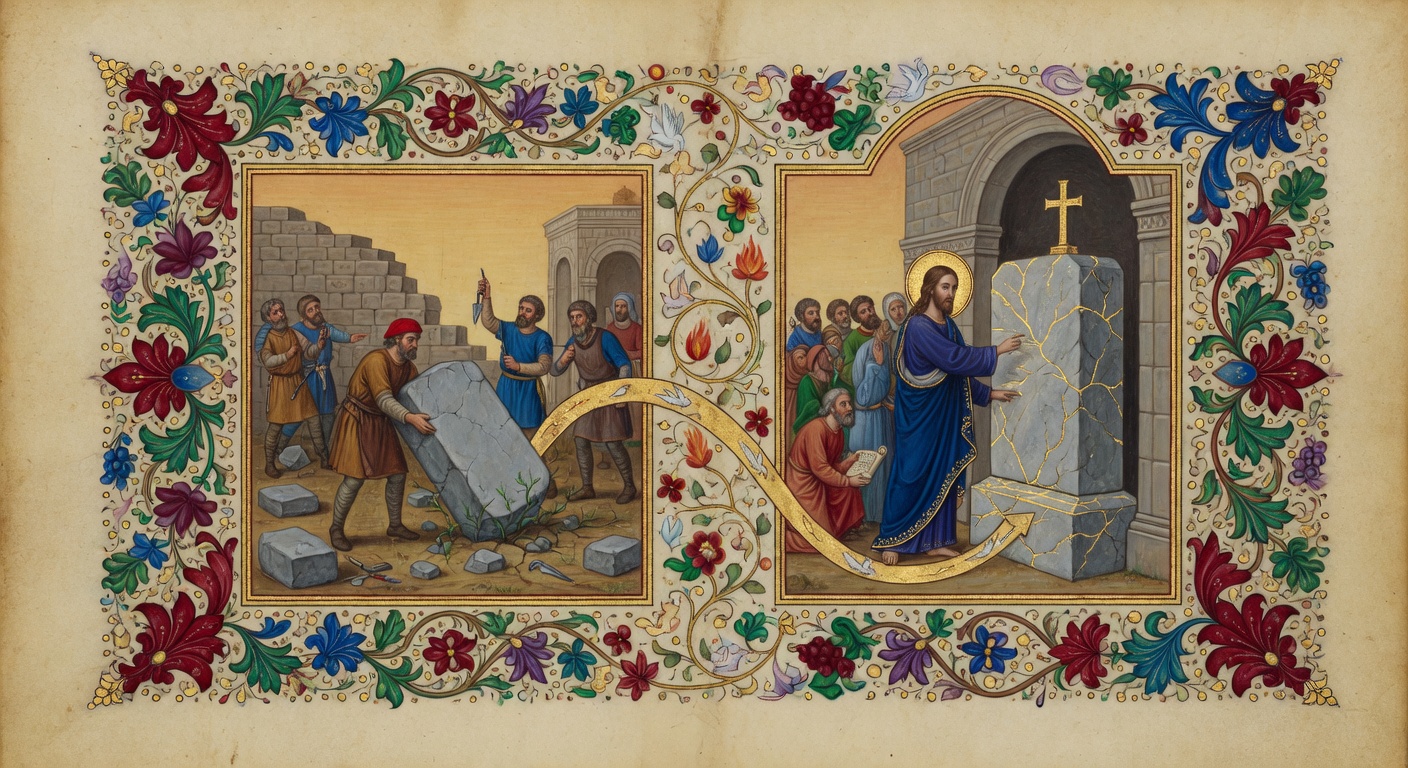
In the psalm of deliverance the rejected stone is shown to become the chief cornerstone by the Lord's doing, marvelous in the eyes of the faithful. When Jesus quotes these words He applies them to His own rejection by the builders of Israel and His exaltation as the sure foundation of God's kingdom. This reversal stands at the heart of redemption, where what the world discards God uses to bring salvation to many.
-
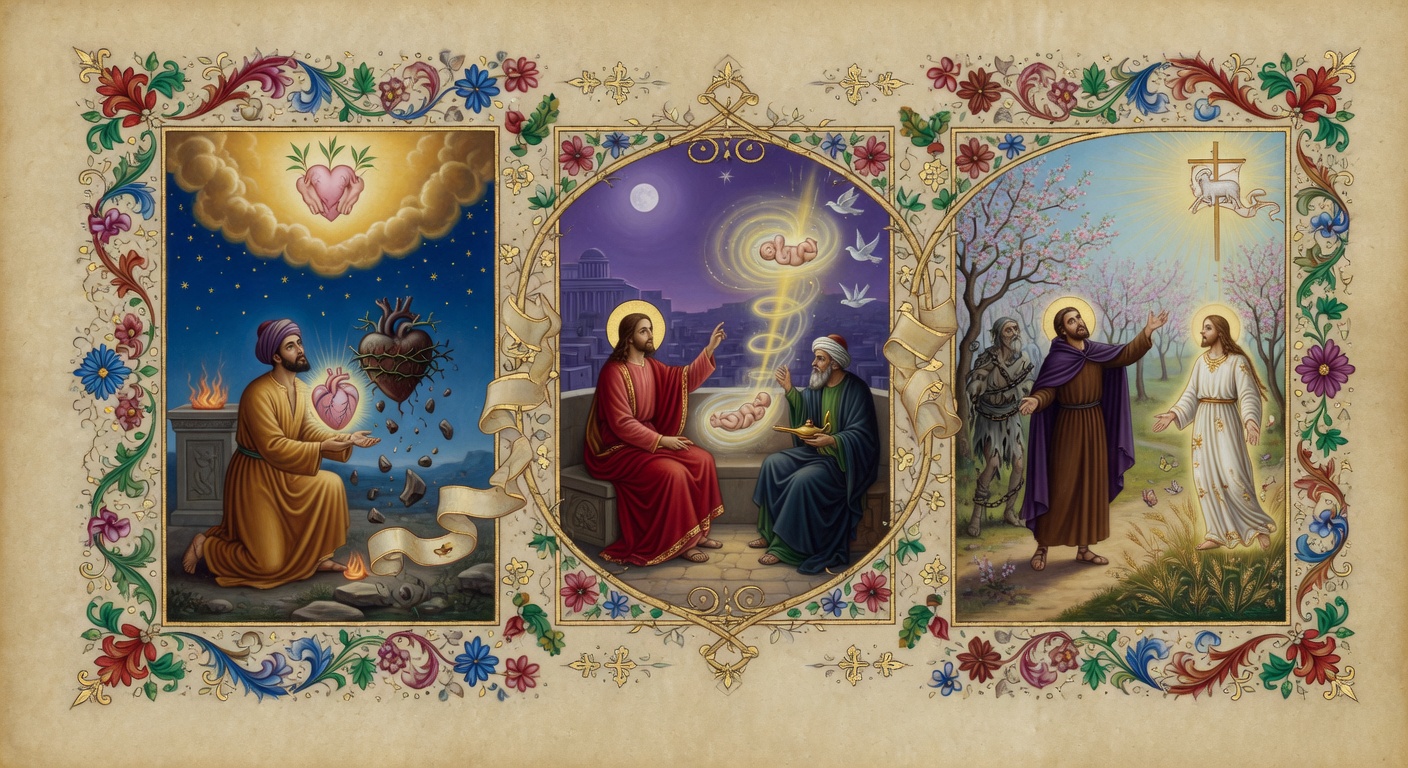
New Birth / New Creation
The promise of a transformed heart and spirit forms a central thread in the redemptive narrative from the prophets to the apostles. Ezekiel records the Lord's pledge to replace the stony heart with a new one of flesh and to place his spirit within his people so they might keep his commandments. Jesus explains this reality to Nicodemus by insisting that entry into the kingdom requires being born again through water and the spirit, while Paul affirms that anyone in Christ is a new creation in whom old things have passed away.
-
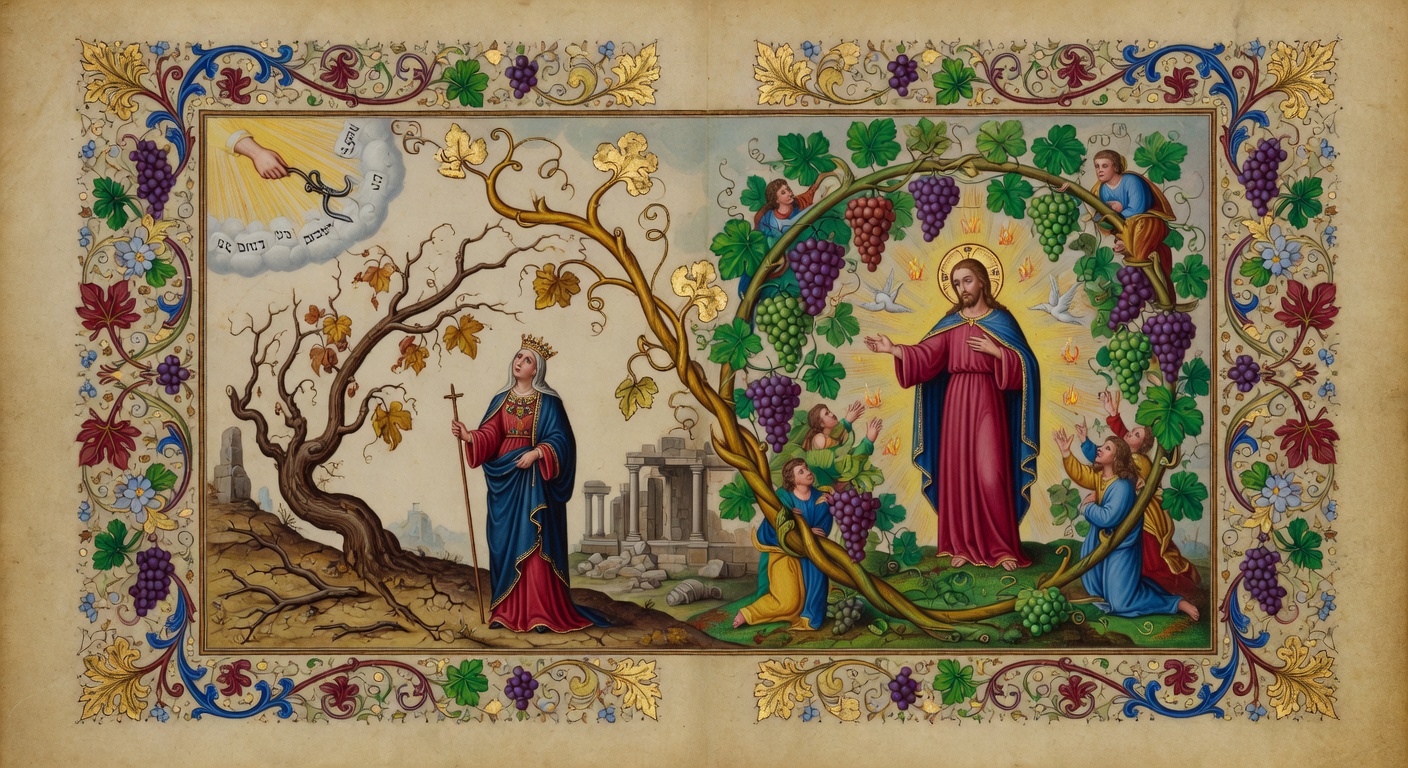
The Vine
Throughout the biblical narrative God establishes Israel as his vine, a people carefully planted and tended in the promised land yet repeatedly failing to produce the fruit of righteousness and justice that he required. This recurring shortfall underscores the deeper human inability to fulfill the covenant apart from divine enablement and sets the stage for the arrival of the true vine. In the Gospels Jesus declares himself that vine, calling his followers to abide in him so that they might bear lasting fruit and thereby participate in the redemptive work that Israel could not accomplish on its own. The image therefore moves from national expectation to personal union with Christ, revealing both the judgment on fruitlessness and the promise of abundant life for those who remain connected to him.
-
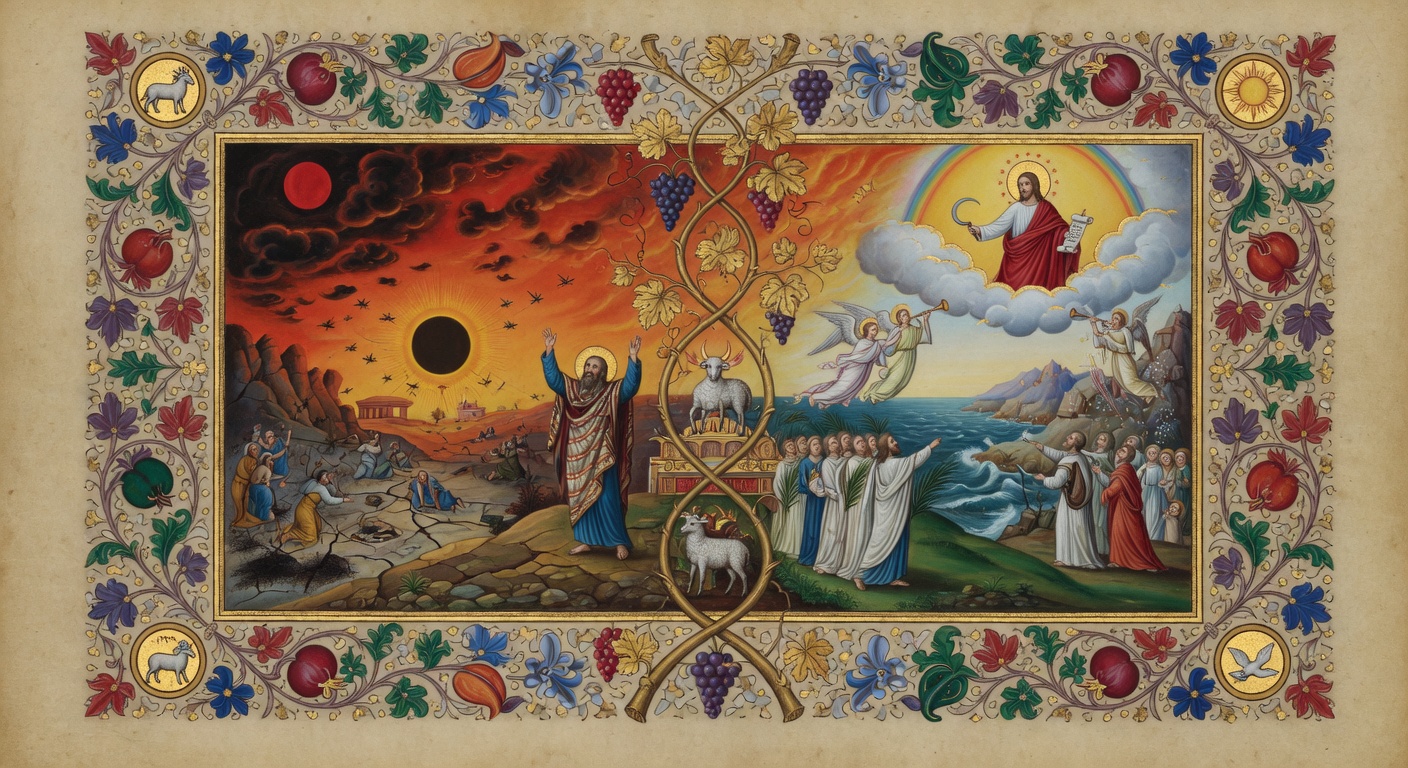
The Day of the LORD
In the prophetic writings the Day of the LORD appears as the appointed time when the Lord intervenes to judge the wicked and to rescue those who turn to him in repentance. Drawing from Joel's portrayal of darkness, fire, and the pouring out of the Spirit upon all flesh, this event highlights God's sovereign control over history and his commitment to both justice and salvation. It forms a key thread in the redemptive story, pointing toward the final vindication of God's people and the establishment of his kingdom.
-
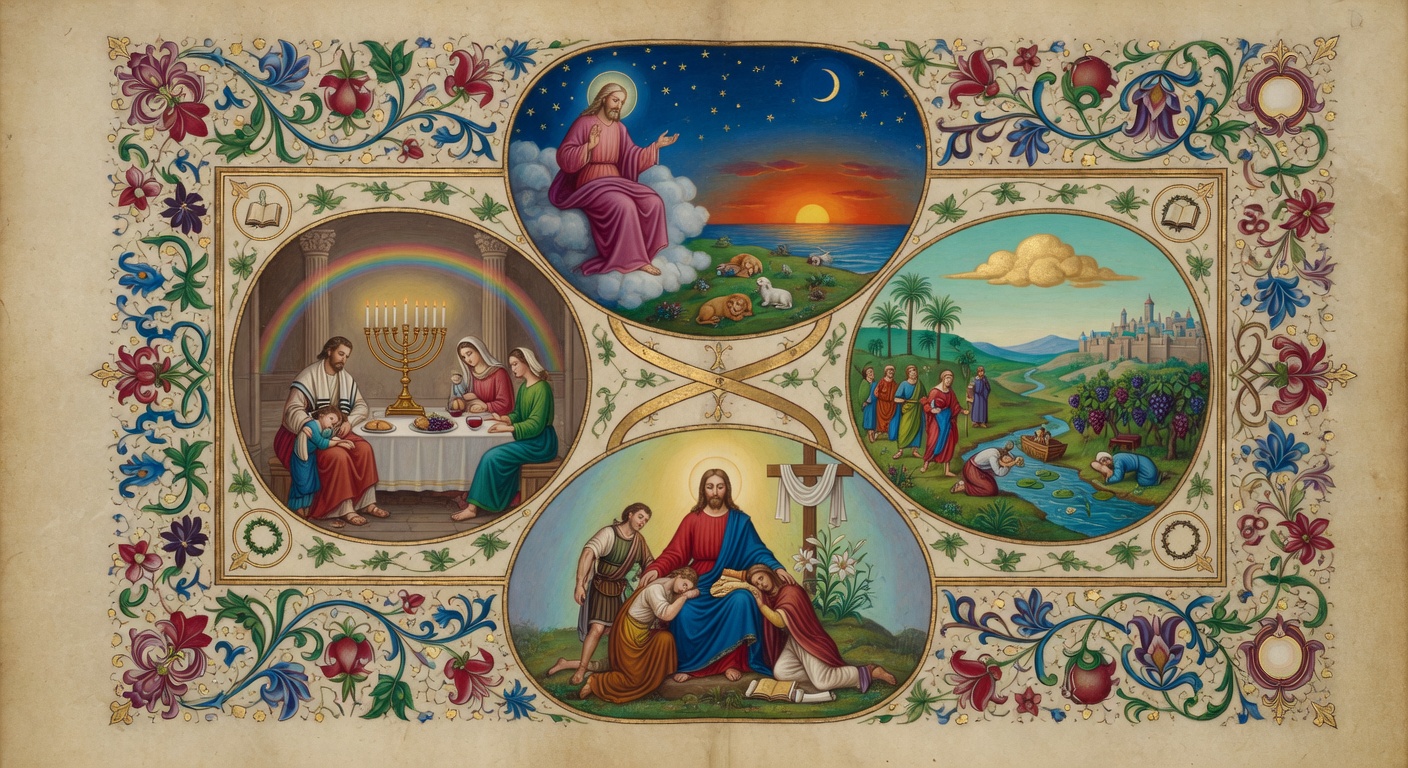
God's Rest
In the beginning the Lord completed his work of creation over six days and rested on the seventh, establishing a pattern of sacred cessation that would shape Israel's weekly Sabbath observance. This same rest appears again in the promise of Canaan, where the people were invited to lay aside striving and trust God's faithfulness, though many failed to enter because of unbelief. Scripture ultimately directs the theme toward its fulfillment in Christ, in whom believers cease from their own works and find lasting repose through faith.
-
The Kingdom of God
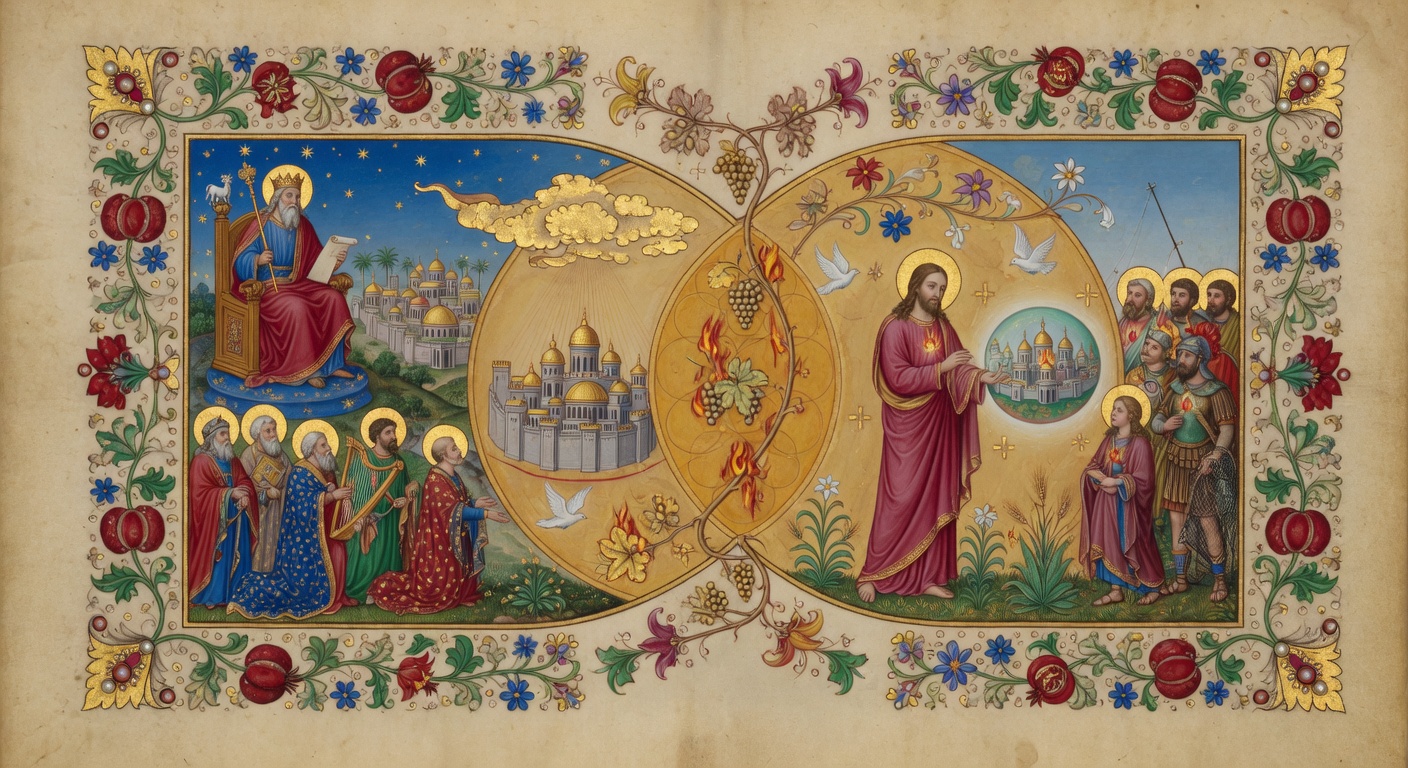
The Lord is revealed throughout Scripture as reigning in sovereign power over Israel and all creation, calling his people to live under his righteous rule amid the nations. This kingship reaches its decisive expression when Jesus announces that the kingdom of God is at hand, breaking into the present through his ministry and the response of faith. Already active in the lives of believers, the kingdom remains not yet fully realized, pointing ahead to the day when every opposing force yields and God's reign is displayed in perfect glory.
-
Resurrection Hope
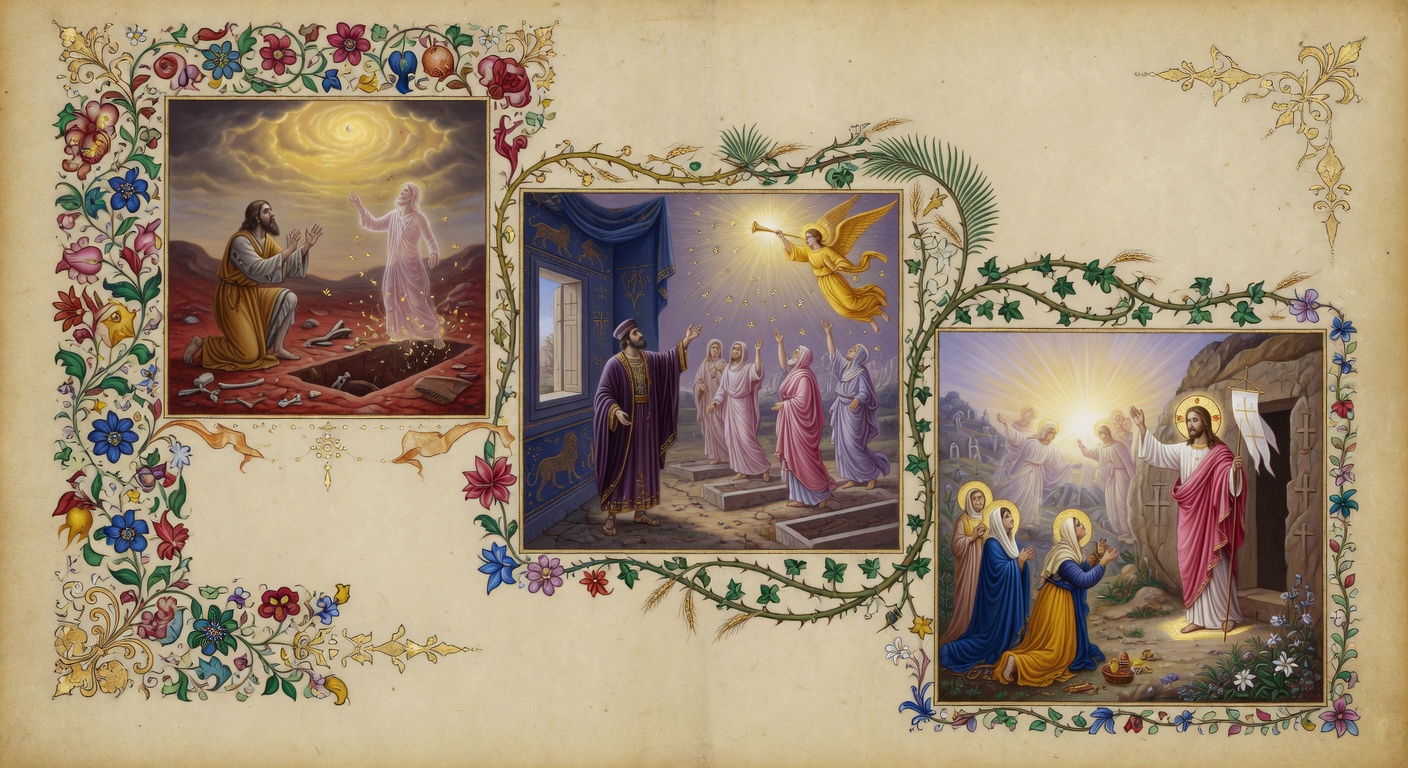
The assurance that a redeemer lives and will stand upon the earth finds its ultimate fulfillment in the resurrection of Christ, transforming ancient longings into present reality. This hope weaves through the biblical narrative as a thread of divine promise, where the grave does not have the final word but yields to the power of God who raises the dead. From the steadfast declaration in the midst of suffering to the empty tomb that confirms eternal life, resurrection hope anchors the redemptive story in victory over sin and death, inviting all to trust in the one who conquers the grave.
-
Blessing All Nations
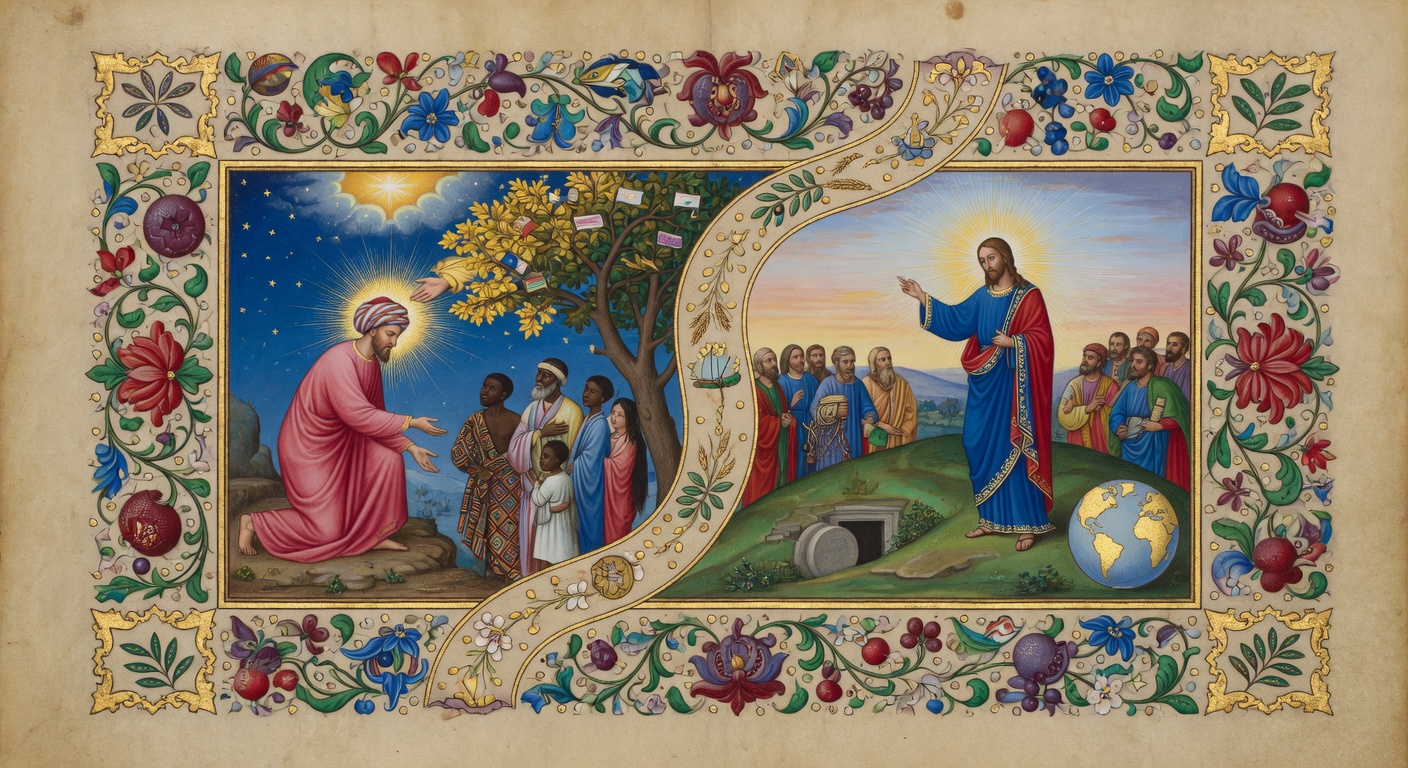
The promise that all nations would be blessed through Abraham's seed finds its ultimate fulfillment in the person and work of Christ, extending God's redemptive grace beyond the boundaries of Israel to the ends of the earth. This divine intention, rooted in the covenant with the patriarch, sets the stage for the church's mission as outlined in the Great Commission, where believers are sent forth to proclaim the gospel universally. In this way, the blessing promised long ago becomes a living reality through faithful witness and discipleship among every people.
-
Suffering Before Glory
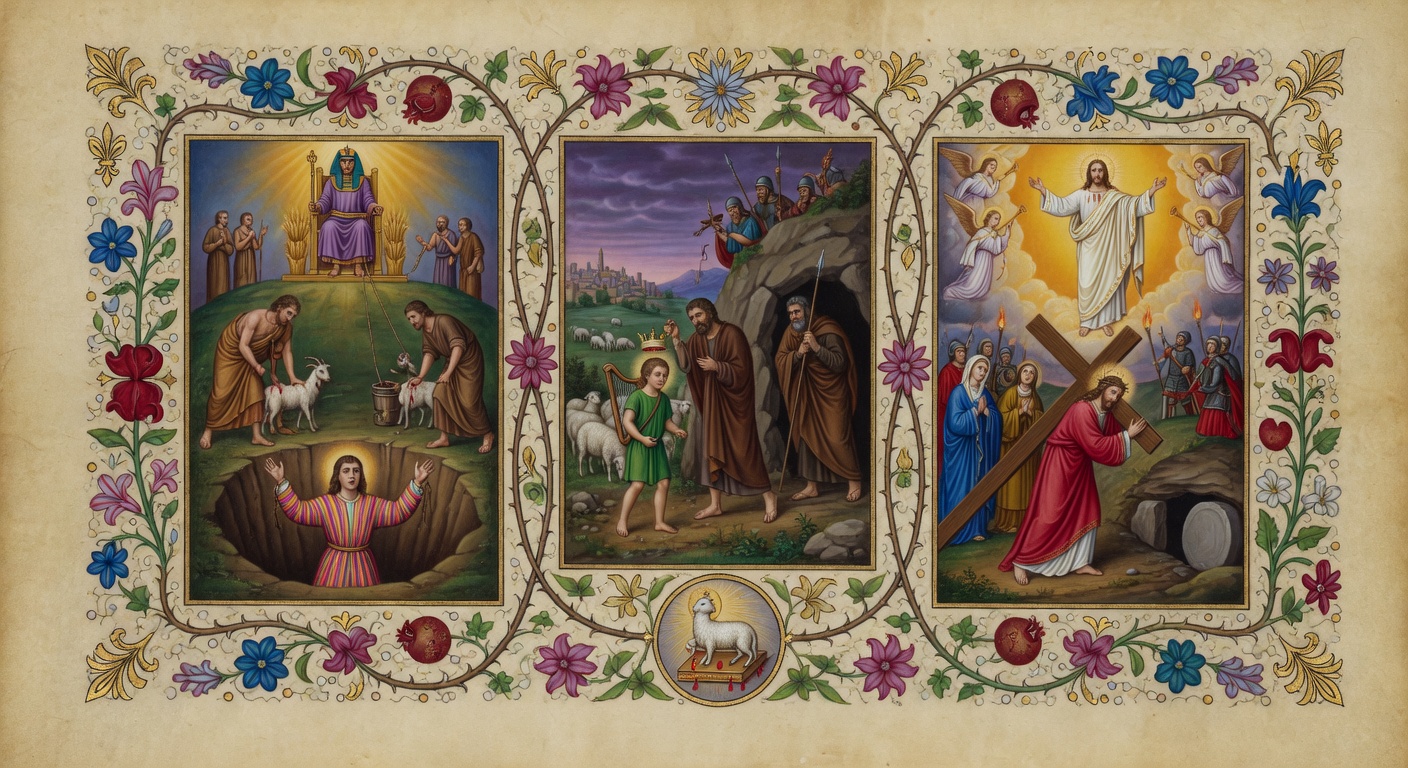
In the unfolding of divine providence the path to exaltation often leads through deep affliction, as seen when Joseph was betrayed by his brothers and cast into prison before being lifted to rule over Egypt and preserve life amid famine. The same sequence marks David's anointing as king followed by years of pursuit by Saul, and reaches its fullest expression in Christ who endured the cross before his resurrection and exaltation to the right hand of the Father. This recurring pattern reveals that suffering serves as the appointed way into glory within the redemptive story, training God's people to endure trials with steadfast hope in the reign to come.
-
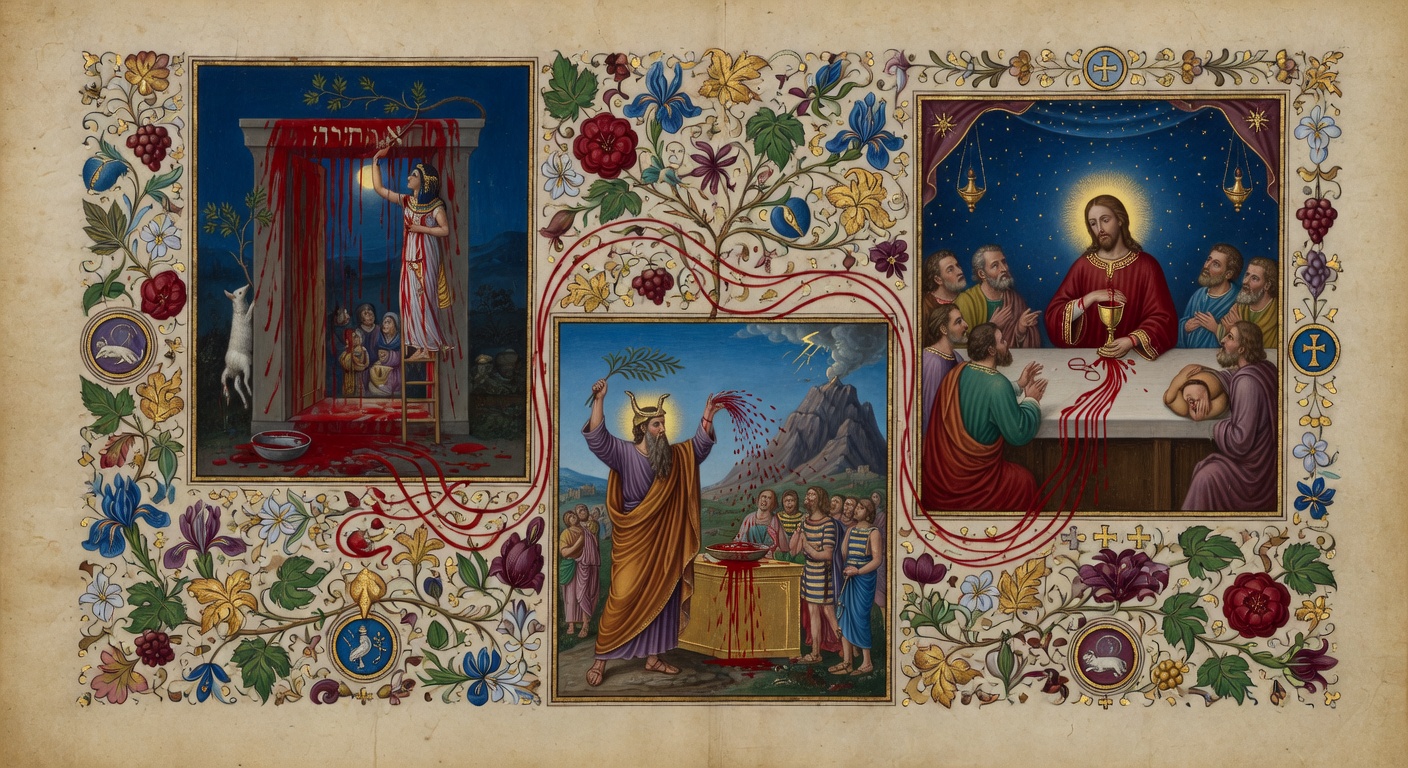
Blood of the Covenant
In the Passover, the blood applied to the doorposts shielded the Israelite households from the angel of death, establishing God's covenant protection and deliverance from bondage in Egypt. Later, Moses took the blood of sacrificed animals and sprinkled it upon the people at Sinai, sealing the old covenant between God and Israel with its promises and obligations. This theme reaches its fulfillment when Christ, at the table with His disciples, declares the cup to be His blood of the new covenant, shed for the remission of sins and inaugurating the eternal redemption for all who believe.