⚔️ Battles & Wars
Exodus
-
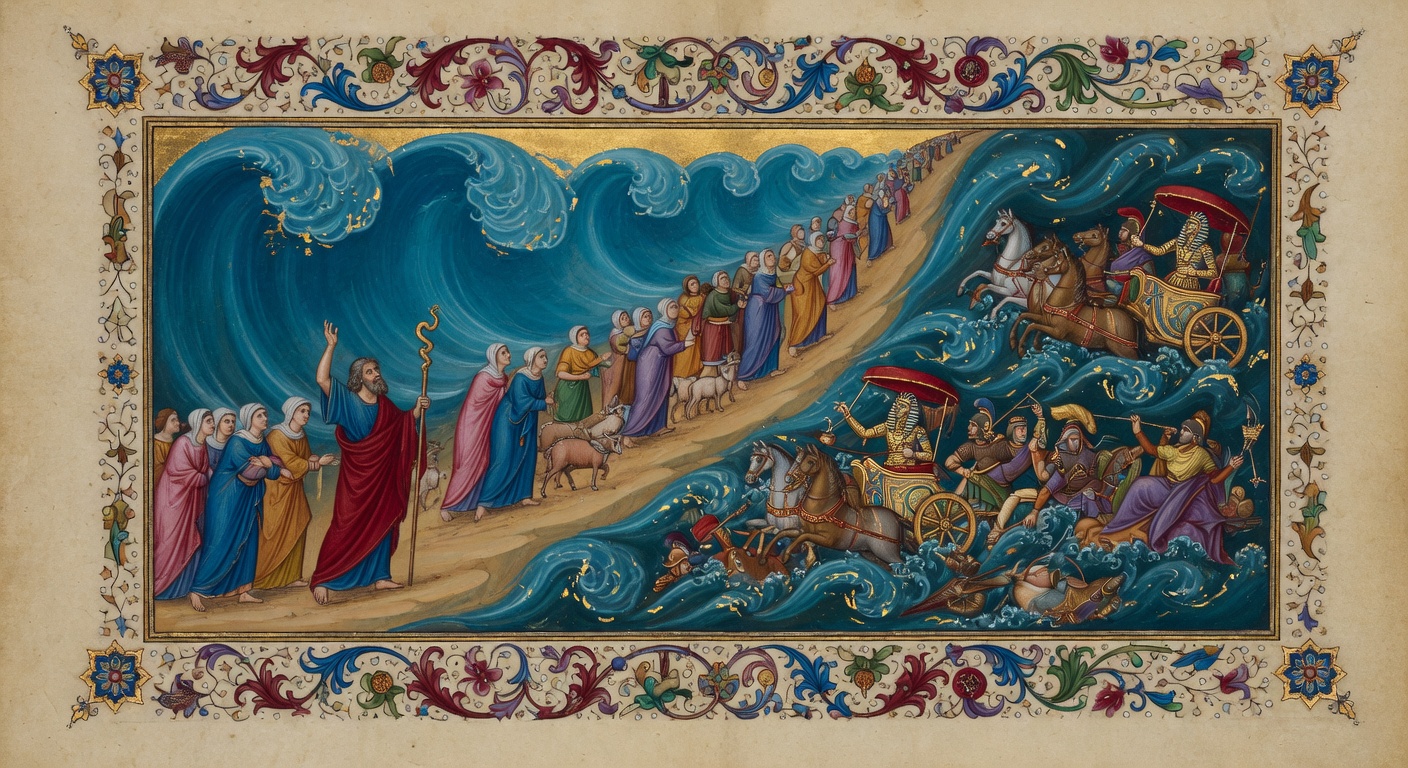
Crossing the Red Sea
Israel vs. Egypt
In the Book of Exodus, after the ten plagues compelled Pharaoh to release the Israelites from slavery in Egypt, he changed his mind and sent his army to recapture them at the Red Sea. Moses stretched out his staff at God's command, parting the waters so the people could cross on dry land with walls of water on either side, only for the sea to return and drown the pursuing Egyptian forces. This deliverance established Israel's national identity and covenant relationship with God, serving as a recurring theme of divine rescue throughout Scripture in psalms, prophecies, and later teachings on faith and redemption.
-
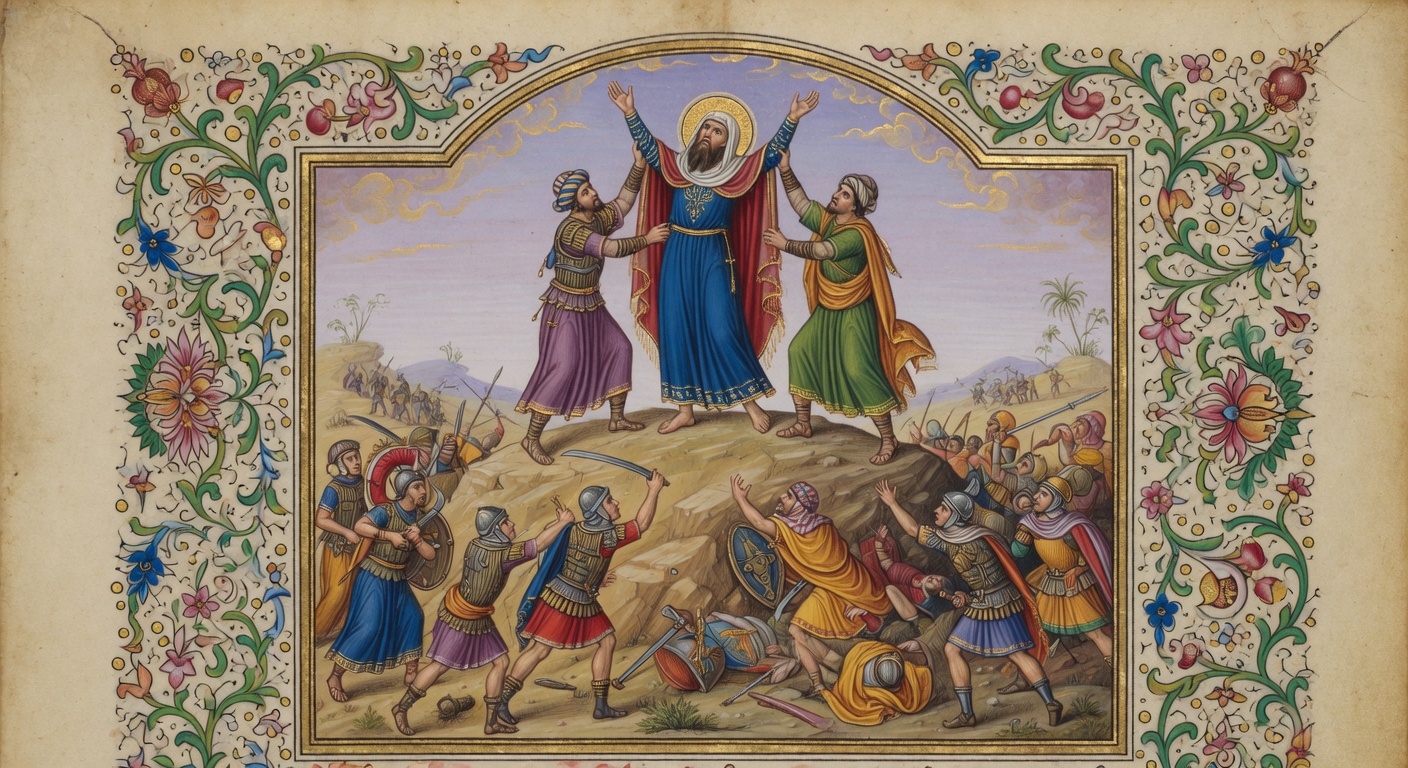
Battle of Rephidim
Israel vs. Amalek
The Battle of Rephidim took place during the Israelites' exodus from Egypt, shortly after their deliverance at the Red Sea, when the nomadic Amalekites launched an unprovoked attack on the vulnerable travelers encamped at Rephidim in the wilderness. Moses directed Joshua to assemble and lead an Israelite army into combat while he climbed a nearby hill holding the staff of God, accompanied by Aaron and Hur; victory depended on Moses keeping his hands raised in intercession, prompting Aaron and Hur to support his arms until sunset and secure Israel's triumph over Amalek. This account, recorded in Exodus 17, highlights the people's reliance on divine power rather than military strength alone and establishes a memorial of the event, with God declaring perpetual opposition to Amalek and instructing that the victory be written as a reminder for future generations.
Conquest
-
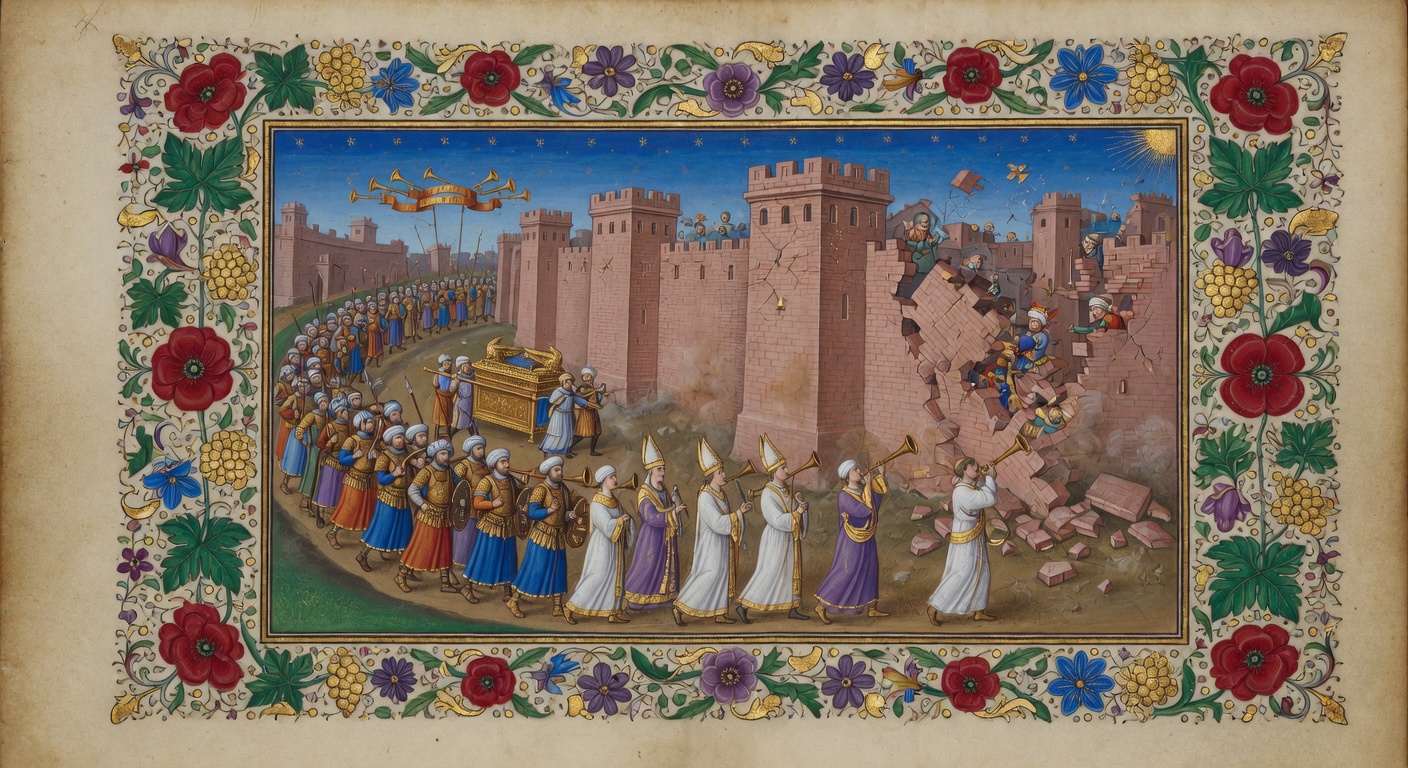
Fall of Jericho
Israel vs. Jericho
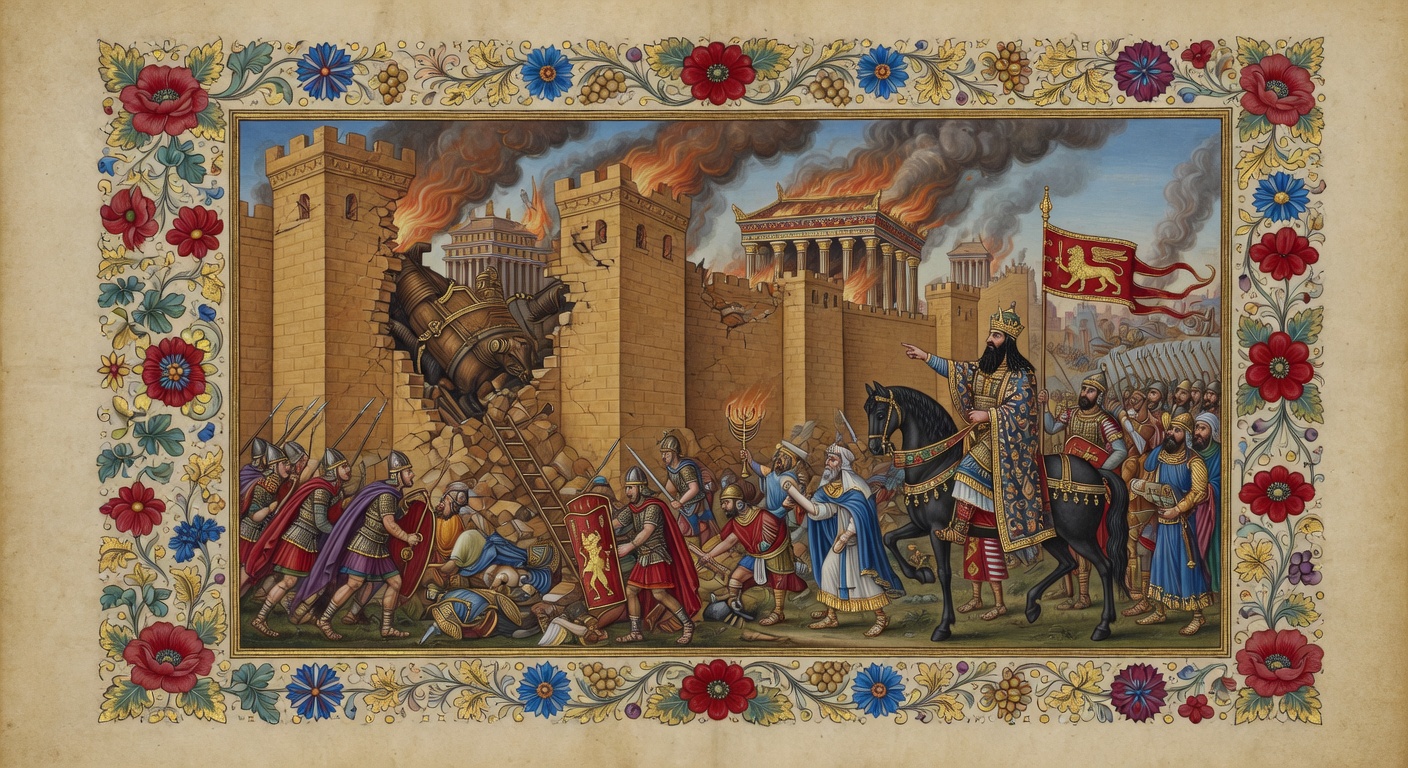
The Israelites' arrival at the fortified city of Jericho marked their first major obstacle after crossing the Jordan River into the Promised Land, following their exodus from Egypt and wilderness wanderings. As described in the Book of Joshua, they obeyed God's command by marching around the city once daily for six days with the Ark of the Covenant and priests blowing trumpets, then seven times on the seventh day before shouting, at which point the walls collapsed flat, allowing conquest of the city. This event demonstrated the power of faith and strict obedience to divine instructions over military might. In Scripture, it underscores God's faithfulness to His covenant promises and serves as a foundational example of victory through reliance on Him during the conquest of Canaan.
-
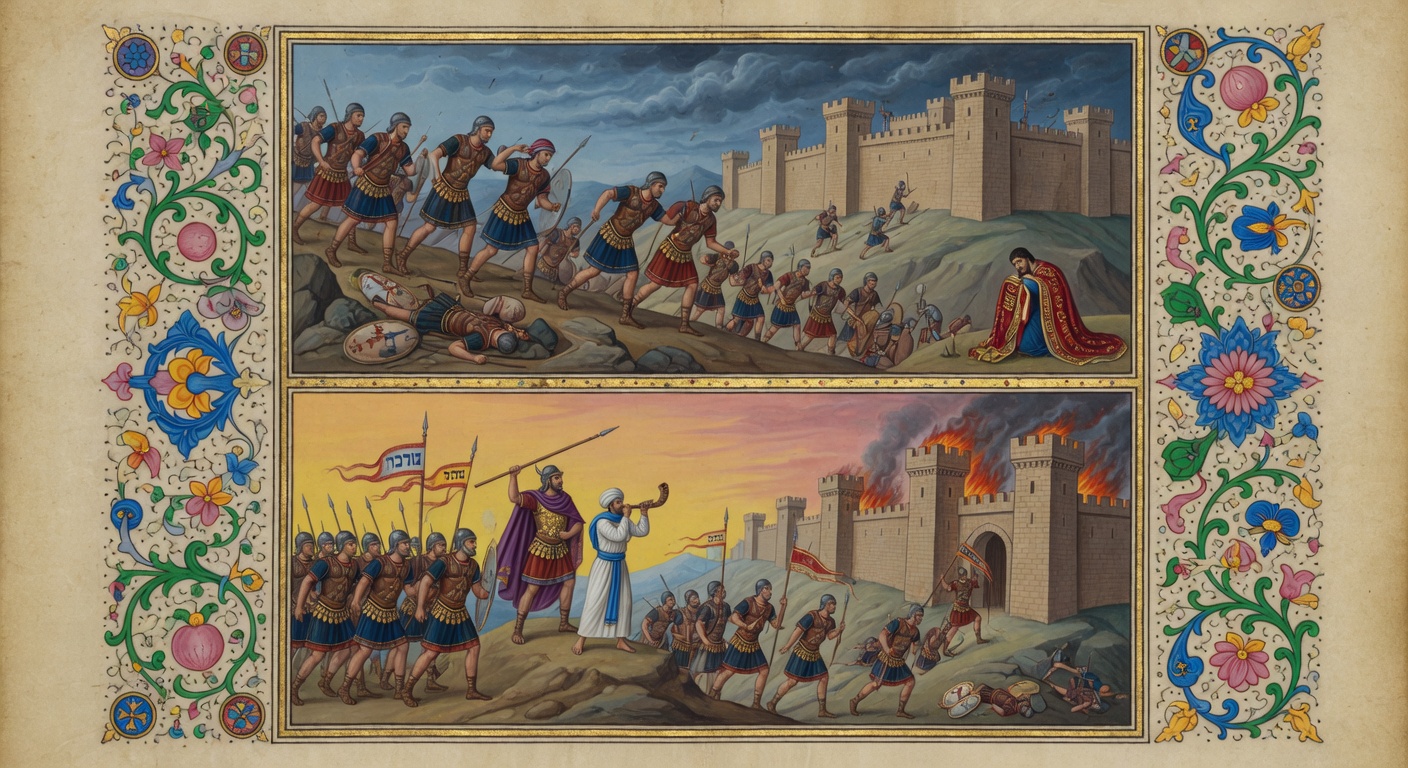
Battle of Ai
Israel vs. Ai
The Battle of Ai, described in Joshua 7–8, occurred during Israel's conquest of Canaan after their victory at Jericho and illustrates the critical need for corporate obedience to God. The Israelites initially suffered defeat because Achan secretly took devoted items from Jericho, violating divine instructions and bringing judgment on the entire nation until his sin was identified and punished by stoning. Following this purification, Joshua employed an ambush strategy that led to the city's capture, the execution of its king, and the complete destruction of Ai. This account emphasizes Scripture's theme that unaddressed disobedience hinders God's purposes, while repentance restores blessing and enables the fulfillment of promises regarding the land.
-
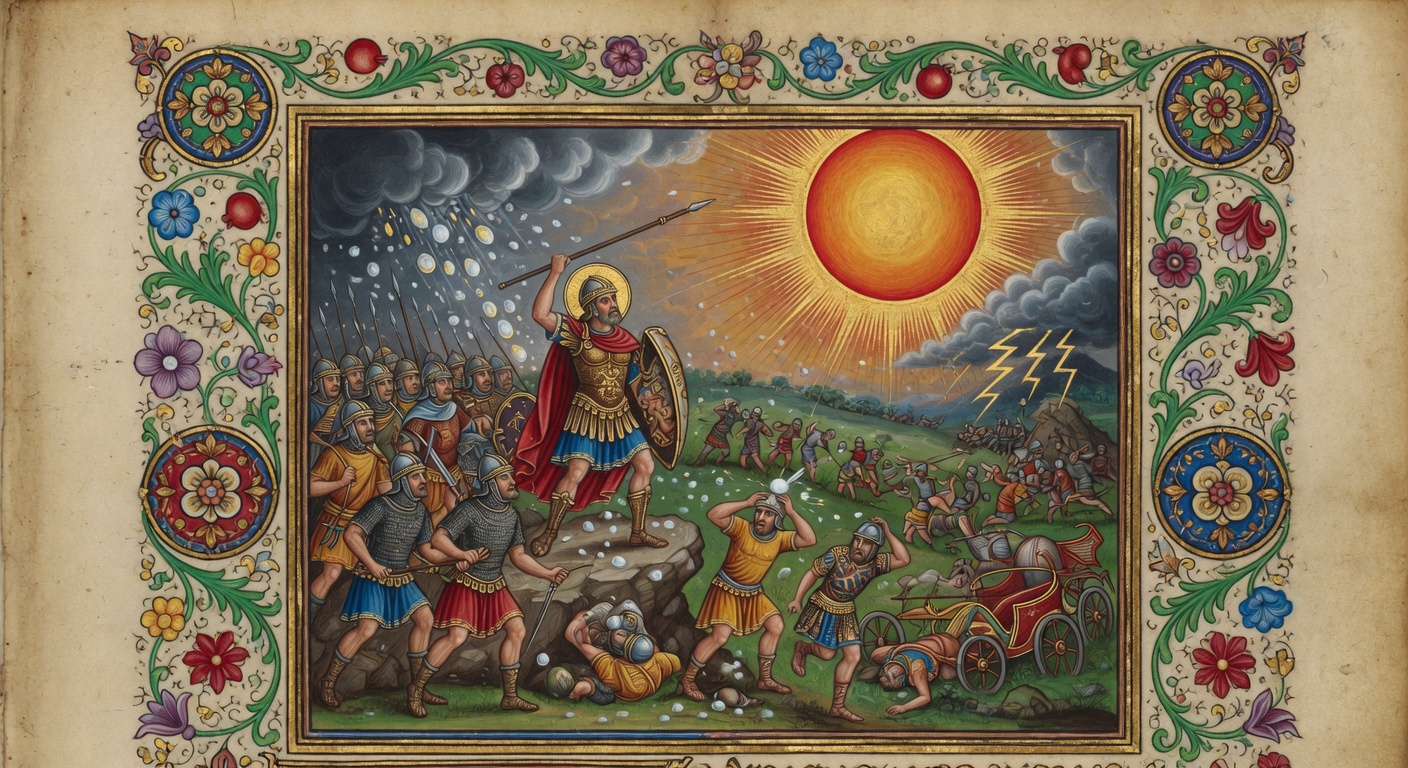
Battle of Gibeon (Sun Stands Still)
Israel vs. Five Amorite Kings
During the Israelite conquest of Canaan, five Amorite kings formed a coalition to attack Gibeon after its people made a treaty with Joshua, prompting him to lead a forced night march to defend the city. In the ensuing battle, God intervened decisively by sending a hailstorm that killed more enemy soldiers than the Israelites did with their swords, and by miraculously prolonging daylight at Joshua's request so the victory could be completed before nightfall. This event matters because it illustrates God's direct fulfillment of His covenant promises to give Israel the land, demonstrating His sovereignty over nature and commitment to His people. In Scripture, it stands as a testament to the power of faithful obedience and prayer in the face of overwhelming odds, recorded in Joshua 10 as a pivotal moment in the conquest narrative.
-
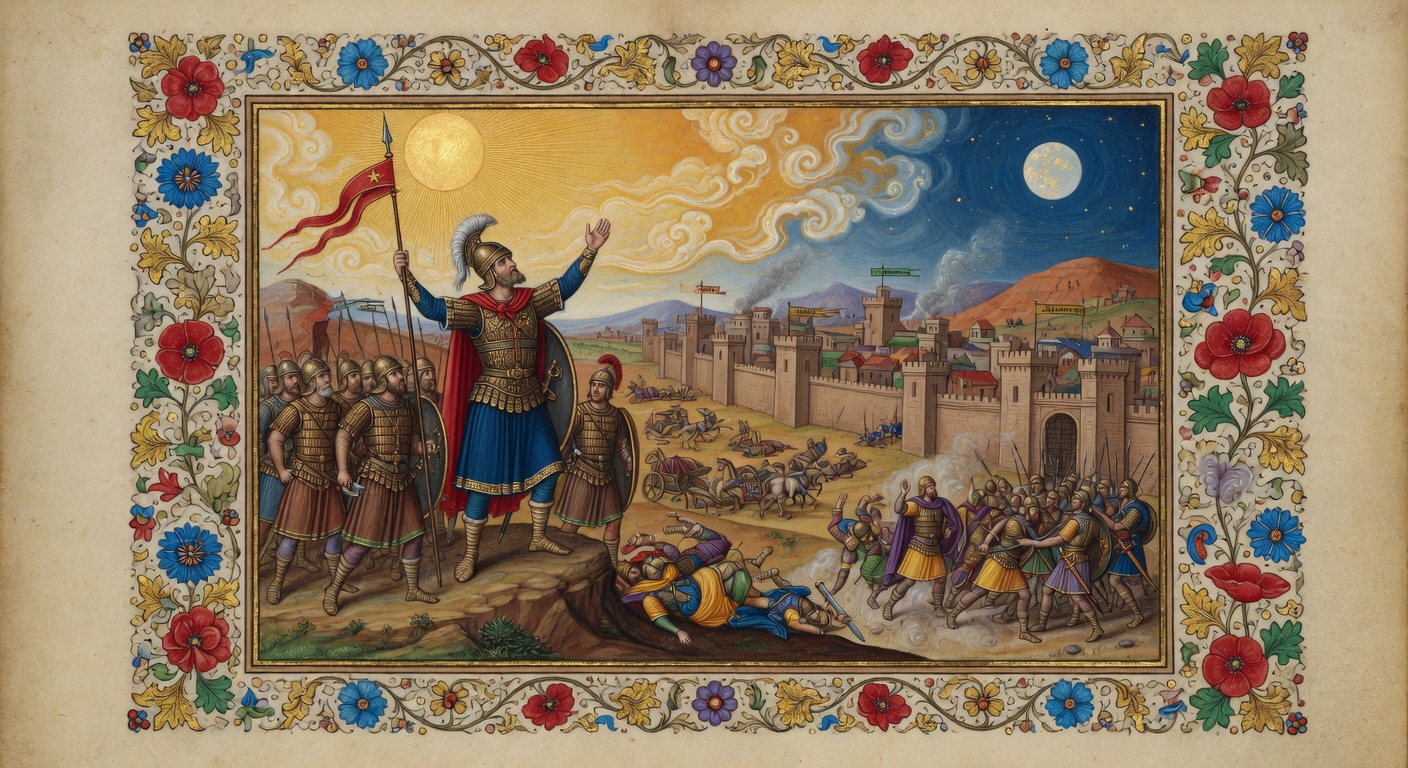
Conquest of Canaan (Southern Campaign)
Israel vs. Southern Canaanite Coalition
The southern campaign of the Conquest of Canaan involved Joshua leading the Israelite forces in a swift series of victories against a coalition of southern Canaanite city-states, prompted by the Gibeonite alliance and following the miraculous event where the sun stood still. After defeating the Amorite kings at Gibeon, Joshua pursued and captured key cities including Makkedah, Libnah, Lachish, Hebron, and Debir, utterly destroying their inhabitants as commanded by God. This campaign was crucial in securing the southern portion of the Promised Land for the Israelites, fulfilling God's covenant promises to Abraham and demonstrating His power through supernatural interventions in battle. In Scripture, it underscores themes of obedience, divine warfare, and the establishment of Israel in Canaan as recorded in the Book of Joshua.
-
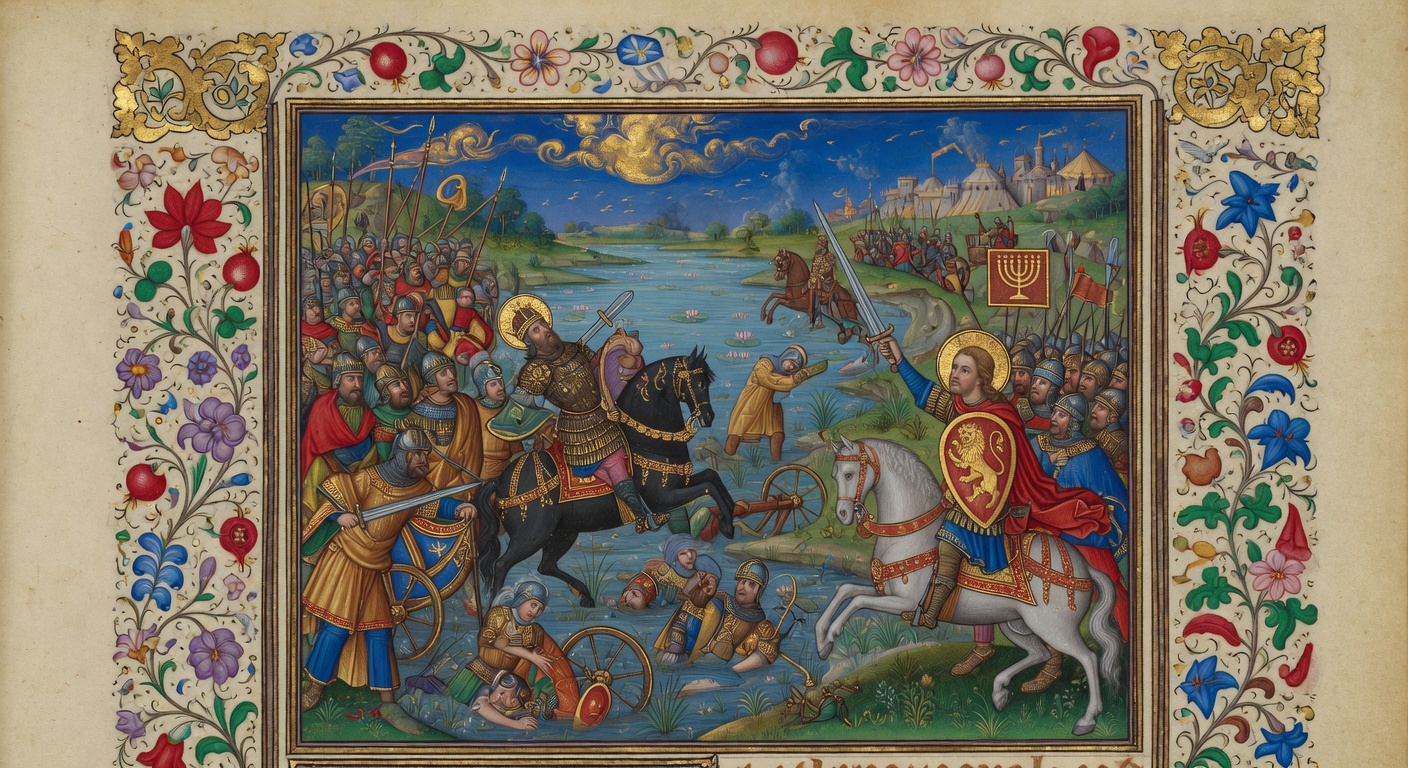
Battle at the Waters of Merom
Israel vs. Northern Canaanite Coalition
The Battle at the Waters of Merom, recorded in Joshua 11, occurred after Israel's southern victories when Jabin, king of Hazor, assembled a vast northern coalition of Canaanite kings with horses and chariots to oppose the Israelites. Joshua, following divine instruction not to fear, launched a surprise attack that routed the enemy forces, destroyed their chariots, and burned Hazor to the ground. This engagement marked the decisive conclusion of the military conquest of Canaan, fulfilling God's promise to give the land to the Israelites and enabling the subsequent tribal allotments described in the book of Joshua.
Judges
-
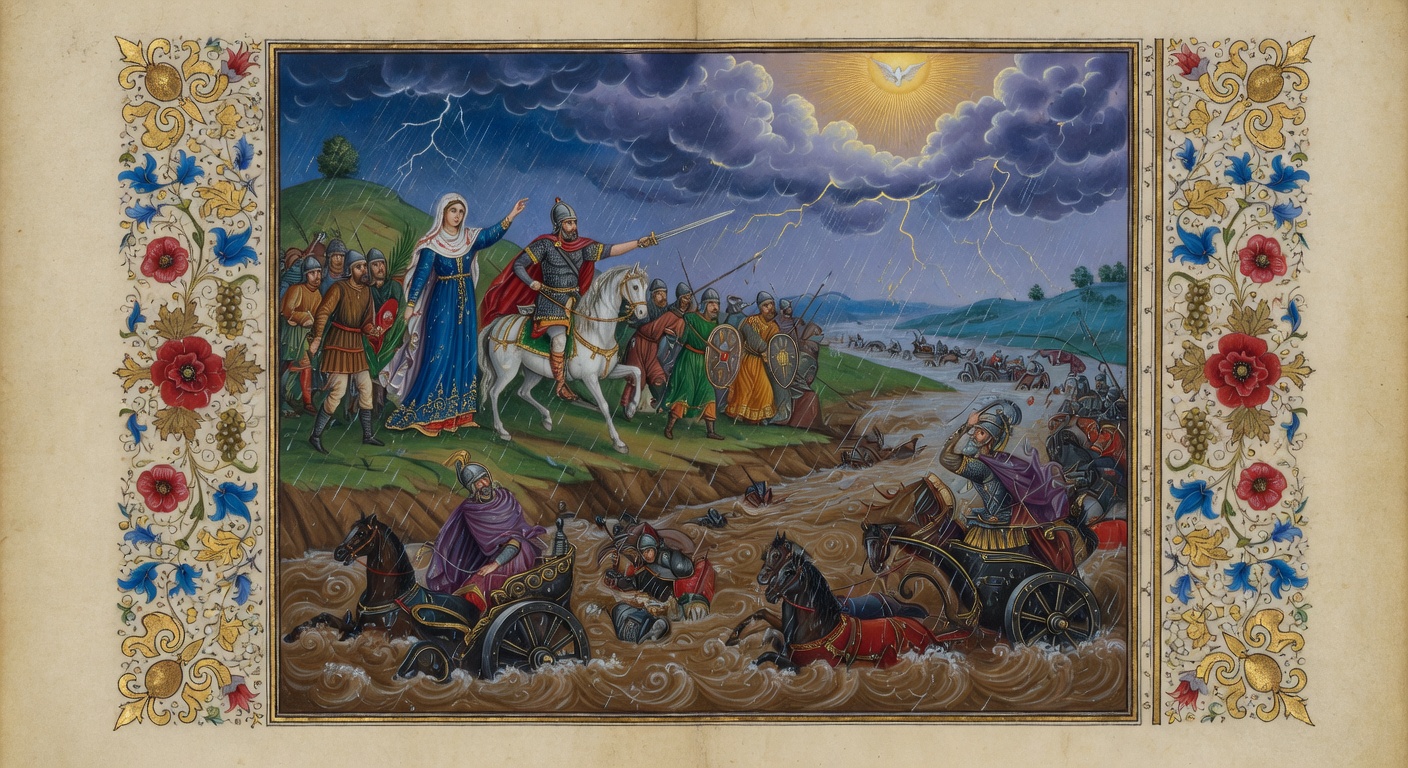
Deborah and Barak vs. Sisera
Israel (Naphtali & Zebulun) vs. Canaan (Sisera)
In the era of the judges, Israel endured twenty years of harsh oppression under Canaanite king Jabin of Hazor, whose army commander Sisera commanded nine hundred iron chariots that dominated the region. Prophetess and judge Deborah summoned Barak to lead Israelite forces against Sisera at Mount Tabor, where God sent a sudden rainstorm that swelled the Kishon River and turned the valley into mud, immobilizing the chariots and enabling the Israelite infantry to rout the enemy. Sisera fled on foot and was later killed by Jael, fulfilling Deborah's prophecy and securing forty years of peace. This victory, recorded in Judges 4 and celebrated in the Song of Deborah in Judges 5, illustrates God's sovereign deliverance through unexpected means and the pivotal roles of faithful leaders in Scripture.
-
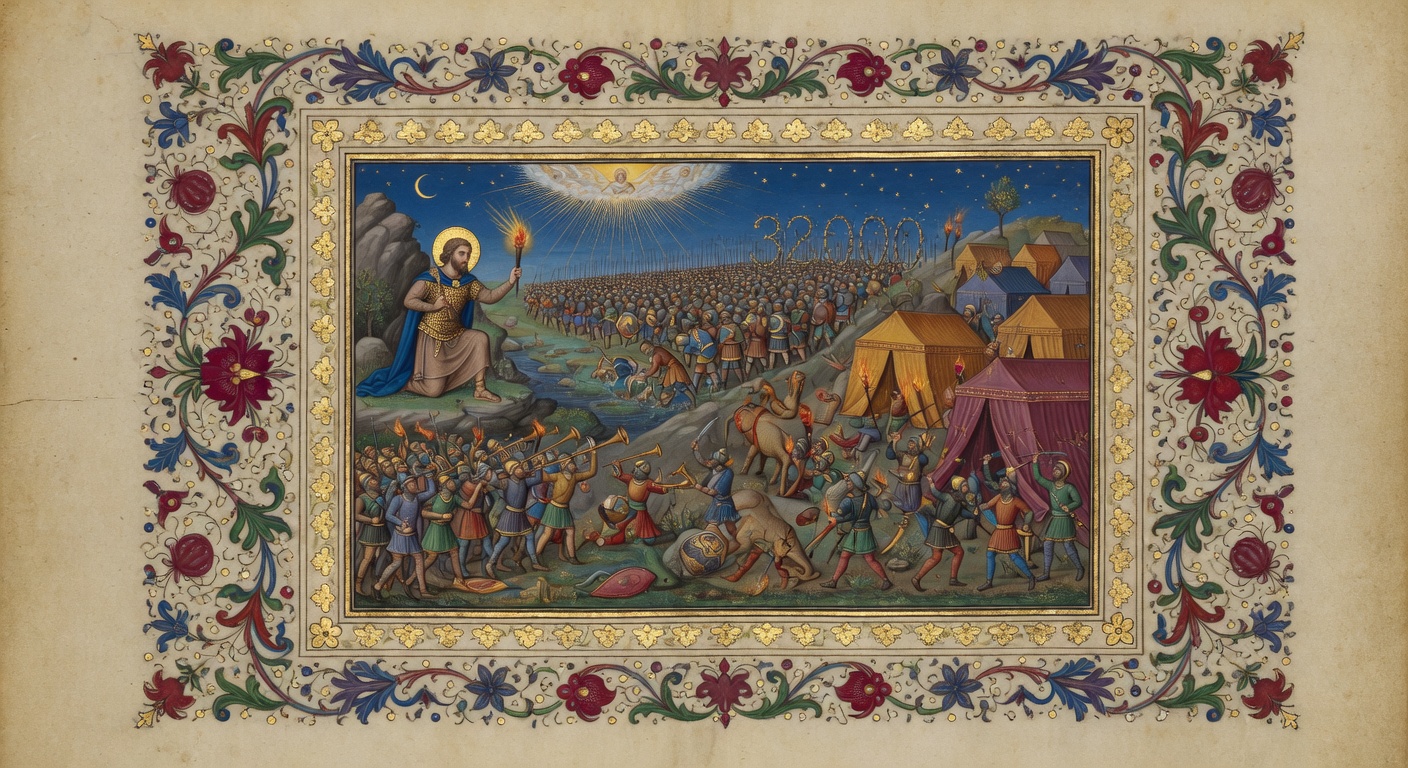
Gideon's 300
300 Israelites vs. 135,000 Midianites
In the Book of Judges, the Israelites endured years of oppression from the Midianites, who raided their lands and depleted their resources, until God commissioned Gideon to lead a campaign of deliverance. Although Gideon initially gathered an army of 32,000 men, God repeatedly reduced the force. First by sending home the fearful and then by selecting only those who drank water in a specific manner. Until just 300 remained, to demonstrate that victory depended on divine power rather than numerical strength. Armed with trumpets, torches hidden in jars, and a battle cry, these 300 men surrounded the Midianite camp at night, triggering chaos that caused the enemy to attack one another and flee in panic. The account illustrates a central scriptural principle that God achieves His purposes through human weakness and faith, encouraging trust in His sovereignty over seemingly impossible circumstances.
-
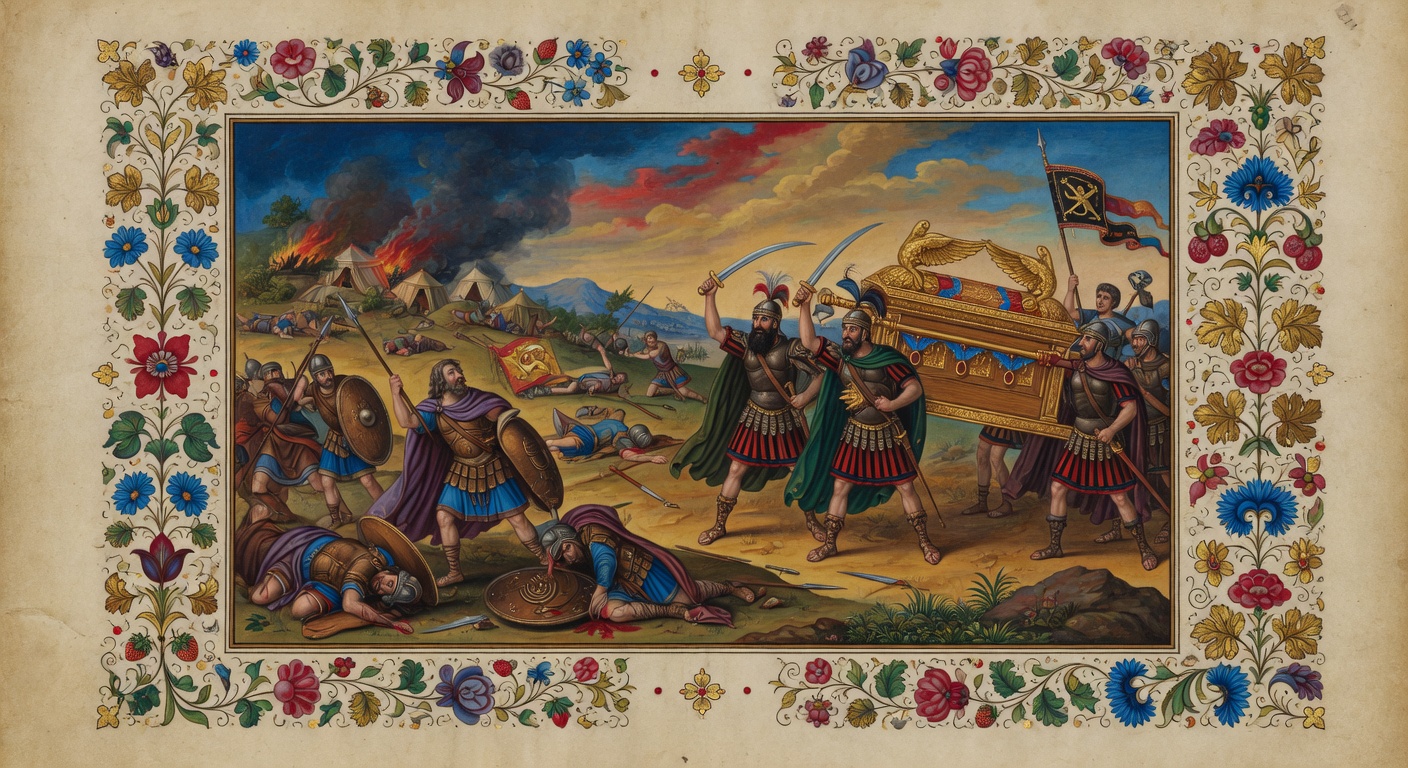
Battle of Ebenezer
Israel vs. Philistia
The Battle of Ebenezer, recorded in 1 Samuel 4, took place during the period of the judges when Israel faced ongoing oppression from the Philistines and was led spiritually by the aging high priest Eli. In a desperate bid for victory, the Israelites transported the Ark of the Covenant to the battlefield at Ebenezer, yet they suffered a crushing defeat that left approximately 30,000 soldiers dead, including Eli's sons Hophni and Phinehas, and resulted in the Ark's capture by the Philistines. This loss proved devastating because it exposed Israel's mistaken belief that the Ark could be wielded as a talisman to guarantee divine protection rather than serving as a symbol of covenant obedience. In Scripture the event underscores themes of judgment on corrupt leadership, the limits of ritual without faithfulness, and God's ultimate sovereignty, setting the stage for Samuel's prophetic ministry and the Ark's eventual return.
United Kingdom
-
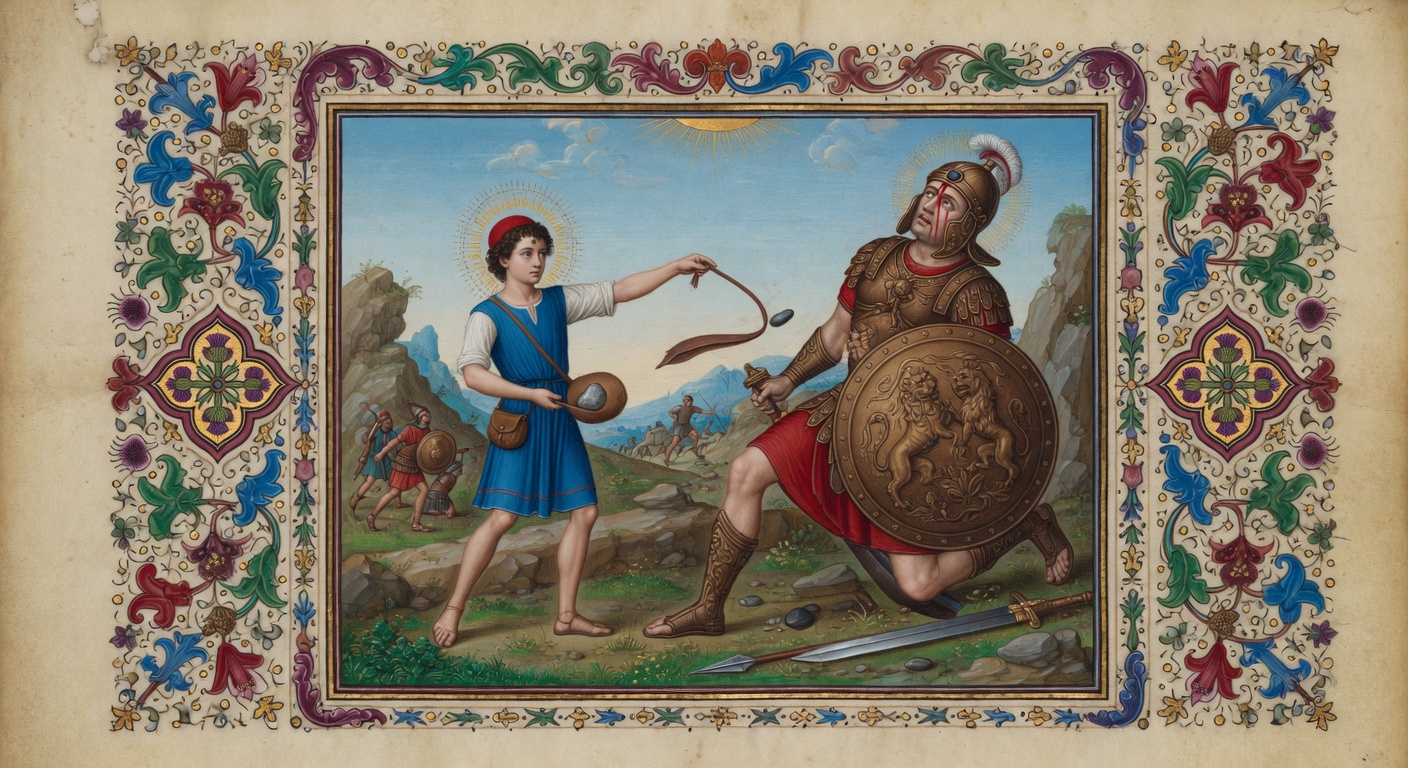
David and Goliath
David vs. Goliath (Israel vs. Philistia)
In the biblical account from 1 Samuel, the Israelite army faced the Philistines, whose champion Goliath, a giant warrior, taunted them daily and challenged anyone to single combat. Young David, a shepherd boy delivering supplies to his brothers at the battlefront, volunteered to fight Goliath despite his inexperience, relying not on armor or weapons but on his faith in God. Armed only with a sling and five stones, David struck Goliath in the forehead, felling the giant, and then used Goliath's own sword to behead him, leading to a victory for the Israelites. This event underscores the scriptural theme that God delivers his people through faith rather than human strength, marking David's rise as a future king of Israel and exemplifying trust in divine power over physical might.
-
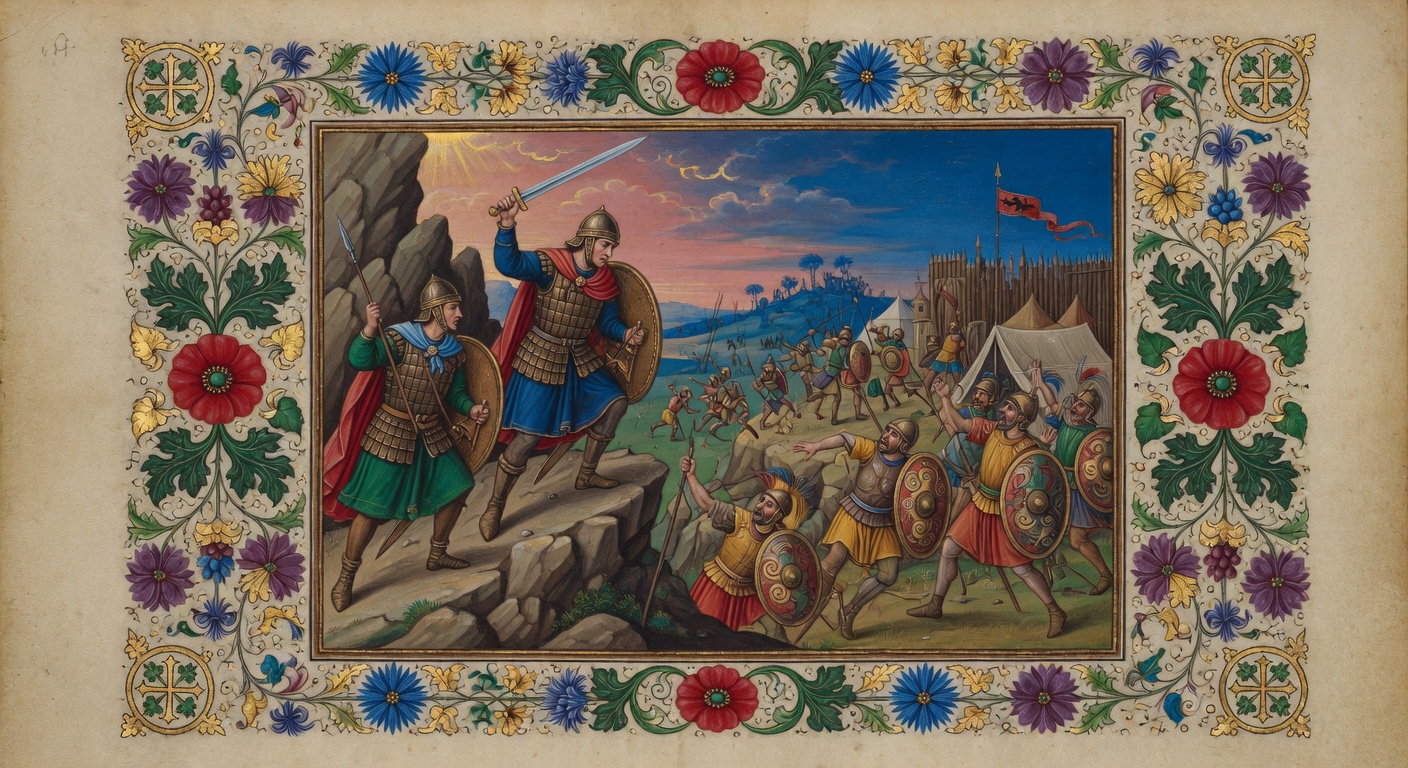
Jonathan at Michmash
Jonathan vs. Philistine Garrison
In the biblical account from 1 Samuel 14, during a time when the Philistines held military superiority over Israel under King Saul, Jonathan, the king's son, initiated a daring assault on an enemy garrison at Michmash with only his armor-bearer. Trusting that God could save by many or by few, the pair climbed the rocky pass, killed around twenty Philistines, and sparked widespread panic and confusion among the larger force, aided by a divinely sent earthquake. Saul's army then joined the fray, turning the skirmish into a decisive rout that drove the Philistines from Israelite territory. This episode illustrates themes of faith-driven initiative and divine deliverance in Scripture, contrasting Jonathan's boldness with Saul's later hesitancy.
-
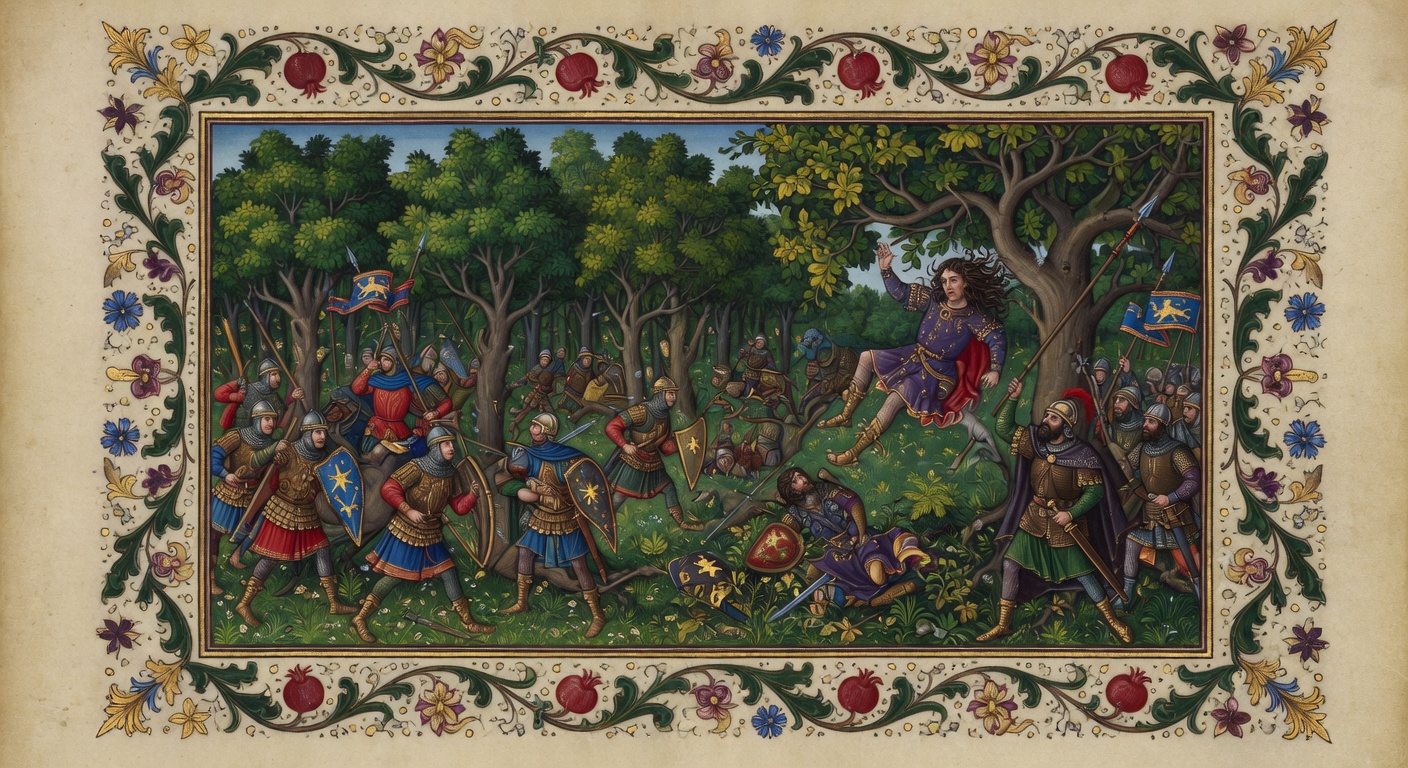
Battle of the Forest of Ephraim
David's army vs. Absalom's rebels
The Battle of the Forest of Ephraim took place amid Absalom's rebellion against his father King David, as recorded in 2 Samuel 18, when the prince raised an army to seize the throne and drove David into temporary exile. David's forces under commanders Joab, Abishai, and Ittai met the rebels in the dense woodland terrain, where superior tactics and terrain knowledge enabled them to inflict a decisive defeat that scattered Absalom's troops. During his flight, Absalom's long hair caught in an oak tree, suspending him helplessly; Joab then killed him with spears in direct violation of David's order for clemency, thereby terminating the civil war. This outcome restored David's rule, illustrated the biblical themes of rebellion's consequences and a father's conflicted mercy, and paved the way for national reconciliation under the returning king.
-
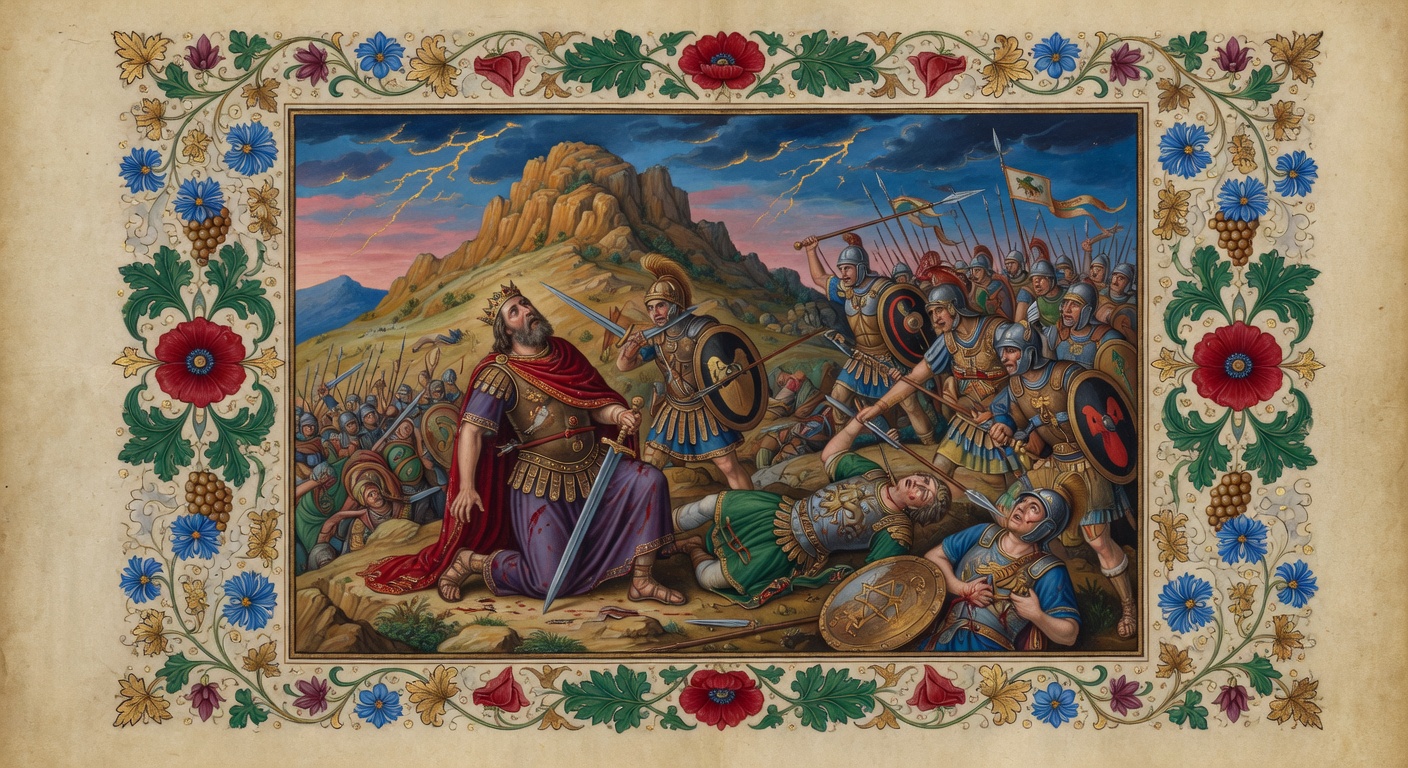
Saul's Last Stand at Gilboa
Israel vs. Philistines
In the biblical account from 1 Samuel, King Saul leads Israel's army against the Philistines on Mount Gilboa after receiving no answer from God and instead consulting a medium at Endor. Overwhelmed by superior enemy forces, Saul and his sons. Including Jonathan. Are slain in battle, with Saul falling on his own sword to avoid capture and humiliation. This defeat marks the end of Saul's reign as Israel's first king, whose disobedience had already prompted God to reject him in favor of David. The event holds significance in Scripture as a demonstration of divine judgment and the transition to David's kingship, fulfilling earlier prophecies about the consequences of turning from God's commands.
-
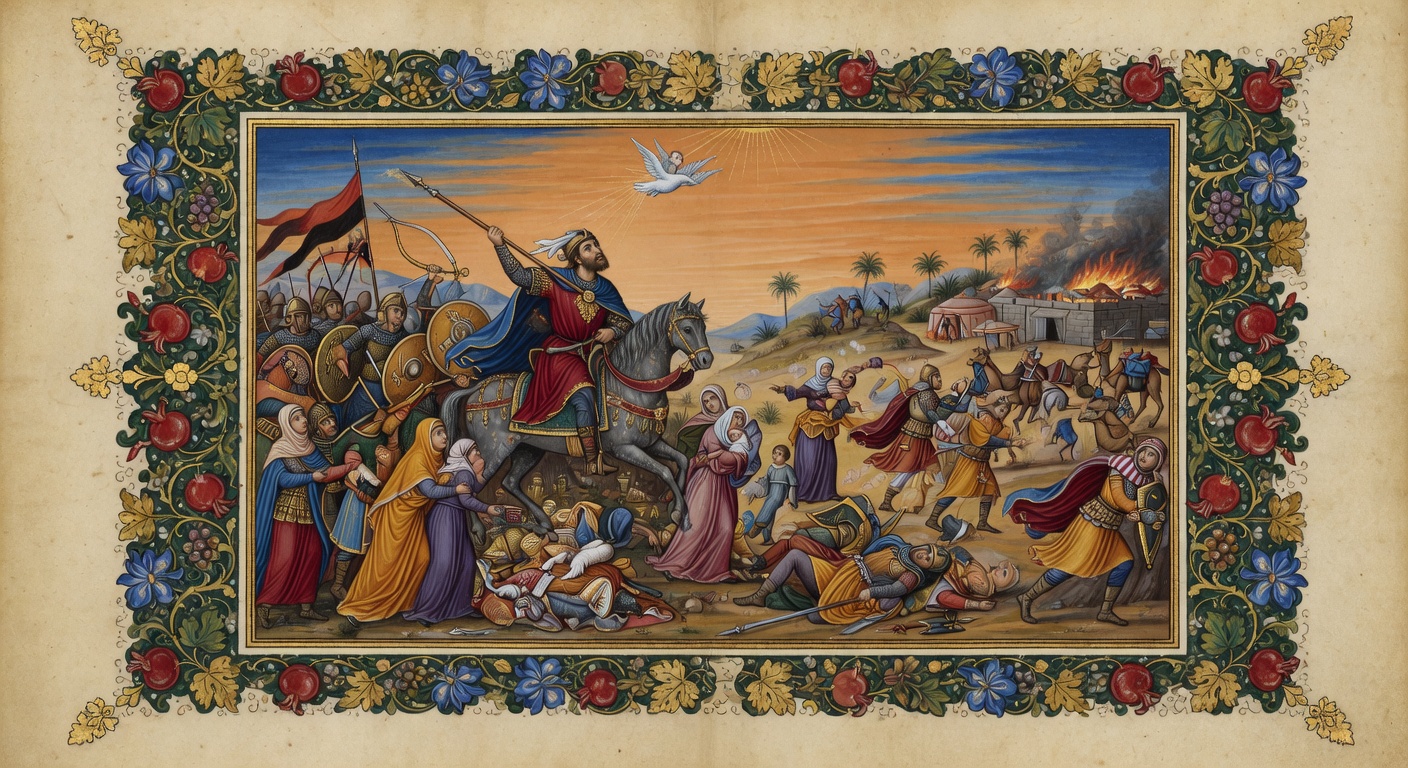
David vs. the Amalekites at Ziklag
David and his men vs. Amalekites
Faced with the devastation of Ziklag where Amalekite raiders had seized all the inhabitants, David strengthened himself in the Lord and inquired of Him before pursuing the enemy with his six hundred men. Guided by an Egyptian slave and assured of success, he attacked at dawn and recovered every person and possession while suffering no casualties among his own. This triumph not only avenged the raid but also revealed the power of seeking divine counsel, preparing David for the throne by affirming God's faithfulness amid trials that could have led to despair.
Divided Kingdom
-
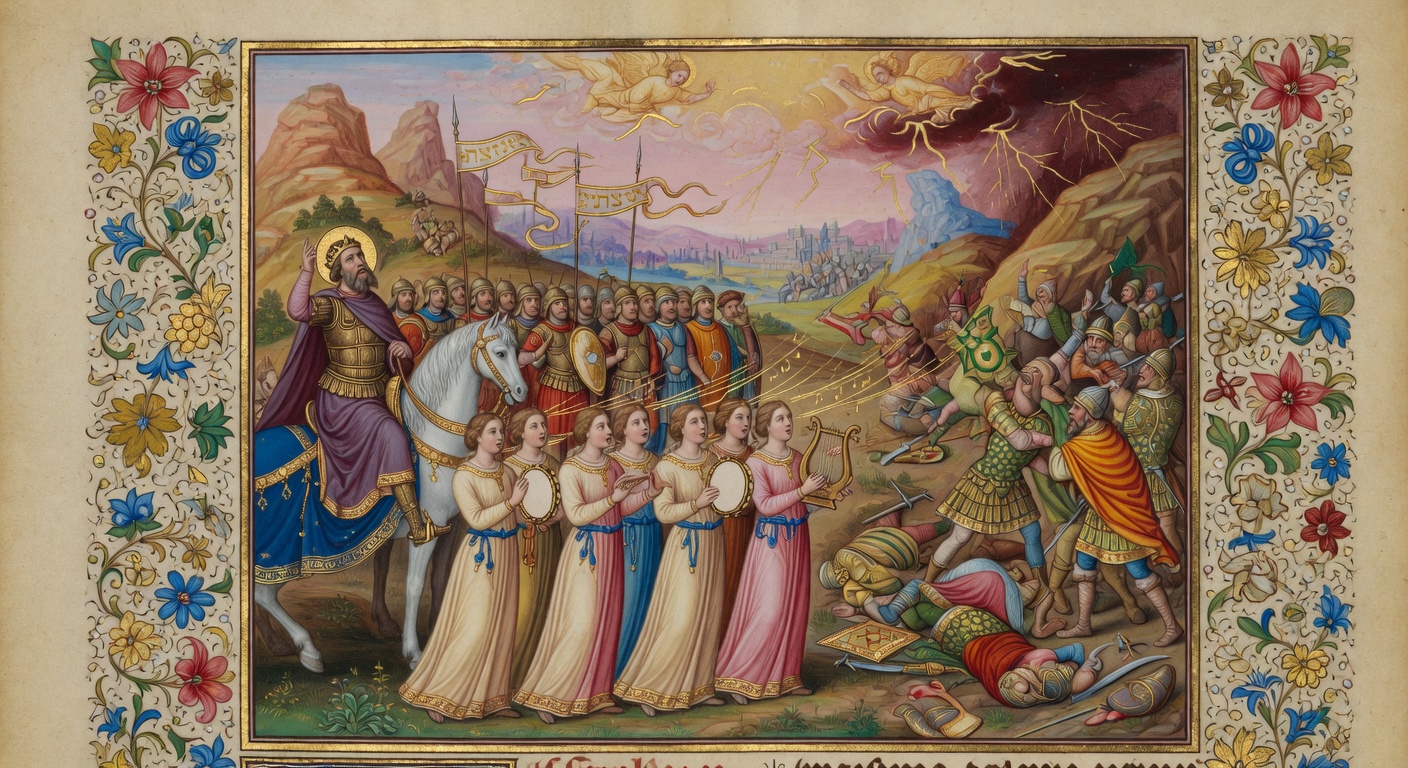
Jehoshaphat's Battle of Praise
Judah vs. Moab, Ammon, and Edom
In the days of King Jehoshaphat, Judah faced a massive invasion by a coalition of Moabite, Ammonite, and Meunite forces that threatened the nation's survival. After seeking divine guidance through prayer and fasting, Jehoshaphat positioned temple singers at the front of his army to praise God with the refrain "Give thanks to the Lord, for his steadfast love endures forever." As the praise began, the Lord caused the enemy armies to turn on one another in confusion, resulting in their complete self-destruction and leaving Judah to gather abundant spoils without engaging in combat. This account in 2 Chronicles 20 illustrates the scriptural principle that faithful reliance on God, expressed through worship rather than military strength, can bring deliverance and underscores praise as a powerful act of trust in divine intervention.
-
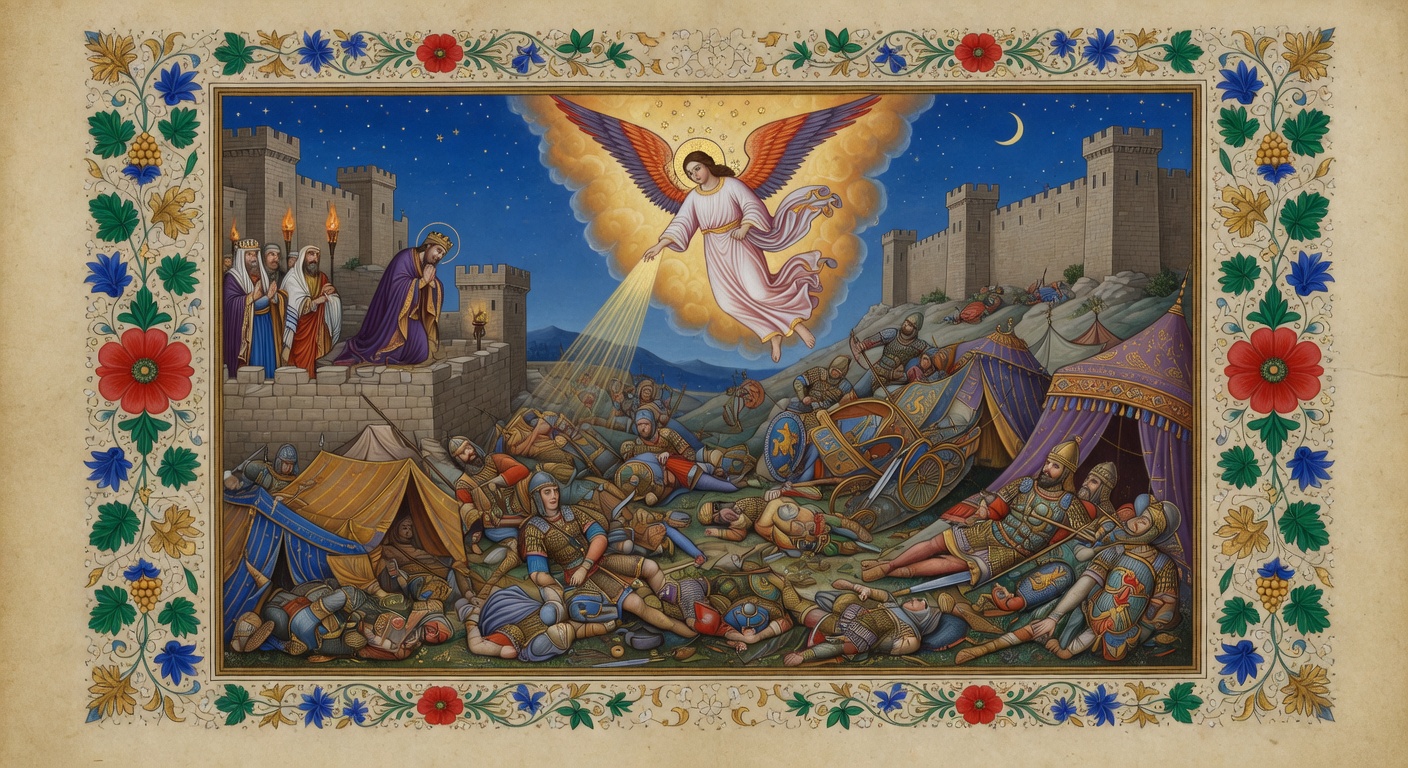
Sennacherib's Siege of Jerusalem
Judah vs. Assyria (Sennacherib)
During the reign of King Hezekiah of Judah, the Assyrian emperor Sennacherib invaded the region, captured numerous fortified cities, and besieged Jerusalem around 701 BCE as part of a broader campaign to suppress rebellion and expand his empire. Hezekiah responded by seeking the Lord through prayer at the temple, prompting the prophet Isaiah to deliver a message of divine assurance that the city would not fall. That night, the angel of the Lord struck down 185,000 Assyrian troops, compelling Sennacherib to lift the siege and return to Nineveh, where he was later assassinated. This account in 2 Kings, Isaiah, and 2 Chronicles illustrates God's sovereign protection of Jerusalem, the efficacy of faithful prayer, and the theological contrast between trust in military power and reliance on divine deliverance.
-
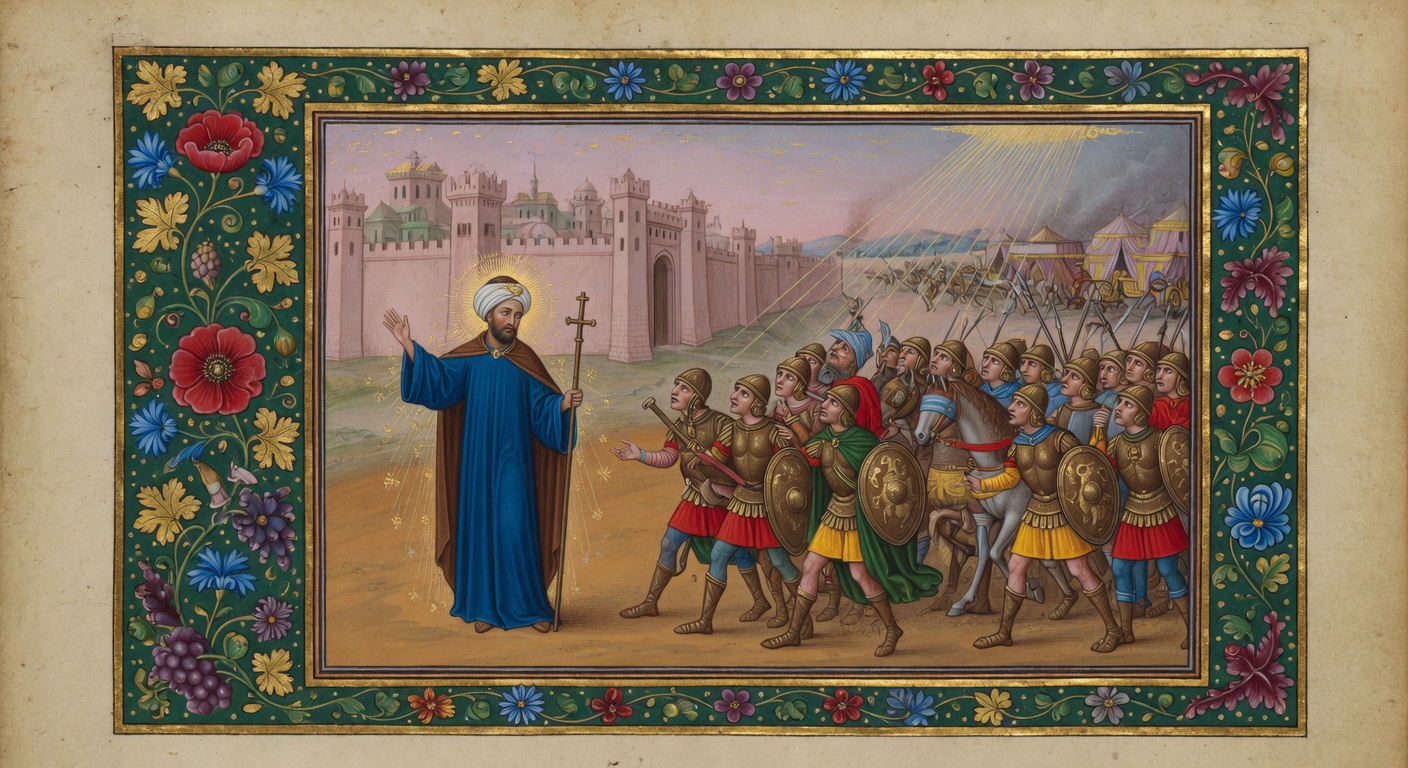
Elisha and the Blinded Arameans
Elisha vs. Aramean Army
In the biblical account from 2 Kings 6, the Aramean king sent a large military force to capture the prophet Elisha in Dothan after Elisha repeatedly warned Israel's ruler about Aramean ambush plans through divine insight. God struck the entire army with blindness in response to Elisha's prayer, enabling the prophet to lead the disoriented soldiers into the heart of Samaria, Israel's capital. There, Elisha prayed once more to restore their vision, revealing their encirclement by Israelite troops and prompting the king to consider their execution. Instead, Elisha advocated mercy by feeding the captives and releasing them, which halted further Aramean raids and demonstrated God's sovereign protection, the power of prayer, and the preference for compassion over retaliation in Scripture.
-
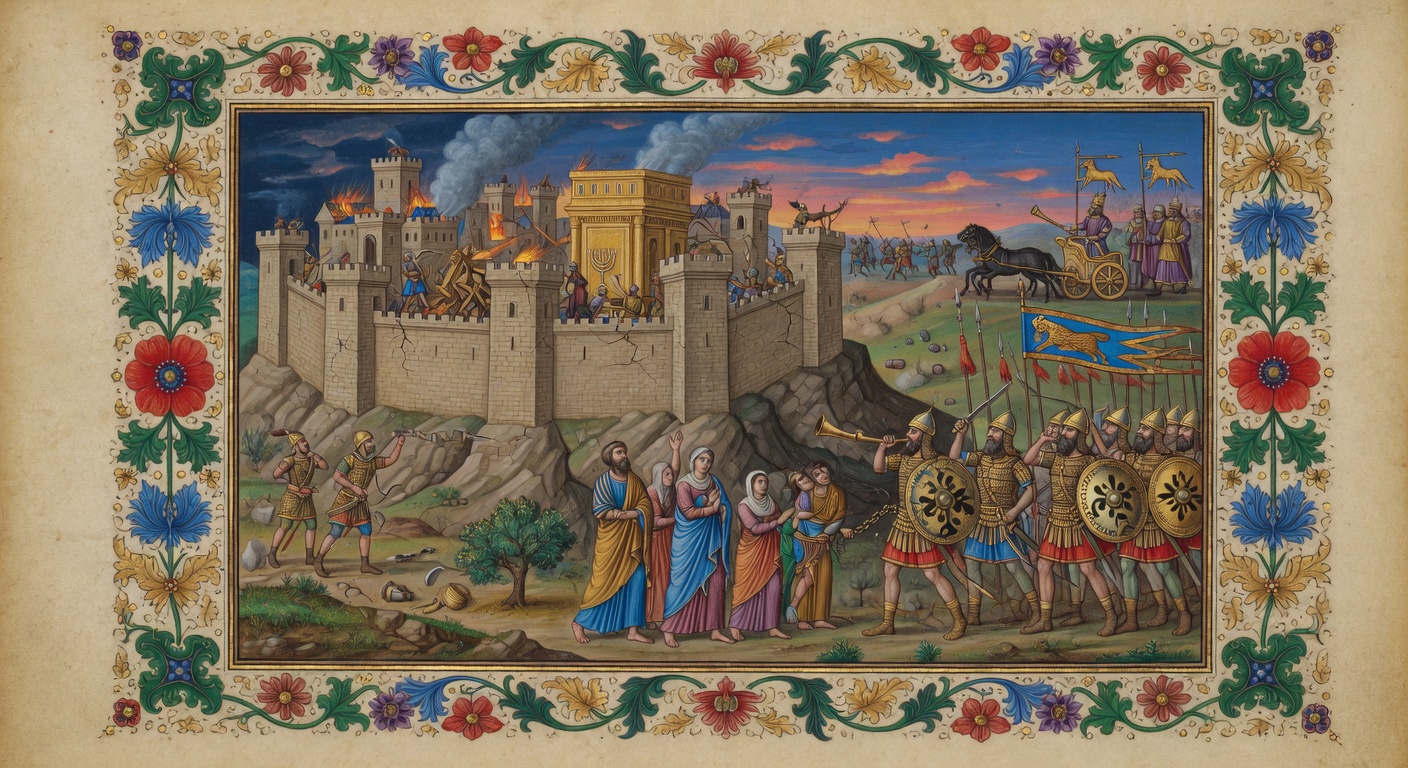
Fall of Samaria (722 BC)
Assyria vs. Israel (Northern Kingdom)
The Fall of Samaria in 722 BC marked the conquest of the northern kingdom of Israel by the Assyrian Empire under Shalmaneser V and Sargon II. After a three-year siege of the capital, the Assyrians captured the city and deported much of the population to Mesopotamia and Media, replacing them with foreign settlers to prevent future revolts. This event ended the independent northern kingdom, scattered the ten tribes into assimilation, and fulfilled prophetic warnings of judgment recorded in 2 Kings 17 for the nation's idolatry and covenant violations. In Scripture it underscores God's sovereignty over empires and serves as a lasting warning to Judah and later readers about the consequences of unfaithfulness.
-
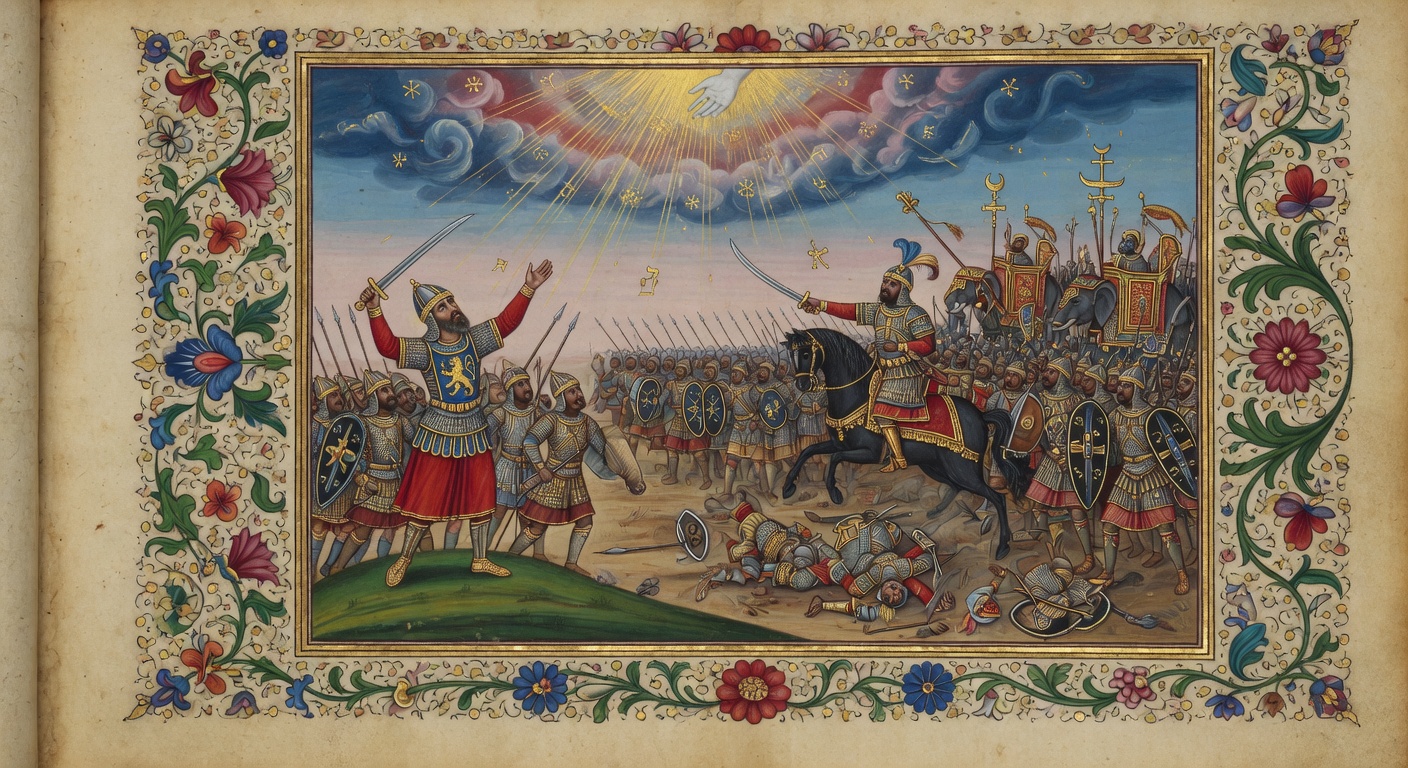
Asa vs. Zerah the Ethiopian
Judah vs. Ethiopian army
In the days of King Asa, who had removed foreign altars and sought the Lord, Zerah the Ethiopian advanced against Judah with an army of a million men and three hundred chariots. Asa prayed for divine help, acknowledging that the battle belonged to God, who then struck the Ethiopian forces and granted Judah a resounding victory as the enemy fled. The people of Judah pursued their foes to Gerar, seizing great plunder and livestock, which demonstrated God's faithfulness to those who trust in Him. This triumph secured peace for the land and highlighted in Scripture the importance of relying on divine power over human strength.
-
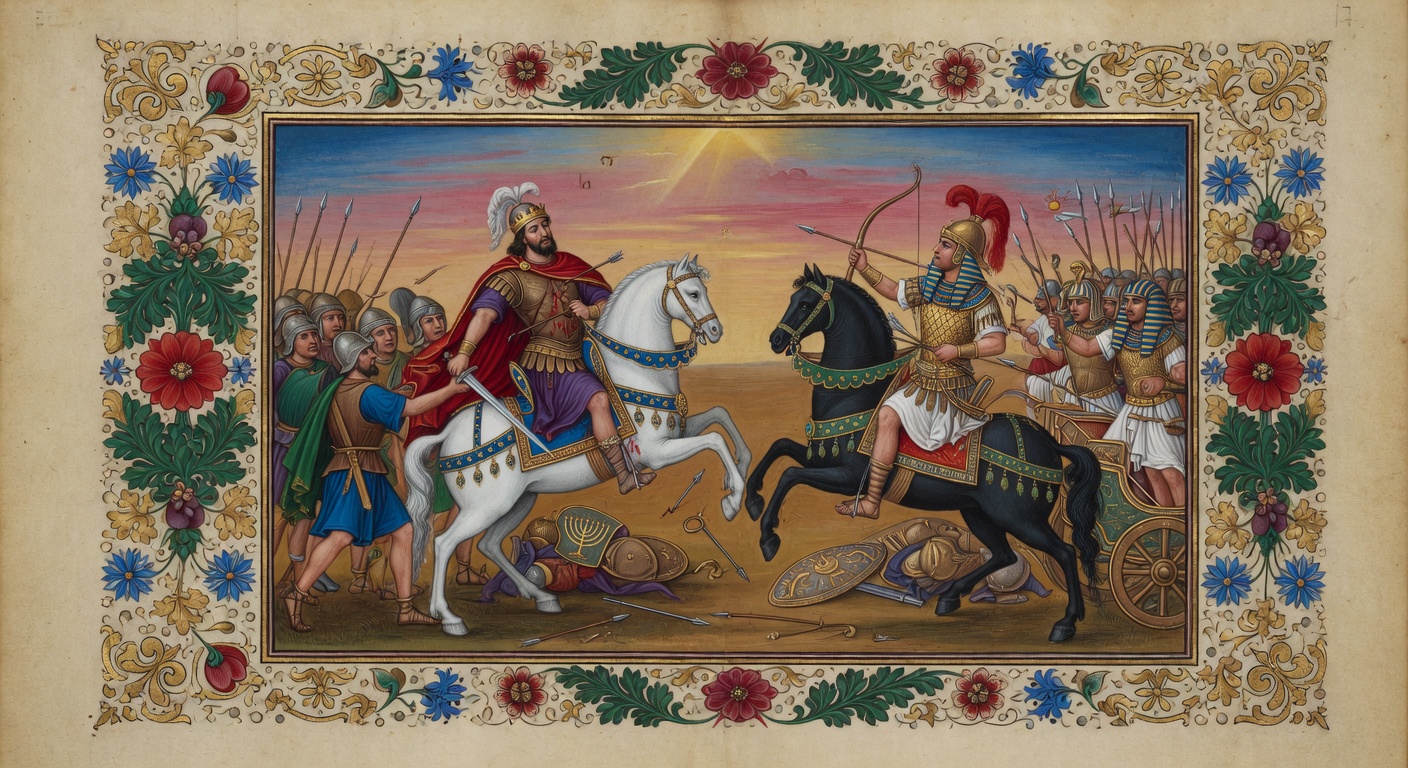
Josiah at Megiddo
Judah vs. Egypt
King Josiah, renowned for his sweeping religious reforms that restored the temple and eliminated idolatry in Judah, chose to intercept Pharaoh Necho II at Megiddo as the Egyptian forces marched northward to aid Assyria against Babylon. Although God had warned Josiah through Necho that the campaign was divinely ordained and that interference would bring disaster, the king disguised himself and joined the battle. Archers wounded him fatally, and he died in Jerusalem after being carried from the field. The event, recorded in 2 Kings 23 and 2 Chronicles 35, underscores the consequences of disregarding divine instruction and accelerated Judah’s political decline toward exile.