Sennacherib's Siege of Jerusalem
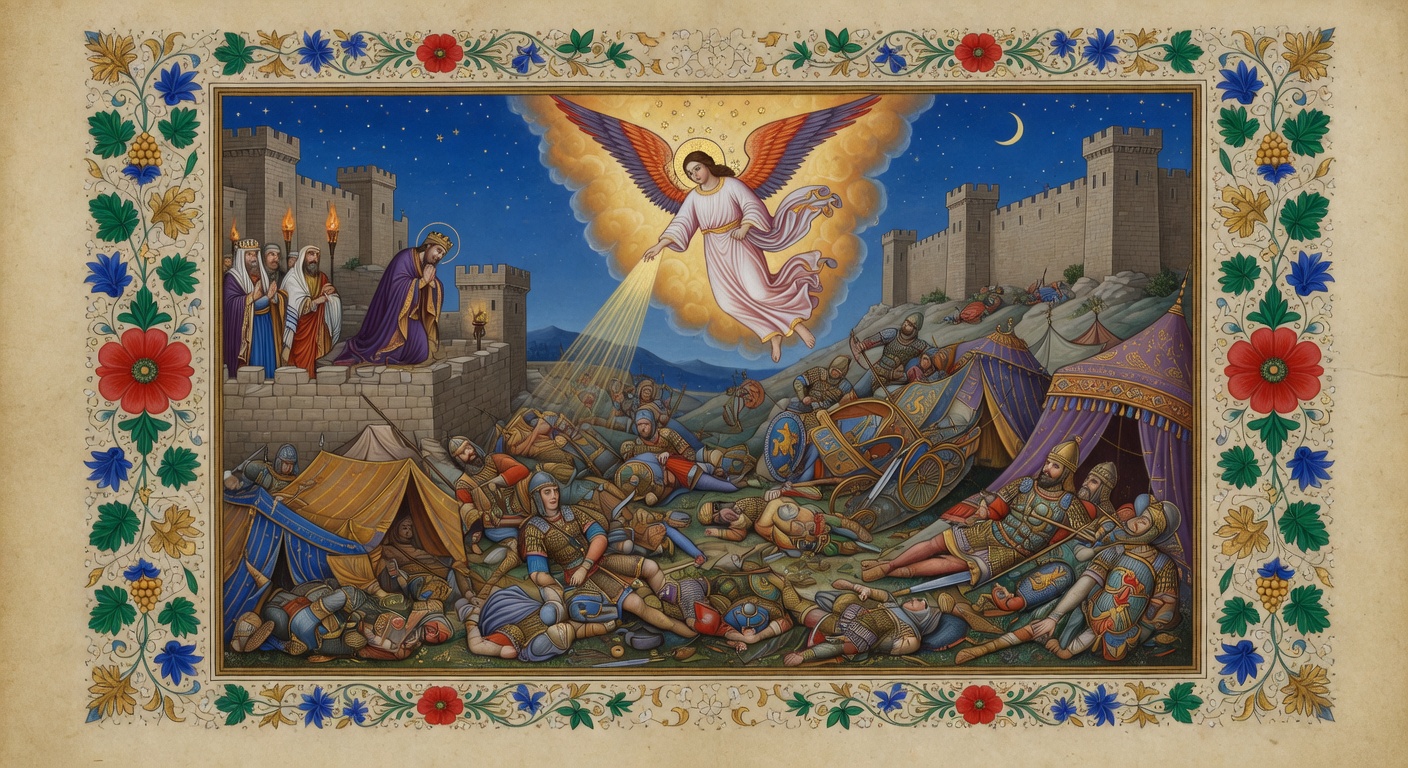
During the reign of King Hezekiah of Judah, the Assyrian emperor Sennacherib invaded the region, captured numerous fortified cities, and besieged Jerusalem around 701 BCE as part of a broader campaign to suppress rebellion and expand his empire. Hezekiah responded by seeking the Lord through prayer at the temple, prompting the prophet Isaiah to deliver a message of divine assurance that the city would not fall. That night, the angel of the Lord struck down 185,000 Assyrian troops, compelling Sennacherib to lift the siege and return to Nineveh, where he was later assassinated. This account in 2 Kings, Isaiah, and 2 Chronicles illustrates God's sovereign protection of Jerusalem, the efficacy of faithful prayer, and the theological contrast between trust in military power and reliance on divine deliverance.
Details
- Era
- Divided Kingdom
- Category
- Divided Kingdom
- Participants
- Judah vs. Assyria (Sennacherib)
- Outcome
- Angel of the Lord kills 185,000 Assyrians overnight
- Divine Intervention
- Yes
Key Passages
The Deliverance
2 Kings 19:35-37
 35nd it came to pass that night, that the angel of the LORD went out, and smote in the camp of the Assyrians an hundred fourscore and five thousand: and when they arose early in the morning, behold, they were all dead corpses.
Did You Know?
185,000 Assyrian soldiers died in a single night. The largest supernatural military defeat in Scripture.
Sennacherib's own records confirm he besieged Jerusalem but never claim to have captured it.
The Assyrian king was later murdered by his own sons while worshipping his god. As Isaiah prophesied.