Isaiah
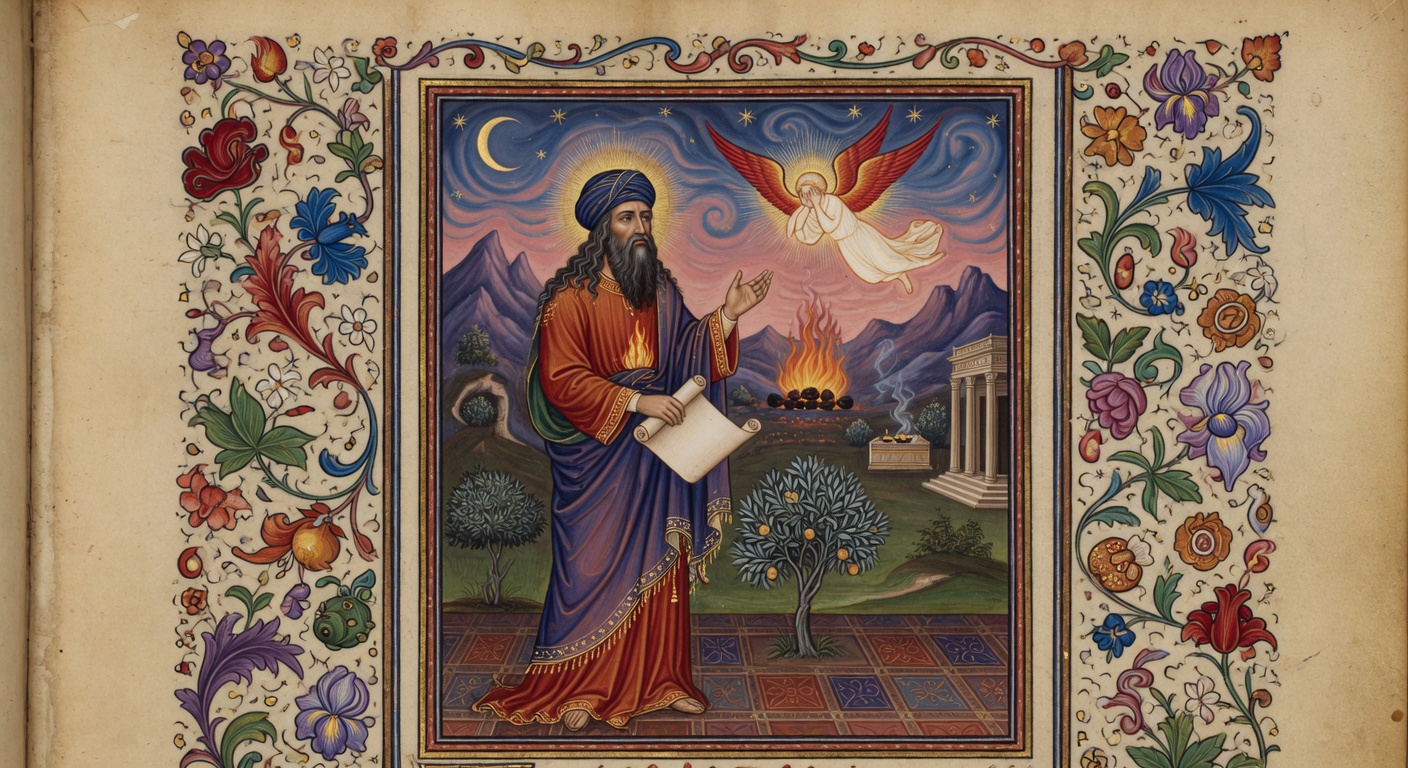
Isaiah was an 8th-century BCE prophet who ministered in the kingdom of Judah during a time of political turmoil and spiritual decline. He received a dramatic vision of God's holiness in the temple, which commissioned him to deliver messages of judgment and hope to the people. Through his prophecies, Isaiah foretold the coming of the Messiah with remarkable detail, including descriptions of a virgin birth and a suffering servant who would bear the sins of many. His writings on themes of redemption and divine sovereignty hold profound significance in Scripture, as they are frequently quoted in the New Testament to affirm Jesus as the promised Christ.
Videos from BibleProject
Isaiah Overview (Part 1: Ch. 1-39)
Isaiah confronts Israel's injustice and promises a future king who will bring peace.
Isaiah Overview (Part 2: Ch. 40-66)
God promises rescue through a suffering servant and a new heavens and earth.
BibleProject is the author and owner of this content. To find more BibleProject resources, visit bibleproject.com. Bible Navigator is not affiliated with BibleProject.
Biography
- Occupation
- Prophet
- Father
- Amoz
- Spouse
- The Prophetess
- Children
- Shear-Jashub, Maher-Shalal-Hash-Baz
- Era
- Divided Kingdom (c. 740-680 BC)
- Nationality
- Judean
Family
Did You Know?
Isaiah had direct access to Judah's royal court and confronted King Ahaz during the Syro-Ephraimite crisis of 734 BC, offering a sign involving the still-unborn Immanuel while the king refused to ask for one as instructed.
In Isaiah 20 the prophet walked naked and barefoot for three years as a living sign-act foretelling the humiliation of Egypt and Cush by Assyria, exemplifying the embodied performance aspect of eighth-century prophecy.
Jewish tradition preserved in the Babylonian Talmud and Ascension of Isaiah reports that the prophet was sawn in half under King Manasseh, an execution method possibly alluded to in the list of faithful sufferers in Hebrews 11:37.
The Dead Sea Scroll 1QIsa^a, copied around 125 BC, contains the entire book of Isaiah with only minor variants from the later Masoretic Text, providing the oldest complete witness to any biblical book and demonstrating extraordinary textual stability.
Isaiah's two named sons, Shear-Jashub and Maher-Shalal-Hash-Baz, bore symbolic names given as divine oracles predicting both a surviving remnant and the swift plunder of Damascus and Samaria by Assyria.
Key Passages
Isaiah's Vision and Call
Isaiah 6:1-8
Isaiah's encounter with God's holiness devastates him with awareness of his sin, then restores him through cleansing - establishing the pattern of true worship: revelation, conviction, grace, and commission.
 1n the year that king Uzziah died I saw also the LORD sitting upon a throne, high and lifted up, and his train filled the temple.
Prophecy of Immanuel
Isaiah 7:10-14
The promise of a virgin-born child named 'God with us' pierces through immediate political crisis to reveal God's ultimate plan of incarnation - God Himself entering human history.
 10oreover the LORD spake again unto Ahaz, saying,
The Suffering Servant
Isaiah 53:1-12
Isaiah 53 describes a figure who bears others' sins through suffering and death - the most detailed Old Testament prophecy of Christ's crucifixion, written 700 years before it happened.
 1ho hath believed our report? and to whom is the arm of the LORD revealed?