💭 Dreams & Visions
Patriarchs
-
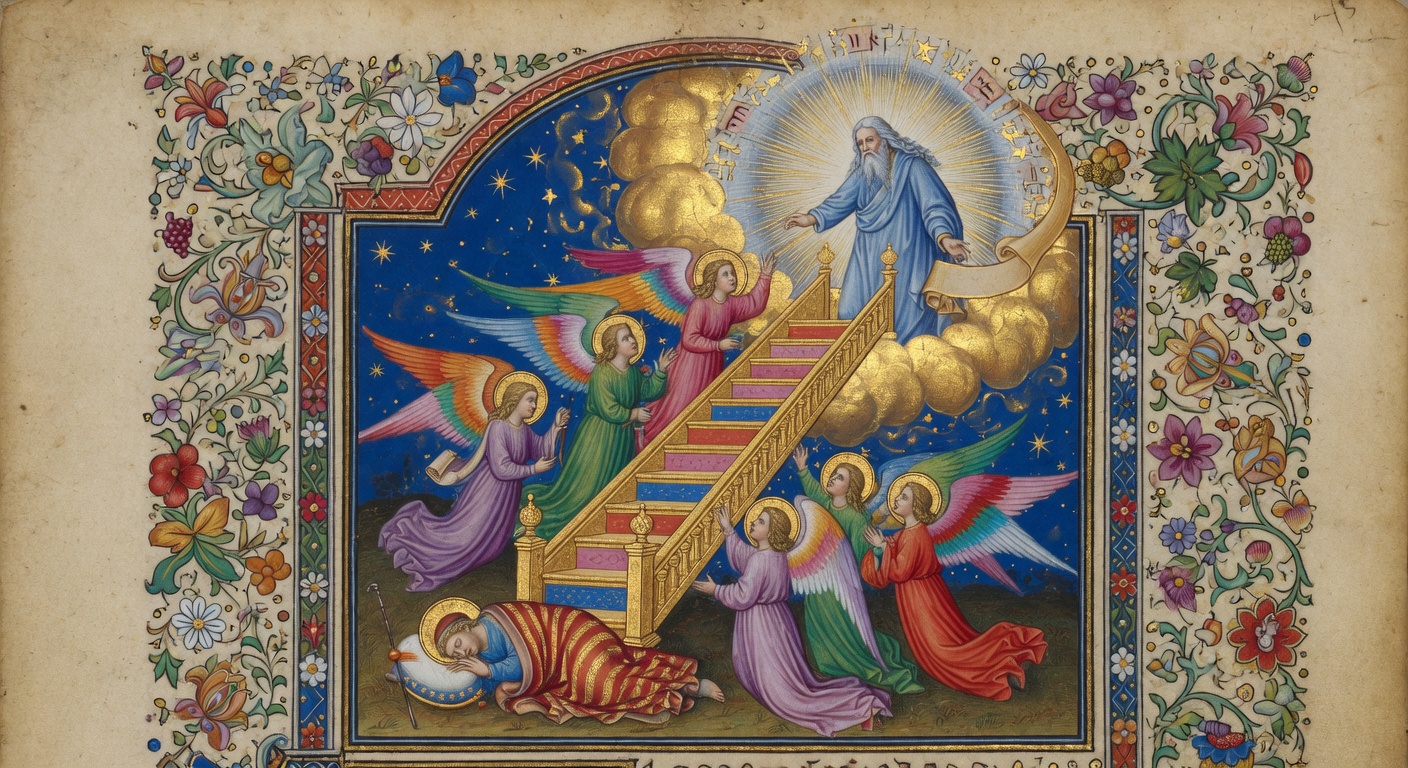
Jacob's Ladder
Dreamer: Jacob
In the Book of Genesis, Jacob experiences this vision while fleeing from his brother Esau and resting at Bethel. He dreams of a stairway extending from earth to heaven with angels ascending and descending upon it, and God stands at the top reaffirming the covenant promises made to Abraham and Isaac. God assures Jacob that the land will belong to his descendants and that through them all families of the earth will be blessed. This event signifies God's continued faithfulness to His promises and marks a turning point in Jacob's spiritual journey, later alluded to in the New Testament.
-
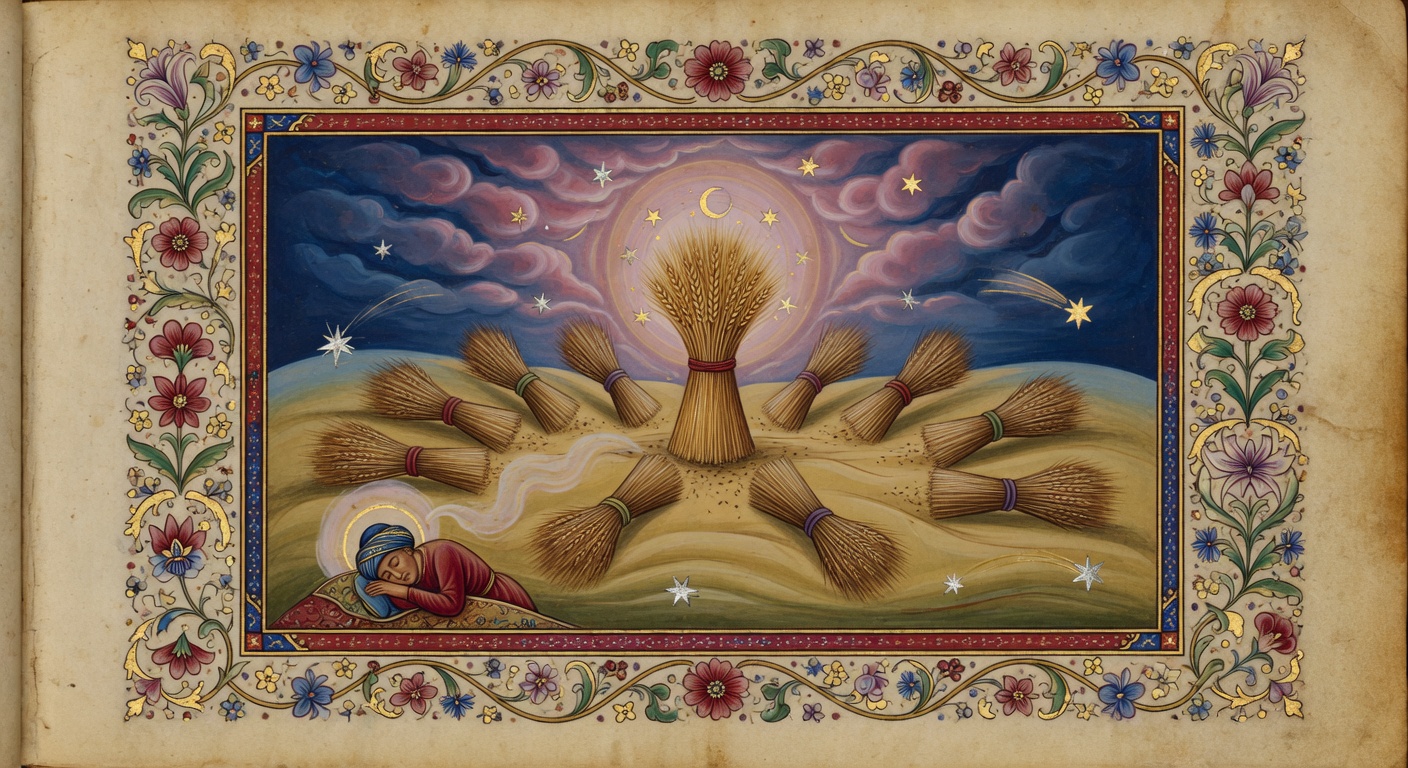
Joseph's Dream of Sheaves
Dreamer: Joseph
In the biblical account from Genesis, Joseph dreams that while his brothers are binding sheaves in the field, his sheaf stands upright and their sheaves bow down to it. This vision, shared with his family, angers his brothers who interpret it as a claim to superiority over them. The dream holds significant prophetic meaning as it foreshadows Joseph's eventual rise to power in Egypt, where his brothers would indeed bow before him during a time of famine. It underscores themes of divine sovereignty and the fulfillment of God's plans through dreams and visions in Scripture.
-
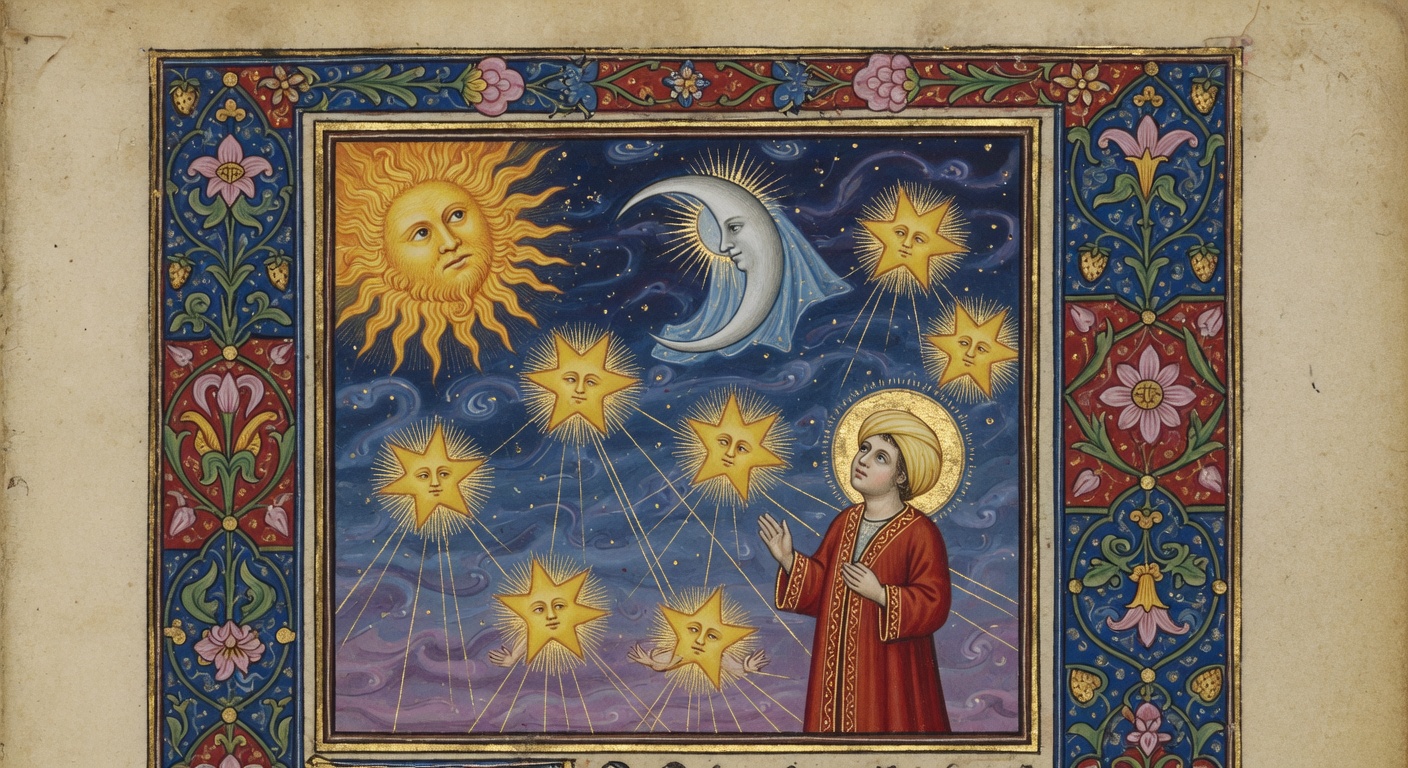
Joseph's Dream of Sun, Moon, and Stars
Dreamer: Joseph
In the Book of Genesis, Joseph recounts a dream in which the sun, moon, and eleven stars bow down before him, symbolizing his father, mother, and brothers showing him honor. This vision, shared with his family, incites jealousy among his brothers who already resented his favored status with their father Jacob. The dream proves prophetic as Joseph rises to become a ruler in Egypt, eventually saving his family from famine and fulfilling the imagery when they seek his aid. Its significance lies in illustrating divine providence and Joseph's destined leadership role within the biblical narrative of Israel's origins.
-
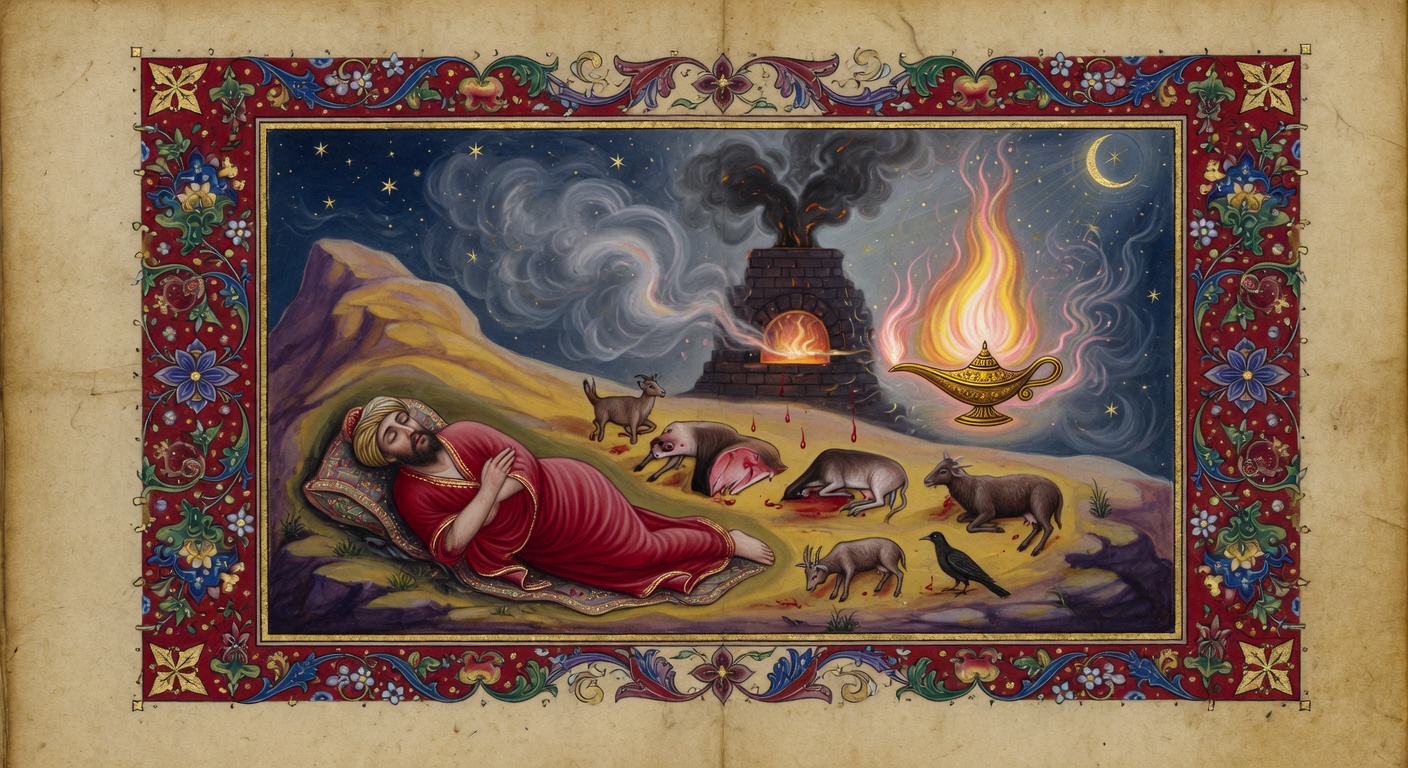
Abraham's Covenant Vision
Dreamer: Abraham
In Genesis 15, after Abram questions how God’s promise of descendants will be fulfilled, the Lord instructs him to prepare a covenant ritual by dividing animals and birds. A deep sleep then falls on Abram, and in the vision he sees a smoking firepot and a blazing torch pass between the pieces, representing God’s presence moving through the sacrifice alone. This unilateral action signified that God, not Abram, assumed full responsibility for keeping the covenant promises of land and offspring. The event established the foundational Abrahamic covenant, which undergirds later biblical narratives of Israel’s election and God’s faithfulness despite human failure.
-
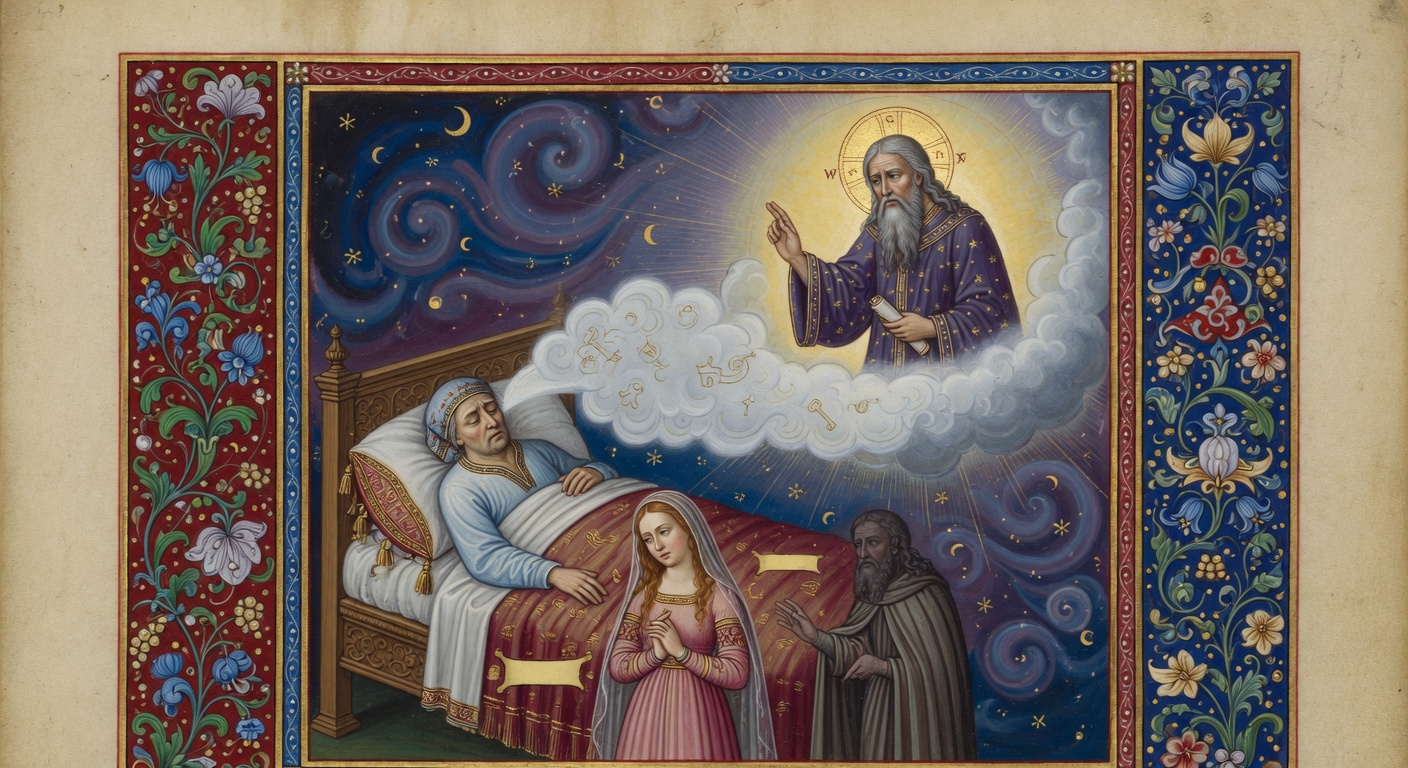
Abimelech Warned About Sarah
Dreamer: Abimelech
In the Book of Genesis, God appears to King Abimelech of Gerar in a dream, revealing that Sarah, whom Abimelech had taken into his household believing her to be Abraham's sister, is actually Abraham's wife, and warns that Abimelech and his people will die if he does not return her unharmed. This divine intervention occurs after Abraham's deceptive statement about his relationship with Sarah, which places the fulfillment of God's covenant promise at risk by potentially compromising Sarah's purity. The warning underscores God's protective care over the patriarchal lineage and serves as a parallel to a similar earlier incident involving Pharaoh in Egypt, highlighting recurring themes of faith, divine sovereignty, and the preservation of the promised seed.
-
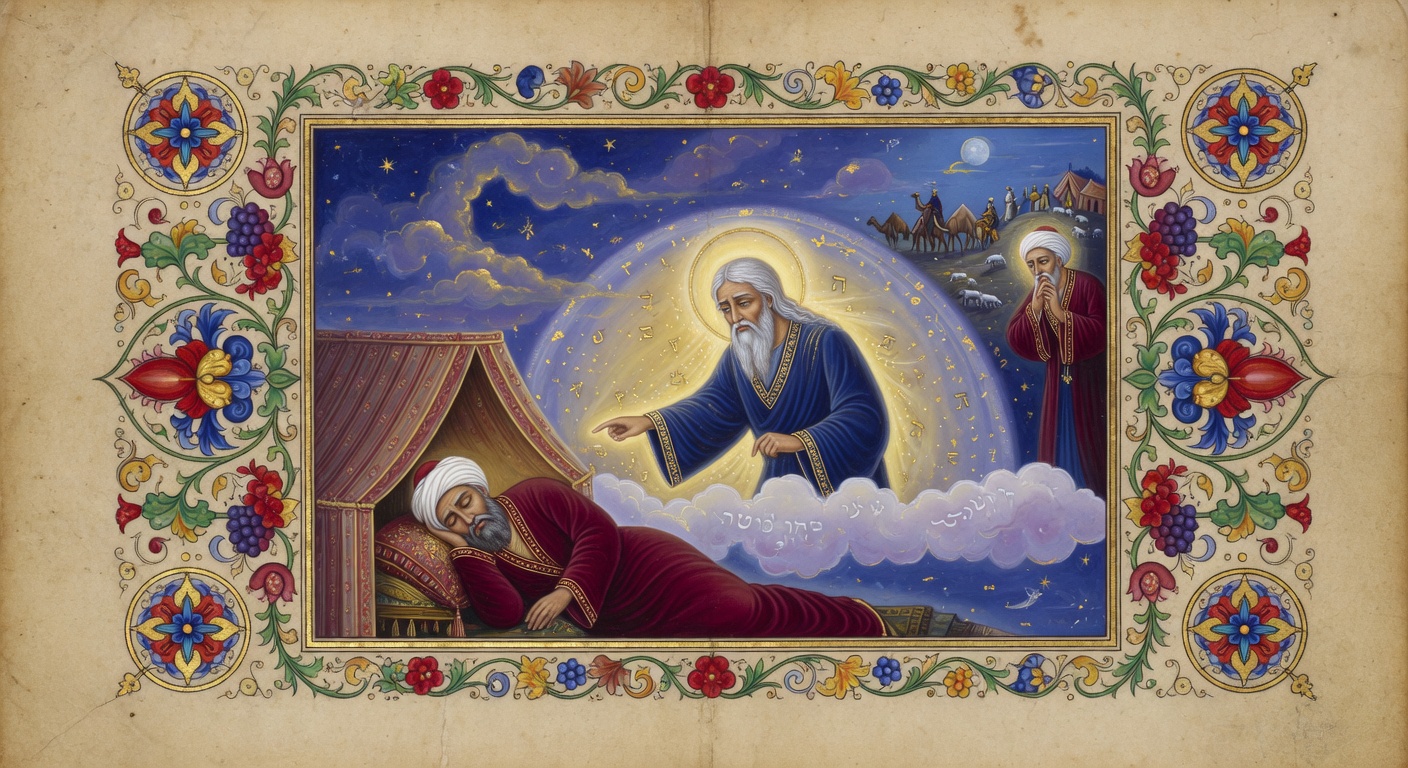
Laban Warned Not to Harm Jacob
Dreamer: Laban
In the Book of Genesis, after Jacob secretly departs from his father-in-law Laban with his family and flocks following years of tense dealings, Laban pursues him with hostile intent. God intervenes by appearing to Laban in a nighttime dream and warning him not to speak to Jacob either good or bad, thereby prohibiting any harm or interference. This divine message halts Laban's aggression, leading to a tense but nonviolent confrontation and covenant at Mizpah. The account illustrates God's protective care over Jacob in fulfillment of the Abrahamic promises and demonstrates how divine warnings preserve the emerging Israelite lineage from destruction.
Egypt
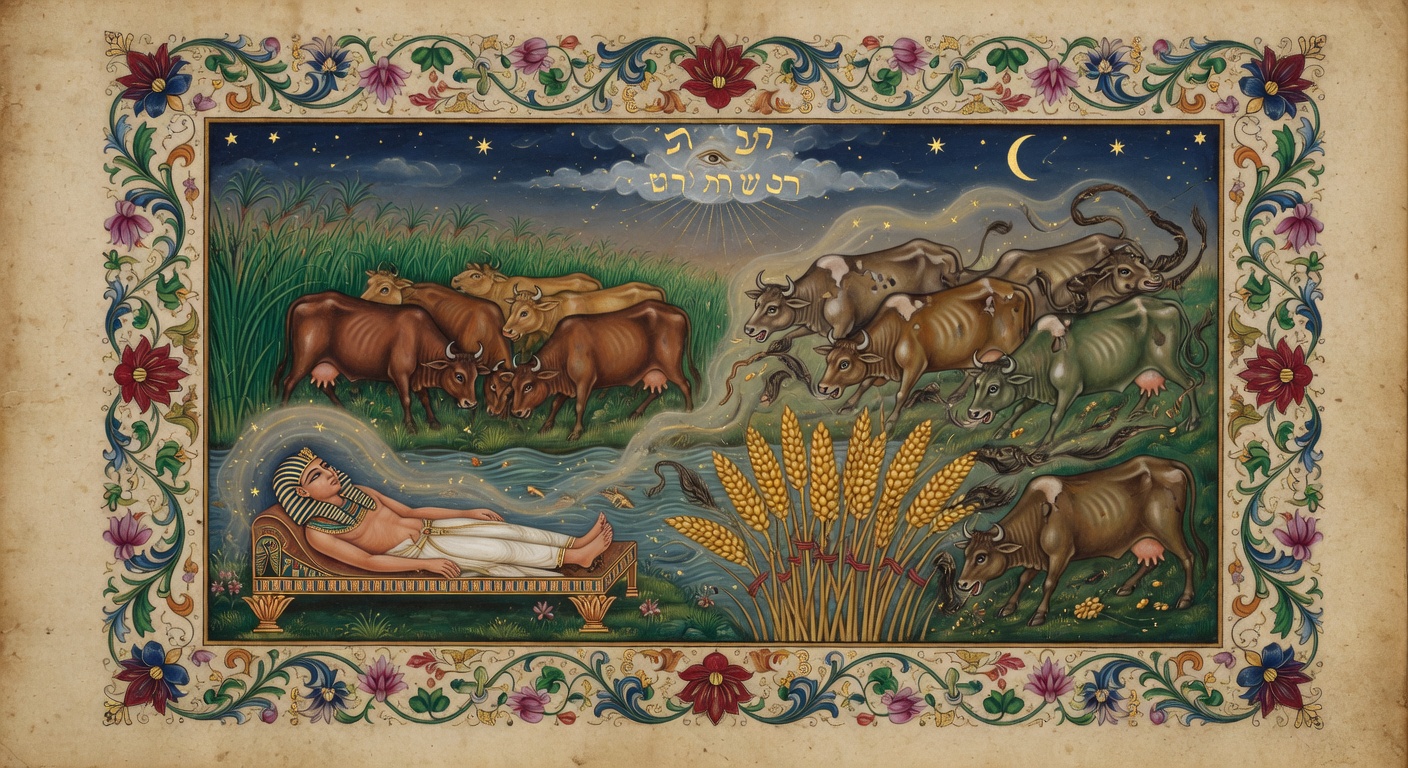
Exile
-
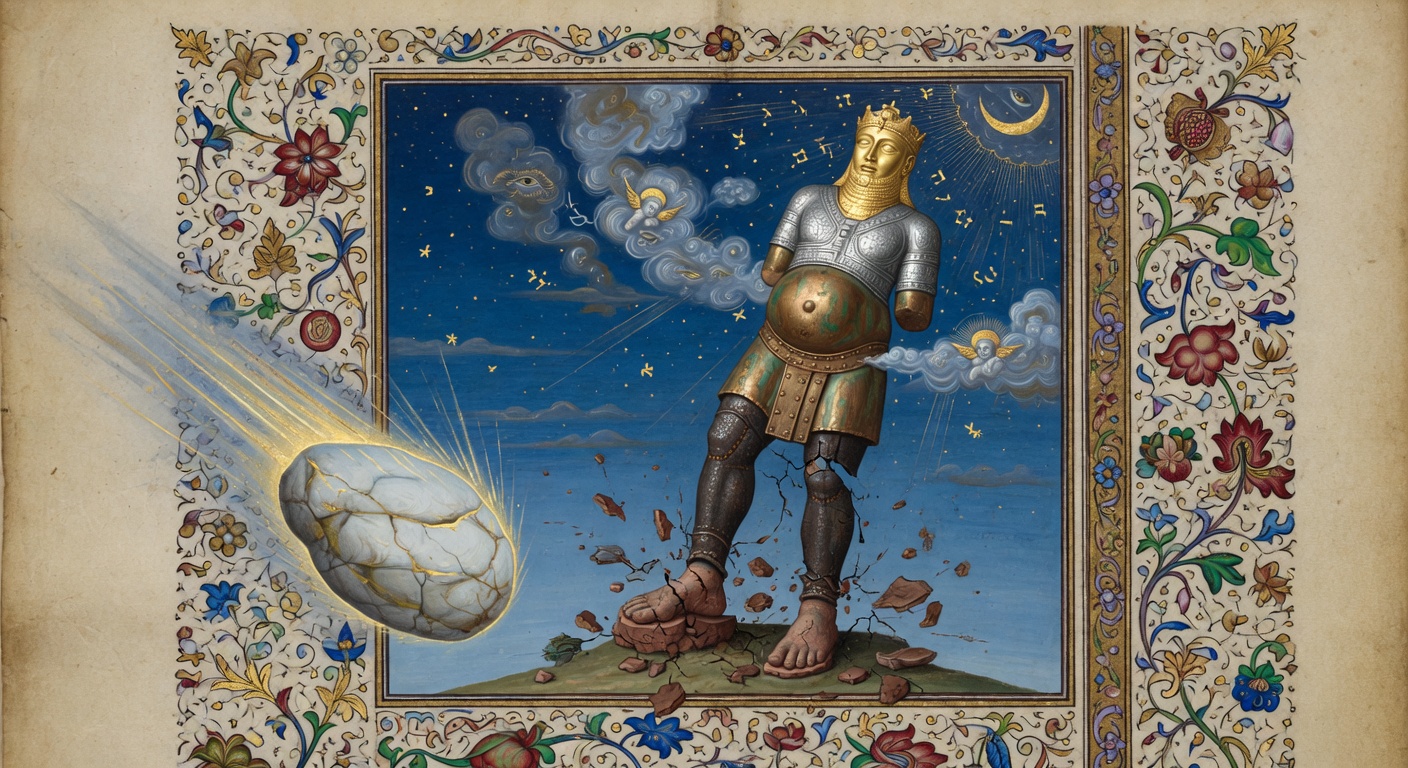
Nebuchadnezzar's Statue
Dreamer: Nebuchadnezzar
In a dream granted to Nebuchadnezzar amid Israel's Babylonian exile, a towering statue with a head of gold and other parts of silver, bronze, iron, and clay portrayed the sequence of world empires destined to rule until divine intervention. A stone cut out without hands smote the feet of the image, reducing it to chaff that the wind carried away, while the stone itself expanded into a mountain filling the earth as the indestructible kingdom of God. Through this revelation Daniel disclosed to the king how God's sovereign purposes would prevail over all human dominion, bringing assurance to the captives of an everlasting realm yet to come.
-
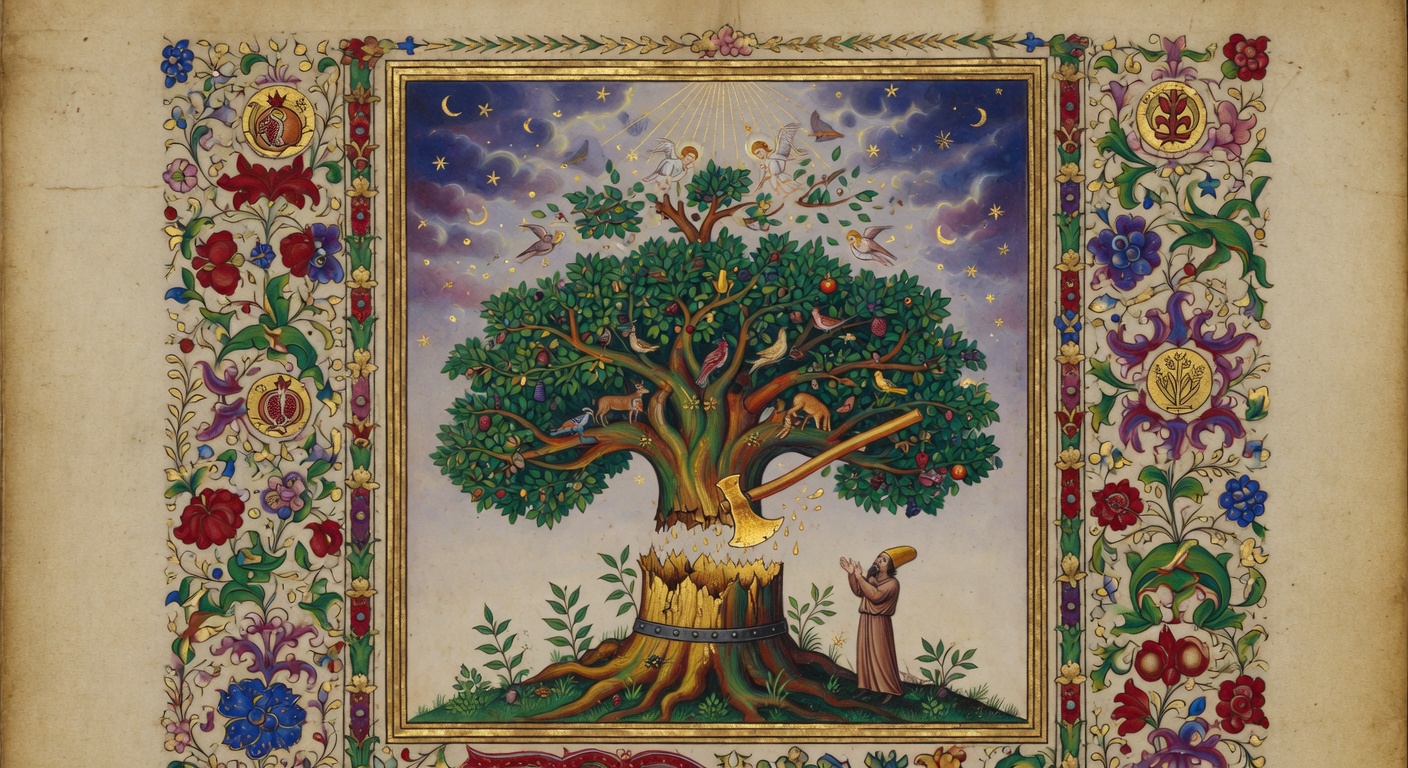
Nebuchadnezzar's Great Tree
Dreamer: Nebuchadnezzar
In the Book of Daniel, chapter 4, King Nebuchadnezzar of Babylon describes a prophetic dream of an enormous tree that grew to reach the heavens, providing shelter, food, and shade for all living creatures under its branches. A heavenly watcher then commands the tree to be cut down, leaving only its stump bound with iron and bronze, while pronouncing a period of madness and exile for the king himself. The vision was fulfilled when Nebuchadnezzar lost his reason and throne for seven years, living like an animal until he acknowledged the sovereignty of the God of Israel. This account illustrates Scripture’s emphasis on divine authority over human rulers and the necessity of humility before God.
-
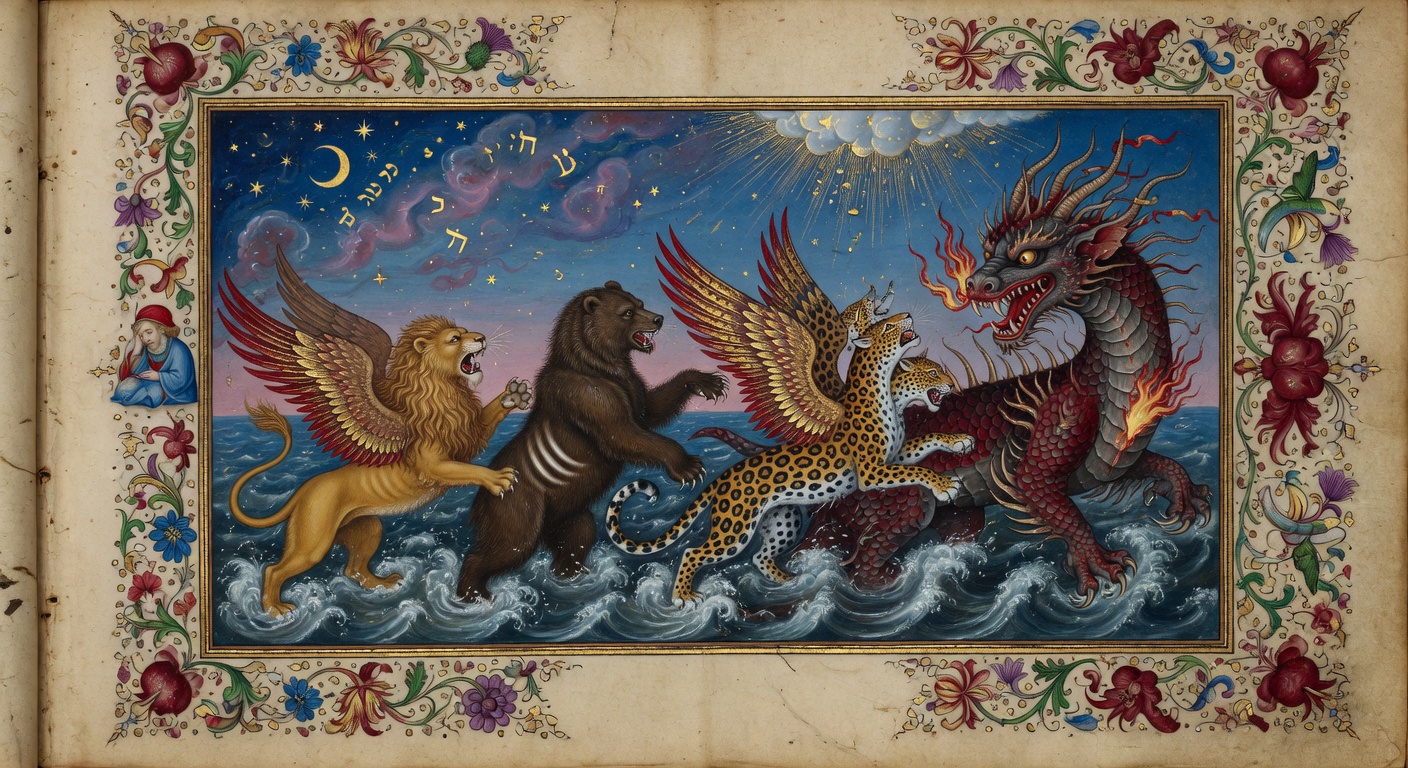
Daniel's Four Beasts
Dreamer: Daniel
In the Book of Daniel, the prophet receives a night vision of four great beasts rising from a churning sea, each representing successive Gentile world empires that would dominate Israel and the ancient Near East. The first three. A lion with eagle’s wings, a bear raised on one side, and a leopard with four heads and wings. Correspond to Babylon, Medo-Persia, and Greece, while the fourth, a terrifying beast with iron teeth and ten horns, points to a final, ruthless power. The scene shifts to heavenly judgment before the Ancient of Days, where the beasts are stripped of authority and an everlasting kingdom is given to “one like a son of man.” This prophecy matters because it reveals God’s sovereign oversight of history, assures believers of the ultimate defeat of oppressive regimes, and forms a foundational messianic text echoed in later Scripture.
-
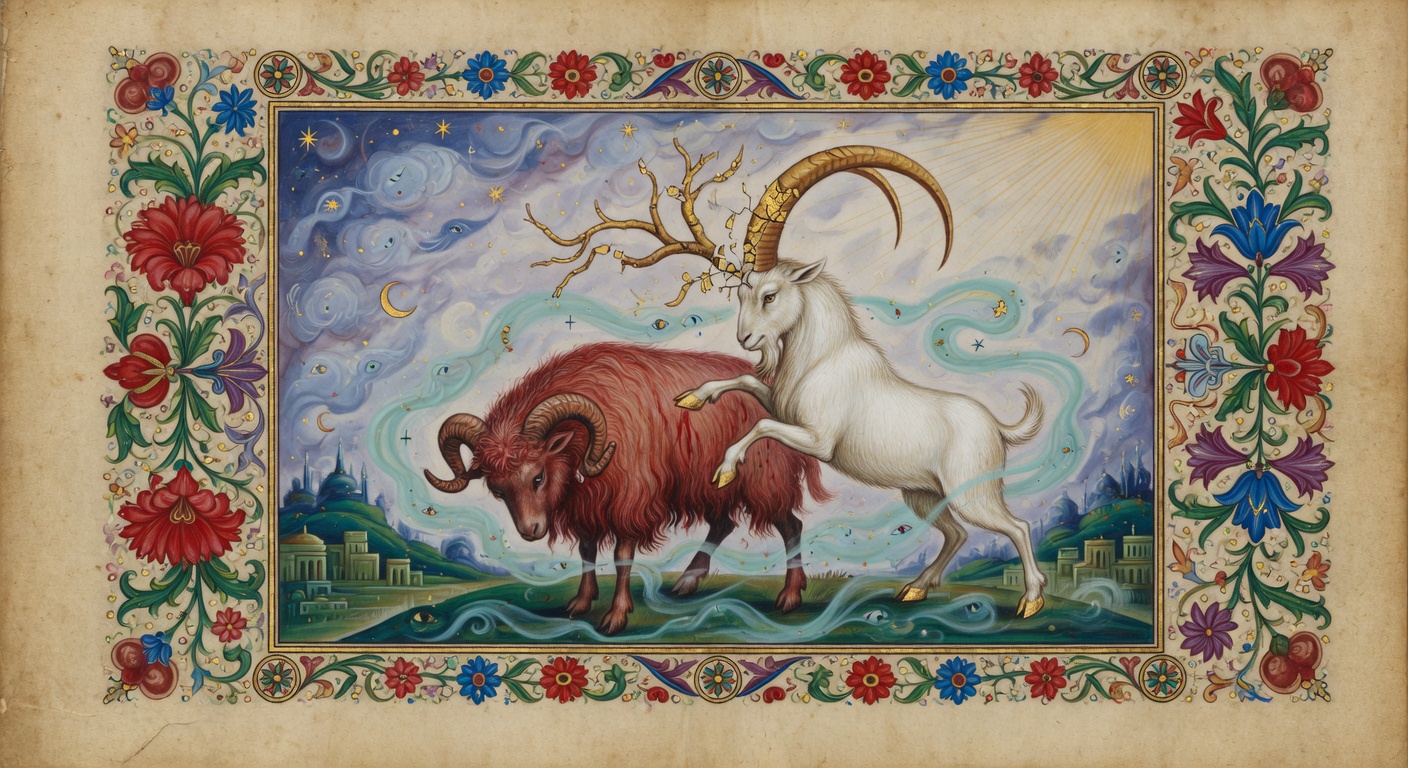
Daniel's Ram and Goat
Dreamer: Daniel
In the Book of Daniel, the prophet receives a vision of a ram with two horns that dominates the land until it is defeated by a swift goat with a prominent horn. The goat's horn breaks, and four horns emerge in its place, symbolizing the succession of world empires. This prophecy, interpreted by the angel Gabriel, foretells the conquests of the Medo-Persian and Greek empires under Alexander the Great, whose kingdom divides after his death. The vision underscores God's control over historical events and serves as a warning about future tribulations leading to the end times.
Prophets
-
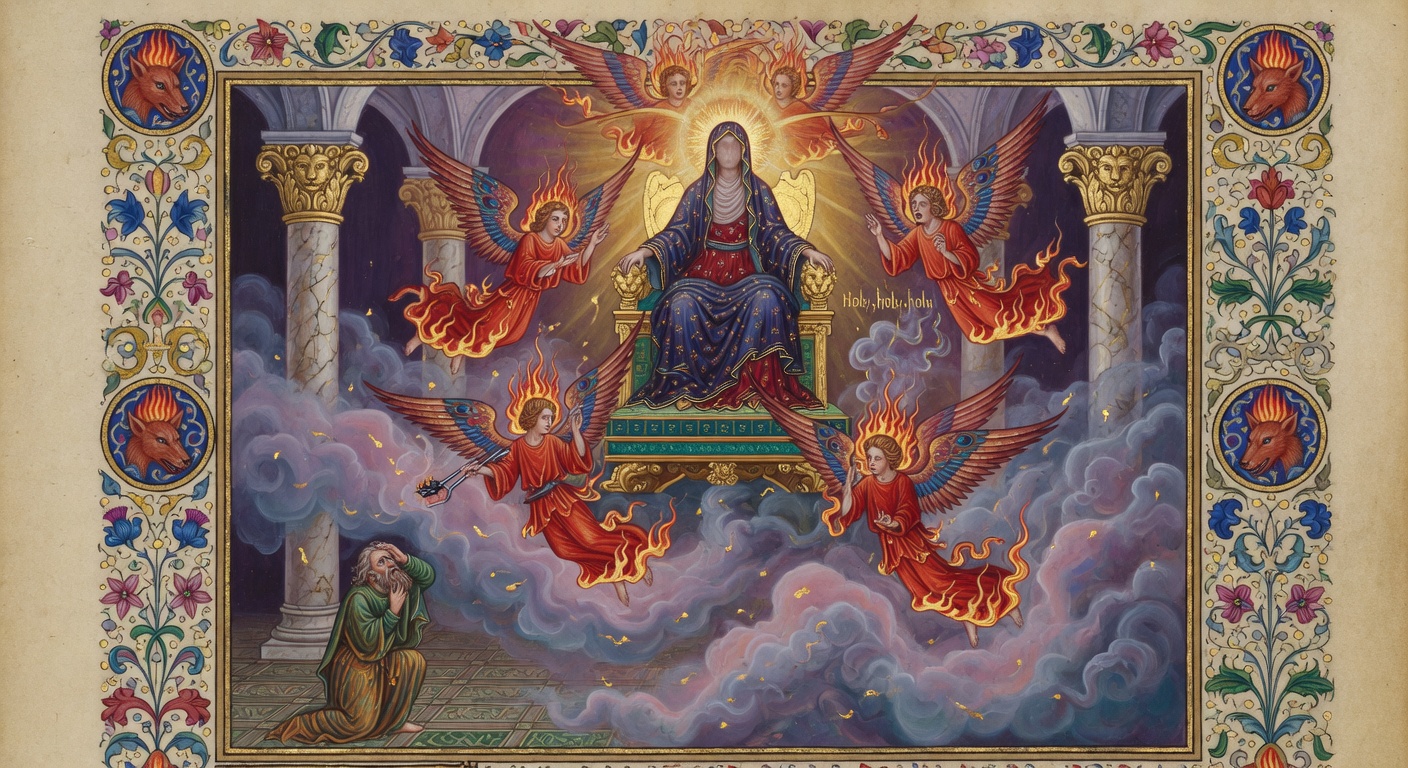
Isaiah's Throne Room Vision
Dreamer: Isaiah
In the year that King Uzziah died, the prophet Isaiah received a vision of the Lord seated on a throne, high and exalted, with the train of his robe filling the temple. Seraphim attended him, calling out to one another about his holiness as the temple filled with smoke, prompting Isaiah to confess his unworthiness and receive purification from a coal on the altar. This encounter led to Isaiah's commissioning as a prophet when he volunteered to go and speak for God to the people of Judah. The vision underscores themes of divine holiness, human sinfulness, and the call to prophetic service that resonate throughout Scripture.
-
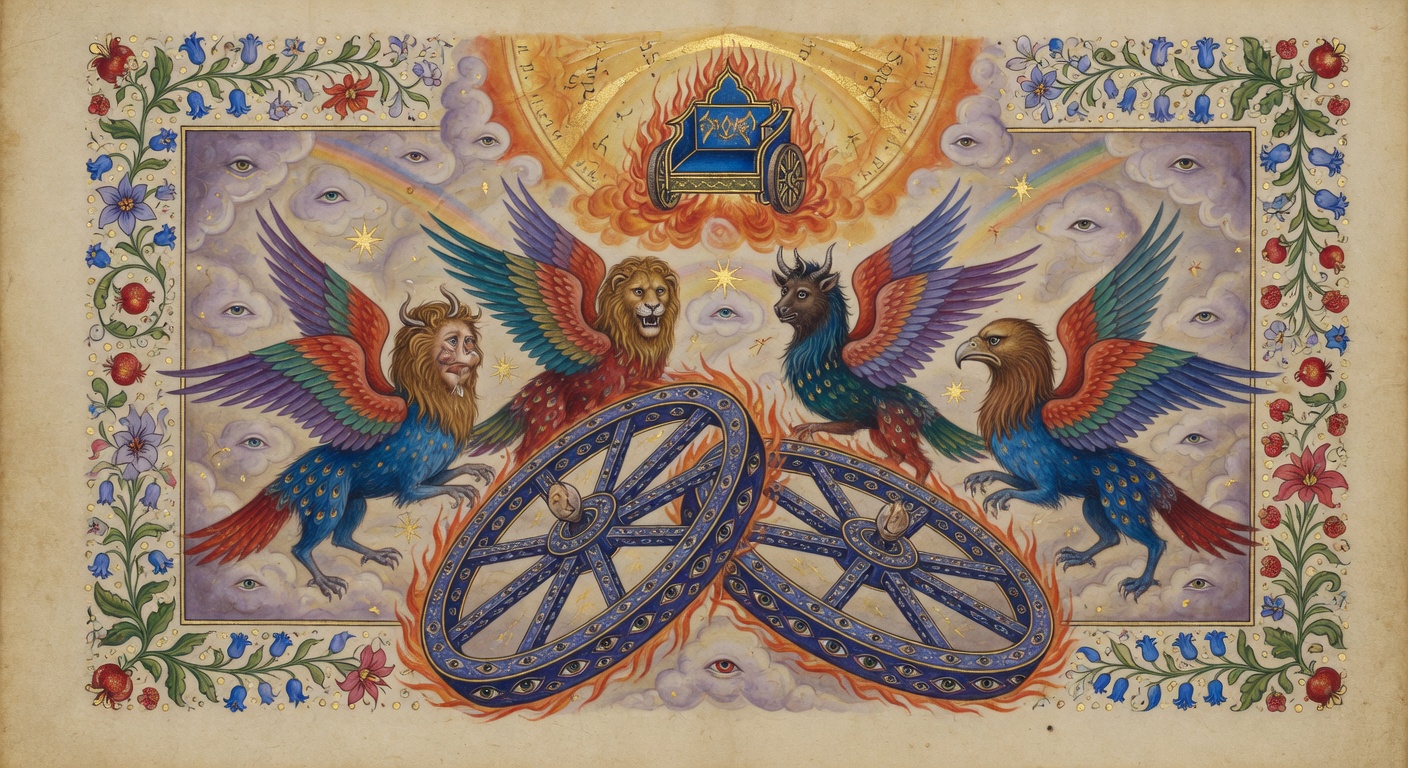
Ezekiel's Vision of the Wheels
Dreamer: Ezekiel
In the opening vision of the Book of Ezekiel, the prophet encounters four living creatures, each with four faces representing a man, lion, ox, and eagle, standing beneath a crystal firmament that supports God's throne. These beings are accompanied by a complex system of intersecting wheels within wheels, all covered with eyes and moving in perfect unison with the creatures, forming a mobile throne-chariot known as the Merkabah. Ezekiel received this revelation while exiled by the Chebar canal in Babylon around 593 BCE, at a time when many Israelites believed God's presence was confined to the Jerusalem temple. The vision affirms God's sovereign mobility and omnipresence, assuring the exiles that divine glory had not abandoned them and establishing a foundational image of God's throne that echoes through later prophetic and apocalyptic literature.
-
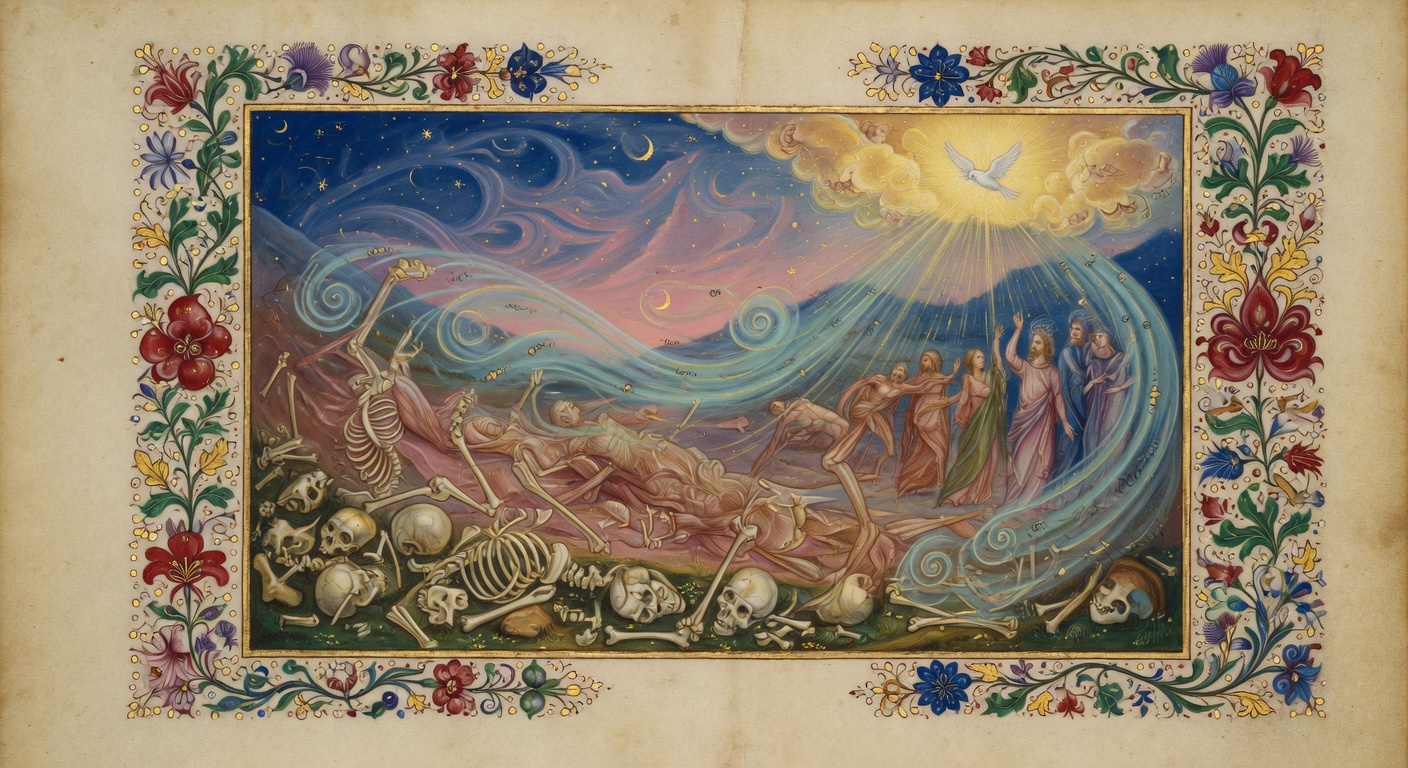
Ezekiel's Valley of Dry Bones
Dreamer: Ezekiel
In the book of Ezekiel, during Israel's Babylonian exile, the prophet receives a vision of a valley filled with dry bones that represent the despairing and seemingly hopeless people of Israel. God commands Ezekiel to prophesy over the bones, causing them to reassemble with sinews, flesh, and skin before the divine breath or spirit revives them into a vast living army. This event underscores God's sovereignty and power to restore life from death. The vision ultimately conveys a promise of national restoration for exiled Israel, returning them to their land as a renewed people, while also foreshadowing broader scriptural themes of resurrection and spiritual renewal.
-
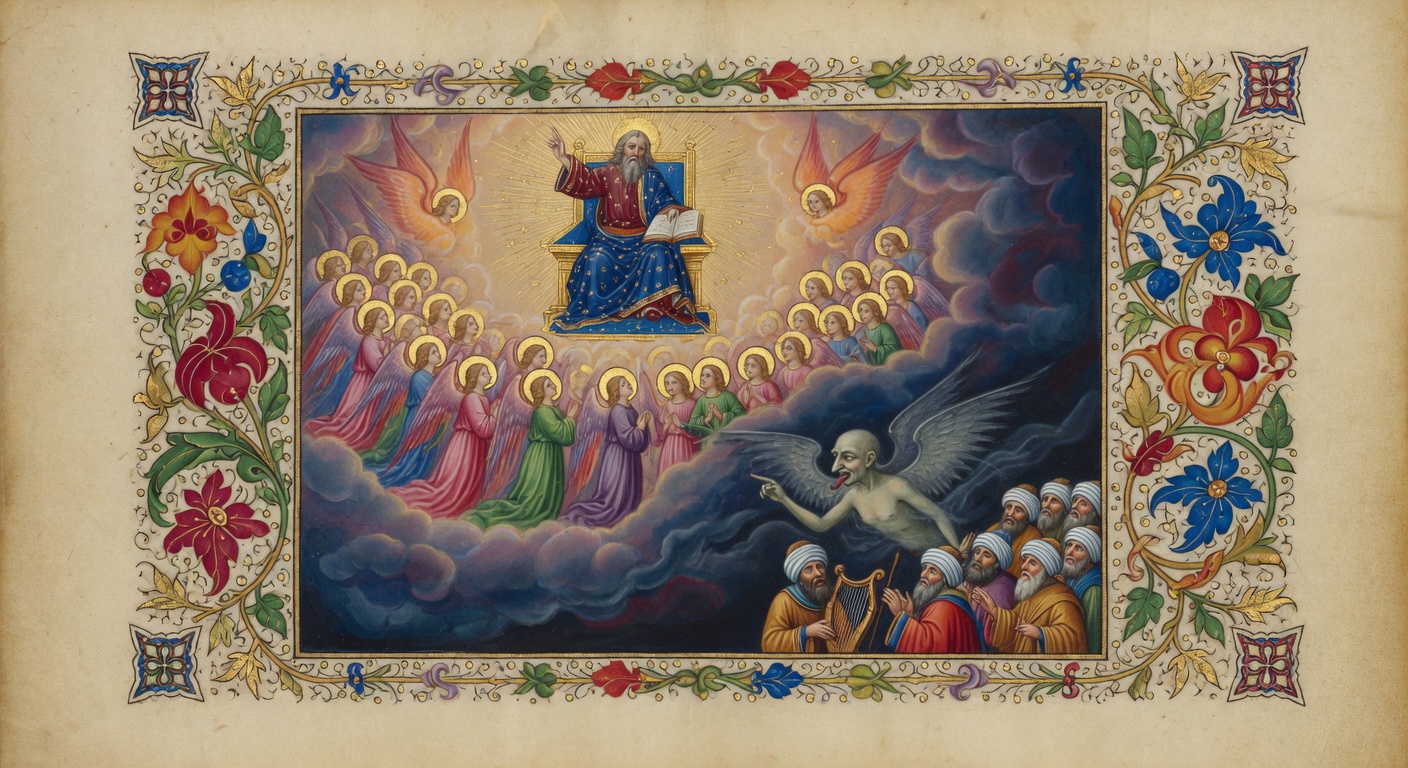
Micaiah's Vision of Heaven's Court
Dreamer: Micaiah
In 1 Kings 22, the prophet Micaiah recounts a vision of the Lord enthroned in heaven amid the host of heavenly beings, who deliberate how to bring about King Ahab's defeat at Ramoth-Gilead. A spirit offers to act as a lying influence in the mouths of Ahab's four hundred prophets, assuring the king of victory to lure him into battle. This episode underscores God's sovereign control over all prophetic messages, including those that deceive, and warns against rejecting true counsel in favor of flattering falsehoods. Its lasting significance in Scripture lies in illustrating divine judgment on unrepentant leaders and the accountability of both prophets and kings to God's word.
Gospels
Early Church
-
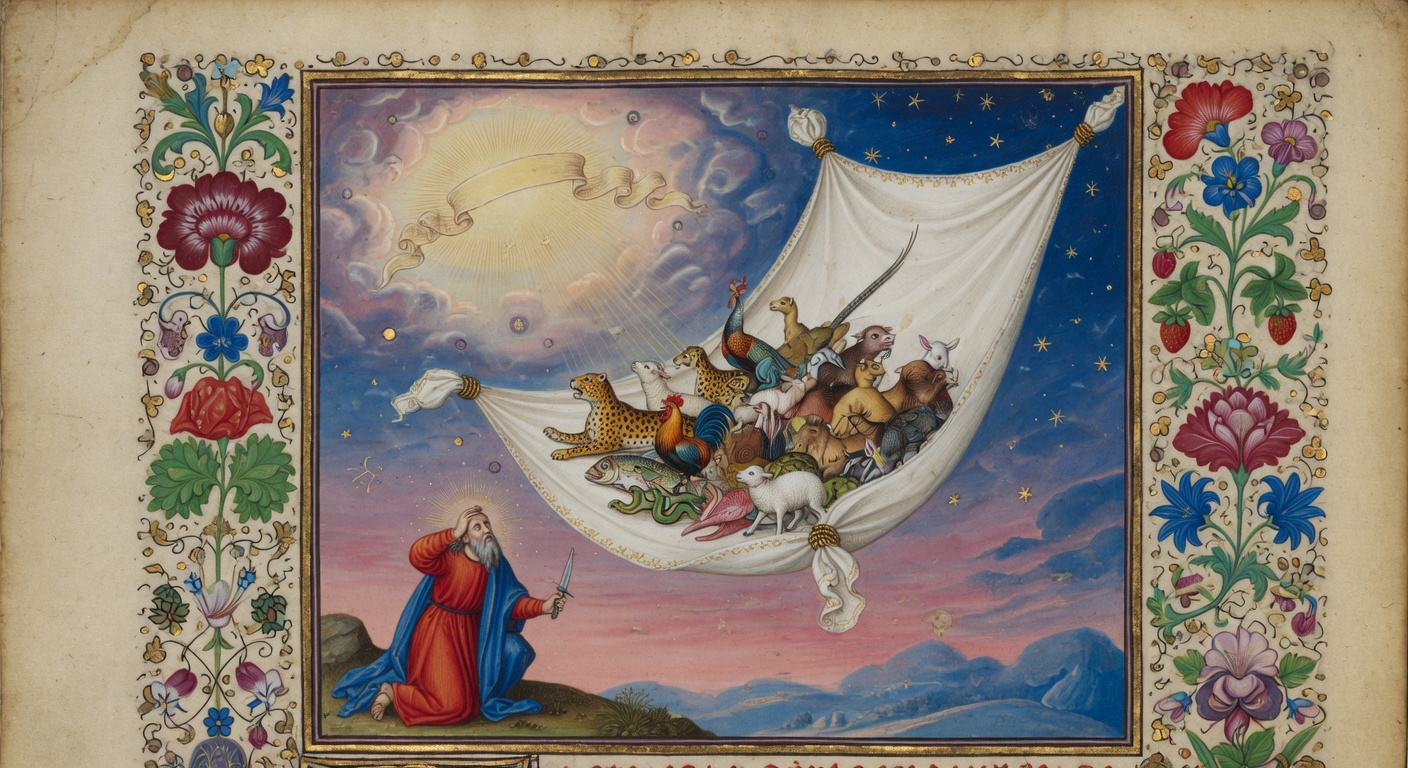
Peter's Vision of the Sheet
Dreamer: Peter
In the Book of Acts, the apostle Peter receives this vision while praying on a rooftop in Joppa shortly after the resurrection and ascension of Jesus. A large sheet descends from heaven containing animals, reptiles, and birds of every kind, and a voice from God instructs him three times to rise, kill, and eat despite the animals being deemed unclean under Jewish dietary laws. Peter initially objects on the grounds of ritual purity, but the repeated command emphasizes that God has declared these things clean. The vision holds major significance in Scripture as it prepares Peter to visit the Gentile centurion Cornelius, thereby opening the Christian message to non-Jews and establishing the principle that salvation through Christ extends beyond ethnic Israel.
-
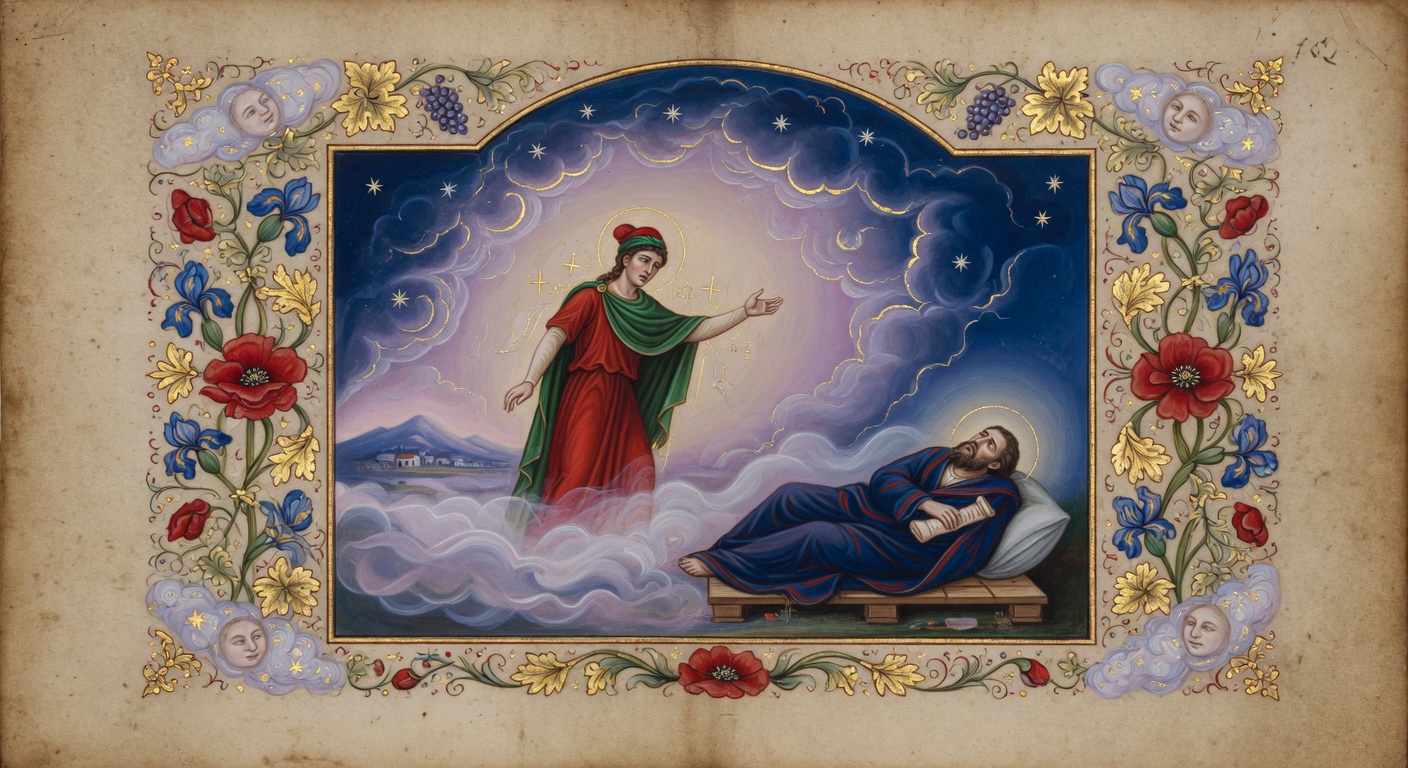
Paul's Macedonian Vision
Dreamer: Paul
During his second missionary journey, the apostle Paul was in Troas seeking direction after the Holy Spirit prevented his group from preaching in parts of Asia Minor. He experienced a nighttime vision in which a man from Macedonia pleaded for help, which Paul and his companions interpreted as a divine call to cross into Europe. They promptly sailed to Philippi and other Macedonian cities, where they established some of the earliest Christian congregations. This vision holds key significance in Acts as the pivotal moment when the gospel message expanded beyond Asia into the wider Greco-Roman world.
-
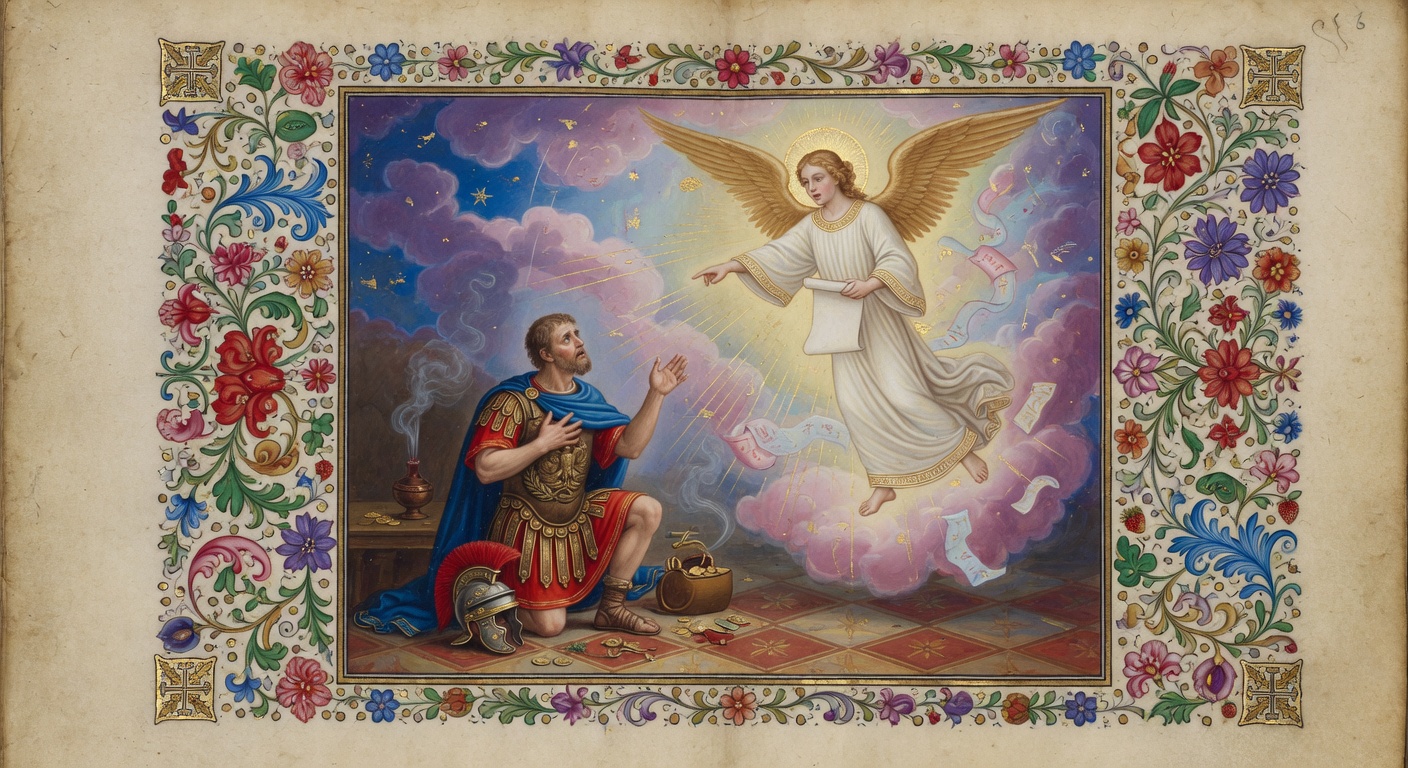
Cornelius' Vision of the Angel
Dreamer: Cornelius
Cornelius, a devout Roman centurion stationed in Caesarea, experienced a divine vision while praying, in which an angel appeared and affirmed that his prayers and charitable acts had ascended as a memorial before God. The angel directed him to summon the apostle Peter from Joppa to his household, setting in motion a crucial encounter between Jewish and Gentile believers. This event holds significant importance in Scripture as it marked the initial inclusion of Gentiles into the Christian community without requiring adherence to Jewish law, demonstrating God's impartiality and expanding the reach of the Gospel.
-
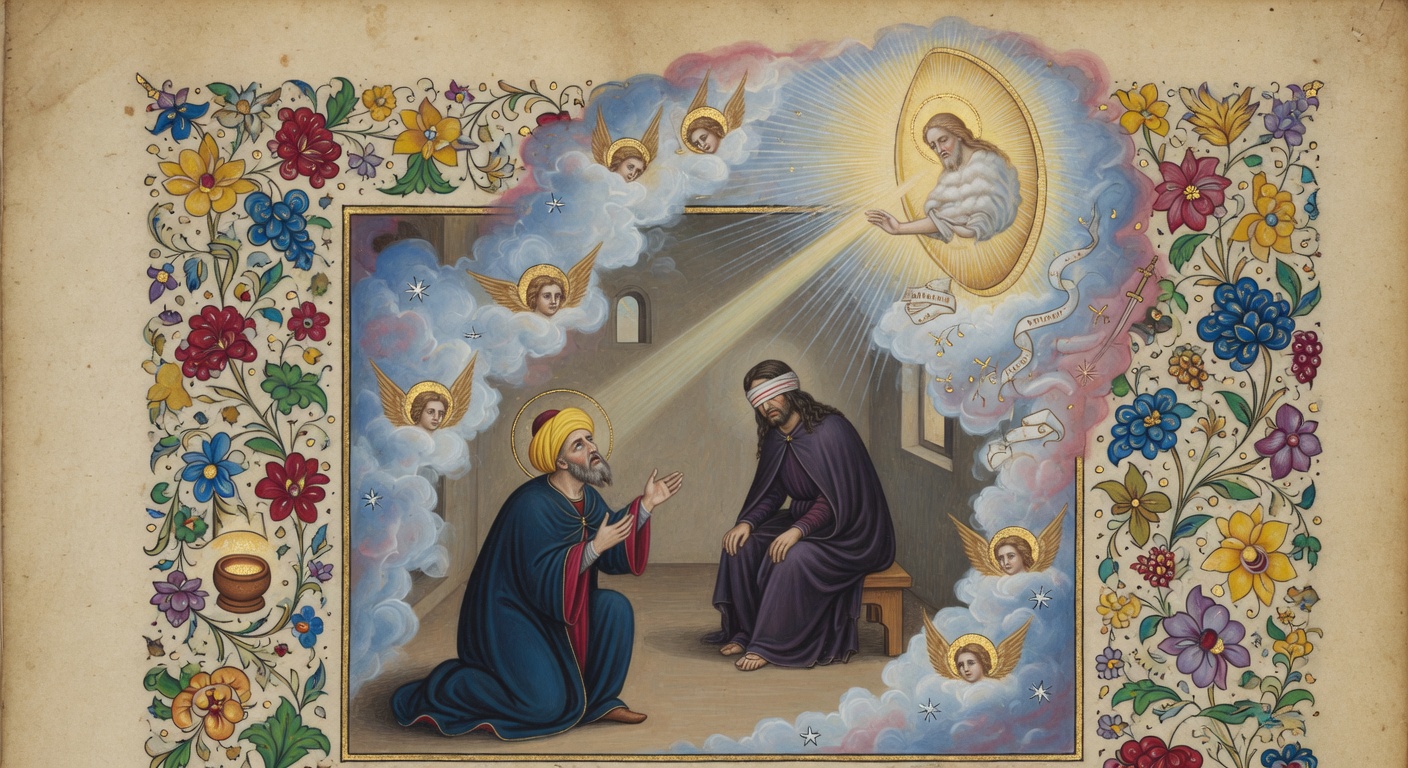
Ananias' Vision About Saul
Dreamer: Ananias
In the Book of Acts, following Saul's dramatic encounter with the risen Christ on the road to Damascus, which left him blind, the Lord appears in a vision to a disciple named Ananias instructing him to visit Saul at the house of Judas and restore his sight by laying hands on him. Ananias expresses reluctance due to Saul's reputation as a fierce persecutor of the early Christian church, but God reveals that Saul is a chosen instrument destined to proclaim the gospel to Gentiles, kings, and the people of Israel. This divine intervention highlights God's sovereign grace in transforming an enemy of the faith into the apostle Paul, whose missionary journeys would profoundly shape the spread of Christianity throughout the Roman Empire.
Apocalyptic
United Kingdom
Judges
New Testament
-
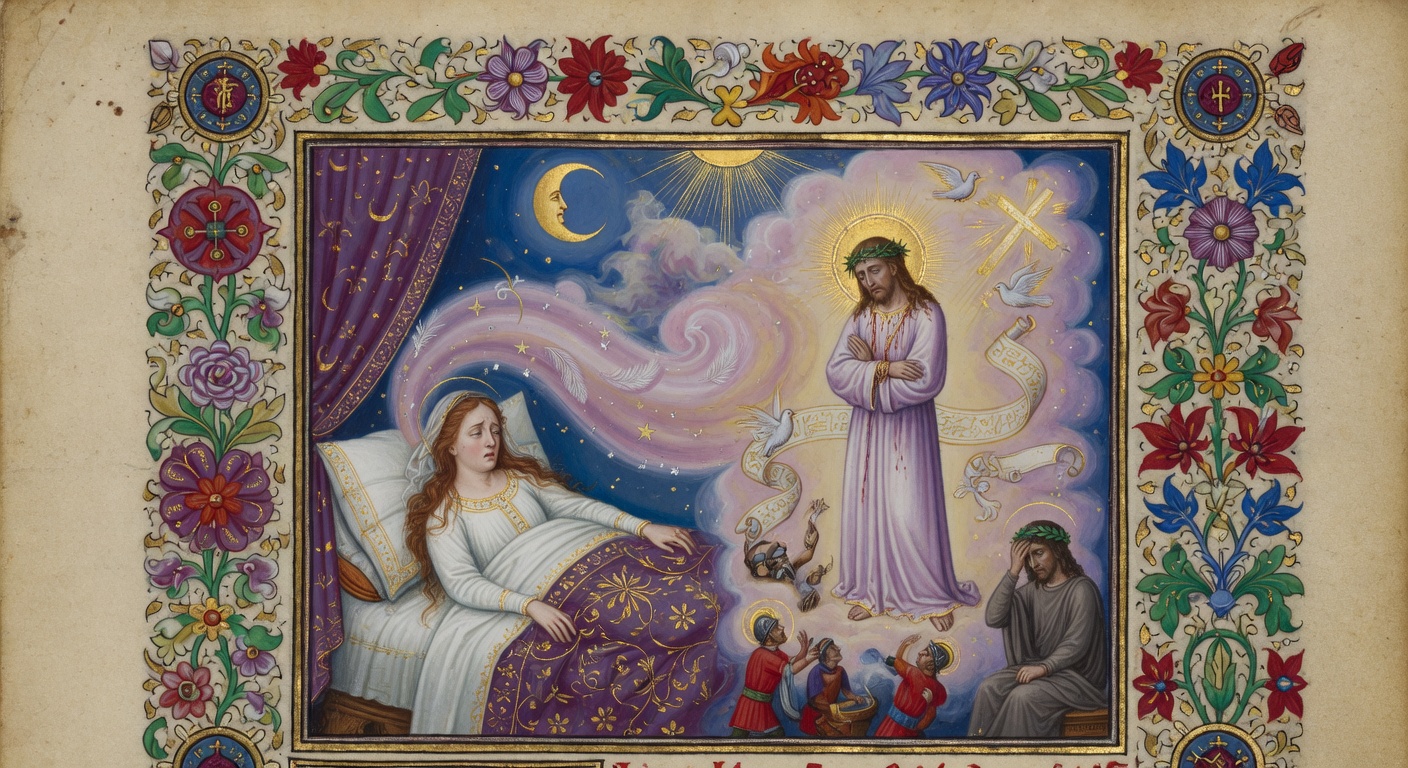
Pilate's Wife's Dream
Dreamer: Pilate's wife
In the Gospel of Matthew, during Jesus' trial before Pontius Pilate, Pilate's wife sends an urgent message to her husband after experiencing a troubling dream about Jesus. She warns him to have nothing to do with that innocent man, stating she had suffered greatly because of him in the dream. This intervention occurs amid the chief priests' and elders' push for Jesus' condemnation, highlighting external recognition of his innocence even from a Roman household. Its significance in Scripture lies in providing a supernatural testimony to Jesus' righteousness at a pivotal moment before the crucifixion, as recorded uniquely in Matthew 27:19.
-
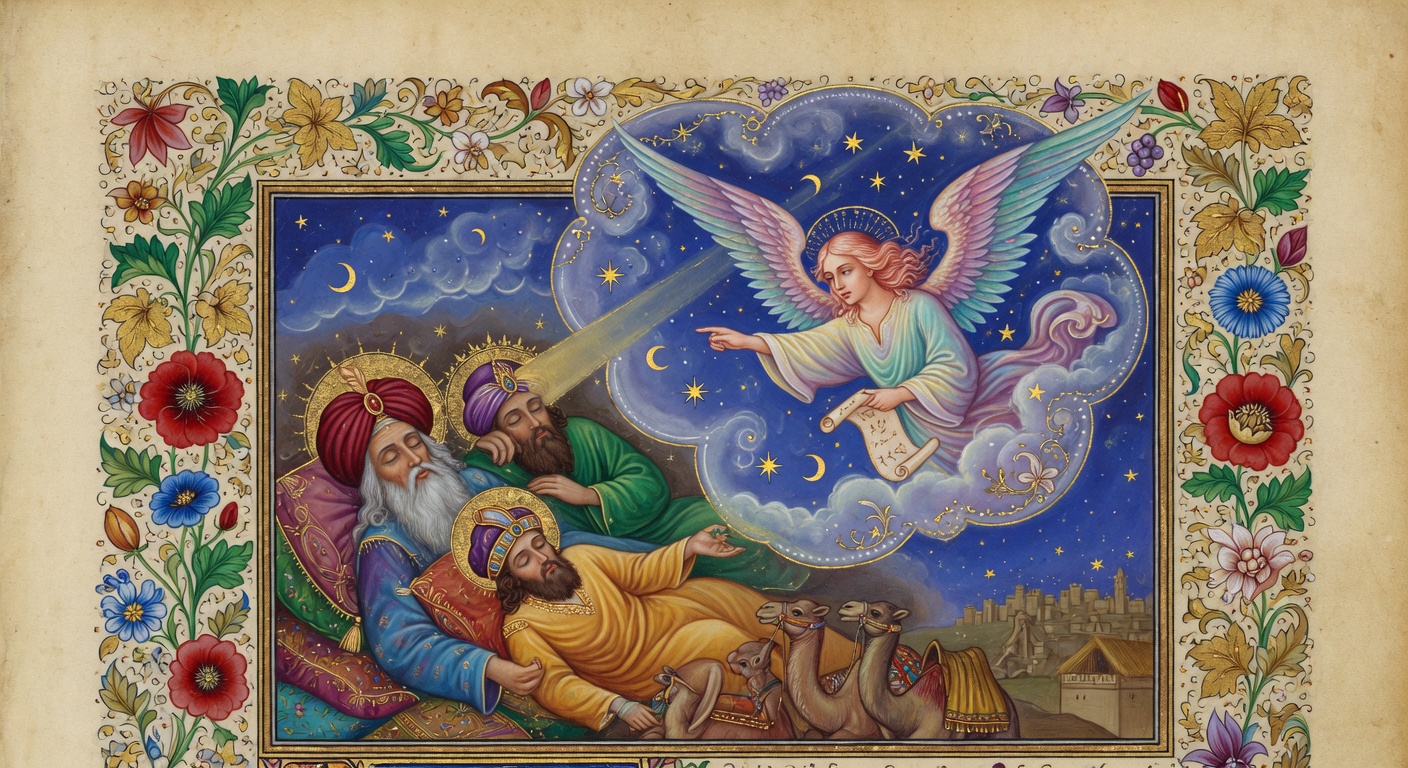
Wise Men Warned in a Dream
Dreamer: Wise men (Magi)
In the Gospel of Matthew, the Magi from the East followed a star to Bethlehem, where they visited the child Jesus after first consulting King Herod in Jerusalem about the newborn king of the Jews. Following their presentation of gifts, the wise men were divinely warned in a dream not to return to Herod, who had secretly intended to locate and destroy the infant as a perceived threat to his throne. They therefore returned home by another route, an event that enabled the Holy Family's flight to Egypt and illustrated God's providential protection while affirming the inclusion of Gentiles in the Messiah's revelation as foretold in Scripture.