🏛️ Sacred Objects
Tabernacle & Temple
-
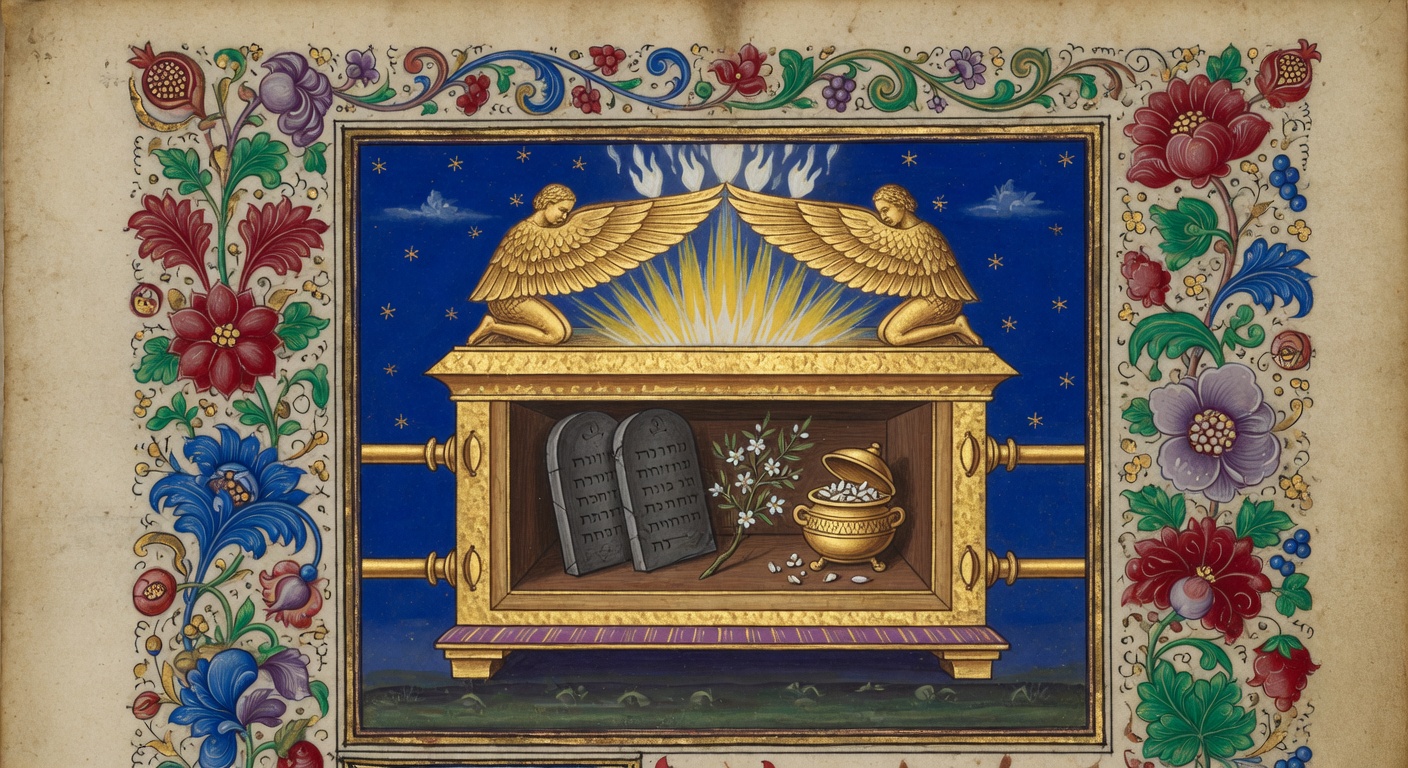
Ark of the Covenant
Central to Israel's worship in the tabernacle and temple, this sacred chest of acacia wood overlaid with pure gold contained the stone tablets, Aaron's rod, and the pot of manna, serving as the most holy object kept behind the veil in the Holy of Holies. Its golden mercy seat, overshadowed by two cherubim, marked the very place where the Lord's presence dwelt among his covenant people, directing their journeys, battles, and atonement rituals across generations. From its divine instructions for construction through its capture by the Philistines, its joyful return to Jerusalem under David, and its final resting place in Solomon's temple, the ark stood as a visible sign of God's redemptive faithfulness to Israel.
-
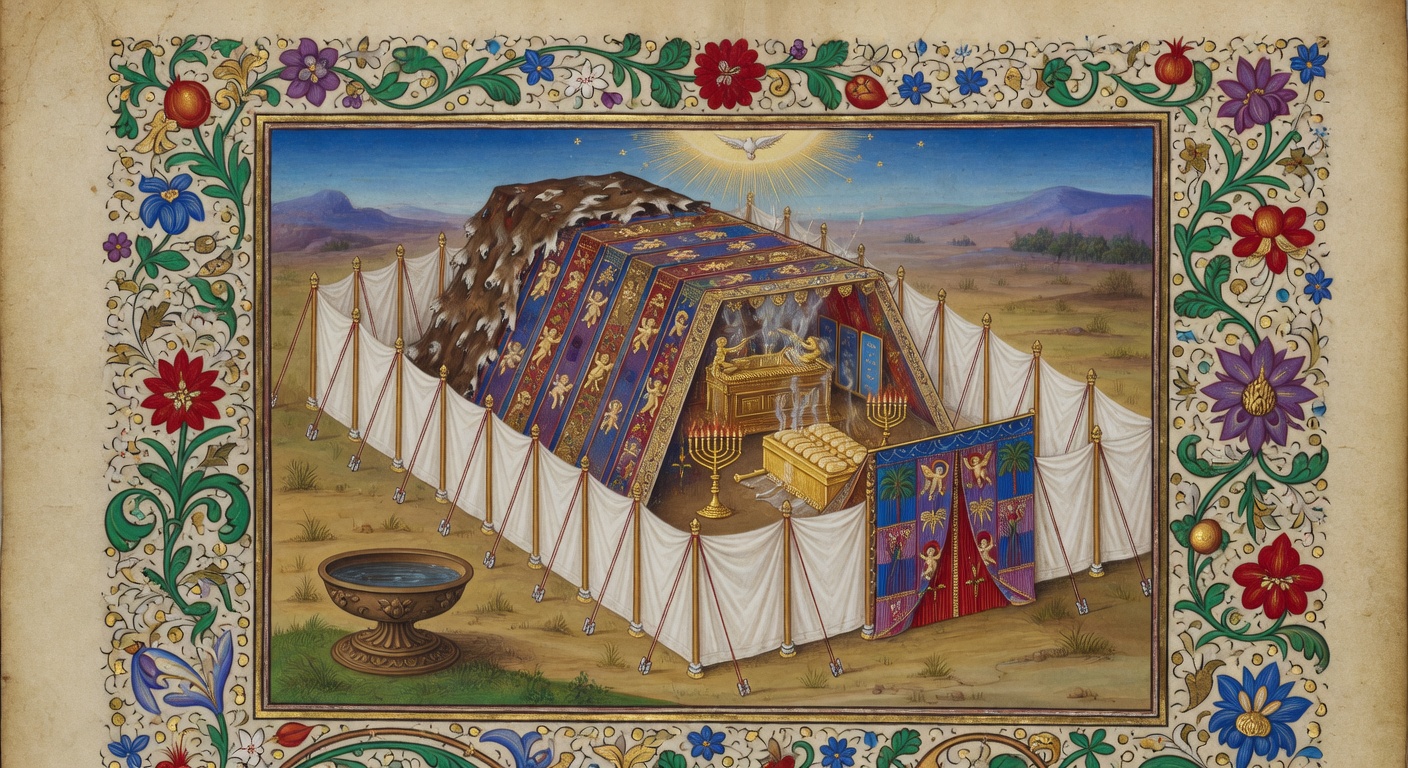
The Tabernacle
The Tabernacle was the portable tent sanctuary where God dwelt among the Israelites during their wilderness wanderings and early settlement of Canaan. Constructed according to precise divine instructions given to Moses at Mount Sinai after the Exodus, it housed the Ark of the Covenant and functioned as the central site for sacrifices, priestly service, and communal worship. This structure demonstrated God's covenant commitment to reside with His people amid their journey from Egypt to the Promised Land. Its rituals and design later pointed forward to the permanent Temple in Jerusalem and ultimately to New Testament themes of God's presence through Christ and the church.
-
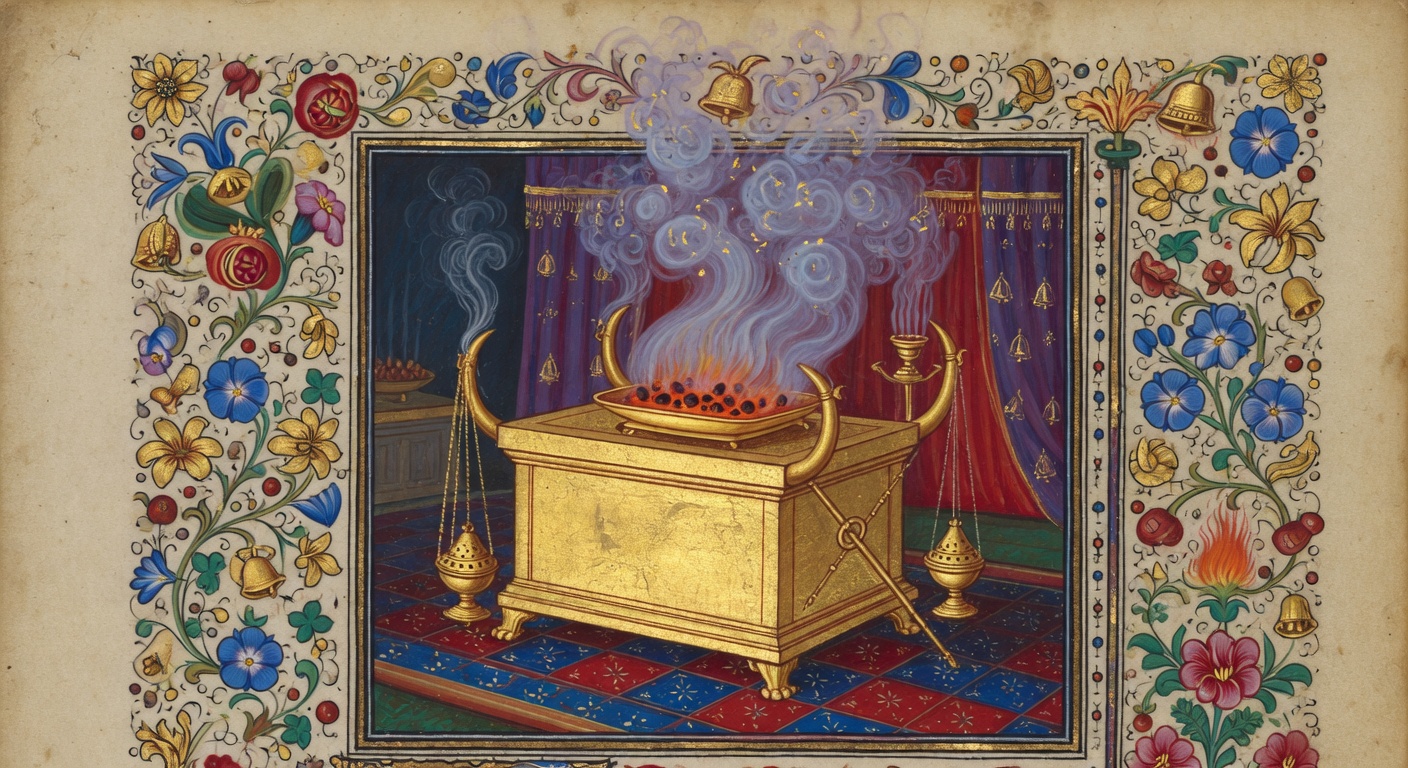
Altar of Incense (Golden Altar)
The Altar of Incense, also known as the Golden Altar, was a small acacia wood structure overlaid with pure gold, positioned in the Holy Place of the Tabernacle and later the Temple. Priests burned a special blend of incense on it every morning and evening as commanded in Exodus, creating a fragrant smoke that filled the sanctuary. This ritual symbolized the prayers of God's people rising before Him, as referenced in Psalm 141 and Revelation 8. Its significance lies in facilitating continuous intercession and worship, underscoring the importance of prayer in the covenant relationship between God and Israel, with violations like unauthorized incense leading to severe consequences such as the deaths of Nadab and Abihu.
-
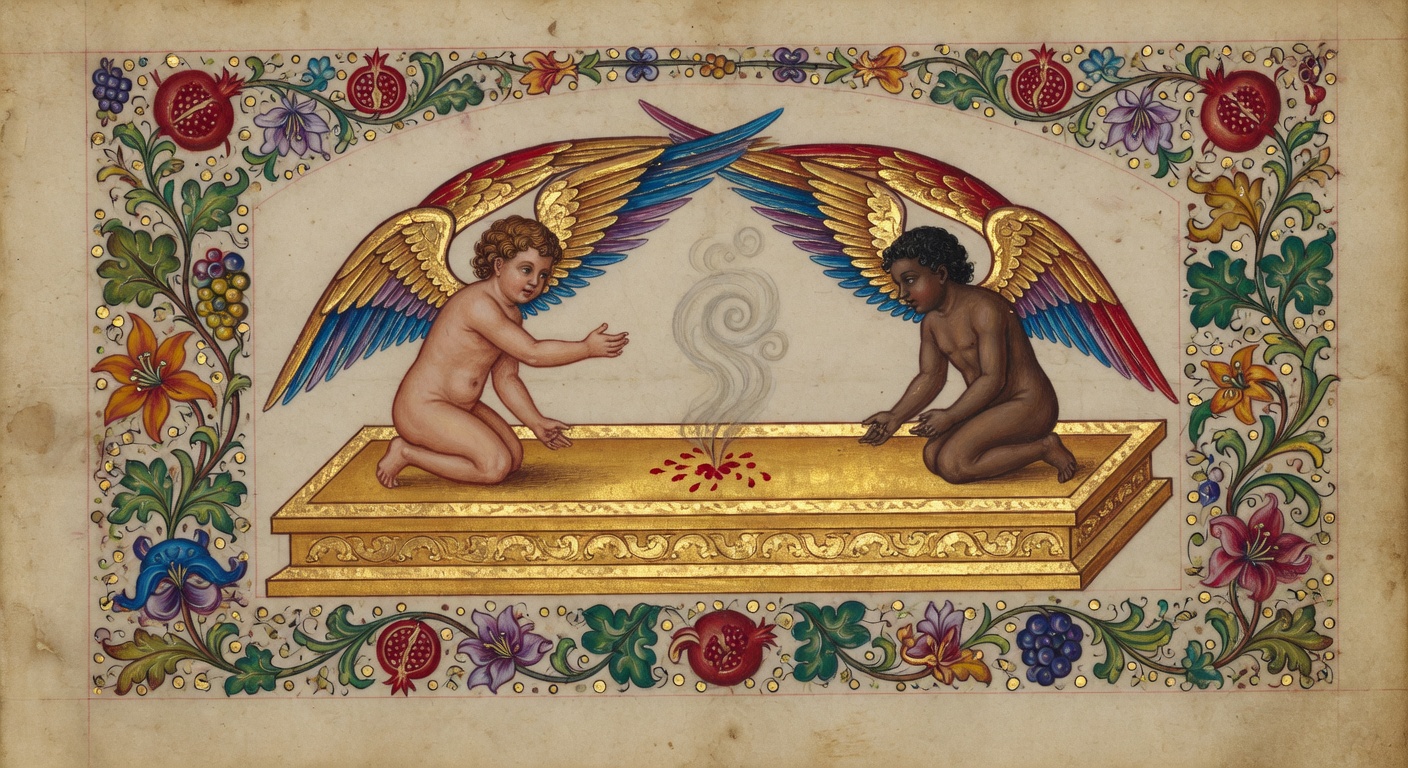
Mercy Seat (Kapporeth)
Crafted of pure beaten gold and resting upon the ark in the holy of holies, the Mercy Seat marked the appointed place where the high priest sprinkled the blood of atonement once each year. There the Lord met with man through the mediator, His glory dwelling between the cherubim as sins were covered and justice satisfied by the offered life. In this way the golden lid foreshadowed Christ as the true propitiation, the mercy seat where God and sinners are reconciled through His own atoning blood.
-
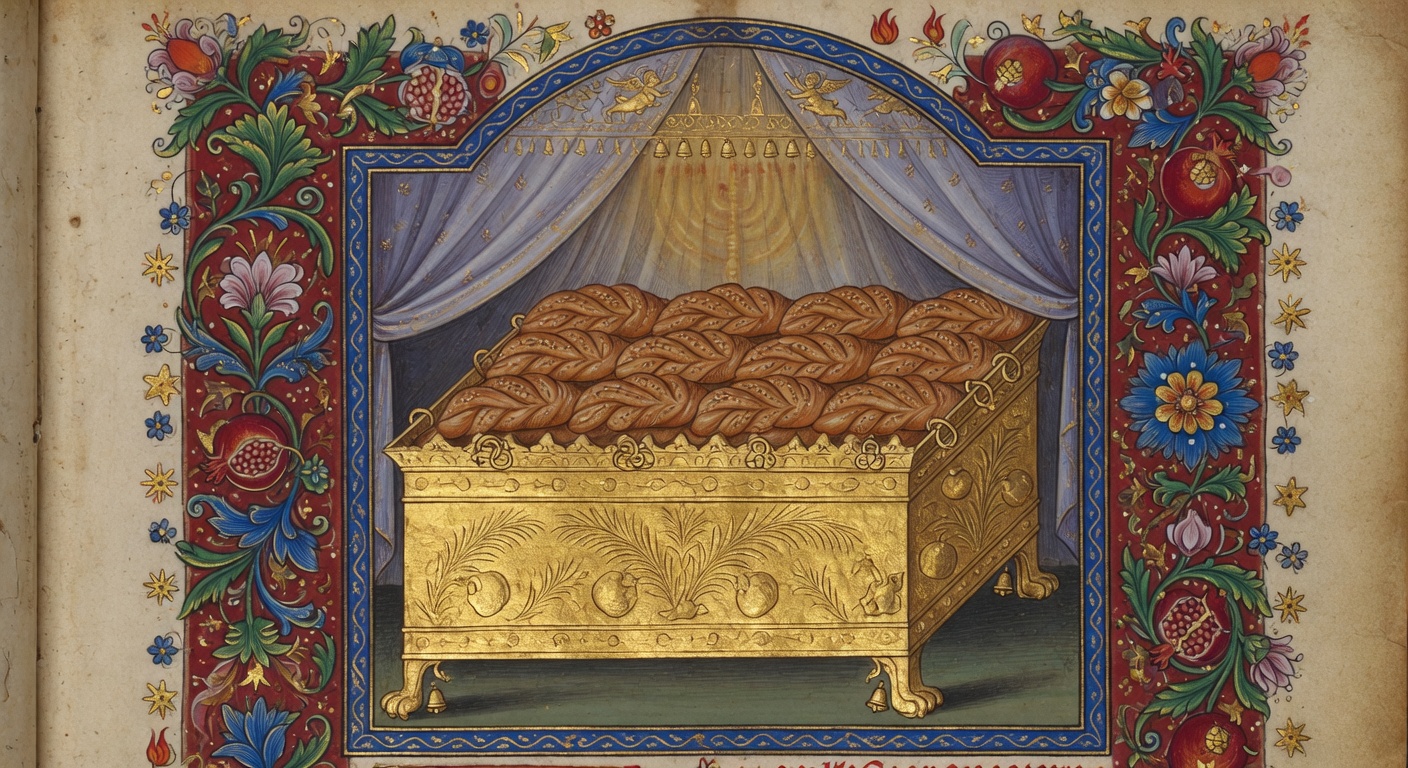
Table of Showbread
The Table of Showbread was a sacred acacia-wood table overlaid with pure gold that stood in the Holy Place of the Tabernacle and later Solomon’s Temple. Twelve loaves of unleavened bread, representing the twelve tribes of Israel, were arranged on it in two stacks and renewed every Sabbath by the priests, who alone ate the previous week’s offering. This perpetual presentation symbolized God’s covenant faithfulness and continual provision for His people in His presence. The table is later referenced in Hebrews as part of the earthly sanctuary that foreshadowed greater spiritual realities fulfilled in Christ.
-
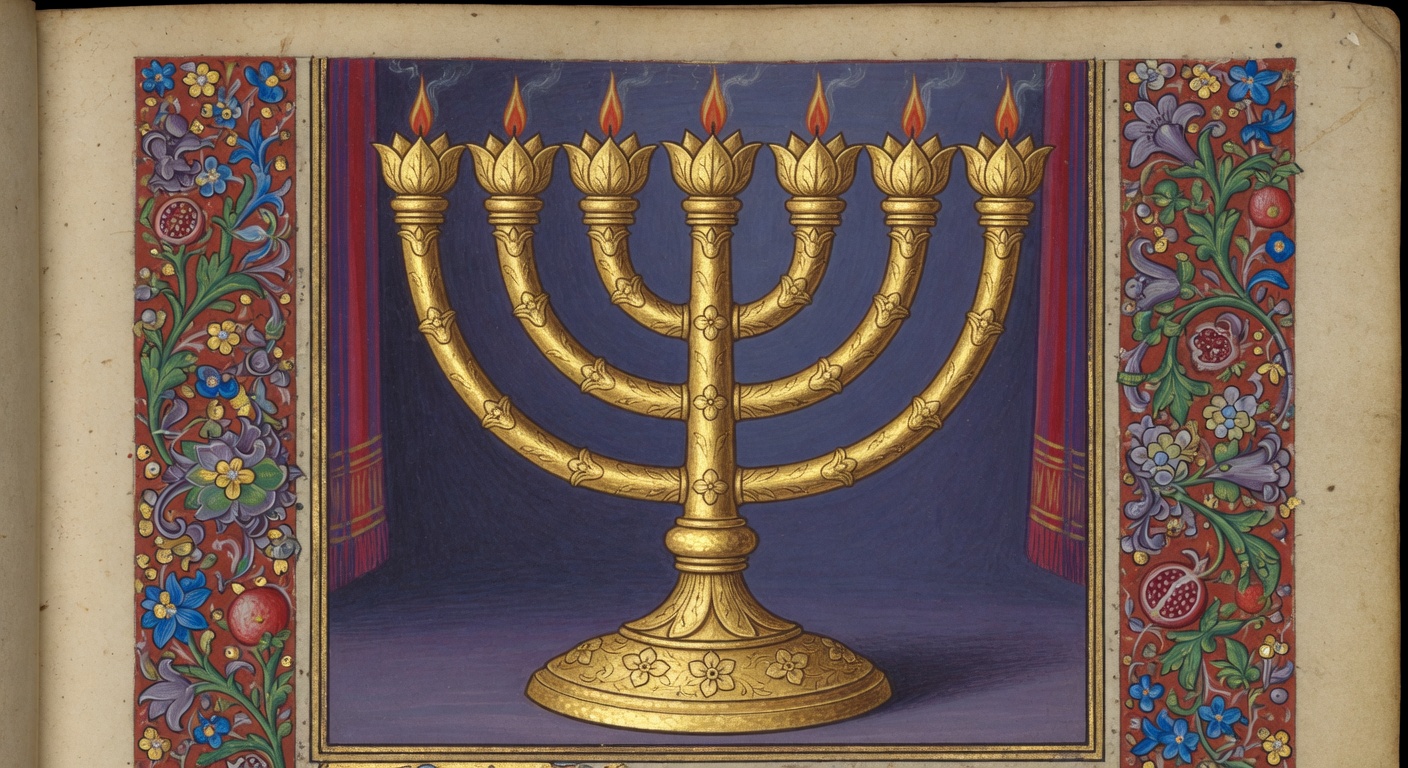
Golden Lampstand (Menorah)
The Golden Lampstand, or Menorah, was crafted from a single talent of pure gold hammered into a seven-branched form according to precise instructions God gave Moses on Mount Sinai for use in the Tabernacle. Positioned in the Holy Place, its seven lamps burned continually with olive oil to illuminate the space where priests performed daily service before the veil of the Holy of Holies. This object later stood in Solomon’s Temple and featured in prophetic visions such as Zechariah’s, where it symbolized the Spirit of God sustaining His people. Its design and ongoing light underscored themes of divine presence, guidance, and covenant faithfulness throughout Scripture.
-
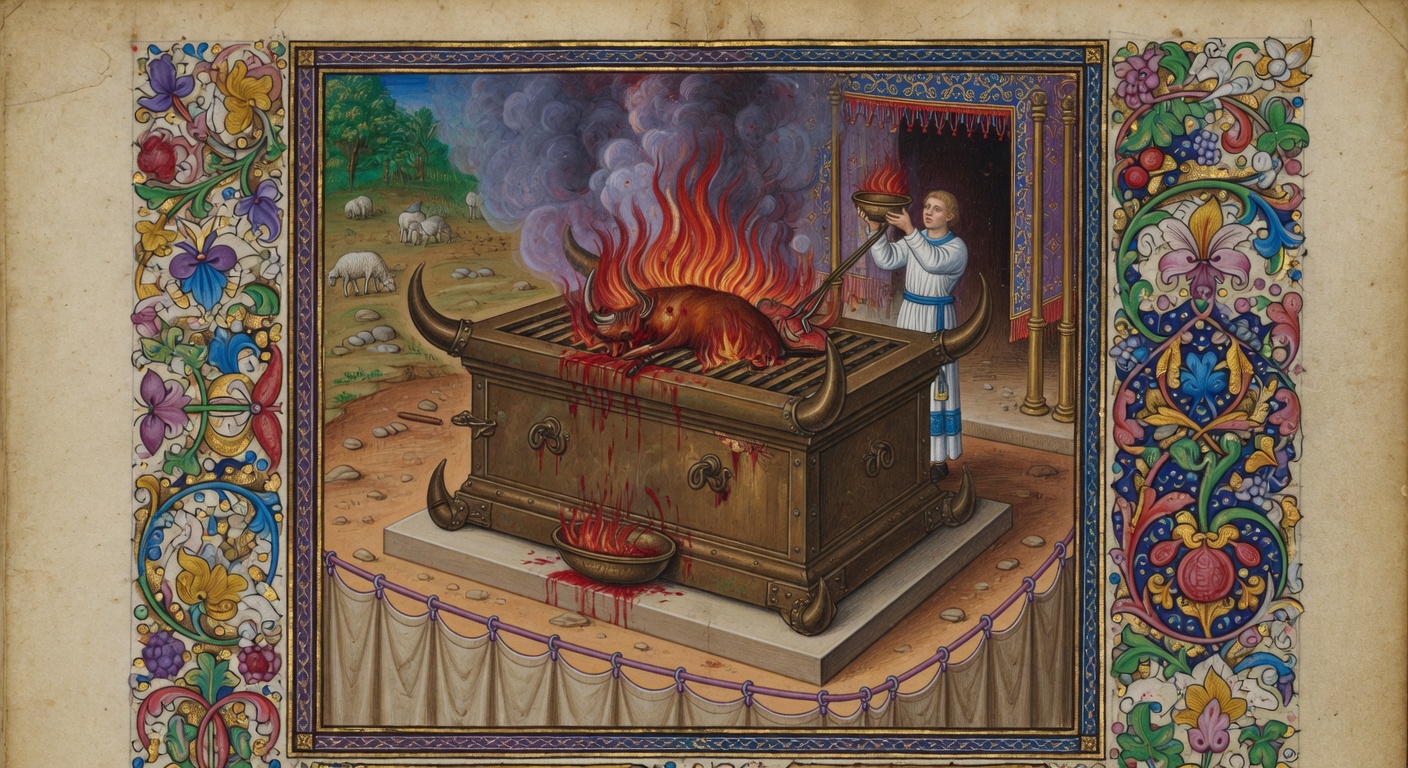
Brazen Altar (Altar of Burnt Offering)
The Brazen Altar, also known as the Altar of Burnt Offering, was a large bronze structure positioned in the outer court of the Tabernacle, serving as the primary site for animal sacrifices. Upon entering the sacred space, worshippers first encountered this altar, where priests offered burnt offerings and other sacrifices to atone for sins and seek reconciliation with God. This practice underscored the biblical principle that approaching a holy God required the shedding of blood as a substitute for human transgression. In Scripture, the altar symbolizes the necessity of sacrifice, ultimately pointing to the redemptive work of Christ as the perfect offering.
-
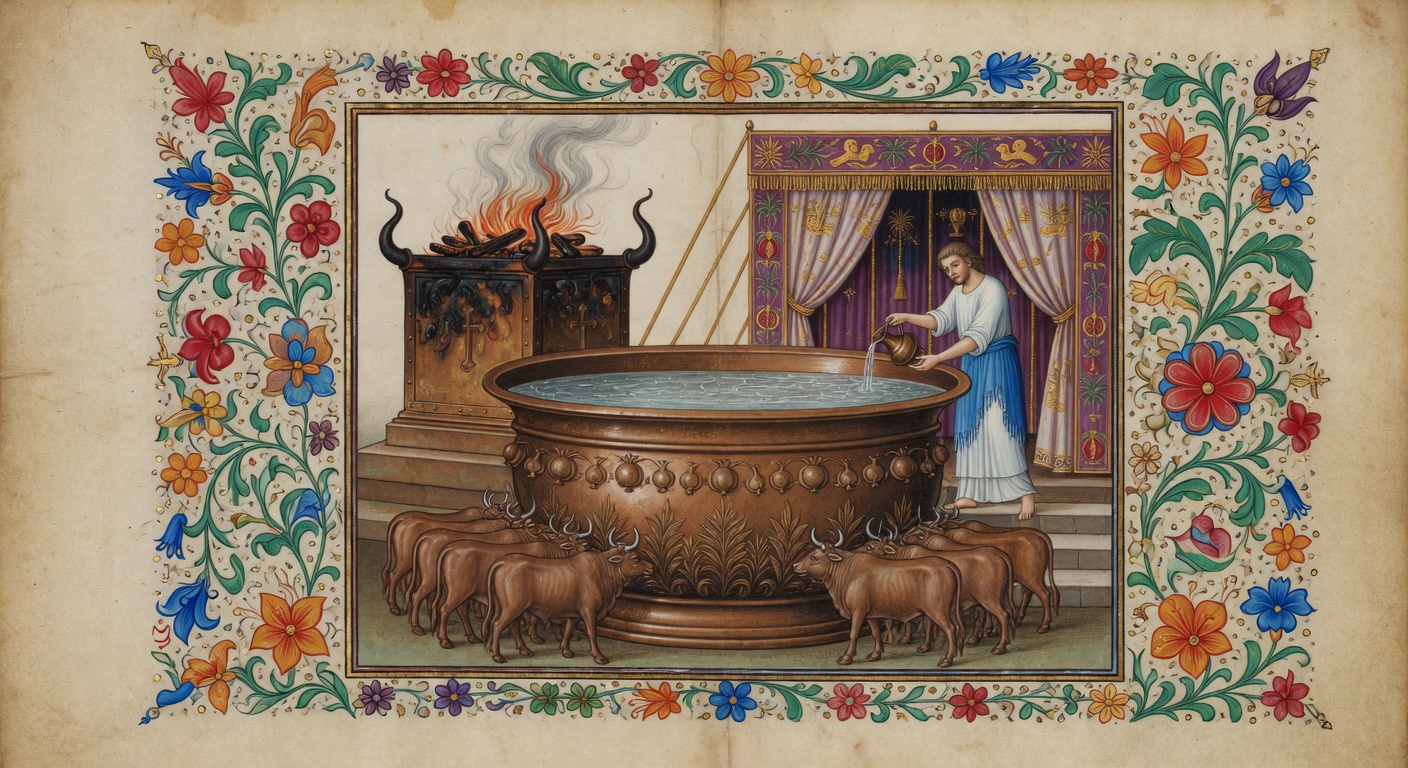
Bronze Laver
The Bronze Laver was a large basin crafted from bronze mirrors donated by Israelite women, positioned between the altar of burnt offering and the tabernacle entrance according to divine instructions given to Moses. Priests were required to wash their hands and feet in it before entering the tent of meeting or approaching the altar, or they would die, enforcing ritual purity during ministry. This practice highlighted the necessity of cleansing before serving a holy God amid the sacrificial system of ancient Israel. Its role in tabernacle worship illustrated broader scriptural themes of purification and preparation for divine encounter, later echoed in temple furnishings and New Testament imagery of spiritual washing.
-
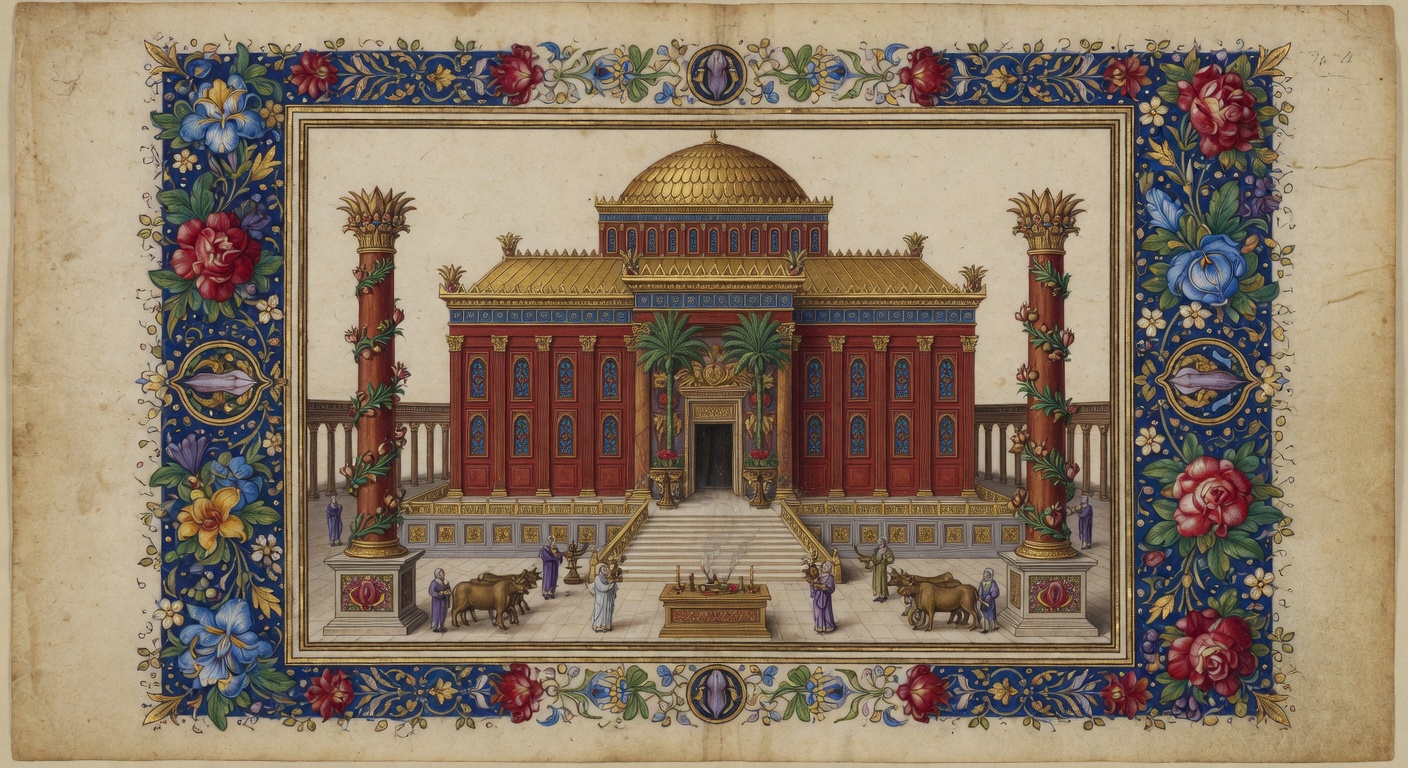
Solomon's Temple
Solomon's Temple, also known as the First Temple, was constructed by King Solomon in Jerusalem as a permanent replacement for the portable tabernacle used during the Israelites' wilderness wanderings. The project, which utilized vast resources and skilled labor including assistance from Hiram of Tyre, took seven years to complete and served as the central sanctuary housing the Ark of the Covenant. This temple held profound significance in Scripture as the dwelling place of God's presence among His people, fulfilling the promise given to David and becoming the focal point for worship, sacrifices, and religious festivals in ancient Israel. Its eventual destruction by the Babylonians marked a pivotal moment in biblical history, underscoring themes of covenant faithfulness and divine judgment.
-
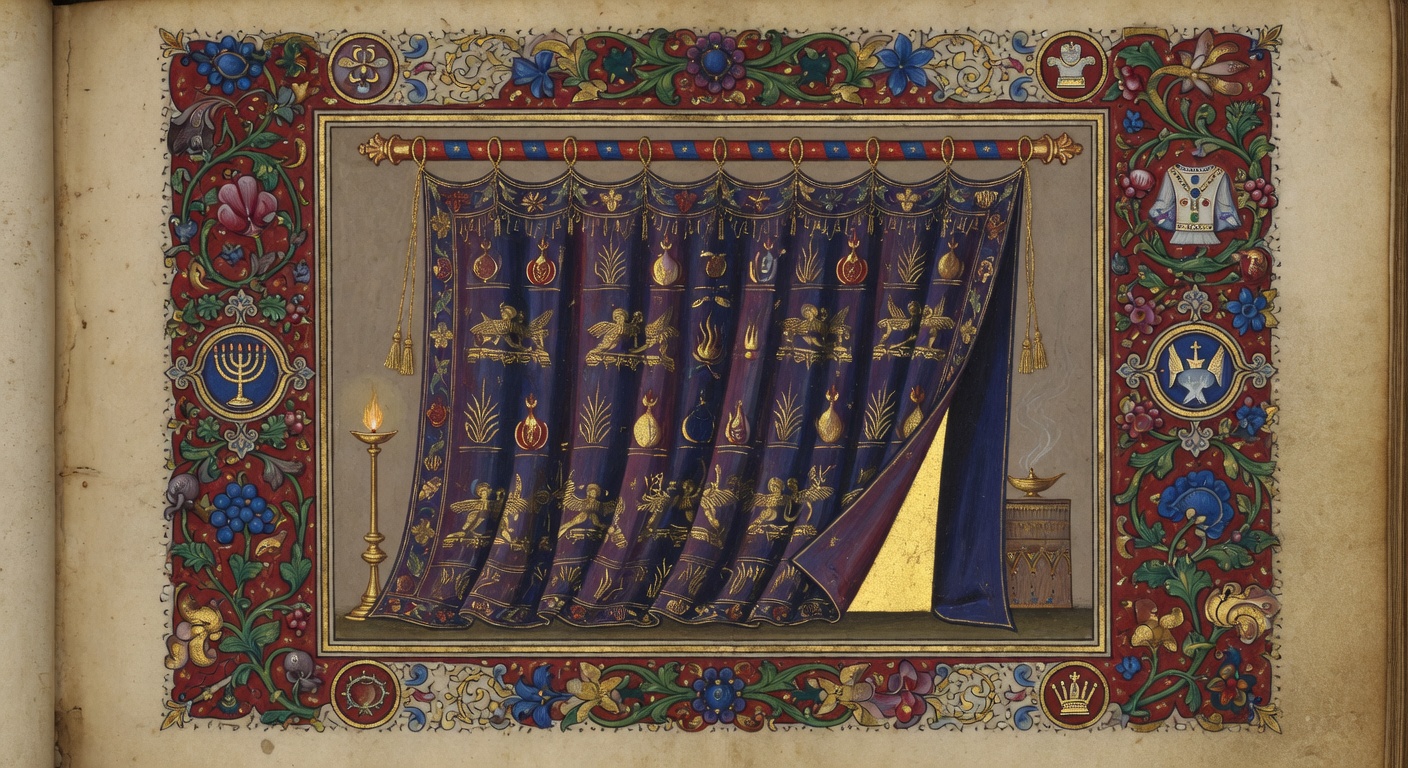
Veil of the Temple
The Veil of the Temple was a thick curtain that separated the Holy Place from the Holy of Holies, the innermost sanctuary representing God's presence in both the Tabernacle and later the Jerusalem Temple. This barrier underscored the separation between a holy God and sinful humanity, permitting only the high priest to pass through once a year on the Day of Atonement to offer blood sacrifices for Israel's sins. At the moment of Jesus Christ's death on the cross, the Gospels record that the veil was torn in two from top to bottom, an event witnessed in the Temple and signifying the removal of that barrier through his atoning sacrifice. This act holds central significance in Scripture as it illustrates the new covenant's provision of direct access to God for all believers, a theme further explained in the Epistle to the Hebrews.
-
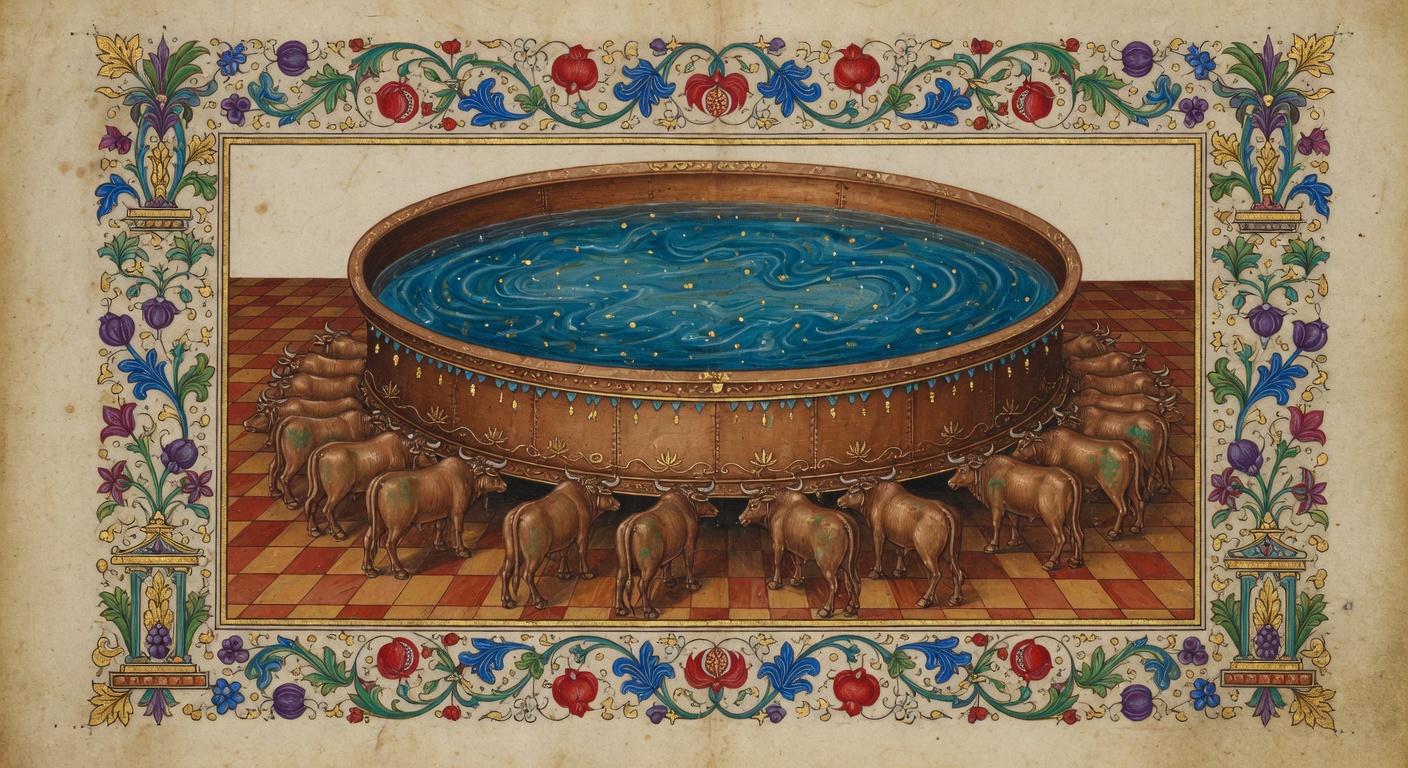
The Molten Sea (Bronze Sea)
The Molten Sea, also known as the Bronze Sea, was a colossal bronze basin crafted for King Solomon's Temple in Jerusalem, measuring approximately fifteen feet in diameter and capable of holding over eleven thousand gallons of water. Positioned on a platform supported by twelve bronze oxen facing outward in groups of three, it served as a ritual purification vessel where priests would wash before conducting sacrifices and other sacred duties. This impressive structure, detailed in the books of 1 Kings and 2 Chronicles, symbolized the cleansing power necessary for approaching the divine presence and underscored the temple's role as the center of Israelite worship. Its eventual removal and destruction during the Babylonian conquest highlight the profound loss experienced by the people of Israel when the temple was destroyed.
Wilderness Objects
-
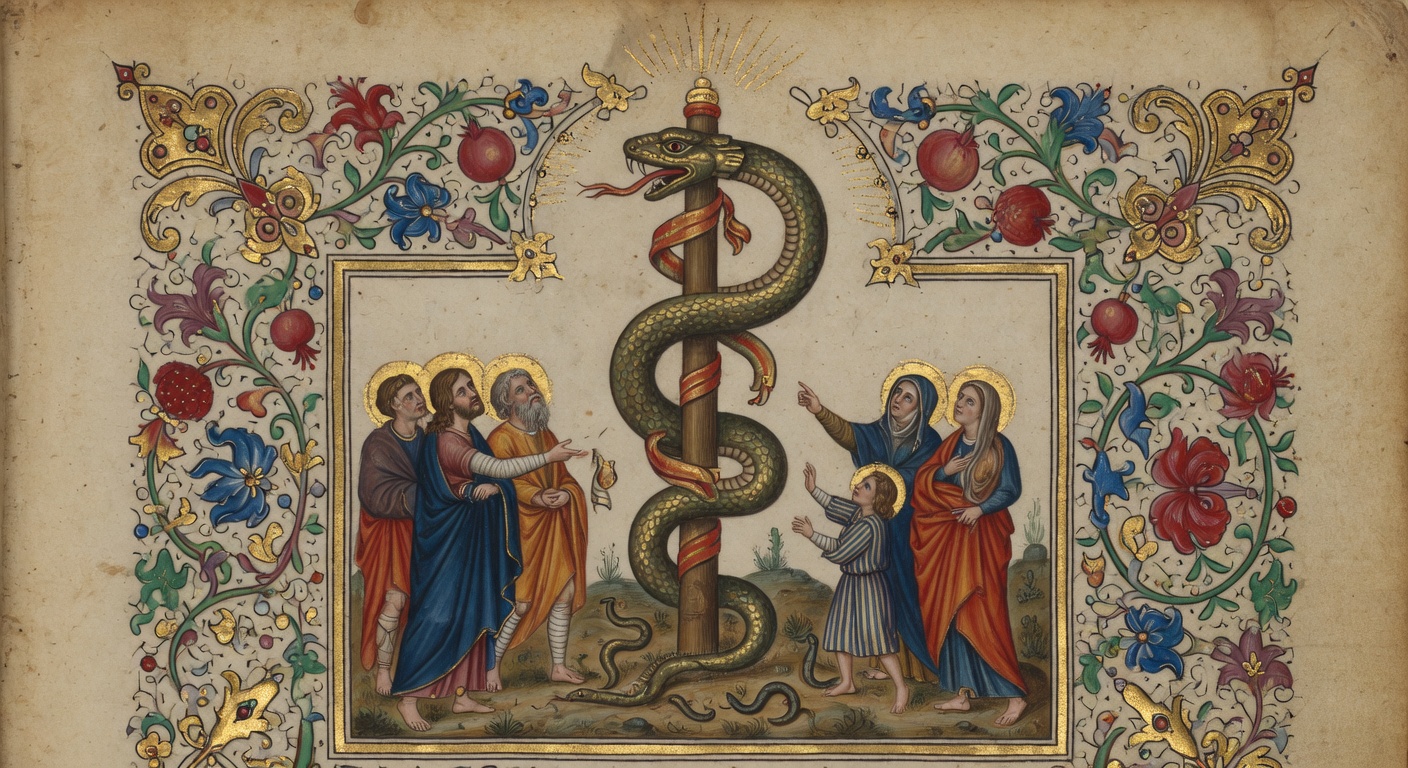
Bronze Serpent (Nehushtan)
The Bronze Serpent, known as Nehushtan, was fashioned by Moses during the Israelites' wilderness journey after they complained against God and were punished with venomous snake bites. In obedience to divine instruction, Moses mounted the bronze figure on a pole so that any afflicted person who looked upon it would be healed, demonstrating God's provision of deliverance through faith and obedience. Centuries later, the object was preserved among the people but became an idol, prompting King Hezekiah to destroy it during his religious reforms as recorded in 2 Kings. In the New Testament, Jesus references the event in John 3 to illustrate how the Son of Man would be lifted up for the salvation of those who believe.
-
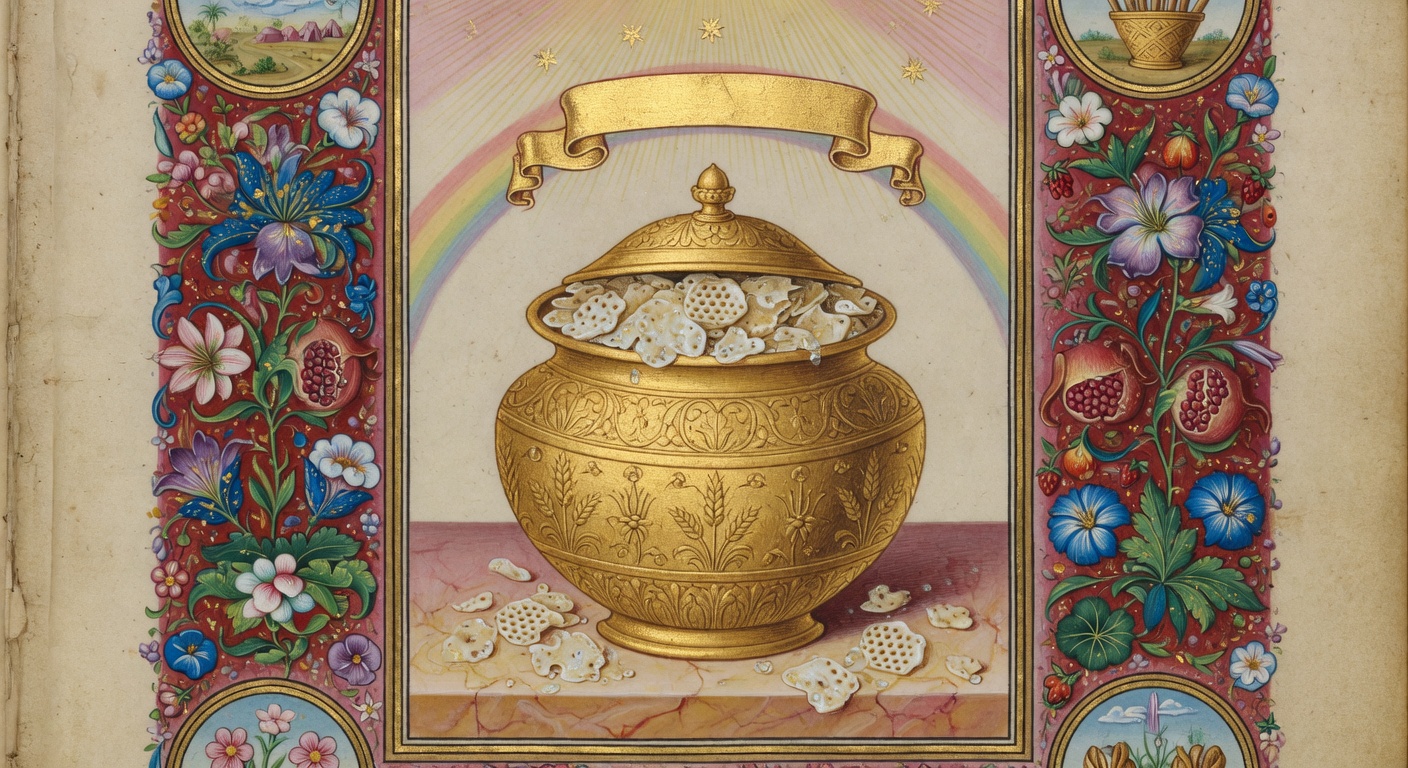
Golden Pot of Manna
The Golden Pot of Manna refers to a jar made of gold that held a preserved sample of the manna, the miraculous bread-like substance God provided daily to sustain the Israelites throughout their 40-year journey in the wilderness after the Exodus from Egypt. According to Exodus 16, Moses was instructed to keep an omer of this manna as a testimony to future generations of God's faithful provision in the desert. This pot was later placed inside the Ark of the Covenant, alongside the stone tablets of the Ten Commandments and Aaron's budding rod, symbolizing God's covenant and care for His people. Its mention in Hebrews 9:4 underscores its enduring spiritual significance as a reminder of divine sustenance and faithfulness.
-
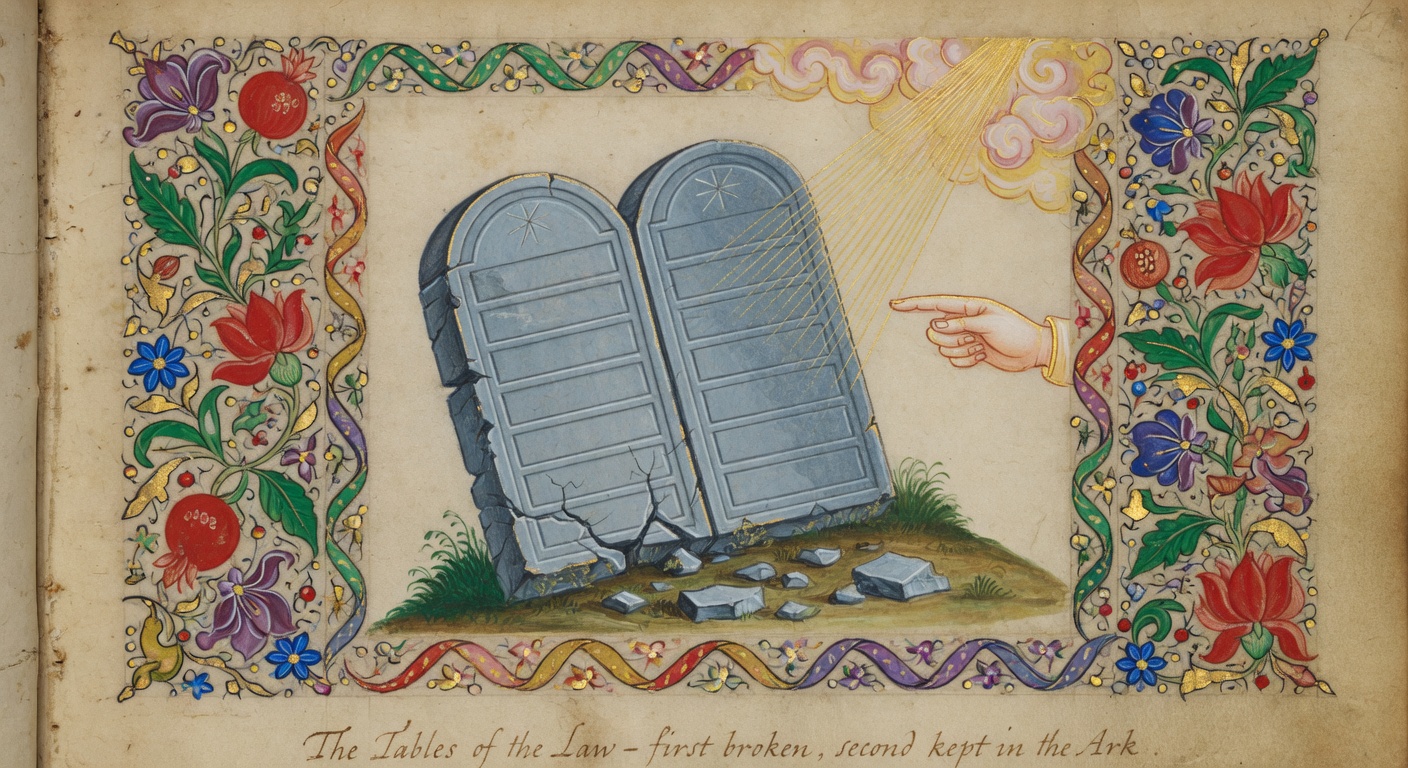
Stone Tablets of the Law
The Stone Tablets of the Law consisted of two stone tablets inscribed by the finger of God with the Ten Commandments, forming the heart of the covenant established with Israel at Mount Sinai. After Moses broke the first set upon seeing the golden calf, God directed him to prepare a replacement pair, which were then deposited in the Ark of the Covenant and housed in the Holy of Holies. These tablets underscored the enduring authority of divine law in Scripture, serving as a tangible witness to God's moral standards and covenant relationship with his people throughout Israel's history.
-
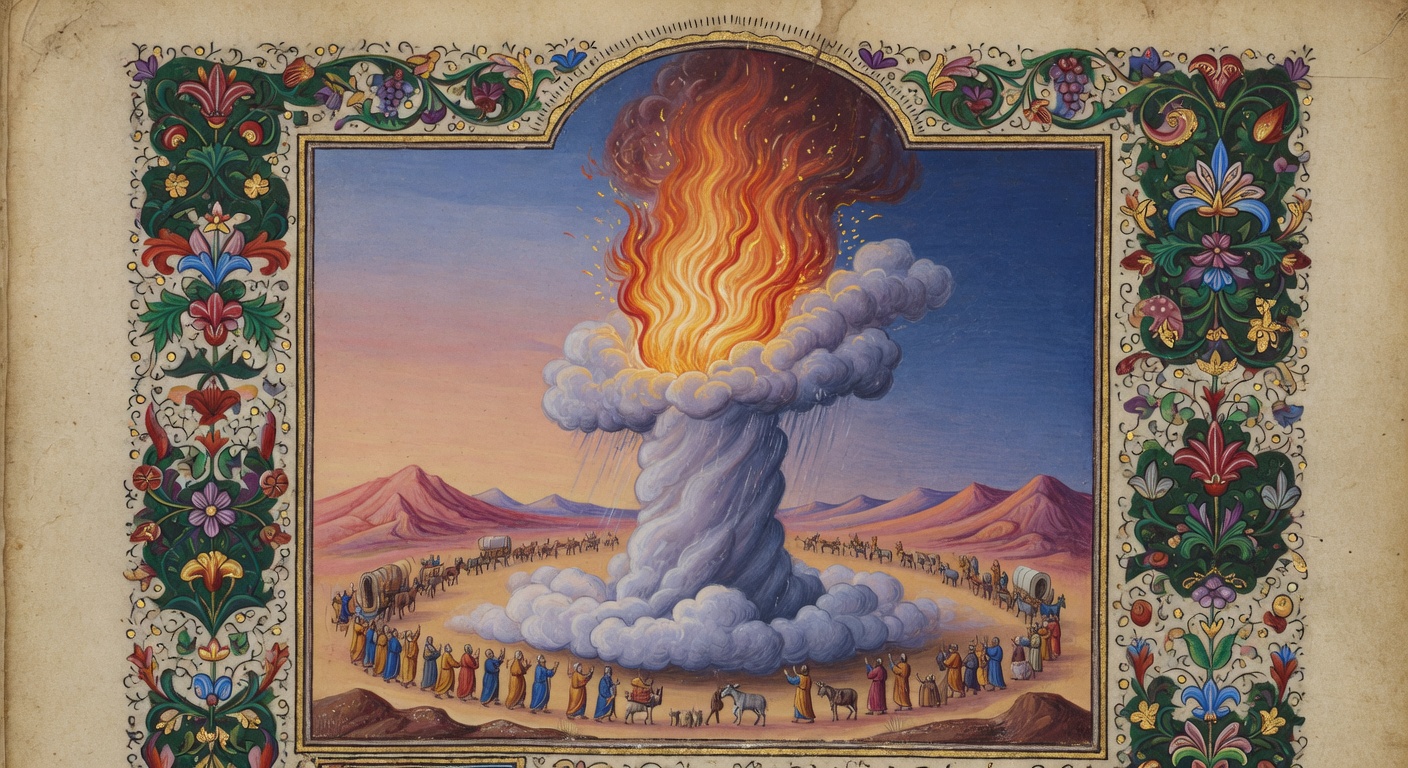
Pillar of Cloud and Fire
The Pillar of Cloud and Fire served as a visible manifestation of God's presence among the Israelites during their exodus from Egypt and journey through the wilderness. By day, the cloud provided shade and guidance, while at night it transformed into fire to offer light and warmth, directing their travels and encampments as described in the Book of Exodus. This divine sign protected the people, such as when it positioned itself between them and the pursuing Egyptian army at the Red Sea, and it ultimately rested upon the Tabernacle to signify God's dwelling with His covenant people. Its significance lies in demonstrating God's faithful guidance and constant companionship, reinforcing the Israelites' identity as a chosen nation under divine leadership.
-
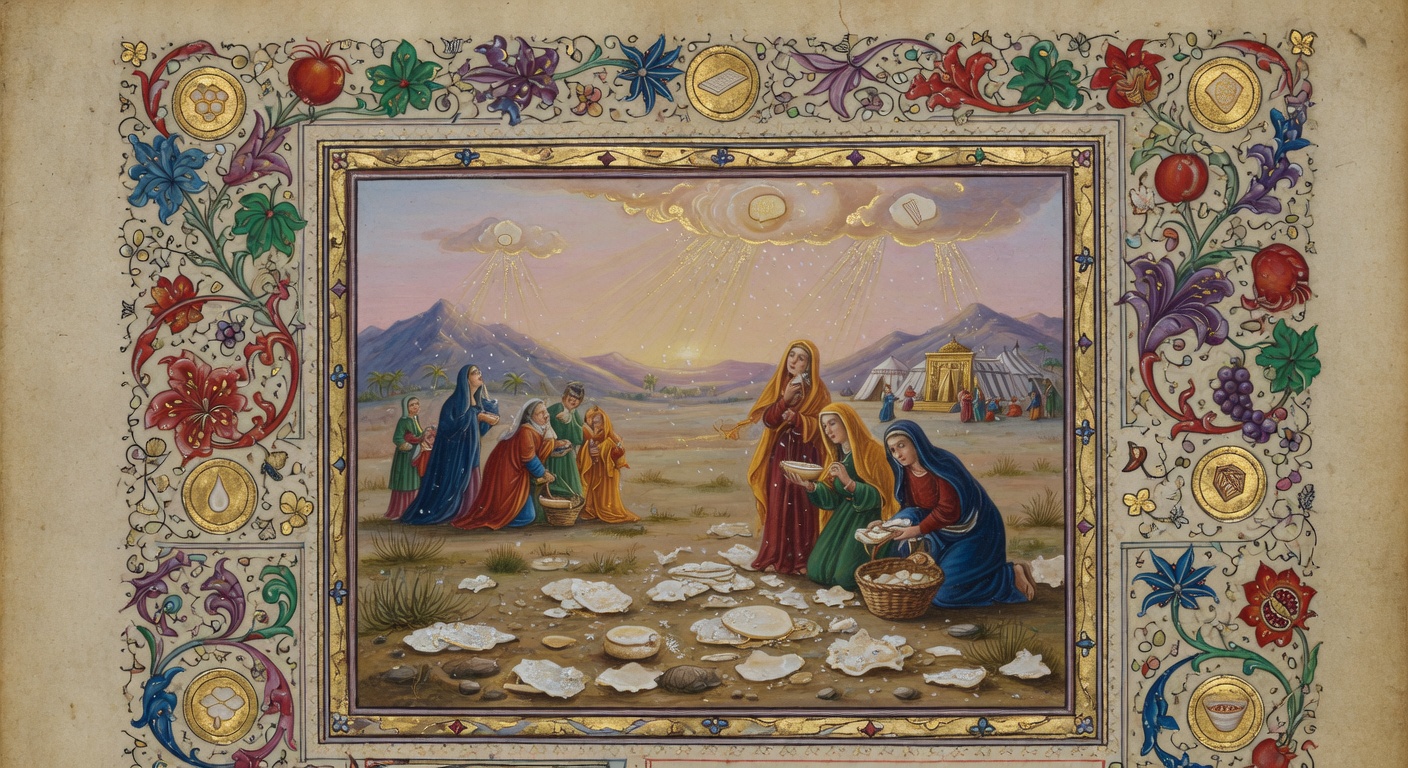
Manna (Daily Bread)
During the Israelites' exodus from Egypt, God provided manna as daily sustenance when the people complained of hunger in the wilderness, with the substance appearing as a fine, flake-like deposit on the ground each morning for forty years until they entered Canaan. The people gathered and baked it into bread that tasted like wafers made with honey, following divine instructions that prohibited storing it overnight except before the Sabbath to prevent spoilage. This miraculous provision demonstrated God's ongoing faithfulness and tested the Israelites' obedience and trust in his word. In Scripture, manna is recorded in Exodus 16 and Numbers 11, later serving as a symbol of divine care that Jesus referenced when identifying himself as the true bread from heaven.
Priestly Objects
-
Aaron's Rod
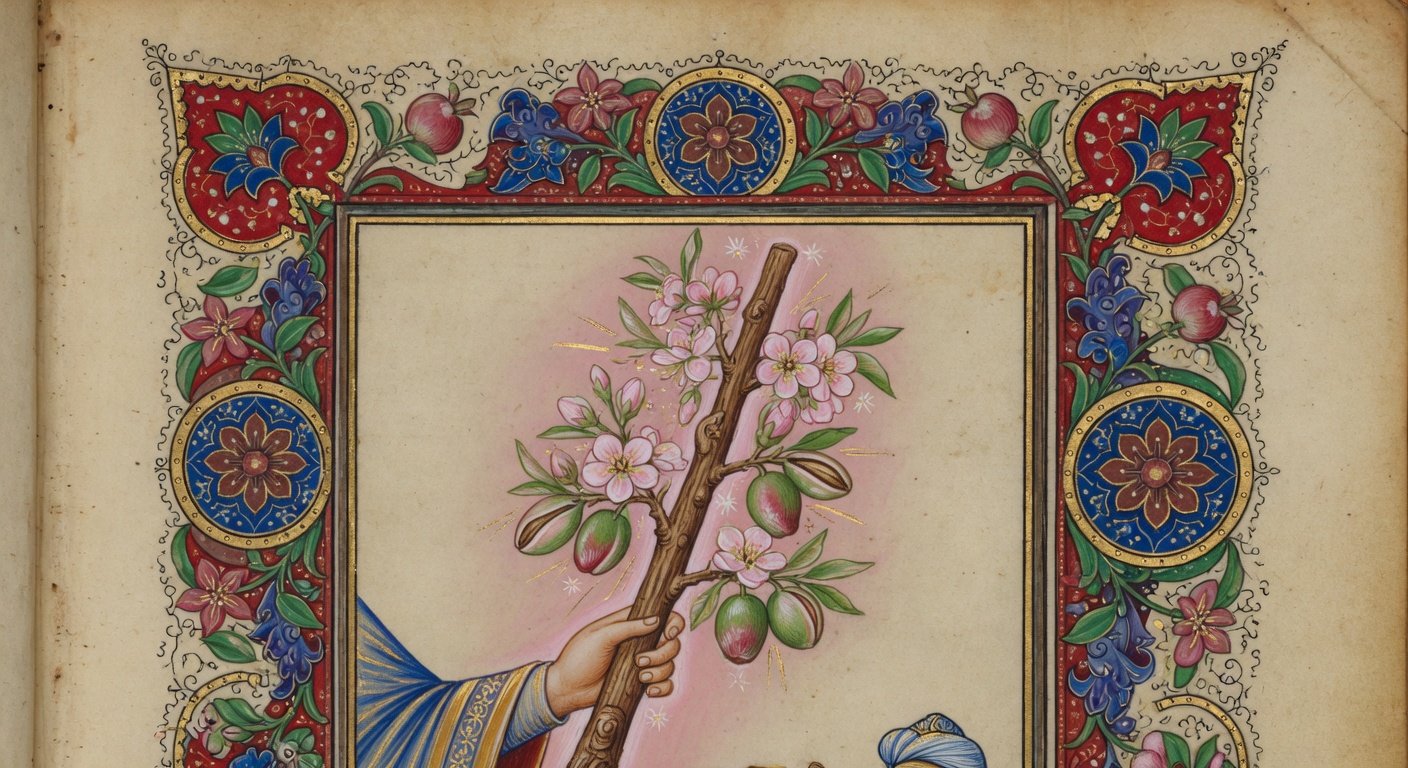
In the wilderness period following Korah’s rebellion against Moses and Aaron’s leadership, God instructed the heads of Israel’s twelve tribes to deposit their staffs overnight in the Tabernacle before the Ark. The next morning only Aaron’s staff had budded, blossomed, and borne ripe almonds, while the others remained unchanged. This supernatural sign authenticated Aaron’s divine appointment and established the exclusive, hereditary priesthood of the tribe of Levi. The rod was subsequently kept inside the Ark of the Covenant as a perpetual witness to God’s chosen order of worship and authority.
-
Urim and Thummim
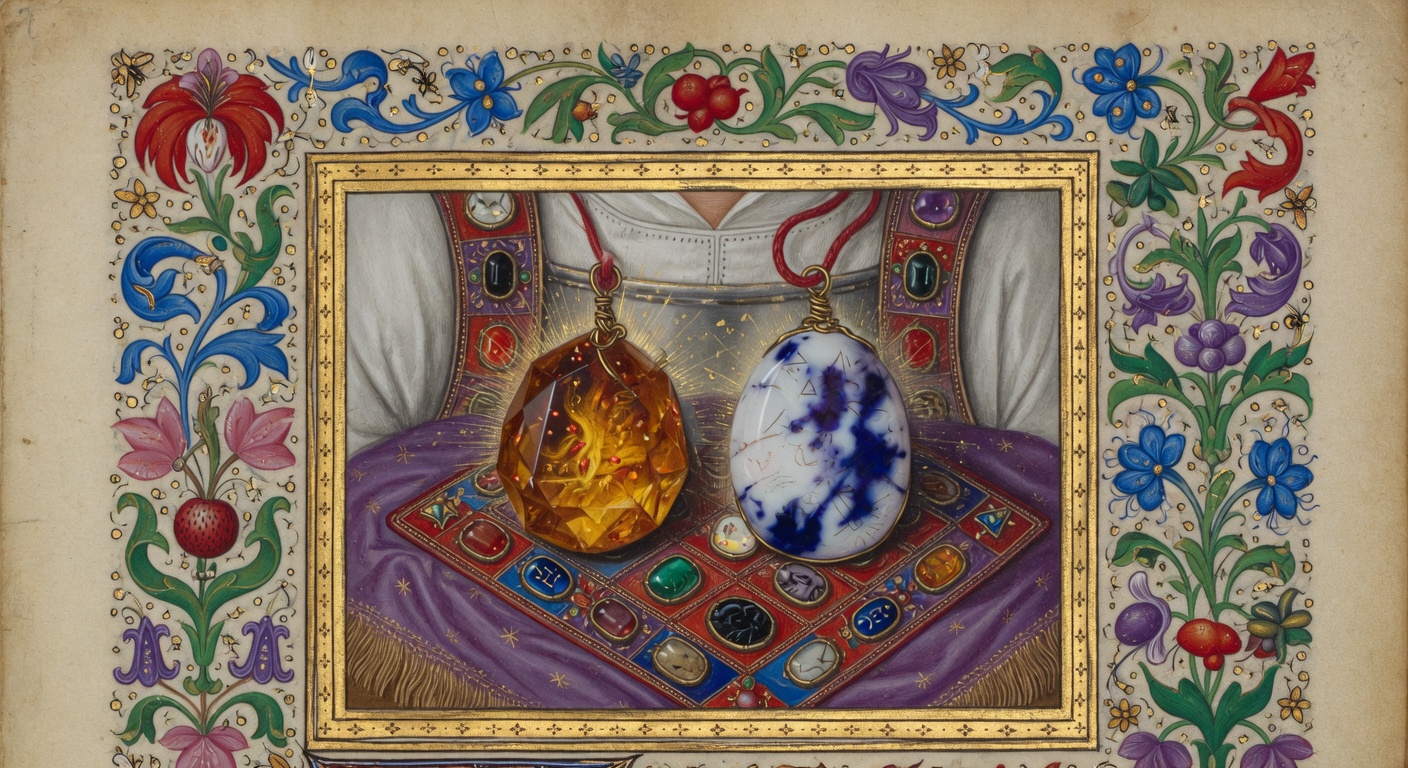
The Urim and Thummim were sacred objects placed within the breastplate of the high priest's ephod, as described in Exodus 28, and functioned as a divinely sanctioned means to discern God's will on critical national matters through yes-or-no or oracular responses. Biblical accounts record their use by figures such as Joshua before military campaigns, the priest Eleazar during the settlement of Canaan, and King Saul in seeking guidance, illustrating their role in Israel's theocratic governance. Their significance lies in underscoring the high priest's mediatory function and the broader scriptural theme of dependence on divine direction rather than human initiative alone. Though their exact composition remains unknown and they disappear from the record after the early post-exilic period, they exemplify the Old Testament's emphasis on God's active involvement in the affairs of His covenant people.
-
High Priest's Garments
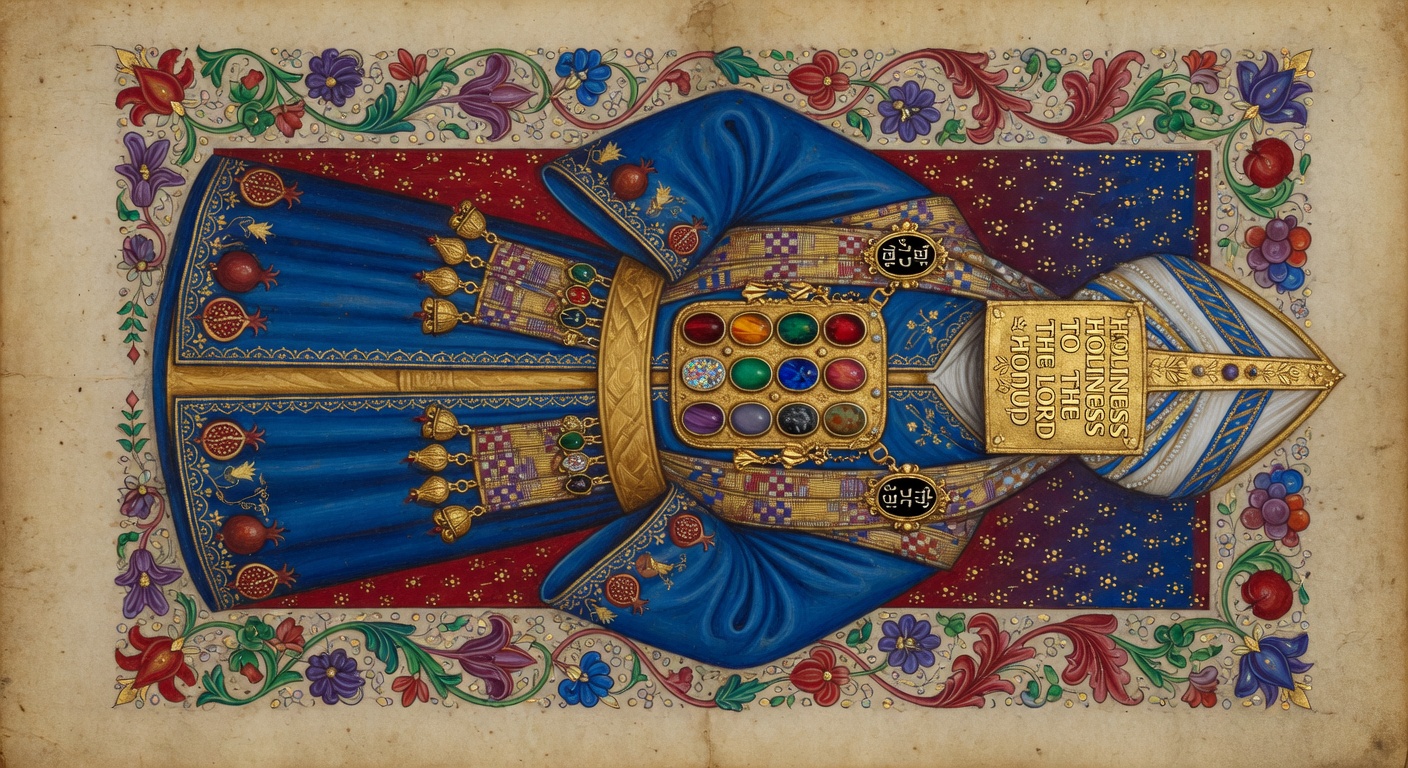
Worn by the high priest in the tabernacle, these garments of gold, blue, purple, scarlet, fine linen, and precious stones set apart Aaron and his successors for sacred service before God. The intricate design, particularly the breastplate with its twelve stones representing Israel's tribes, illustrated the priest carrying the people on his heart in continual intercession. In this way the vestments pointed ahead to Christ in his role as mediator, embodying the holiness and representation essential to redemption.
-
The Ephod
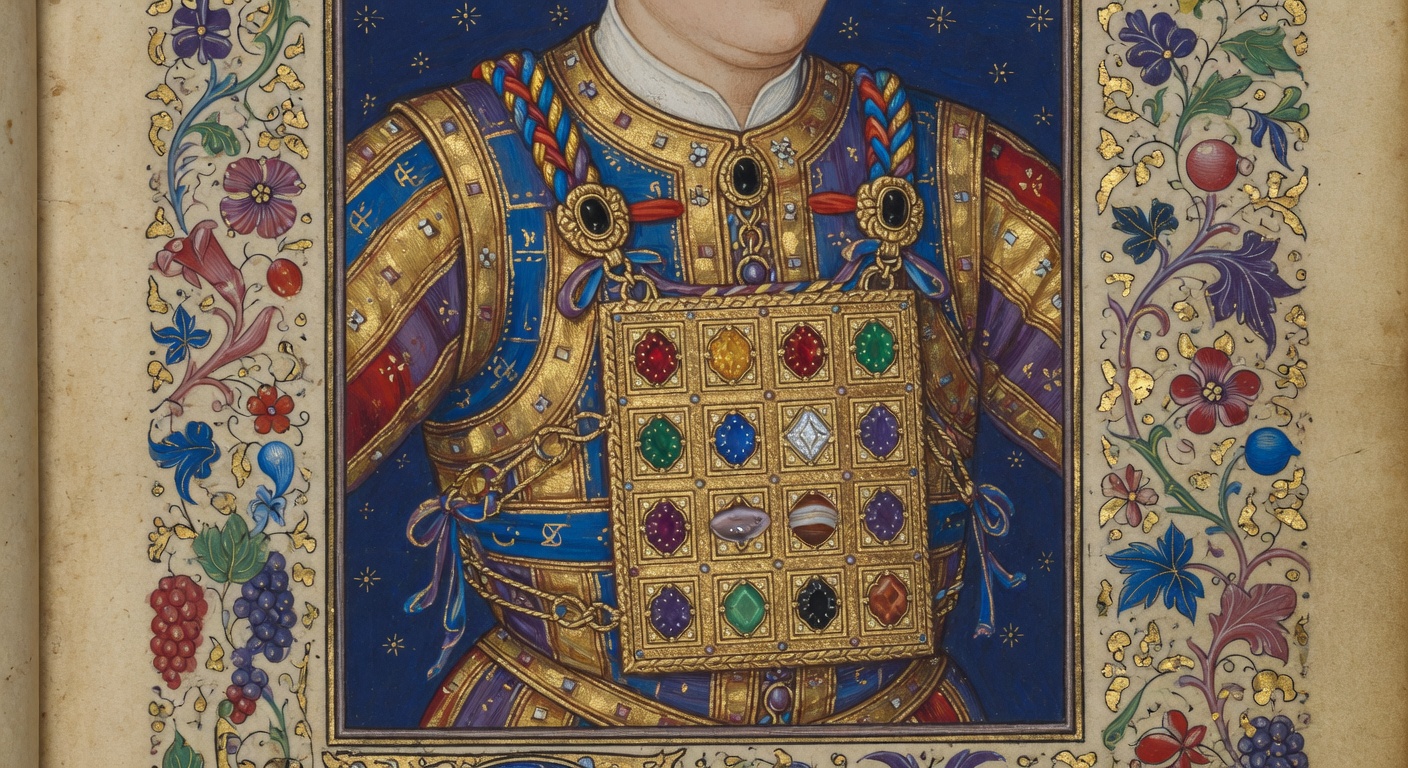
The Ephod was a sacred vest-like garment worn exclusively by the high priest in ancient Israel, crafted from fine linen interwoven with gold, blue, purple, and scarlet threads as detailed in the book of Exodus. Attached to its front was the breastplate of judgment, which held twelve precious stones representing the tribes of Israel and contained the Urim and Thummim used for divine consultation. This garment played a crucial role in the high priest's duties within the tabernacle, enabling him to bear the names of the people before God and to seek His will on important matters. Its significance underscores the mediatory function of the priesthood and the importance of divine guidance in the governance and spiritual life of the Israelite nation.