Bronze Serpent (Nehushtan)
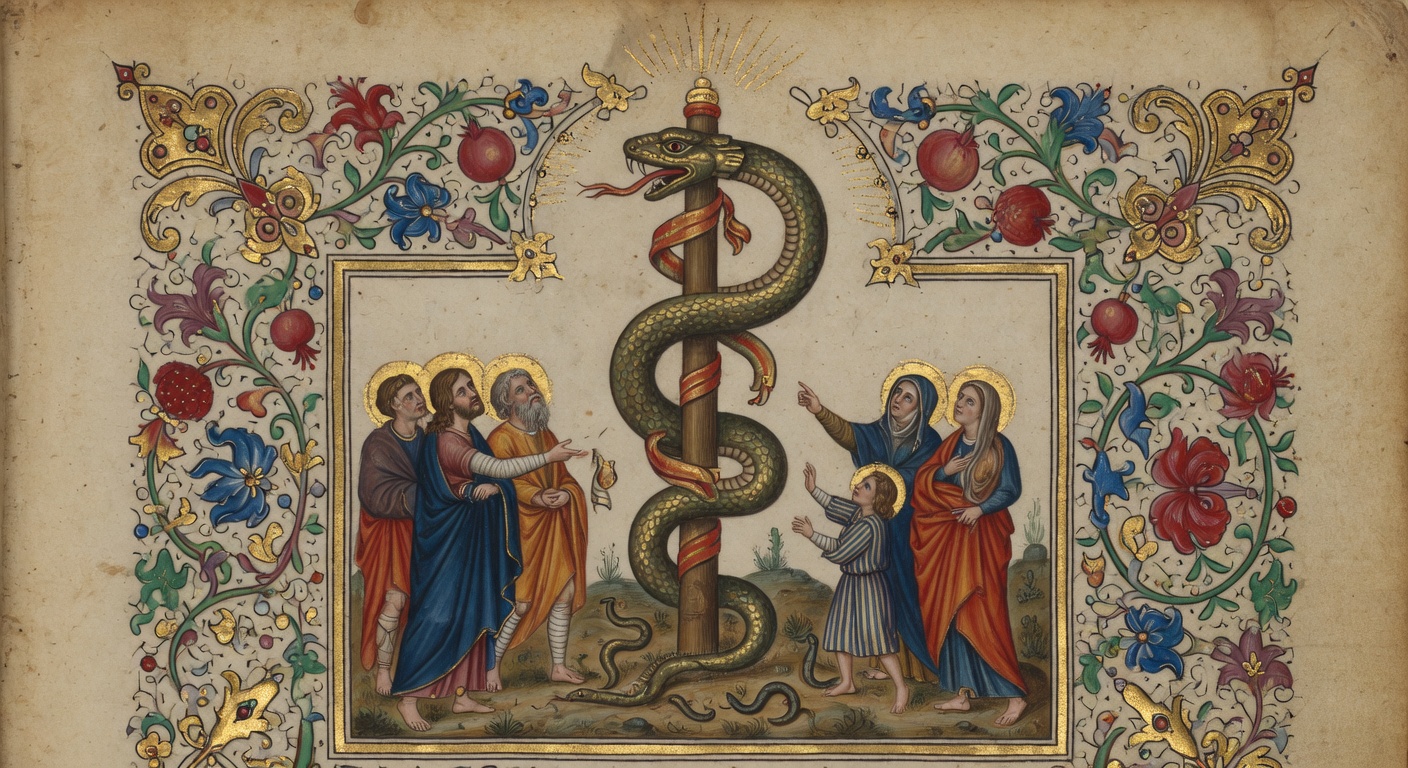
The Bronze Serpent, known as Nehushtan, was fashioned by Moses during the Israelites' wilderness journey after they complained against God and were punished with venomous snake bites. In obedience to divine instruction, Moses mounted the bronze figure on a pole so that any afflicted person who looked upon it would be healed, demonstrating God's provision of deliverance through faith and obedience. Centuries later, the object was preserved among the people but became an idol, prompting King Hezekiah to destroy it during his religious reforms as recorded in 2 Kings. In the New Testament, Jesus references the event in John 3 to illustrate how the Son of Man would be lifted up for the salvation of those who believe.
Video from BibleProject
John Overview
Jesus references the bronze serpent as a picture of his own crucifixion (John 3:14).
BibleProject is the author and owner of this content. To find more BibleProject resources, visit bibleproject.com. Bible Navigator is not affiliated with BibleProject.
Details
- Significance
- A type of Christ lifted up on the cross. Jesus directly referenced it as foreshadowing His crucifixion.
- Materials
- Bronze
Key Passages
Moses Lifts the Serpent
Numbers 21:6-9
 6nd the LORD sent fiery serpents among the people, and they bit the people; and much people of Israel died.
Jesus References It
John 3:14-15
14nd as Moses lifted up the serpent in the wilderness, even so must the Son of man be lifted up:
Hezekiah Destroys It
2 Kings 18:4
 4e removed the high places, and brake the images, and cut down the groves, and brake in pieces the brasen serpent that Moses had made: for unto those days the children of Israel did burn incense to it: and he called it Nehushtan.
Did You Know?
Jesus directly compared himself to the bronze serpent: 'As Moses lifted up the serpent... so must the Son of Man be lifted up.'
The serpent represented the curse of sin. Looking at it in faith brought healing, just as looking to Christ brings salvation.
King Hezekiah later destroyed it because people had started worshipping it as an idol (2 Kings 18:4).
It was called 'Nehushtan'. Meaning 'a piece of bronze'. To strip it of false religious power.