Timeline
Primeval History
-
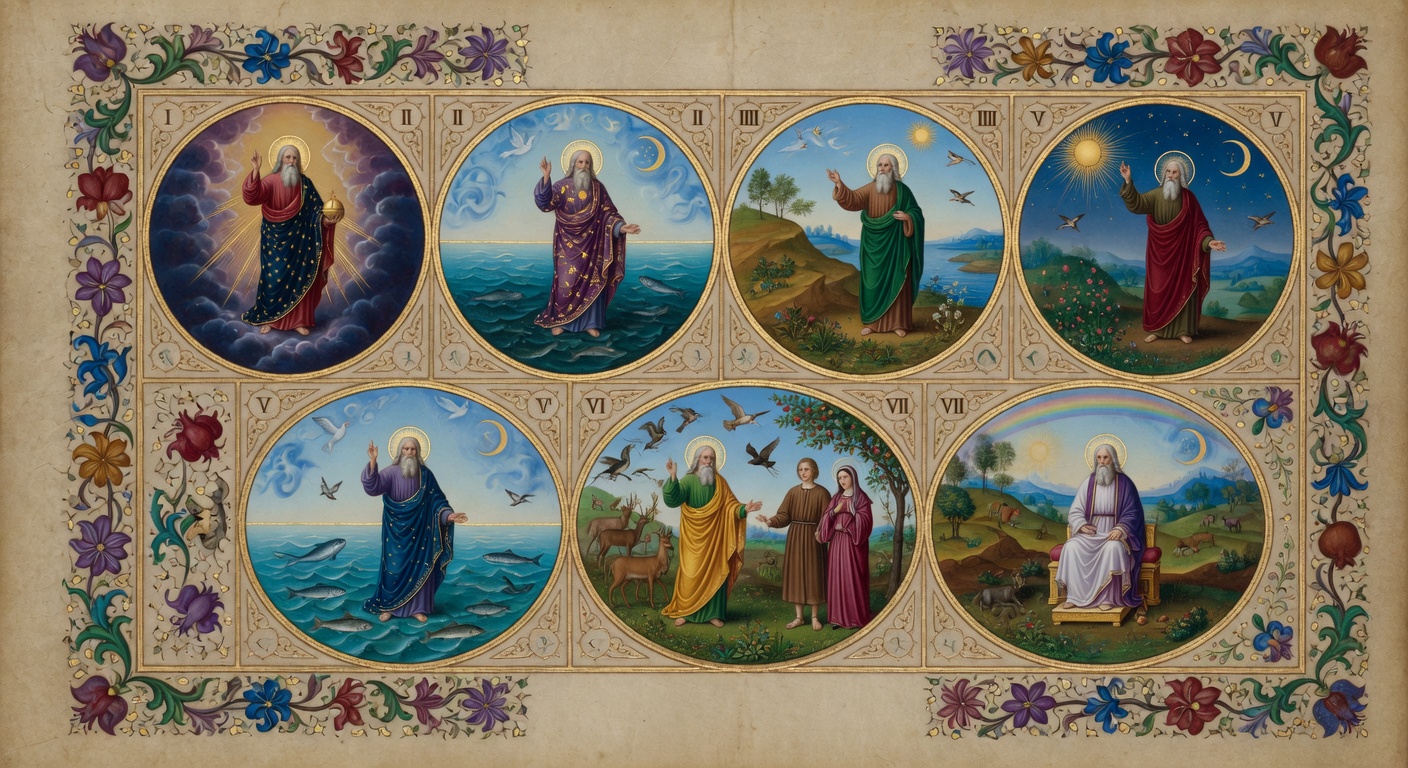
Creation Beginning
○ TraditionalIn the book of Genesis, God creates the heavens and the earth over the course of six days, bringing light, sky, land, vegetation, celestial bodies, animals, and finally humanity into existence through his spoken word. On the seventh day, he rests, establishing a pattern of work and rest that becomes foundational for the Sabbath observance in Jewish and Christian traditions. This account underscores God's sovereignty as the creator of all things and sets the stage for the entire biblical narrative, emphasizing humanity's role as stewards made in the divine image. Its significance lies in affirming the goodness of creation and God's purposeful design, themes that resonate throughout Scripture.
-
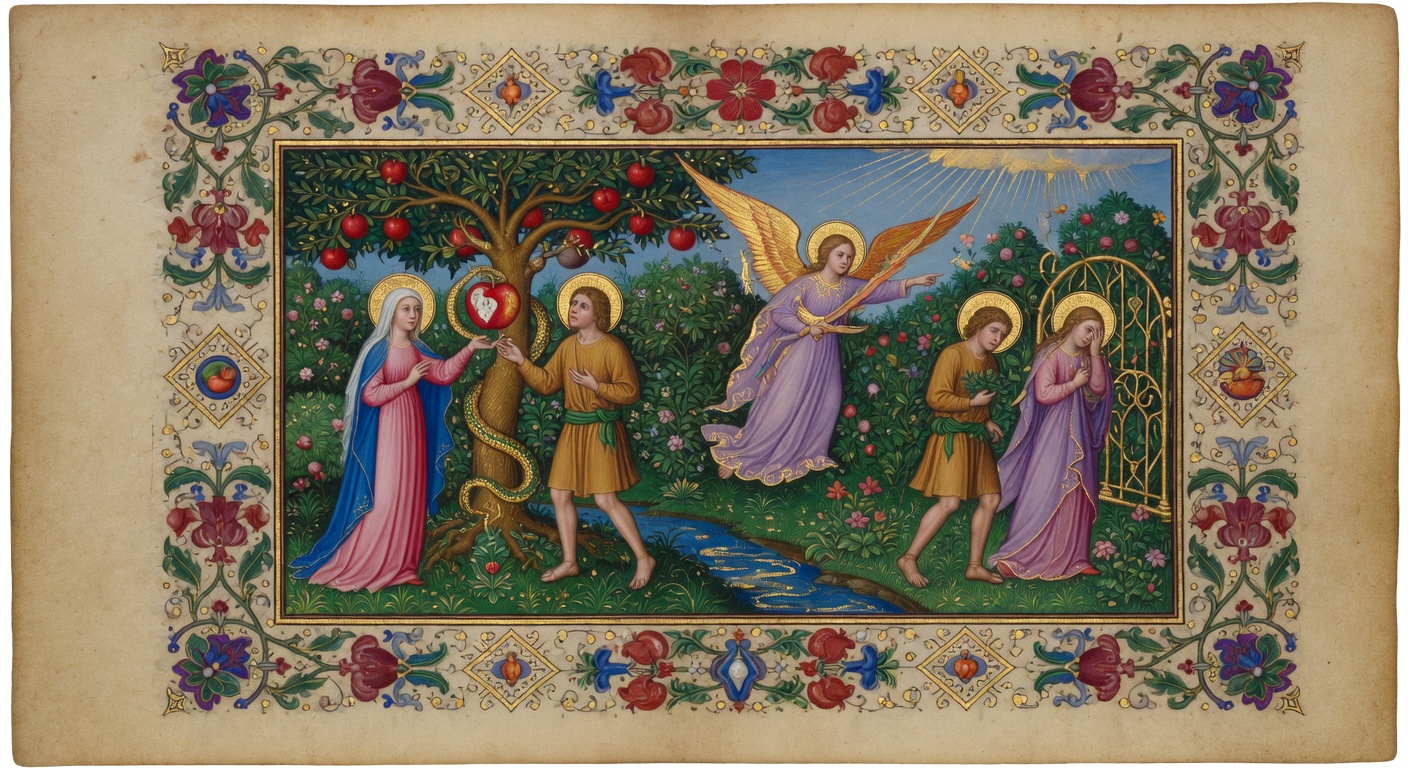
Fall of Man Beginning
○ TraditionalIn the Garden of Eden, God placed the first humans, Adam and Eve, with full provision except for the tree of the knowledge of good and evil, which they were commanded not to eat from on pain of death. Tempted by the serpent, Eve ate the forbidden fruit and gave some to Adam, resulting in their immediate awareness of guilt, attempts to hide from God, and eventual expulsion from the garden to prevent access to the tree of life. This event introduced sin, death, and broken relationship with God into human existence, along with curses affecting the serpent, childbirth, and the ground. Its significance in Scripture lies in establishing the origin of humanity's fallen condition and the foundational need for redemption that shapes the entire biblical storyline.
-
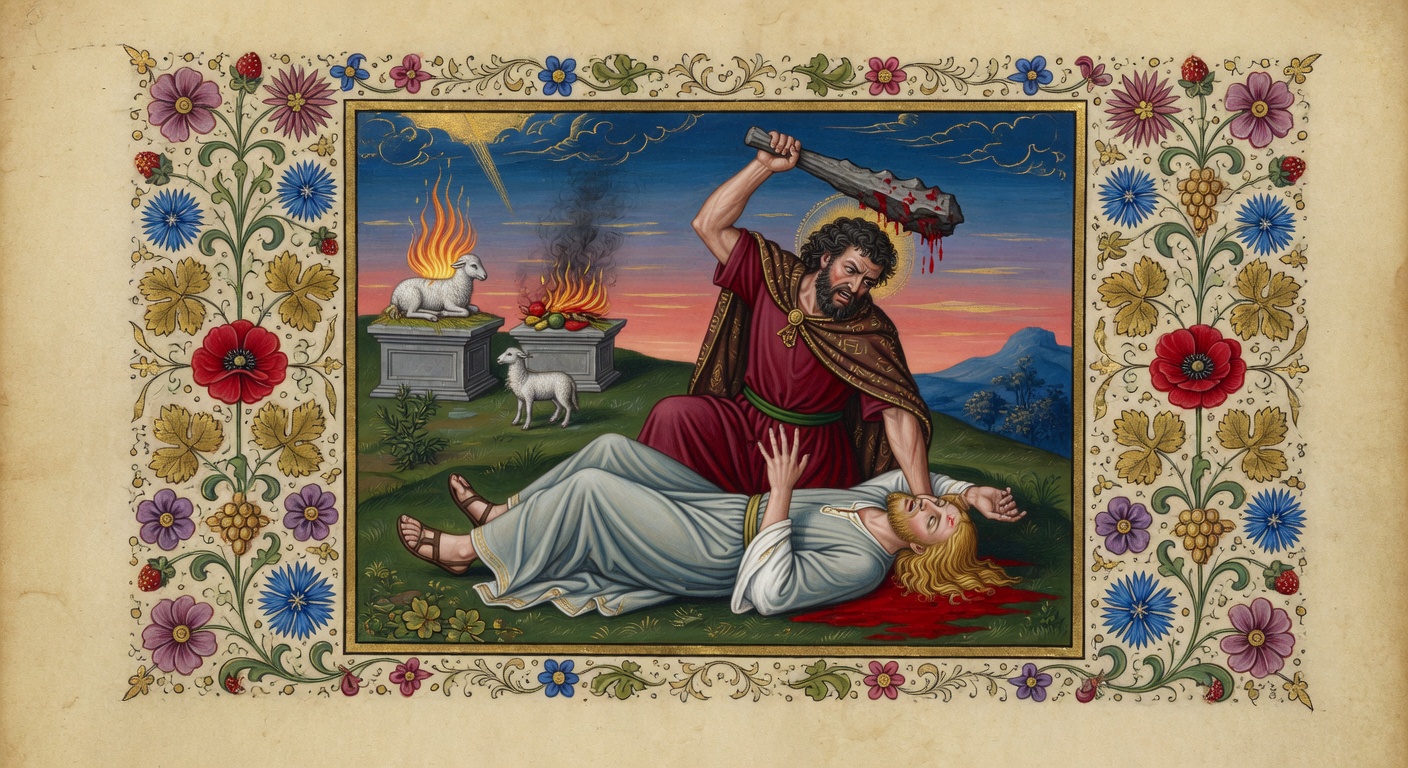
First Murder Beginning
○ TraditionalIn the early days following humanity's expulsion from Eden, Cain, the firstborn son of Adam and Eve, became the perpetrator of the first murder by killing his brother Abel in a fit of jealousy. After God accepted Abel's offering of the firstborn from his flock but rejected Cain's offering from the produce of the ground, Cain ignored a divine warning about sin and attacked Abel in the field. This event marks the initial outbreak of violence and death in Scripture, demonstrating the swift spread of sin's destructive effects and prompting God's curse on Cain along with the placement of a protective mark. Its significance lies in underscoring themes of proper worship attitudes, human accountability, and the enduring conflict between righteousness and evil throughout the biblical narrative.
-
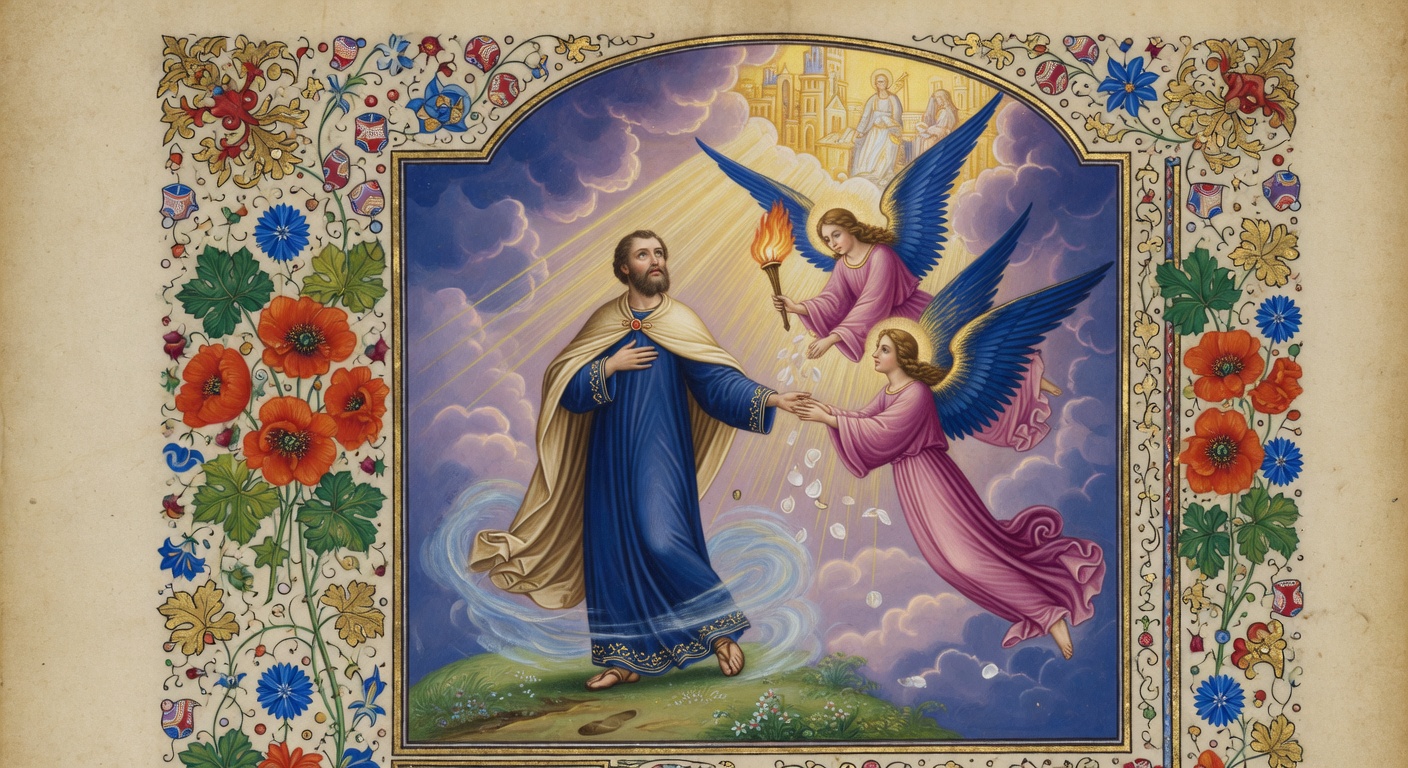
Enoch Taken to Heaven Beginning
○ TraditionalEnoch, who lived during the early generations of humanity as described in Genesis, maintained a close and faithful relationship with God throughout his 365 years. Unlike others in the genealogical record who died, Enoch was taken directly to heaven by God, bypassing the experience of death entirely. This extraordinary event signifies God's approval of unwavering faith and righteousness, serving as a profound example in Scripture of divine reward and the promise of eternal life. It is later referenced in the New Testament book of Hebrews as a testament to how faith can lead to being taken by God without seeing death.
-
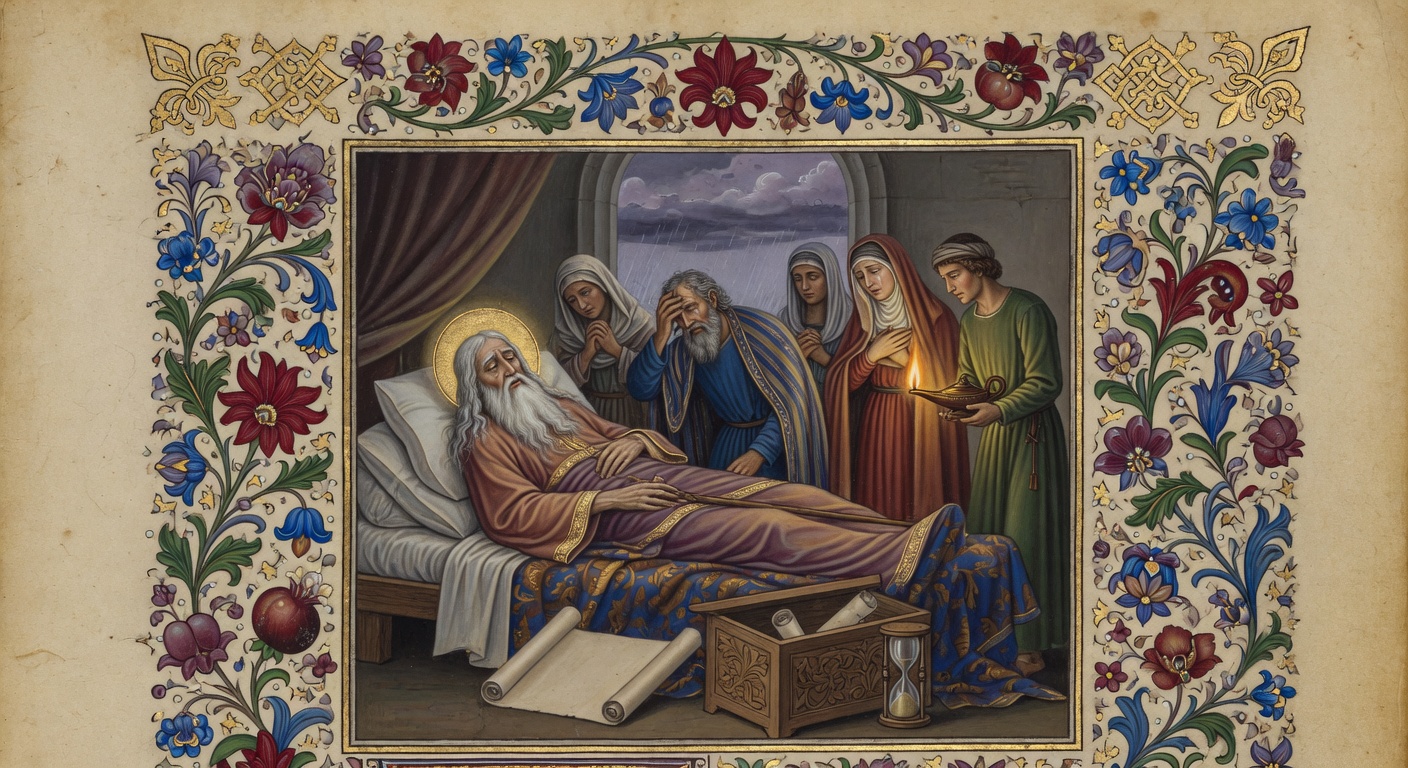
Methuselah Dies c. 2400 BC
○ TraditionalMethuselah, the son of Enoch and grandfather of Noah, is identified in Genesis 5 as the longest-lived person in the Bible, reaching 969 years of age. Biblical chronology places his death in the same year that the flood began, specifically during Noah’s 600th year, marking the close of the antediluvian period. This timing carries symbolic weight, as some interpreters connect the meaning of his name. “his death shall bring”. To the arrival of divine judgment through the flood. His passing thus underscores Scripture’s emphasis on the certainty of God’s word and the transition from an era of increasing human wickedness to one of preservation and renewal through Noah’s family.
-
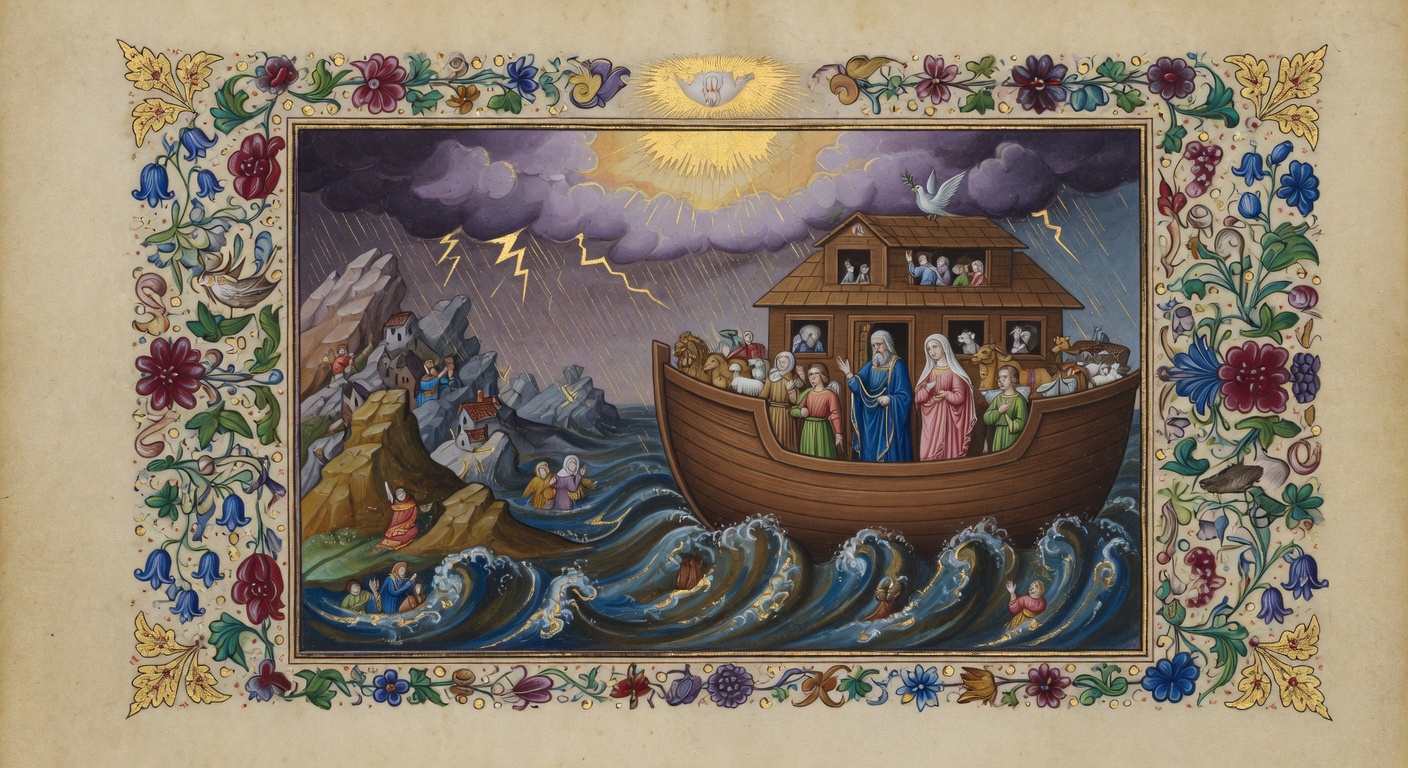
The Flood c. 2400 BC
○ TraditionalIn the biblical account, widespread human wickedness and corruption prompted God to send a devastating flood as an act of divine judgment to cleanse the earth and renew creation. Noah, a righteous man, obeyed God's command to build an ark that preserved his family along with pairs of every animal species through the waters that covered the land for months. This event holds lasting significance in Scripture as it demonstrates themes of justice, mercy, and covenant, with God promising never again to destroy the earth by flood and establishing the rainbow as a lasting sign of that commitment.
-
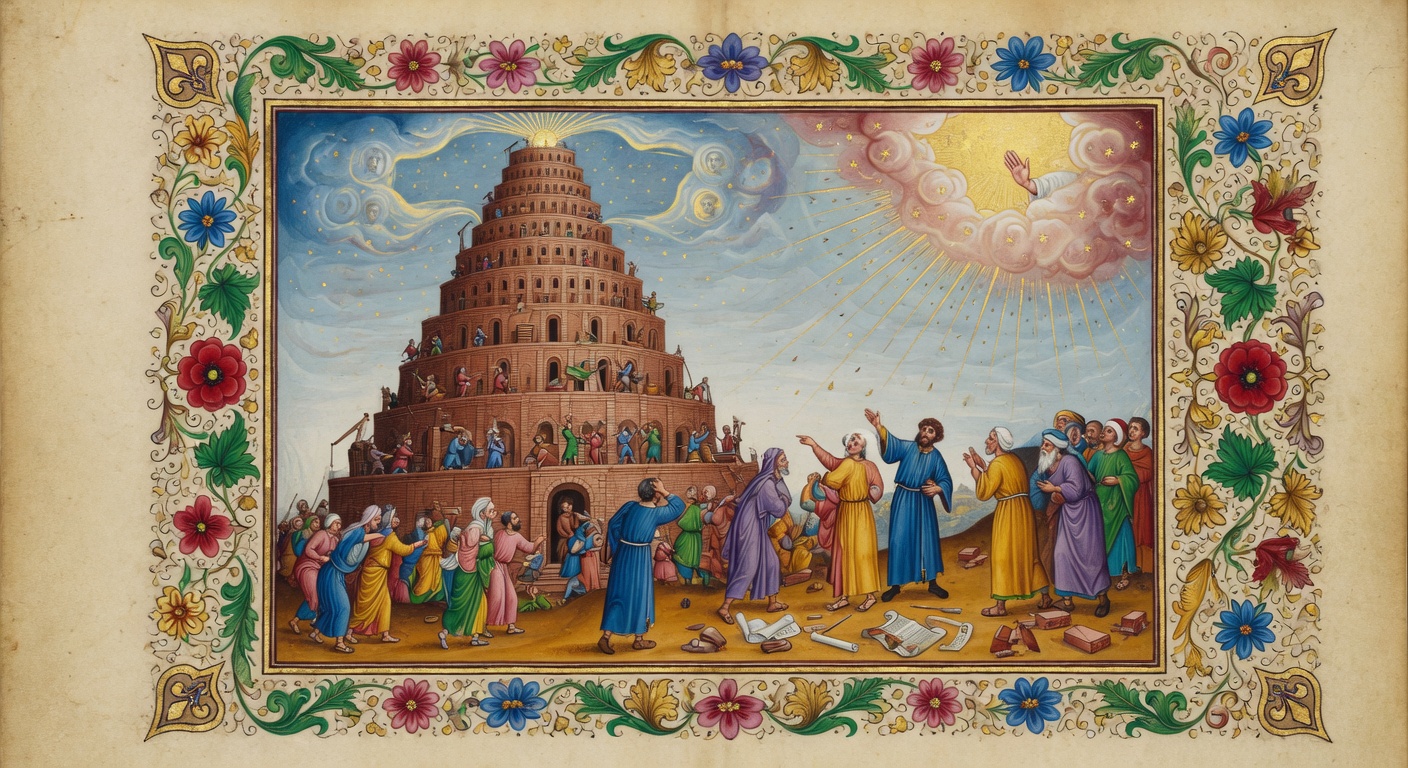
Tower of Babel c. 2200 BC
○ TraditionalFollowing the flood, humanity remained unified in language and purpose as they migrated eastward. They decided to build a city and a tower reaching to the heavens to make a name for themselves and prevent being scattered across the earth. In response to this act of pride and disobedience to God's command to fill the earth, God confused their languages, causing them to no longer understand one another and forcing them to disperse. This event, recorded in Genesis 11, explains the origin of diverse languages and nations while demonstrating God's sovereignty and setting the stage for the subsequent call of Abraham.
Patriarchs
-
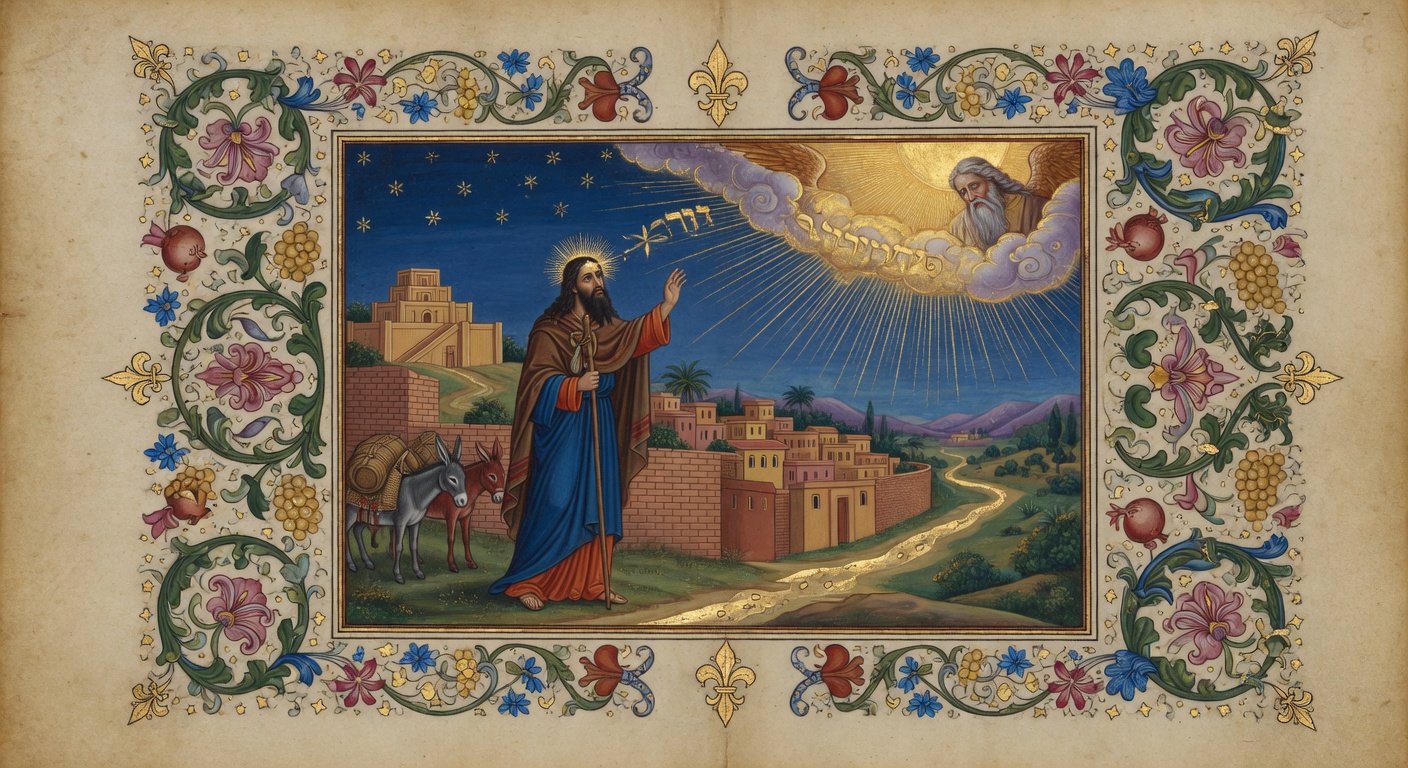
Call of Abraham c. 2091 BC
In the book of Genesis, God calls Abram, later renamed Abraham, to depart from his homeland in Mesopotamia and journey to an unknown land that God would reveal to him. This divine summons includes a profound promise that God would transform Abram into a great nation, bless him abundantly, and extend blessings to all the families of the earth through his descendants. The event is significant because it establishes the Abrahamic covenant, which forms the foundation for the nation of Israel and God's redemptive plan throughout Scripture. It represents a pivotal moment in biblical history, transitioning from the universal narratives of creation and the flood to the specific story of God's chosen people.
-
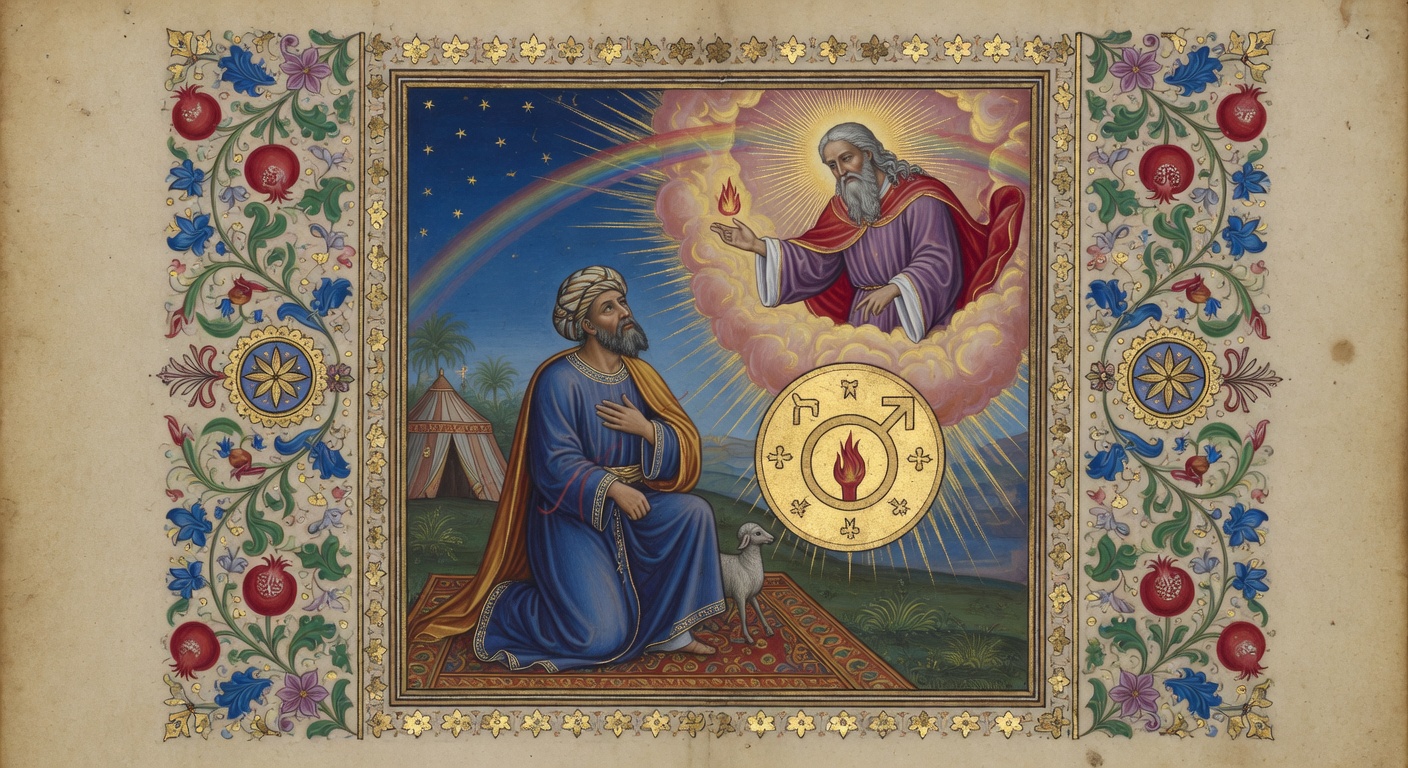
Abraham's Covenant c. 2067 BC
In the book of Genesis, God appears to Abraham and establishes a covenant promising that he will become the father of many nations, receive the land of Canaan, and that his descendants will be blessed. As a sign of this everlasting agreement, God commands Abraham and his male descendants to undergo circumcision. This event is significant because it marks the formal beginning of God's chosen people and underscores themes of faith, obedience, and divine faithfulness throughout Scripture. The Abrahamic covenant serves as a foundational promise that influences the narratives of the Old and New Testaments, ultimately pointing toward the coming of the Messiah.
-
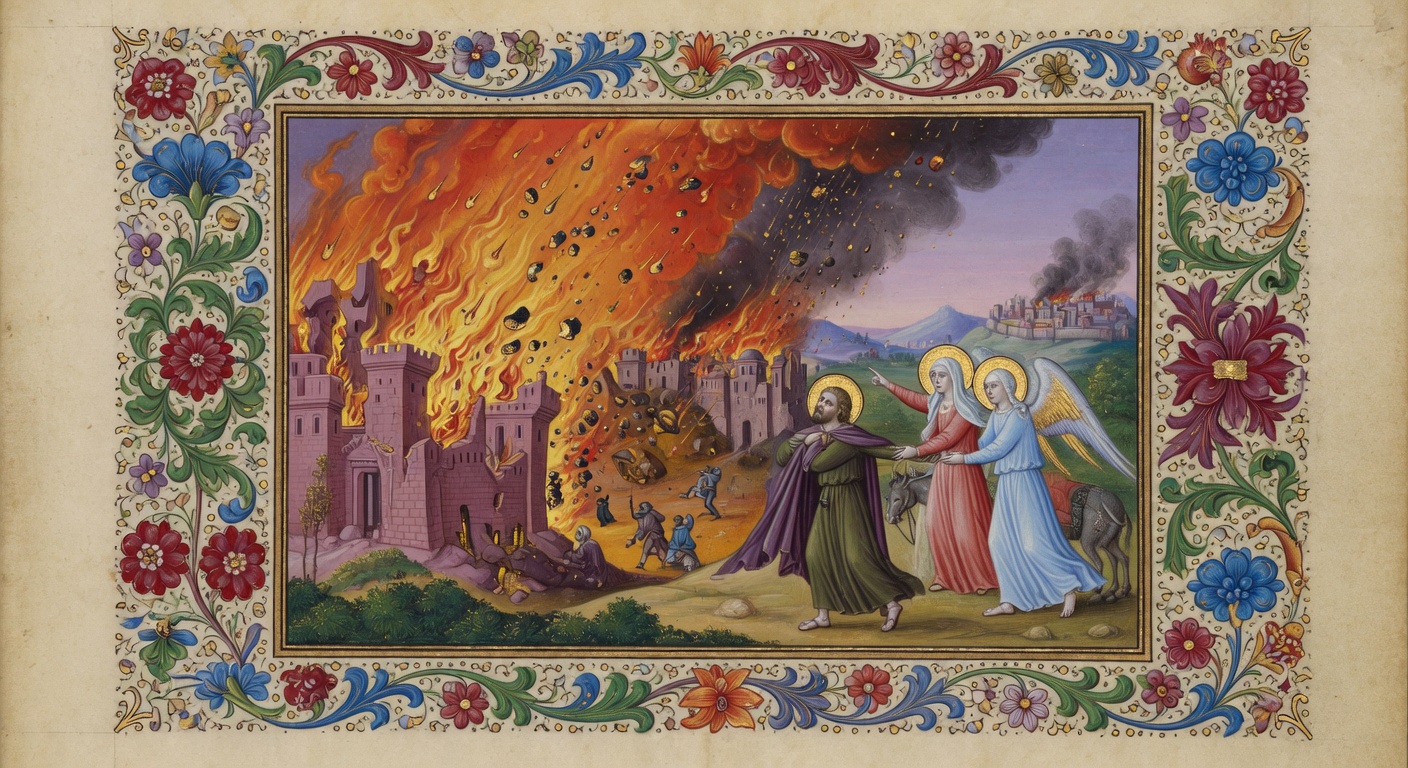
Destruction of Sodom c. 2067 BC
In the Book of Genesis, God determines to destroy the cities of Sodom and Gomorrah because of their extreme wickedness and immorality. Despite Abraham's plea for mercy on behalf of any righteous inhabitants, the cities are ultimately consumed by fire and brimstone from heaven as an act of divine judgment. Lot, Abraham's nephew who resided in Sodom, is rescued along with his family by angels, though his wife perishes after disobeying the command not to look back. This event underscores God's holiness, the certainty of judgment against sin, and serves as a recurring biblical warning about the consequences of rejecting righteousness, as referenced by Jesus and the apostles.
-
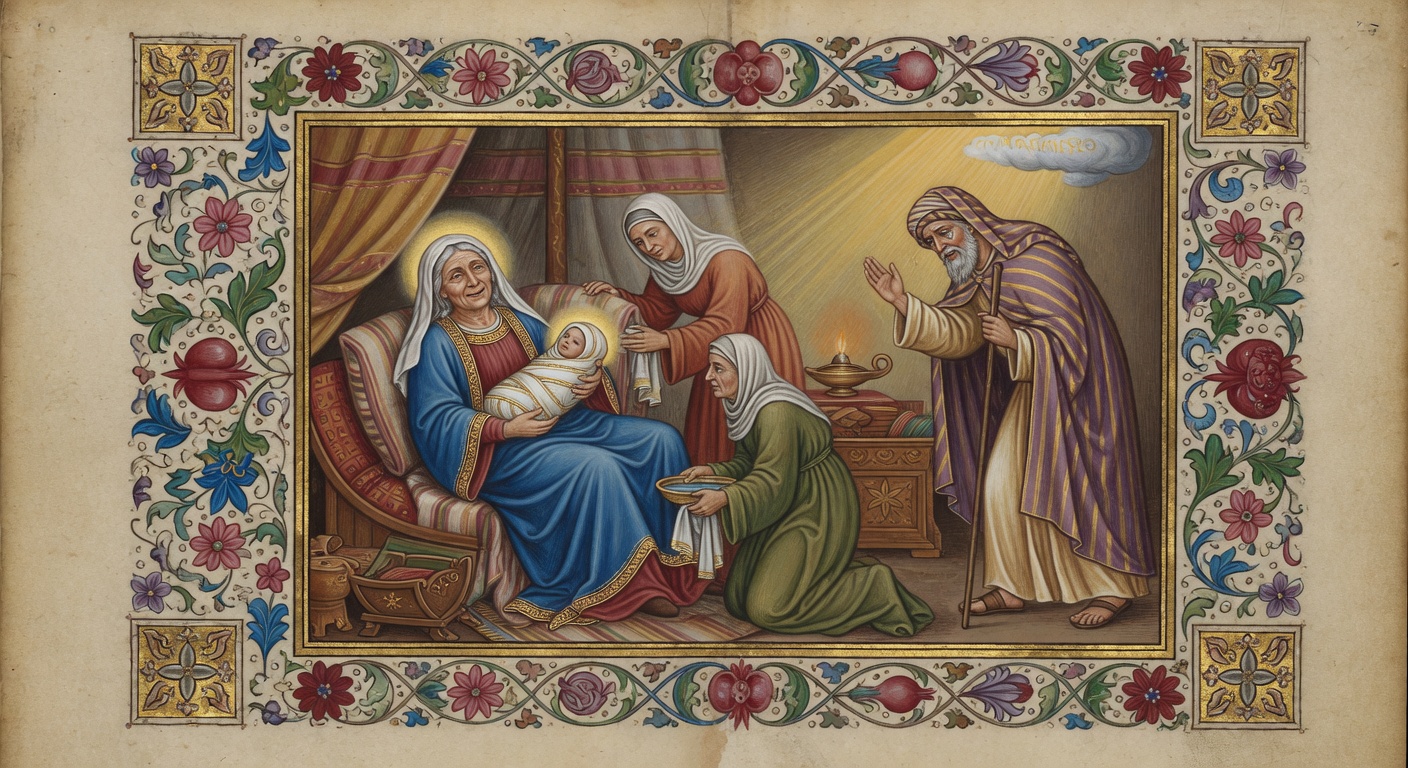
Birth of Isaac c. 2066 BC
In her old age, Sarah miraculously gave birth to a son named Isaac, as God had promised to Abraham many years earlier. This event occurred when Abraham was one hundred years old and Sarah was ninety, long after they had lost hope of having children together. The birth of Isaac fulfilled the covenant God made with Abraham, establishing him as the father of many nations through this child of promise rather than through Ishmael. In Scripture, this demonstrates God's faithfulness and power, serving as a foundational moment in the lineage leading to the nation of Israel and ultimately to Jesus Christ.
-
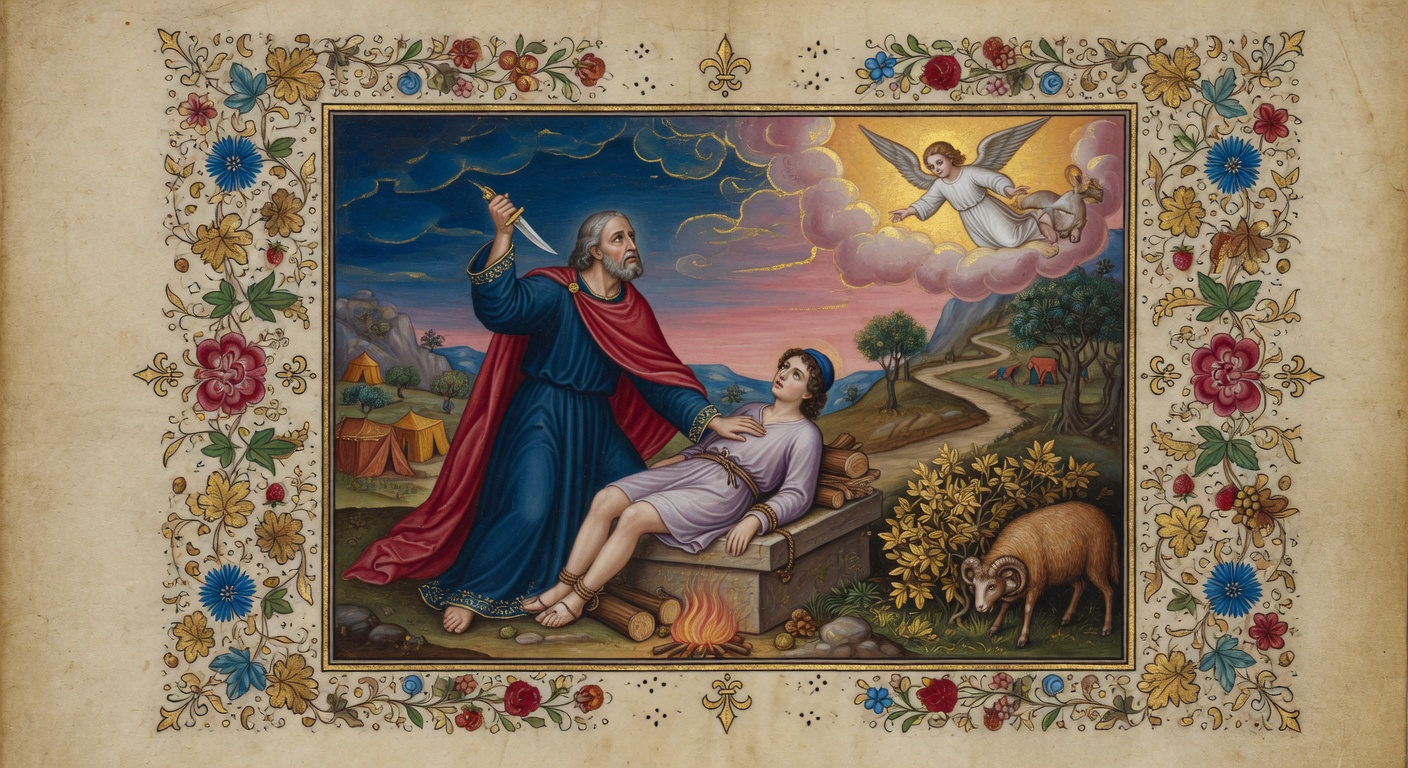
Binding of Isaac c. 2050 BC
In the biblical narrative from Genesis 22, God tests Abraham's faith by commanding him to sacrifice his son Isaac as a burnt offering on Mount Moriah. Abraham demonstrates complete obedience by journeying to the site, binding Isaac on the altar, and preparing to carry out the act until an angel of the Lord intervenes at the last moment, providing a ram caught in a thicket as a substitute. This event, known as the Akedah or Binding of Isaac, affirms the strength of the Abrahamic covenant through demonstrated trust in divine provision. Its significance in Scripture lies in establishing a model of faithful obedience while foreshadowing themes of substitutionary sacrifice that resonate throughout both the Hebrew Bible and New Testament interpretations.
-
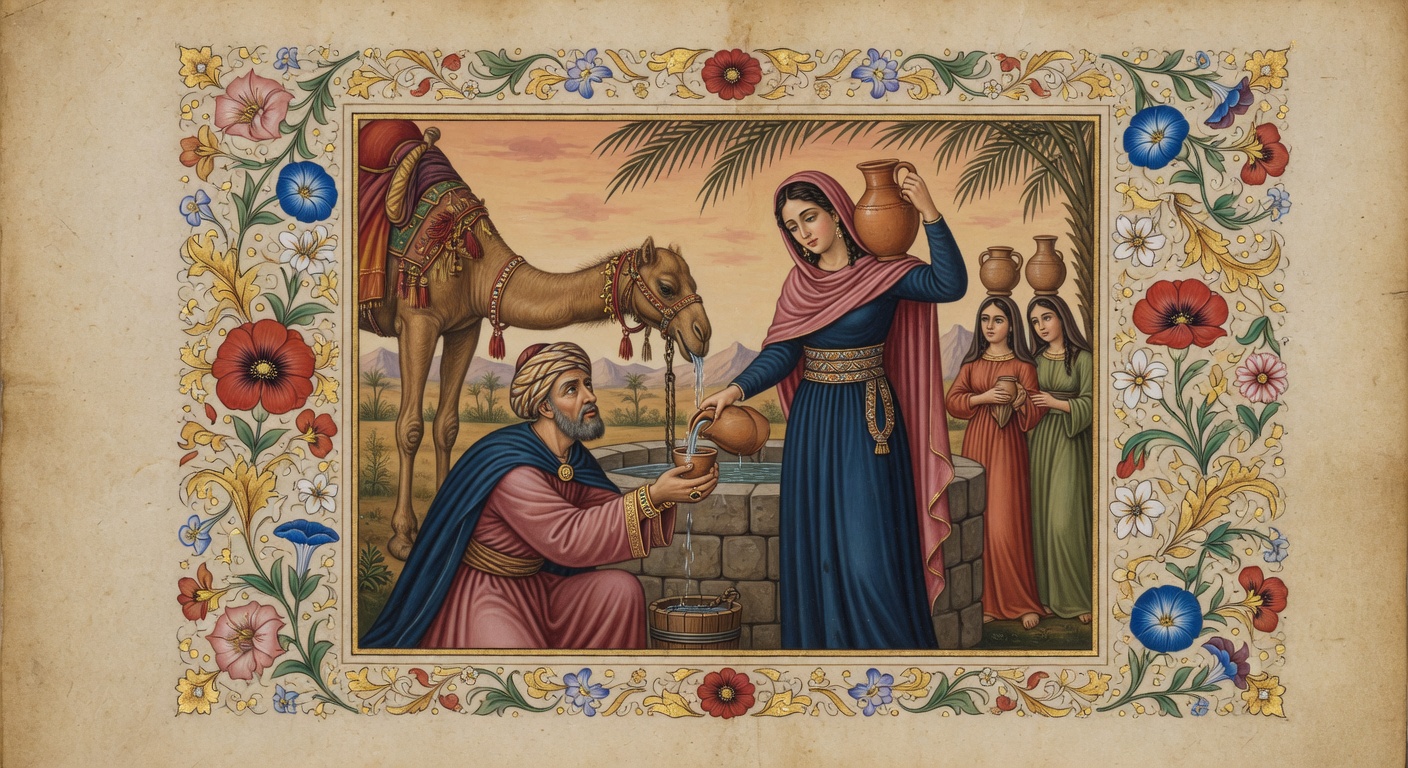
Rebekah Chosen c. 2026 BC
In the biblical account from Genesis 24, Abraham instructs his servant to travel to his homeland to find a suitable wife for his son Isaac, emphasizing the importance of maintaining the covenant lineage by avoiding Canaanite women. Upon arriving at a well in Nahor, the servant prays for divine guidance, and Rebekah appears, generously providing water for him and his camels, which serves as the confirming sign. She consents to return with the servant and marries Isaac, becoming an integral part of the patriarchal narrative. This event underscores God's providence in fulfilling His promises to Abraham through the continuation of his family line.
-
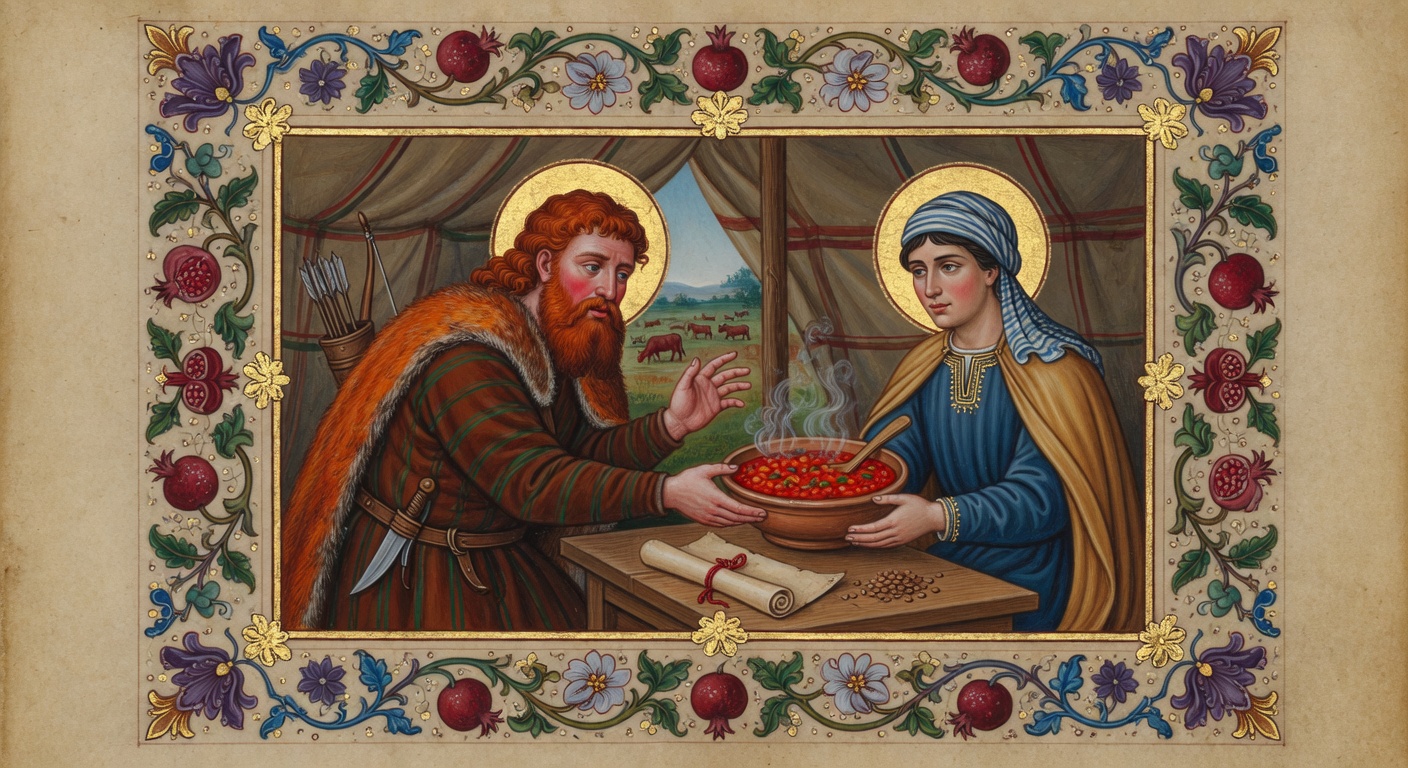
Esau Sells Birthright c. 1980 BC
In the book of Genesis, Esau and his younger twin brother Jacob were the sons of Isaac and Rebekah, with Esau as the firstborn entitled to the family birthright that carried leadership of the household and participation in God's covenant promises to Abraham. One day, after returning famished from the fields, Esau impulsively sold his birthright to Jacob in exchange for a meal of lentil stew, an act the text describes as despising his inheritance. This transaction holds significance in Scripture as it sets the stage for Jacob later receiving Isaac's blessing and illustrates the biblical theme of valuing spiritual legacy over immediate gratification. The event also aligns with the prophecy given to Rebekah that the older son would serve the younger, shaping the lineage leading to the nation of Israel.
-
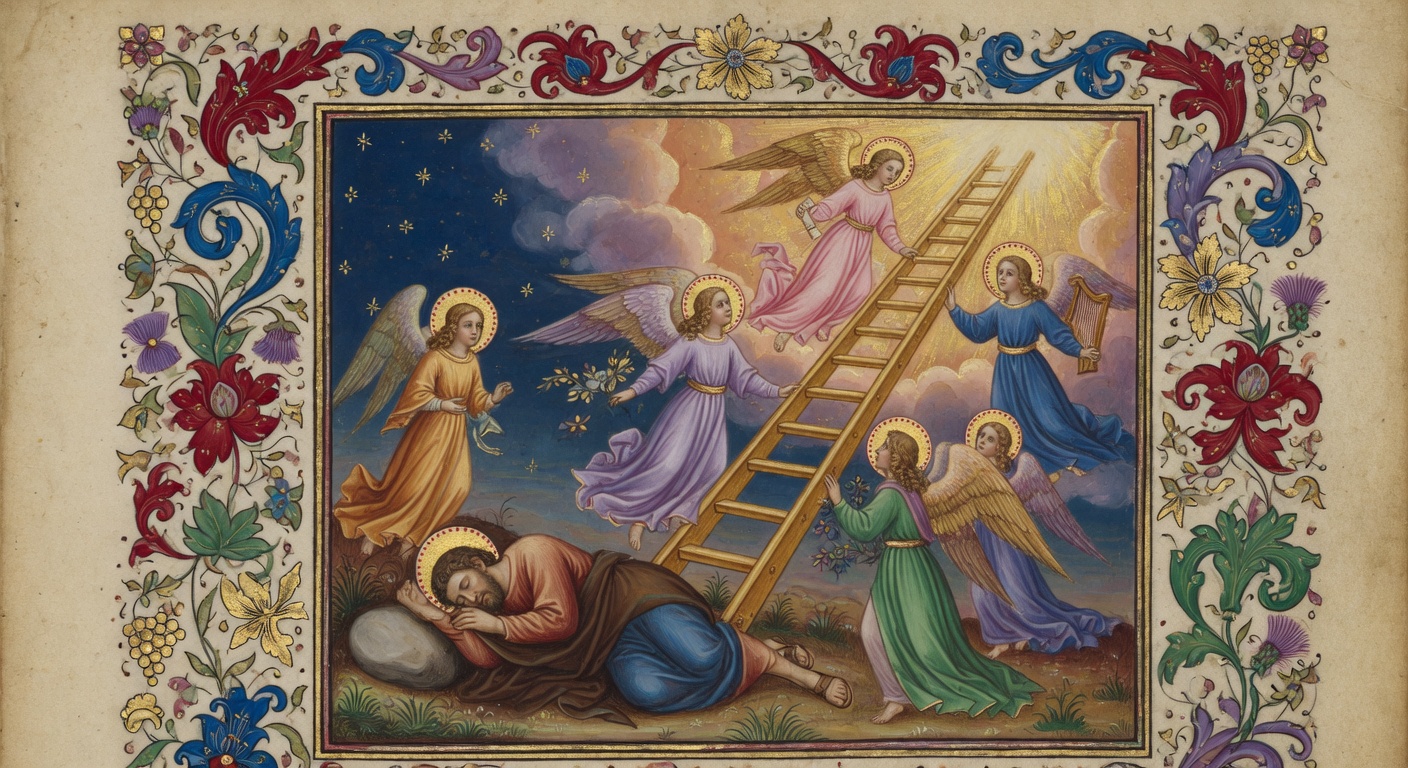
Jacob's Ladder c. 1900 BC
Jacob, fleeing from his brother Esau after obtaining the family blessing, stops to rest at a site later known as Bethel and dreams of a ladder stretching from earth to heaven with angels ascending and descending. In the dream, God stands above the ladder and reaffirms the Abrahamic covenant, promising Jacob numerous descendants, possession of the land, and personal protection as part of the divine plan. Upon awakening, Jacob anoints a stone pillar, names the place Bethel meaning "house of God," and vows faithfulness in response to the revelation. This event matters in Scripture because it confirms Jacob's role in the patriarchal lineage, establishes Bethel as a sacred location, and illustrates God's ongoing communication with humanity through divine encounters.
-
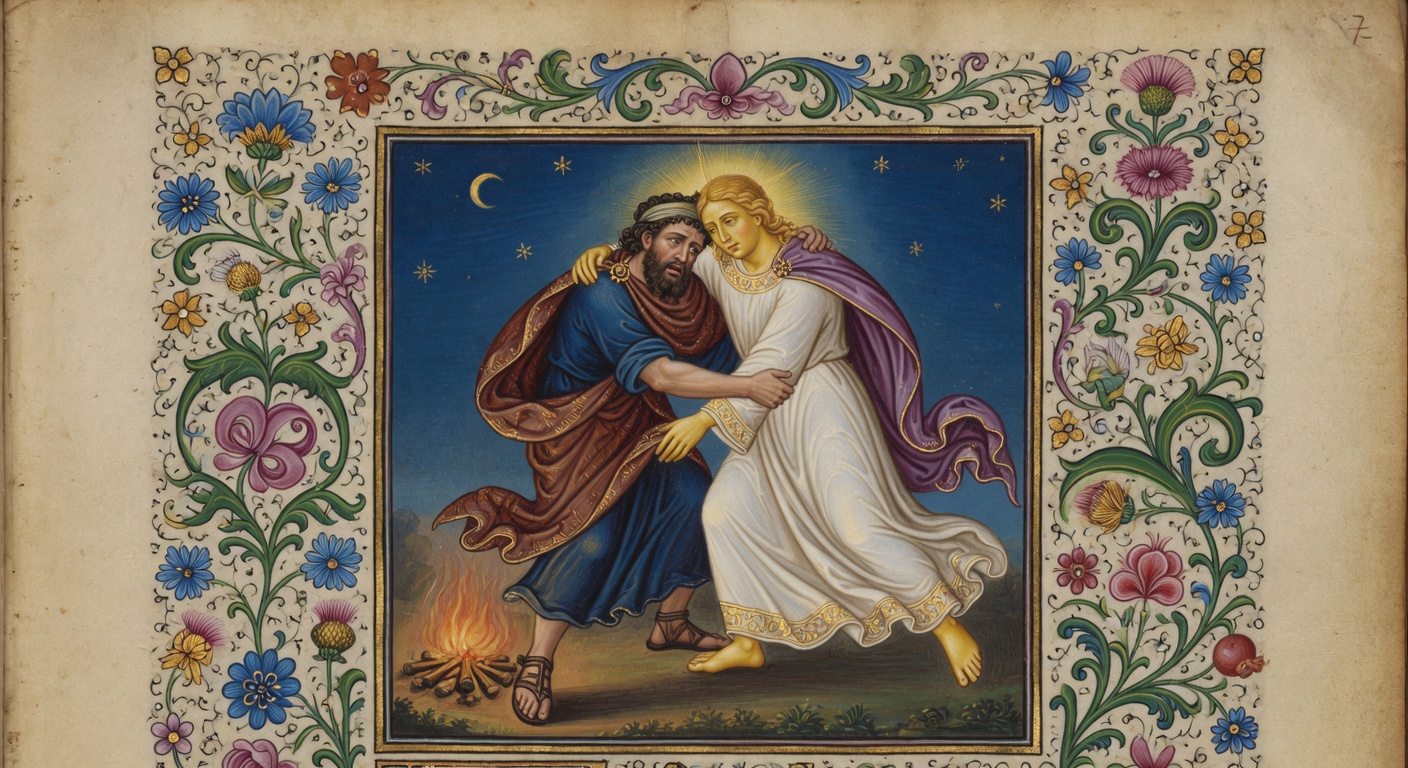
Jacob Wrestles with God c. 1880 BC
In the Book of Genesis, as Jacob prepares to reunite with his brother Esau after years of estrangement, he encounters a mysterious divine being while alone by the Jabbok River. Throughout the night, Jacob wrestles with this figure, refusing to release him until receiving a blessing, during which his hip is dislocated. The being then renames Jacob as Israel, meaning "he who struggles with God," symbolizing his perseverance and transformation. This event holds profound significance in Scripture as it marks the origin of the name for the nation of Israel and underscores themes of divine encounter and covenantal identity.
-
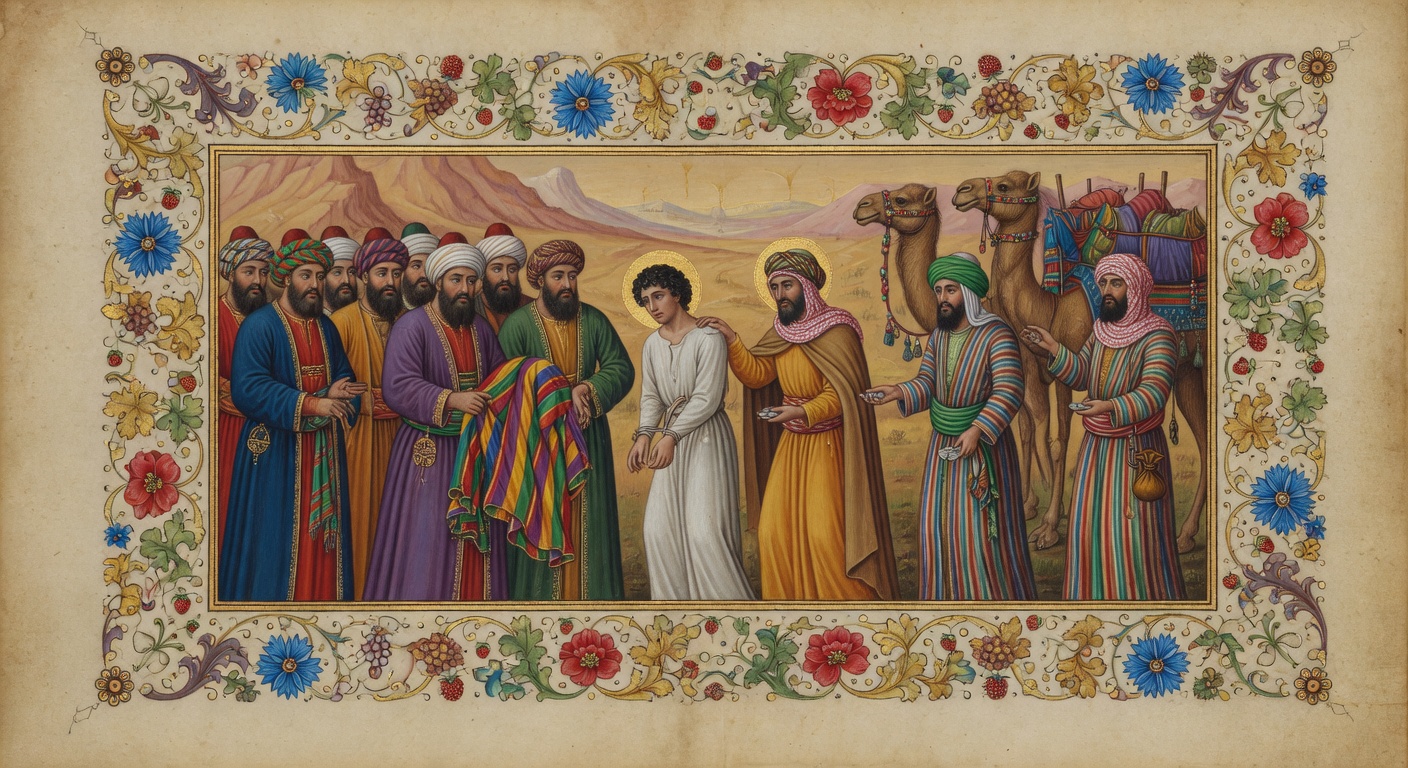
Joseph Sold into Slavery c. 1898 BC
Joseph, the favored son of Jacob, aroused jealousy among his brothers due to his dreams of authority and his distinctive coat. Enraged, his brothers initially planned to kill him but instead sold him to a caravan of Midianite traders heading to Egypt, where he was purchased as a slave. This pivotal event in Genesis 37 initiates Joseph's journey that leads to his rise as a ruler in Egypt, ultimately preserving the Israelite family line during famine and demonstrating God's sovereign providence in fulfilling His promises to the patriarchs.
-
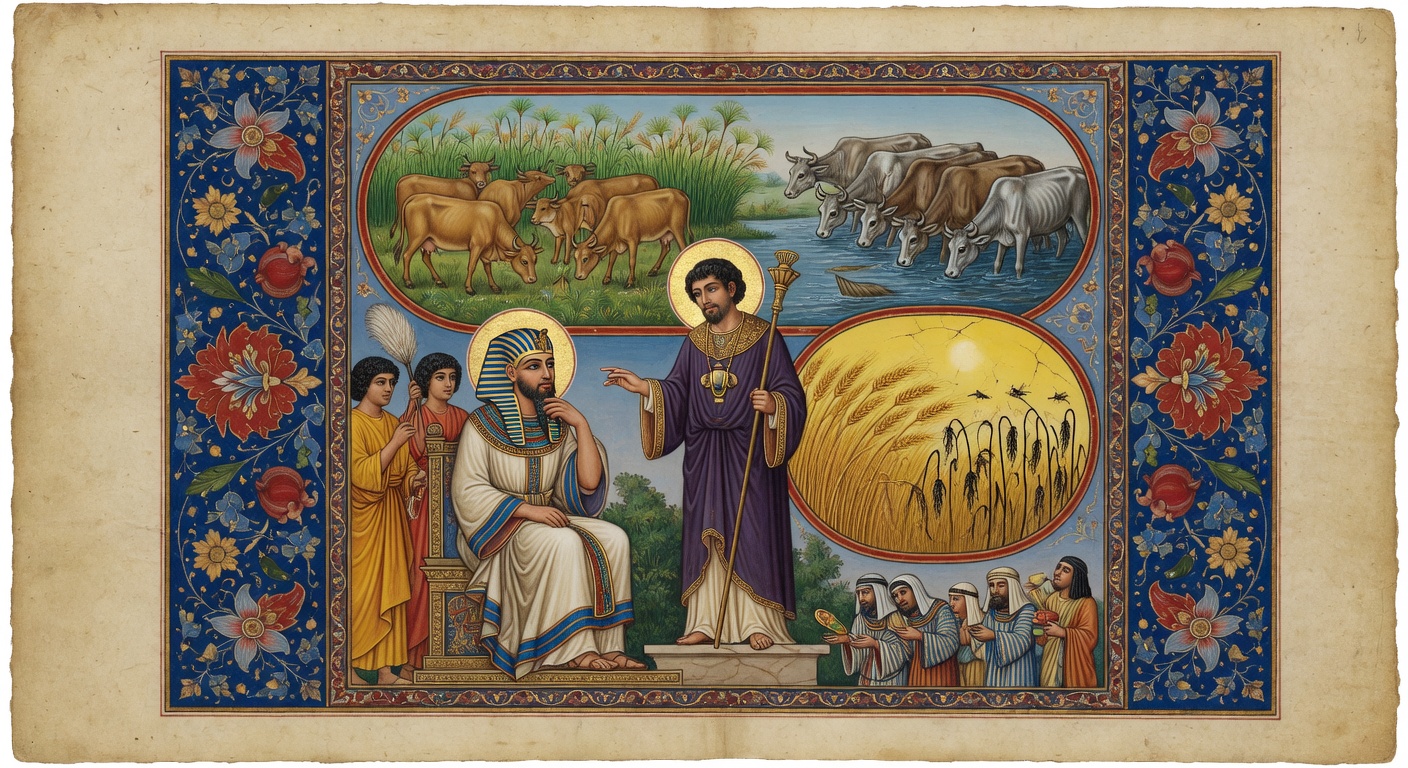
Joseph Interprets Dreams c. 1885 BC
Joseph, who had been sold into slavery by his brothers and imprisoned in Egypt, was summoned to interpret Pharaoh's troubling dreams after the royal cupbearer recalled his earlier ability to explain dreams accurately. Joseph explained that the dreams foretold seven years of abundant harvests followed by seven years of severe famine, advising Pharaoh to appoint a wise administrator to store surplus grain during the prosperous period. Impressed by this insight and Joseph's character, Pharaoh elevated him to second-in-command over all Egypt, granting him authority to implement the plan. This event holds key significance in Scripture as it demonstrates God's providential guidance in preserving the line of Abraham through famine, ultimately reuniting Joseph with his family and relocating the Israelites to Egypt.
-
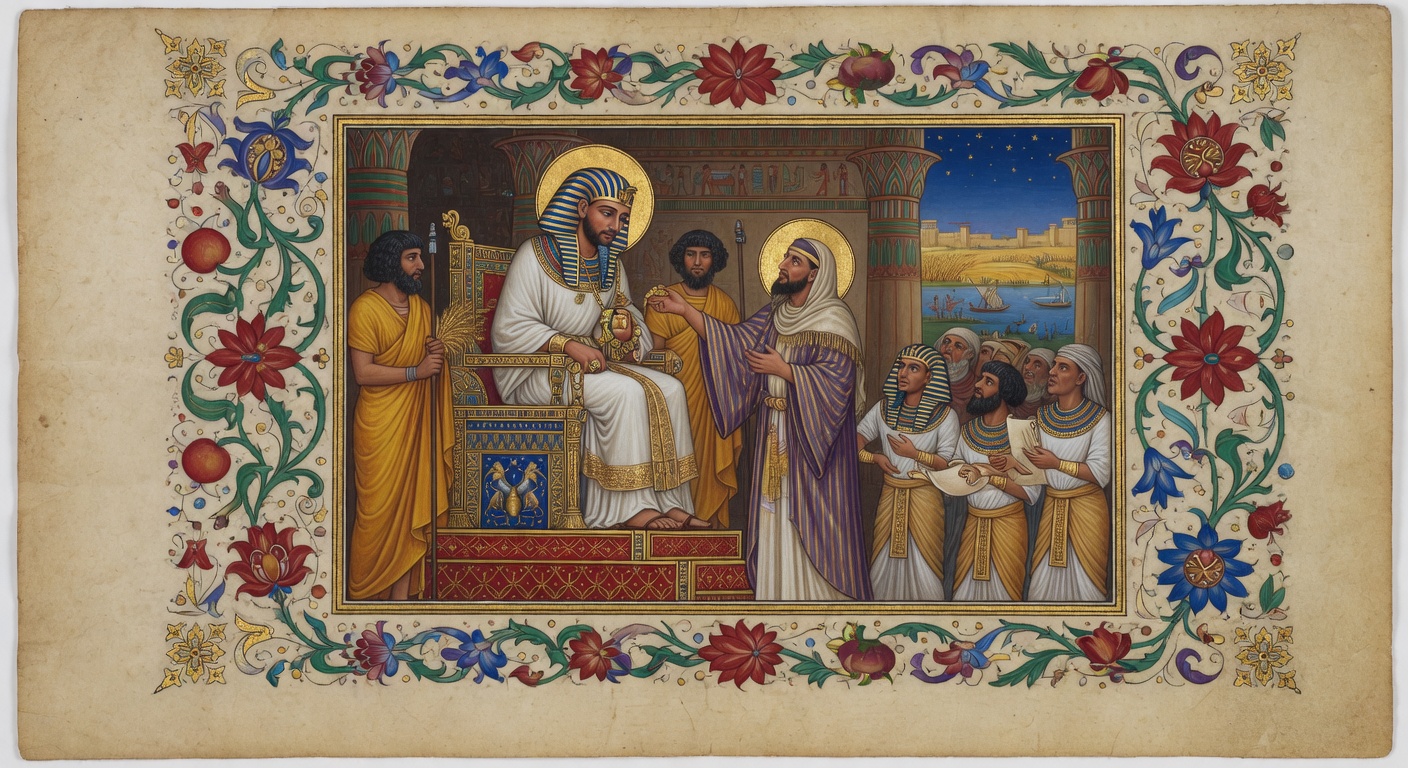
Joseph Becomes Ruler of Egypt c. 1885 BC
In the book of Genesis, Joseph interprets Pharaoh's troubling dreams as a prediction of seven years of abundant harvests followed by seven years of severe famine. Recognizing Joseph's divine insight and wisdom, Pharaoh elevates him from prison to the position of second-in-command over all Egypt, granting him authority to manage the nation's grain stores during the coming crisis. This event is significant because it allows Joseph to implement a plan that saves Egypt and surrounding nations from starvation, ultimately leading to the reunion with his family and the migration of the Israelites to Egypt. It underscores God's providential care in preserving His chosen people and fulfilling His covenant promises.
-
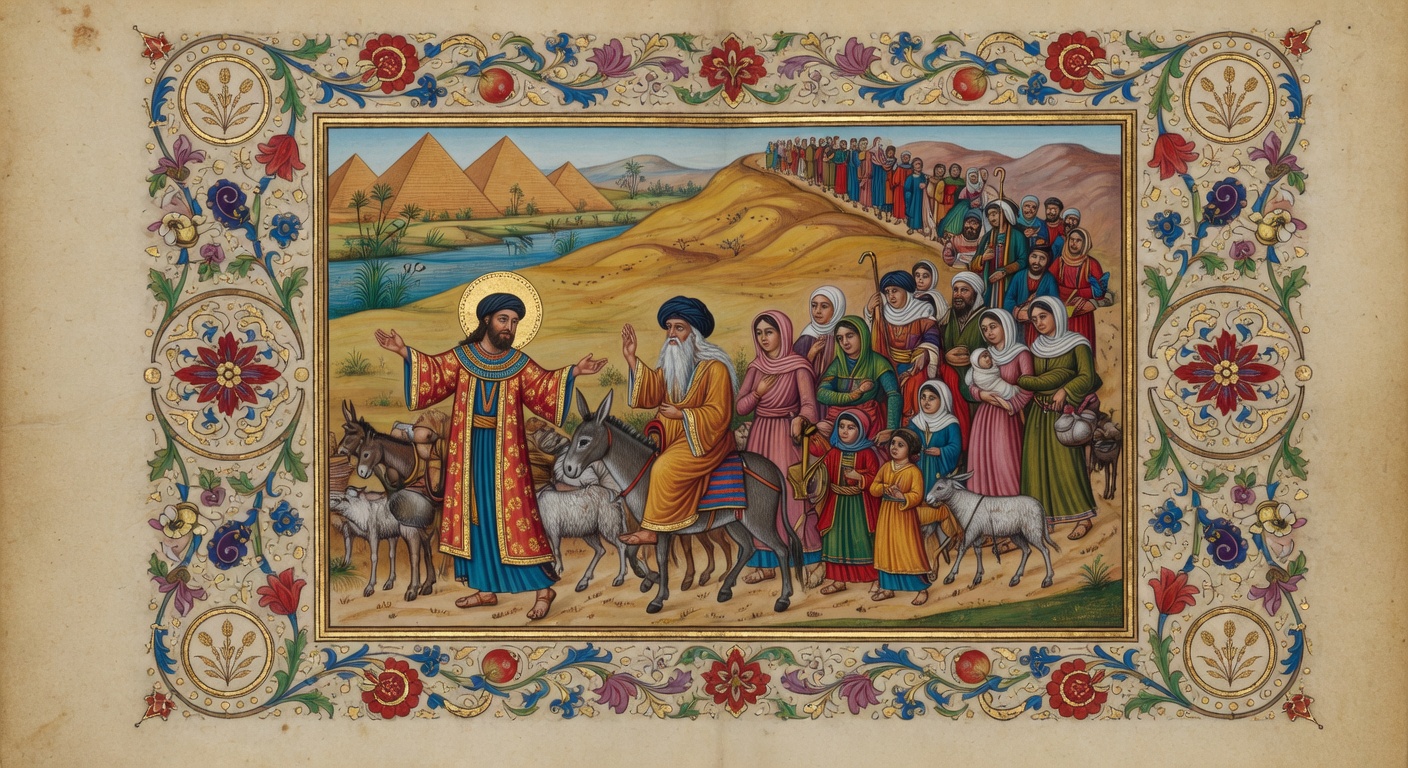
Jacob's Family Moves to Egypt c. 1876 BC
During a widespread famine in Canaan, Jacob and his family of seventy members journeyed to Egypt at the invitation of Joseph, who had risen to power there and provided them with fertile land in Goshen for settlement. This relocation allowed the family to reunite with Joseph after years of separation and ensured their survival through the years of scarcity. The event holds significant importance in Scripture as it represents the beginning of the Israelites' sojourn in Egypt, fulfilling God's covenant promise to Abraham regarding his descendants and setting the stage for the future Exodus narrative.
Exodus & Conquest
-
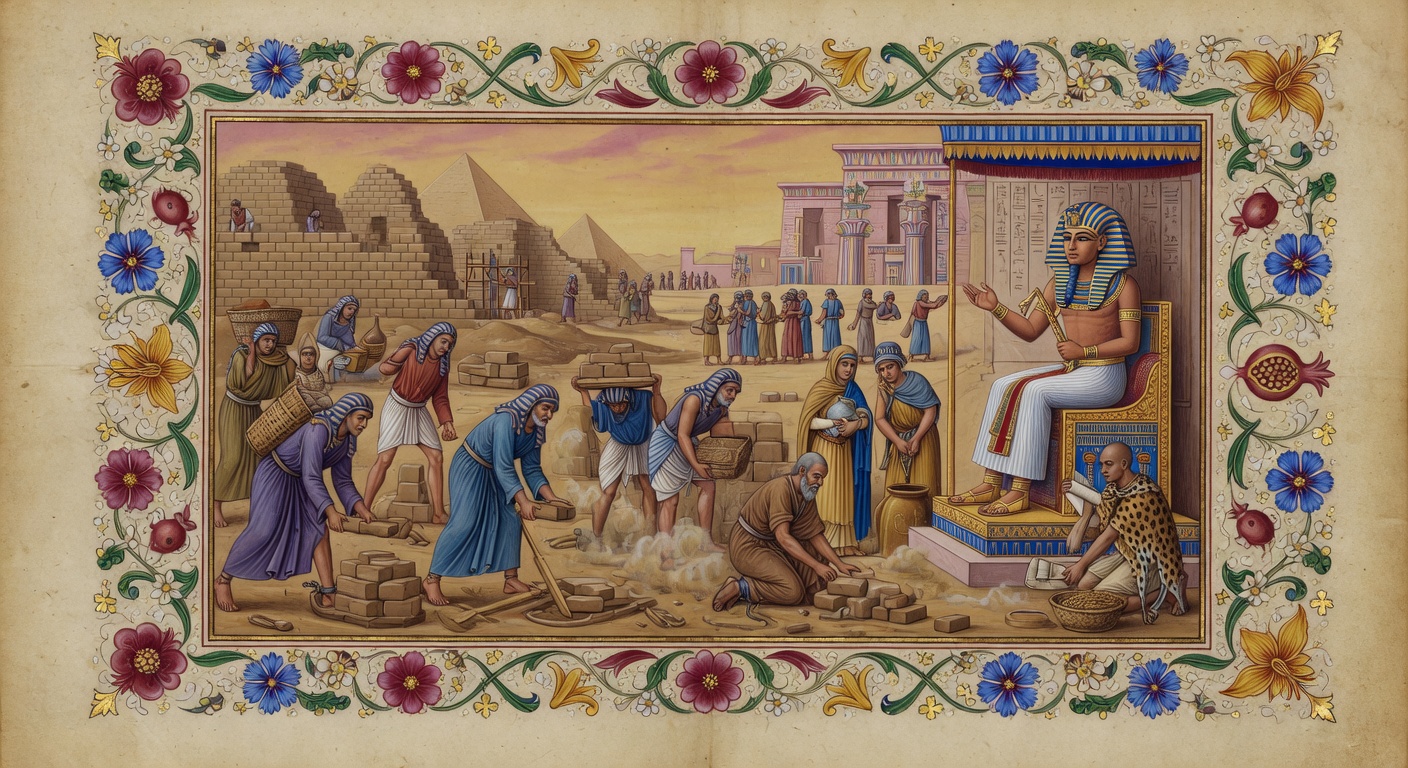
Israel's Slavery in Egypt c. 1550–1446 BC
Following the death of Joseph and his generation, a new Pharaoh rose to power in Egypt who had no regard for the contributions of the Israelites' ancestors. Fearing their growing numbers and potential alliance with enemies, he subjected the Hebrews to harsh slavery, forcing them to construct cities and endure brutal labor under oppressive taskmasters. This period of bondage, lasting several centuries, tested the faith of God's people but ultimately highlighted divine faithfulness as God prepared to fulfill His covenant promises through deliverance. The event underscores key biblical themes of suffering, redemption, and God's sovereignty over nations, setting the stage for the Exodus narrative central to Israel's identity and Scripture's message of salvation.
-
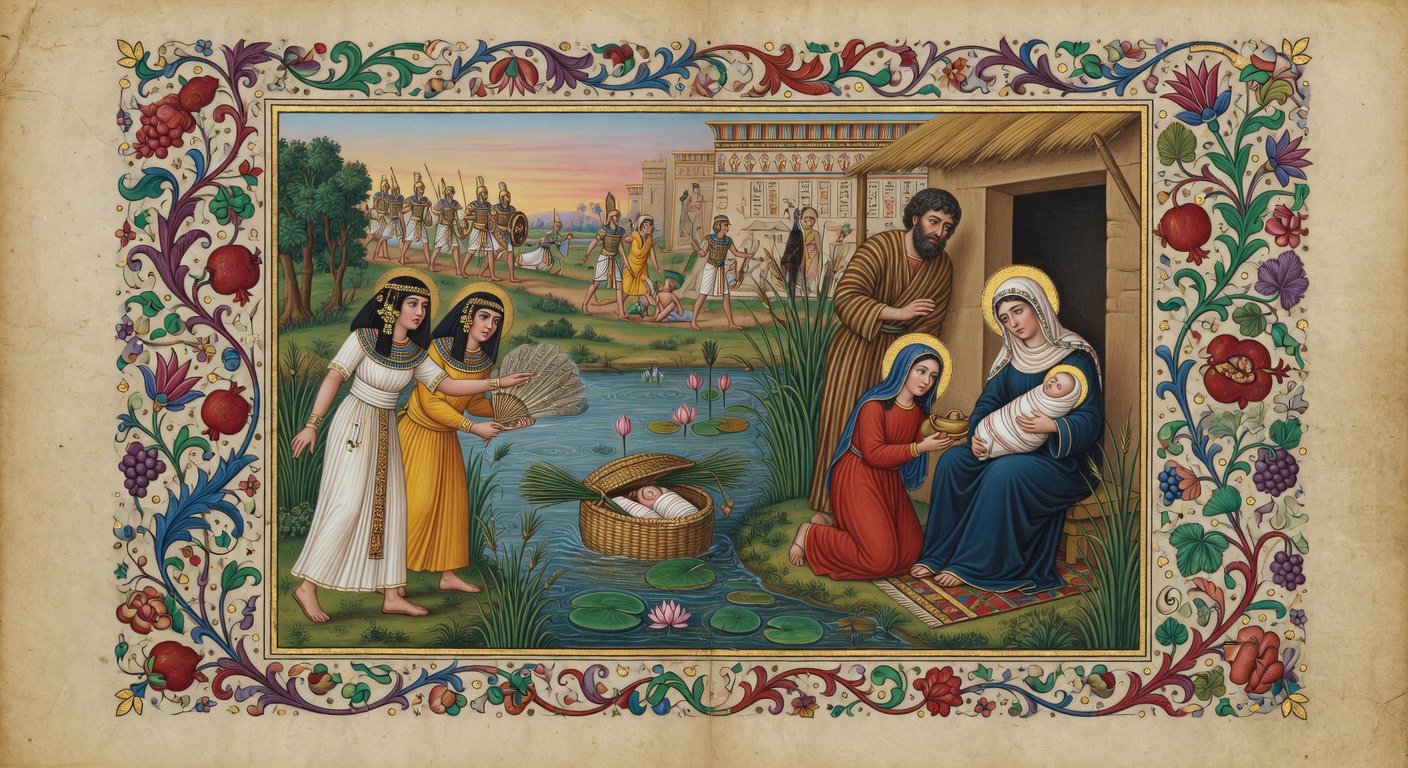
Birth of Moses c. 1526 BC
During the period of Israelite enslavement in Egypt, Pharaoh issued a decree ordering the death of all newborn Hebrew boys out of fear that the growing population would threaten his rule. Moses' mother hid him for three months before placing him in a waterproof basket among the reeds of the Nile River, where he was discovered and adopted by Pharaoh's daughter, who named him and raised him in the royal household. This event highlights God's providential protection amid oppression and marks the beginning of Moses' life, positioning him as the future deliverer who would lead the Exodus and receive the Law at Sinai as detailed in the book of Exodus.
-
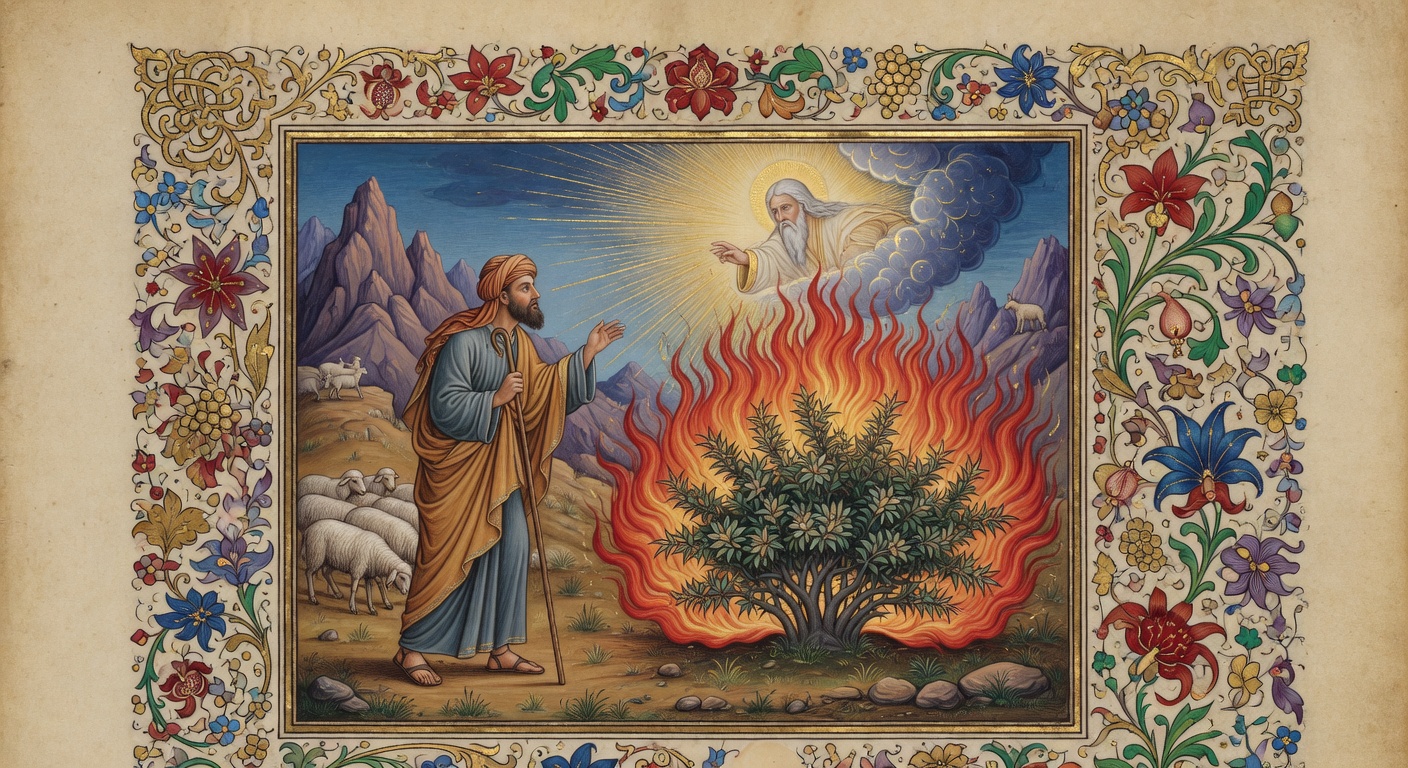
The Burning Bush c. 1446 BC
In the book of Exodus, while Moses tended sheep near Mount Horeb, also called Sinai, he witnessed a bush engulfed in flames yet remaining unconsumed, prompting him to approach out of curiosity. God then spoke directly from the bush, identifying Himself as the God of Abraham, Isaac, and Jacob, revealing His name as "I AM WHO I AM," and commissioning Moses to confront Pharaoh and lead the Israelites out of Egyptian bondage. This theophany holds central importance in Scripture because it launches the Exodus narrative, affirms God's covenant faithfulness, and establishes Moses as the prophet through whom divine law and redemption would be mediated to Israel. The event further highlights themes of divine initiative and human reluctance that recur throughout the biblical story of salvation.
-
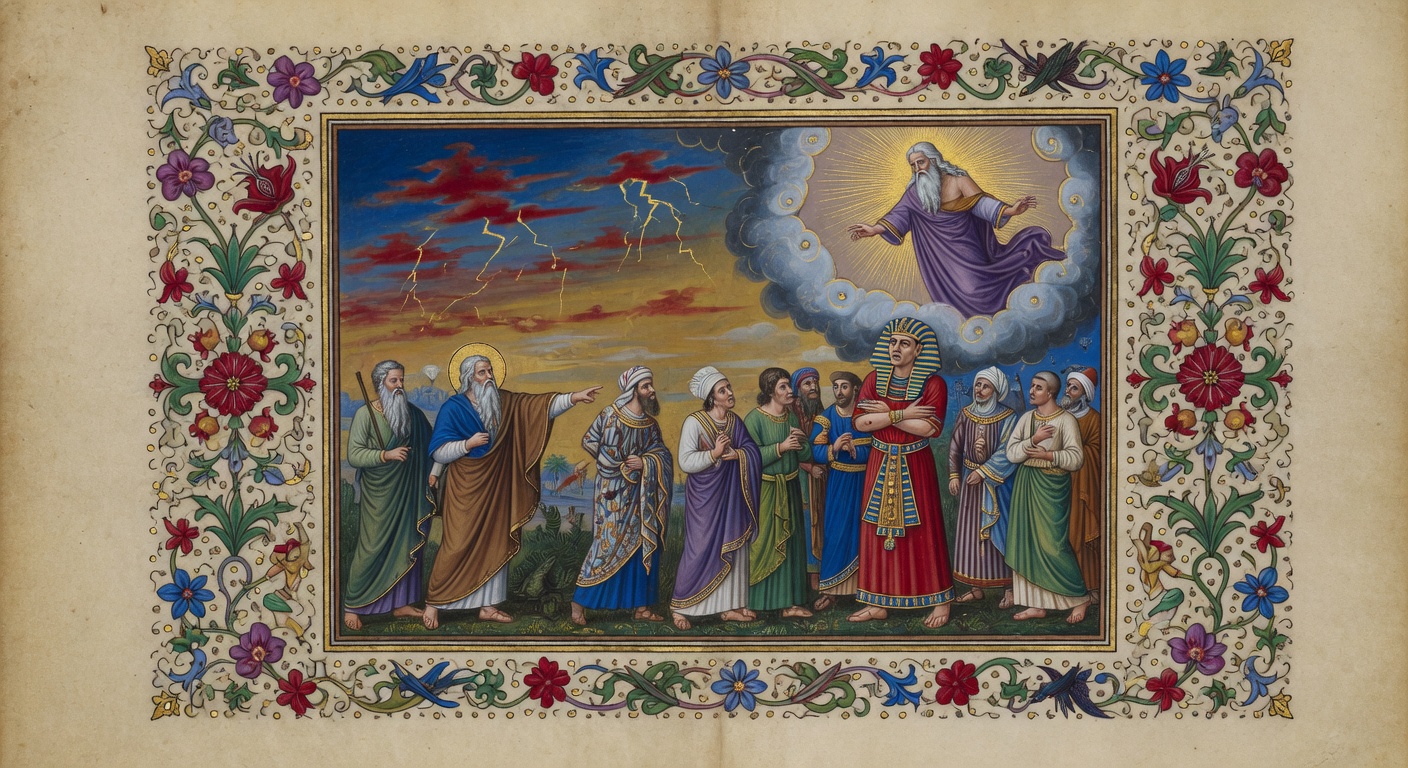
The Ten Plagues c. 1446 BC
The Ten Plagues occurred during the Israelites' enslavement in Egypt. God commissioned Moses to demand their release from Pharaoh, who repeatedly refused despite warnings. In response, God unleashed a series of ten escalating plagues, turning the Nile to blood, sending frogs, gnats, and flies, killing livestock, causing boils, hail, locusts, and darkness, and culminating in the death of Egypt's firstborn sons, while sparing the Israelites in the land of Goshen. These events demonstrated God's supreme power over Egypt's deities and forced Pharaoh to free the Hebrew people, leading directly to the Exodus and the institution of the Passover. In Scripture, the plagues underscore themes of divine judgment, redemption, and covenant faithfulness, serving as a foundational narrative for both Jewish and Christian traditions of God's deliverance.
-
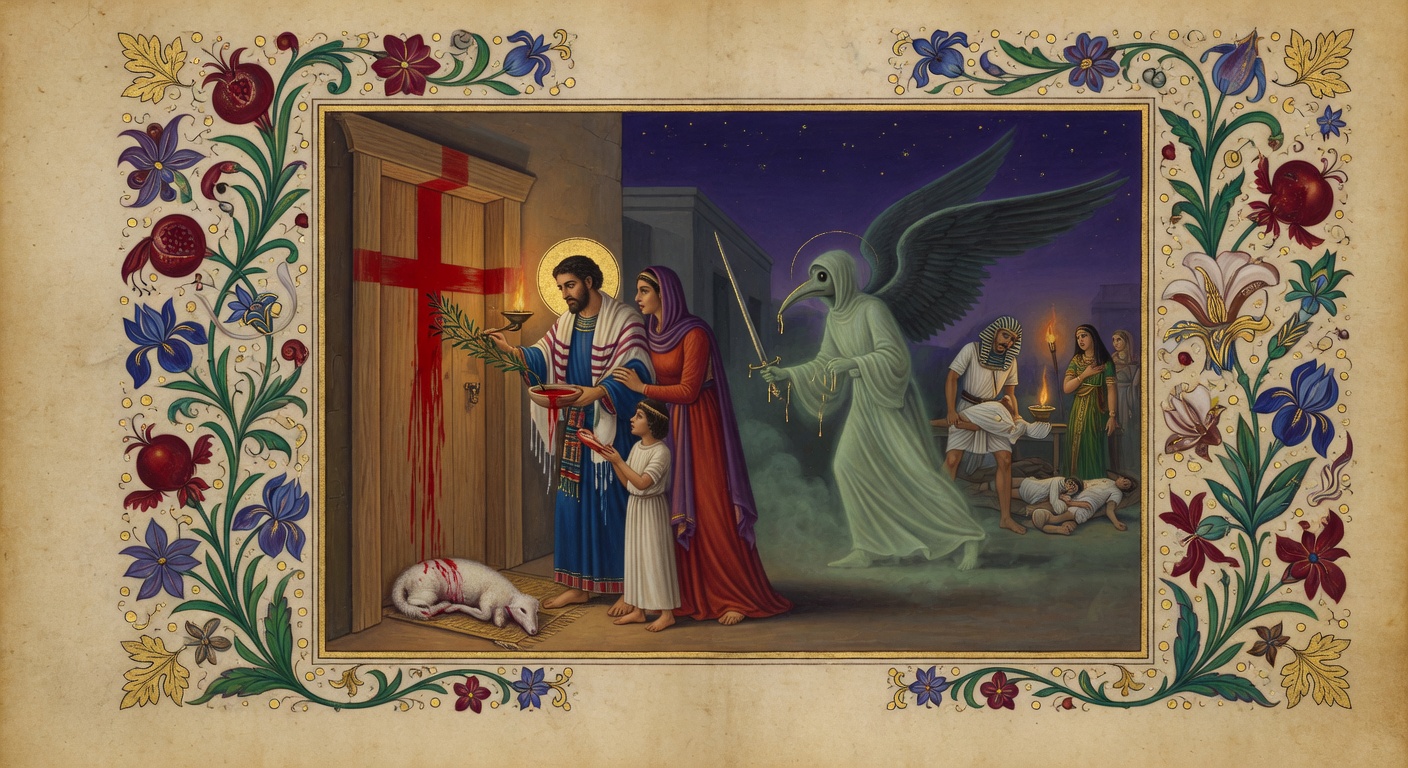
The Passover c. 1446 BC
In the book of Exodus, God sends ten plagues upon Egypt to compel Pharaoh to release the Israelites from slavery. The final plague results in the death of every firstborn in the land, but the Israelites are spared when they apply the blood of a sacrificed lamb to their doorposts as instructed by God. This event marks the institution of the Passover, a sacred meal eaten in haste that commemorates God's protection and deliverance. Its significance extends throughout Scripture as a foreshadowing of redemption and the establishment of a covenant people freed to worship the Lord.
-
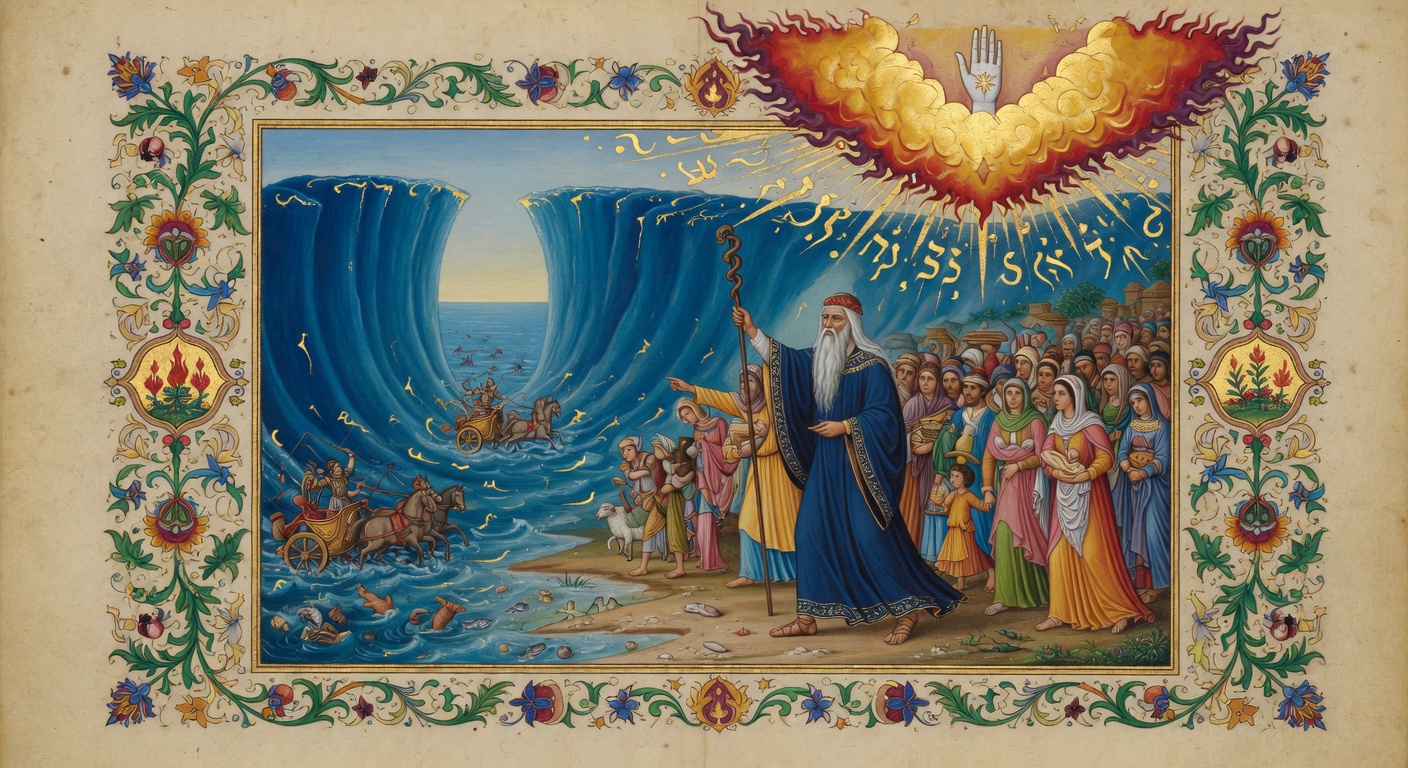
The Exodus c. 1446 BC
The Exodus refers to the event in which God, through the leadership of Moses, rescued the Israelites from their enslavement under the Pharaoh of Egypt by sending a series of plagues that culminated in the death of the firstborn, prompting their release. Following their departure, the Israelites crossed the Red Sea on dry land after it was miraculously parted, escaping the pursuing Egyptian army and beginning their journey toward the Promised Land. This pivotal moment underscores God's faithfulness to His covenant with Abraham and serves as a foundational narrative in Scripture, symbolizing redemption and frequently referenced in the laws, psalms, and prophetic writings to remind the people of God's saving power.
-
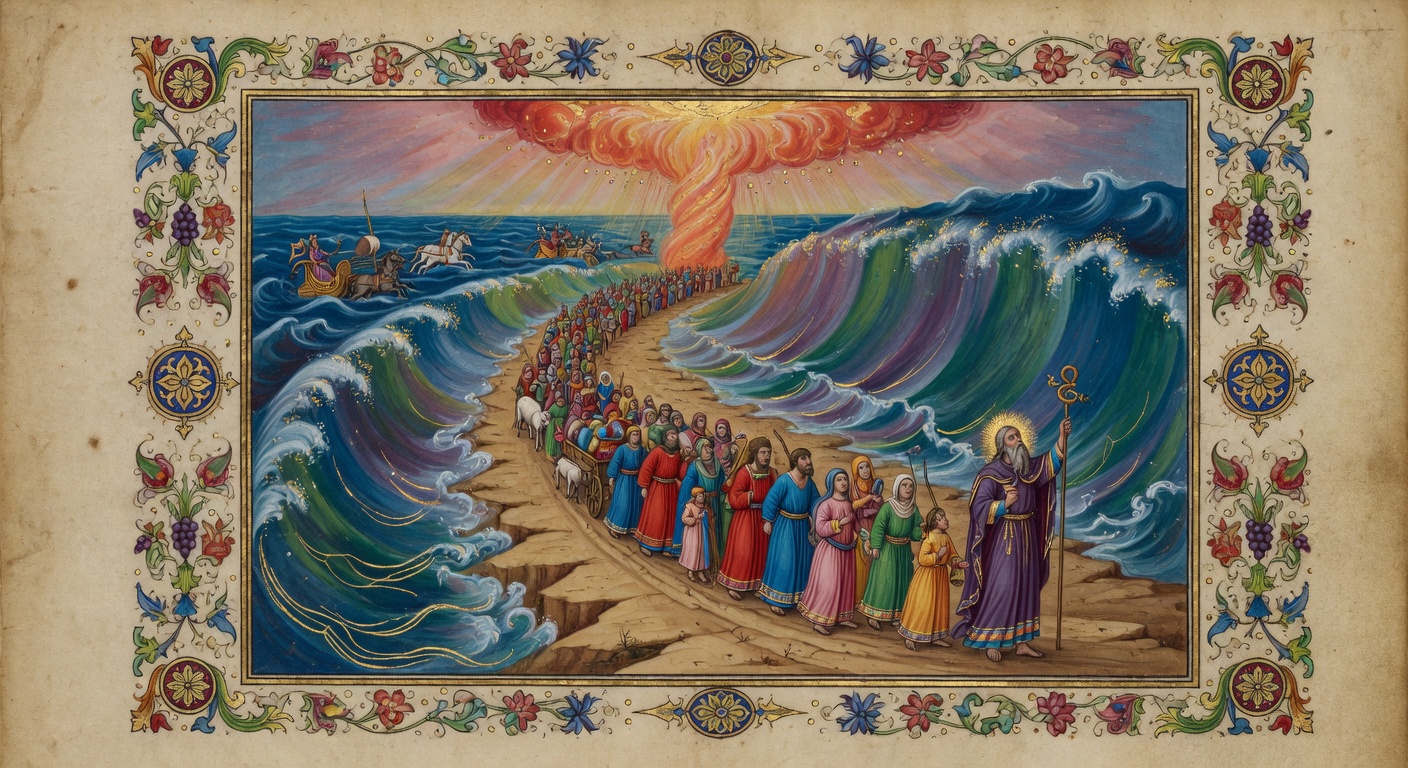
Crossing the Red Sea c. 1446 BC
Following their exodus from slavery in Egypt, the Israelites found themselves trapped between the Red Sea and the approaching Egyptian army led by Pharaoh. In response to Moses' obedience, God miraculously parted the waters of the sea, allowing the people to cross on dry land while the waters stood as walls on either side. Once the Israelites had safely passed, the sea closed back upon the pursuing Egyptians, destroying their forces and securing the Israelites' freedom. This event holds profound significance in Scripture as a testament to God's sovereign power and faithfulness in delivering His chosen people, frequently referenced as a pivotal act of redemption that foreshadows themes of salvation throughout the Bible.
-
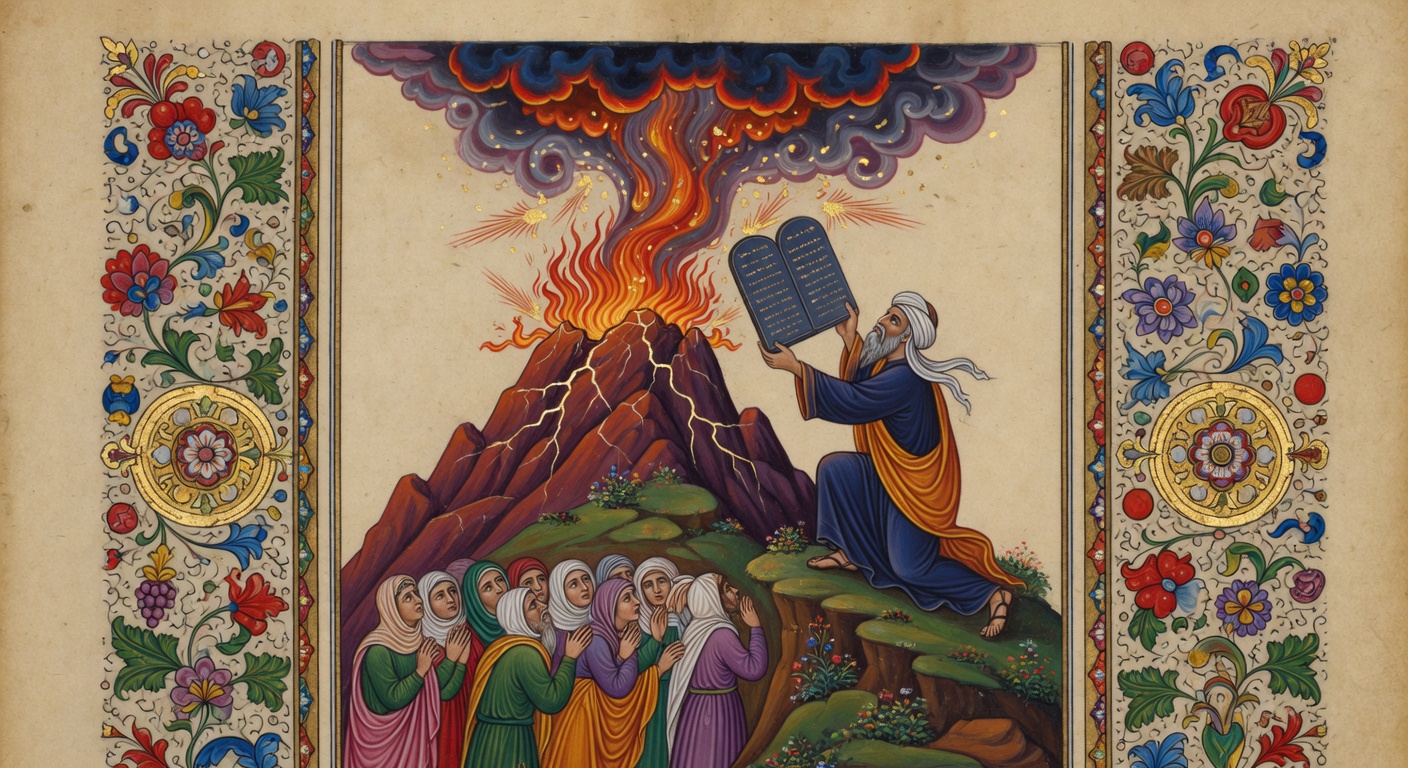
Giving of the Law c. 1446 BC
Following the Israelites' exodus from Egypt, God led them to Mount Sinai to establish a formal covenant, setting them apart as His chosen nation bound by divine standards. Amid thunder, lightning, fire, and a thick cloud, God descended on the mountain and gave Moses the Ten Commandments inscribed on stone tablets, along with additional moral, civil, and ceremonial laws to govern the people. This revelation underscored God's holiness and justice while providing a clear framework for Israel's worship, ethics, and community life. In Scripture, the event highlights humanity's inability to keep God's perfect standards, pointing forward to the need for grace and a greater mediator fulfilled in Christ.
-
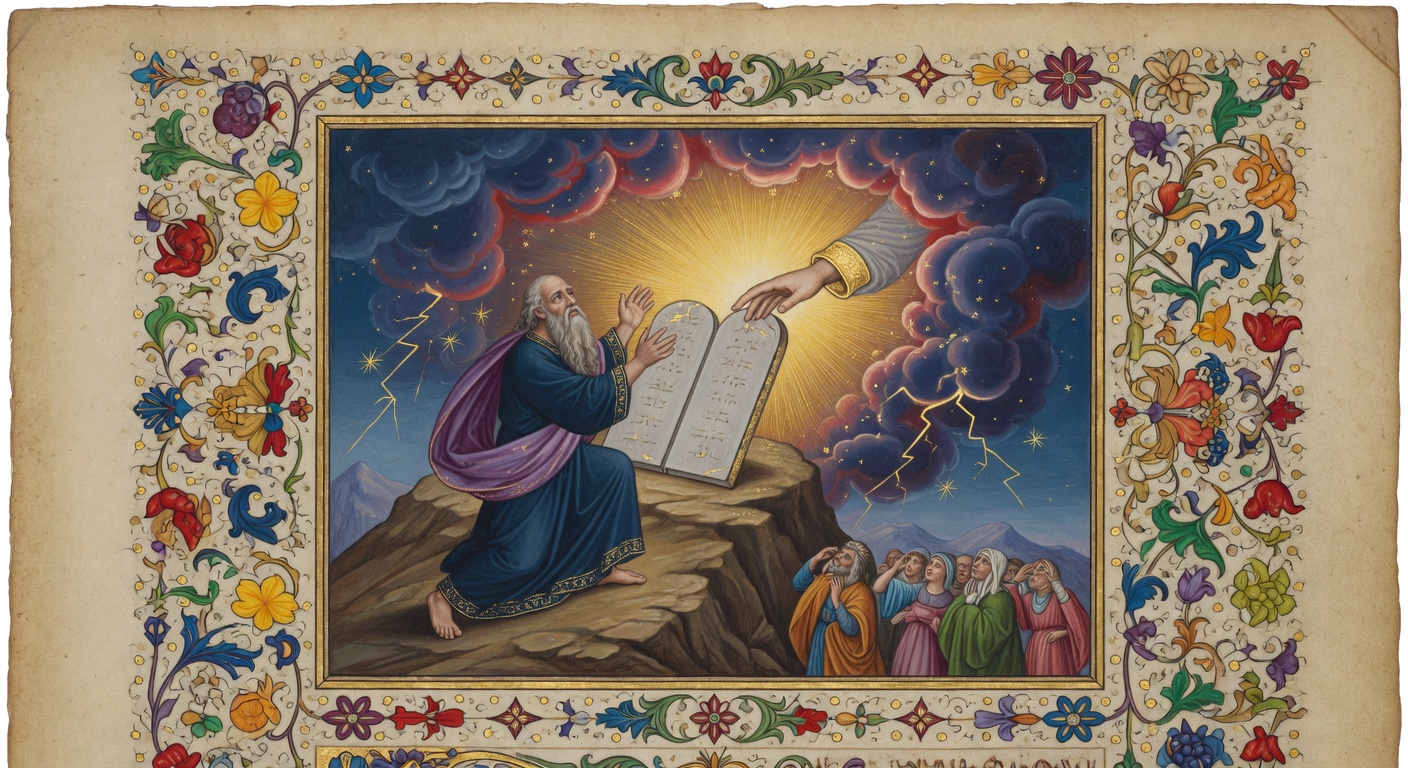
Ten Commandments c. 1446 BC
Following the Israelites' exodus from Egypt, God led them to Mount Sinai where He summoned Moses to receive divine laws. On the mountain, God inscribed the Ten Commandments on stone tablets, outlining moral principles such as the worship of one God, honoring parents, and prohibitions against murder, theft, and adultery. This event established the covenant between God and Israel, serving as a foundational moment in Scripture that underscores the importance of obedience to divine law. The commandments are repeatedly referenced throughout the Bible, influencing both Old and New Testament teachings on righteousness and faith.
-
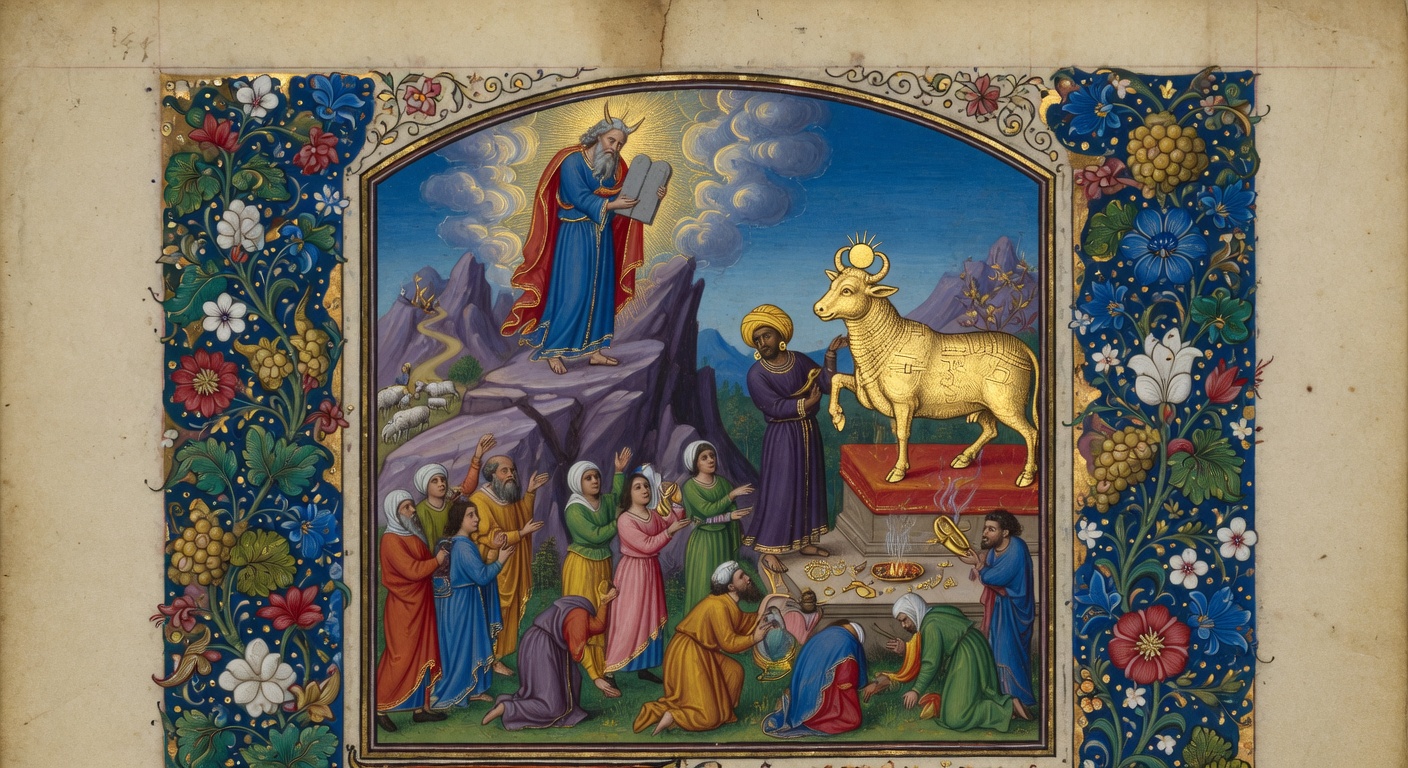
Golden Calf c. 1446 BC
While Moses remained on Mount Sinai receiving the law from God, the Israelites grew impatient and pressured Aaron to create an idol for them to worship. Aaron fashioned a golden calf from their jewelry, and the people offered sacrifices to it, proclaiming it as the god that delivered them from Egypt. This act of idolatry directly violated the commandments being given on the mountain and provoked God's wrath, leading Moses to intercede on behalf of the people to prevent their destruction. The event underscores the recurring theme of Israel's struggle with faithfulness and serves as a warning against turning away from the one true God in Scripture.
-
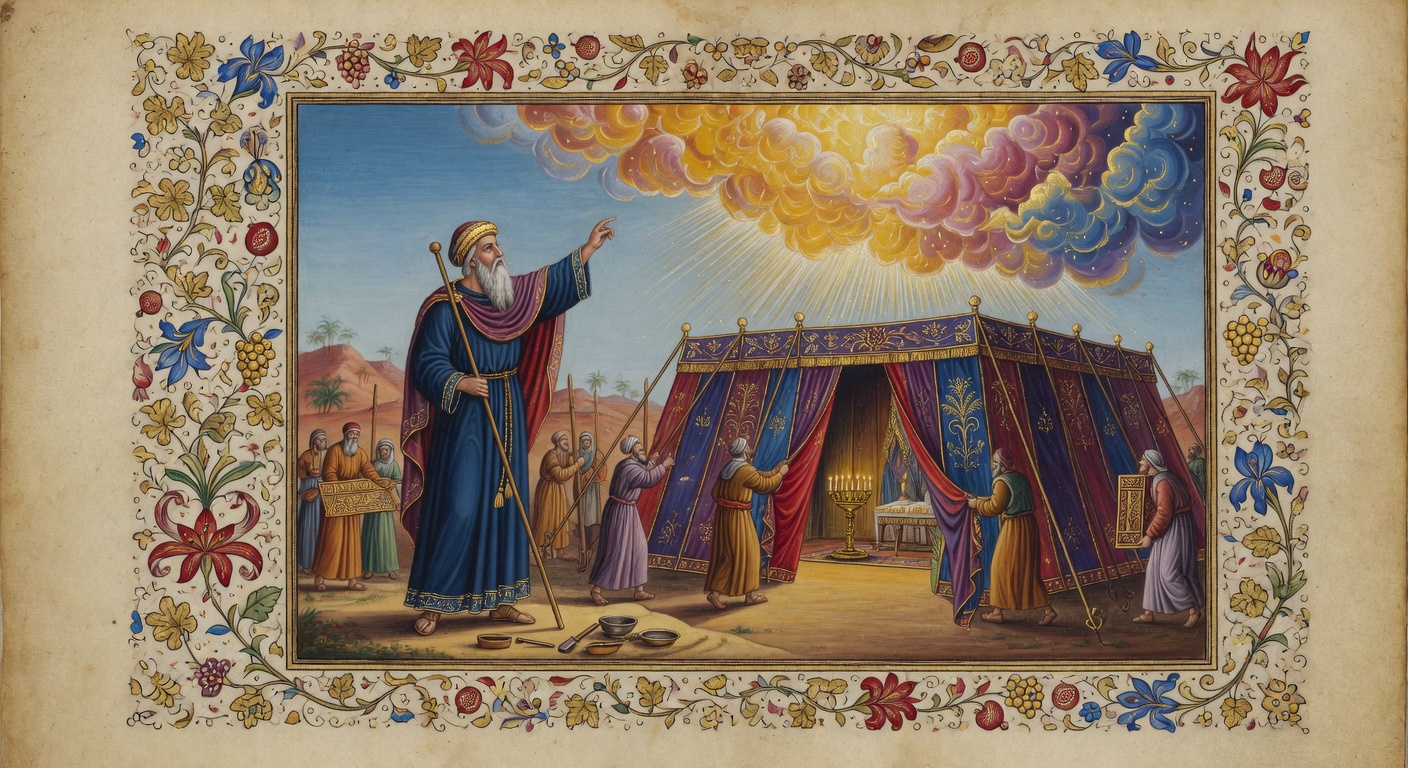
Tabernacle Built c. 1445 BC
In the wilderness after the Exodus and the giving of the Law at Sinai, God instructed Moses to build the Tabernacle as a portable sanctuary where He would dwell among the Israelites. Moses directed the project, funded by the people's voluntary offerings and executed by skilled craftsmen such as Bezalel according to the exact divine pattern detailed in Exodus. Upon its completion, the glory of the Lord filled the structure in a visible cloud, marking God's approval and presence. This event established the central site for worship, sacrifices, and atonement, forming the heart of Israel's covenant relationship with God throughout their wilderness journey.
-
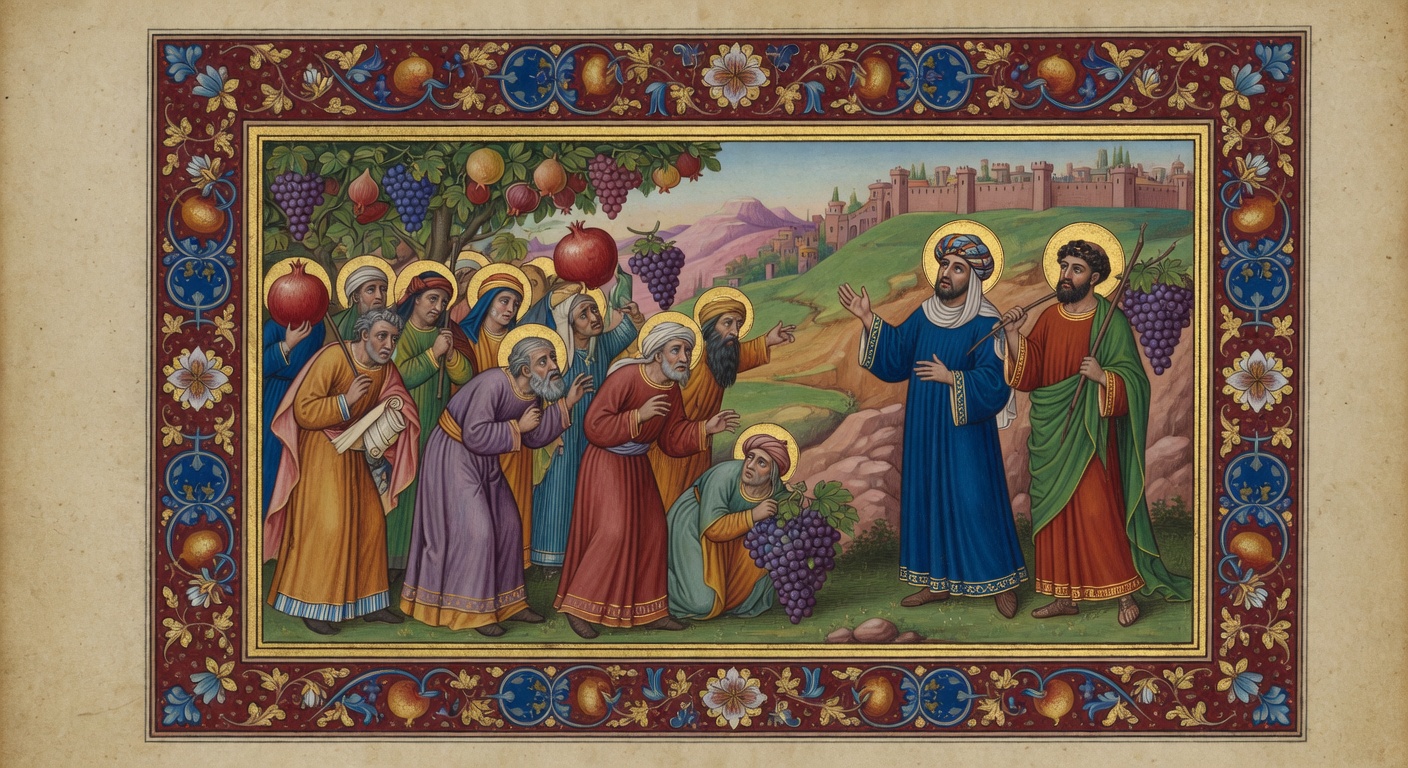
Spies Sent to Canaan c. 1445 BC
Following the Exodus from Egypt, God instructed Moses to send one leader from each of the twelve tribes to scout the land of Canaan, which had been promised to the Israelites as their inheritance. The spies returned after forty days with evidence of the land's fertility, yet ten of them emphasized the strength of its inhabitants and cities, spreading fear that led the people to rebel against entering the land. Joshua and Caleb countered with a report of faith, urging the nation to trust God's promise despite the obstacles. This event proved pivotal in Scripture, as the resulting unbelief prompted God to decree forty years of wilderness wandering, ensuring that only the faithful spies Joshua and Caleb would survive to enter Canaan with the next generation.
-
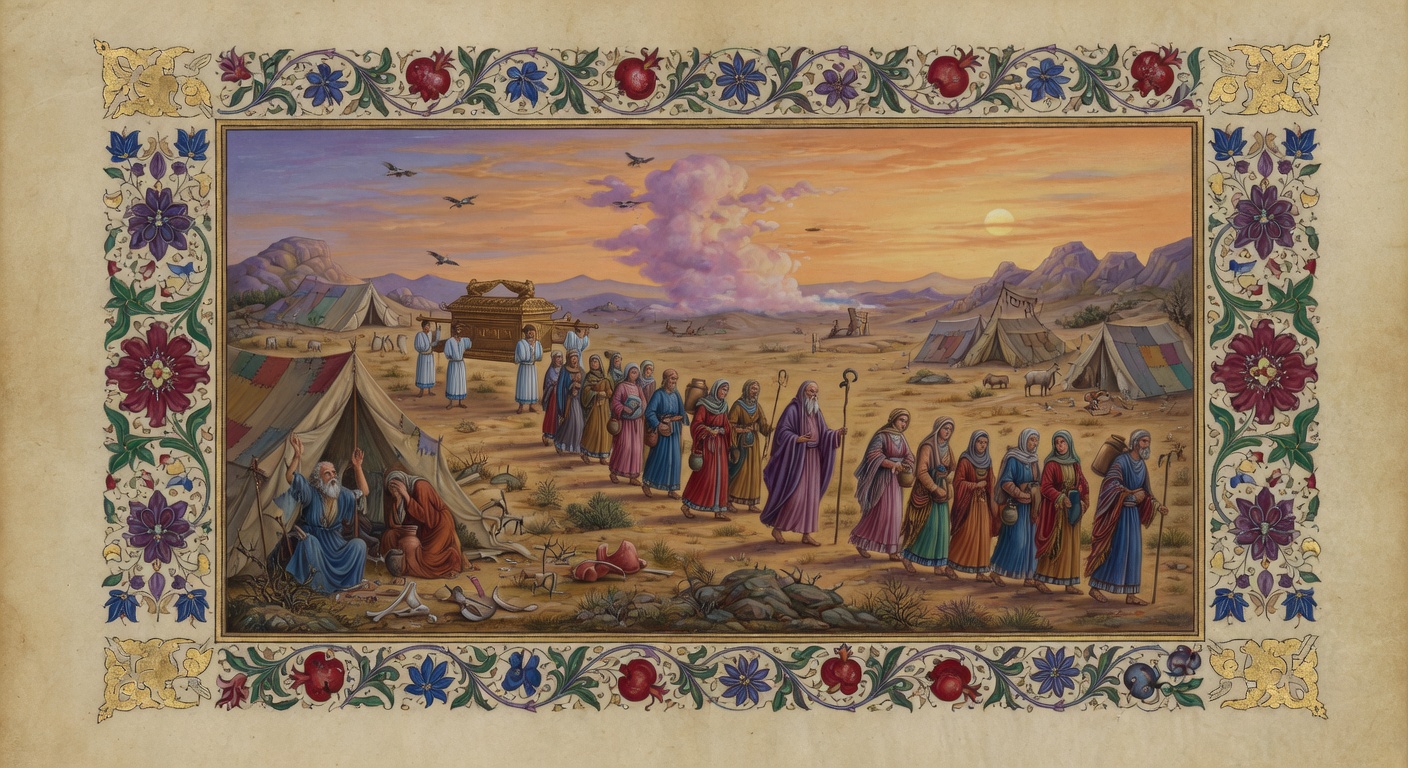
40 Years in Wilderness c. 1445–1406 BC
Following their exodus from Egypt, the Israelites reached the borders of Canaan but refused to enter the Promised Land after the spies' report fueled widespread unbelief and fear, despite God's prior assurances of victory. In response, God decreed that the faithless adult generation would wander in the wilderness for forty years until they all perished, with only Joshua and Caleb permitted to survive and enter. This extended period allowed the next generation to mature under God's provision and guidance before possessing the land. In Scripture, the event highlights the consequences of disobedience, serves as a recurring warning about trusting divine promises, and is referenced in books such as Numbers, Deuteronomy, and Hebrews to illustrate both judgment and God's enduring faithfulness.
-
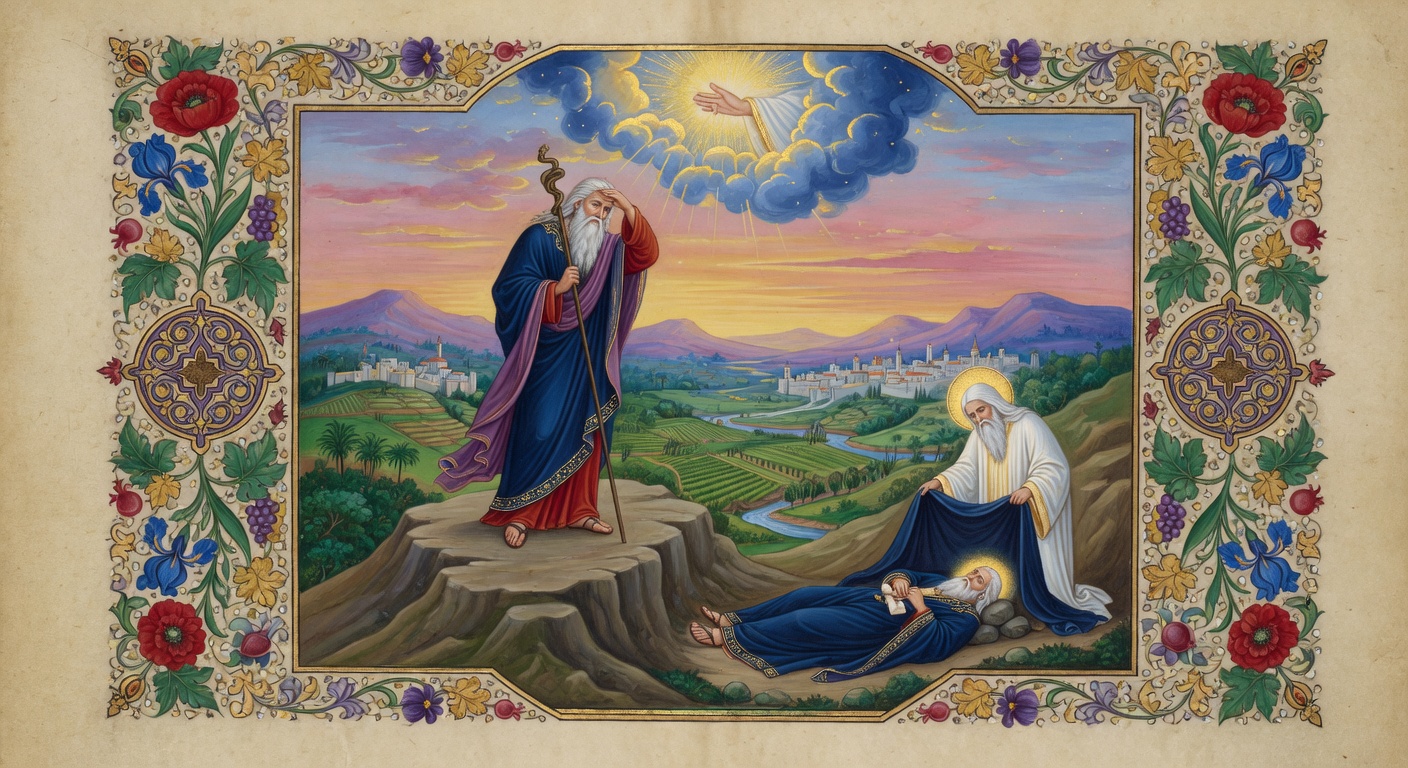
Death of Moses c. 1406 BC
After leading the Israelites through the wilderness for forty years, Moses ascends Mount Nebo in Moab, where God permits him to view the Promised Land from a distance as the consequence of his disobedience at Meribah. At age 120, Moses dies on the mountain, and God buries him in an undisclosed location to prevent any veneration of his tomb. This event concludes the Exodus generation and transfers leadership to Joshua, who will guide Israel across the Jordan. In Scripture, it underscores themes of divine justice, mercy, and covenant faithfulness, reminding readers that even revered leaders remain accountable to God's commands while His promises endure.
-
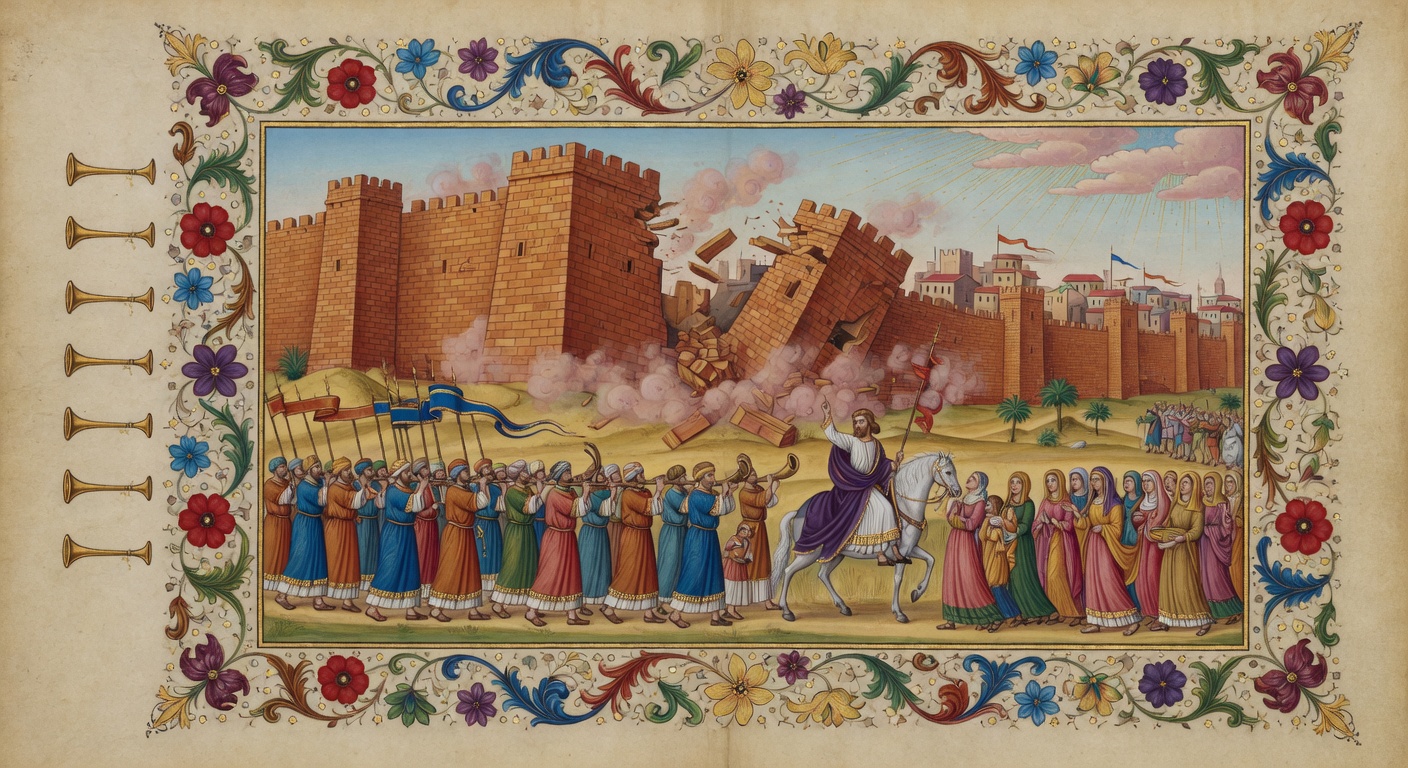
Fall of Jericho c. 1406 BC
The Fall of Jericho occurred as the Israelites, under Joshua's leadership, began their conquest of the Promised Land following the Exodus from Egypt. According to the biblical account in Joshua 6, the Israelites marched around the city's walls once a day for six days and seven times on the seventh day, accompanied by priests carrying the Ark of the Covenant and blowing trumpets; after the people shouted, the walls miraculously collapsed, allowing them to capture the city. This event is significant because it demonstrates the power of faith and obedience to God's instructions, as the victory was achieved not through military might but through divine intervention. It marks the first major triumph in the Israelites' settlement of Canaan and serves as a testament to God's faithfulness in fulfilling His promises to His people.
-
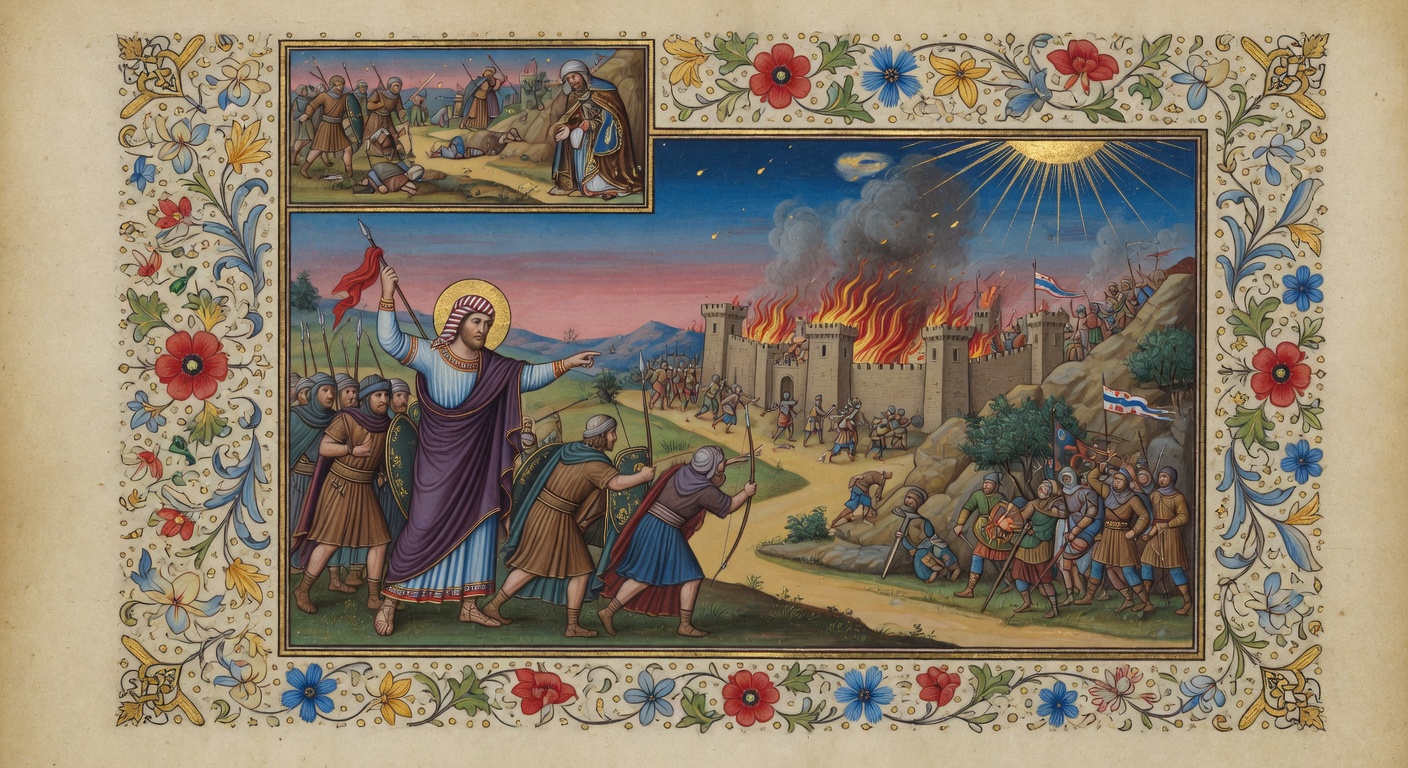
Conquest of Ai c. 1406 BC
After the victory at Jericho, Israel's initial defeat at Ai stemmed from Achan's sin in taking devoted items from the previous conquest, which brought God's judgment on the entire nation until the offender was identified and punished. Joshua then followed divine instructions for an ambush strategy, positioning forces to draw out Ai's defenders while a hidden contingent captured and burned the city from behind, leading to its total destruction and the execution of its king. This event proved essential in Israel's broader conquest of Canaan by securing a foothold in the central highlands and demonstrating that success depended on covenant obedience rather than military strength alone. In Scripture, it reinforces themes of corporate holiness, divine restoration after repentance, and the fulfillment of God's promise to give the land to Abraham's descendants.
-
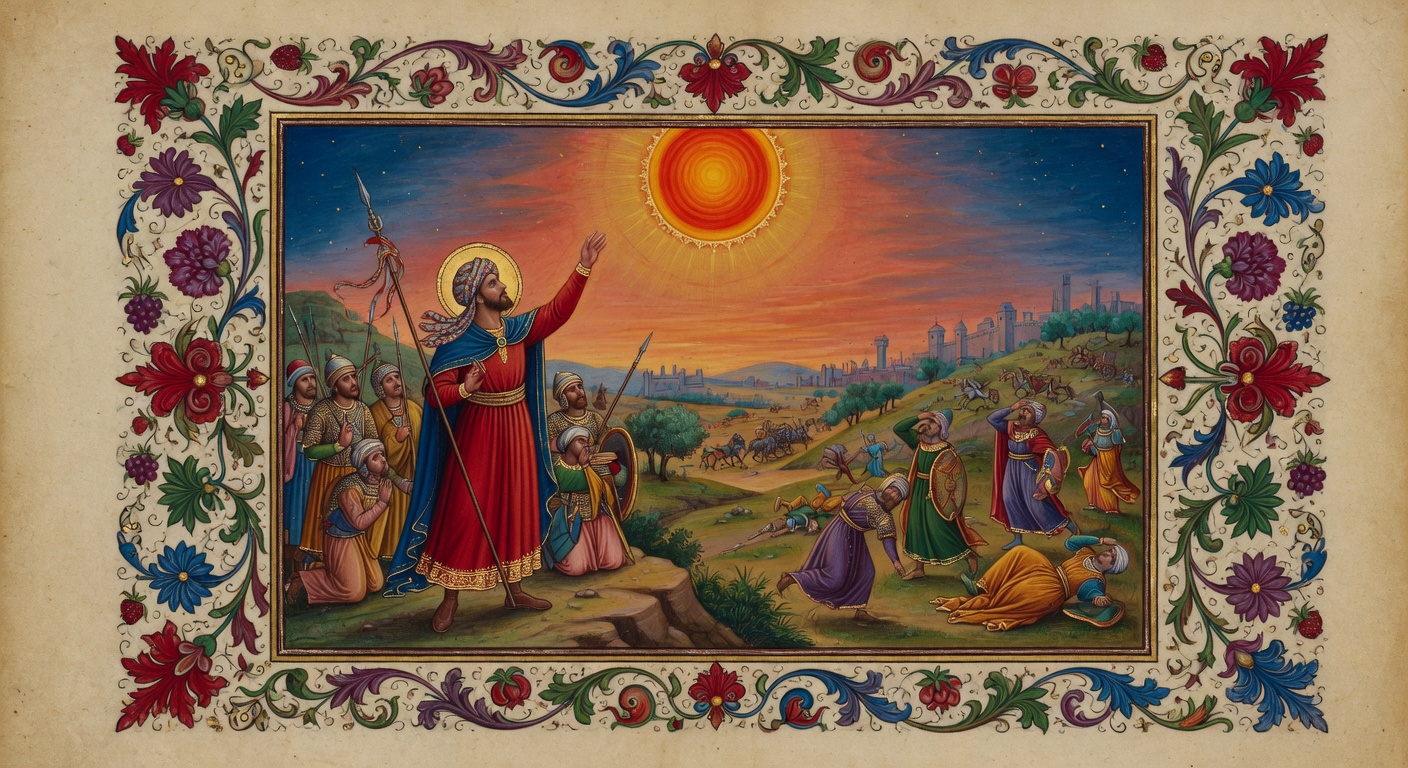
Sun Stands Still c. 1405 BC
During the Israelite conquest of Canaan, Joshua led his army in defense of Gibeon against a coalition of five Amorite kings. As daylight waned during the battle, Joshua prayed for the sun and moon to stand still, and Scripture records that God caused the sun to remain in the sky for nearly a full day, enabling the Israelites to achieve a decisive victory. This miracle, detailed in Joshua 10, demonstrates God's sovereign power over creation and His direct intervention on behalf of His covenant people. It underscores the theme of divine assistance in fulfilling the promise of the land, highlighting the effectiveness of faithful prayer in Israel's history.
-
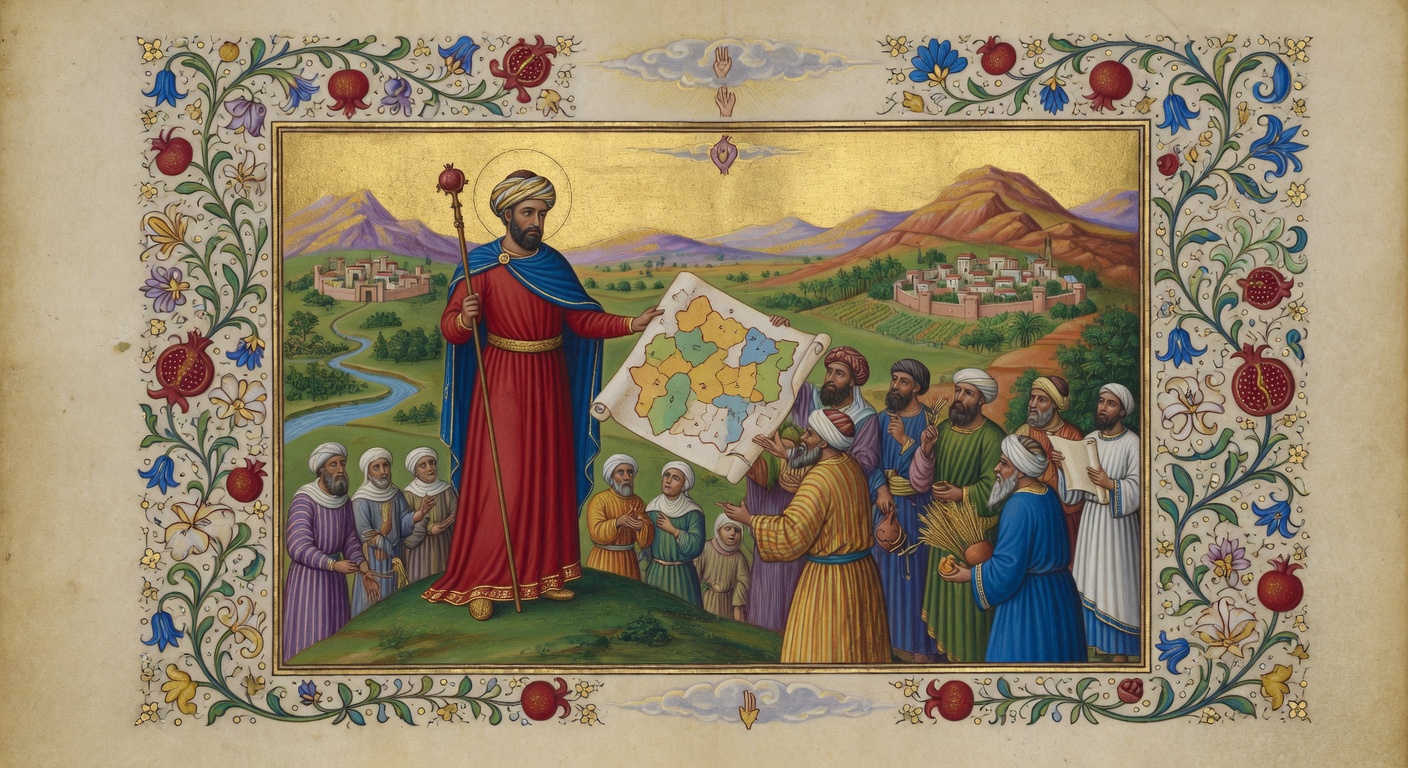
Conquest of Canaan Complete c. 1399 BC
Following the death of Moses, Joshua led the Israelites across the Jordan River and conducted a series of campaigns that defeated key Canaanite kings and cities, bringing much of the Promised Land under Israelite control. Once military operations concluded, Joshua allotted the conquered territories to the twelve tribes according to divine instructions, with specific portions assigned east and west of the Jordan as permanent inheritances. This fulfillment of the Abrahamic covenant demonstrated God’s faithfulness in delivering the land promised centuries earlier and transitioned Israel from a nomadic people to a settled nation. In Scripture the event underscores themes of obedience, divine sovereignty, and the foundation for the subsequent period of the judges.
Judges Period
-
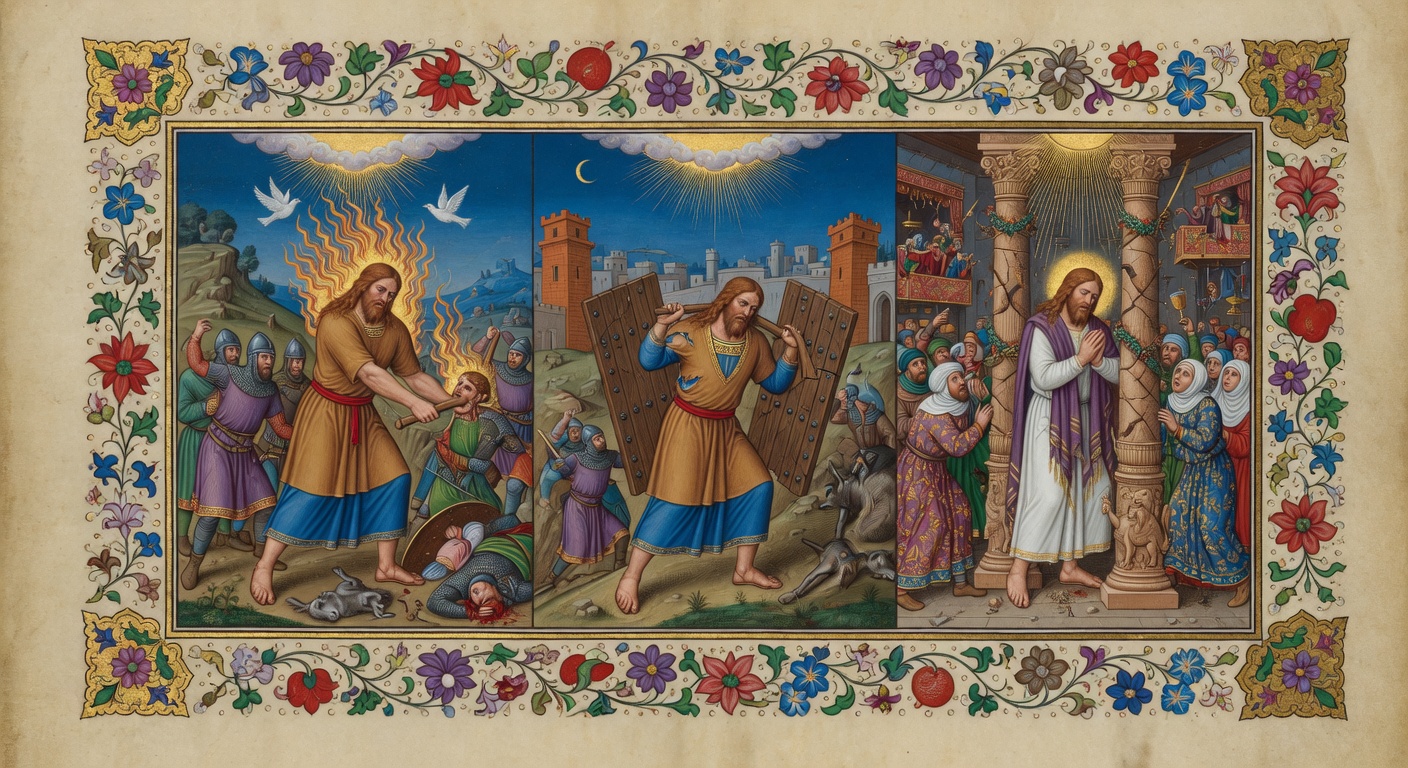
Samsons Exploits c. 1100 BC
Samson was raised up by God as a Nazirite judge during the period of the Judges, when Israel repeatedly fell into sin and faced oppression from the Philistines. Empowered by the Spirit of the Lord, he carried out a series of remarkable feats including slaying a lion barehanded, defeating a thousand Philistine soldiers with a donkey's jawbone, and removing the gates of Gaza, all of which disrupted enemy control and demonstrated divine intervention on behalf of God's people. These exploits underscored themes of God's sovereign power working through imperfect human agents to advance His purposes. They culminated in Samson's final sacrificial act of collapsing the Philistine temple, resulting in his own death alongside the defeat of many enemy leaders.
-
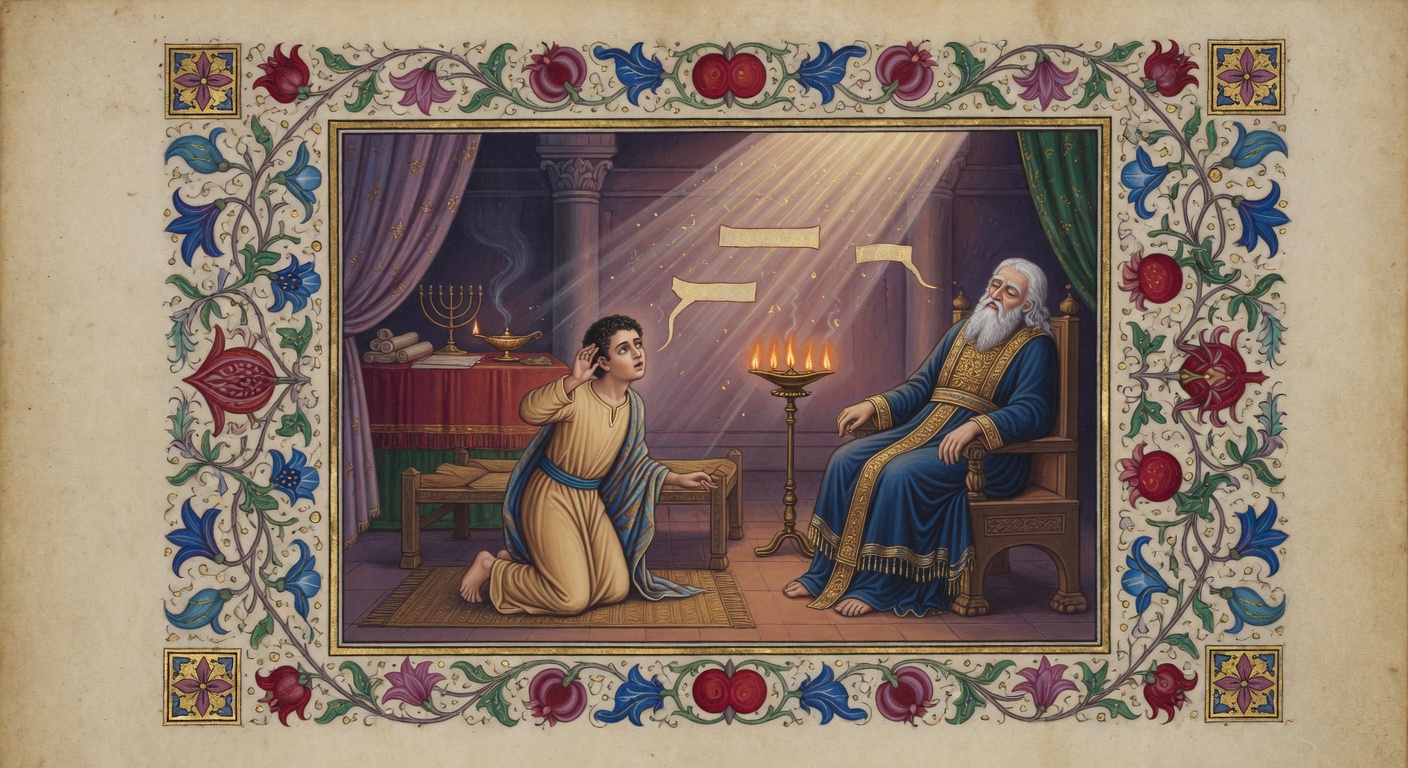
God Calls Samuel c. 1080 BC
In the biblical account from 1 Samuel 3, God calls the young Samuel at night while he serves in the tabernacle at Shiloh under the elderly priest Eli, initially mistaking the voice for Eli's until guided to respond with openness to God's message. God then reveals the coming judgment on Eli's household due to the corruption of his sons, establishing Samuel as a direct recipient of divine revelation during a time when such communications were rare. This event marks the start of Samuel's lifelong prophetic ministry, positioning him as a key transitional figure who would later anoint Israel's first kings. Its significance in Scripture lies in demonstrating God's initiative in raising up faithful leaders and bridging the era of the judges with the monarchy.
-
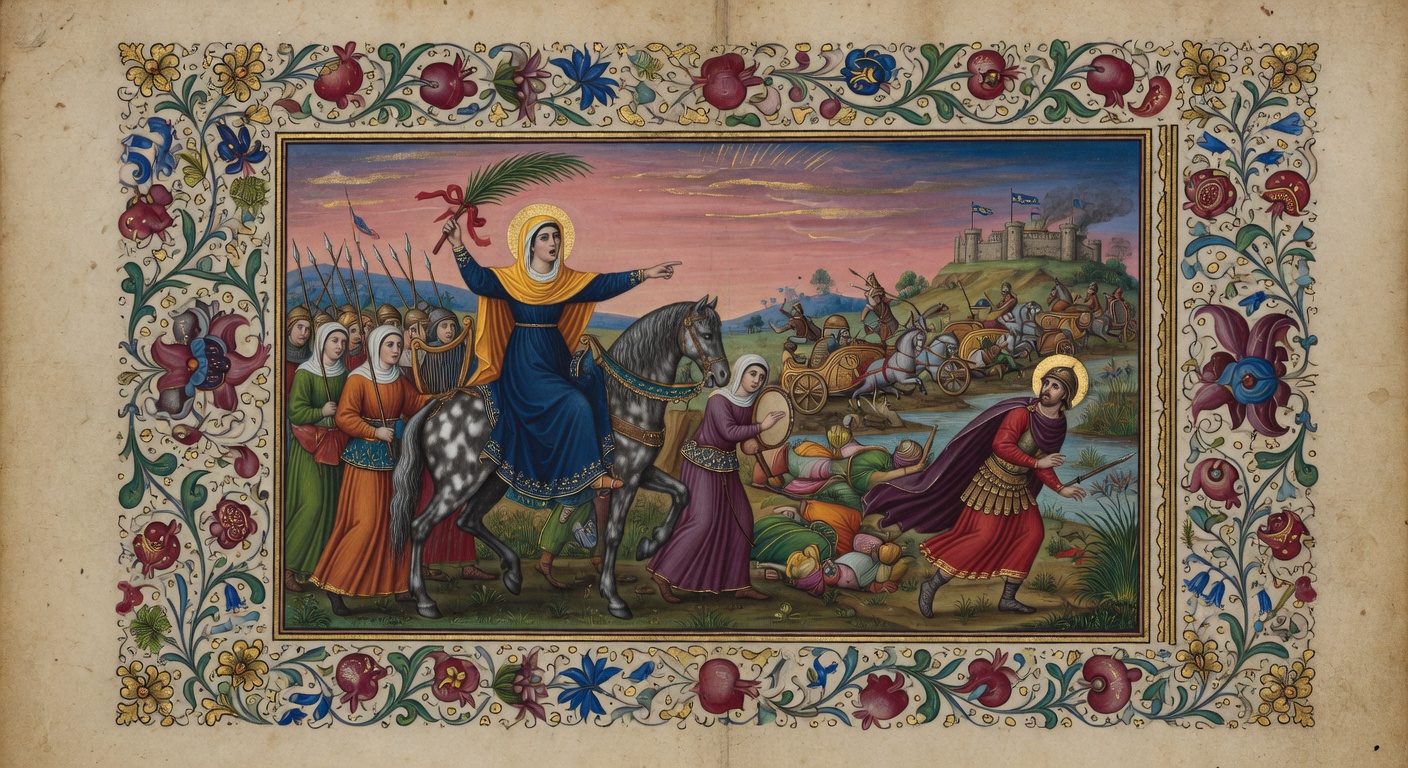
Deborah's Victory c. 1209 BC
During the time of the Judges, the Israelites faced oppression from the Canaanite king Jabin and his powerful general Sisera due to their disobedience to God. The prophetess Deborah, serving as a judge, directed military leader Barak to assemble an army from the tribes of Israel, resulting in a decisive victory through divine intervention that routed Sisera's forces. Sisera fled and was ultimately killed by Jael, a Kenite woman, fulfilling Deborah's prophecy. This triumph brought forty years of peace to Israel and is commemorated in the Song of Deborah, underscoring themes of faith, leadership, and God's deliverance in Scripture.
-
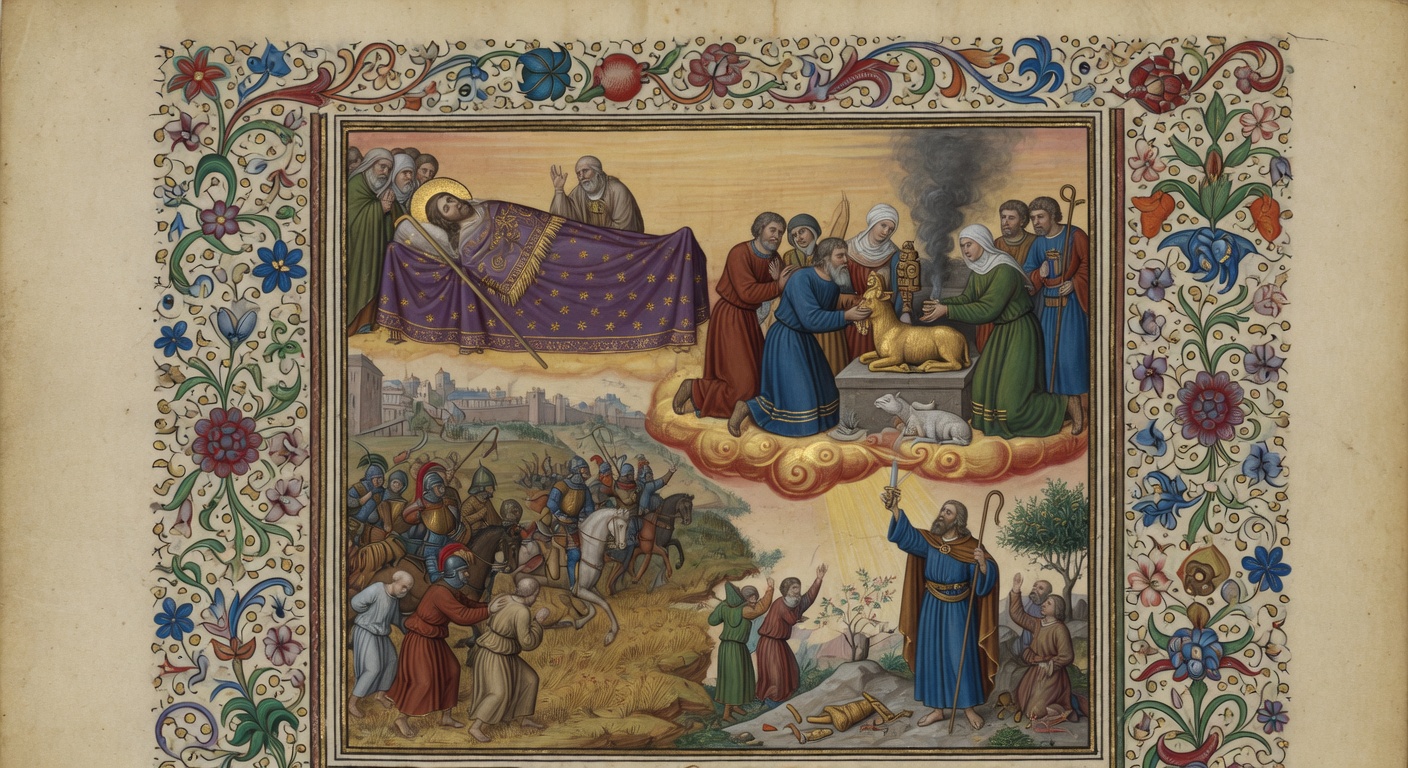
Period of the Judges Begins c. 1380 BC
Following the death of Joshua, the Israelites settled in Canaan but failed to fully drive out its inhabitants, leading them to adopt pagan worship and intermarry with surrounding nations. This disobedience triggered a recurring cycle in which the people sinned, suffered oppression from enemies as judgment, repented under distress, and received deliverance through judges divinely appointed as military and spiritual leaders. The era, spanning roughly 300 years and recorded primarily in the Book of Judges, featured figures such as Deborah, Gideon, and Samson who restored temporary peace amid widespread moral decline. Its significance lies in illustrating Israel's covenant unfaithfulness contrasted with God's persistent mercy, while highlighting the need for righteous kingship that anticipates later biblical developments.
-
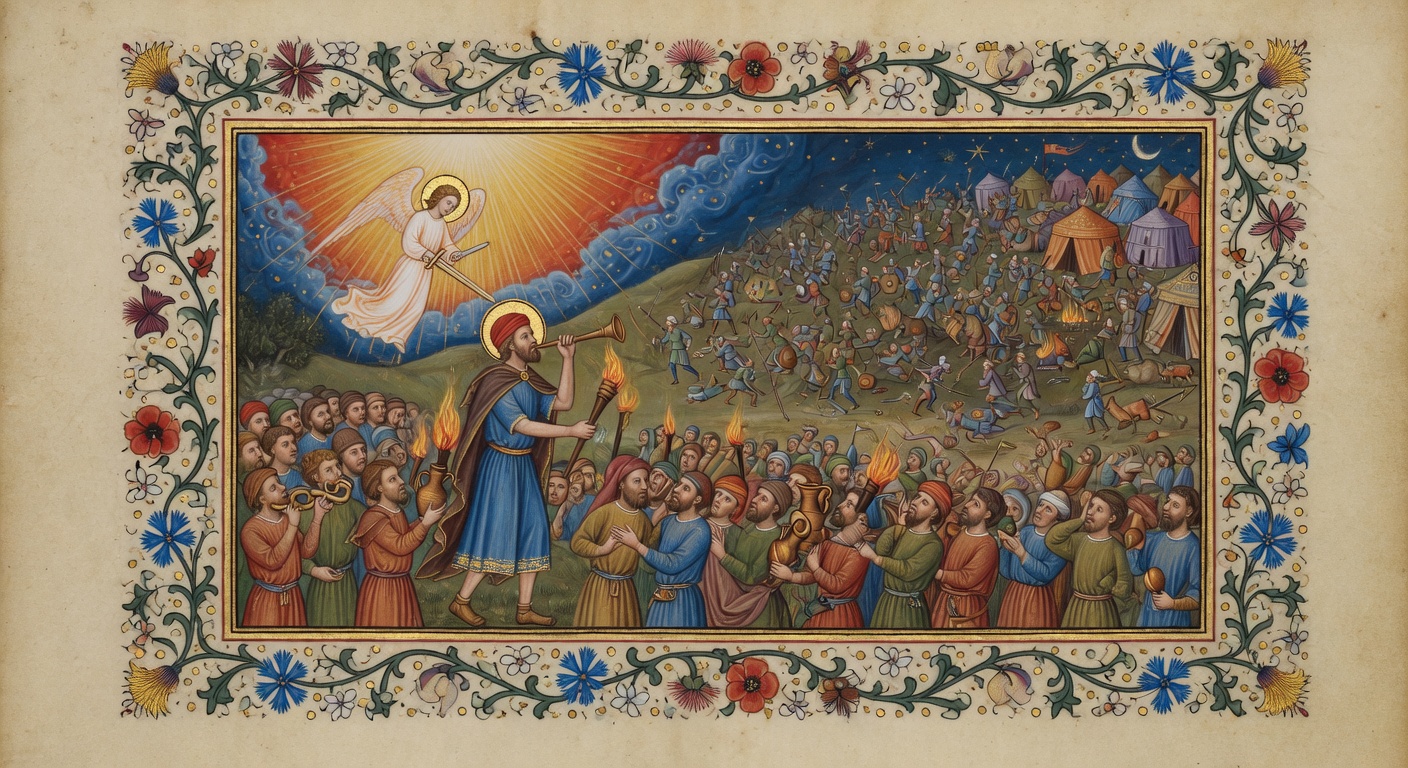
Gideon's 300 c. 1162 BC
During a period of oppression by the Midianites, God raised up Gideon as a judge to deliver Israel after the people cried out for help. Though Gideon assembled an army of over 30,000 men, God repeatedly reduced the force to just 300 to demonstrate that victory depended on divine power rather than numerical strength or military strategy. Using torches, trumpets, and clay jars in a nighttime raid, the small band created confusion that led the Midianites to turn on one another and flee. This account in the Book of Judges illustrates the recurring scriptural principle that God achieves His purposes through human weakness to foster faith and prevent boasting in human achievement.
-
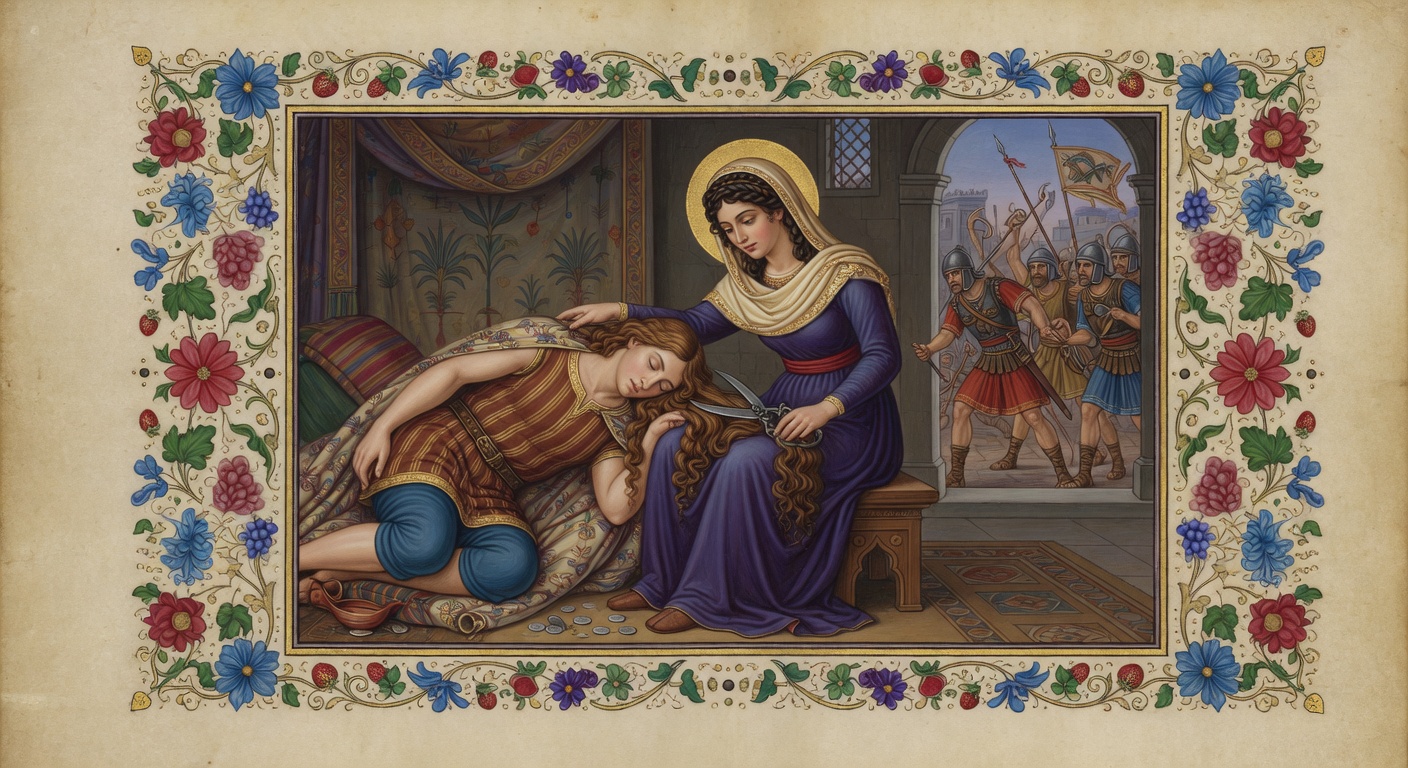
Samson and Delilah c. 1075 BC
Samson served as a judge of Israel during a period of Philistine oppression, empowered by God with supernatural strength tied to his Nazirite vow of uncut hair. Delilah, whom Samson loved, accepted a bribe from Philistine rulers to learn the secret of his power and repeatedly pressed him until he revealed that shaving his head would leave him weak. She then cut his hair while he slept, enabling his capture, blinding, and enslavement by his enemies. This account illustrates the dangers of misplaced trust and the lasting consequences of compromising one's divine calling, while also highlighting God's continued faithfulness despite human failure.
-
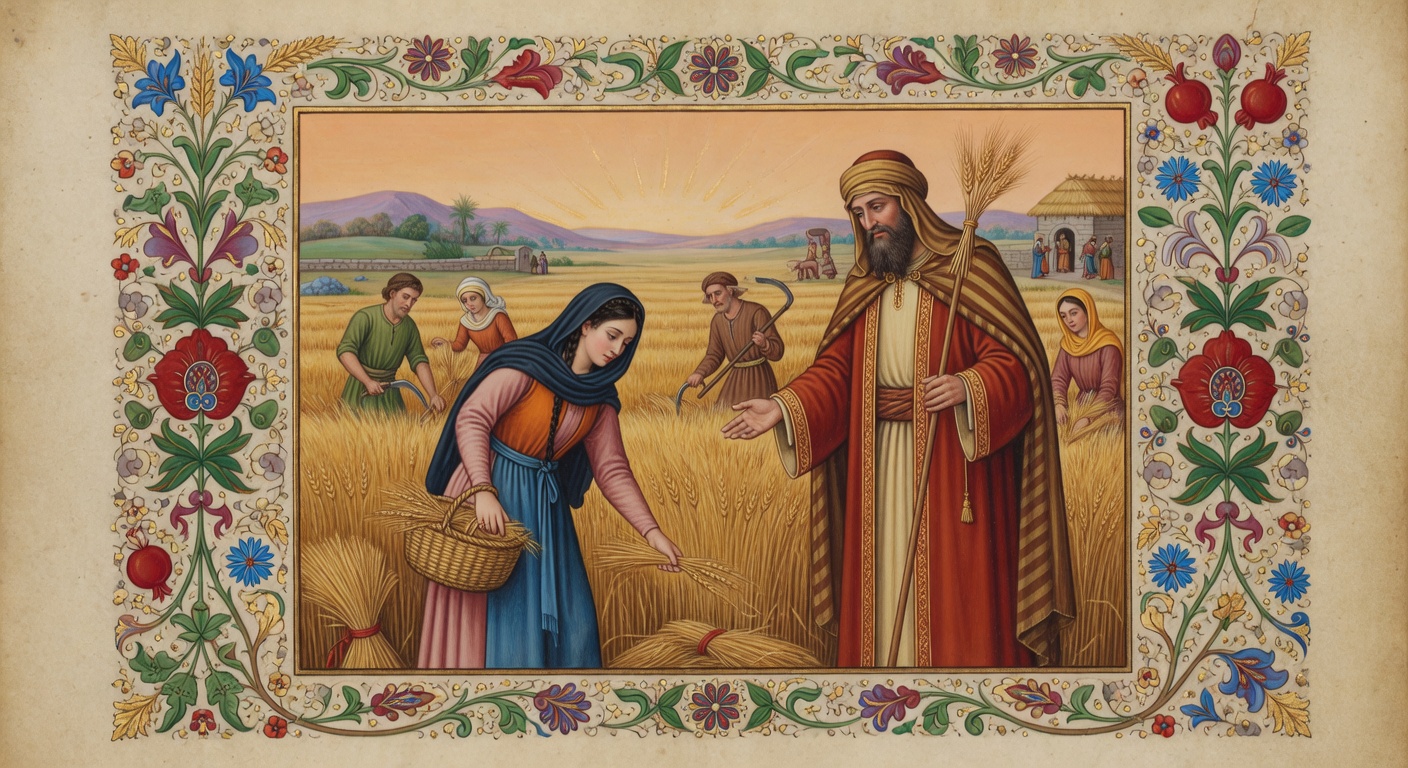
Ruth and Boaz c. 1100 BC
In the Book of Ruth, set during the time of the judges, the Moabite widow Ruth accompanies her mother-in-law Naomi back to Bethlehem and gleans in the barley fields belonging to Boaz, a wealthy relative of Naomi's deceased husband. Boaz, impressed by Ruth's loyalty and character, exercises his right as kinsman-redeemer by marrying her and purchasing the family land, thereby providing security for both women. This union results in the birth of their son Obed, who becomes the grandfather of King David, illustrating God's providential care and the inclusion of Gentiles in the lineage leading to the Messiah. The story highlights themes of redemption, faithfulness, and divine sovereignty within the broader narrative of Scripture.
United Kingdom
-
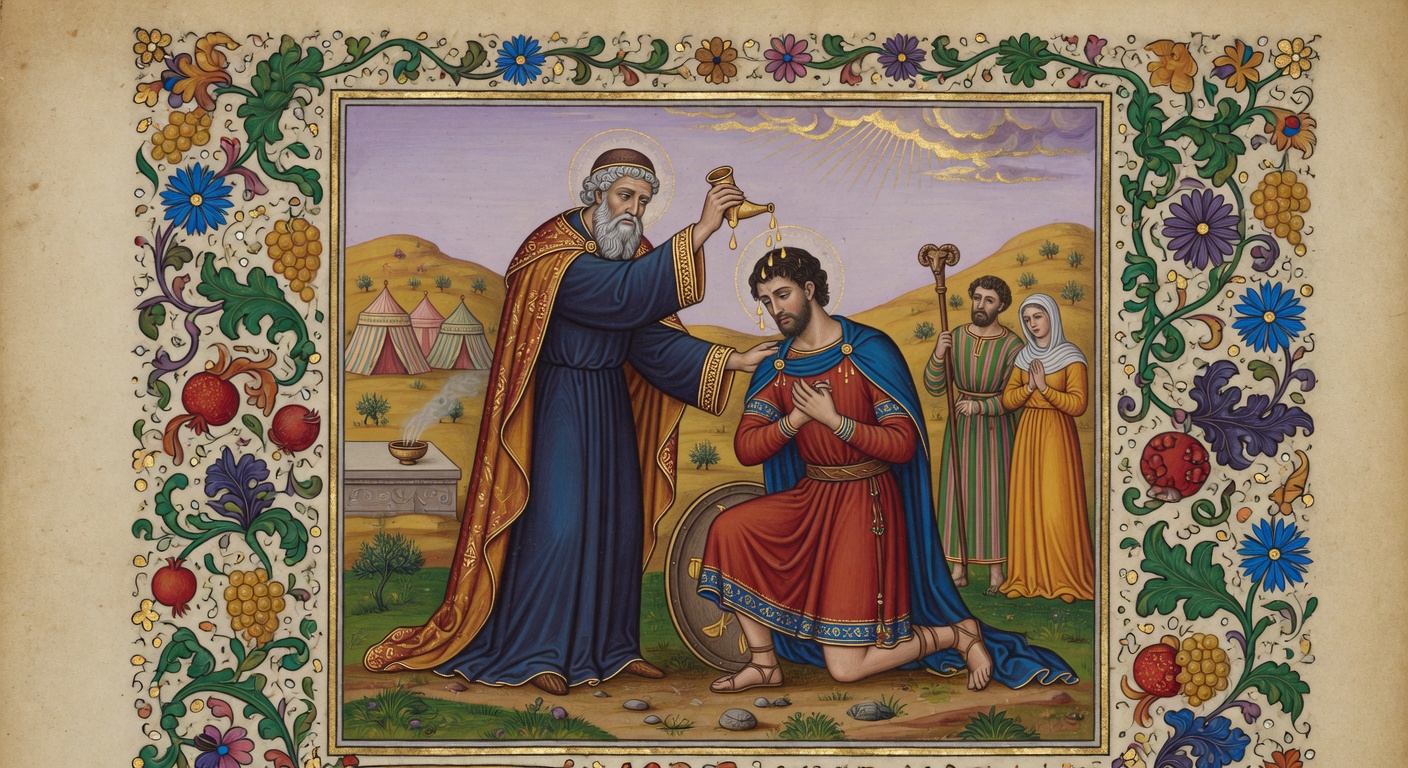
Samuel Anoints Saul c. 1050 BC
The Israelites, weary of being led by judges and eager to emulate neighboring nations, demanded a human king from the aging prophet Samuel, who warned them of the burdens this would bring. Obeying God's specific command, Samuel privately anointed Saul, a tall Benjamite chosen by divine lot, by pouring oil on his head and declaring him ruler over Israel. This transition established Israel's first monarchy, shifting the nation from direct theocratic rule under God to governance through a king. In Scripture, the event underscores themes of human rebellion against divine authority while setting the stage for the Davidic line and future messianic promises.
-
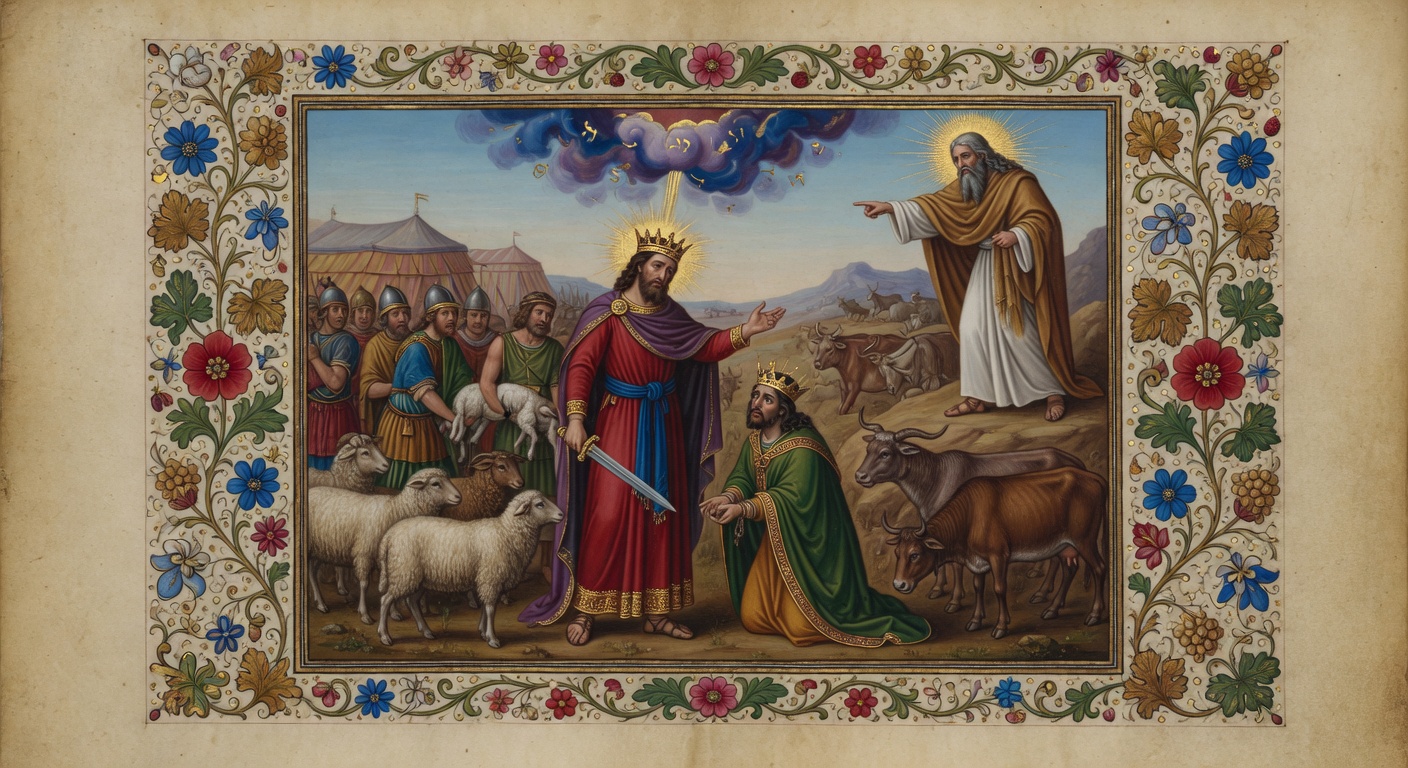
Saul's Disobedience c. 1028 BC
In the biblical account from 1 Samuel 15, God commanded King Saul through the prophet Samuel to completely destroy the Amalekites and all their possessions as an act of divine judgment for their ancient hostility toward Israel. Saul disobeyed by sparing King Agag and the choicest livestock, later claiming these were reserved for sacrifice, which prompted Samuel's rebuke that to obey is better than sacrifice. As a result, God rejected Saul as king, withdrew His Spirit from him, and initiated the search for a new leader. This event underscores the scriptural emphasis on full obedience to God's commands and serves as a turning point that leads to David's anointing.
-
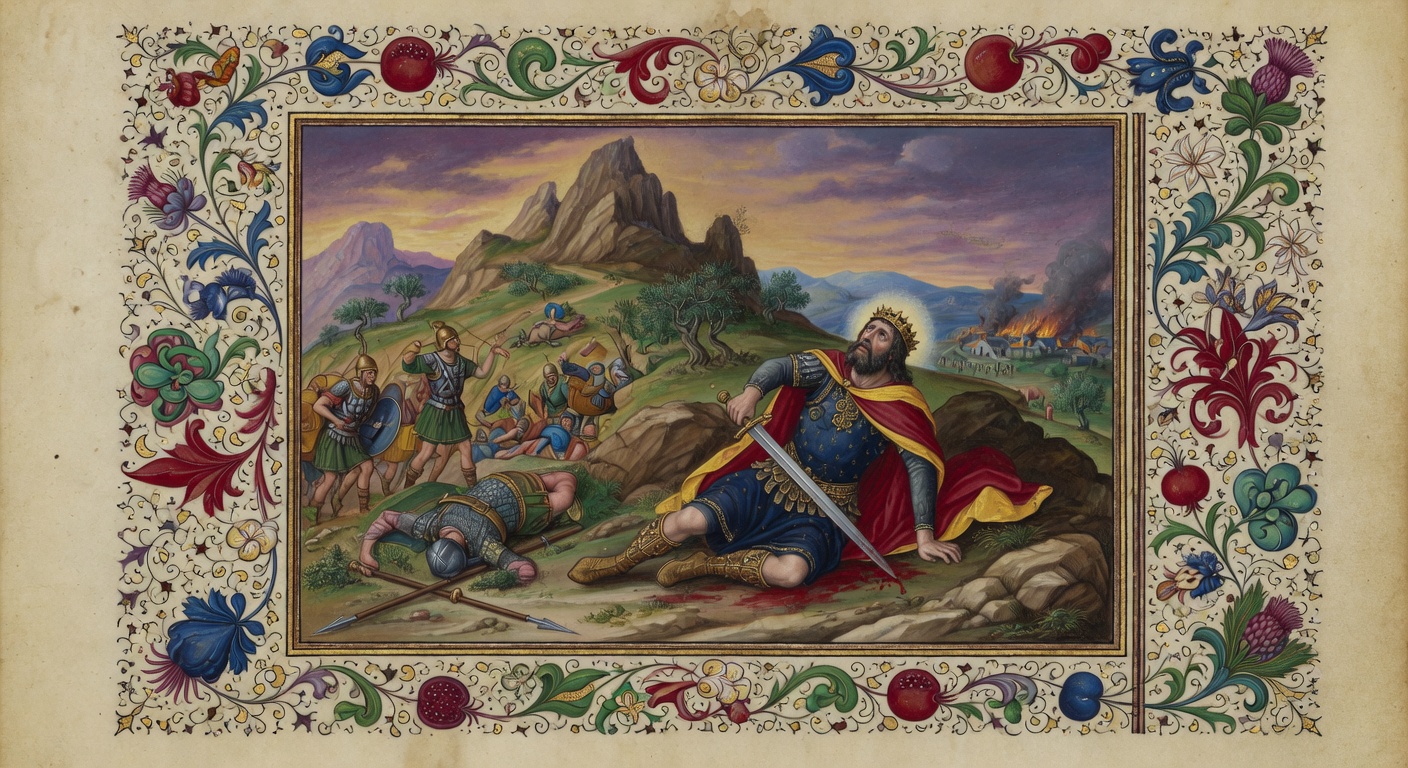
Death of Saul c. 1010 BC
King Saul, the first king of Israel whose reign had been rejected by God due to repeated disobedience, led his army against the Philistines in a decisive battle on Mount Gilboa. As his forces collapsed and his sons were slain, Saul was severely wounded by archers; he then urged his armor-bearer to end his life to prevent capture and mockery, and upon refusal fell on his own sword. This suicide fulfilled earlier prophetic warnings of judgment on Saul and immediately ended his dynasty, allowing David. Already anointed. To unite the tribes and establish the promised royal line. In Scripture the account highlights themes of divine sovereignty, the cost of unfaithfulness, and the transition from one era of leadership to another.
-
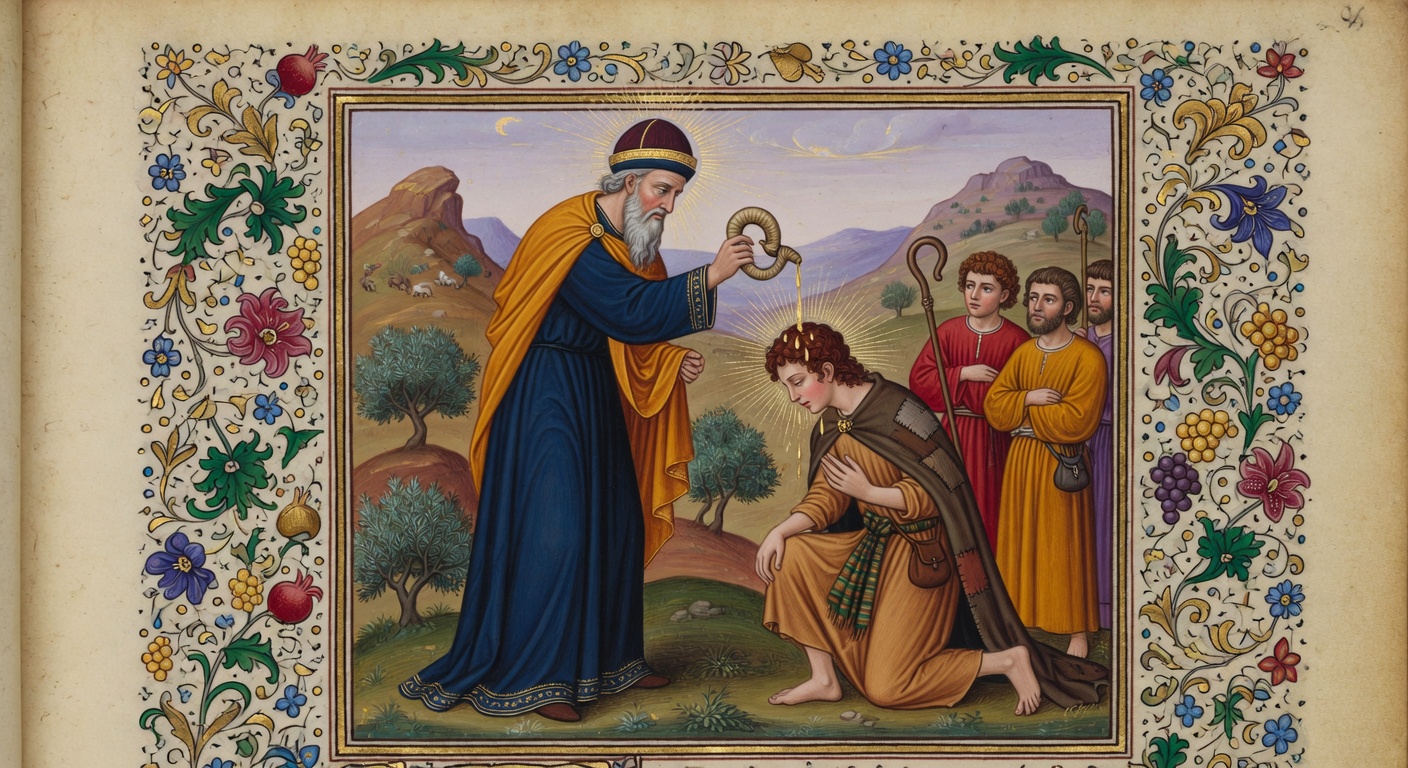
David Anointed c. 1025 BC
After God rejected King Saul for his disobedience, the prophet Samuel was directed to the house of Jesse in Bethlehem to anoint a new king from among his sons. Although David's older brothers appeared more suitable, God instructed Samuel to choose the young shepherd David, recognizing the condition of his heart rather than his outward appearance. Samuel poured oil on David's head, anointing him as the future king of Israel, and from that day the Spirit of the Lord came powerfully upon him. This event is significant because it marks the beginning of David's journey to the throne and establishes the Davidic line through which the Messiah would eventually come.
-
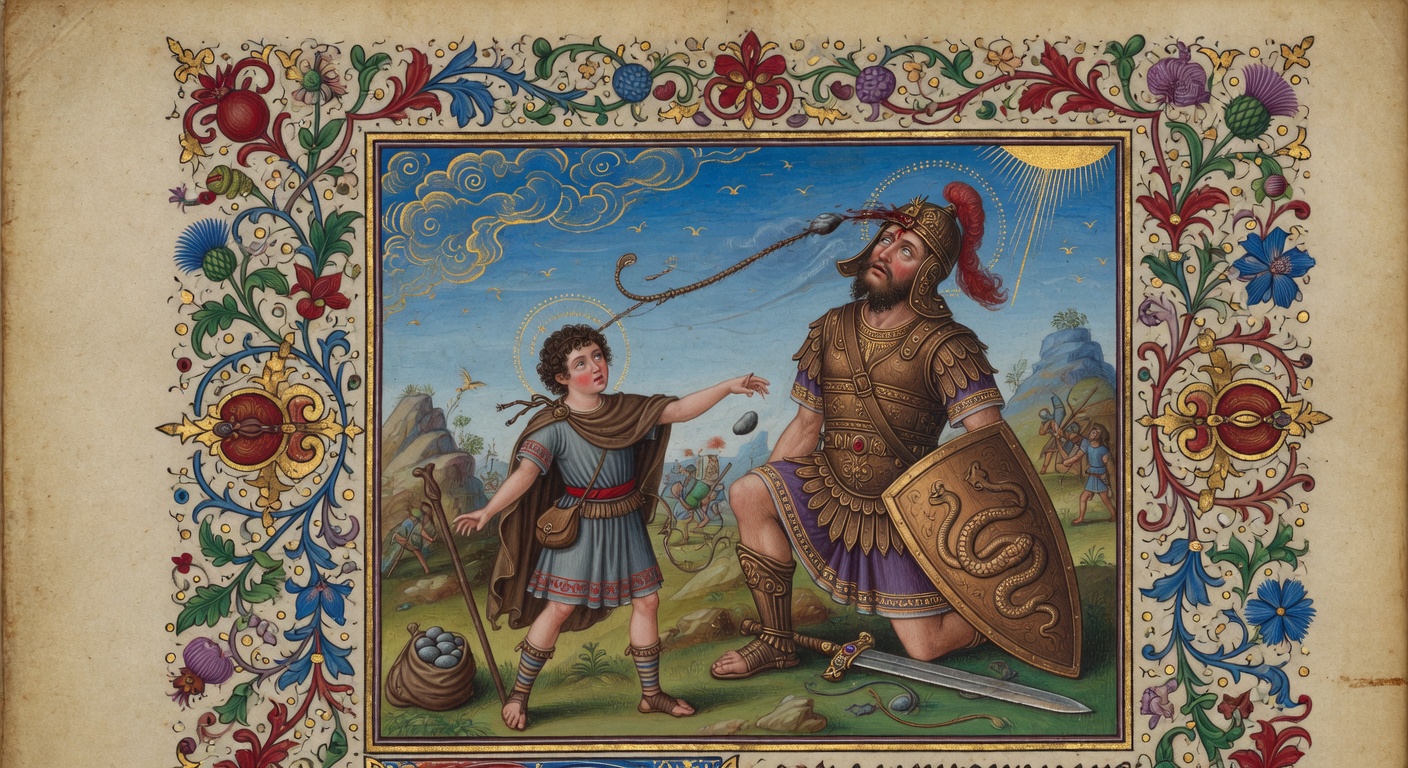
David and Goliath c. 1025 BC
During the conflict between the Israelites and the Philistines, the giant warrior Goliath challenged the Israelite army to single combat, intimidating them for forty days. The young shepherd David, sent to bring supplies to his brothers, volunteered to fight Goliath, relying on his faith in God rather than armor or weapons. Armed only with a sling and five stones, David struck Goliath in the forehead, felling him, and then used the giant's own sword to behead him, leading to a victory for Israel. This event highlights the biblical theme that God uses the weak and faithful to overcome the strong, marking the beginning of David's rise to prominence and eventual kingship as described in the books of Samuel.
-
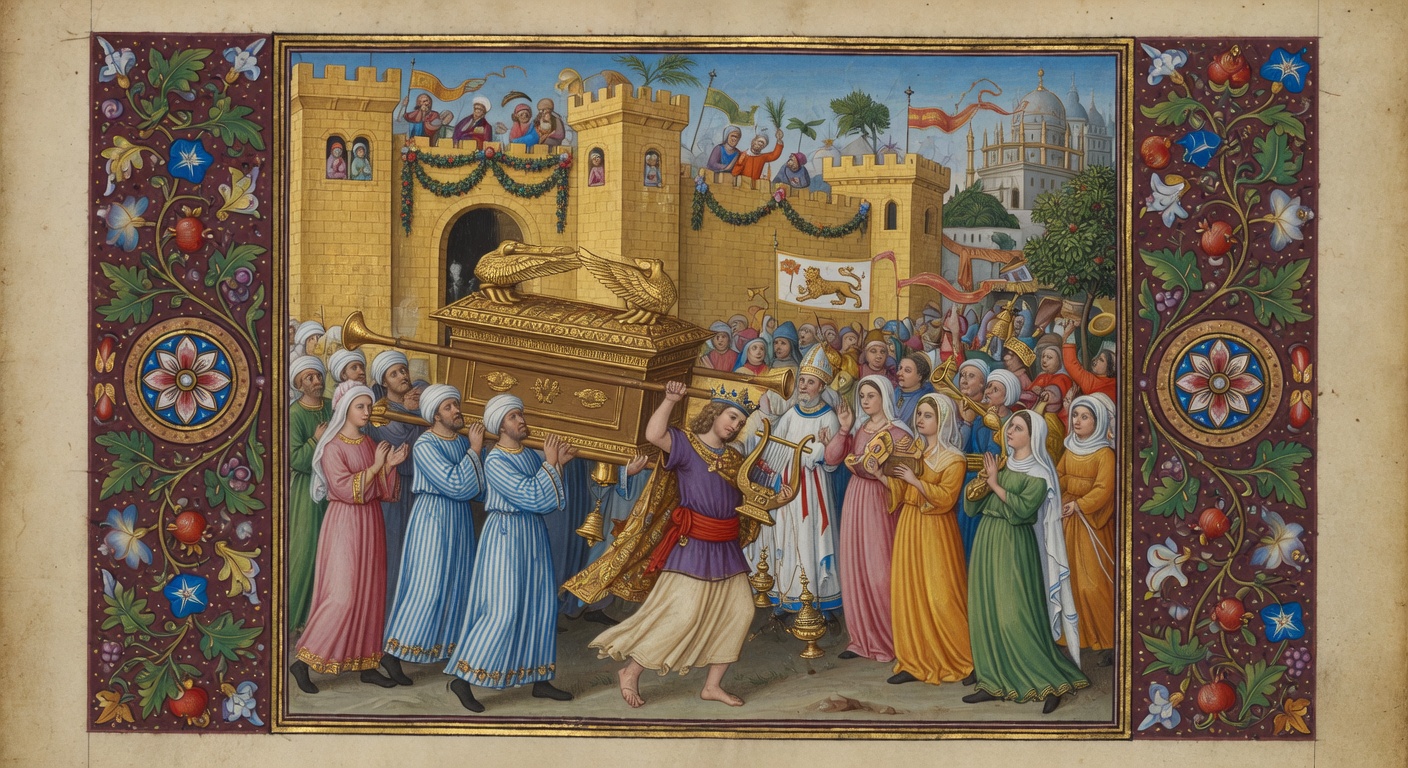
Ark Brought to Jerusalem c. 1000 BC
In the biblical account, King David organized a grand procession to transport the Ark of the Covenant from its temporary location to Jerusalem, involving musicians, sacrifices, and his own exuberant dancing before the Lord. This event followed an initial failed attempt that resulted in the death of Uzzah for improperly handling the sacred Ark, underscoring the need for reverence in approaching God's presence. By establishing the Ark in Jerusalem, David unified the nation politically and spiritually, designating the city as the central place of worship for Israel. This act held profound significance in Scripture as it affirmed God's covenant with David and prepared the way for the construction of the Temple under his son Solomon.
-
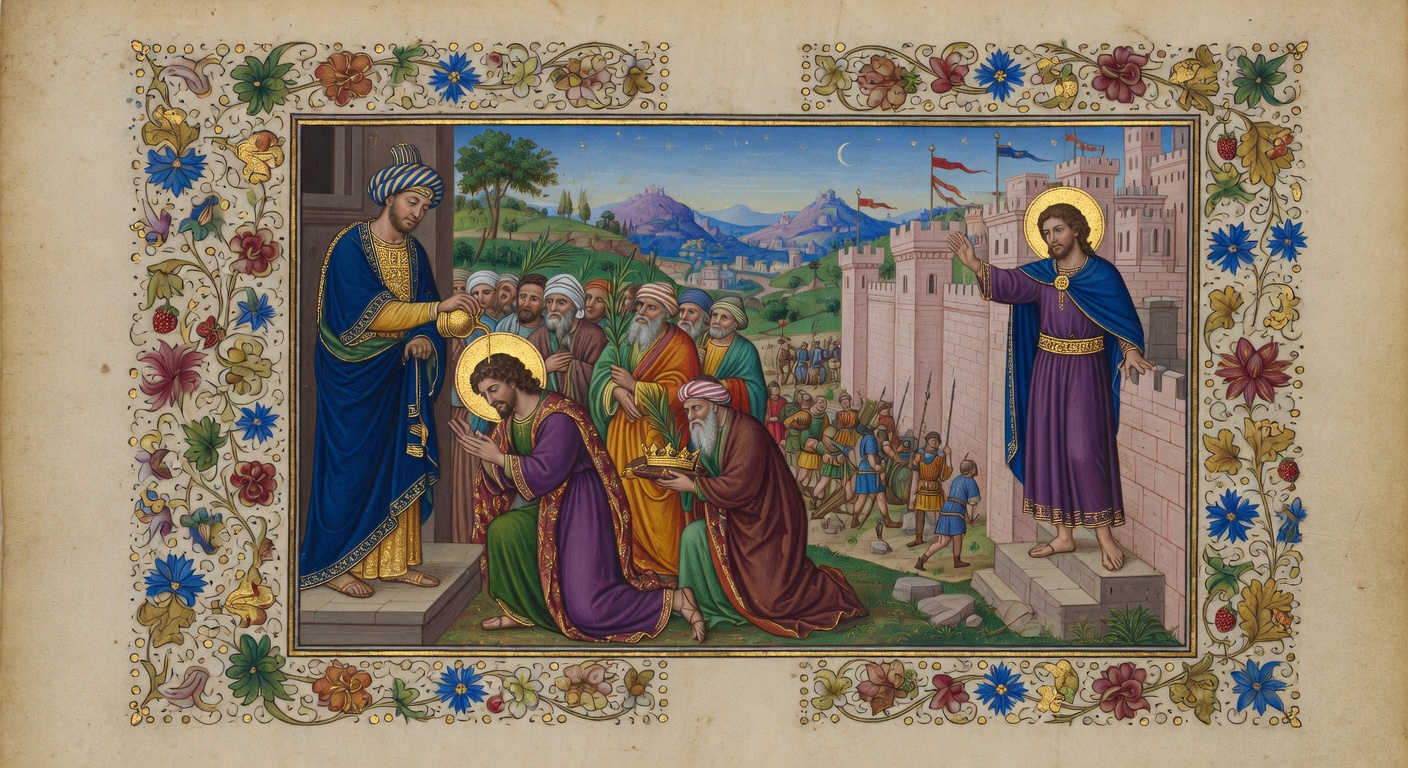
David Becomes King c. 1010 BC
After the death of King Saul, the elders of Israel came to David at Hebron and anointed him king over all twelve tribes, ending a period of civil division and unifying the nation under a single ruler chosen by God. David subsequently captured the fortified Jebusite city of Jerusalem, which he established as his capital and developed into a central political hub for the united kingdom. This consolidation strengthened Israel's defenses and centralized governance, setting the stage for military successes and national stability. In Scripture, the event fulfills earlier promises of David's rise, initiates the Davidic covenant, and positions Jerusalem as the enduring spiritual and royal center from which the messianic line would emerge.
-
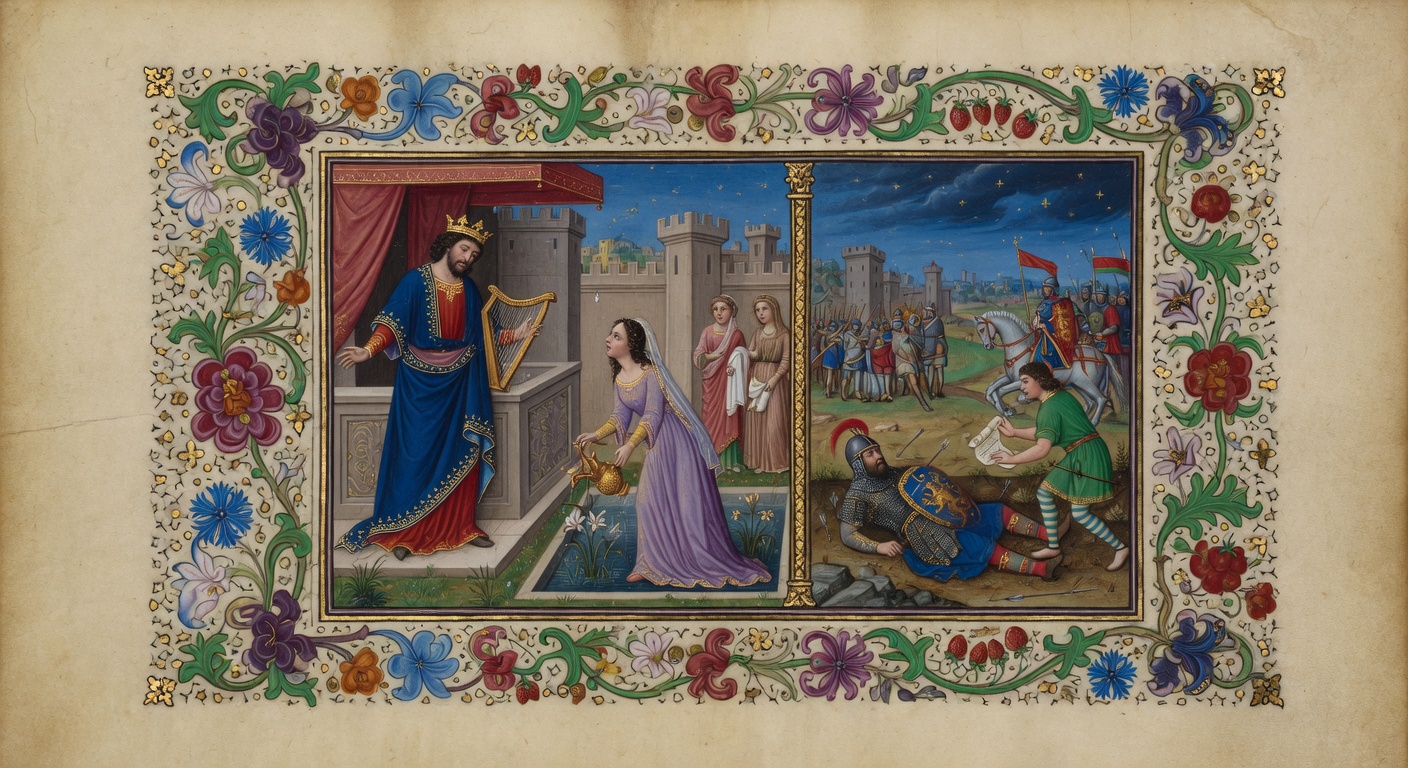
David and Bathsheba c. 990 BC
King David, while ruling over Israel, saw Bathsheba bathing and committed adultery with her, resulting in her pregnancy. To conceal his sin, he arranged for her husband Uriah to be killed in battle by placing him in a dangerous position during the siege of Rabbah. The prophet Nathan confronted David with a parable, leading to his repentance, though the child born from the union died as a consequence. This event underscores the themes of sin, accountability, and divine mercy in Scripture, as David's lineage through Bathsheba continues to Solomon and ultimately to the Messiah.
-
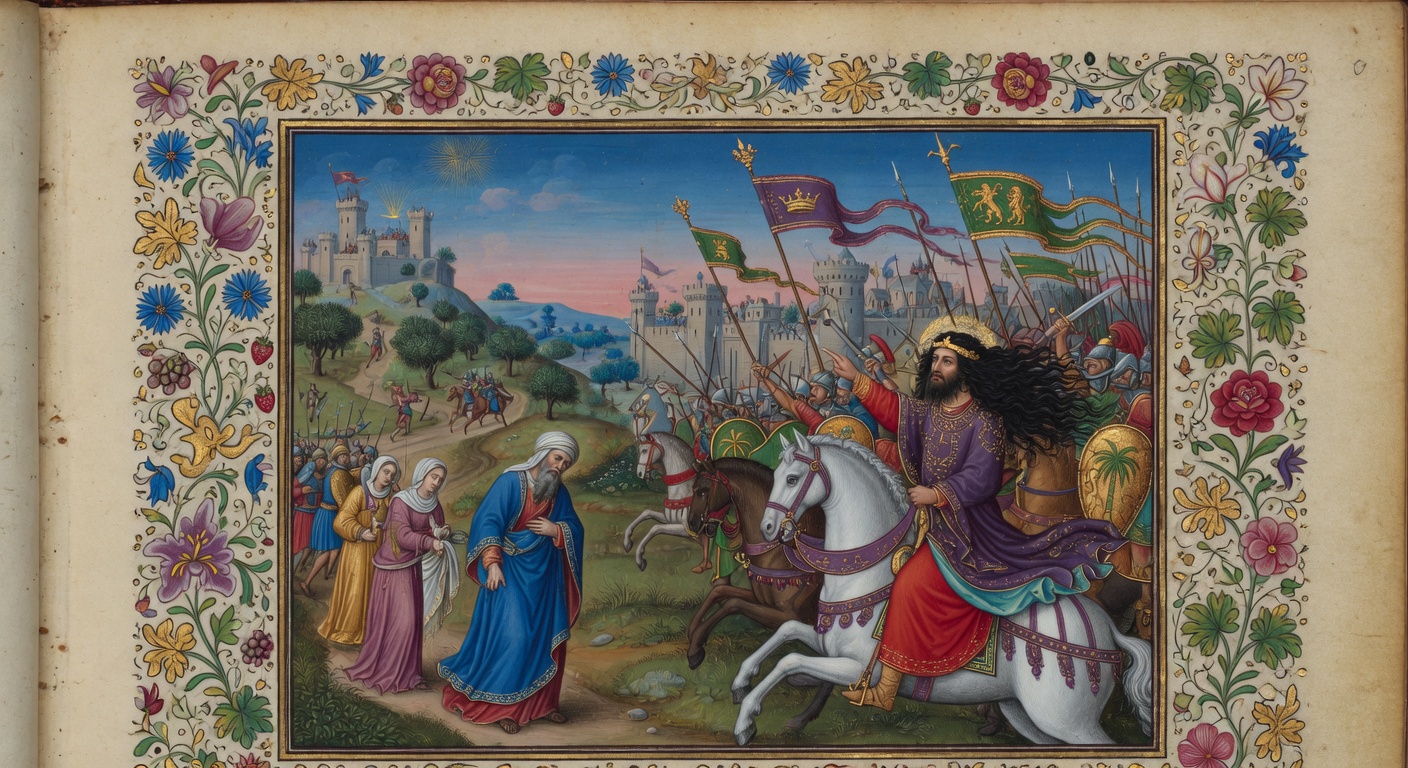
Absalom's Rebellion c. 980 BC
Absalom, one of King David's sons, grew resentful after his sister Tamar was violated by their half-brother Amnon and David failed to administer justice, fueling Absalom's ambition to claim the throne. He gradually won popular support by positioning himself as a more accessible leader, then declared himself king in Hebron, forcing David to flee Jerusalem and temporarily handing control of the capital and royal household to the rebel forces. In the ensuing battle in the forest of Ephraim, Absalom was killed by Joab despite David's explicit command to spare his life, ending the revolt but plunging the king into deep grief. This episode fulfills Nathan's earlier prophecy of ongoing turmoil within David's house as a consequence of his sins with Bathsheba and Uriah, while underscoring biblical themes of divine judgment, the limits of human authority, and the enduring consequences of familial and moral failure in Israel's monarchy.
-
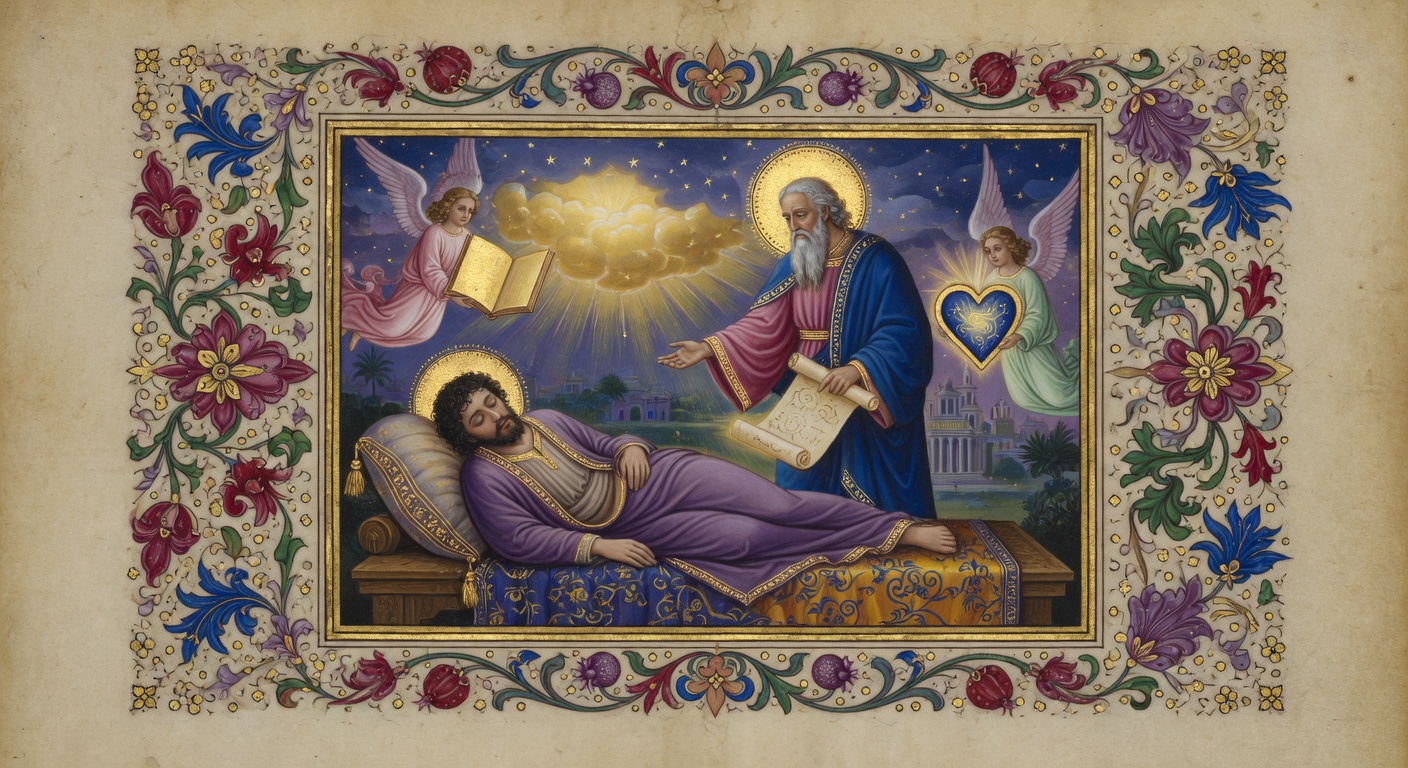
Solomons Wisdom c. 970 BC
In the early years of his reign, Solomon encountered God in a dream at Gibeon and requested an understanding heart to judge the people of Israel with justice rather than asking for wealth, victory, or long life. God responded by granting him extraordinary wisdom, along with the added blessings of riches, honor, and a long reign, establishing Solomon as the wisest ruler of his time. This wisdom was demonstrated in famous judgments, such as determining the true mother in a dispute between two women over a child. The account highlights the scriptural theme that humbly seeking divine wisdom above material gain brings comprehensive favor and underpins Solomon's role in authoring much of the Bible's wisdom literature.
-
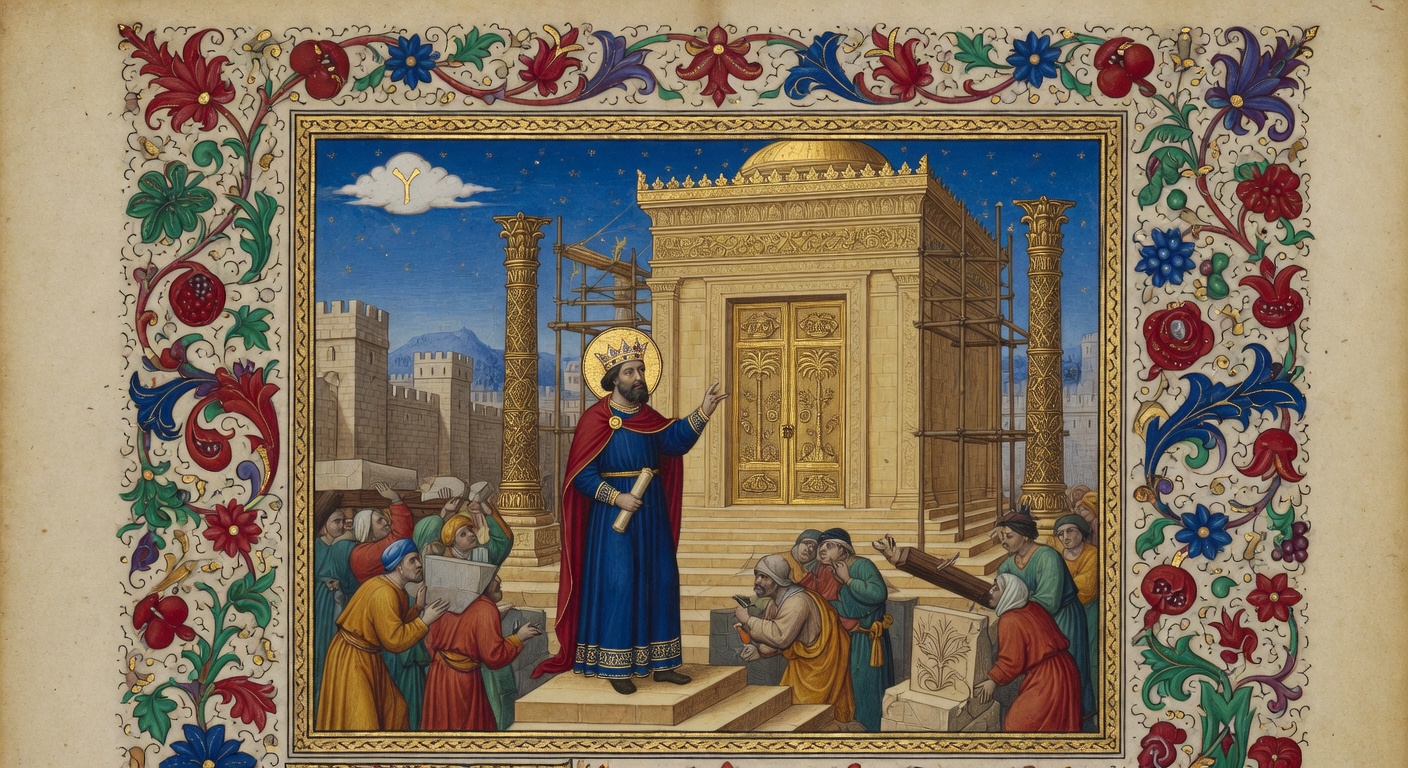
Solomon's Temple c. 966 BC
King Solomon, son of David, constructed the first Temple in Jerusalem during the tenth century BC, fulfilling God's promise that David's heir would build a permanent dwelling place for the Lord after David had gathered materials but been prohibited from completing the project himself. The Temple centralized Israelite worship by housing the Ark of the Covenant in the Holy of Holies and serving as the sole authorized site for sacrifices and major festivals under the Mosaic Law. Its dedication, described in 1 Kings 8, featured Solomon's prayer for God's ongoing presence and blessing on the nation, marking a high point of unity and spiritual devotion in Israel's monarchy. In Scripture this structure holds lasting significance as both a symbol of covenant relationship and a prophetic benchmark referenced in later books concerning judgment, exile, and future restoration.
-
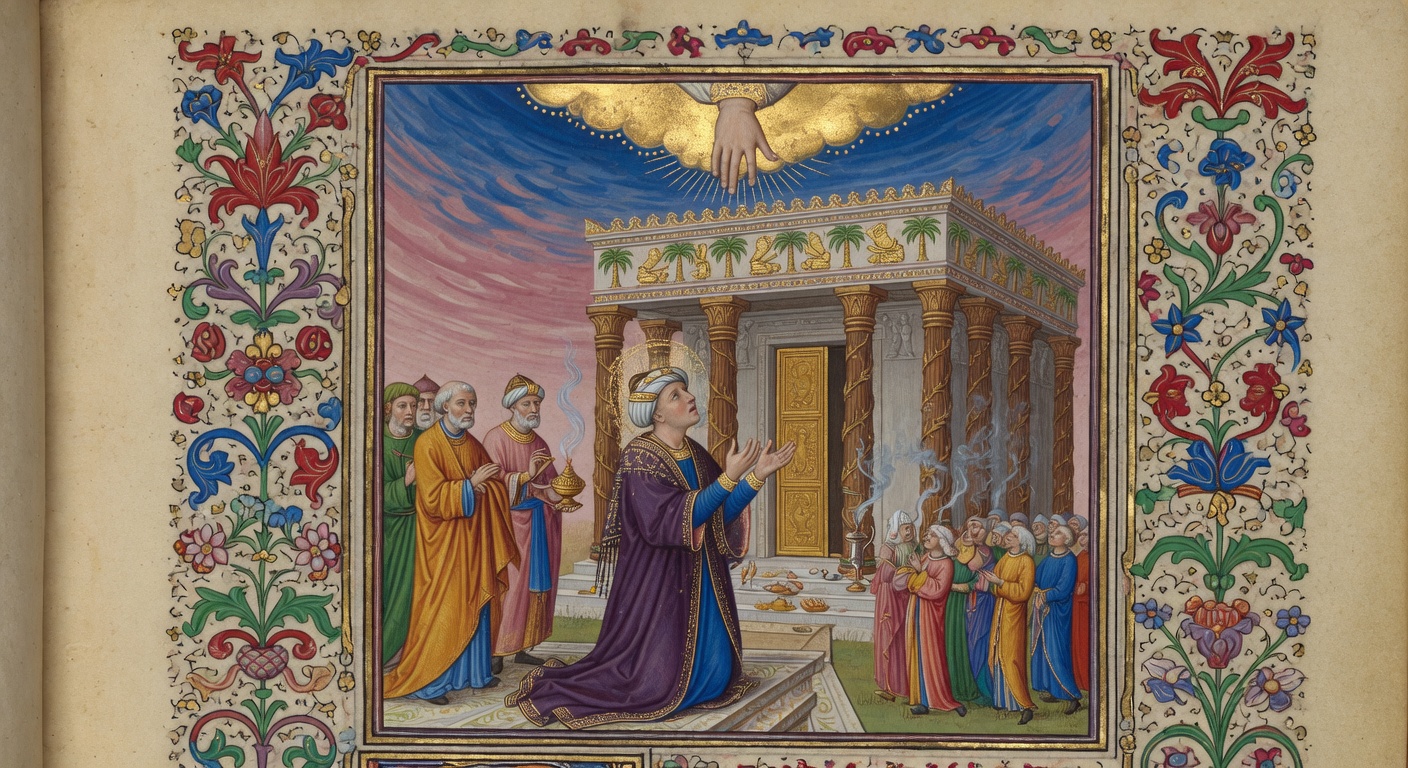
Solomons Prayer at Temple Dedication c. 960 BC
Solomon completed the construction of the Temple in Jerusalem as the permanent dwelling place for the Ark of the Covenant, fulfilling the divine instructions given to his father David. In the dedication ceremony recorded in 1 Kings 8, he stood before the assembly and offered an extended prayer that blessed the people while petitioning God to hear future prayers offered toward the Temple, including petitions for forgiveness, deliverance from enemies, and relief from drought or famine. This act established the Temple as Israel's central sanctuary and affirmed the conditional nature of God's covenant blessings tied to obedience and repentance. Its lasting significance in Scripture lies in modeling intercessory prayer and underscoring the Temple's role as a focal point for divine-human encounter until its later destruction.
-
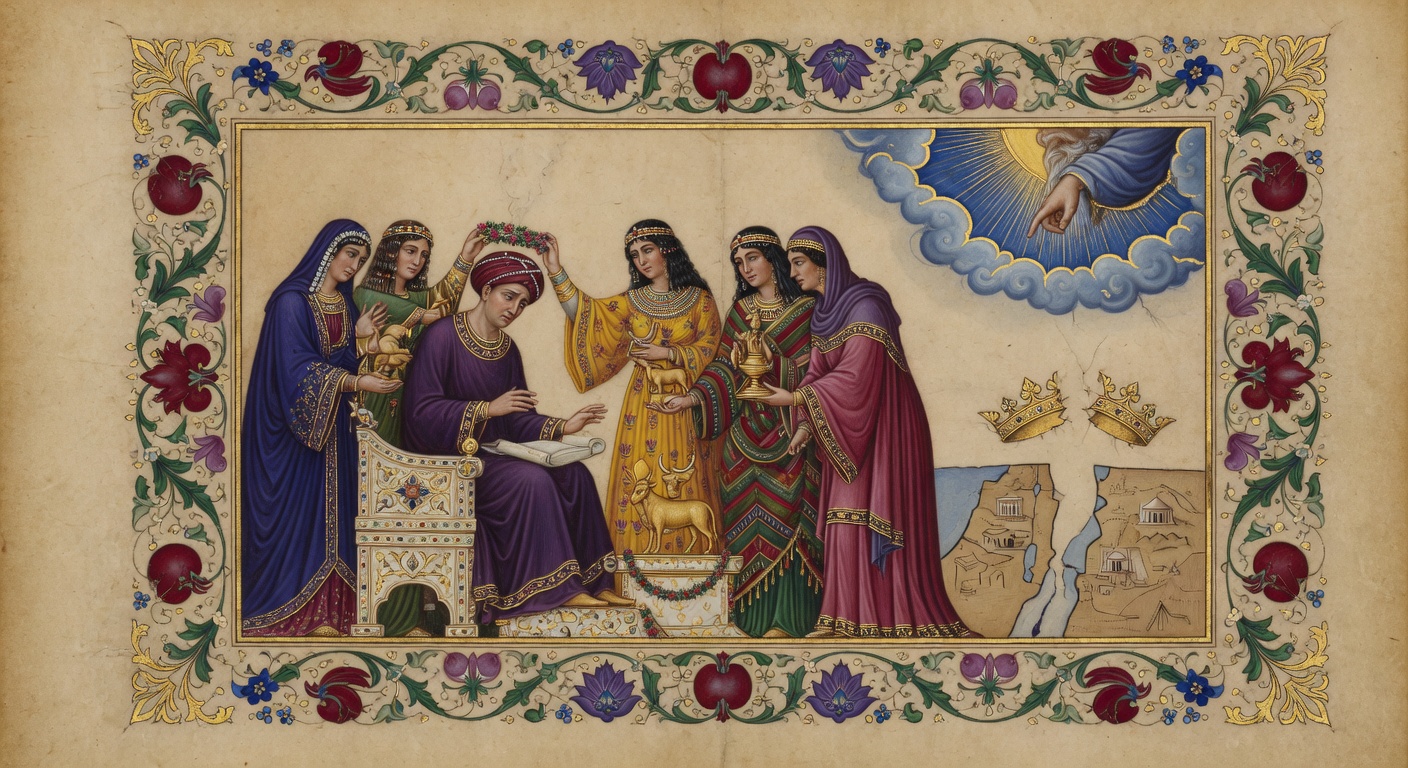
Solomon's Apostasy c. 940 BC
In the later years of his reign, King Solomon's numerous marriages to foreign women caused him to turn away from exclusive worship of the Lord and toward the idols of his wives, including Ashtoreth and Molech. This apostasy angered God, who had appeared to Solomon twice and warned him against such idolatry, resulting in the divine decree that the united kingdom of Israel would be divided after his death. Although the full judgment was delayed for the sake of David, ten tribes were ultimately given to Jeroboam while only Judah remained with Solomon's son Rehoboam. This event underscores the biblical theme that even the wisest of leaders are vulnerable to spiritual compromise, marking a pivotal turning point that led to the split between the northern kingdom of Israel and the southern kingdom of Judah.
Divided Kingdom
-
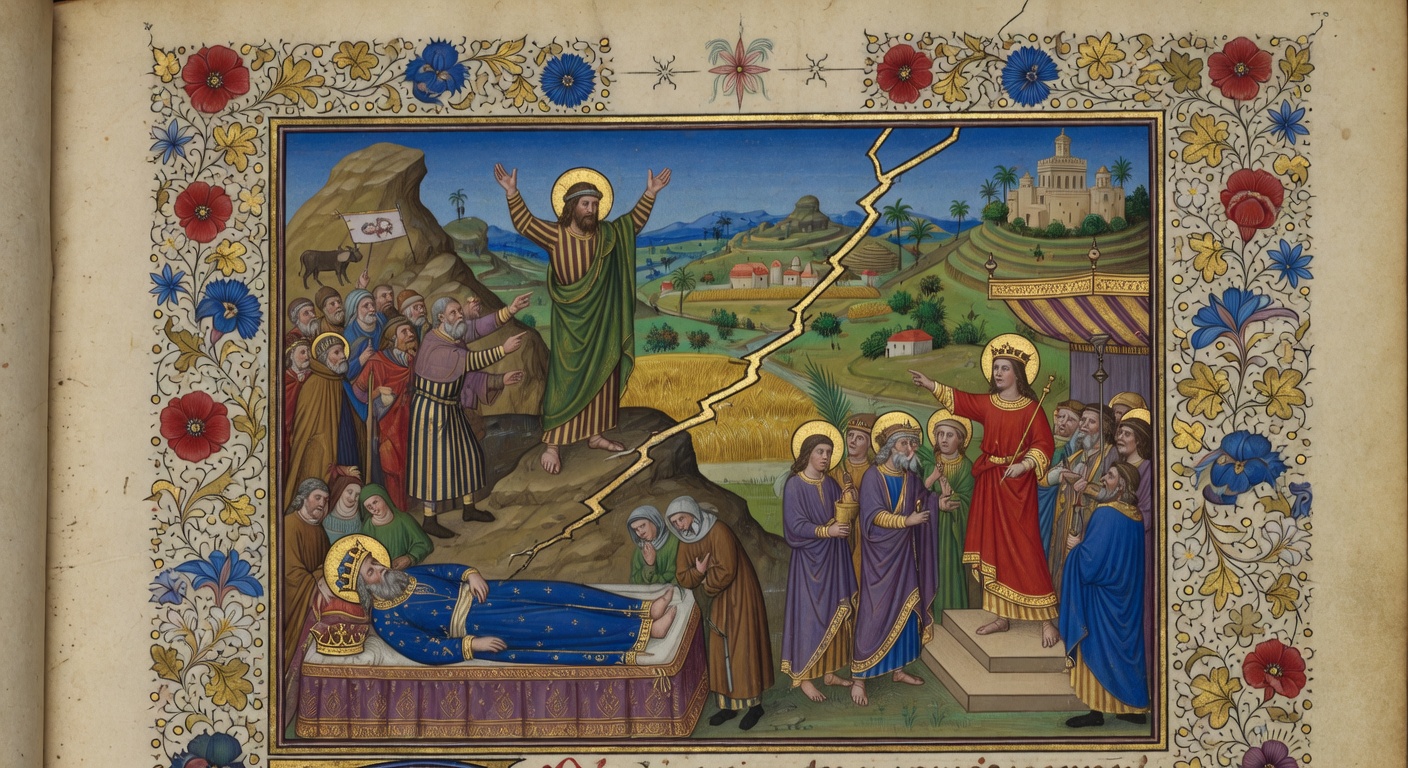
Kingdom Divided c. 930 BC
Following the death of King Solomon, his son Rehoboam refused to ease the heavy labor and tax burdens on the people, leading the northern tribes to rebel under Jeroboam and form the separate kingdom of Israel, while the southern tribes remained under the Davidic line as the kingdom of Judah. This division, occurring around 930 BC, created two rival nations with distinct capitals at Samaria and Jerusalem, frequent conflicts, and differing royal dynasties. In Scripture the event fulfills earlier warnings about the consequences of covenant unfaithfulness and initiates the divided-monarchy era chronicled in Kings and Chronicles, during which idolatry proliferated especially in the north. The split ultimately contributed to Israel’s fall to Assyria and Judah’s later exile to Babylon, illustrating the biblical pattern of blessing for obedience and judgment for rebellion.
-
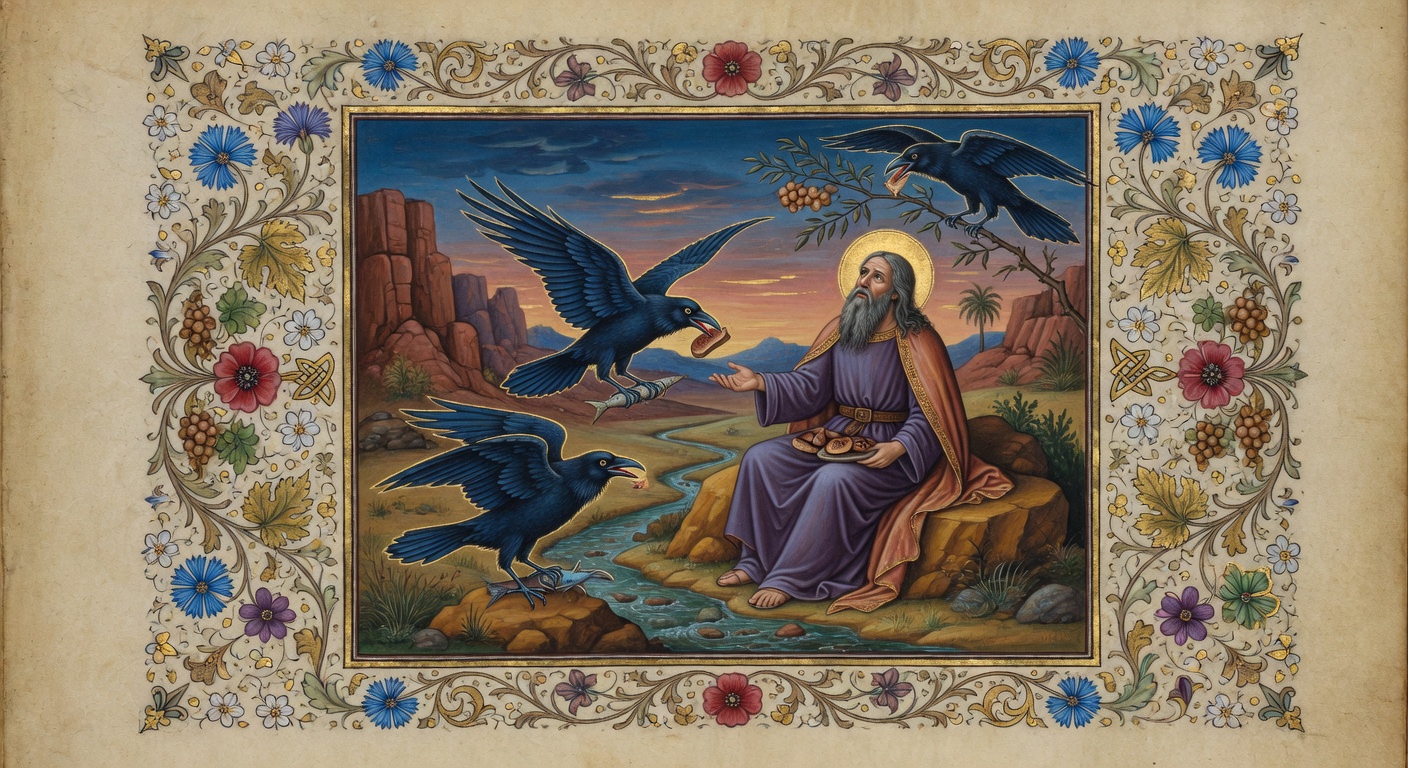
Elijah Fed by Ravens c. 870 BC
In the biblical account from 1 Kings 17, the prophet Elijah announces a severe drought upon Israel as judgment for the nation's idolatry under King Ahab. Obeying God's command, Elijah hides by the Brook Cherith where ravens miraculously deliver bread and meat to him twice daily while he drinks from the stream. This event underscores God's faithful provision for His servants amid adversity and serves as a testament to divine care that sustains Elijah for his upcoming prophetic missions, including the challenge against the prophets of Baal.
-
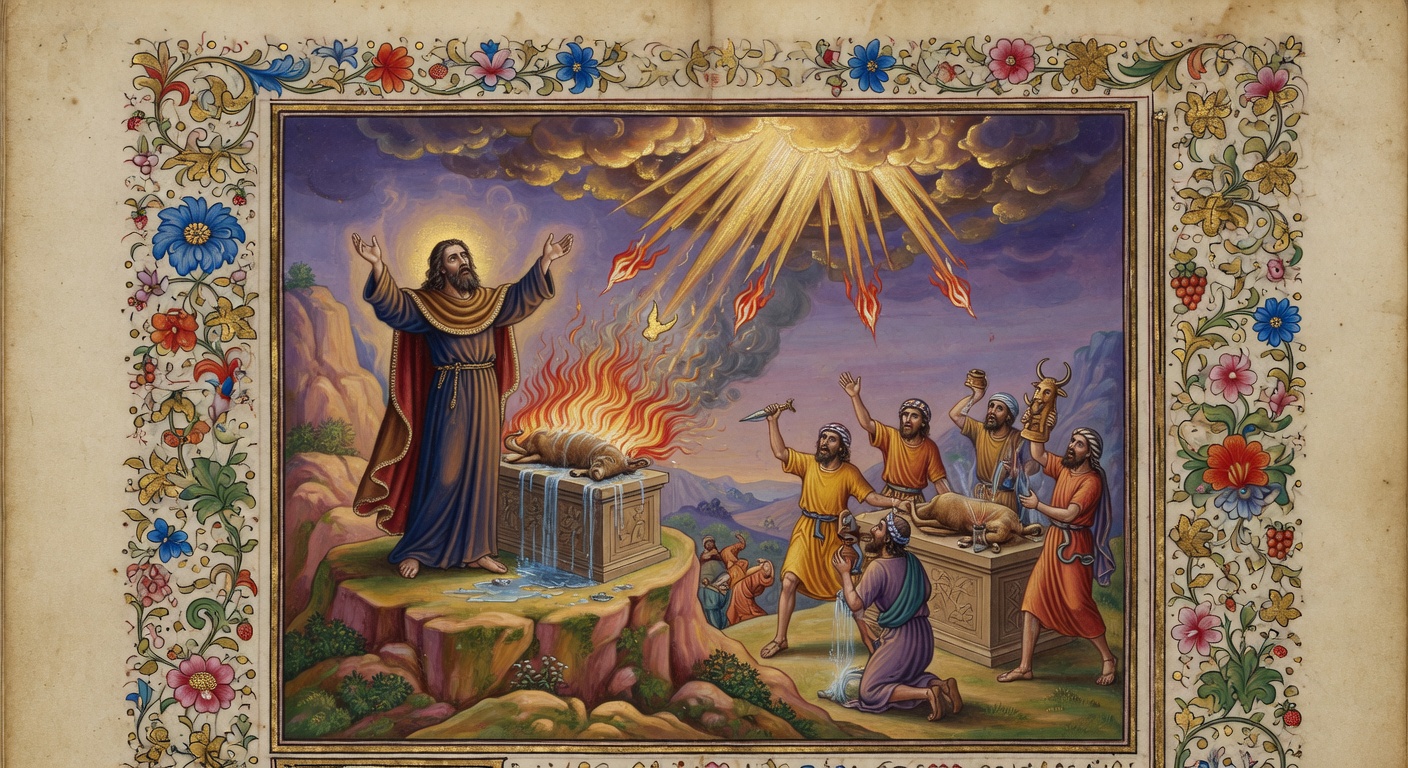
Elijah on Mount Carmel c. 860 BC
In the era of King Ahab and Queen Jezebel, widespread idolatry had led Israel to abandon the covenant with the Lord in favor of Baal worship, prompting a severe drought as divine judgment. On Mount Carmel, the prophet Elijah confronted 450 prophets of Baal in a public contest, preparing identical sacrifices without fire and challenging each side to call upon its deity to respond. After the prophets of Baal failed despite frantic appeals, Elijah prayed once and God sent fire from heaven that consumed the offering, wood, stones, and surrounding water, proving the Lord alone is God. This demonstration reaffirmed Israel's monotheistic faith, led to the slaying of the false prophets, and preceded the restoration of rain, underscoring themes of covenant loyalty and divine sovereignty throughout Scripture.
-
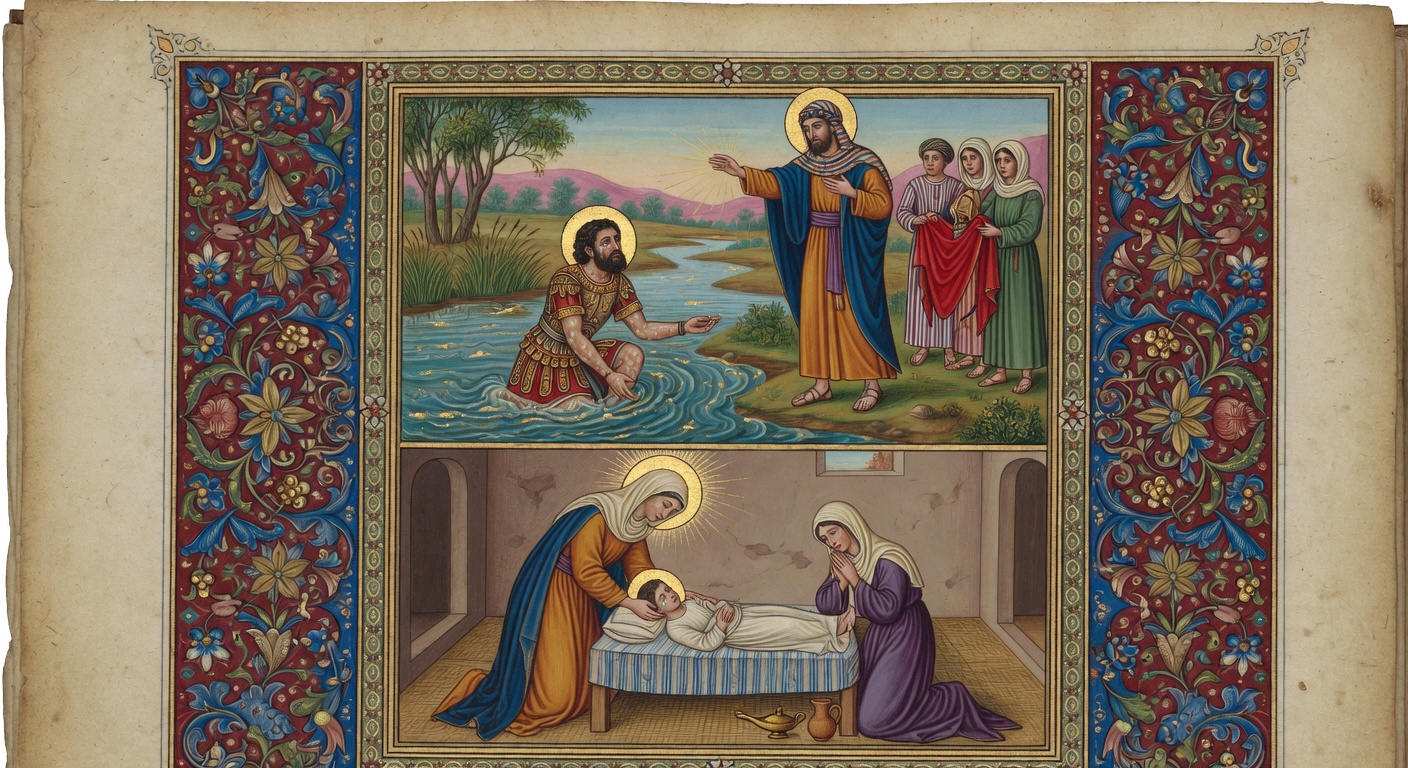
Elisha's Miracles c. 850 BC
After succeeding the prophet Elijah, Elisha carried out an extensive ministry in the northern kingdom of Israel during the ninth century BC, performing a series of miracles that demonstrated God’s continuing power and presence. Among the most notable were the healing of the Aramean commander Naaman’s leprosy after he washed seven times in the Jordan River and the raising of the Shunammite woman’s son through prophetic intercession. These accounts in 2 Kings illustrate God’s willingness to extend mercy beyond Israel’s borders and to respond to faith and obedience. They also affirm the legitimacy of Elisha’s prophetic role and anticipate the healing and resurrection miracles later performed by Jesus.
-
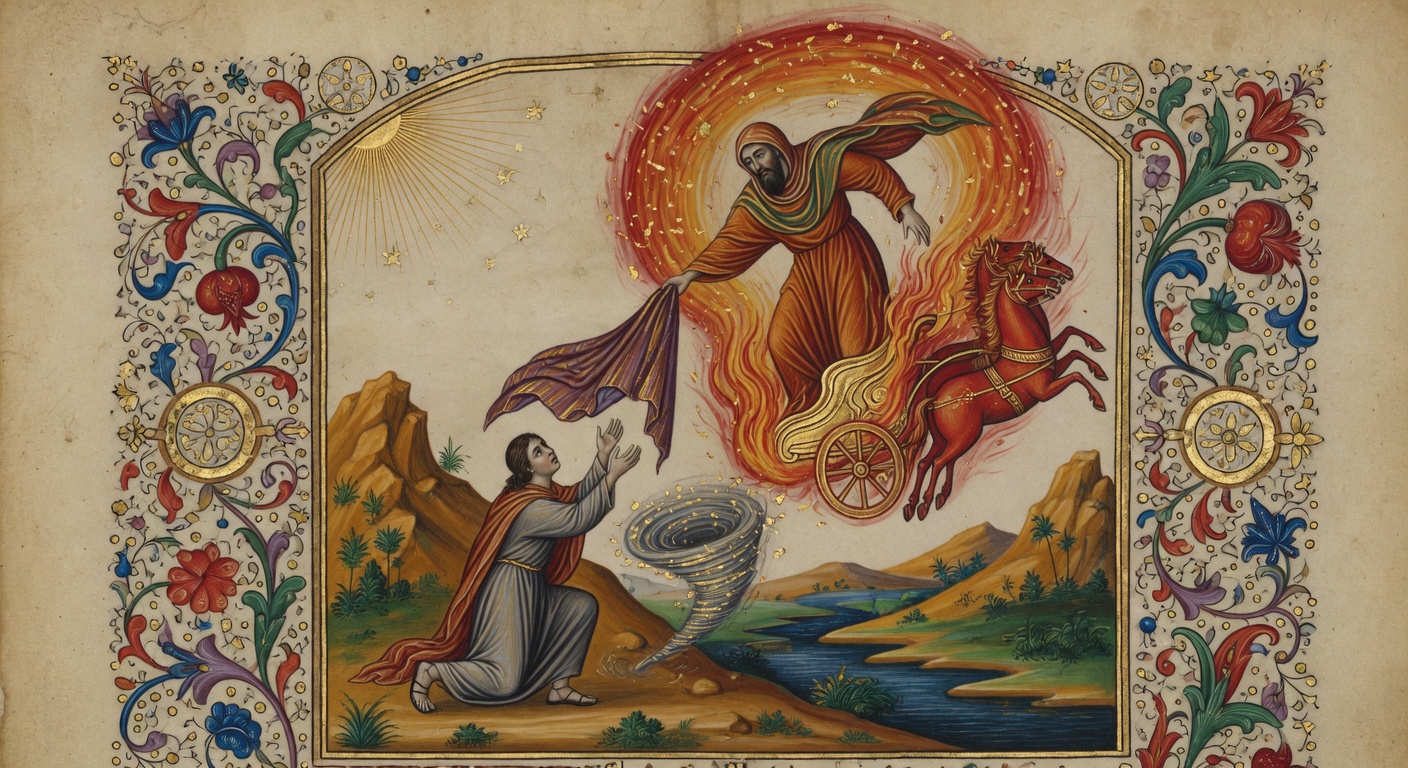
Elijah Taken to Heaven c. 850 BC
In the biblical account from 2 Kings 2, the prophet Elijah, who had confronted idolatry and demonstrated God's power during the reigns of Ahab and Ahaziah, is taken up to heaven without experiencing death. While walking with his designated successor Elisha near the Jordan River, a chariot of fire drawn by horses of fire appears and separates the two men, after which Elijah ascends in a whirlwind as Elisha watches. Before departing, Elijah casts his cloak, or mantle, to Elisha, transferring his prophetic authority and a double portion of his spirit. This transition highlights the continuity of God's message through successive prophets and serves as a foundational event echoed in later Scripture, including prophecies of Elijah's return.
-
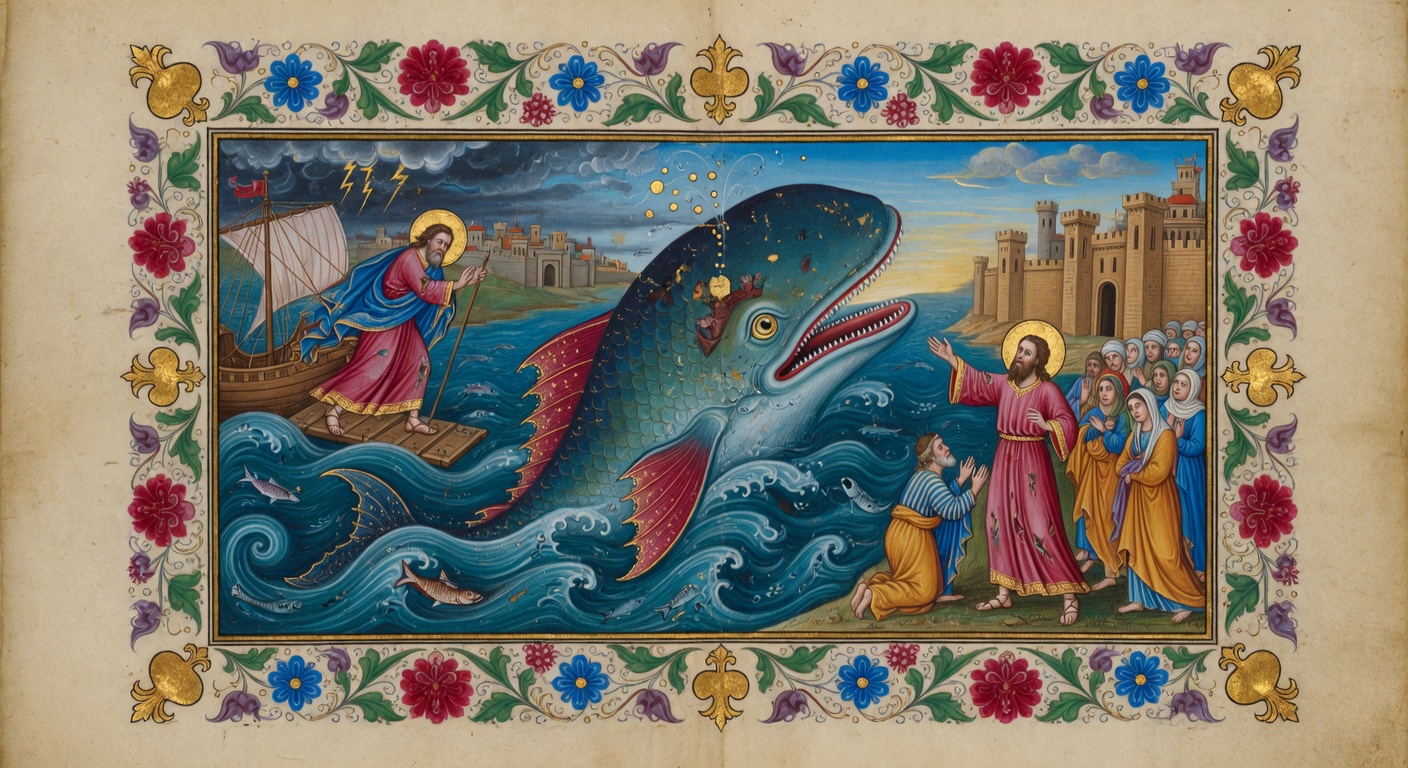
Jonah and the Whale c. 780 BC
The story of Jonah begins when God instructs the prophet to warn the Assyrian city of Nineveh about its impending judgment due to its great wickedness. Instead of obeying, Jonah attempts to flee by sea, leading to a divine storm that results in him being swallowed by a great fish, where he remains for three days before being delivered onto dry land. Upon finally preaching in Nineveh, the entire city repents, prompting God to spare them from destruction. This event holds significance in Scripture as it demonstrates God's concern for all nations and serves as a sign of resurrection referenced by Jesus in the Gospels.
-
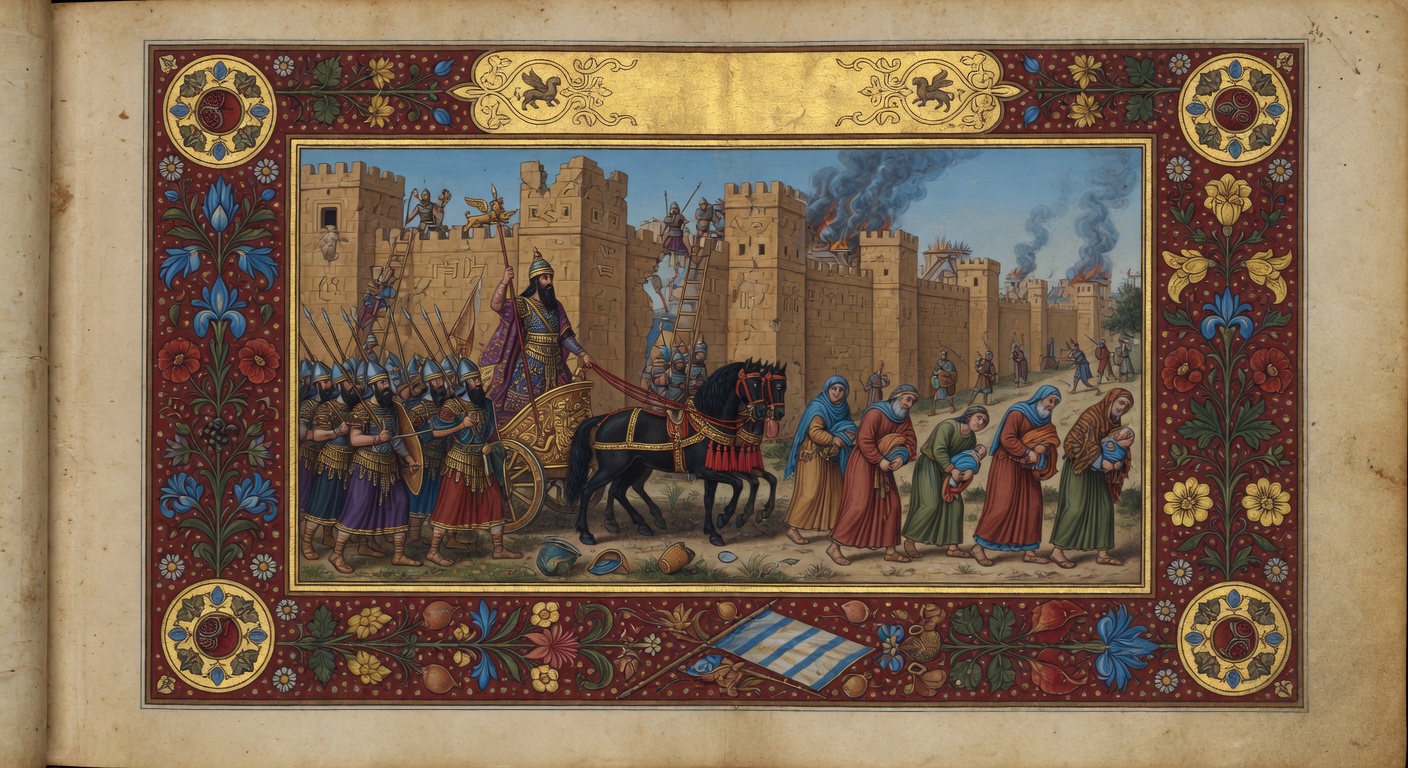
Fall of Israel (Samaria) 722 BC
✓ ConfirmedThe northern kingdom of Israel, centered in Samaria, fell to the Assyrian Empire around 722 BC when Sargon II completed the capture of the capital following a three-year siege begun by Shalmaneser V. This conquest led to the mass deportation of Israelites into exile, a policy that scattered much of the population and gave rise to the later tradition of the ten lost tribes. Scripture records the event in 2 Kings 17, attributing the kingdom's destruction to generations of idolatry, covenant violations, and rejection of prophetic warnings from figures such as Hosea and Amos. The fall ended Israel's existence as an independent nation, underscored the reality of divine judgment for unfaithfulness, and left only the southern kingdom of Judah as the surviving remnant of God's people.
-
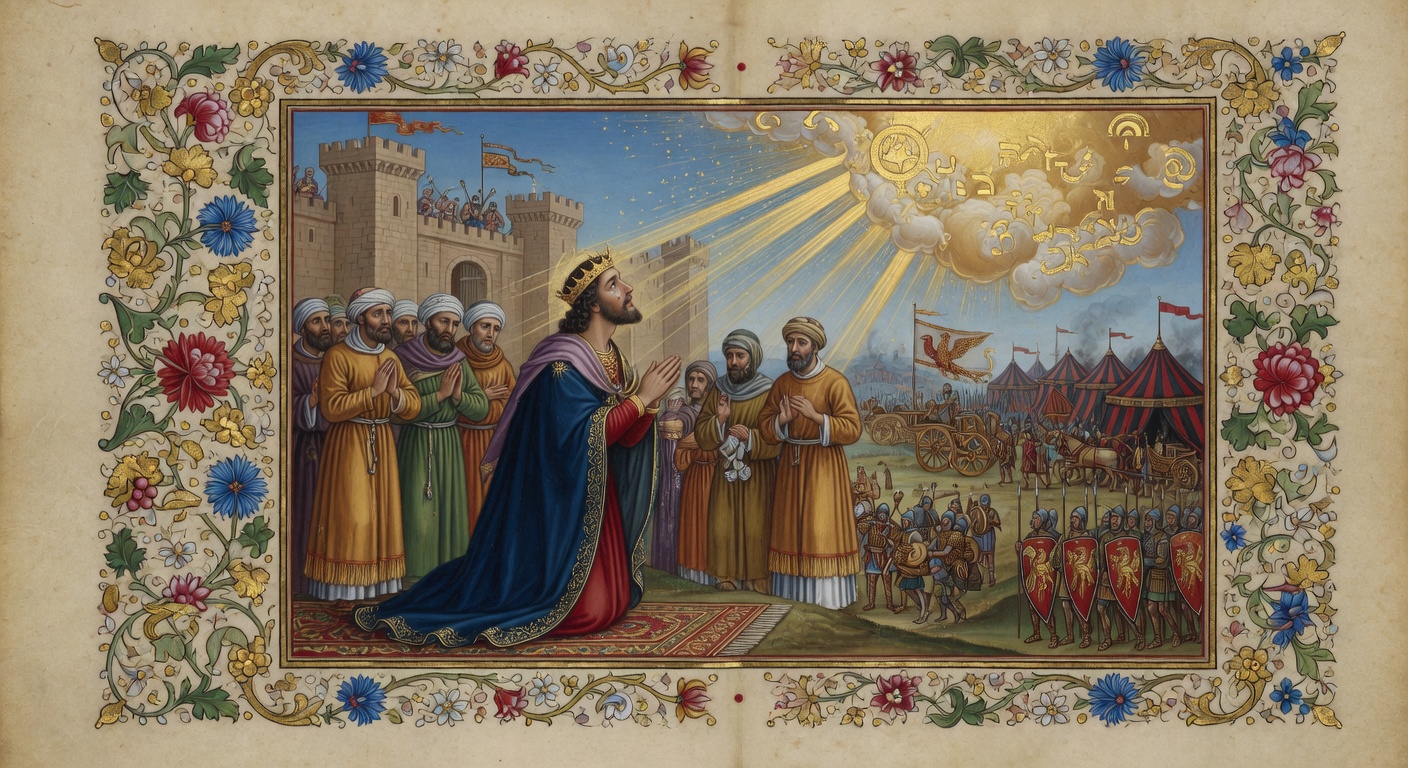
Hezekiah's Prayer c. 701 BC
During the Assyrian invasion of Judah around 701 BC, King Hezekiah confronted an existential threat as Sennacherib's forces besieged Jerusalem and mocked the God of Israel. Hezekiah responded by entering the temple to pray, spreading the enemy's threatening letter before the Lord and seeking divine deliverance based on God's covenant promises. God answered through the prophet Isaiah, affirming that the city would be spared, and an angel subsequently struck down 185,000 Assyrian troops in a single night, forcing Sennacherib's retreat. This account, preserved in Isaiah 37, 2 Kings 19, and 2 Chronicles 32, illustrates the power of earnest prayer and God's faithfulness in protecting those who trust Him amid overwhelming odds.
-
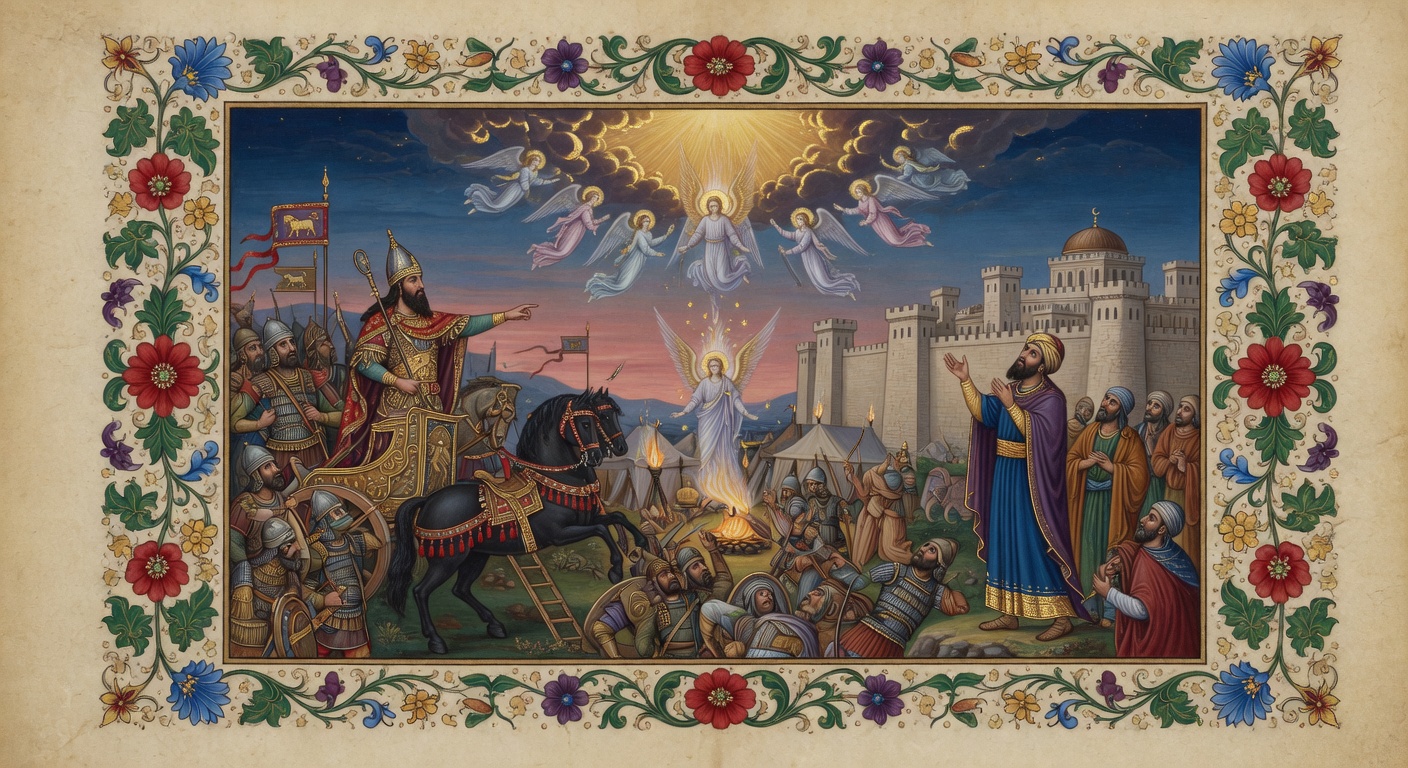
Sennacherib's Siege of Jerusalem 701 BC
✓ ConfirmedIn 701 BC, Assyrian king Sennacherib invaded the kingdom of Judah as part of a broader campaign to suppress rebellion against the Assyrian Empire, capturing numerous fortified cities and advancing on Jerusalem under King Hezekiah. Hezekiah responded by fortifying the city's defenses, including the construction of the Siloam Tunnel for water supply, while turning to prayer and seeking counsel from the prophet Isaiah rather than relying solely on political alliances. According to the biblical accounts in 2 Kings 18–19, Isaiah 36–37, and 2 Chronicles 32, God intervened by sending an angel that killed 185,000 Assyrian soldiers in a single night, compelling Sennacherib to withdraw without capturing the city. This deliverance underscores Scripture's emphasis on divine sovereignty and the efficacy of faithful trust in God amid overwhelming threats, distinguishing Jerusalem's fate from the earlier fall of the northern kingdom of Israel.
-
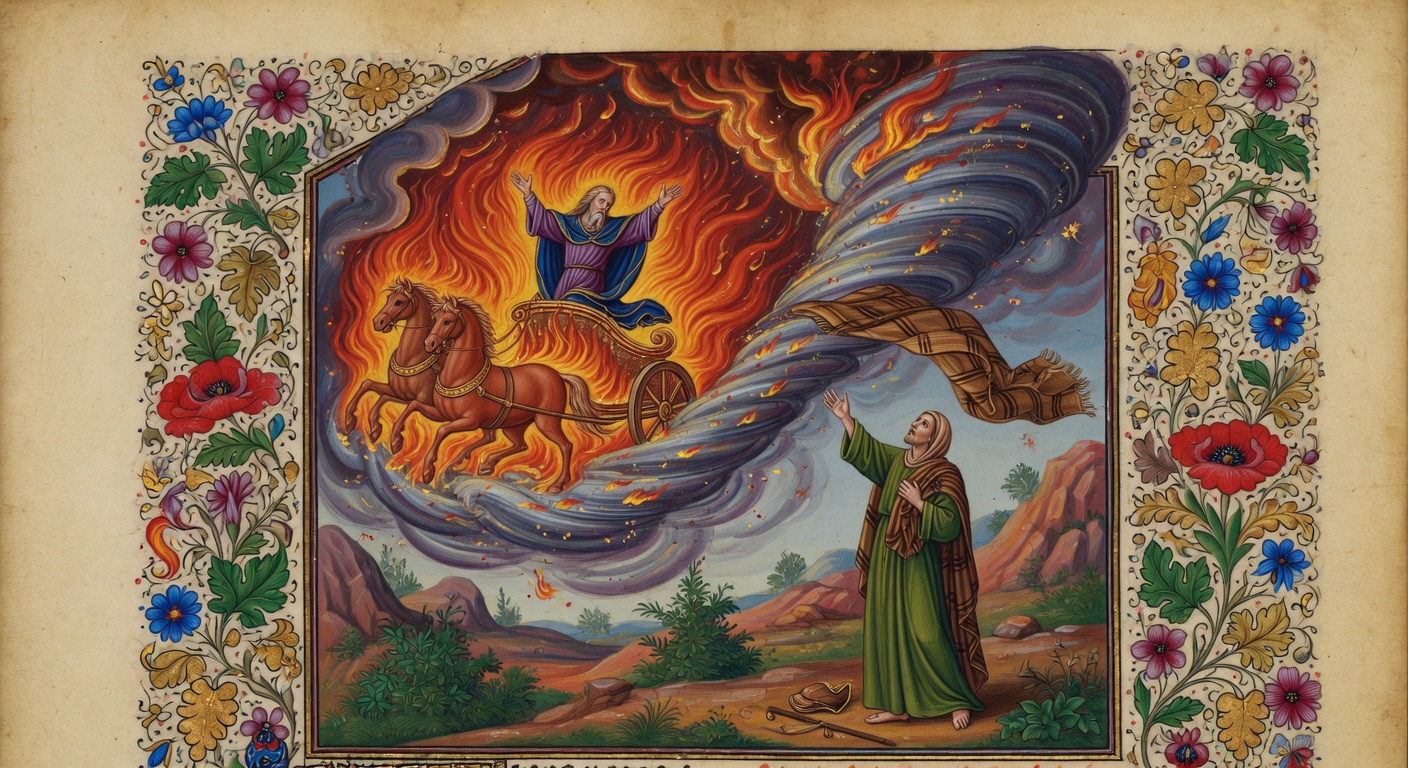
Elijah Taken to Heaven c. 850 BC
In the biblical account from 2 Kings, the prophet Elijah is miraculously taken up to heaven without experiencing death, ascending in a whirlwind accompanied by a chariot and horses of fire while his successor Elisha looks on. As Elijah departs, his cloak or mantle falls to the ground, which Elisha then picks up, symbolizing the transfer of prophetic authority and anointing to him. This event is significant because it marks the continuation of God's prophetic work in Israel through Elisha, who subsequently performs similar miracles, and it underscores themes of divine power and faithful succession in Scripture. Elijah's ascension also serves as a rare example of a person being taken directly to heaven, later referenced in the New Testament during the Transfiguration.
-
Isaiah's Suffering Servant c. 700 BC
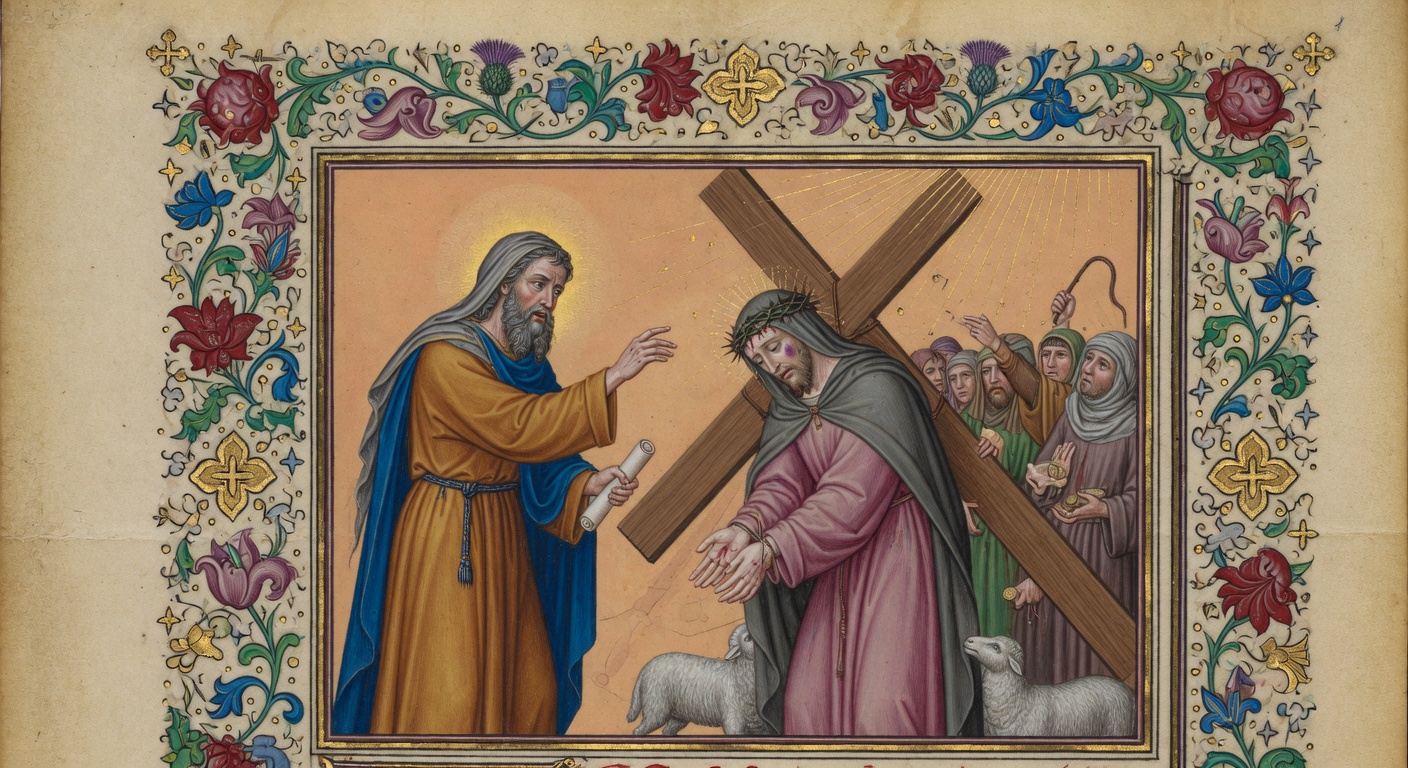
In the Book of Isaiah, particularly chapters 52 and 53, the prophet describes a figure known as the Suffering Servant who is despised, rejected, and subjected to unjust suffering and death despite his innocence. This servant voluntarily bears the sins and iniquities of many as a guilt offering, achieving justification and healing for transgressors through his wounds and sacrificial death. The passage highlights themes of substitutionary atonement central to biblical theology, portraying the servant's obedience as the means of redemption for others. Christians have long interpreted this prophecy as fulfilled in Jesus Christ, while Jewish traditions often view the servant as representing Israel or a righteous remnant.
-
Josiah Finds the Book of the Law c. 622 BC
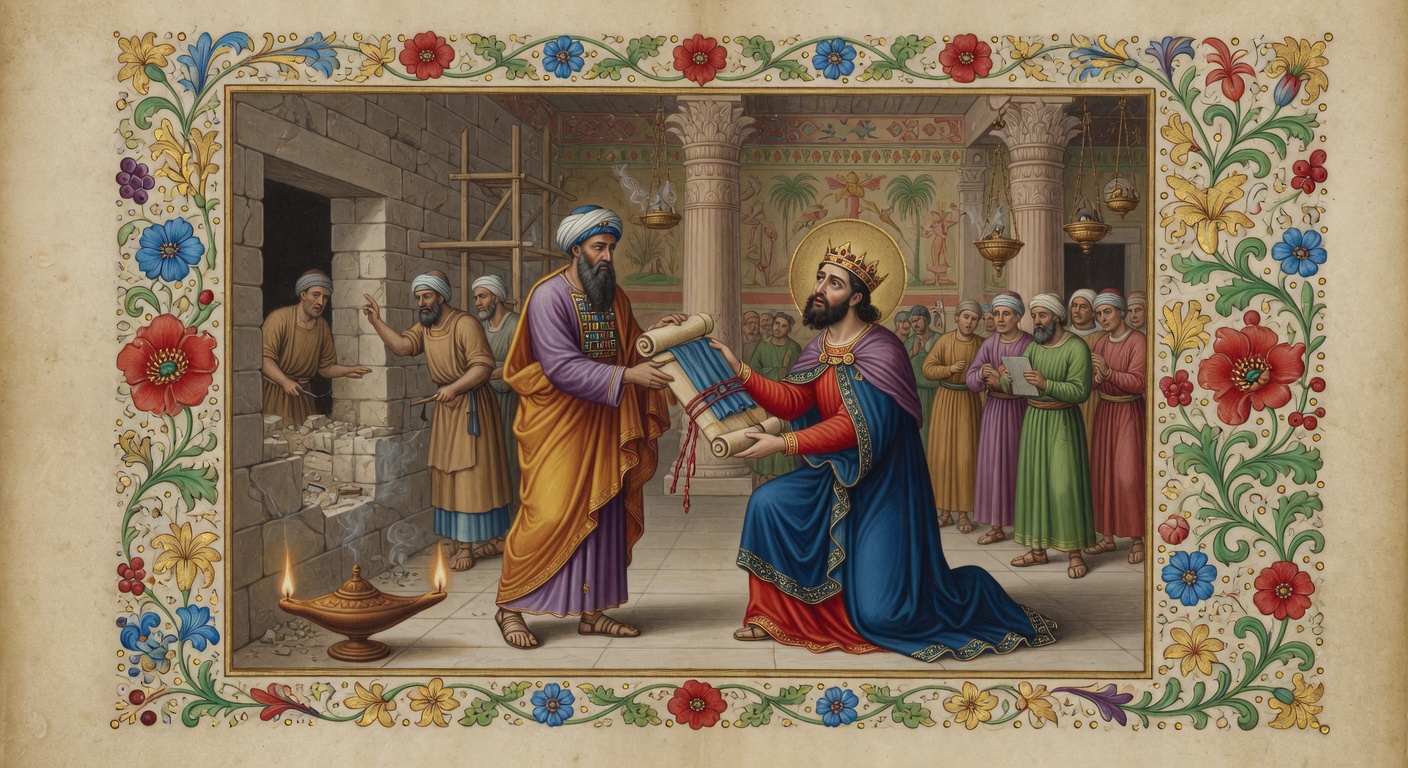
✓ ConfirmedDuring the reign of King Josiah, repairs to the temple in Jerusalem led to the discovery of the long-neglected Book of the Law by the high priest Hilkiah. When the book was read to the king, he responded with deep repentance, tearing his clothes upon realizing how far Judah had strayed from God's commands. Josiah then sought guidance from the prophetess Huldah and launched sweeping reforms across the land, purging idolatry and restoring proper worship practices. This rediscovery highlighted the central role of Scripture in renewing the covenant relationship between God and His people, influencing the spiritual direction of the nation in its final years before exile.
-
Josiahs Reforms c. 622 BC
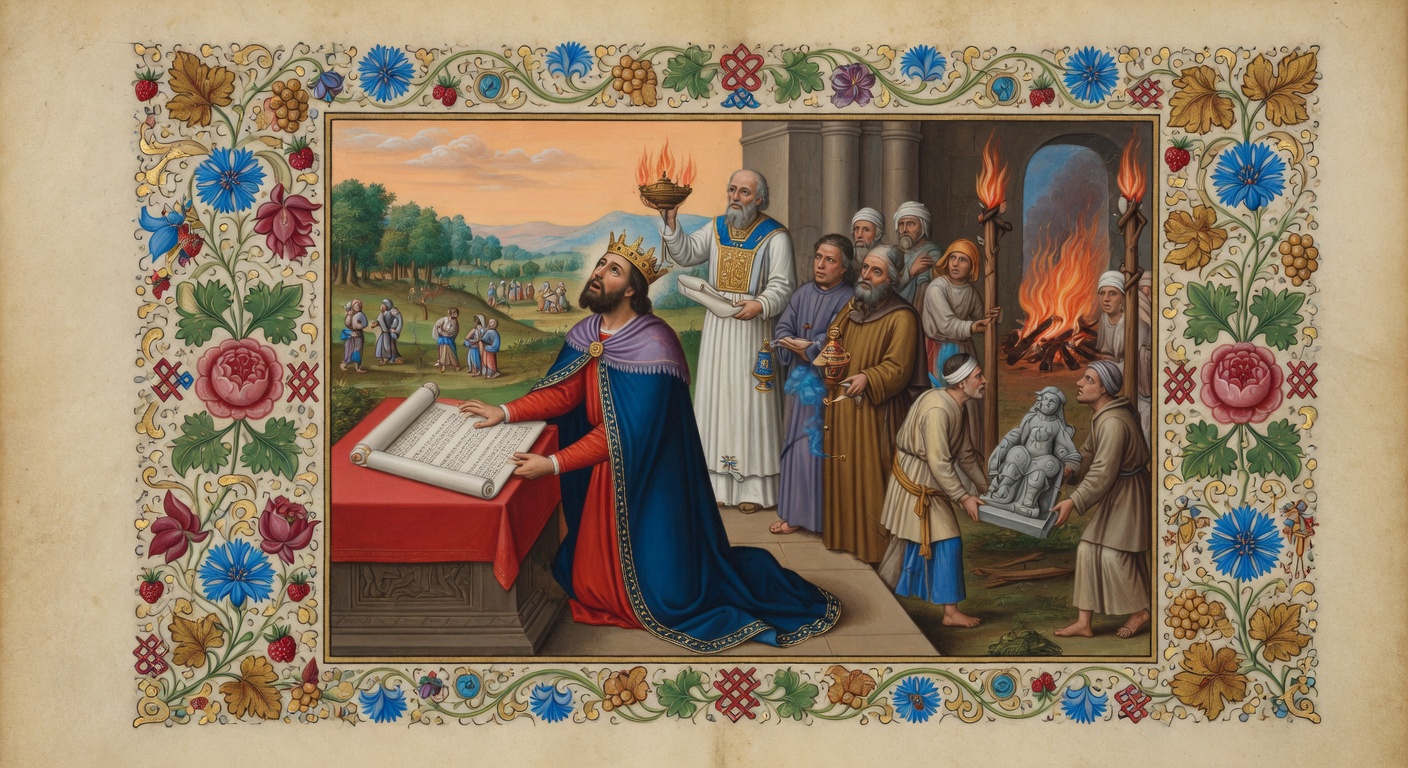
During the reign of King Josiah in the late seventh century BC, temple repairs in Jerusalem led to the discovery of the Book of the Law by High Priest Hilkiah, prompting the young king to tear his robes in repentance upon hearing its contents. Josiah responded by purging Judah of idolatry, destroying pagan altars and high places, reinstating covenant faithfulness, and overseeing a national Passover celebration unmatched since the days of the judges. These reforms temporarily restored adherence to Mosaic law amid generations of apostasy under previous kings. In Scripture, the account in 2 Kings 22–23 and 2 Chronicles 34–35 underscores the power of God’s Word to spark revival while illustrating that such renewal could only delay, not avert, the coming judgment of exile.
Exile & Return
-
Battle of Carchemish 605 BC
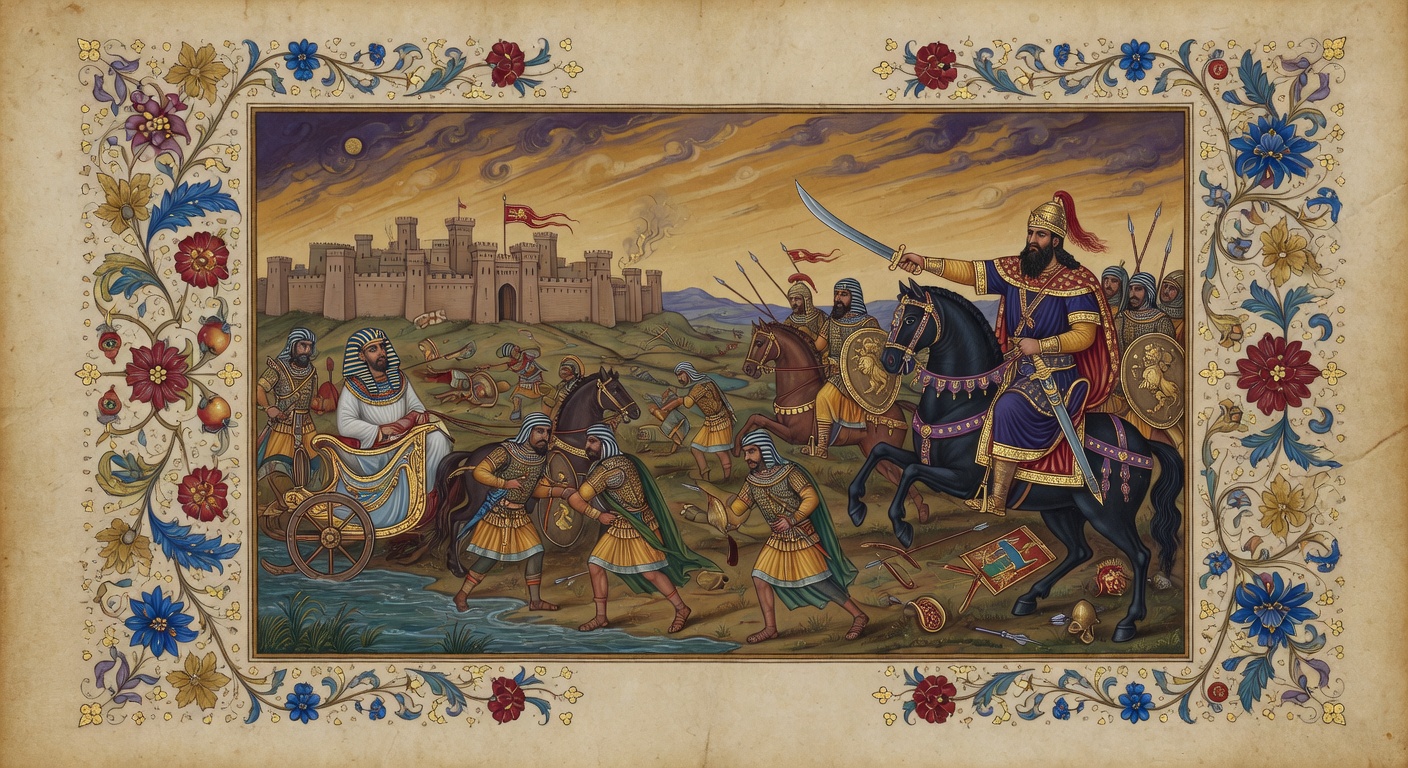
✓ ConfirmedThe Battle of Carchemish in 605 BC saw Babylonian forces under Crown Prince Nebuchadnezzar II decisively defeat the Egyptian army of Pharaoh Necho II along the Euphrates River. This clash ended Egyptian influence in Syria and the Levant after the collapse of the Assyrian Empire, allowing Babylon to emerge as the unrivaled power in the ancient Near East. In Scripture the event is explicitly noted in Jeremiah 46:2 and marks the geopolitical shift that brought Judah under Babylonian control, setting the stage for Nebuchadnezzar’s later campaigns against Jerusalem and the Babylonian exile. The outcome illustrates the biblical theme of God directing the rise and fall of nations to accomplish His purposes.
-
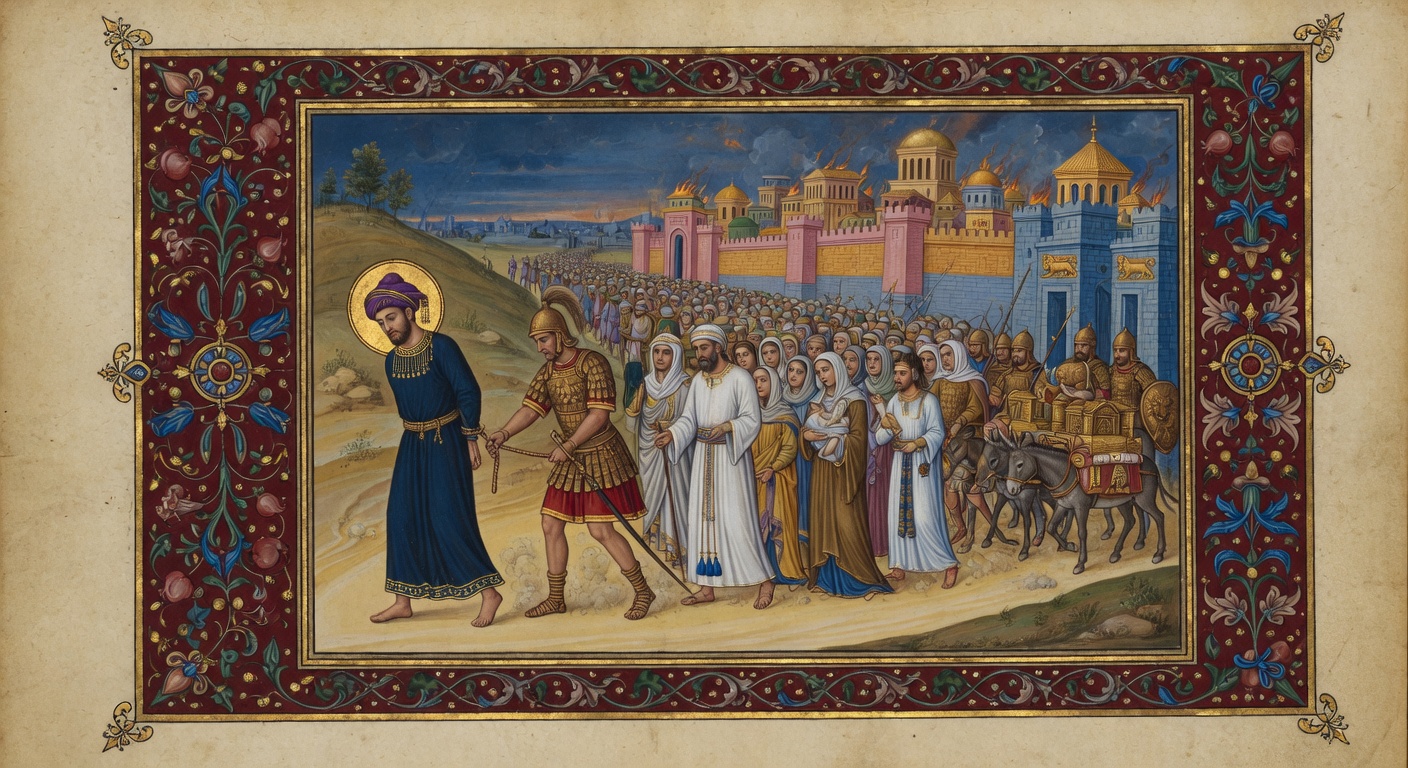
Deportation of Jehoiachin 597 BC
✓ ConfirmedDuring the reign of King Jehoiachin in 597 BC, Babylonian forces under Nebuchadnezzar II captured Jerusalem after a brief siege, leading to the deportation of the young king, his mother, court officials, and approximately ten thousand leading citizens, including craftsmen and warriors, to Babylon. This event occurred as divine judgment for Judah's persistent idolatry and failure to heed prophetic warnings from figures like Jeremiah. Jehoiachin's exile marked a pivotal moment in the Babylonian captivity, with Zedekiah installed as a puppet king, and it set the stage for the final destruction of Jerusalem in 586 BC. In Scripture, this deportation underscores themes of covenant consequences and hope, as Jehoiachin is later shown favor in Babylon and appears in the genealogy of Jesus Christ.
-
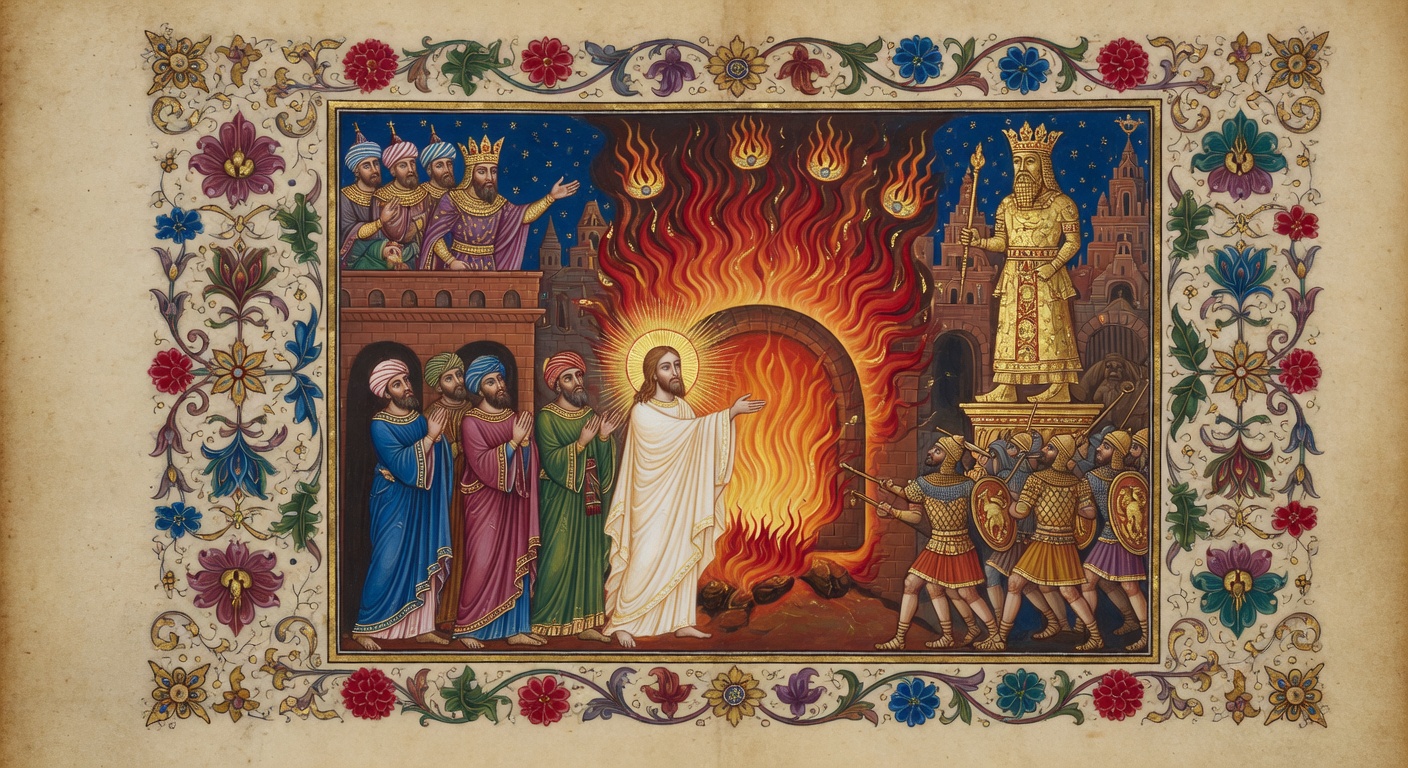
Fiery Furnace c. 590 BC
During the Babylonian exile, King Nebuchadnezzar erected a massive golden statue and commanded all officials to worship it on pain of death in a blazing furnace. Shadrach, Meshach, and Abednego, three faithful Jewish exiles, refused to comply, citing exclusive allegiance to the God of Israel, and were thrown into the furnace after it was heated seven times hotter than usual. They emerged completely unharmed, accompanied by a fourth figure resembling a divine being, which led Nebuchadnezzar to acknowledge their God's supremacy and issue a decree protecting the worship of the true God. This account in Daniel 3 illustrates the rewards of steadfast faith amid persecution and affirms God's sovereign protection over those who trust Him.
-
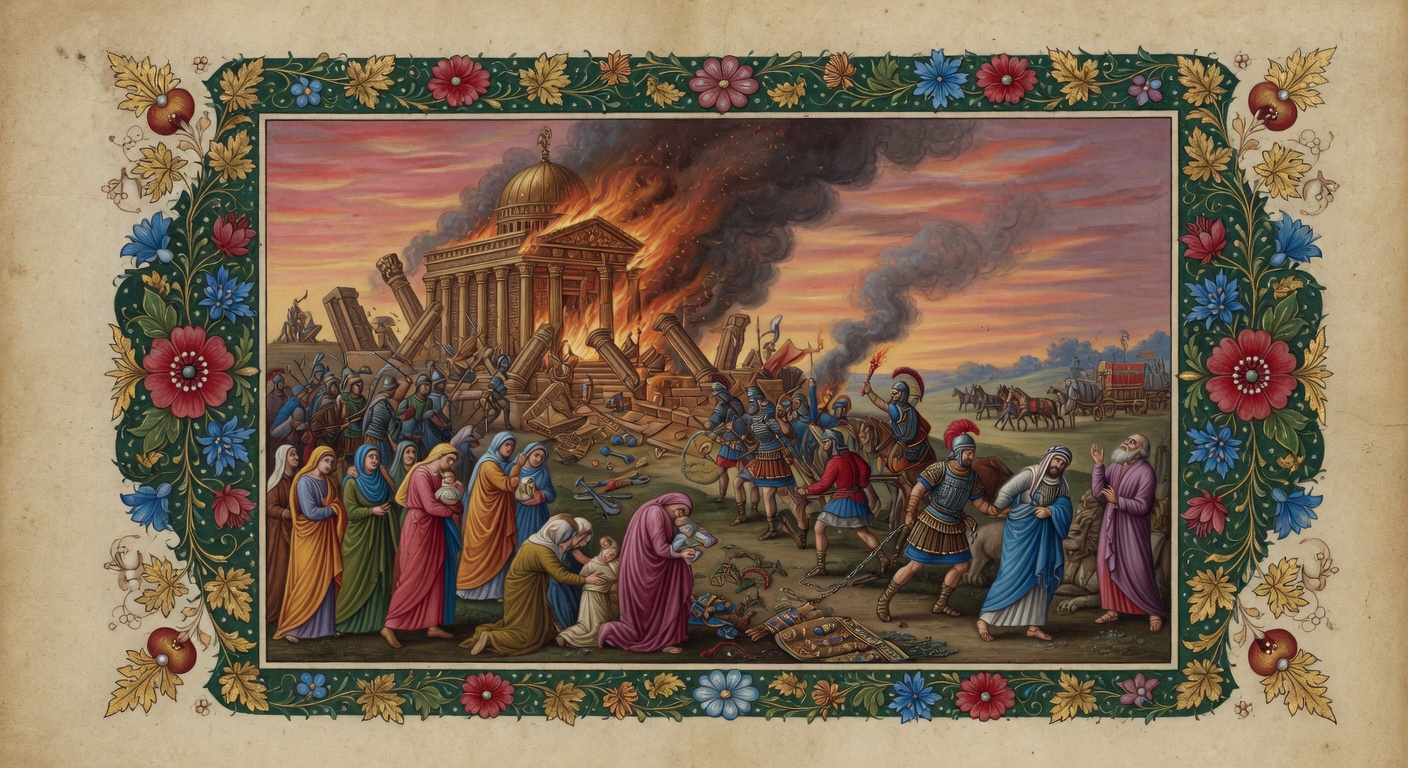
Fall of Jerusalem 586 BC
✓ ConfirmedThe Fall of Jerusalem occurred in 586 BCE when Babylonian forces under Nebuchadnezzar II besieged the city, destroyed Solomon's Temple, and burned much of Jerusalem after King Zedekiah's rebellion. This catastrophe ended the southern Kingdom of Judah and led to the exile of its leading citizens to Babylon, fulfilling repeated warnings from prophets like Jeremiah about divine judgment for covenant unfaithfulness and idolatry. In Scripture the event is presented as a pivotal act of God's justice that dismantled the Davidic monarchy and temple-centered worship, yet it also set the stage for themes of repentance, hope, and promised restoration developed in books such as Ezekiel, Lamentations, and later Ezra-Nehemiah.
-
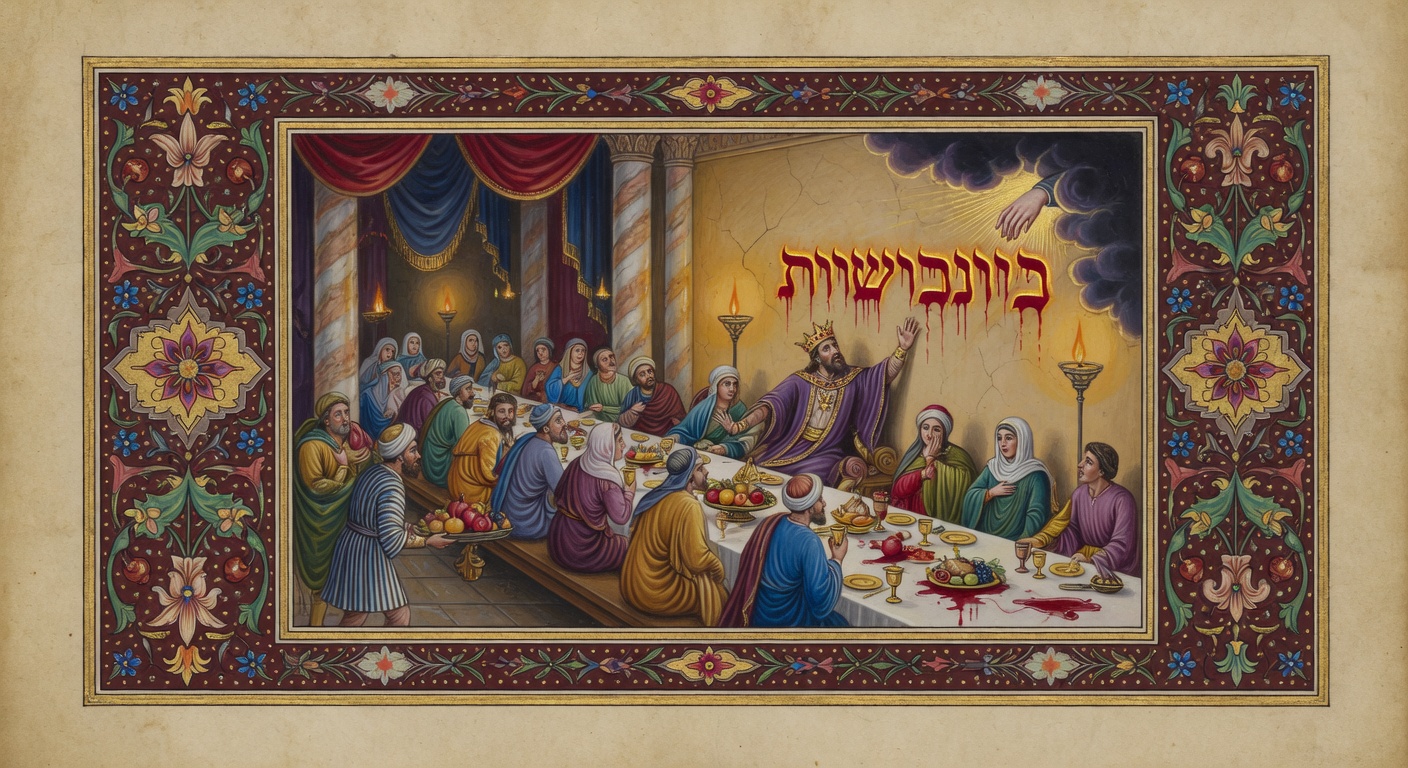
Writing on the Wall 539 BC
During Belshazzar's feast in Babylon, the king and his nobles drank from gold and silver vessels taken from the Jerusalem temple, an act of defiance against the God of Israel. Suddenly, a mysterious hand appeared and wrote the words "Mene, Mene, Tekel, Upharsin" on the palace wall, which the prophet Daniel interpreted as God's judgment that the Babylonian kingdom had been numbered, weighed, and found wanting, soon to be divided between the Medes and Persians. That very night, Persian forces captured the city, killing Belshazzar and ending the Babylonian empire. This event underscores Scripture's theme of divine sovereignty, illustrating how God holds rulers accountable for pride and sacrilege while fulfilling prophecies of judgment.
-
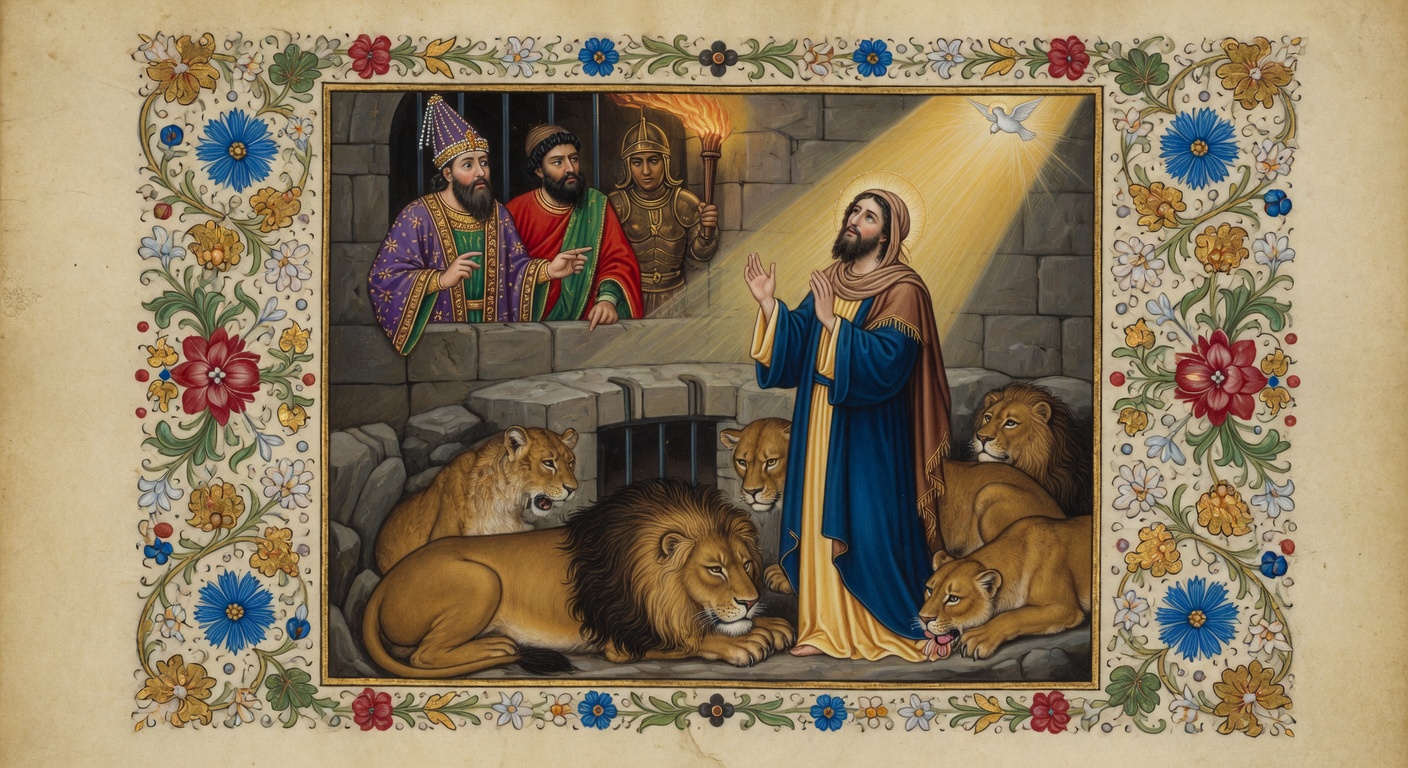
Daniel in the Lion's Den c. 539 BC
In the book of Daniel, the prophet, serving as an advisor to King Darius of Persia, faced a conspiracy from jealous officials who tricked the king into issuing a decree forbidding prayer to anyone but the king for thirty days. Despite the law, Daniel continued his practice of praying to God three times daily, leading to his punishment of being cast into a den of lions. God miraculously intervened by sending an angel to close the lions' mouths, preserving Daniel unharmed overnight. This event demonstrated God's faithfulness to those who trust Him and prompted King Darius to issue a decree honoring the God of Daniel, underscoring themes of divine protection and sovereignty in Scripture.
-
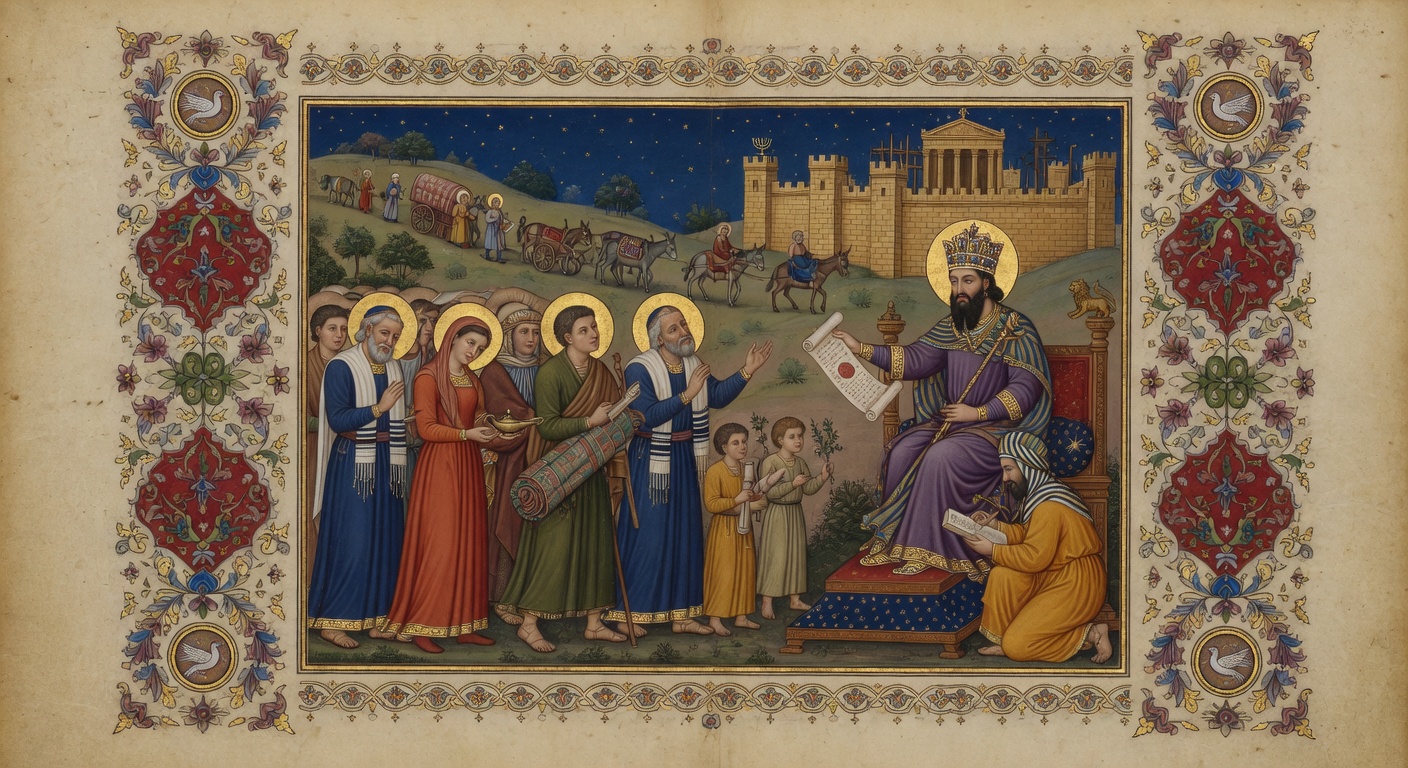
Return from Exile 538 BC
✓ ConfirmedFollowing the conquest of Babylon by the Persian Empire, King Cyrus issued a decree in 538 BC permitting the exiled Jews to return to their homeland in Jerusalem and reconstruct the temple that had been destroyed by the Babylonians. This event marked the end of the Babylonian captivity, which had lasted approximately seventy years as prophesied by Jeremiah, allowing a remnant of the Jewish people to resettle in Judah. The return facilitated the rebuilding of the Second Temple, completed under Zerubbabel, restoring central worship practices and symbolizing God's faithfulness to His covenant promises. In Scripture, this period underscores themes of restoration, divine sovereignty over nations, and the continuation of Israel's story leading into the post-exilic books like Ezra and Nehemiah.
-
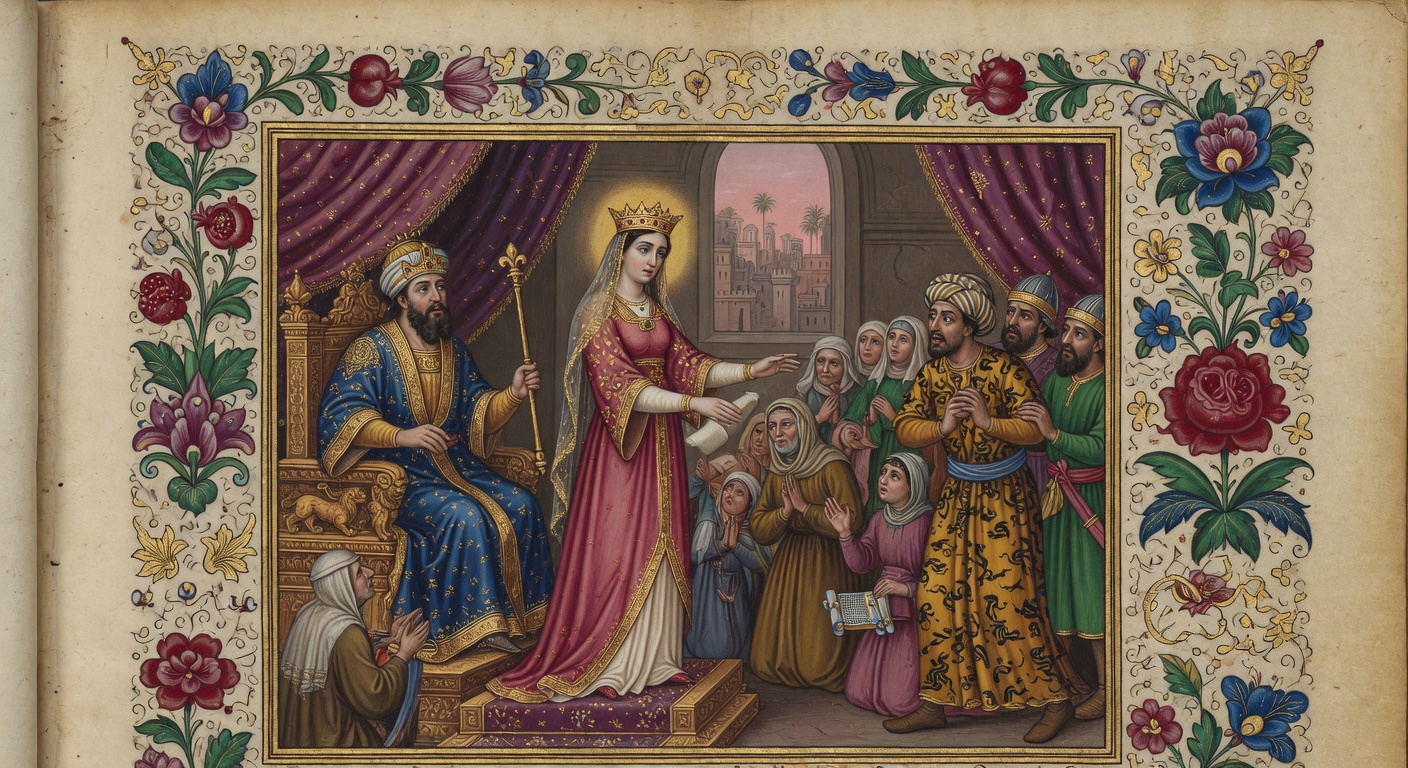
Esther Saves Her People c. 473 BC
In the Persian Empire under King Ahasuerus, the advisor Haman secured a royal decree to annihilate all Jews after Mordecai refused to bow to him, placing the Jewish people under threat of genocide across the provinces. Queen Esther, a Jewish woman who had been chosen as queen and advised by her cousin Mordecai, risked execution by entering the king's presence uninvited and strategically revealed both her identity and Haman's plot during banquets with the king. Her actions led to Haman's execution, a counter-decree permitting Jewish self-defense, and the deliverance of her people from destruction. This event is commemorated annually in the festival of Purim and illustrates God's providential care for Israel even when His name is not explicitly mentioned in the biblical text.
-
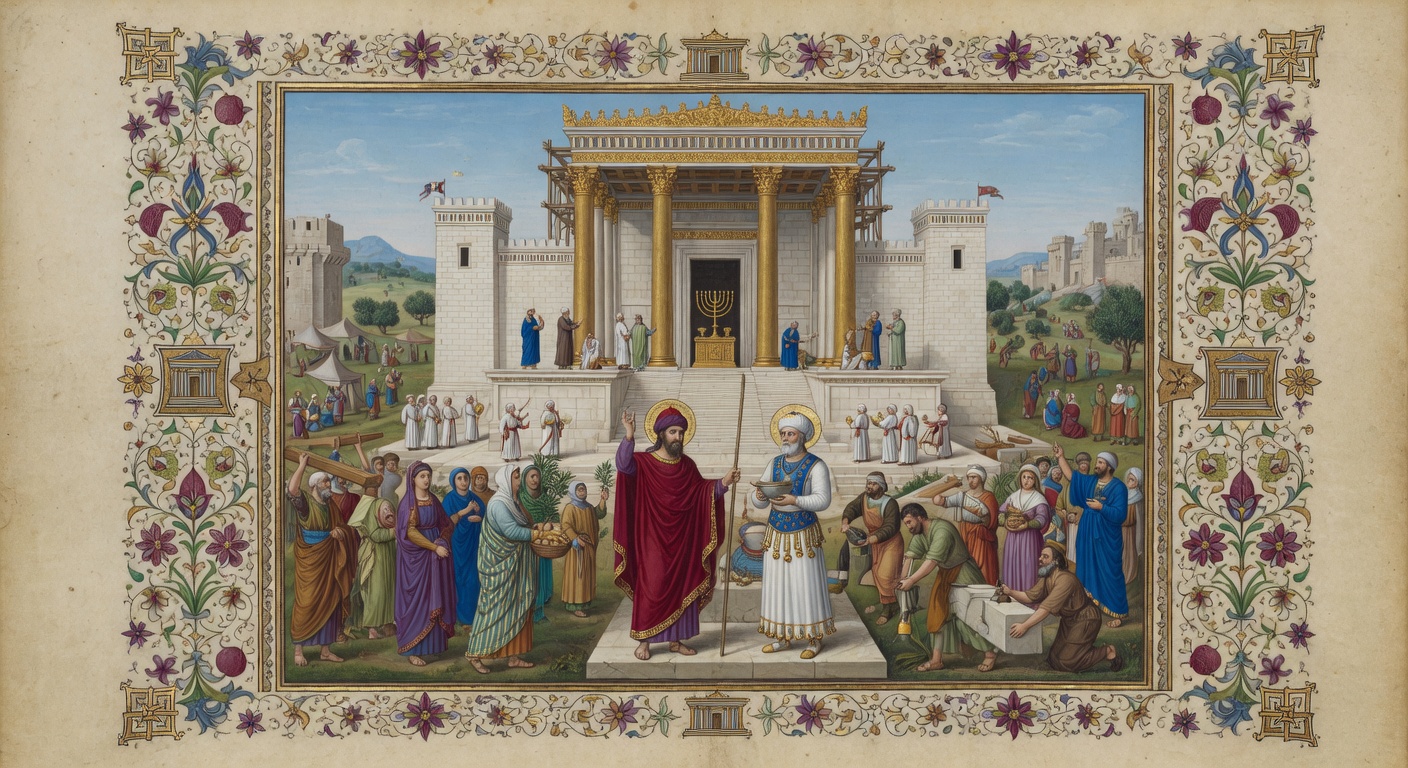
Second Temple Completed 516 BC
✓ ConfirmedThe returned exiles, led by the governor Zerubbabel and the high priest Joshua, completed construction of the Second Temple in Jerusalem around 516 BC after a period of opposition and delay. This event followed the decree of Persian king Cyrus that ended the Babylonian exile, allowing Jewish captives to return and restore their homeland. The Temple's dedication enabled the resumption of daily sacrifices and religious festivals central to Jewish covenant life. In Scripture, the completion is detailed in Ezra 6 and affirmed by the prophets Haggai and Zechariah as a sign of God's faithfulness to his promises of restoration after seventy years of judgment.
-
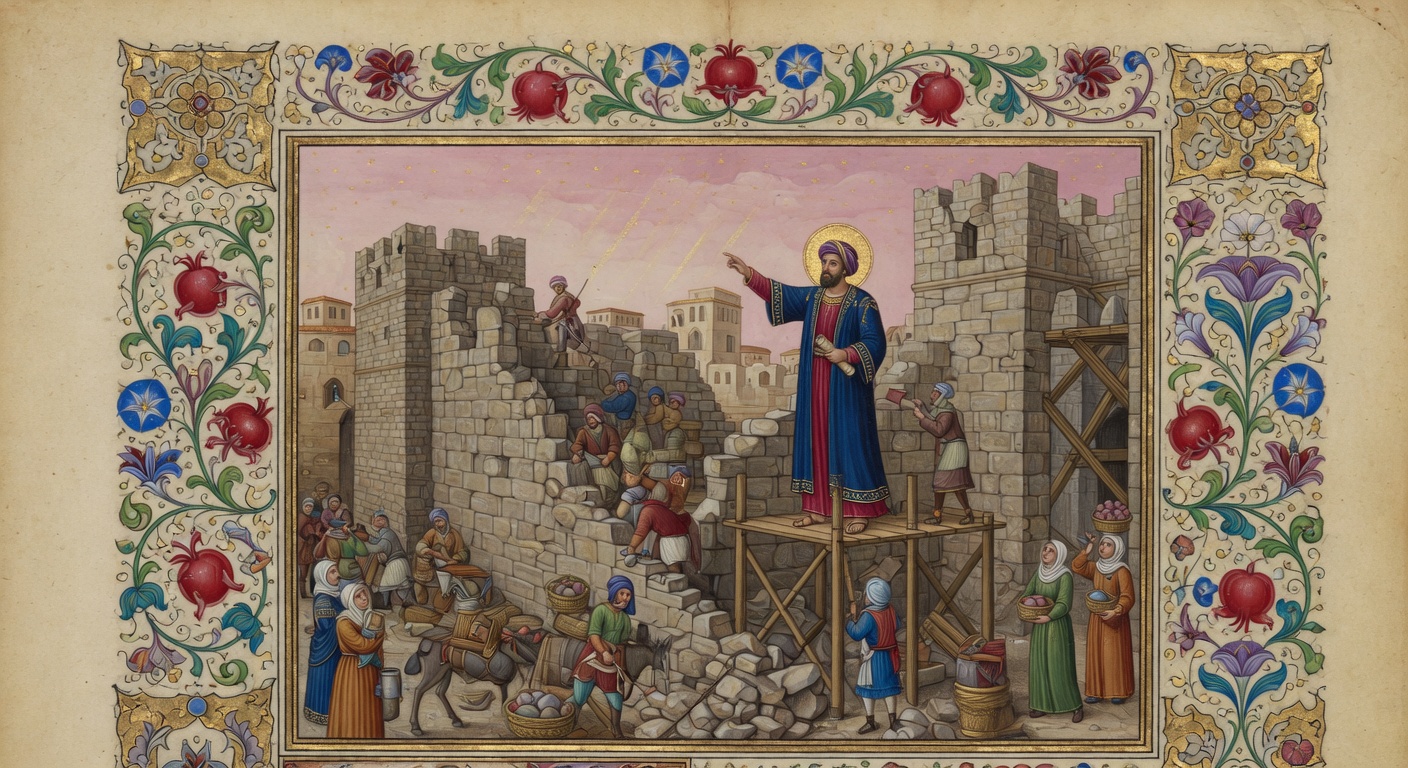
Rebuilding the Walls 445 BC
✓ ConfirmedFollowing the Babylonian exile, the walls of Jerusalem lay in ruins, leaving the city defenseless and symbolizing the spiritual and national brokenness of God's people after decades of judgment and displacement. Nehemiah, a Jewish cupbearer to Persian King Artaxerxes, receives royal permission and resources around 445 BC to return and lead the reconstruction, organizing the people to repair sections of the wall while facing intense opposition from regional enemies like Sanballat and Tobiah. The work is completed in just 52 days through unified effort and prayerful dependence on God, restoring physical security to the city. This event matters in Scripture as a key step in post-exilic restoration, highlighting themes of covenant faithfulness, communal revival, and God's sovereignty in enabling His people to rebuild both their city and their relationship with Him.
-
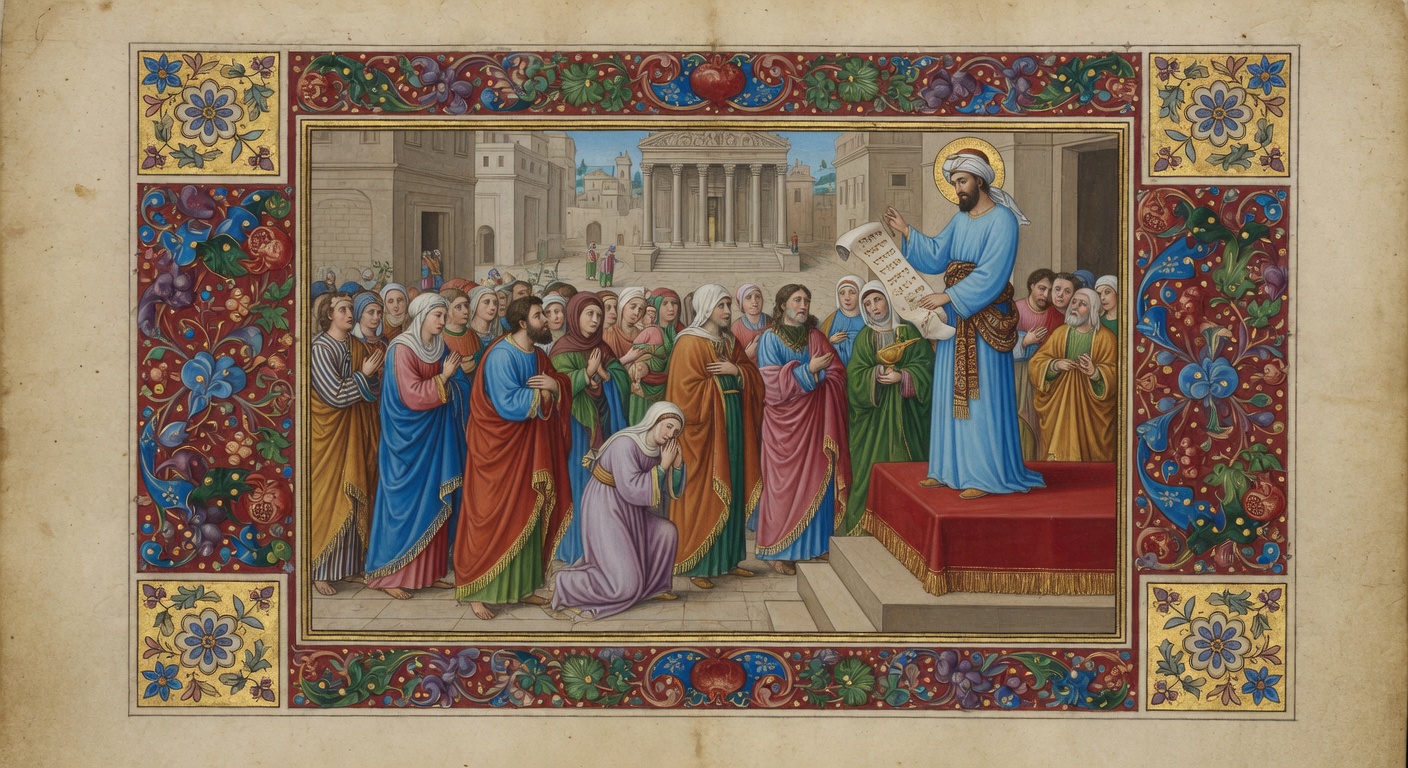
Ezra Reads the Law c. 444 BC
Following the return from Babylonian exile and the rebuilding of Jerusalem's walls under Nehemiah, Ezra the priest and scribe assembled all the people (including men, women, and those old enough to understand) in the square before the Water Gate. From daybreak until noon he read aloud from the Book of the Law of Moses while Levites explained its meaning, prompting the crowd to weep in conviction, worship, and renewed obedience. The people then observed the Feast of Tabernacles with joy and later confessed their sins, leading to a covenant renewal ceremony. This public reading, recorded in Nehemiah 8, highlights Scripture's central role in restoring Israel's spiritual identity and covenant faithfulness after judgment and dispersion.
Intertestamental
-
The Silent Years c. 400–5 BC
The Silent Years refer to the roughly four centuries spanning from the time of the prophet Malachi to the birth of Jesus Christ. During this intertestamental period, no new prophetic revelations were given to Israel as recorded in Scripture, though significant historical developments took place under Persian, Greek, and Roman rule. This era saw the rise of various Jewish sects and the translation of the Hebrew Scriptures into Greek, known as the Septuagint. Its significance lies in bridging the Old Testament promises with their fulfillment in the New Testament, demonstrating God's sovereign timing in the arrival of the Messiah.
-
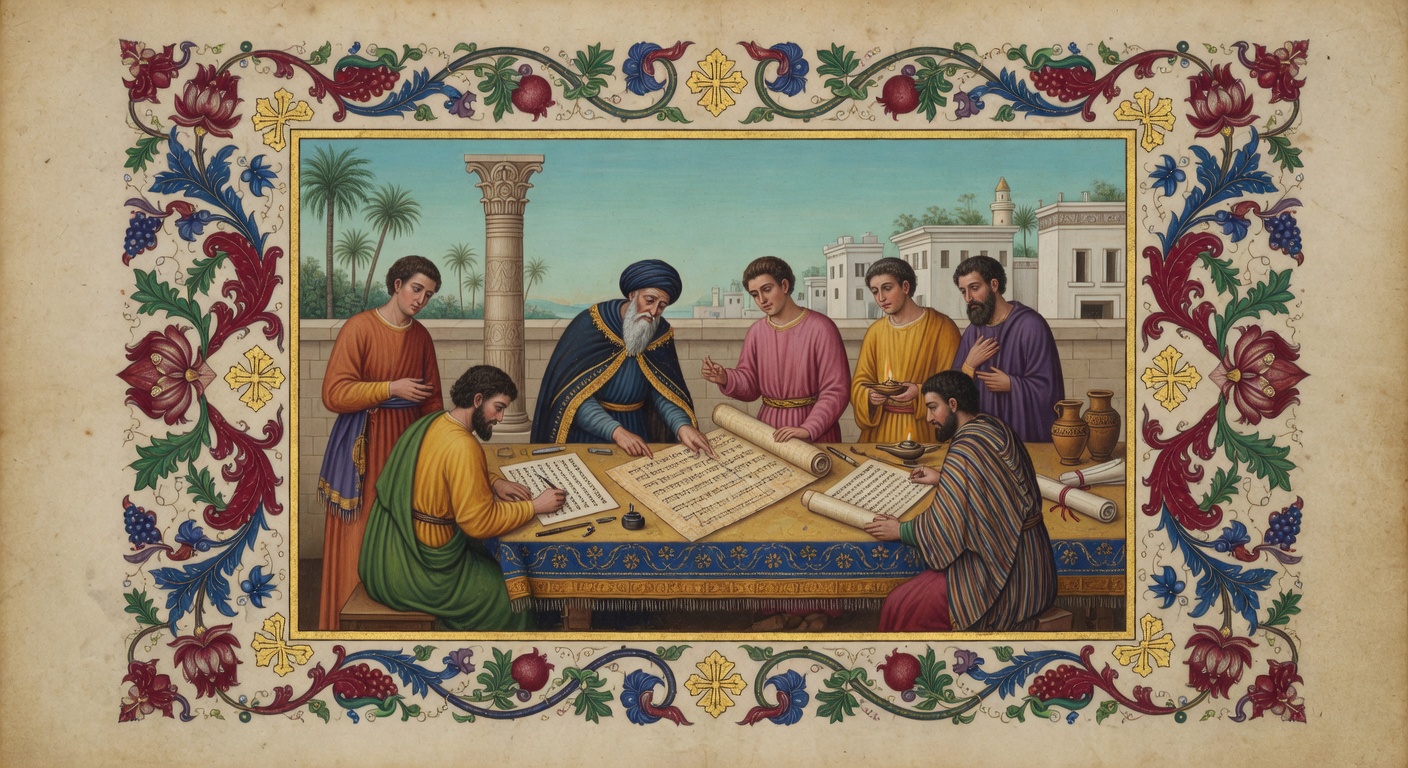
Septuagint Translation c. 250 BC
The Septuagint translation took place in Alexandria, Egypt, during the third century BC, when Jewish scholars produced a Greek version of the Hebrew Scriptures, traditionally at the request of Ptolemy II for inclusion in the royal library. This effort addressed the needs of the widespread Jewish diaspora, where Greek had become the common language and many could no longer read Hebrew fluently. The resulting text served as the primary Old Testament for Greek-speaking Jews and became the version most frequently quoted by New Testament writers. Its lasting significance lies in shaping early Christian Scripture, broadening access to biblical teachings, and contributing to the formation of the canon in multiple traditions.
-
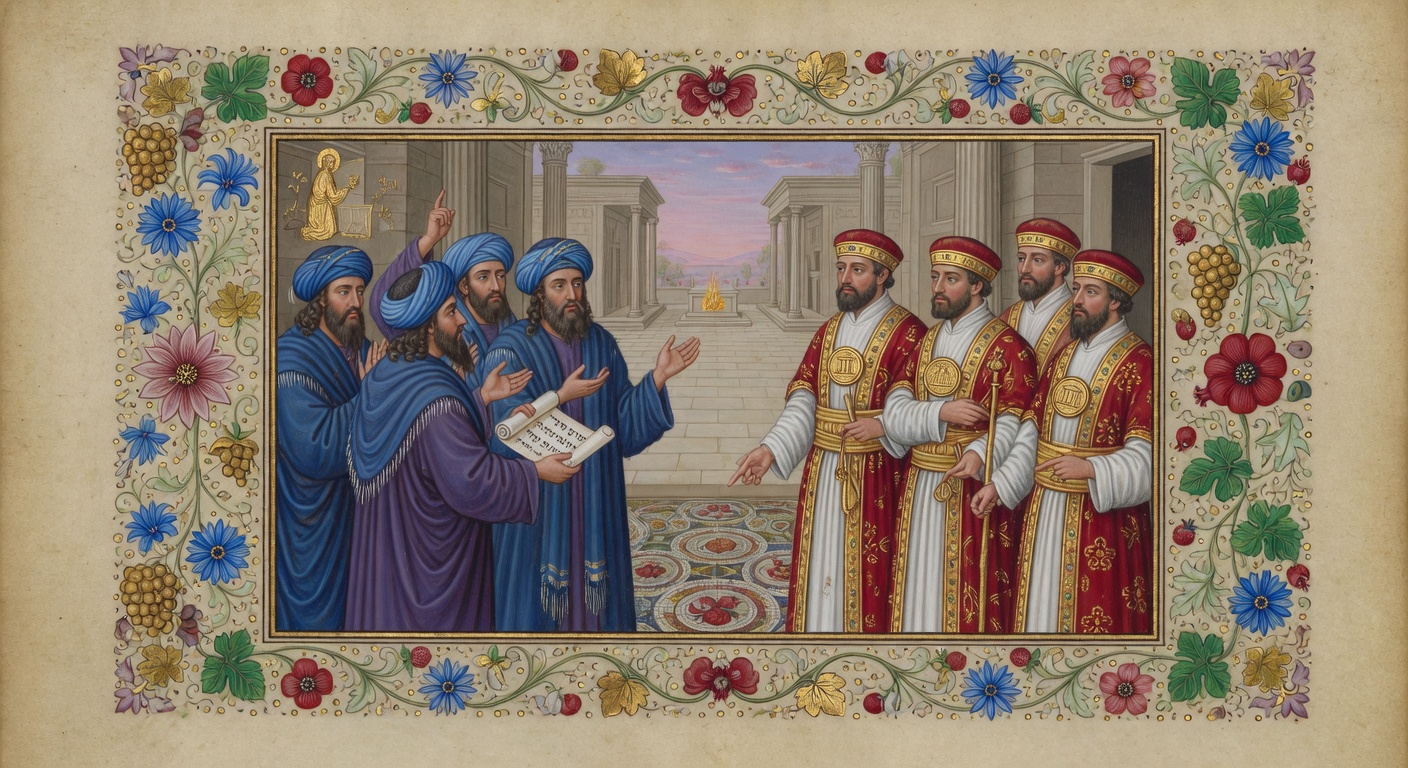
Rise of Pharisees and Sadducees c. 150-100 BC
Two major Jewish sects emerge: Pharisees (oral law, resurrection belief) and Sadducees (temple aristocracy, no resurrection). Both feature prominently in the Gospels.
-
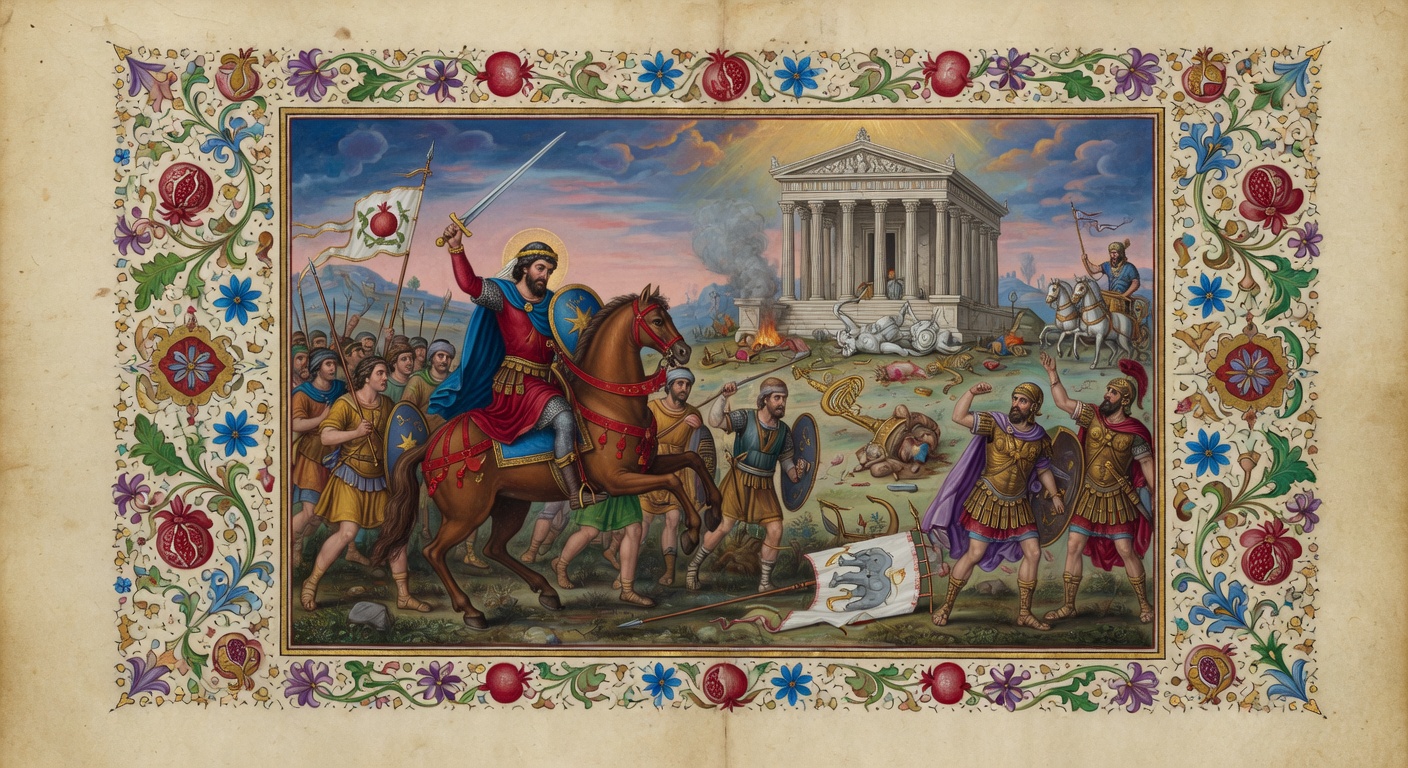
Maccabean Revolt 167-160 BC
✓ ConfirmedThe Maccabean Revolt occurred in the second century BC when the Seleucid king Antiochus IV Epiphanes imposed Hellenistic practices on the Jewish people and desecrated the Second Temple by sacrificing a pig on its altar. In response, Judas Maccabeus and his brothers led a guerrilla campaign that ultimately defeated the Seleucid armies and restored Jewish worship in the Temple, an event commemorated by the festival of Hanukkah. This historical episode is detailed in the deuterocanonical books of 1 and 2 Maccabees, underscoring themes of religious liberty and covenant faithfulness that resonate throughout Scripture.
-
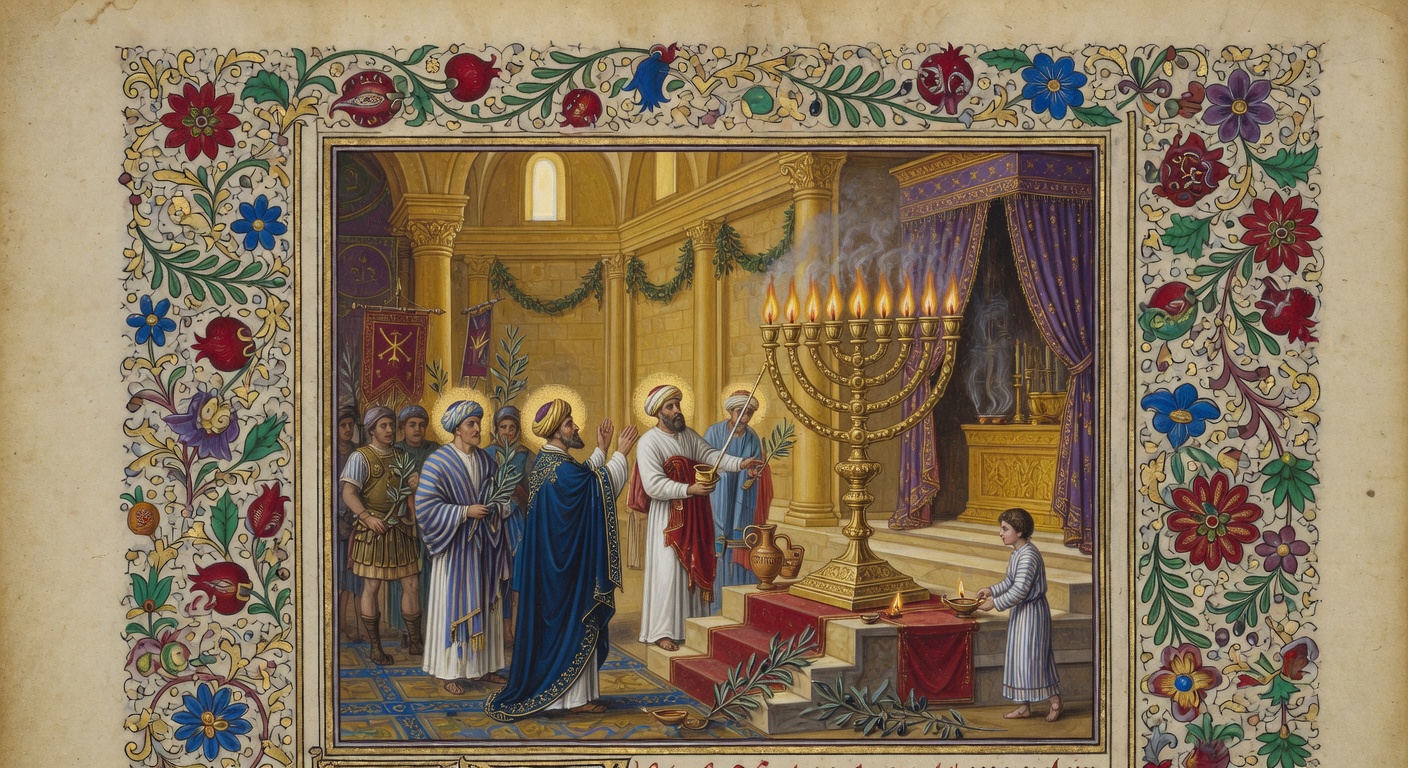
Temple Rededication (Hanukkah) 164 BC
✓ ConfirmedThe temple is cleansed and rededicated after the Maccabean victory. The menorah miraculously burns for eight days. This event is celebrated as Hanukkah.
-
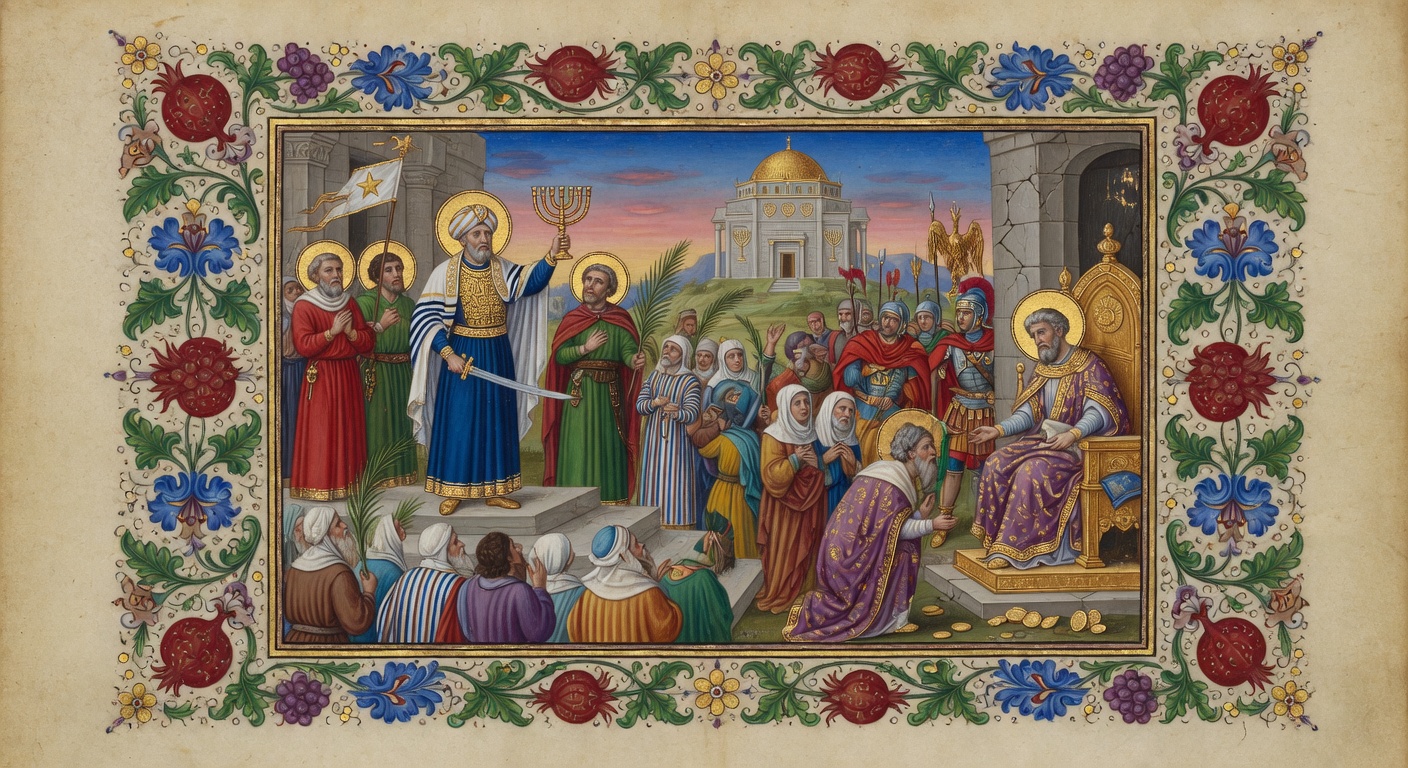
Hasmonean Dynasty 140-63 BC
✓ ConfirmedFollowing the successful Maccabean Revolt against Seleucid oppression in the second century BCE, the Hasmonean family established an independent Jewish state in Judea, with rulers serving as both kings and high priests. This period of autonomy allowed for the rededication of the Temple in Jerusalem, commemorated by the festival of Hanukkah, and the expansion of Jewish territory. However, internal strife and corruption among the Hasmonean leaders weakened the kingdom, prompting Roman general Pompey to intervene in 63 BCE and bring Judea under Roman influence. Though not directly mentioned in the Protestant canon, this era forms the crucial intertestamental backdrop for the New Testament, explaining the rise of Jewish sects and the political landscape during Jesus' time.
-
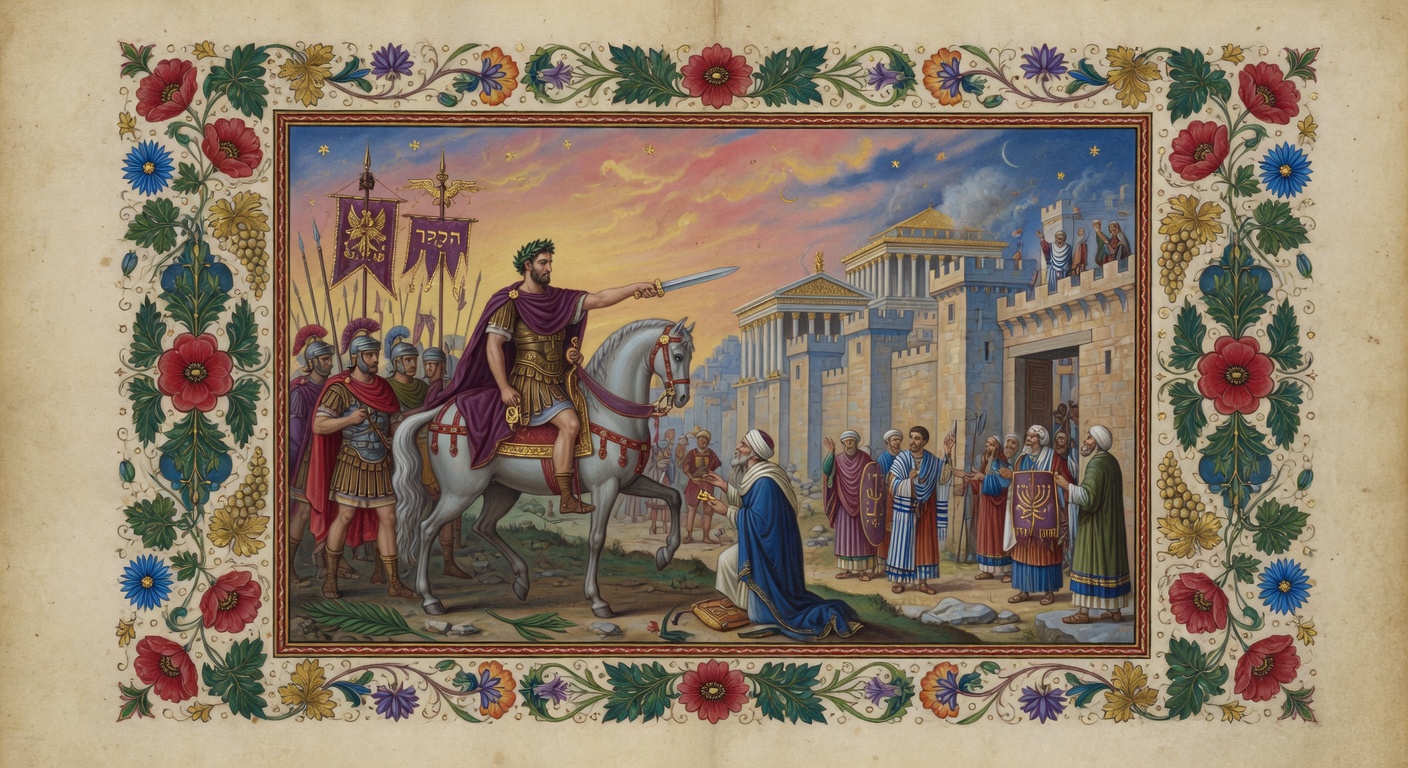
Roman Conquest of Judea 63 BC
✓ ConfirmedPompey the Great conquers Jerusalem, ending Jewish independence. Judea becomes a Roman client state, setting the stage for the world Jesus was born into.
Life of Christ
-
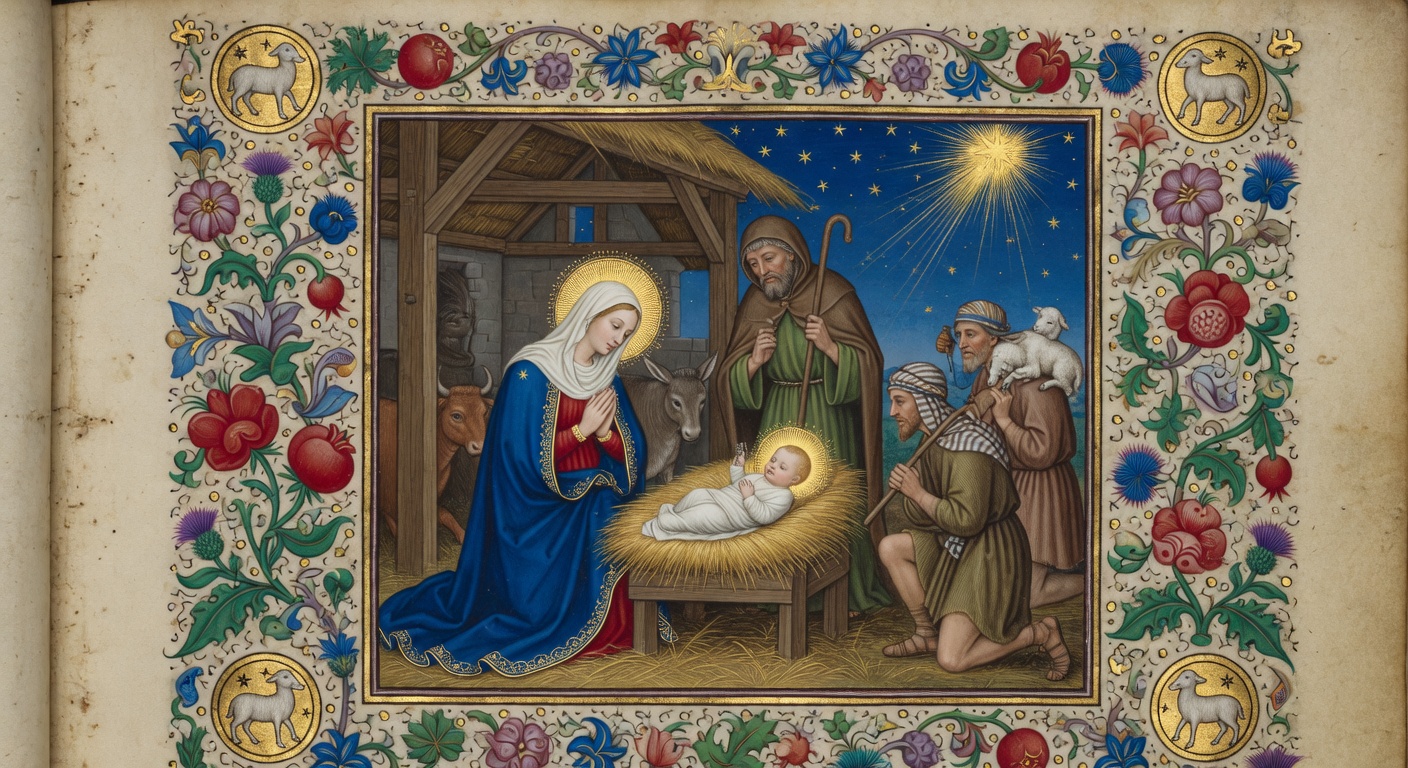
Birth of Jesus c. 5–4 BC
The birth of Jesus Christ occurred in Bethlehem when the virgin Mary gave birth to the Son of God, as announced by angels to nearby shepherds and witnessed by visitors including wise men from the East. This event fulfilled multiple Old Testament prophecies, including Micah 5:2 regarding the Messiah's birthplace and Isaiah 7:14 concerning the virgin birth. It marks the incarnation of God in human form, launching the divine plan of redemption for humanity through Jesus' subsequent life, death, and resurrection. In Scripture, the birth serves as the pivotal bridge between the Old and New Testaments, affirming God's covenant faithfulness and establishing the foundation for Christian faith.
-
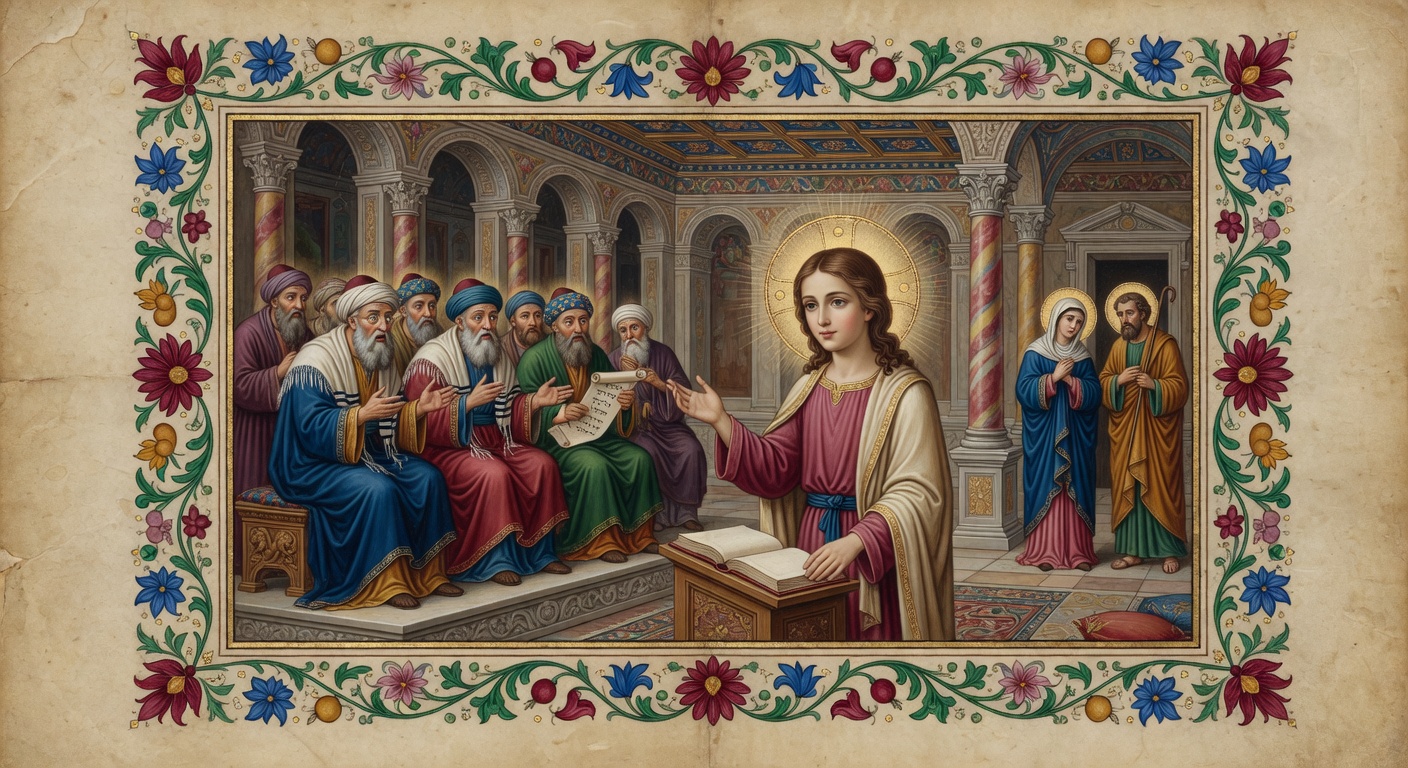
Jesus at Age 12 in the Temple c. AD 7–8
When Jesus was twelve years old, he traveled with his parents to Jerusalem for the annual Passover festival but stayed behind in the temple courts after they began their return journey to Nazareth. His parents found him three days later, sitting among the teachers of the law, listening attentively and asking questions that astonished them with his depth of understanding and insightful answers. This incident, recorded only in Luke 2:41-52, highlights Jesus' early awareness of his divine mission, as he referred to the temple as his Father's house. It provides a rare scriptural glimpse into his childhood development and foreshadows the wisdom and authority that would characterize his later public ministry.
-
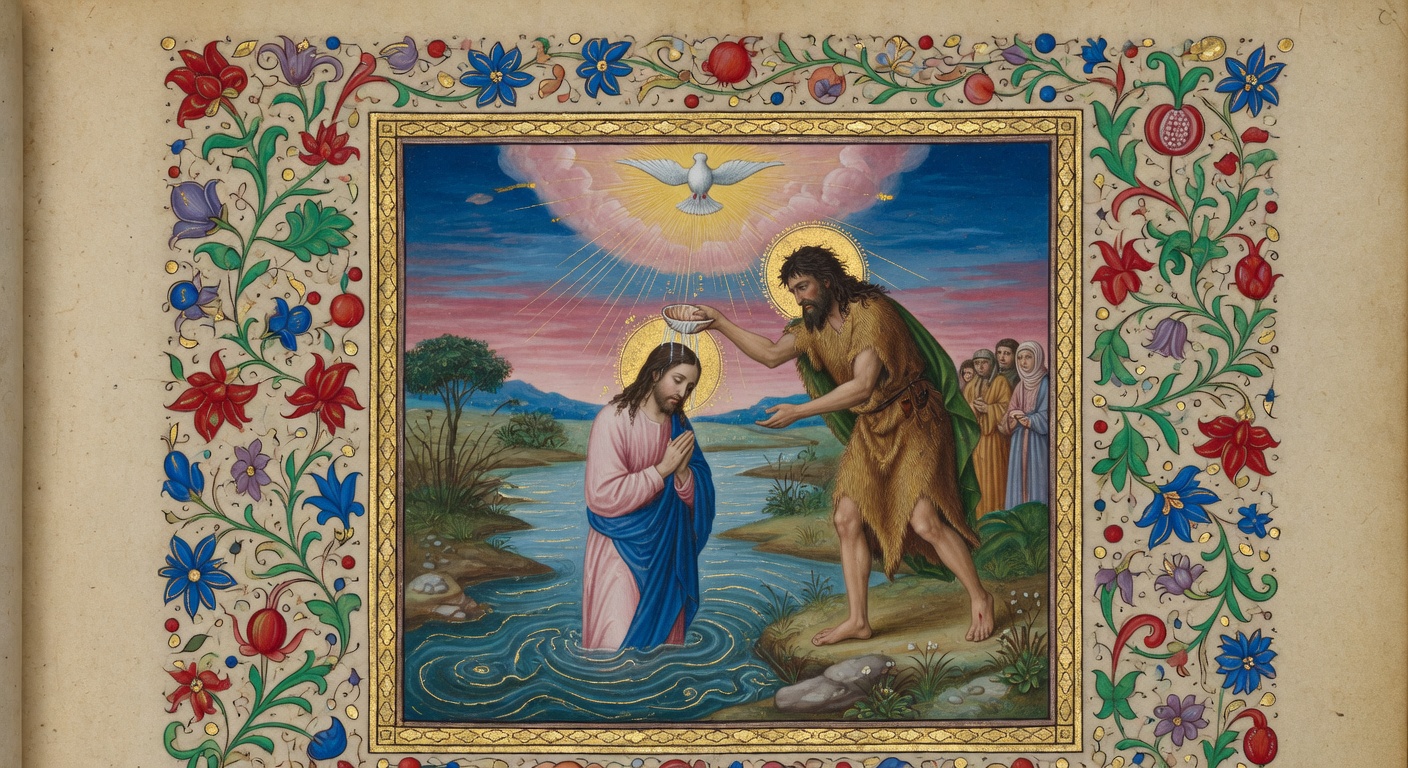
Baptism of Jesus c. AD 26–29
The baptism of Jesus marks the beginning of his public ministry when he approaches John the Baptist at the Jordan River to undergo baptism despite being sinless. John initially objects, but Jesus insists in order to fulfill all righteousness, after which the heavens open and the Holy Spirit descends on him in the bodily form of a dove. A voice from heaven then declares, "This is my beloved Son, with whom I am well pleased." This event holds major significance in Scripture as it publicly affirms Jesus' identity as the Messiah, reveals the Trinity in action, and demonstrates his obedience and identification with humanity.
-
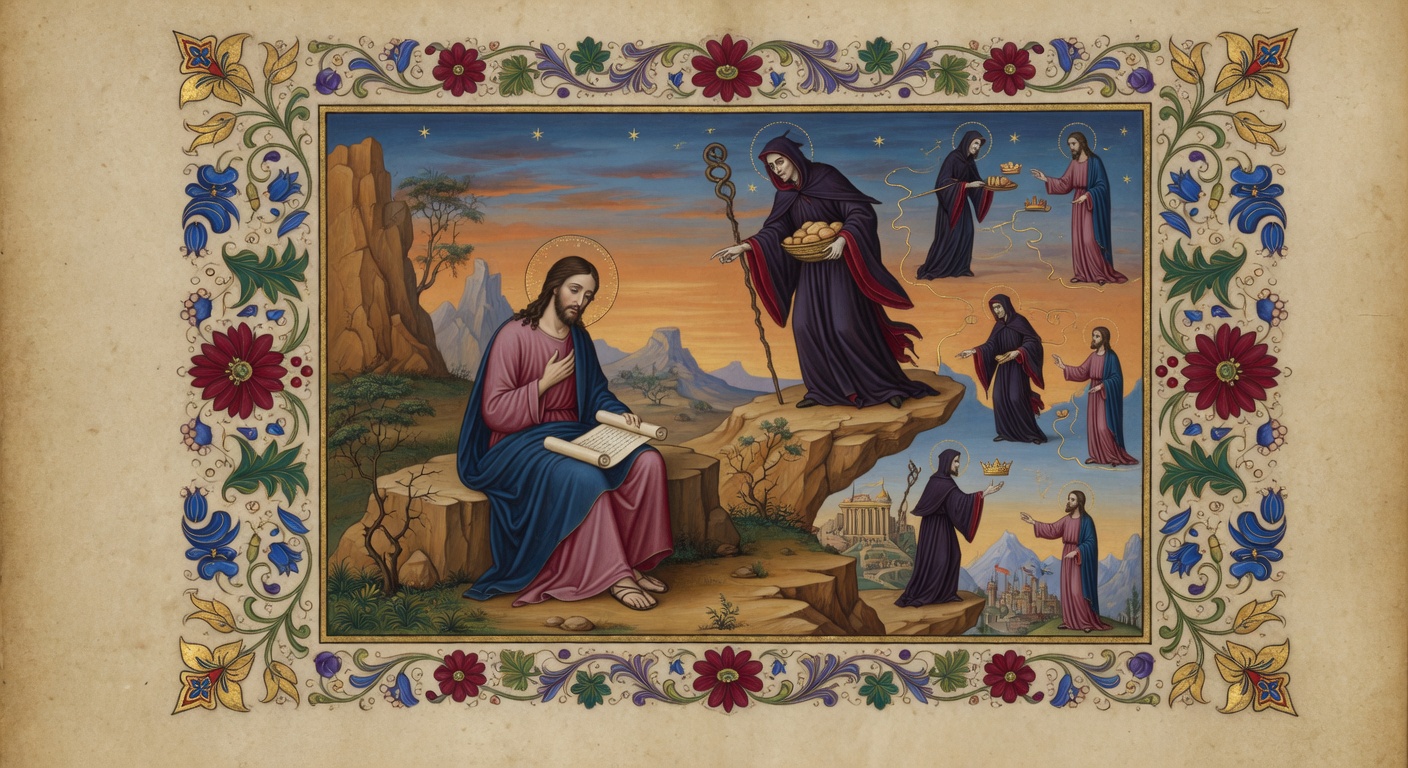
Temptation in the Wilderness c. AD 26–29
Following his baptism by John, Jesus was led by the Spirit into the Judean wilderness, where he fasted for forty days and nights before facing direct temptation from Satan. The devil presented three specific challenges: turning stones into bread to satisfy hunger, leaping from the temple pinnacle to test divine protection, and worshiping Satan in exchange for earthly kingdoms. Jesus countered each one by quoting passages from Deuteronomy. This event holds significance in Scripture as it portrays Jesus succeeding where the Israelites had failed during their own wilderness testing, demonstrating perfect obedience to God and establishing a model for resisting temptation through reliance on biblical truth. It also affirms his identity as the sinless Messiah prepared for public ministry.
-
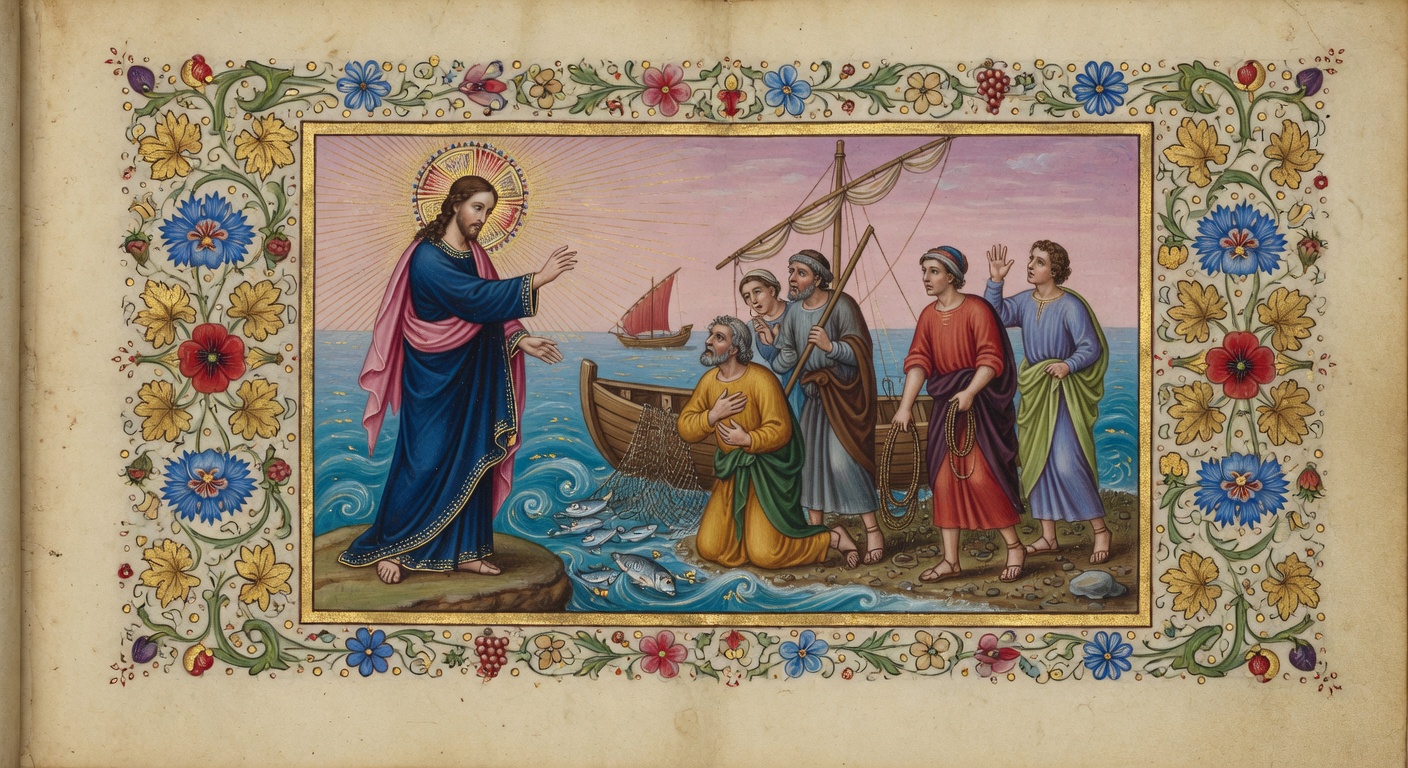
Calling of the Disciples c. AD 27
In the early stages of his ministry along the Sea of Galilee, Jesus encountered fishermen Peter and Andrew casting their nets and called them to follow him, promising to make them fishers of men. He then summoned James and John, the sons of Zebedee, who immediately left their boat and father to join him, as described in the Gospels of Matthew and Mark. This event matters because it represents the deliberate selection of Jesus' first disciples, who would become his closest companions, learn his teachings directly, and later serve as foundational leaders in the early church. Its significance in Scripture lies in illustrating the radical call to discipleship, where ordinary individuals abandon their livelihoods to participate in God's redemptive mission.
-
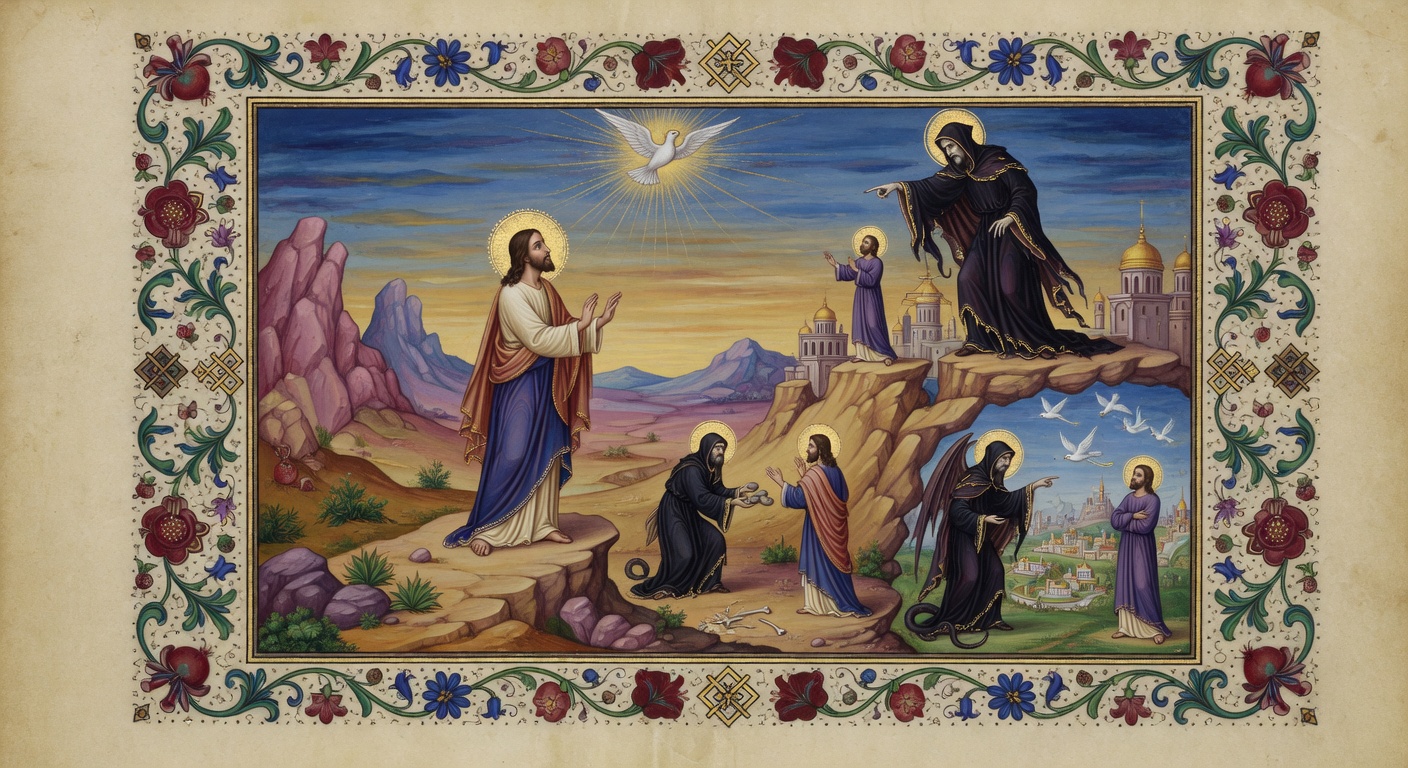
Temptation of Jesus c. AD 27
Following his baptism, Jesus was led by the Holy Spirit into the wilderness, where he fasted for forty days and nights before facing three direct temptations from Satan. The devil challenged Jesus to turn stones into bread to satisfy hunger, to jump from the temple pinnacle to test divine protection, and to worship him in exchange for worldly kingdoms, but each offer was met with a precise quotation from Deuteronomy that affirmed trust in God alone. This event holds significance in Scripture as it confirms Jesus' identity as the obedient Son of God who succeeds where Israel previously failed during its wilderness testing, while also providing a model for resisting temptation through reliance on biblical truth.
-
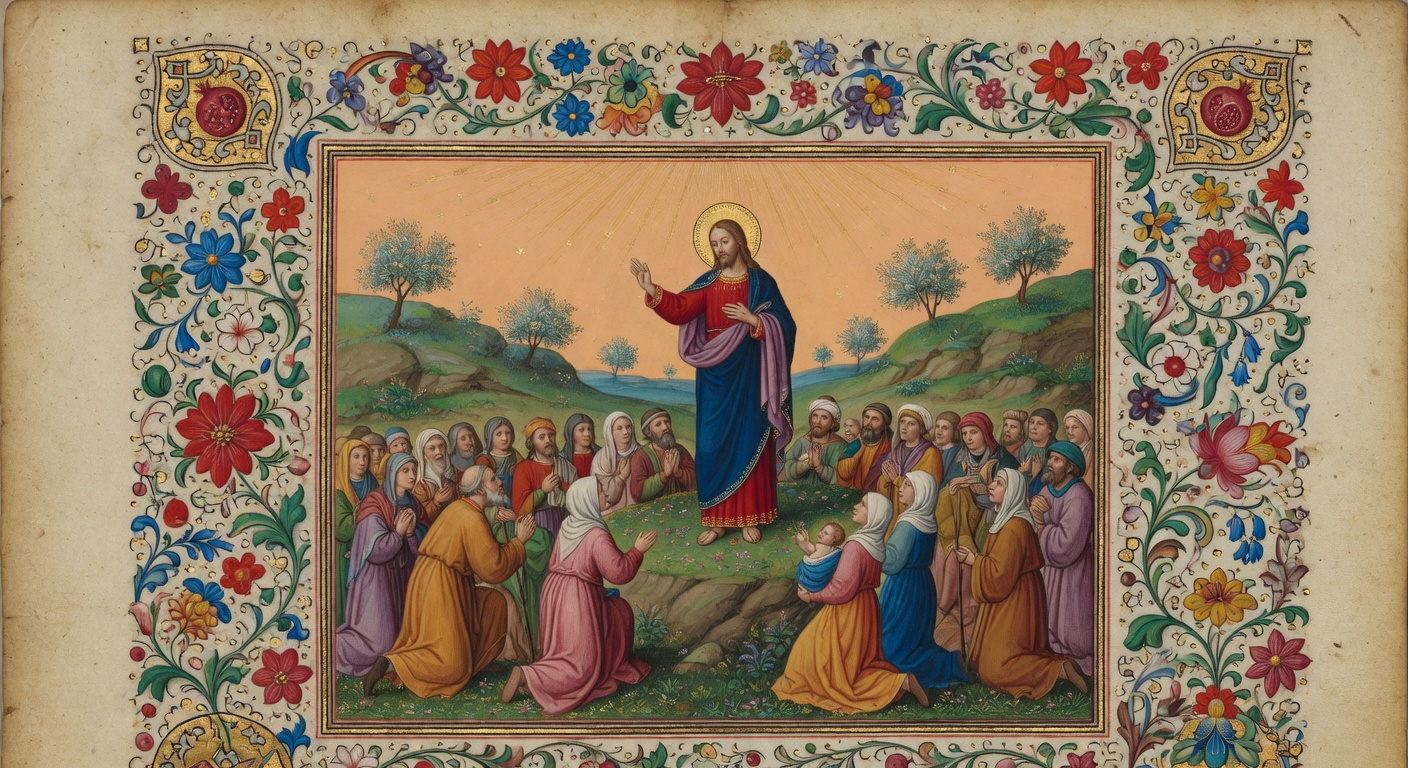
Sermon on the Mount c. AD 27–30
The Sermon on the Mount took place early in Jesus' ministry near the Sea of Galilee, as recorded in Matthew chapters 5 through 7, where he taught a large crowd of disciples and followers from a hillside. In this address, Jesus presented the Beatitudes as blessings for the humble and persecuted, instructed on prayer through the model known as the Lord's Prayer, and expounded on topics including anger, lust, love for enemies, and trust in God rather than material wealth. This event matters because it outlines the ethical standards and values of God's kingdom, contrasting external religious observance with inner righteousness. Its significance in Scripture lies in establishing Jesus as the authoritative interpreter of the Law and providing a foundational framework for Christian discipleship and moral living.
-
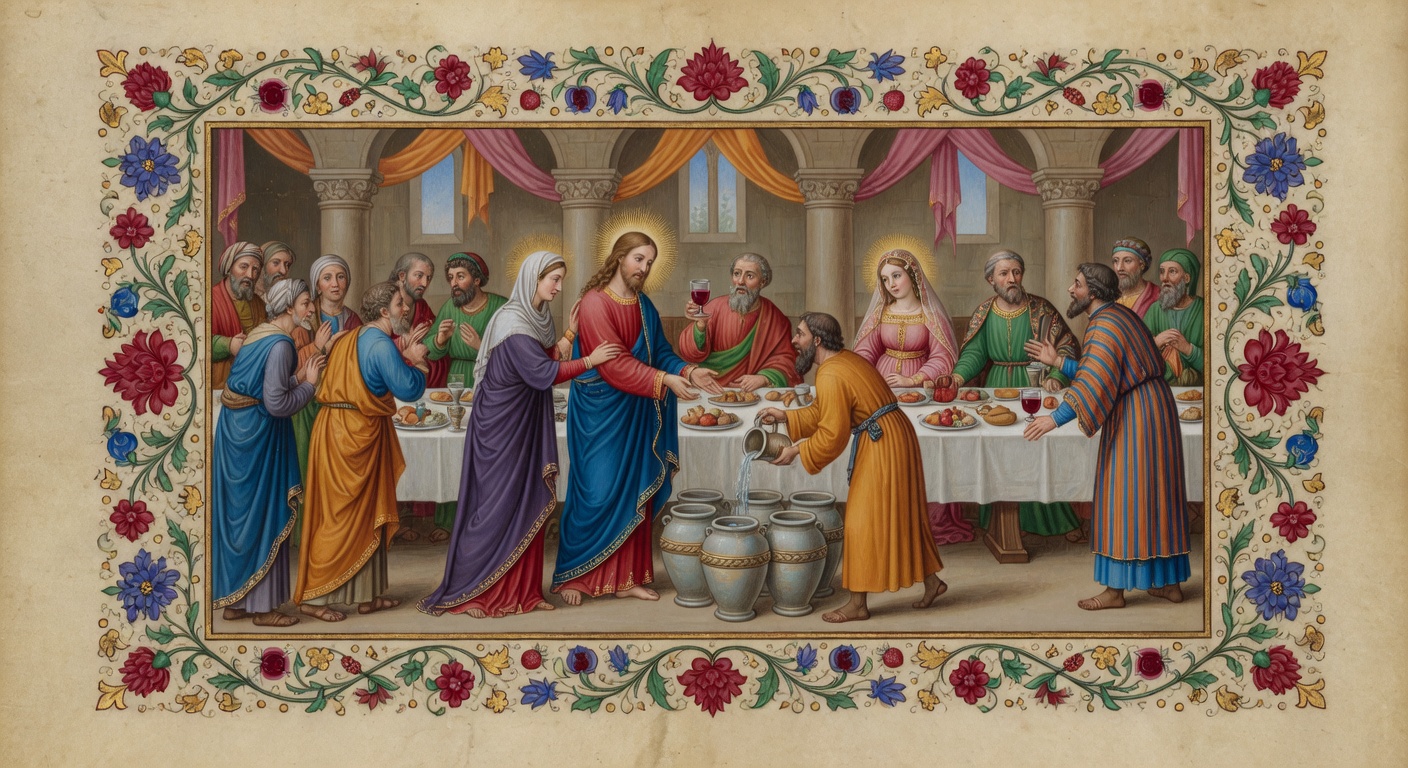
Wedding at Cana c. AD 27
The Wedding at Cana marks the occasion of Jesus' first public miracle, which took place during a wedding feast in the town of Cana in Galilee. When the hosts ran out of wine, Jesus' mother informed him of the shortage, prompting him to instruct the servants to fill six stone water jars with water, which he then miraculously transformed into high-quality wine. This event demonstrated Jesus' divine power and compassion for everyday human needs, leading his disciples to believe in him as the Messiah. In Scripture, it serves as a sign that reveals Jesus' glory and inaugurates his public ministry, highlighting themes of abundance and the new covenant.
-
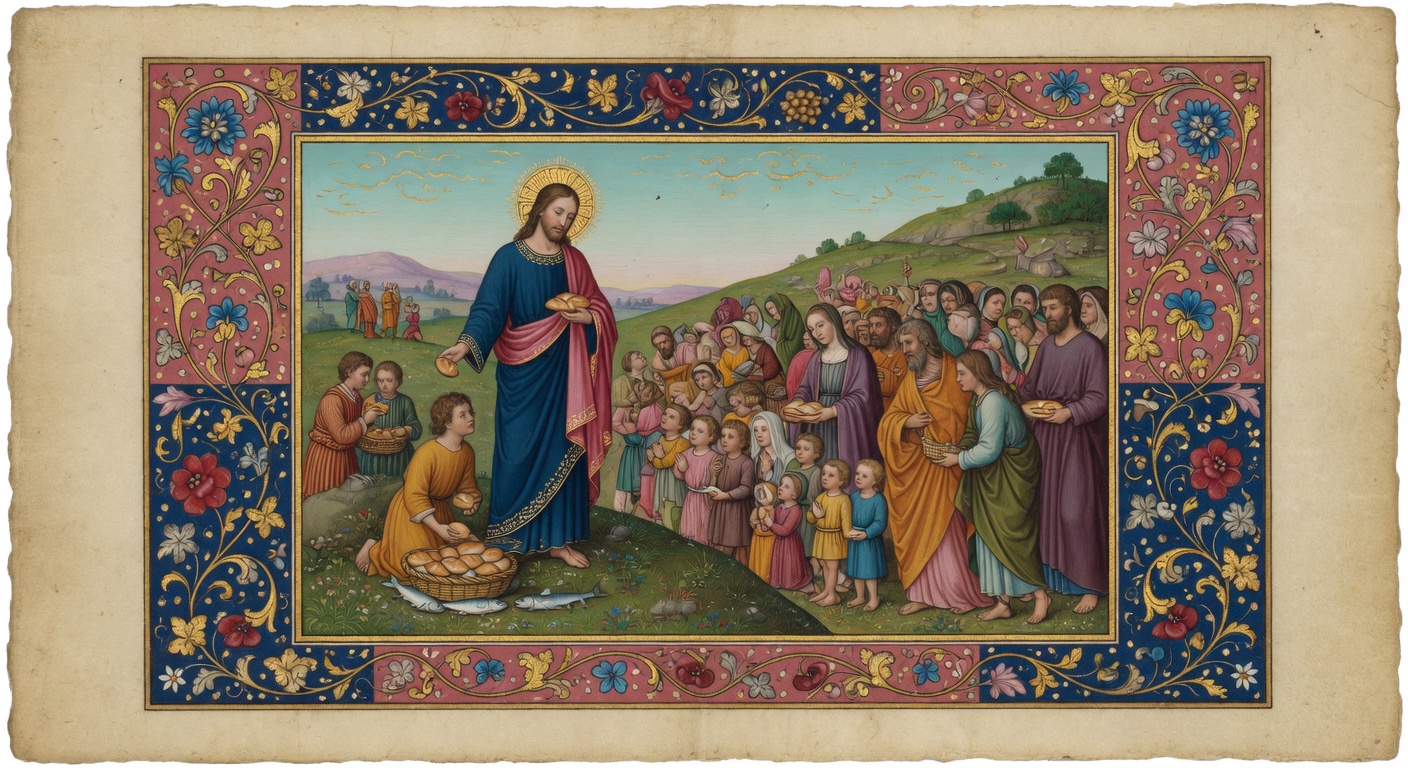
Feeding the 5000 c. AD 29
The Feeding of the 5000 is one of the most well-known miracles performed by Jesus, recounted in all four Gospels. In this event, Jesus took five loaves of bread and two fish from a young boy, blessed them, and distributed them to a crowd of over five thousand men plus women and children who had gathered to hear his teaching, resulting in everyone being satisfied with twelve baskets of leftovers remaining. This miracle highlights Jesus' compassion for the physical needs of the people as well as his divine power to provide abundantly from limited resources. Its significance in Scripture lies in demonstrating Jesus as the Bread of Life and foreshadowing the spiritual sustenance he offers to believers.
-
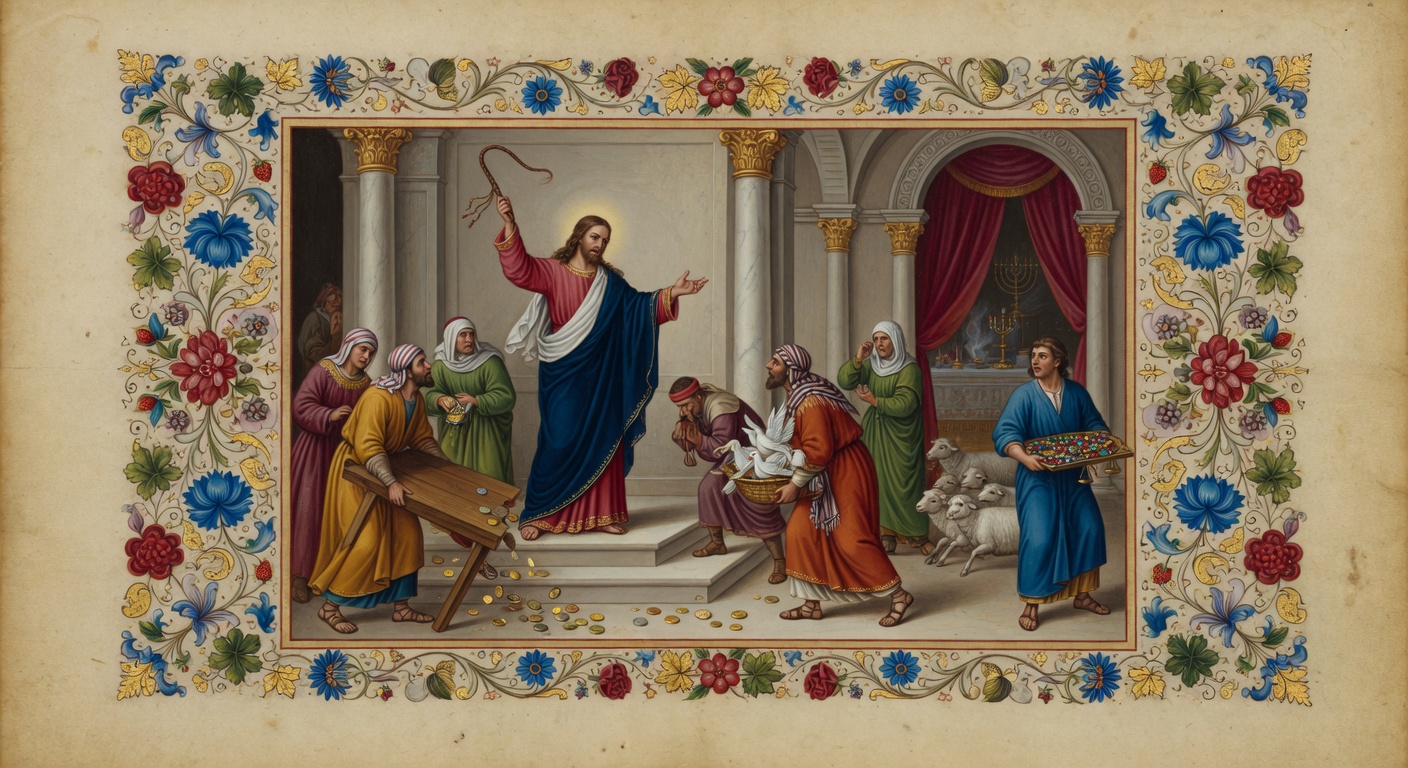
Cleansing of the Temple c. AD 30
During the Passover festival, Jesus entered the Jerusalem temple and found merchants selling animals for sacrifices alongside money changers profiting from currency exchanges required for temple taxes, practices that had transformed the sacred courts into a commercial hub. He overturned their tables, scattered the coins, and drove out the sellers while declaring the temple a house of prayer for all nations, citing Isaiah and Jeremiah to condemn it as a den of robbers. This confrontation exposed systemic corruption among the religious leaders who enabled exploitation of worshippers, particularly the poor. In Scripture the event reveals Jesus' zeal for authentic worship, asserts his messianic authority over the temple, and foreshadows both its coming destruction and the shift to a new covenant centered on spiritual rather than physical sacrifice.
-
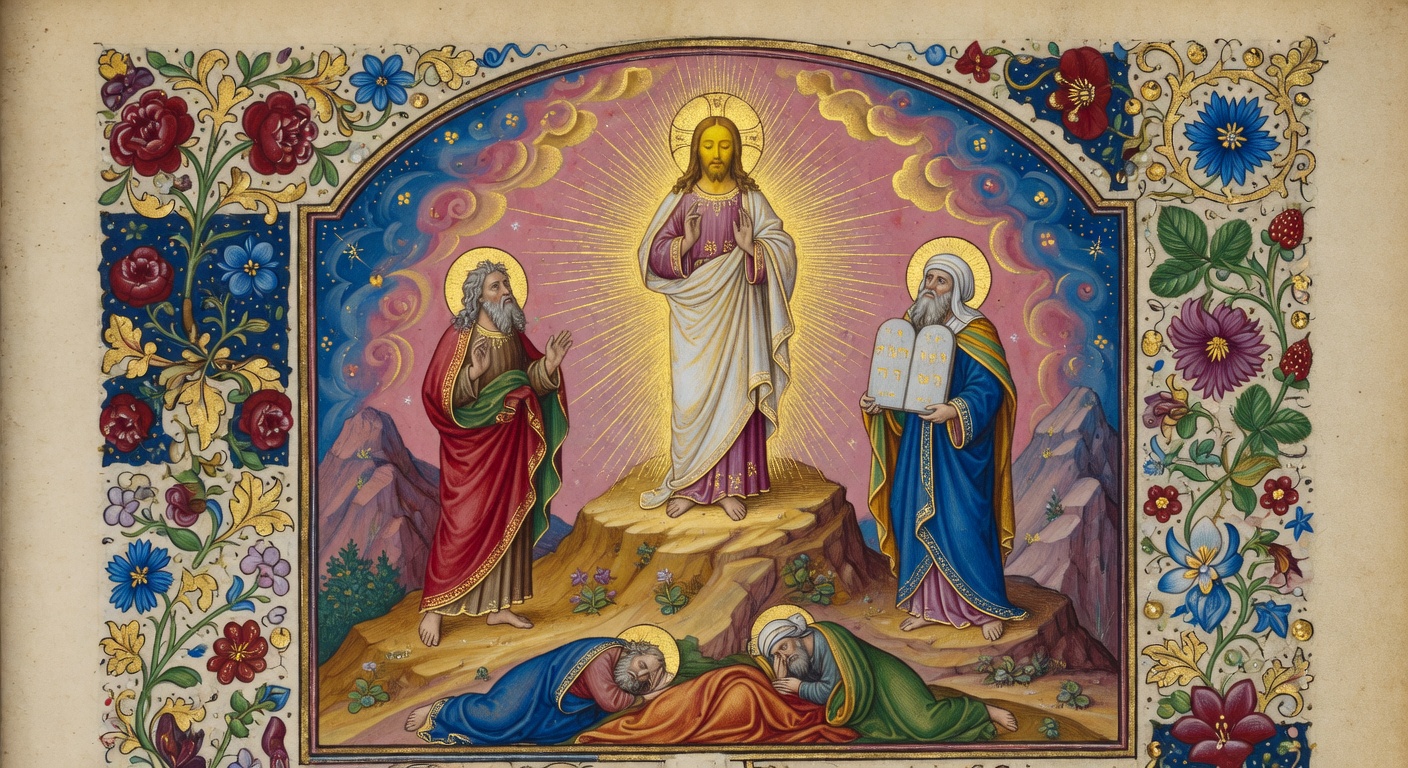
Transfiguration c. AD 29
The Transfiguration took place when Jesus led Peter, James, and John up a high mountain, where his appearance was dramatically altered so that his face shone like the sun and his clothes became intensely white. Moses and Elijah appeared beside him, discussing his upcoming departure in Jerusalem, while a bright cloud enveloped them and a voice from heaven declared Jesus as God's beloved Son, commanding the disciples to listen to him. This event holds significance in Scripture as it reveals Jesus' divine glory prior to his suffering and death, bridging the Old Testament law and prophets with the New Covenant he fulfills. It strengthened the disciples' faith by confirming his identity as the Messiah and preparing them for the challenges ahead.
-
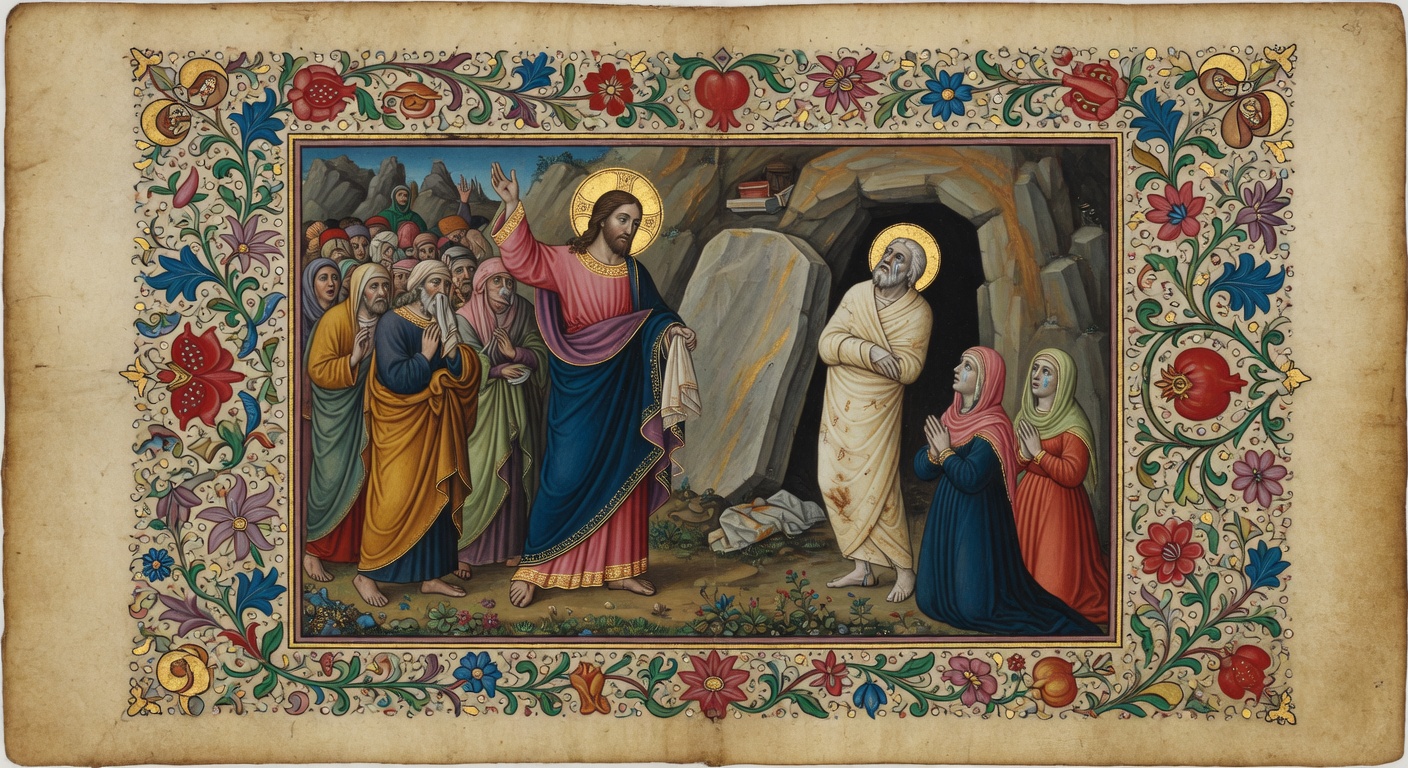
Raising of Lazarus c. AD 30
The raising of Lazarus is a pivotal miracle recorded in the Gospel of John where Jesus brings his friend Lazarus back to life after he had been dead and buried for four days in Bethany. Despite warnings and the grief of Lazarus's sisters Mary and Martha, Jesus arrives and publicly calls Lazarus out of the tomb, demonstrating his authority over death even after decomposition had begun. This event strengthens the faith of many witnesses and serves as a powerful sign of Jesus' divine power, directly leading to increased opposition from religious authorities who then plot to kill him. It also foreshadows Jesus' own resurrection and underscores his claim to be the resurrection and the life.
-
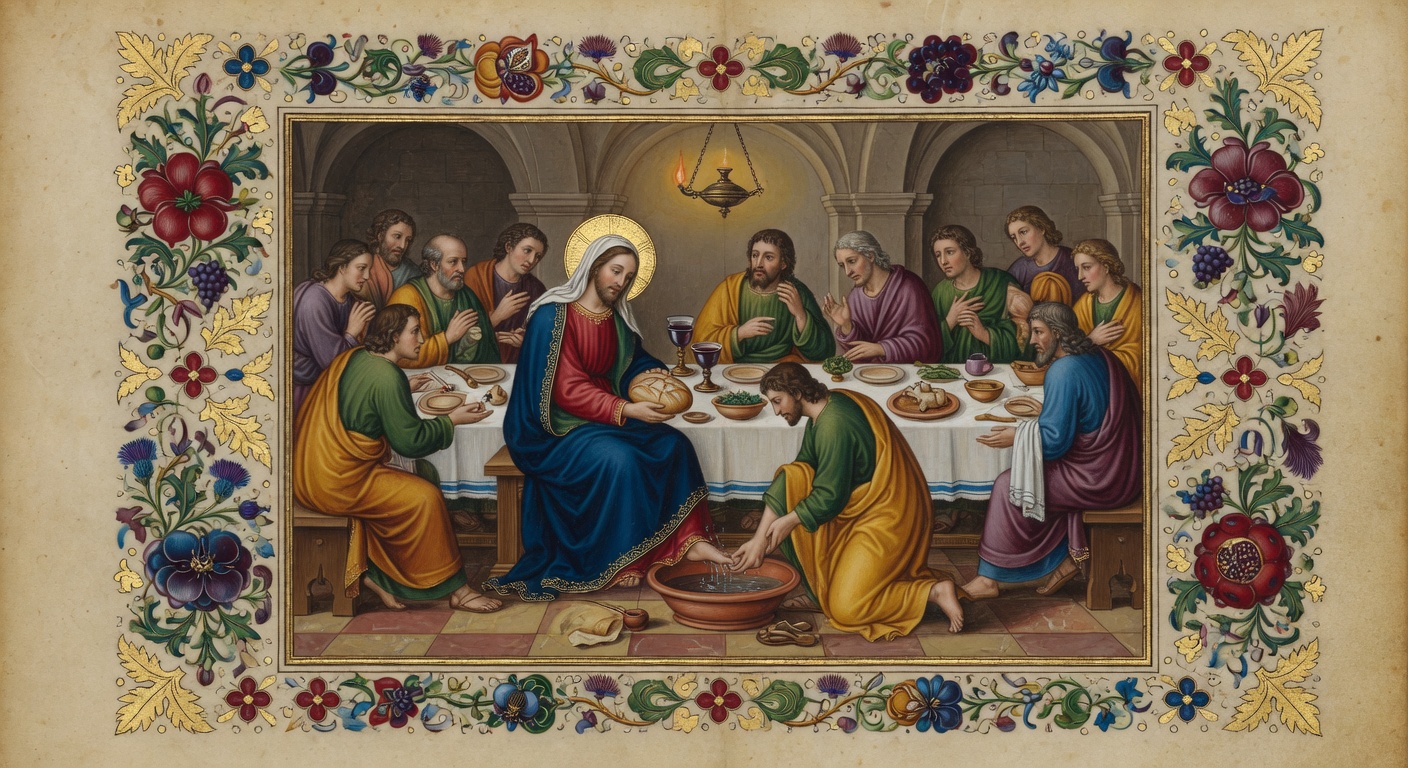
Last Supper AD 30 or 33
During the Passover meal in Jerusalem shortly before his crucifixion, Jesus shared a final supper with his twelve disciples as they reclined together in an upper room. He instituted the Lord's Supper by breaking bread and sharing wine, explaining that these elements represented his body and blood, which would establish a new covenant for the forgiveness of sins. Jesus also washed his disciples' feet to model humility and servant leadership, instructing them to follow his example. This event is significant in Scripture because it fulfills the Passover as a type of Christ's sacrificial death while establishing the ongoing ordinance of communion, which reminds believers of his atoning work and the call to love one another.
-
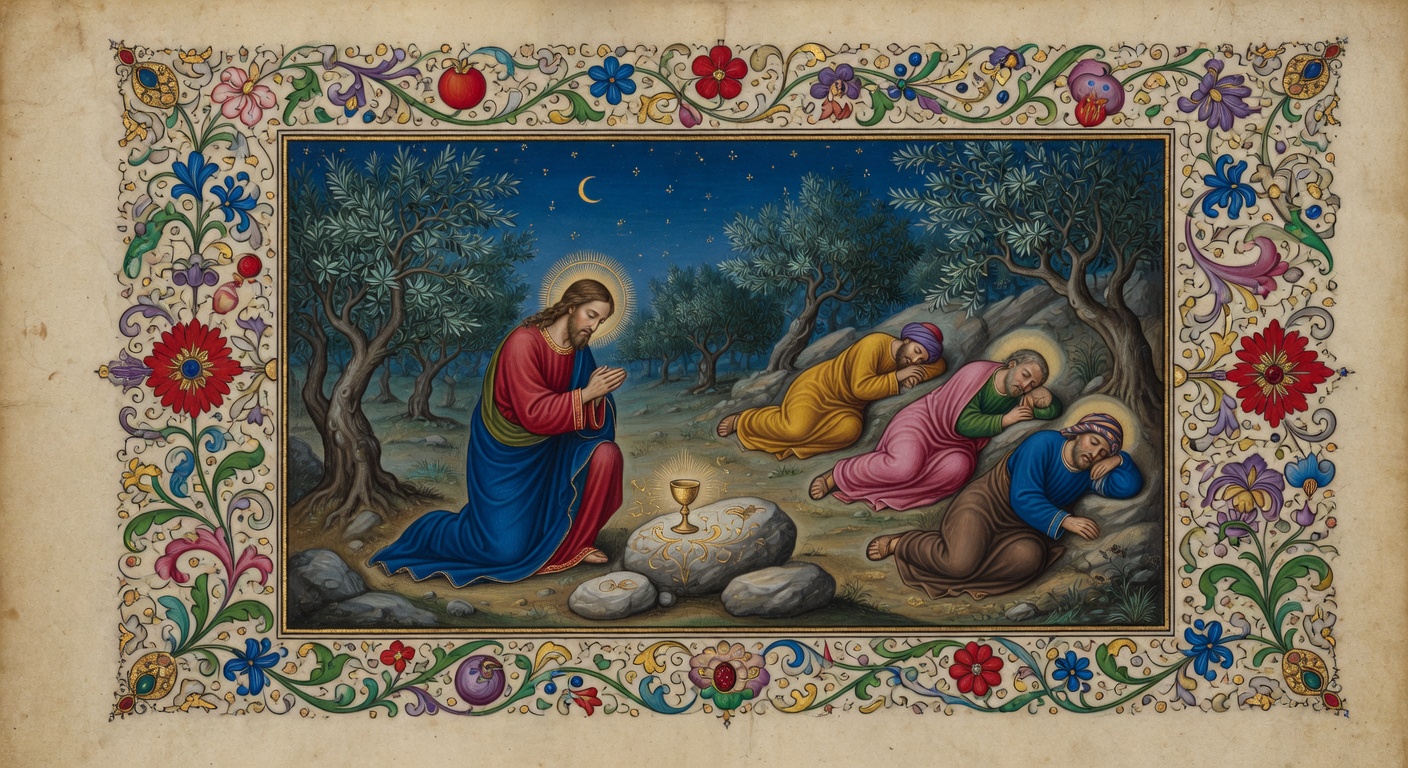
Garden of Gethsemane AD 30 or 33
In the Garden of Gethsemane on the night before his crucifixion, Jesus withdrew with his disciples after the Last Supper to pray in deep distress over the suffering that awaited him. He repeatedly asked the Father if the cup of wrath and death could be removed, yet submitted with the words “not my will, but yours be done,” while his sweat fell like drops of blood and the disciples slept nearby. Judas soon arrived with an armed crowd, leading to Jesus’ arrest and the beginning of his trial. This episode underscores Christ’s genuine humanity, his obedient trust in the Father, and the costly path to redemption recorded in the Synoptic Gospels.
-
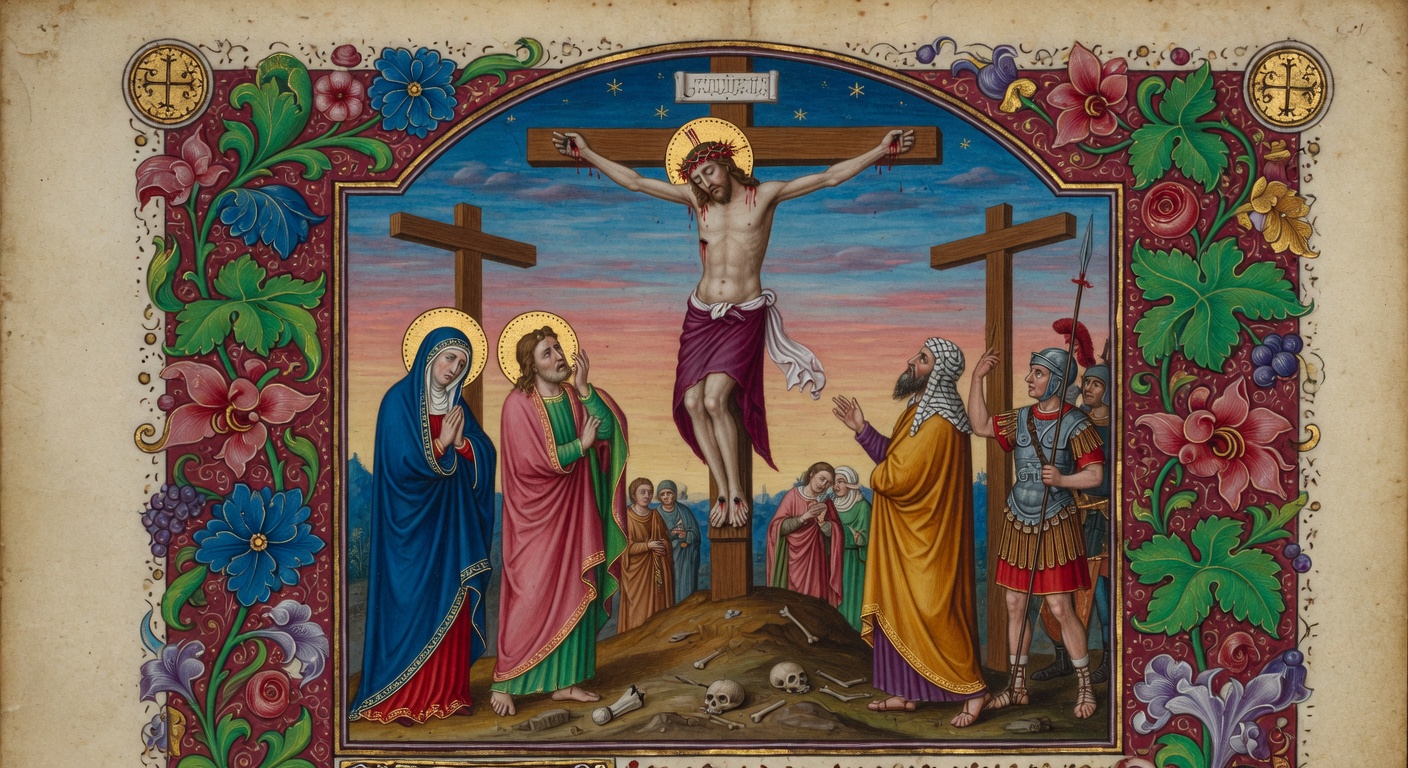
Crucifixion AD 30 or 33
✓ ConfirmedThe crucifixion of Jesus took place at Golgotha, a site outside Jerusalem, where Roman soldiers nailed him to a cross and he died after hours of suffering. According to the Gospel accounts, Jesus voluntarily endured this execution while bearing the sins of the world as the ultimate atoning sacrifice, fulfilling numerous Old Testament prophecies about the Messiah's suffering and death. This event holds central importance in Scripture because it accomplishes God's plan of redemption, providing forgiveness and reconciliation for humanity through the shedding of innocent blood. It also marks the establishment of the new covenant, demonstrating both divine justice and love as the foundation for salvation.
-
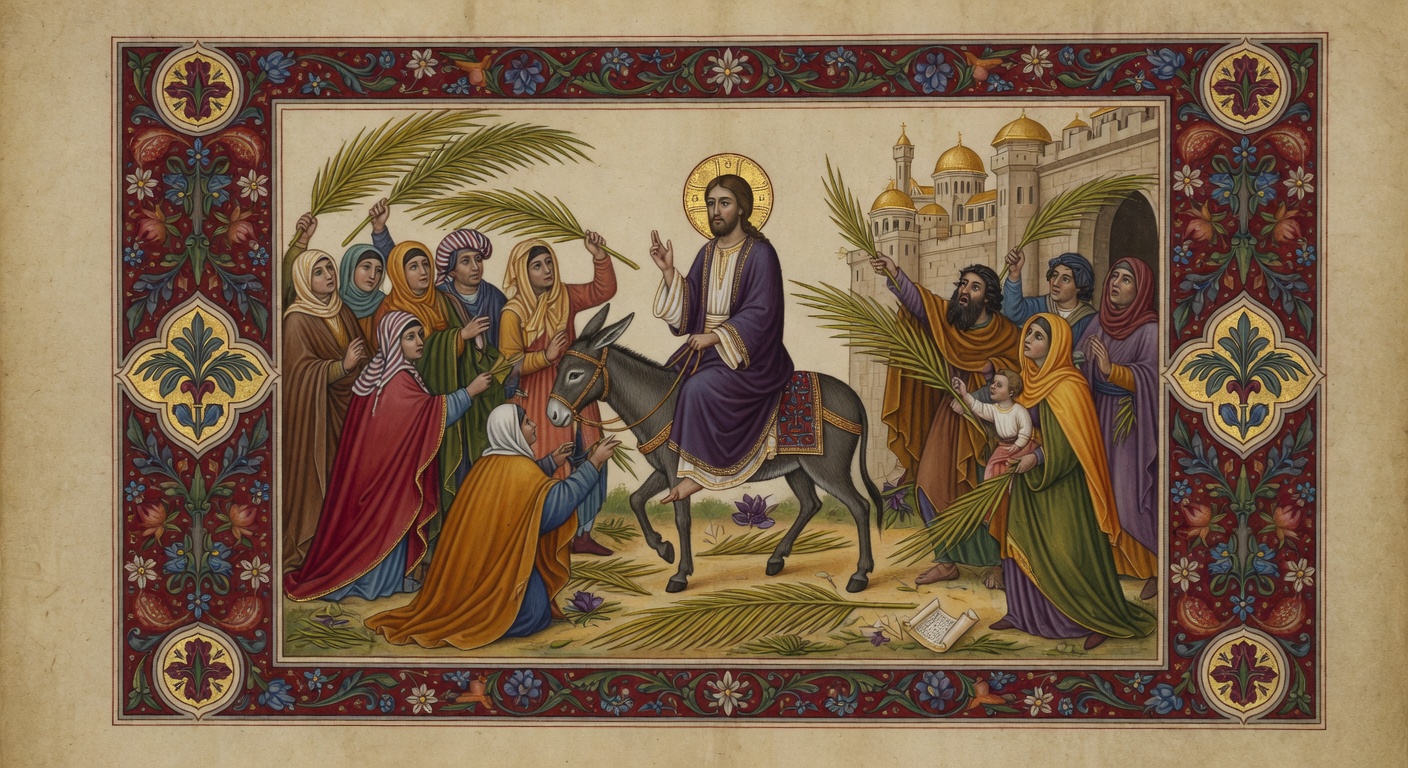
Triumphal Entry c. AD 30
The Triumphal Entry marks the occasion when Jesus rode into Jerusalem on a donkey while crowds spread palm branches and their cloaks on the road, shouting praises and declaring him the Son of David. This event fulfilled the prophecy in Zechariah 9:9, which foretold that the king would come to Zion riding on a donkey, symbolizing peace rather than conquest. It holds significance as the public declaration of Jesus' messianic identity at the start of Holy Week, setting the stage for the events leading to his crucifixion and resurrection. In Scripture, this moment highlights the tension between the people's expectations of a political savior and Jesus' mission of spiritual redemption.
-
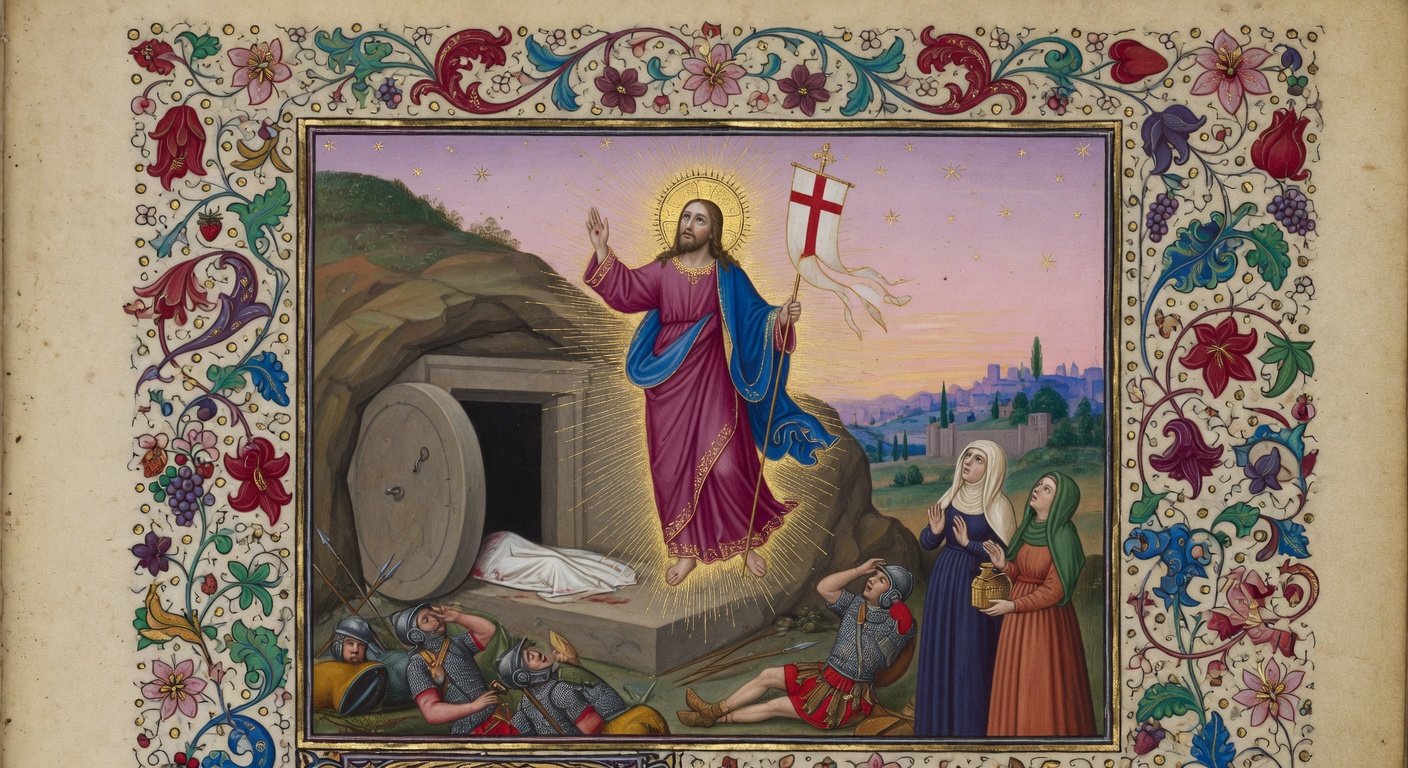
Resurrection AD 30 or 33
✓ ConfirmedFollowing his crucifixion and burial in a tomb, Jesus Christ rose bodily from the dead on the third day, as witnessed by Mary Magdalene, the disciples, and over five hundred others according to the Gospels. This event fulfills multiple Old Testament prophecies, such as those in Psalm 16 and Isaiah 53, along with Jesus' own predictions recorded in the Gospels. It demonstrates his divine authority over sin and death, securing victory that makes salvation and eternal life available to believers. In Scripture, the resurrection stands as the cornerstone of Christian faith, validated in passages like 1 Corinthians 15 as essential proof of Jesus' identity as the Messiah.
-
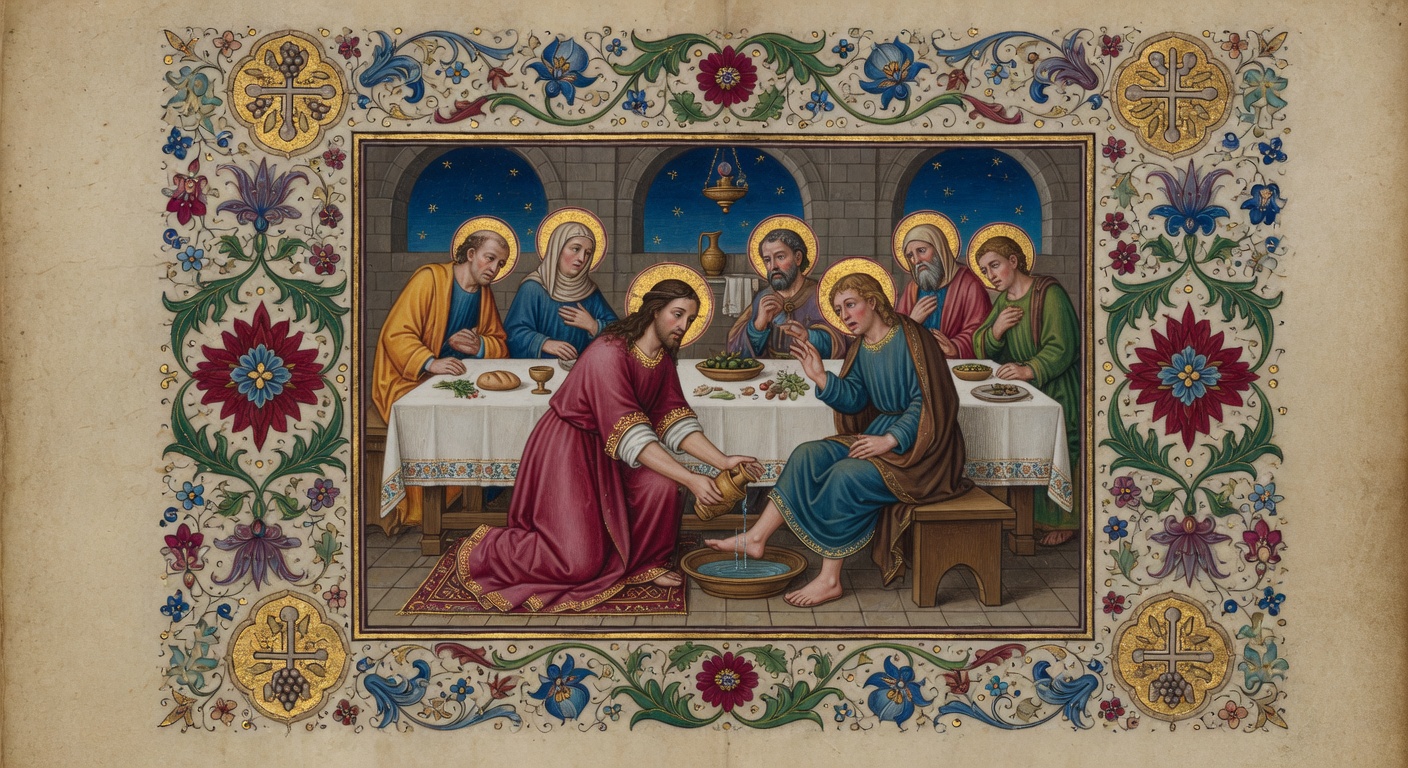
Jesus Washes the Disciples Feet c. AD 30
During the Last Supper, as Jesus prepared for his impending betrayal and crucifixion, he rose from the table, wrapped a towel around his waist, and washed the feet of his disciples, including those of Judas Iscariot. Peter initially resisted the act, but Jesus explained that participation was necessary for fellowship with him and that the gesture served as a deliberate example for the disciples to imitate. This event from John 13 highlights Jesus modeling humility and servant leadership rather than seeking status or authority. Its significance in Scripture lies in establishing a pattern for Christian relationships, where mutual service and love reflect the heart of Jesus' mission and the new commandment he gave that night.
-
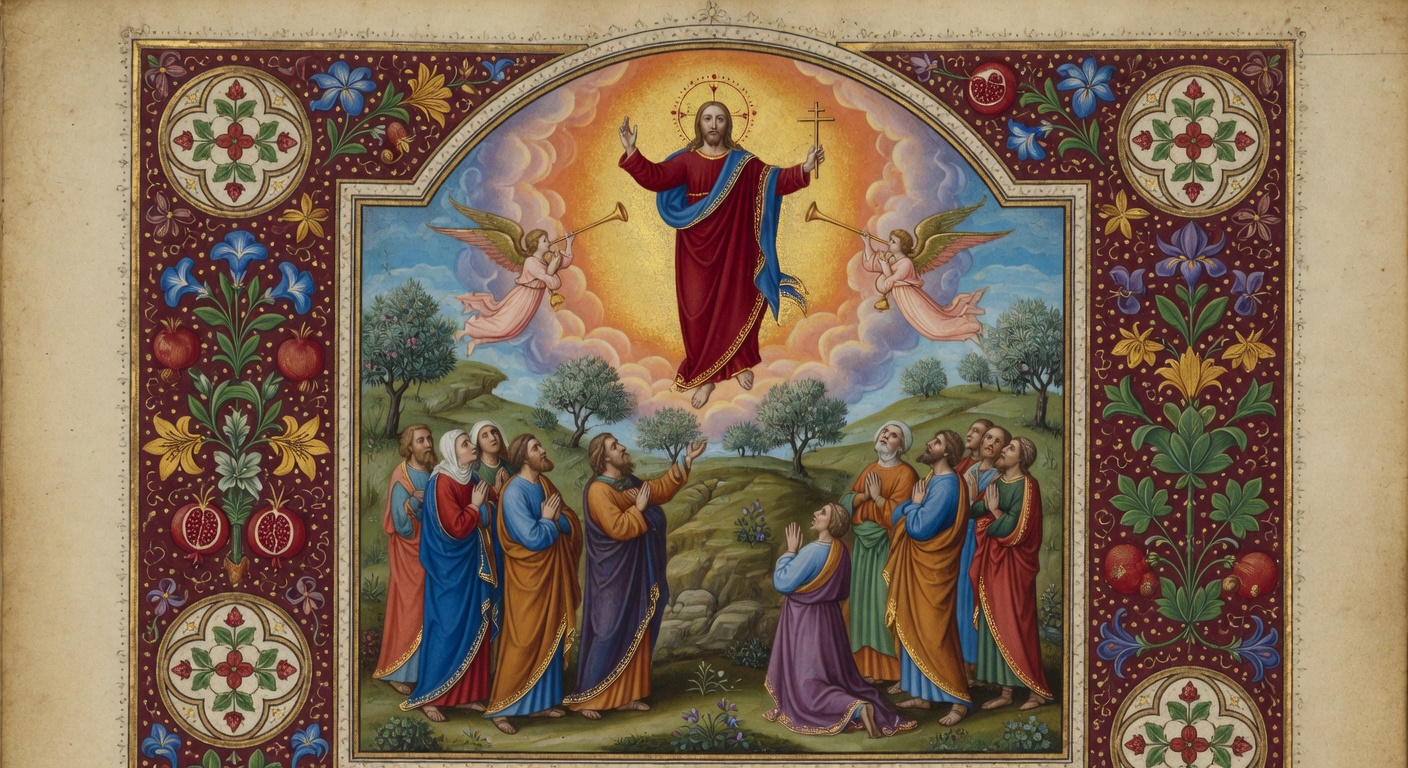
Ascension AD 30 or 33
Following his resurrection, Jesus spent forty days appearing to his disciples and instructing them about the kingdom of God before the event recorded in Acts 1. From the Mount of Olives, he was taken up into heaven in their sight, with two angels announcing his future return in the same manner. This ascension concluded his earthly ministry, fulfilled Old Testament prophecies, and exalted him to the right hand of the Father, where he serves as intercessor. It also prepared the way for the Holy Spirit’s arrival at Pentecost and established the foundation for the church’s mission and hope of Christ’s second coming.
-
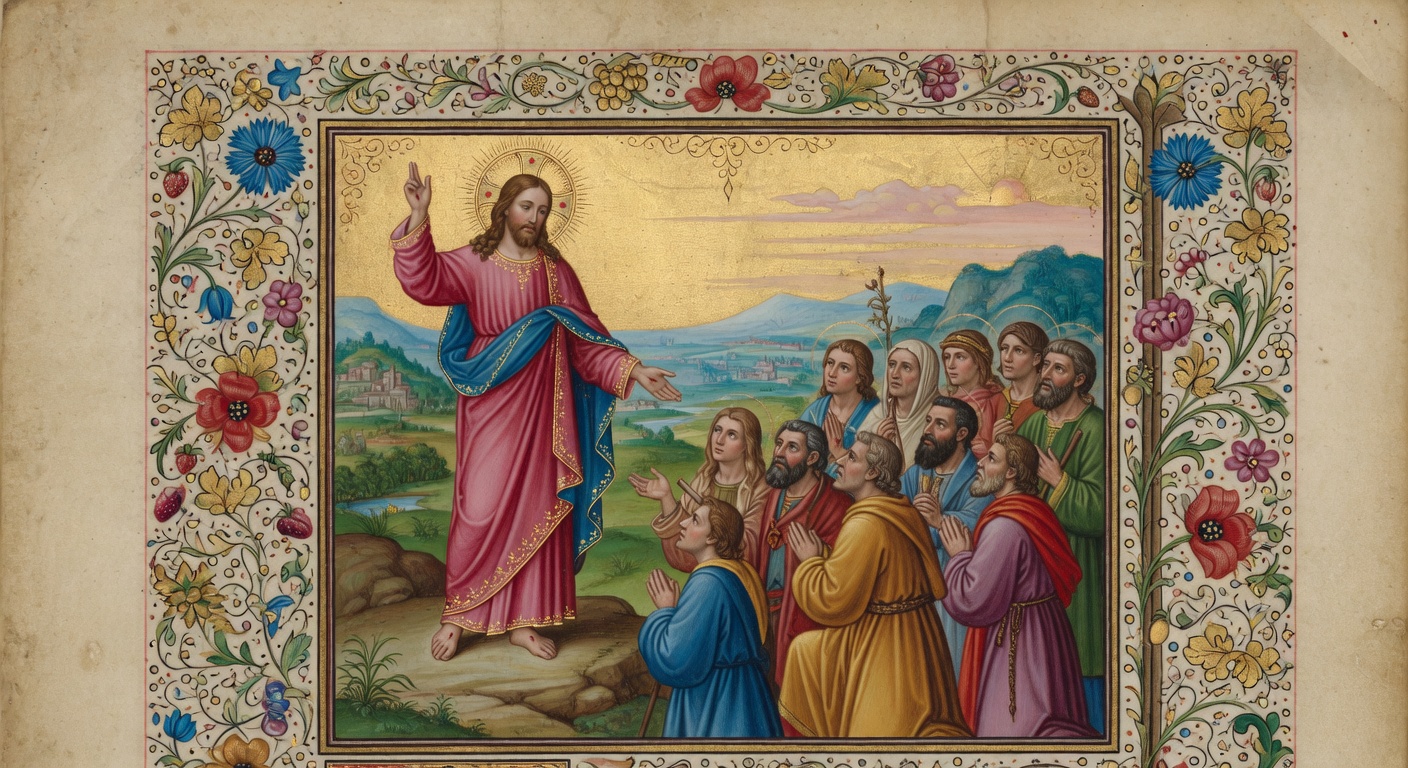
The Great Commission c. AD 30
Following his resurrection, Jesus appeared to his disciples on a mountain in Galilee, declaring that all authority in heaven and on earth had been given to him. He then commanded them to go and make disciples of all nations, baptizing them in the name of the Father, the Son, and the Holy Spirit, while teaching them to obey all his commands. This event, recorded in Matthew 28:18-20, marks the launch of the church's global mission to proclaim the gospel. Its significance lies in establishing Jesus' ongoing authority and his promise to remain with believers until the end of the age, shaping Christian outreach throughout Scripture and history.
Return from Exile
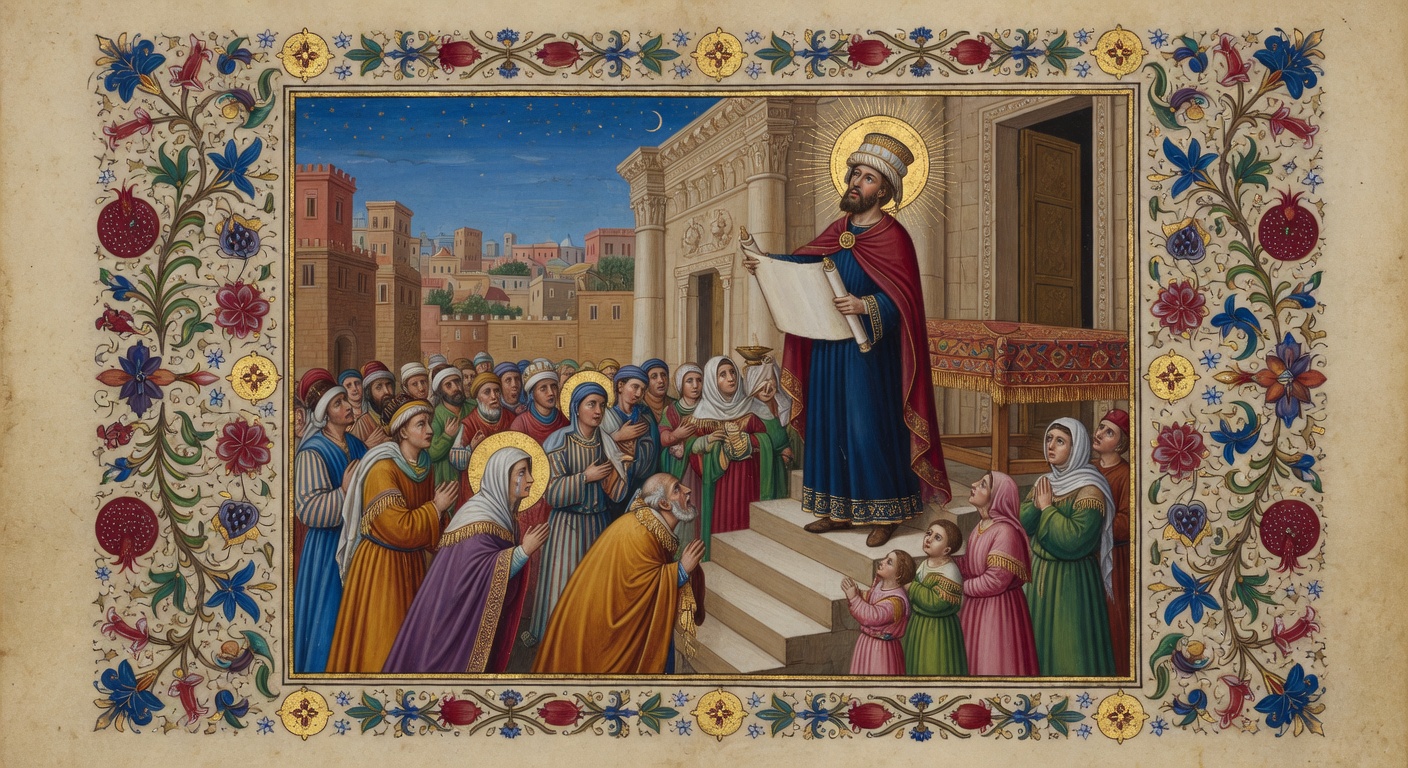
Early Church
-
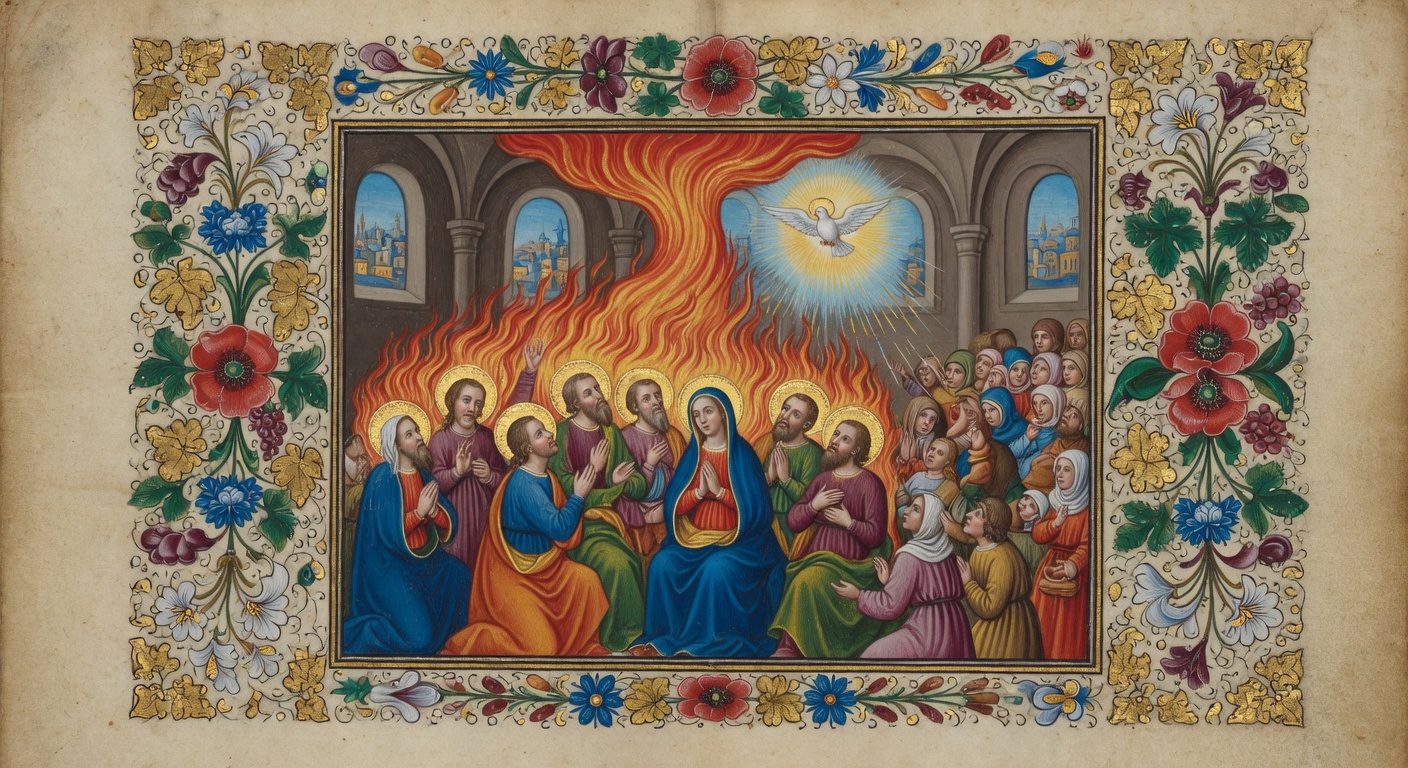
Pentecost AD 30 or 33
✓ ConfirmedPentecost occurred fifty days after Jesus' resurrection when the apostles were gathered in Jerusalem during the Jewish feast of Shavuot. The Holy Spirit descended upon them in a powerful display of wind and tongues of fire, enabling them to speak in various languages and proclaim the gospel boldly. This event resulted in Peter's sermon leading to the conversion and baptism of about three thousand people, marking the birth of the Christian church. It holds great significance in Scripture as the fulfillment of Jesus' promise to send the Holy Spirit and the Old Testament prophecies regarding the outpouring of God's Spirit on all people.
-
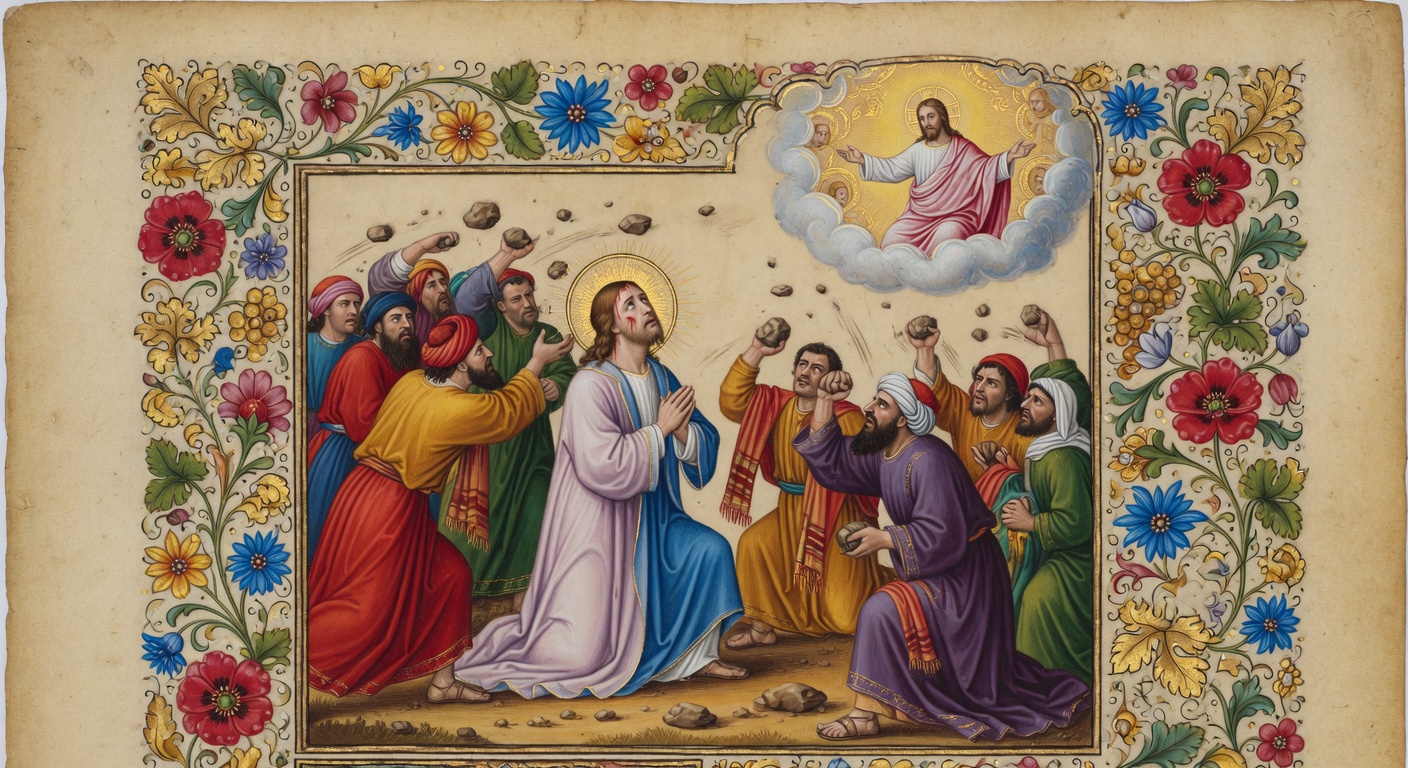
Stoning of Stephen c. AD 34
Stephen, a prominent deacon in the early church known for his wisdom and faith, was brought before the Sanhedrin on charges of speaking against the temple and the law. In his defense, he delivered a powerful speech recounting Israel's history and accusing the religious leaders of resisting the Holy Spirit, culminating in a vision of Jesus standing at God's right hand. As a result, he was dragged out of the city and stoned to death, becoming the first Christian martyr while forgiving his executioners. This event marked the beginning of widespread persecution against the church in Jerusalem, leading to the dispersion of believers and the spread of the gospel, while also introducing Saul, who would later become the apostle Paul.
-
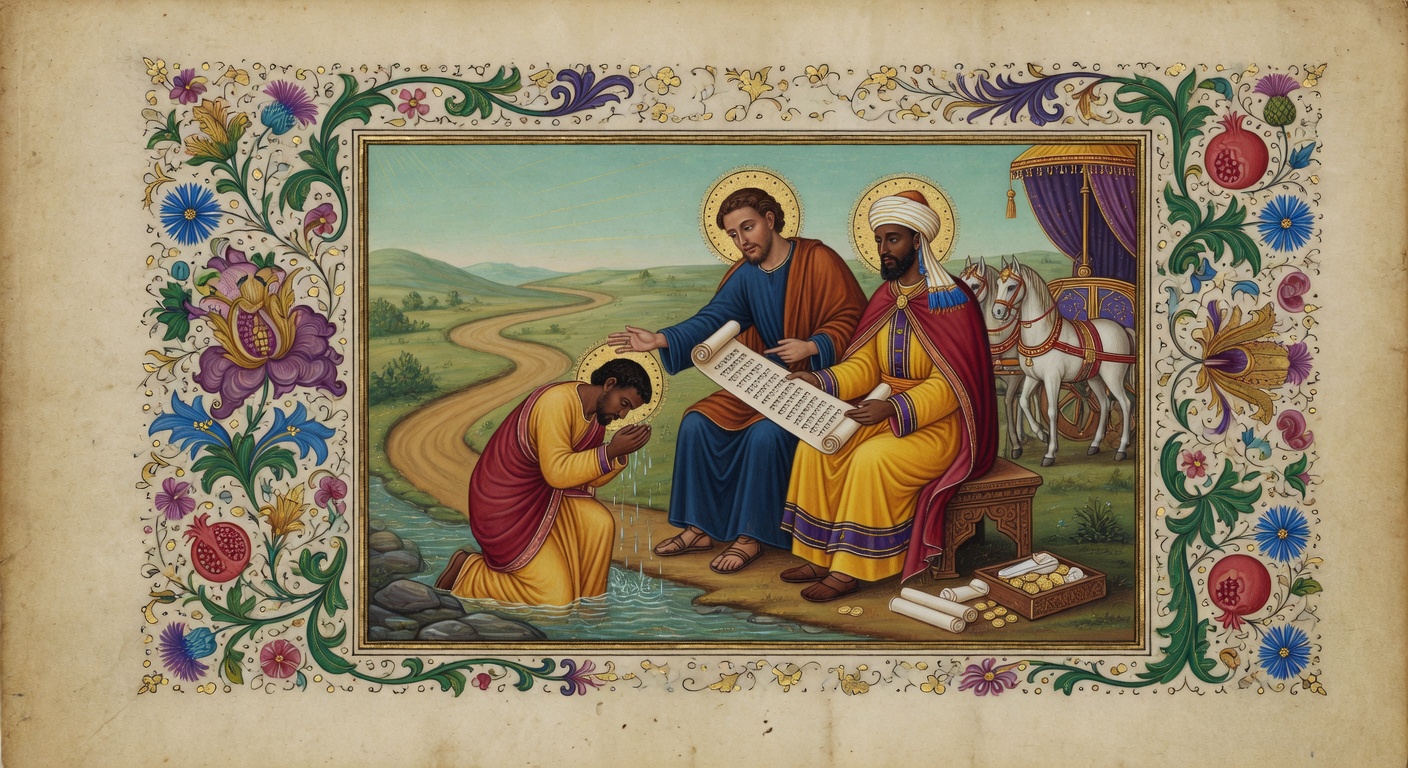
Philip and the Ethiopian c. AD 34
In the Book of Acts, an angel directs Philip the evangelist to intercept an Ethiopian official returning from worship in Jerusalem along the desert road to Gaza. The official, a eunuch serving as treasurer to Queen Candace, was reading Isaiah 53 aloud, prompting Philip to explain that the prophecy describes Jesus' sacrificial death and resurrection. After the man professes faith, Philip baptizes him in nearby water before being supernaturally transported away. This encounter marks one of the earliest expansions of the gospel beyond Jewish communities into Africa and illustrates Scripture's fulfillment through the inclusion of Gentile believers.
-
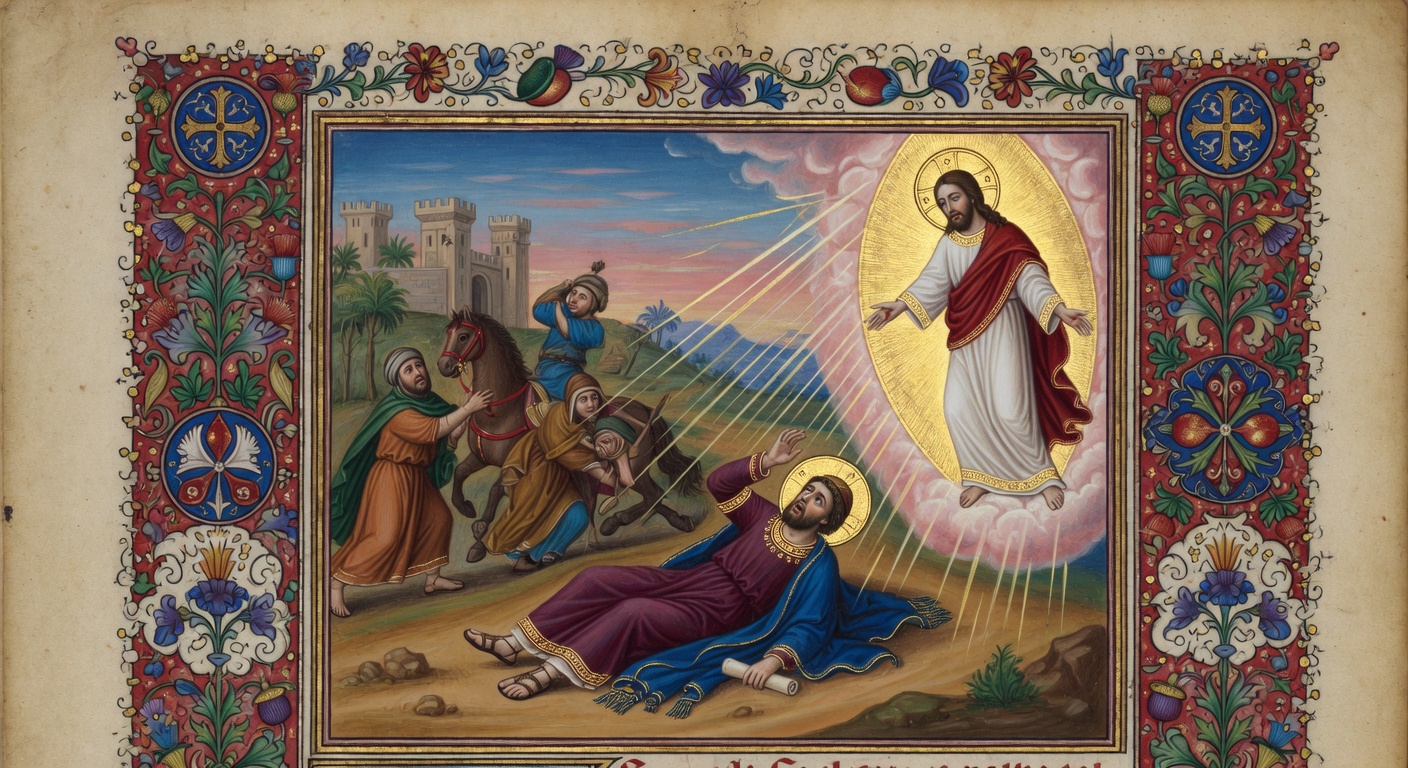
Conversion of Paul c. AD 33–36
Saul of Tarsus, a zealous Pharisee actively persecuting early Christians, was traveling to Damascus when he encountered the risen Christ in a blinding vision of light, during which Jesus confronted him about his actions and commissioned him for ministry. Temporarily blinded, Saul was led into the city where the disciple Ananias restored his sight and baptized him, marking his immediate transformation from opponent of the faith to devoted follower who soon began preaching that Jesus is the Son of God. This event, recorded in Acts 9 with additional details in Acts 22 and 26, holds major significance in Scripture as it illustrates divine grace powerfully redirecting a key adversary, resulting in Saul's adoption of the name Paul and his pivotal role as apostle to the Gentiles.
-
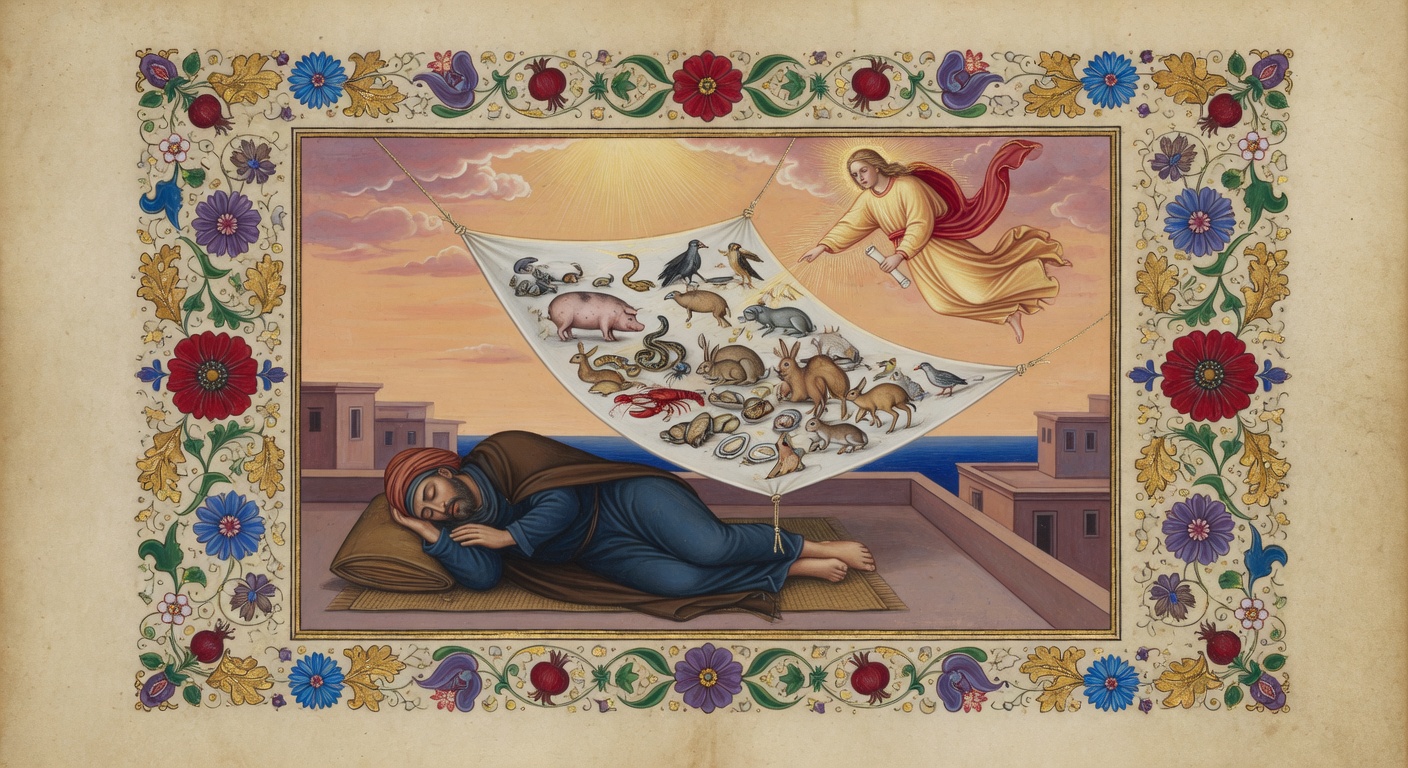
Peter's Vision c. AD 40
In the Book of Acts, the apostle Peter experiences a divine vision while praying on a rooftop in Joppa. A large sheet descends from heaven containing various animals considered unclean under Jewish law, and a voice commands him to kill and eat them, repeating the instruction three times despite Peter's objections. This vision coincides with a message from the Gentile centurion Cornelius, leading Peter to understand that God shows no partiality and that the gospel message is intended for Gentiles as well as Jews. The event marks a pivotal moment in the early church, resulting in the baptism of Cornelius's household and affirming the inclusion of all people in God's salvation plan without the need for adherence to ceremonial laws.
-
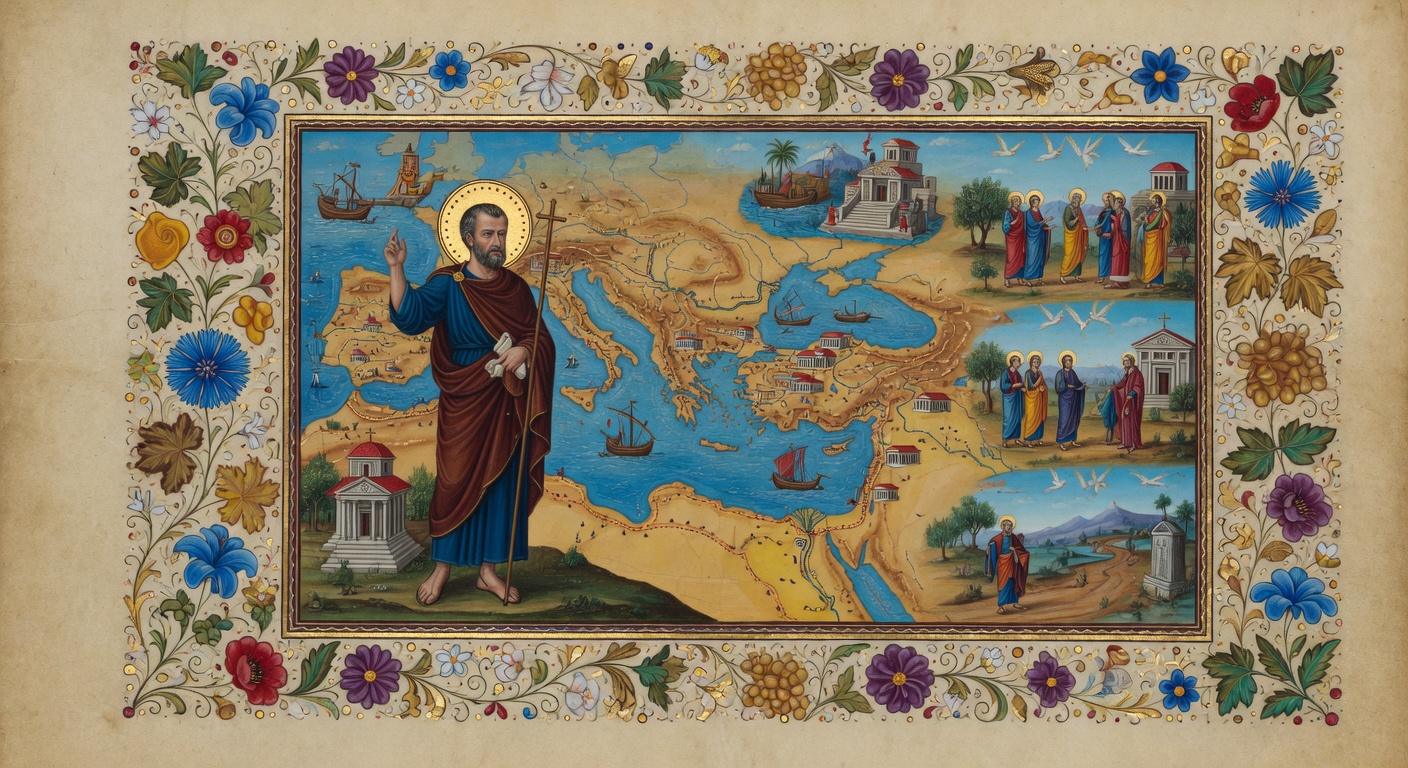
Paul's Missionary Journeys c. AD 47–57
Paul undertook three major missionary journeys throughout the Roman Empire in the mid-first century AD, traveling by land and sea to regions including Asia Minor, Macedonia, and Greece as recorded in the Book of Acts. During these travels he preached the gospel in synagogues and public forums, performed miracles, debated philosophers, and founded congregations in key cities such as Antioch, Corinth, and Ephesus while converting both Jews and Gentiles. These efforts fulfilled Jesus’ commission to take the message beyond Jerusalem and were essential for the rapid expansion of Christianity into the wider Greco-Roman world. The journeys also prompted many of Paul’s New Testament epistles, which provided theological instruction and pastoral guidance to the newly established churches.
-
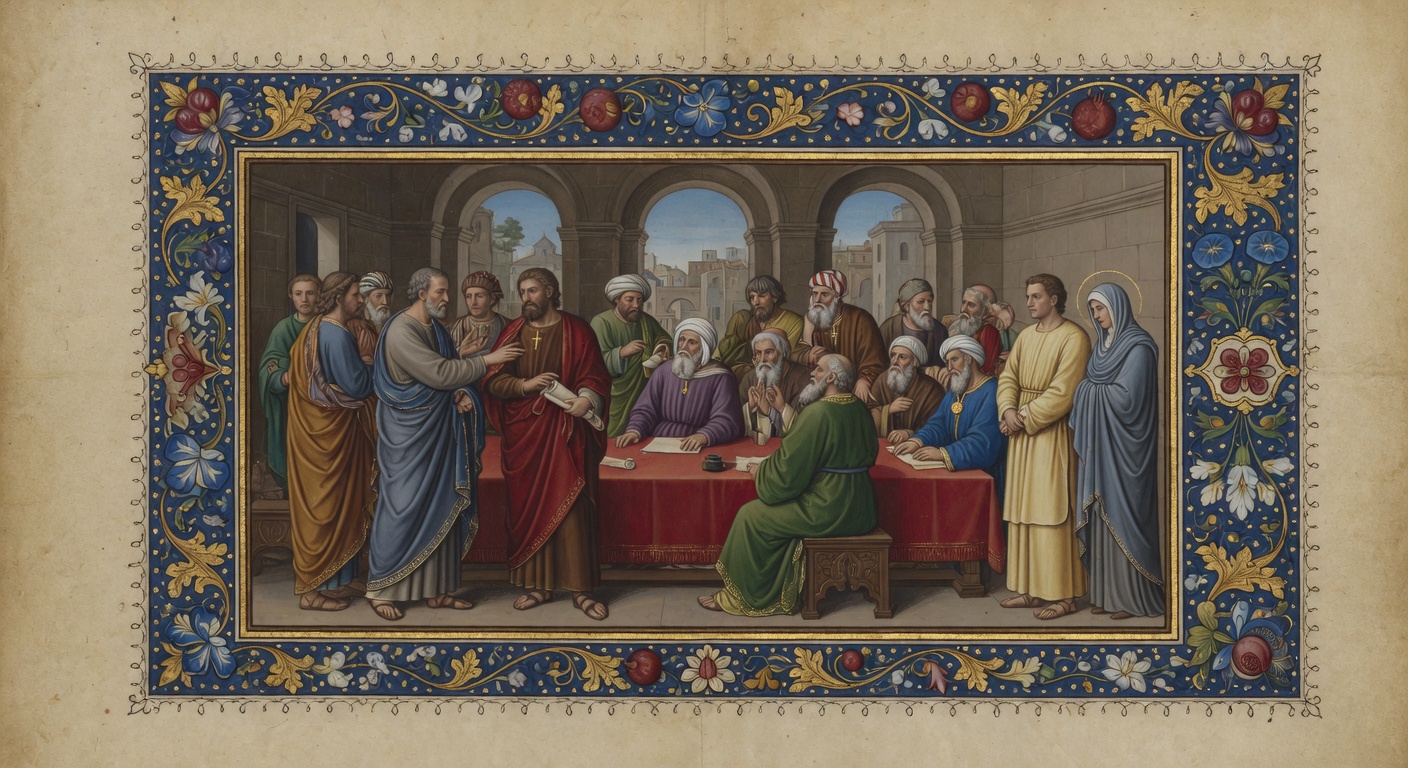
Council of Jerusalem c. AD 49
The Council of Jerusalem, described in Acts 15, was convened by the early church leaders around 50 AD to resolve a dispute over whether Gentile converts must undergo circumcision and fully observe the Mosaic Law to be saved. Jewish believers from Judea insisted on these requirements, but apostles including Peter, Paul, Barnabas, and James gathered to examine the matter through testimonies, the Holy Spirit's work among Gentiles, and scriptural interpretation. The council ultimately ruled that circumcision was unnecessary for salvation, issuing a letter directing Gentile believers only to avoid food sacrificed to idols, blood, strangled animals, and sexual immorality. This decision proved pivotal in Scripture by affirming salvation through grace alone, enabling the church's expansion beyond Jewish boundaries, and modeling Spirit-led resolution of doctrinal conflict for future generations.
-
Paul in Corinth AD 51–52
✓ ConfirmedDuring his second missionary journey, the apostle Paul arrived in the bustling city of Corinth and spent eighteen months teaching in the synagogue and a private home, establishing one of the earliest Christian communities in Greece amid a culturally diverse and morally challenging environment. Local Jewish leaders accused him of promoting unlawful religious practices and brought him before the Roman proconsul Gallio, who dismissed the case as an internal dispute rather than a criminal matter under imperial law. This event, recorded in Acts 18, provided an early legal precedent that Christianity was not inherently subversive, allowing Paul and other missionaries greater freedom to continue their work without immediate Roman interference. The Corinthian church he founded later became the recipient of his canonical epistles addressing doctrine, morality, and church order.
-
Jerusalem Council c. AD 49
The Jerusalem Council, described in Acts 15, was convened by the apostles and elders in Jerusalem around 50 AD to resolve a major dispute in the early church over whether Gentile converts must obey the full Mosaic law, especially circumcision, to be saved. After testimonies from Peter, Paul, and Barnabas about God's acceptance of Gentiles by faith, James delivered the council's judgment that such requirements were unnecessary, though believers should avoid idolatry, sexual immorality, blood, and strangled meat. This decision affirmed salvation by grace through faith alone rather than works of the law, prevented division between Jewish and Gentile Christians, and enabled the gospel's rapid expansion to non-Jewish populations throughout the Roman world.
-
Paul's Shipwreck c. AD 60
During his voyage to Rome as a prisoner to stand trial before Caesar, the apostle Paul encountered a severe storm that caused the ship to wreck on the island of Malta. Despite the perilous conditions, all 276 passengers and crew survived, fulfilling Paul's earlier prophecy of divine protection. While on Malta, Paul performed miracles including surviving a viper bite and healing the sick, which opened doors for sharing the gospel with the island's inhabitants. This event underscores God's sovereignty in guiding Paul to fulfill his mission of testifying in Rome, as recorded in the Book of Acts.
-
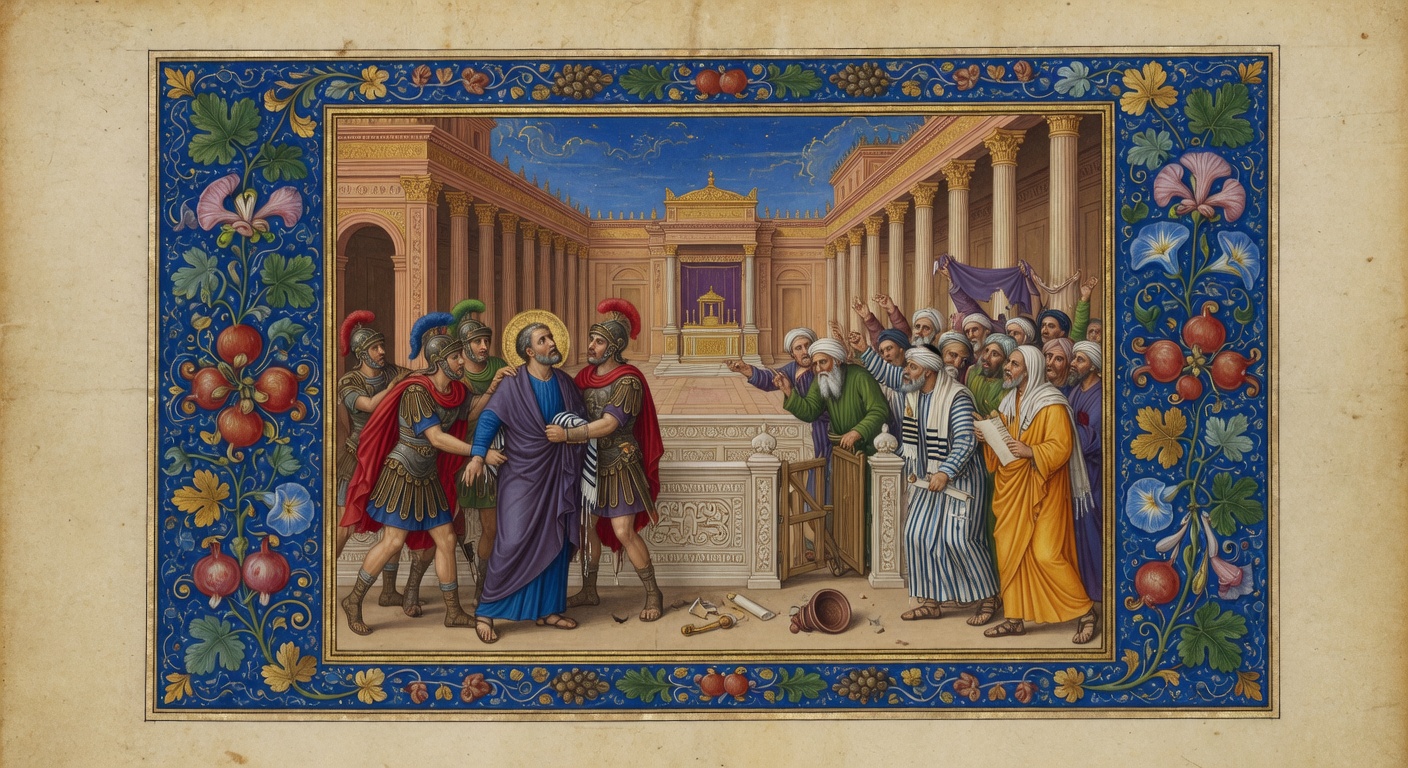
Pauls Arrest in Jerusalem c. AD 57
Paul's arrest in Jerusalem occurred when Jews from Asia accused him of defiling the temple by bringing the Gentile Trophimus into its restricted inner courts, igniting a riot that led to Paul being seized, beaten, and nearly killed by an enraged mob. Roman soldiers intervened to rescue him from the violence and placed him under arrest, an event that took place during his final visit to the city after completing his missionary journeys. This incident marked the start of Paul's prolonged imprisonment and series of trials before Jewish and Roman authorities, fulfilling earlier prophecies that he would testify in Jerusalem and eventually reach Rome. In Scripture, the arrest underscores the opposition faced by early Christian leaders, demonstrates Paul's steadfast commitment to the gospel, and serves as a key turning point that enabled the message of Christ to advance through his writings and witness while in custody.
-
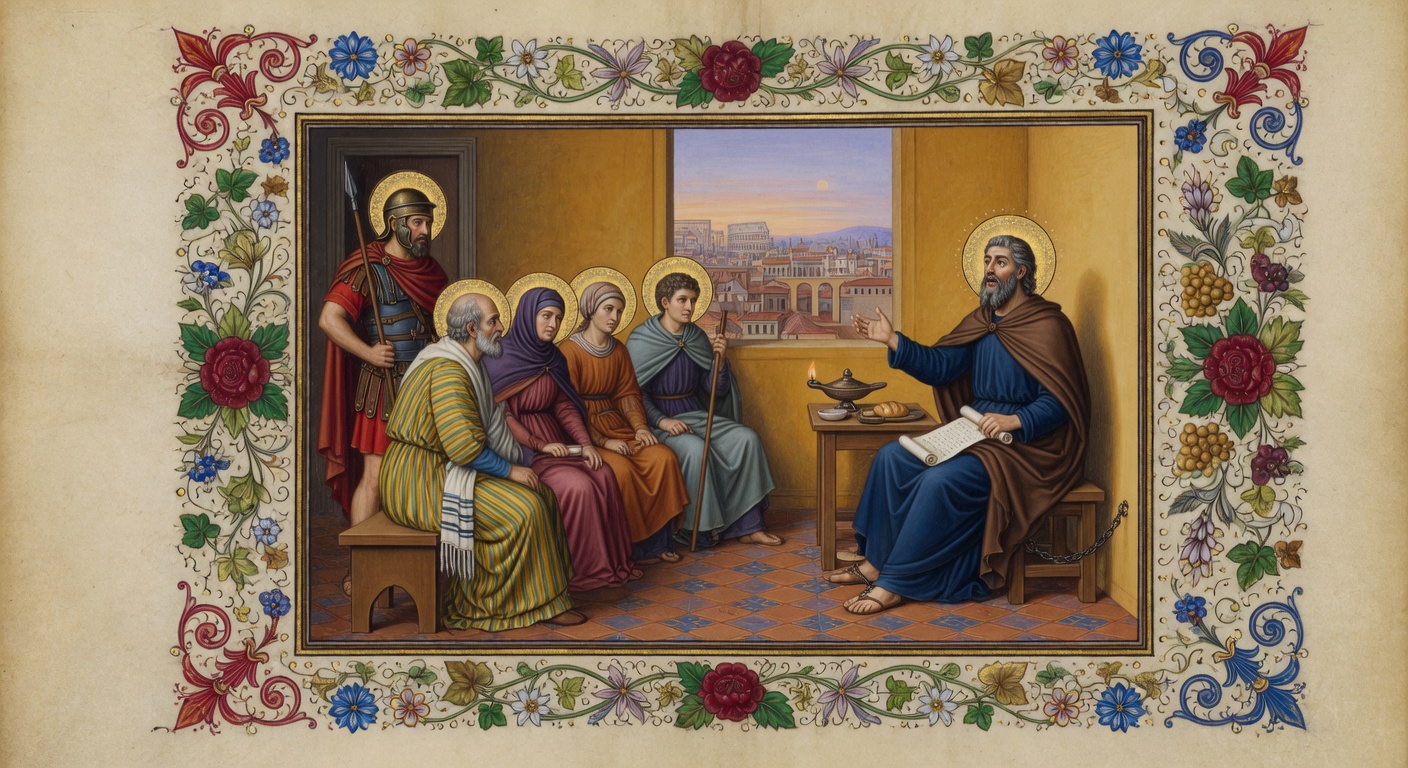
Paul in Rome c. AD 60–62
Paul's arrival in Rome as a prisoner under house arrest represents the culmination of his missionary journeys and the fulfillment of his desire to preach in the imperial capital. Despite being chained to a Roman guard, he was permitted to receive visitors and boldly proclaimed the gospel to both Jewish leaders and Gentile audiences over a period of two years. During this time, Paul authored several epistles that form a significant portion of the New Testament, encouraging churches and articulating key theological truths. This event underscores the unstoppable nature of the gospel message, as it advanced even through imprisonment at the heart of the Roman Empire.
-
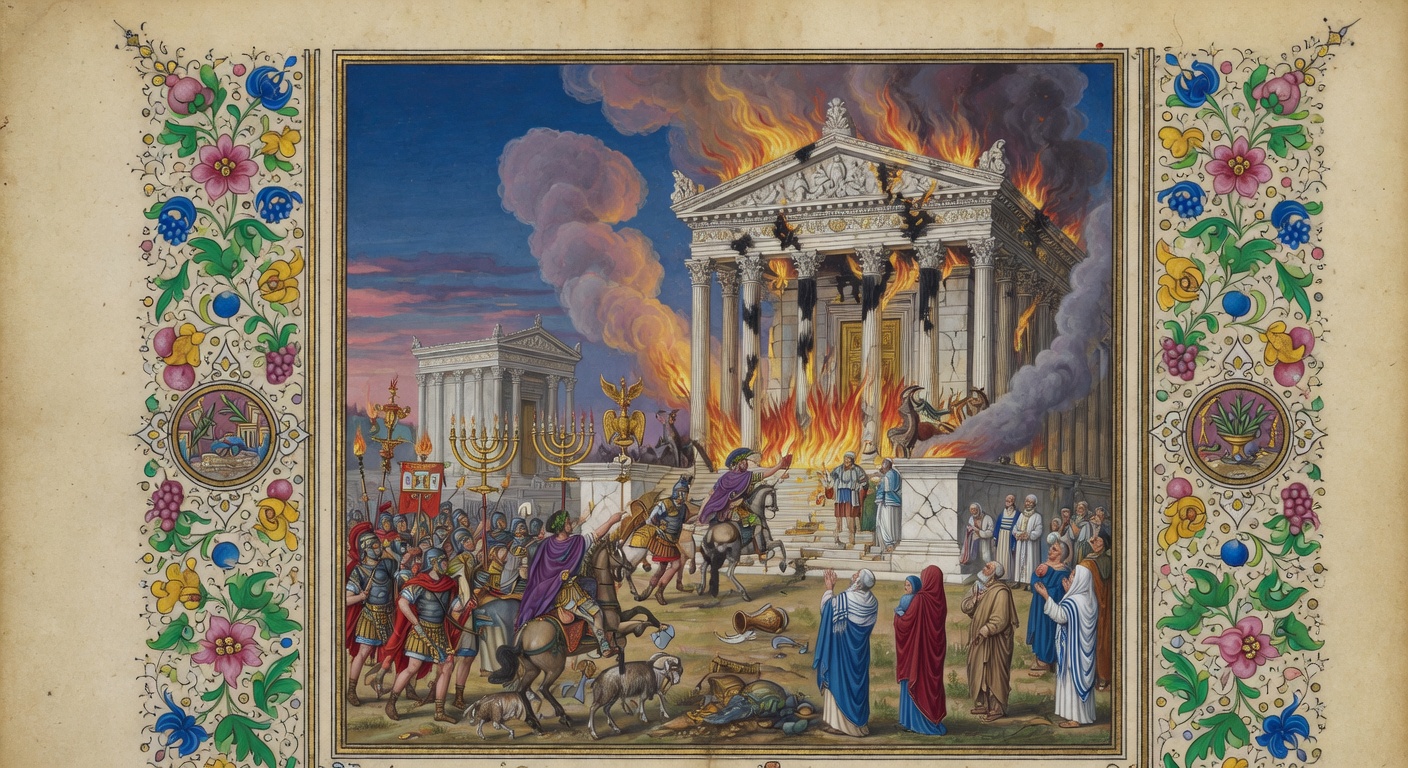
Destruction of the Second Temple AD 70
✓ ConfirmedIn 70 AD, amid the First Jewish-Roman War, Roman legions under the command of Titus besieged Jerusalem, breached its defenses, and set fire to the Second Temple, reducing the structure to ruins and slaughtering or scattering much of the population. This event permanently ended the daily animal sacrifices and priestly rituals that had defined Jewish worship since the Temple's rebuilding under Zerubbabel and its later expansion by Herod the Great. Scripture highlights its significance through Jesus' prophecies in Matthew 24 and Luke 21, which foretold the Temple's destruction as a sign of coming judgment and the shift from the old covenant system to the new covenant centered on Christ's once-for-all sacrifice. The loss also prompted the rise of rabbinic Judaism, redirecting religious life toward Torah study, prayer, and synagogues in the absence of a central sanctuary.
-
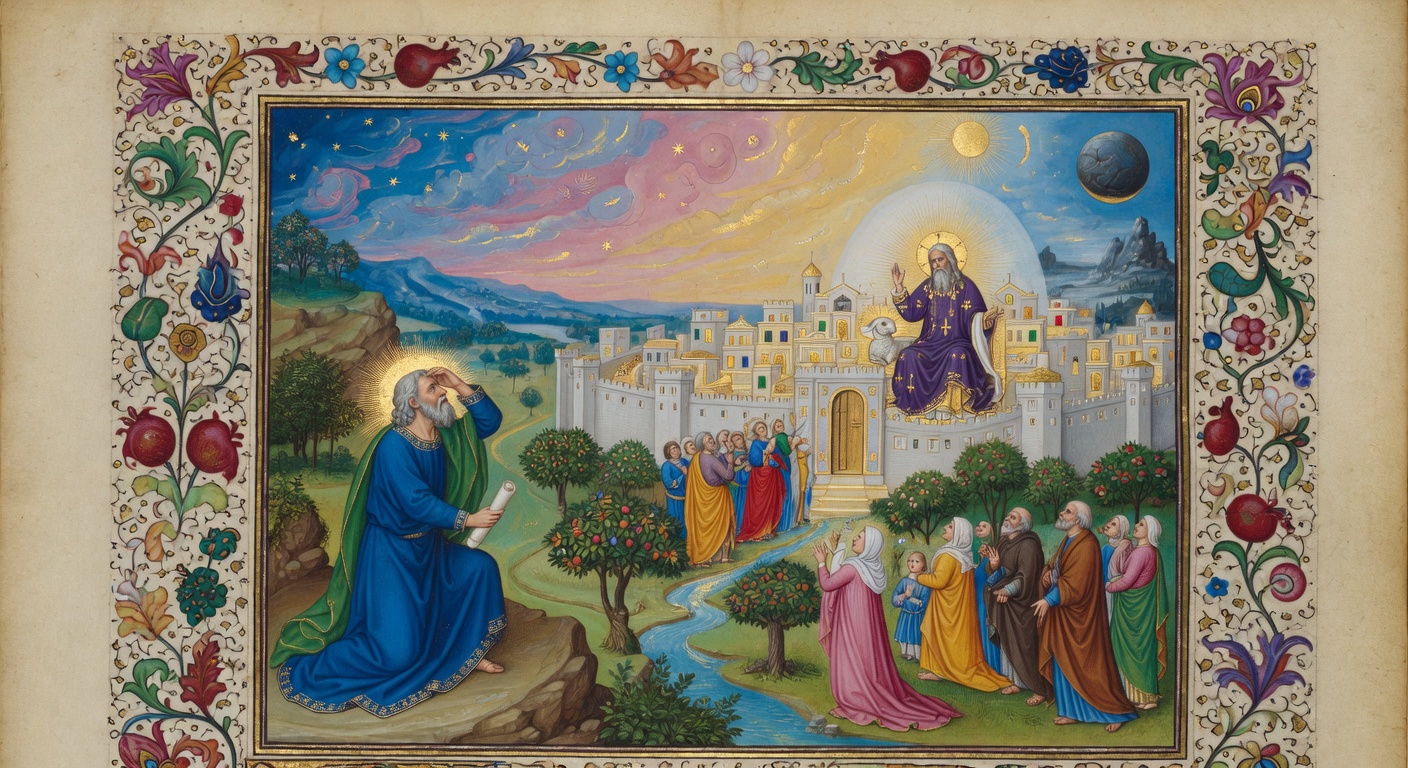
New Heaven and New Earth c. AD 95
In the book of Revelation, the apostle John receives a vision of a renewed creation in which the first heaven and earth pass away and are replaced by a new heaven and new earth free from sin, suffering, and death. This event marks the fulfillment of God’s redemptive plan as he descends to dwell permanently with his people in the New Jerusalem, restoring perfect communion and fulfilling covenant promises made throughout Scripture. Its significance rests in representing the climax of biblical history, where final judgment gives way to eternal righteousness and the complete restoration of all things.
-
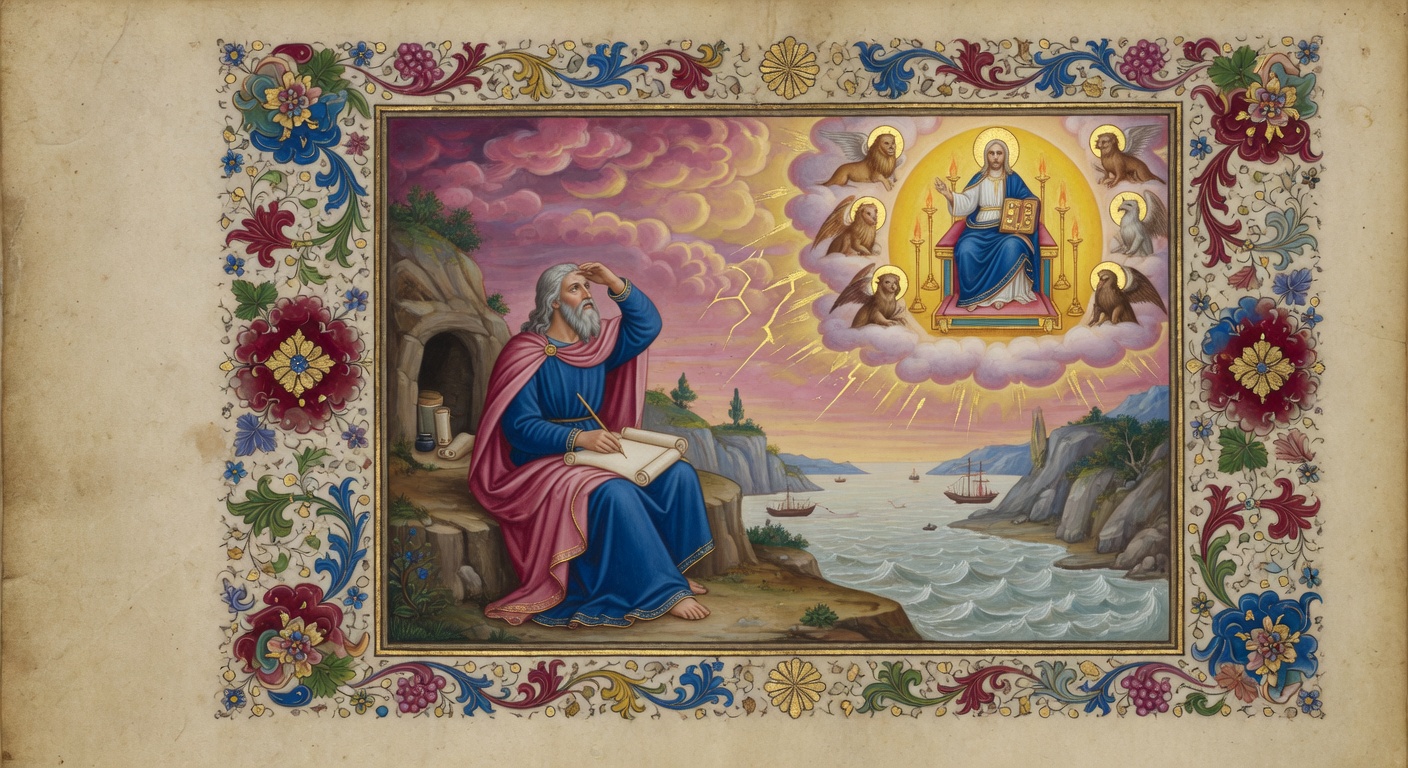
John on Patmos c. AD 95
The apostle John was exiled to the island of Patmos during a period of Roman persecution against early Christians for his faithful witness to Jesus Christ. While on the island, John received a series of divine visions revealing future events, including the judgments of God, the triumph of Christ, and the establishment of a new heaven and earth. These visions form the content of the Book of Revelation, the final book of the New Testament canon. The account holds significant importance in Scripture as it provides hope and encouragement to believers facing trials, assuring them of God's ultimate victory over evil.