Esau Sells Birthright
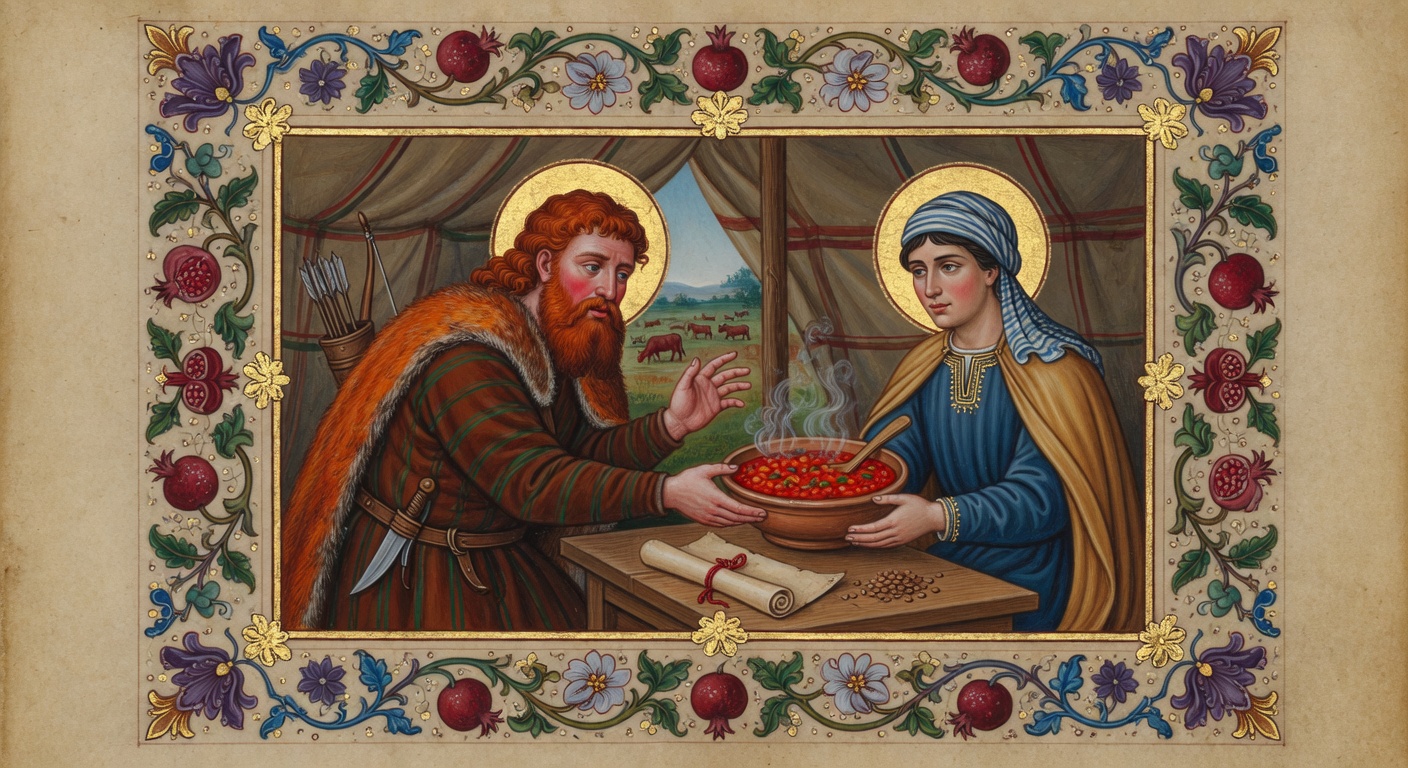
In the book of Genesis, Esau and his younger twin brother Jacob were the sons of Isaac and Rebekah, with Esau as the firstborn entitled to the family birthright that carried leadership of the household and participation in God's covenant promises to Abraham. One day, after returning famished from the fields, Esau impulsively sold his birthright to Jacob in exchange for a meal of lentil stew, an act the text describes as despising his inheritance. This transaction holds significance in Scripture as it sets the stage for Jacob later receiving Isaac's blessing and illustrates the biblical theme of valuing spiritual legacy over immediate gratification. The event also aligns with the prophecy given to Rebekah that the older son would serve the younger, shaping the lineage leading to the nation of Israel.
Meanwhile in the World
Egypt's Old Kingdom builds the pyramids (c. 2600-2100 BC). Mesopotamia is dominated by Akkad and then Ur III. The Indus Valley civilization flourishes. Stonehenge is being constructed in Britain. This is the era of the great ziggurats and the first law codes (Ur-Nammu).