Absalom's Rebellion
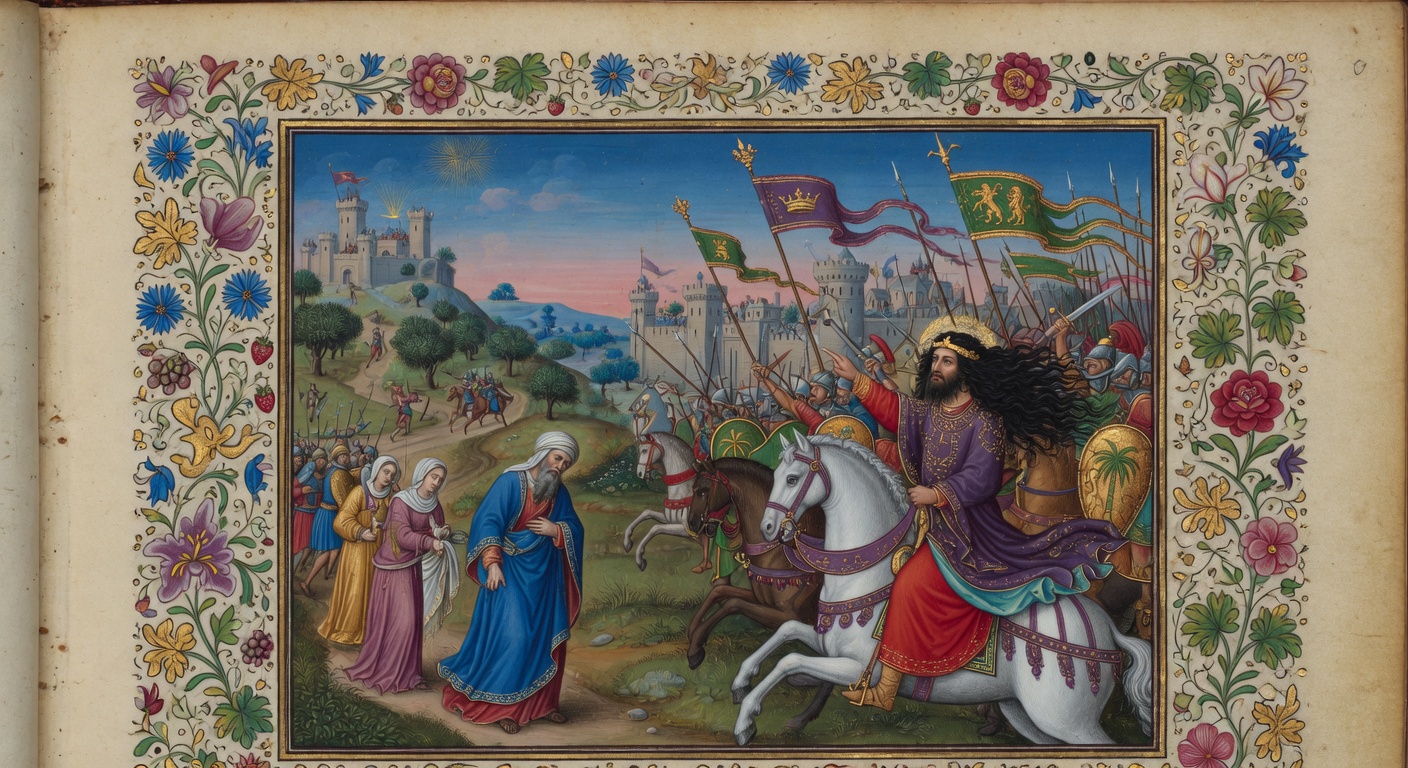
Absalom, one of King David's sons, grew resentful after his sister Tamar was violated by their half-brother Amnon and David failed to administer justice, fueling Absalom's ambition to claim the throne. He gradually won popular support by positioning himself as a more accessible leader, then declared himself king in Hebron, forcing David to flee Jerusalem and temporarily handing control of the capital and royal household to the rebel forces. In the ensuing battle in the forest of Ephraim, Absalom was killed by Joab despite David's explicit command to spare his life, ending the revolt but plunging the king into deep grief. This episode fulfills Nathan's earlier prophecy of ongoing turmoil within David's house as a consequence of his sins with Bathsheba and Uriah, while underscoring biblical themes of divine judgment, the limits of human authority, and the enduring consequences of familial and moral failure in Israel's monarchy.
Meanwhile in the World
Egypt is in decline (Third Intermediate Period). Phoenicia dominates Mediterranean trade. The Greek Dark Age continues. Assyria is rising in Mesopotamia. Homer may be composing the Iliad and Odyssey. This is the era of the great Phoenician alphabet spreading.