Rebuilding the Walls
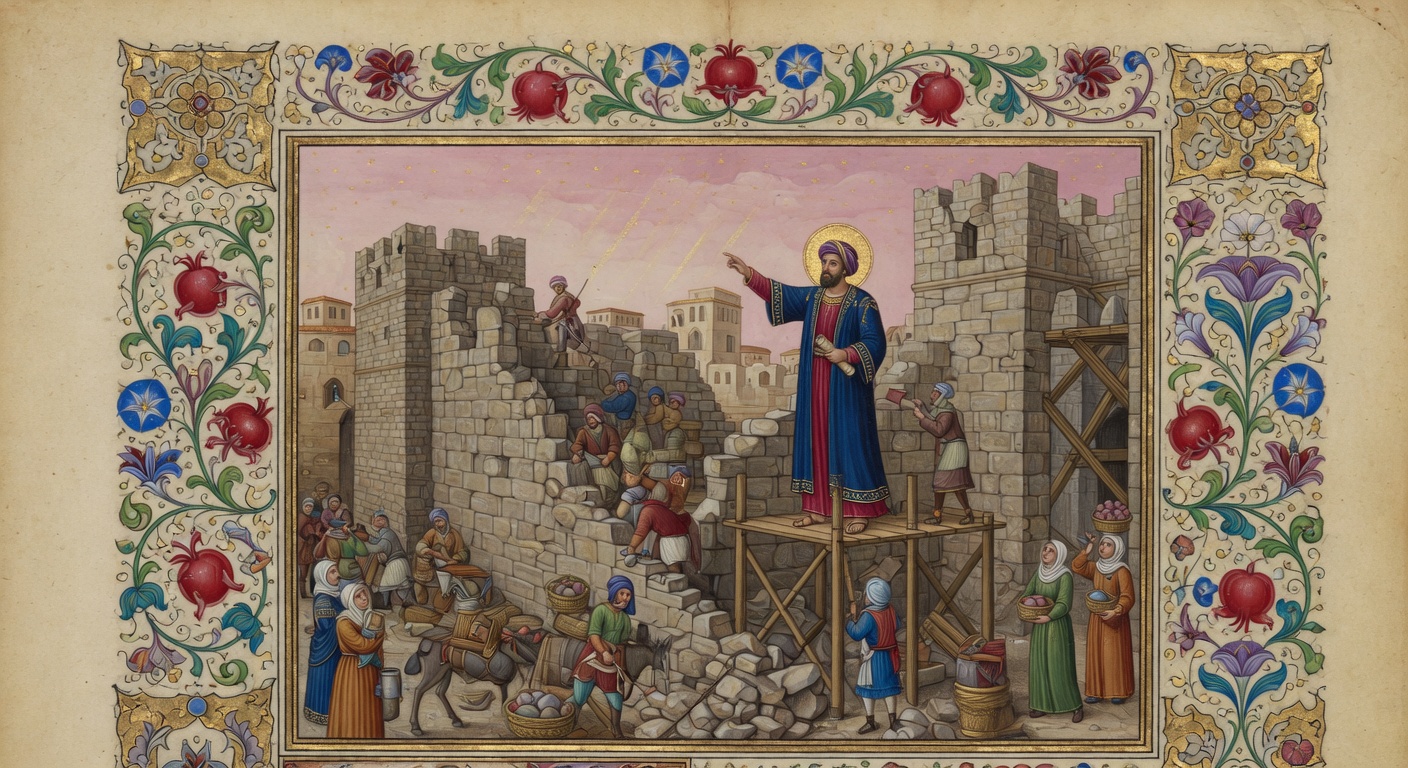
Following the Babylonian exile, the walls of Jerusalem lay in ruins, leaving the city defenseless and symbolizing the spiritual and national brokenness of God's people after decades of judgment and displacement. Nehemiah, a Jewish cupbearer to Persian King Artaxerxes, receives royal permission and resources around 445 BC to return and lead the reconstruction, organizing the people to repair sections of the wall while facing intense opposition from regional enemies like Sanballat and Tobiah. The work is completed in just 52 days through unified effort and prayerful dependence on God, restoring physical security to the city. This event matters in Scripture as a key step in post-exilic restoration, highlighting themes of covenant faithfulness, communal revival, and God's sovereignty in enabling His people to rebuild both their city and their relationship with Him.
Meanwhile in the World
Babylon under Nebuchadnezzar conquers the known world, then falls to Persia under Cyrus the Great (539 BC). Greece enters its Classical period - Socrates, Plato, the Parthenon. Rome becomes a republic. The Persian Empire creates the Royal Road and standardized coinage.