The Burning Bush
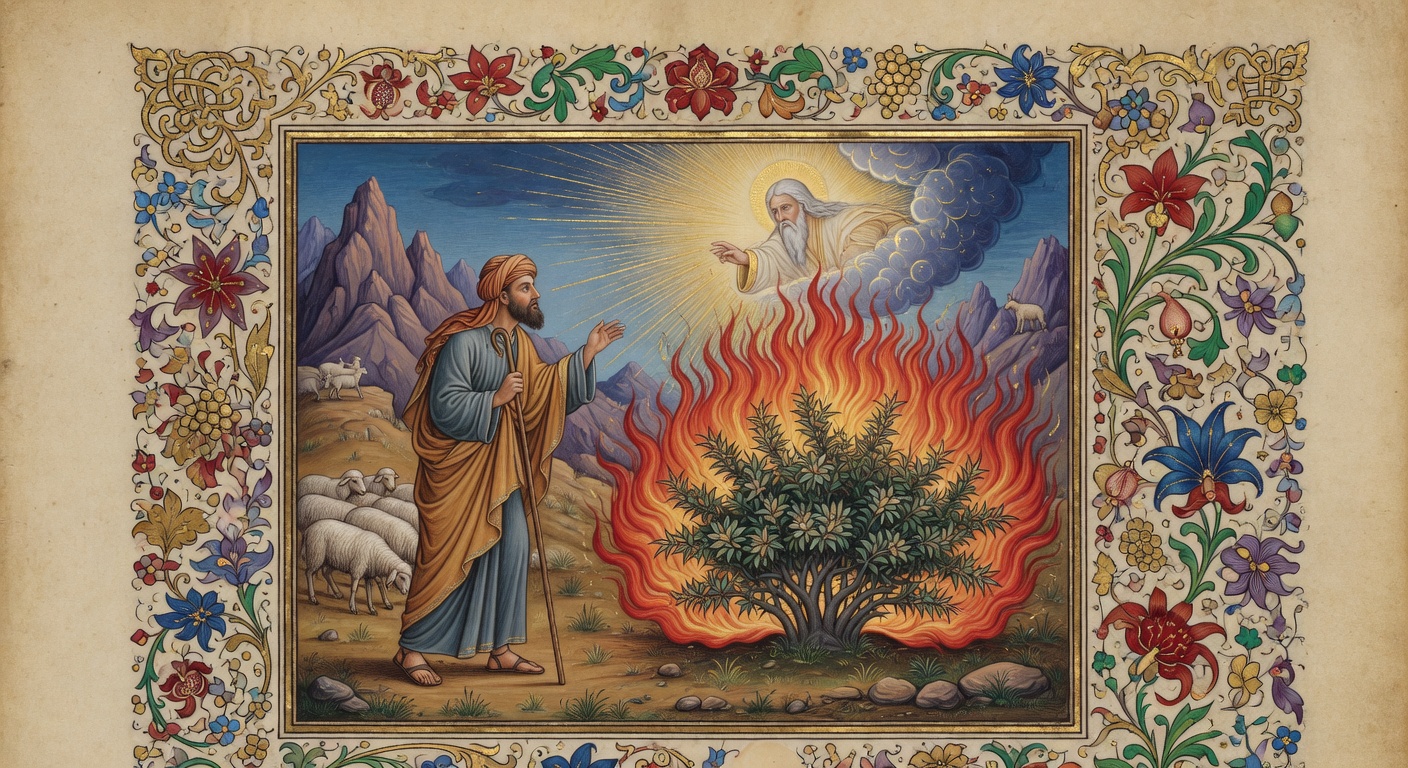
In the book of Exodus, while Moses tended sheep near Mount Horeb, also called Sinai, he witnessed a bush engulfed in flames yet remaining unconsumed, prompting him to approach out of curiosity. God then spoke directly from the bush, identifying Himself as the God of Abraham, Isaac, and Jacob, revealing His name as "I AM WHO I AM," and commissioning Moses to confront Pharaoh and lead the Israelites out of Egyptian bondage. This theophany holds central importance in Scripture because it launches the Exodus narrative, affirms God's covenant faithfulness, and establishes Moses as the prophet through whom divine law and redemption would be mediated to Israel. The event further highlights themes of divine initiative and human reluctance that recur throughout the biblical story of salvation.
Meanwhile in the World
Egypt is at the height of its New Kingdom power under pharaohs like Thutmose III and Ramesses II. The Hittite Empire controls Anatolia. The Late Bronze Age collapse is approaching. Troy exists as a real city. This is the time of the Amarna letters and international diplomacy.