Intertestamental Period
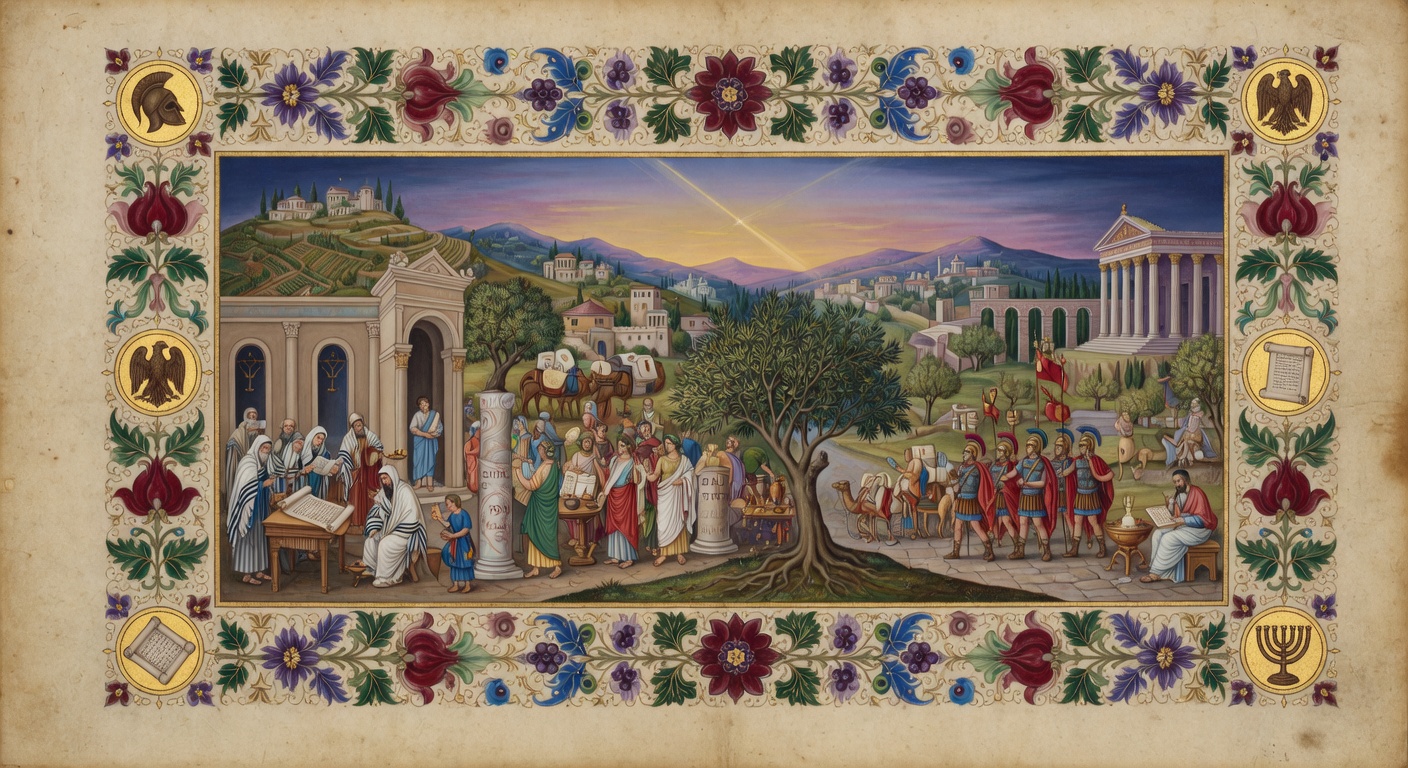
In the four centuries after the final Old Testament prophets, no further inspired writings appeared, yet the Lord continued directing events according to His redemptive plan. Greek culture permeated the Mediterranean through Alexander's conquests, the Roman Empire rose to provide political unity and infrastructure, and the Hebrew Scriptures were rendered into Greek as the Septuagint while synagogues took root among the scattered people of Israel. These developments, along with the growing expectation in Judea, set the precise conditions for the Messiah's birth and the subsequent proclamation of the Gospel throughout the world.
Did You Know?
This 400-year period is often called the 'silent years' because there was no new prophetic revelation.
Major historical developments occurred, including the rise of the Greek empire and the Maccabean revolt.
Many of the religious and political structures Jesus encountered (Pharisees, Sadducees, Herodians) developed during this era.