Hasmonean Dynasty
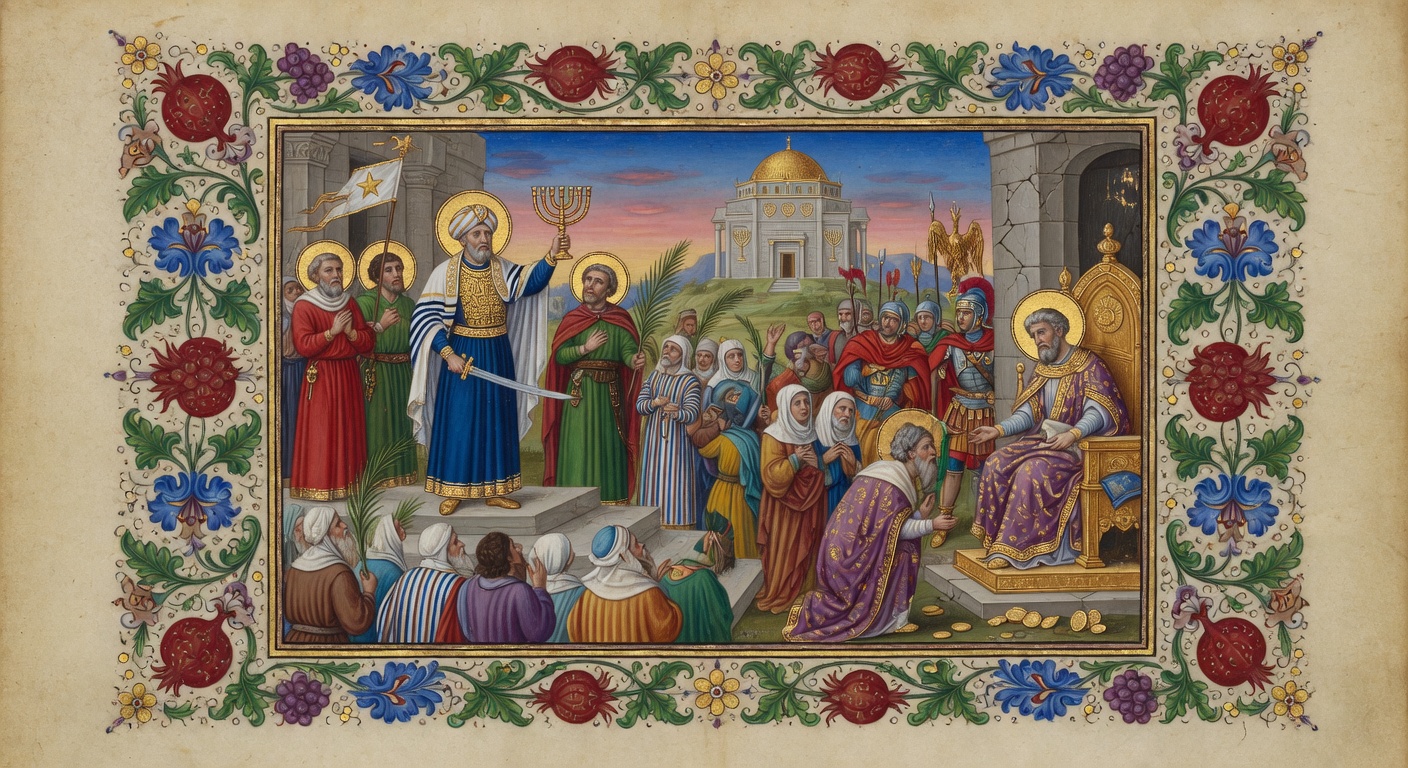
Following the successful Maccabean Revolt against Seleucid oppression in the second century BCE, the Hasmonean family established an independent Jewish state in Judea, with rulers serving as both kings and high priests. This period of autonomy allowed for the rededication of the Temple in Jerusalem, commemorated by the festival of Hanukkah, and the expansion of Jewish territory. However, internal strife and corruption among the Hasmonean leaders weakened the kingdom, prompting Roman general Pompey to intervene in 63 BCE and bring Judea under Roman influence. Though not directly mentioned in the Protestant canon, this era forms the crucial intertestamental backdrop for the New Testament, explaining the rise of Jewish sects and the political landscape during Jesus' time.
Meanwhile in the World
Alexander the Great conquers from Greece to India (330s BC). Greek culture spreads everywhere (Hellenization). Rome rises to dominate the Mediterranean. The Maccabean revolt occurs. Julius Caesar is assassinated (44 BC). The Septuagint (Greek Old Testament) is translated in Alexandria.
Maccabean Revolt (167 BC), rise of Pharisees, Sadducees, and Essenes; Dead Sea Scrolls community