Writing on the Wall
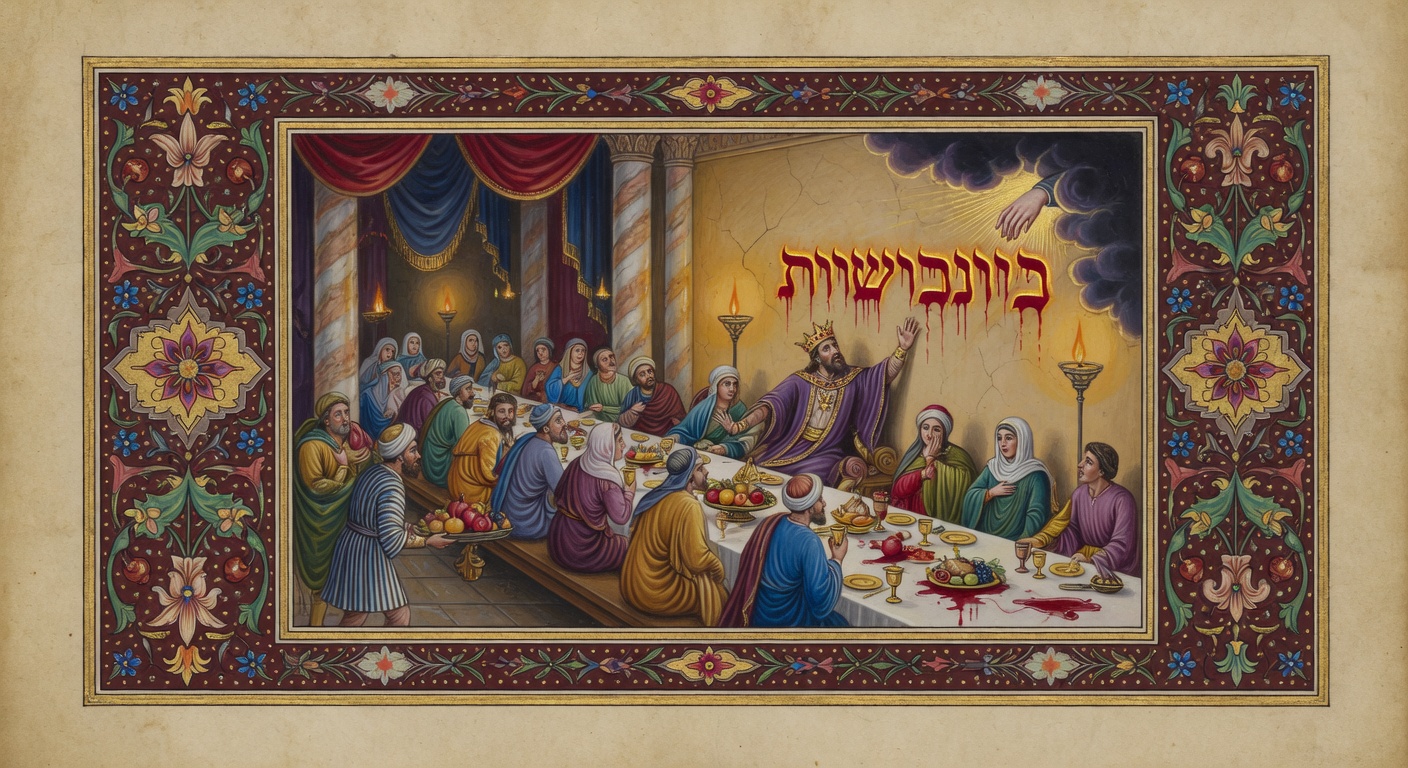
During Belshazzar's feast in Babylon, the king and his nobles drank from gold and silver vessels taken from the Jerusalem temple, an act of defiance against the God of Israel. Suddenly, a mysterious hand appeared and wrote the words "Mene, Mene, Tekel, Upharsin" on the palace wall, which the prophet Daniel interpreted as God's judgment that the Babylonian kingdom had been numbered, weighed, and found wanting, soon to be divided between the Medes and Persians. That very night, Persian forces captured the city, killing Belshazzar and ending the Babylonian empire. This event underscores Scripture's theme of divine sovereignty, illustrating how God holds rulers accountable for pride and sacrilege while fulfilling prophecies of judgment.
Meanwhile in the World
Babylon under Nebuchadnezzar conquers the known world, then falls to Persia under Cyrus the Great (539 BC). Greece enters its Classical period - Socrates, Plato, the Parthenon. Rome becomes a republic. The Persian Empire creates the Royal Road and standardized coinage.