Daniel
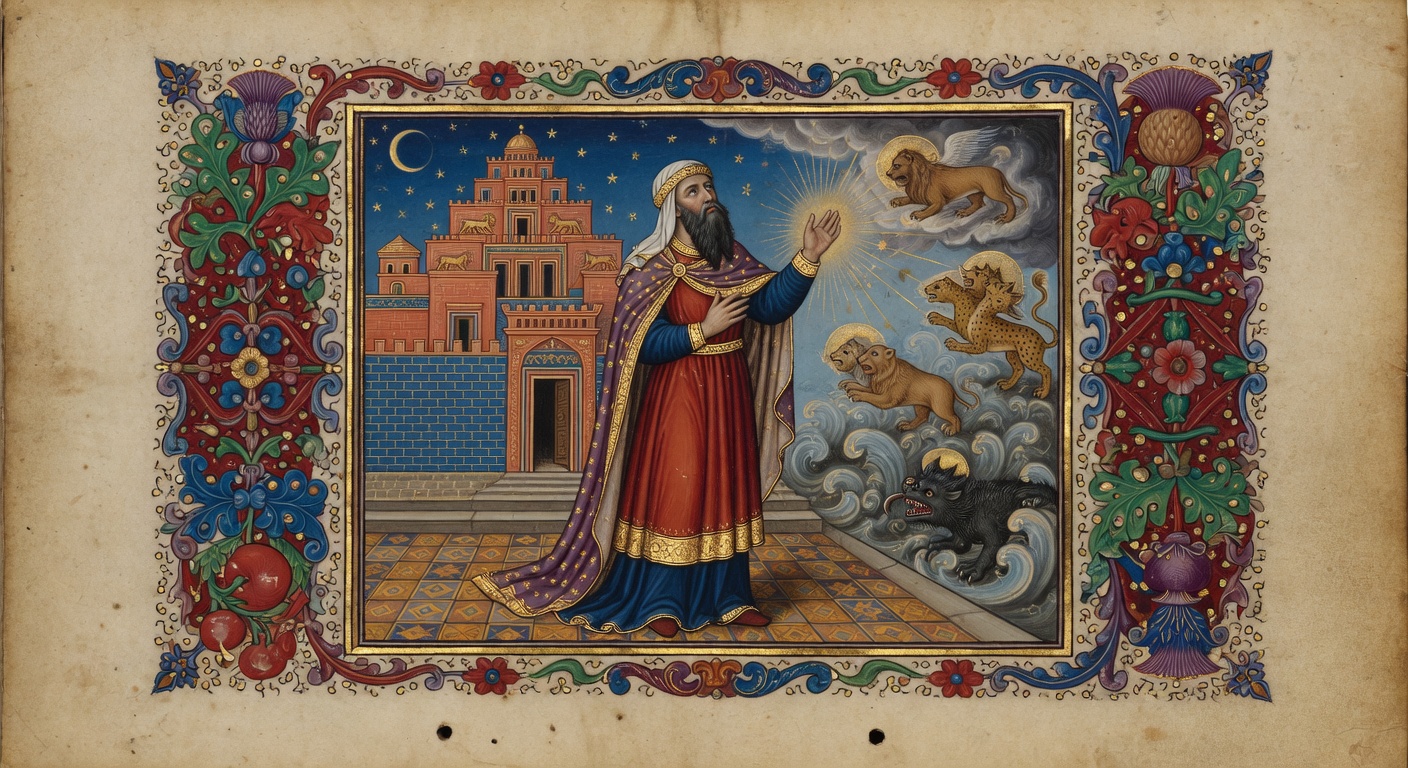
Daniel was a young Israelite taken captive to Babylon in the sixth century BC, where he rose to prominence as a wise advisor to kings Nebuchadnezzar and Darius while maintaining his devotion to God. Despite facing persecution, including being thrown into a den of lions for his prayers, he consistently refused to compromise his faith and was miraculously delivered by God. In addition to interpreting royal dreams and visions, Daniel himself received apocalyptic revelations about the succession of world empires and the ultimate triumph of God's kingdom. These accounts in the Book of Daniel underscore the themes of divine sovereignty, faithfulness under trial, and hope for future redemption, influencing both Jewish and Christian eschatology.
Video from BibleProject
Daniel Overview
Daniel remains faithful to God in exile while God reveals his plan for all kingdoms.
BibleProject is the author and owner of this content. To find more BibleProject resources, visit bibleproject.com. Bible Navigator is not affiliated with BibleProject.
Biography
- Born
- c. 620 BC, Jerusalem
- Died
- c. 530 BC, Babylon/Persia
- Occupation
- Prophet, Statesman
- Tribe
- Judah (royal family)
- Era
- Exile (c. 605-530 BC)
- Nationality
- Judean
- Also Known As
- Belteshazzar
Did You Know?
Daniel and his companions were among the first wave of Judean exiles deported to Babylon in 605 BC, where they underwent three years of training in Chaldean language and literature before entering royal service.
Despite his high position in the Babylonian and Persian courts, Daniel continued to observe Jewish prayer customs by kneeling toward Jerusalem three times daily, even when it led to his condemnation under Persian law.
The Aramaic portions of the Book of Daniel, covering chapters 2 through 7, include the famous story of the writing on the wall during Belshazzar's feast, where the phrase "mene, mene, tekel, upharsin" predicted the fall of Babylon to the Medes and Persians.
Nebuchadnezzar's second dream, interpreted by Daniel, foretold the king's descent into madness for seven years as punishment for his pride, after which he acknowledged the sovereignty of the God of heaven.
Daniel's vision of the four beasts emerging from the sea in chapter 7 parallels his earlier interpretation of Nebuchadnezzar's statue but adds details about a "little horn" that speaks boastfully, often linked by scholars to the Seleucid ruler Antiochus IV Epiphanes.
Key Passages
Daniel's Resolve
Daniel 1:6-21
As a teenager in exile, Daniel refuses to compromise his faith through small acts of cultural conformity - establishing that faithfulness in small things prepares one for greater tests.
 6ow among these were of the children of Judah, Daniel, Hananiah, Mishael, and Azariah:
The Fiery Furnace
Daniel 3:13-28
Three young men choose the furnace over idolatry, declaring 'even if God does not rescue us' - demonstrating faith that trusts God's character regardless of outcome.
 13hen Nebuchadnezzar in his rage and fury commanded to bring Shadrach, Meshach, and Abednego. Then they brought these men before the king.
The Lion's Den
Daniel 6:16-23
Daniel's enemies can find no fault in him except his faithfulness to God. His deliverance from the lions vindicates righteous living and demonstrates God's power to protect His servants.
16hen the king commanded, and they brought Daniel, and cast him into the den of lions. Now the king spake and said unto Daniel, Thy God whom thou servest continually, he will deliver thee.