Cyrus
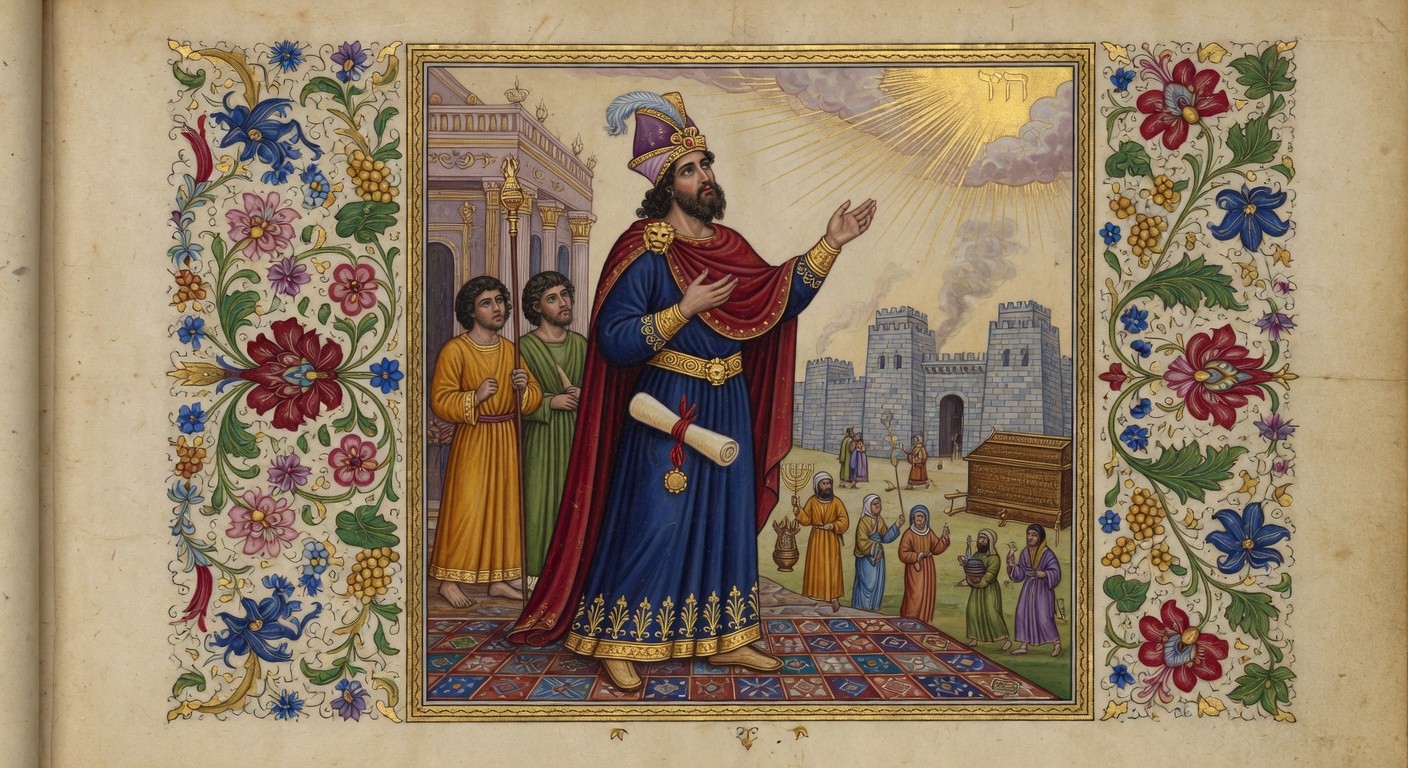
Cyrus, the king of Persia, is recognized in the Bible as God's anointed servant who played a crucial role in the history of Israel. After conquering Babylon, he issued a decree that allowed the Jewish exiles to return to their homeland and rebuild the temple in Jerusalem, as recorded in the books of Ezra and 2 Chronicles. This event marked the end of the Babylonian captivity and fulfilled prophecies from Isaiah that named Cyrus specifically centuries in advance. The significance lies in demonstrating God's sovereignty over world empires and His faithfulness in restoring His people according to His covenant promises.
Biography
- Born
- c. 600 BC, Anshan, Persia
- Died
- c. 530 BC, Central Asia (battle)
- Occupation
- King of Persia
- Father
- Cambyses I
- Mother
- Mandane
- Spouse
- Cassandane
- Children
- Cambyses II, Smerdis
- Era
- Post-Exile (c. 559-530 BC)
- Nationality
- Persian
- Also Known As
- Cyrus the Great
Family
Did You Know?
In Isaiah 45:1, God uniquely calls the pagan ruler Cyrus His "anointed" (mashiach), a title otherwise reserved for Israelite kings, priests, and the future Messiah, underscoring divine sovereignty over foreign empires.
The Cyrus Cylinder, discovered in 1879, documents Cyrus's policy of repatriating exiled peoples and restoring their temples, directly paralleling the decree in Ezra 1:1-4 that ended the Babylonian captivity around 538 BC.
Isaiah 44:28 and 45:1 name Cyrus explicitly as the one who would order Jerusalem's rebuilding and the temple's foundation, a prophecy issued roughly 150 years before his birth during the late 8th century BC.
Josephus records that Cyrus was shown Isaiah's prophecies concerning himself, prompting his edict for the Jews' return, an extra-biblical tradition that aligns with the Persian king's documented tolerance of local cults across his empire.
Cyrus's decree appears in three distinct biblical contexts. 2 Chronicles 36:22-23, Ezra 1:2-4, and Ezra 6:3-5. Each emphasizing different aspects of the temple vessels' return and the exiles' freedom, without any scriptural rebuke of his Zoroastrian background.
Key Passages
Isaiah's Prophecy of Cyrus
Isaiah 45:1-7
This passage shows God's sovereign love in raising up unexpected leaders to fulfill His redemptive plans for His people.
 1hus saith the LORD to his anointed, to Cyrus, whose right hand I have holden, to subdue nations before him; and I will loose the loins of kings, to open before him the two leaved gates; and the gates shall not be shut;
Cyrus's Decree
Ezra 1:1-4
This passage shows God's sovereign faithfulness in moving a pagan ruler to restore His people and fulfill His promises.
 1ow in the first year of Cyrus king of Persia, that the word of the LORD by the mouth of Jeremiah might be fulfilled, the LORD stirred up the spirit of Cyrus king of Persia, that he made a proclamation throughout all his kingdom, and put it also in writing, saying,