Hezekiah
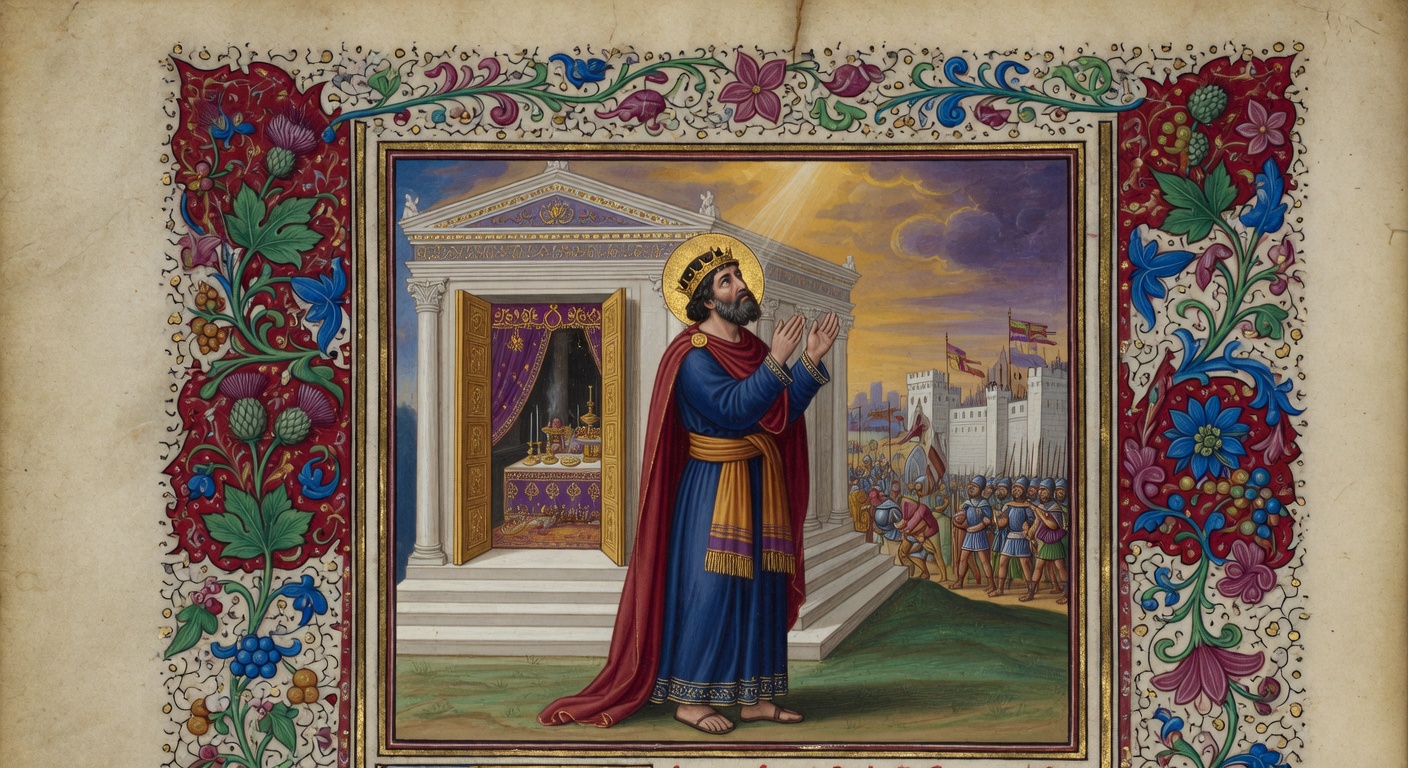
Hezekiah served as a righteous king of Judah in the late eighth century BC, following the Assyrian conquest of the northern kingdom of Israel. He restored temple worship by cleansing the sanctuary, removing idols, and reinstating Passover observance to renew covenant faithfulness among the people. When Assyrian forces under Sennacherib besieged Jerusalem, Hezekiah responded with prayer and trust in God rather than political alliances, leading to the city's miraculous deliverance as recorded in 2 Kings 19 and Isaiah 37. This account underscores Scripture's emphasis on divine protection for those who seek the Lord amid national crisis and remains a model of faithful leadership.
Biography
- Born
- c. 739 BC, Jerusalem
- Died
- c. 687 BC, Jerusalem
- Occupation
- King of Judah
- Tribe
- Judah
- Father
- Ahaz
- Mother
- Abijah
- Spouse
- Hephzibah
- Children
- Manasseh
- Era
- Divided Kingdom (c. 715-687 BC)
- Nationality
- Judean
Family
Did You Know?
Hezekiah destroyed the bronze serpent Moses had crafted in the wilderness because the Israelites had turned it into an object of incense-burning worship, an act of reform that set him apart from most Judahite kings who tolerated such syncretism.
To withstand Sennacherib's siege, Hezekiah commissioned a 533-meter tunnel carved through bedrock to channel the Gihon Spring inside Jerusalem's walls, an engineering project whose original Hebrew inscription was recovered in 1880 and confirms the biblical account in 2 Kings 20.
After being told by Isaiah that he would die from his illness, Hezekiah prayed and received both a fifteen-year extension of life and the miraculous reversal of the sun's shadow on Ahaz's stairway as a divine sign, details recorded in both 2 Kings 20 and Isaiah 38.
Hezekiah dispatched couriers throughout the former northern kingdom to summon survivors to an unprecedented Passover in Jerusalem, resulting in such a large attendance that the Levites had to assist with sacrifices because many participants had not properly consecrated themselves.
When Sennacherib's threatening letter arrived, Hezekiah carried it into the temple and spread it before the Lord, prompting Isaiah to prophesy that not a single arrow would be shot against the city, a prediction fulfilled when an angel struck down 185,000 Assyrian troops overnight.
Key Passages
Hezekiah's Reforms
2 Kings 18:1-8
Hezekiah's reforms show how removing idols and trusting God wholeheartedly opens the way for His blessing and guidance.
 1ow it came to pass in the third year of Hoshea son of Elah king of Israel, that Hezekiah the son of Ahaz king of Judah began to reign.
Hezekiah's Prayer Against Assyria
2 Kings 19:14-19
Hezekiah’s example shows how humbly spreading our fears before God in prayer invites His mighty deliverance.
 14nd Hezekiah received the letter of the hand of the messengers, and read it: and Hezekiah went up into the house of the LORD, and spread it before the LORD.
Hezekiah's Illness and Recovery
2 Kings 20:1-11
This passage shows how God compassionately responds to humble, earnest prayer by granting healing and renewed life.
 1n those days was Hezekiah sick unto death. And the prophet Isaiah the son of Amoz came to him, and said unto him, Thus saith the LORD, Set thine house in order; for thou shalt die, and not live.