Manasseh
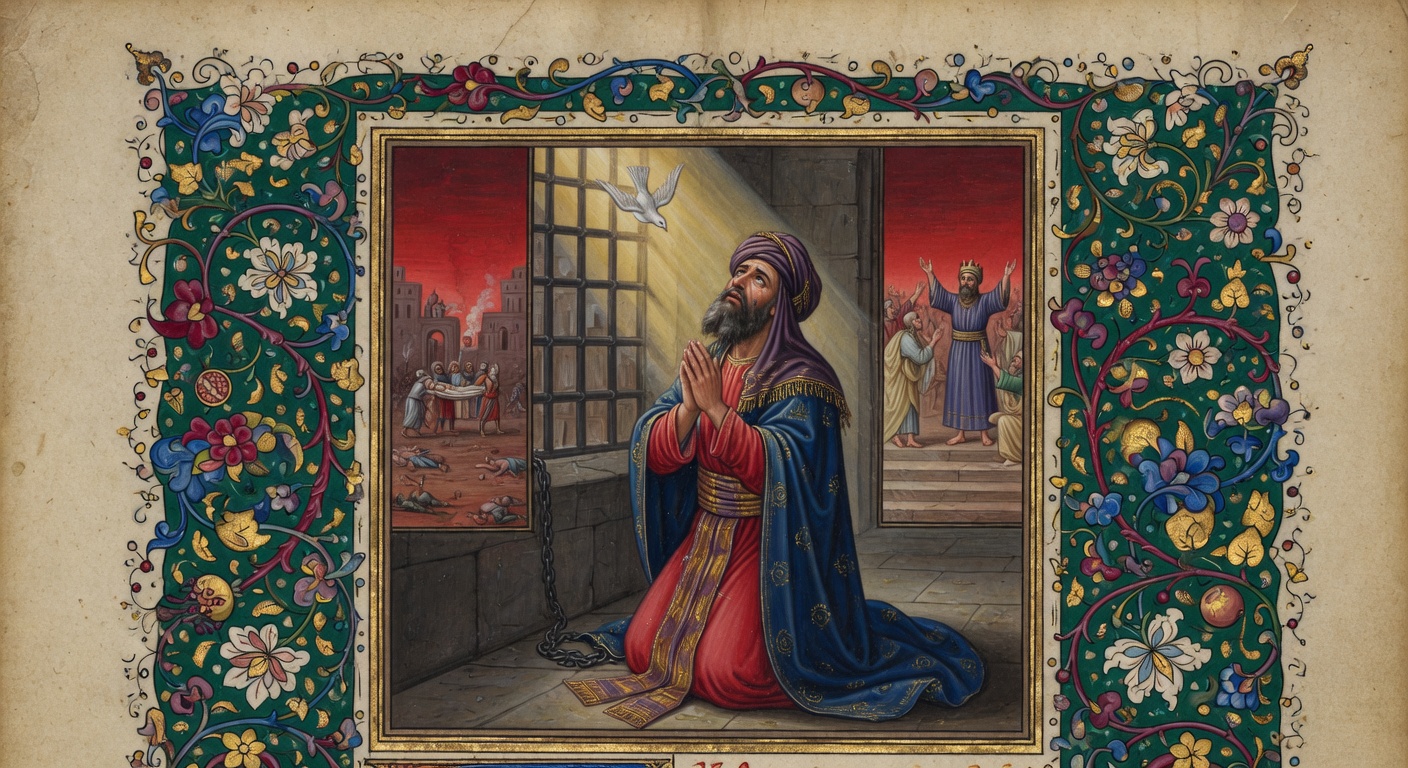
Manasseh reigned as king of Judah for fifty-five years and became the most wicked ruler in the nation's history by promoting idolatry, child sacrifice, sorcery, and the shedding of vast amounts of innocent blood that filled Jerusalem from one end to the other. These actions exceeded the sins of the pagan nations the Lord had previously driven out, provoking divine judgment that resulted in his capture by Assyrian forces and exile in chains to Babylon. While imprisoned, Manasseh humbled himself, prayed to God, and genuinely repented, leading the Lord to restore him to his throne in Jerusalem. His story, recorded especially in 2 Chronicles 33, illustrates both the severe national consequences of royal apostasy and God's remarkable mercy toward even the most notorious sinners who turn back to him in faith.
Biography
- Born
- c. 709 BC, Jerusalem
- Died
- c. 643 BC, Jerusalem
- Occupation
- King of Judah
- Tribe
- Judah
- Father
- Hezekiah
- Mother
- Hephzibah
- Children
- Amon
- Era
- Divided Kingdom (c. 697-643 BC)
- Nationality
- Judean
Family
Did You Know?
Manasseh's 55-year reign was the longest of any king in Judah or Israel, yet the Bible records that he sacrificed his own son as a burnt offering to Molech and erected altars to foreign gods inside the Jerusalem temple itself.
Jewish tradition holds that Manasseh ordered the prophet Isaiah to be sawn in half inside a hollow log, an event alluded to in the New Testament's reference to prophets being 'sawn in two' (Hebrews 11:37).
After being captured by Assyrian forces and taken in chains to Babylon, Manasseh genuinely repented, leading God to restore him to his throne. An outcome unique among Judah's kings and recorded in 2 Chronicles 33.
Manasseh's extensive shedding of innocent blood in Jerusalem was so severe that later prophets, including Jeremiah, cited it as a primary reason the city ultimately fell to the Babylonians despite his personal repentance.
The short apocryphal 'Prayer of Manasseh,' preserved in some ancient Christian manuscripts, is a penitential composition attributed to the king that emphasizes God's boundless mercy toward even the most notorious sinners.
Key Passages
Manasseh's Wickedness
2 Kings 21:1-9
Manasseh's story warns how a leader's embrace of evil can corrupt an entire nation, underscoring our need for faithful obedience to God.
 1anasseh was twelve years old when he began to reign, and reigned fifty and five years in Jerusalem. And his mother’s name was Hephzibah.
Manasseh's Repentance
2 Chronicles 33:10-16
This passage shows that even the most rebellious heart can find full restoration through humble repentance and God's mercy.
 10nd the LORD spake to Manasseh, and to his people: but they would not hearken.
God Heard His Prayer
2 Chronicles 33:12-13
This passage shows that even the most hardened sinner can find mercy and restoration through humble prayer.
12nd when he was in affliction, he besought the LORD his God, and humbled himself greatly before the God of his fathers,