Asa
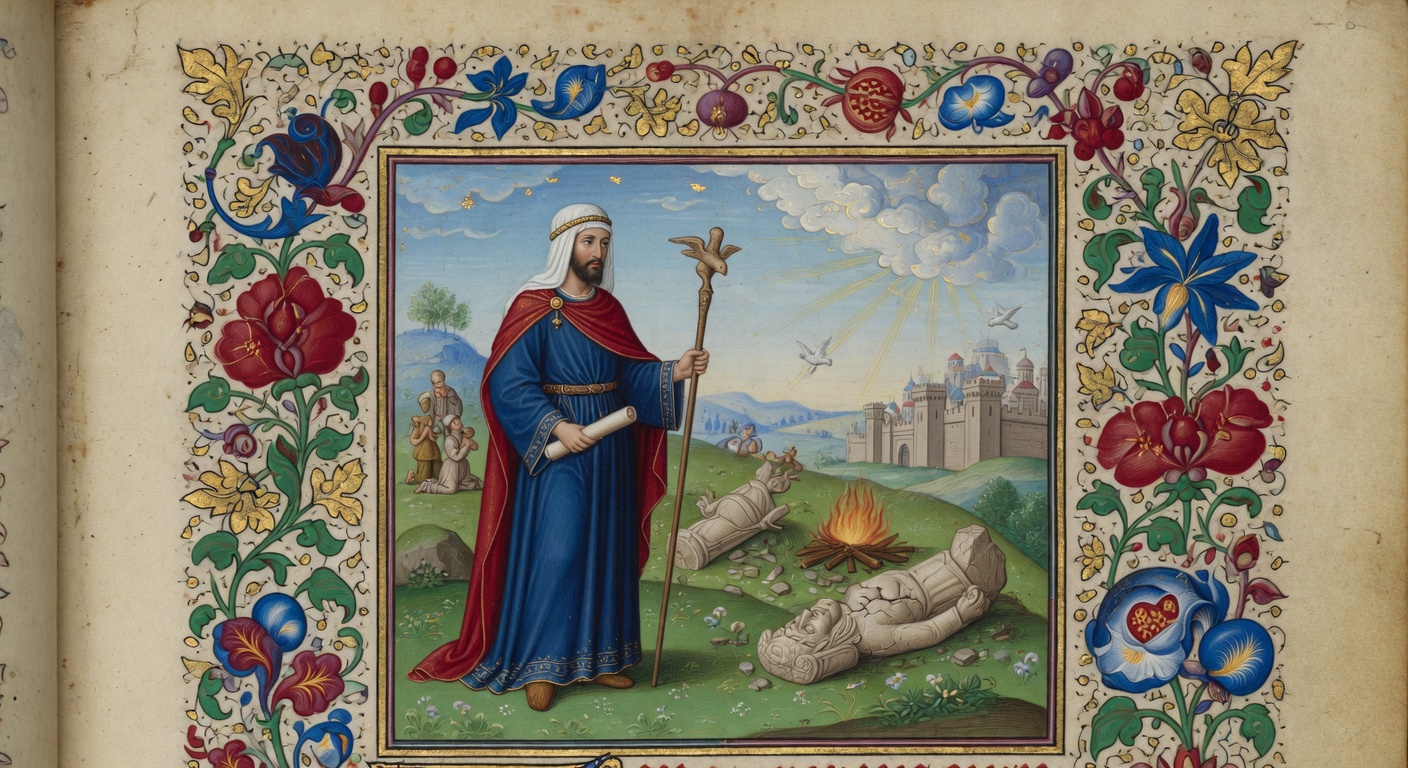
Asa served as the third king of Judah and distinguished himself through sweeping religious reforms that eliminated idols, pagan altars, and high places while restoring proper worship of the Lord. Early in his reign he faced a massive invasion by Zerah the Cushite; by crying out to God for help rather than relying on military strength alone, Asa secured a decisive victory that demonstrated the power of faith and brought a period of peace to the kingdom. In later years, however, when threatened by King Baasha of Israel, Asa turned to an alliance with Aram instead of seeking divine aid, prompting prophetic rebuke and illustrating the spiritual decline that also marked his final illness. His story, recorded in 1 Kings 15 and 2 Chronicles 14–16, underscores the scriptural principle that consistent dependence on God throughout life produces blessing, while any shift toward self-reliance carries lasting consequences.
Biography
- Died
- c. 870 BC, Jerusalem
- Occupation
- King of Judah
- Tribe
- Judah
- Father
- Abijah
- Mother
- Maacah (grandmother)
- Children
- Jehoshaphat
- Era
- Divided Kingdom (c. 911-870 BC)
- Nationality
- Judean
Family
Did You Know?
Asa deposed his own grandmother Maacah from her influential role as queen mother after she erected an Asherah pole, then destroyed the image and renewed a national covenant to seek Yahweh exclusively.
Faced with an invasion by Zerah the Cushite commanding one million troops and three hundred chariots, Asa cried out to God for deliverance and routed the vastly superior force near Mareshah, seizing enormous spoil.
In his thirty-sixth year Asa stripped gold and silver from the temple treasuries to bribe Ben-Hadad of Aram into breaking his treaty with Baasha, prompting the seer Hanani to declare that Asa had forfeited future victories.
During his final years Asa contracted a painful foot ailment yet consulted physicians instead of the Lord, dying two years later without having sought divine healing.
Although Asa abolished many high places and incense altars, archaeological and textual evidence indicates several rural sanctuaries continued operating, revealing the gradual and incomplete character of his reforms.
Key Passages
Asa's Reforms
2 Chronicles 14:2-5
Asa's reforms show how courageously clearing away idols and distractions allows a people to seek God wholeheartedly and enjoy His blessing.
 2nd Asa did that which was good and right in the eyes of the LORD his God:
Asa's Victory Over the Ethiopians
2 Chronicles 14:9-15
This passage shows that wholehearted trust in God brings victory and peace even when facing overwhelming odds.
9nd there came out against them Zerah the Ethiopian with an host of a thousand thousand, and three hundred chariots; and came unto Mareshah.
Asa's Later Failure
2 Chronicles 16:7-12
This passage shows how easily even faithful leaders drift from trusting God, urging us to seek Him in every challenge.
7nd at that time Hanani the seer came to Asa king of Judah, and said unto him, Because thou hast relied on the king of Syria, and not relied on the LORD thy God, therefore is the host of the king of Syria escaped out of thine hand.