Rehoboam
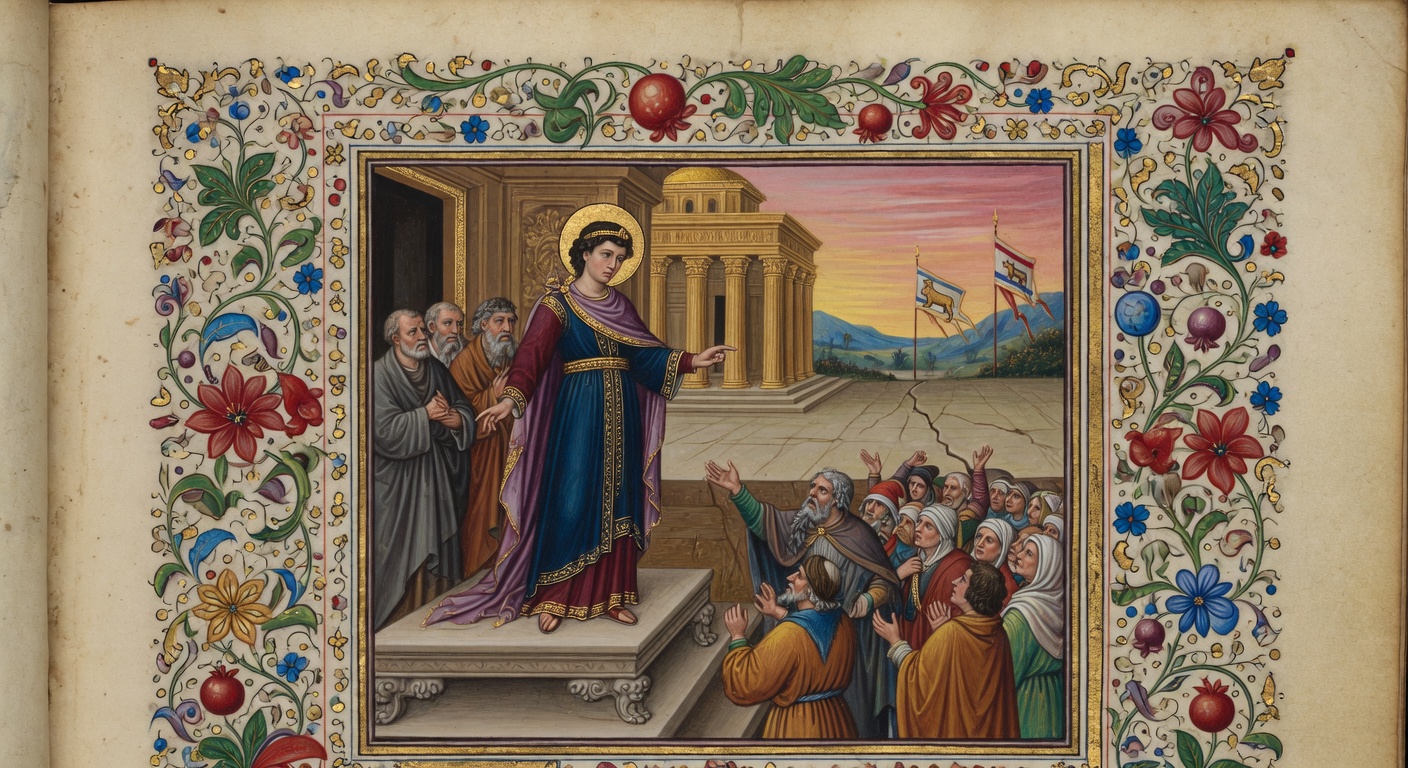
Rehoboam, the son of King Solomon, succeeded his father as ruler over the united kingdom of Israel. When the people requested relief from the heavy burdens imposed during Solomon's reign, Rehoboam rejected the counsel of his elders and instead followed the advice of his peers, threatening even harsher treatment. This decision prompted the northern tribes to revolt and establish their own kingdom under Jeroboam, resulting in the division of the nation into the northern kingdom of Israel and the southern kingdom of Judah. The event, recorded in 1 Kings 12, marked the end of the united monarchy and fulfilled earlier prophetic warnings regarding the consequences of Solomon's disobedience to God.
Biography
- Born
- c. 972 BC
- Died
- c. 913 BC, Jerusalem
- Occupation
- King of Judah
- Tribe
- Judah
- Father
- Solomon
- Mother
- Naamah (Ammonite)
- Spouse
- Mahalath, Maacah
- Children
- Abijah, and others
- Era
- Divided Kingdom (c. 931-913 BC)
- Nationality
- Israelite/Judean
Family
Did You Know?
Rehoboam's mother was Naamah, an Ammonite woman, which placed a foreign-born queen mother in the Davidic court and underscored the international scope of Solomon's marriages.
When the northern tribes petitioned for relief from forced labor, Rehoboam consulted both elders and his youthful peers before declaring his little finger thicker than his father's loins, a vivid ancient Near Eastern idiom that triggered the immediate secession of Israel.
Rehoboam mustered 180,000 troops from Judah and Benjamin to reconquer the north but halted the campaign after the prophet Shemaiah relayed God's explicit command not to fight fellow Israelites.
In his fifth regnal year Pharaoh Shishak invaded Judah and stripped the temple and palace of their gold, forcing Rehoboam to replace Solomon's golden ceremonial shields with cheaper bronze replicas kept under guard.
Rehoboam fathered twenty-eight sons and sixty daughters through eighteen wives and sixty concubines, then assigned each son a fortified city with stored provisions, a strategic measure to secure dynastic control within Judah.
Key Passages
Rehoboam's Foolish Decision
1 Kings 12:1-17
This passage reminds us that heeding wise, humble counsel fosters unity, while prideful choices can fracture relationships and communities.
 1nd Rehoboam went to Shechem: for all Israel were come to Shechem to make him king.
The Kingdom Divided
1 Kings 12:18-24
This passage shows how prideful choices fracture nations, yet God sovereignly guides events to fulfill His compassionate purposes.
 18hen king Rehoboam sent Adoram, who was over the tribute; and all Israel stoned him with stones, that he died. Therefore king Rehoboam made speed to get him up to his chariot, to flee to Jerusalem.