Jeroboam
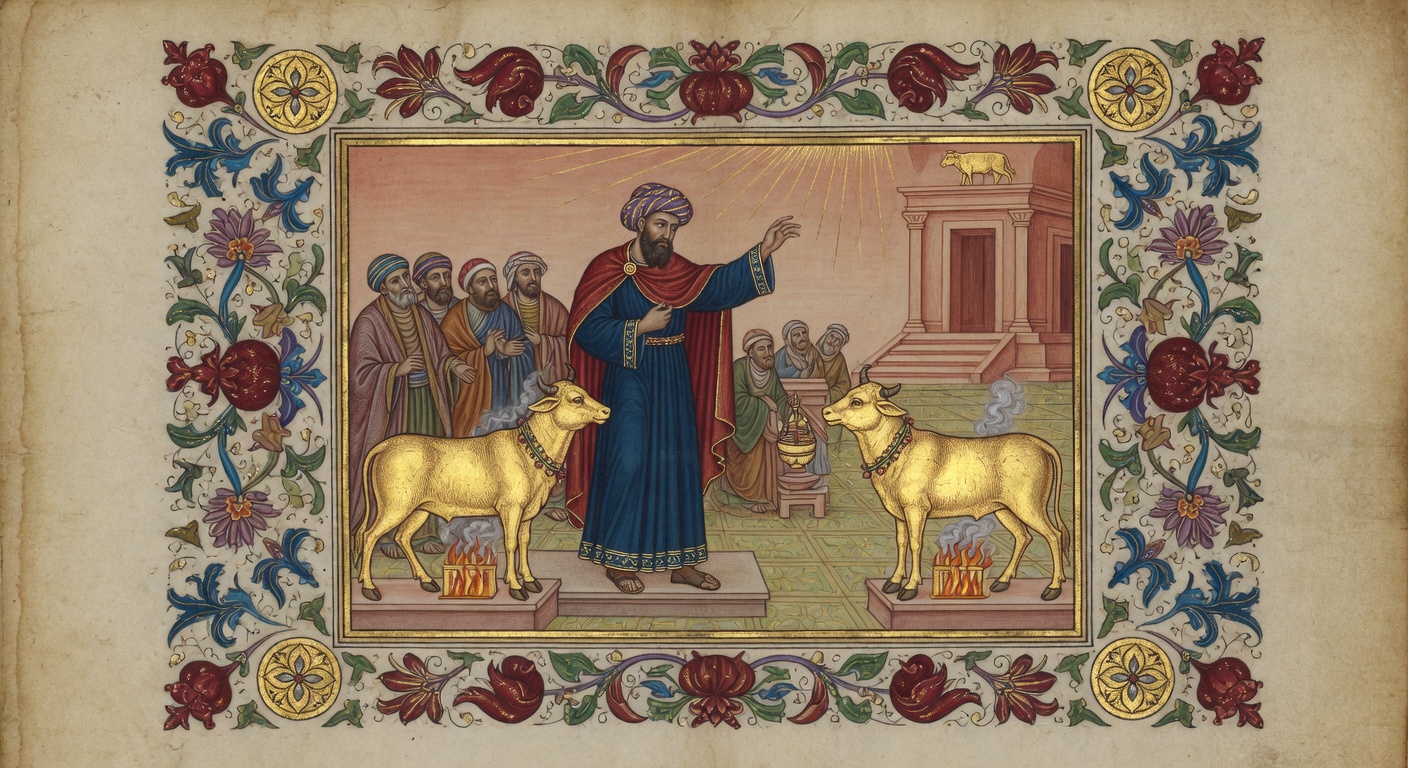
Jeroboam was the first king of the northern kingdom of Israel, which formed after the united monarchy split following Solomon’s death around 930 BC, when the ten northern tribes rejected Rehoboam’s rule. To secure his throne and discourage pilgrimages to the Jerusalem temple in Judah, he erected golden calves at Bethel and Dan, redirecting worship away from the central sanctuary and instituting new priesthoods and festivals. This policy institutionalized idolatry across the northern tribes, an offense Scripture repeatedly labels the “sin of Jeroboam” that later kings perpetuated. The resulting spiritual decline is presented in the biblical narrative as a primary cause of Israel’s eventual conquest and exile by Assyria, underscoring the lasting consequences of political compromise with false worship.
Biography
- Died
- c. 910 BC
- Occupation
- King of Israel (Northern)
- Tribe
- Ephraim
- Father
- Nebat
- Mother
- Zeruah
- Children
- Abijah, Nadab
- Era
- Divided Kingdom (c. 931-910 BC)
- Nationality
- Israelite
Family
Did You Know?
Jeroboam, an Ephraimite labor foreman under Solomon, received a symbolic prophecy from Ahijah the Shilonite who tore a new garment into twelve pieces and gave ten to Jeroboam, foretelling his rule over the northern tribes.
To prevent pilgrimages to Jerusalem, Jeroboam installed golden calves at Bethel and Dan while also creating a rival festival in the eighth month and appointing non-Levitical priests from every class of people.
A prophet from Judah traveled to Bethel and denounced Jeroboam's altar, predicting that a future Davidic king named Josiah would desecrate it by burning the bones of its priests upon it, a sign confirmed when the altar split and its ashes spilled out.
Jeroboam's dynasty ended abruptly after only two generations when his son Nadab was assassinated by Baasha during a military campaign, fulfilling Ahijah's curse that every male descendant would be cut off and left unburied.
Archaeological layers at Tel Dan reveal a large platform and horned altar consistent with the cultic high place Jeroboam established, showing how his religious reforms left material traces still studied by scholars today.
Key Passages
Jeroboam Made King
1 Kings 12:20
This passage reveals how prideful leadership fractures God's people, urging us to lead and follow with humble, listening hearts.
 20nd it came to pass, when all Israel heard that Jeroboam was come again, that they sent and called him unto the congregation, and made him king over all Israel: there was none that followed the house of David, but the tribe of Judah only.
Golden Calves at Dan and Bethel
1 Kings 12:25-33
This passage shows how fear-driven compromises can lead leaders and nations into idolatry, pulling hearts away from wholehearted trust in God.
 25hen Jeroboam built Shechem in mount Ephraim, and dwelt therein; and went out from thence, and built Penuel.
Judgment on Jeroboam
1 Kings 14:7-16
This passage shows how turning from God brings painful consequences for leaders and their people, urging us to stay faithful and lead others well.
 7o, tell Jeroboam, Thus saith the LORD God of Israel, Forasmuch as I exalted thee from among the people, and made thee prince over my people Israel,