Bronze Laver
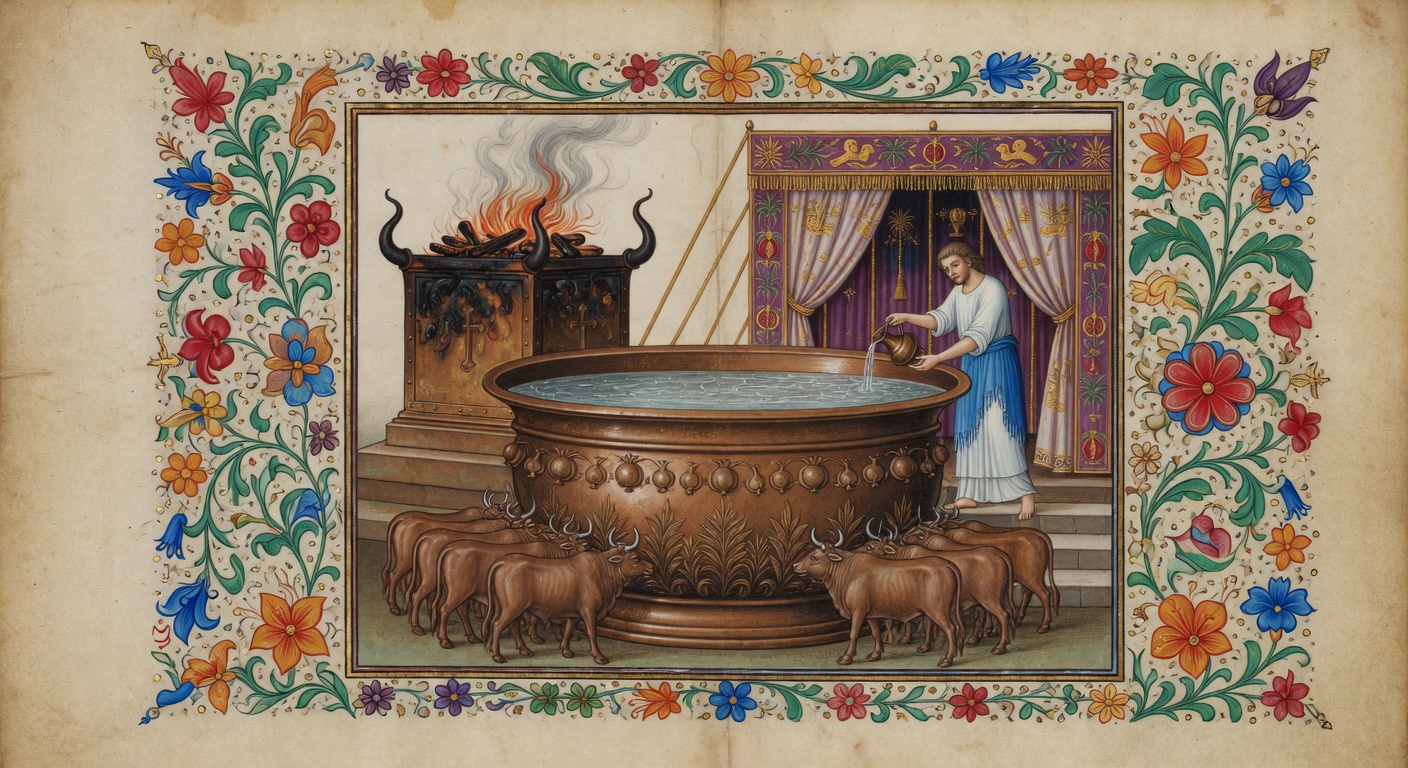
The Bronze Laver was a large basin crafted from bronze mirrors donated by Israelite women, positioned between the altar of burnt offering and the tabernacle entrance according to divine instructions given to Moses. Priests were required to wash their hands and feet in it before entering the tent of meeting or approaching the altar, or they would die, enforcing ritual purity during ministry. This practice highlighted the necessity of cleansing before serving a holy God amid the sacrificial system of ancient Israel. Its role in tabernacle worship illustrated broader scriptural themes of purification and preparation for divine encounter, later echoed in temple furnishings and New Testament imagery of spiritual washing.
Details
- Significance
- Symbolized cleansing and sanctification. Points to the washing of regeneration through God's Word.
- Materials
- Bronze, made from the mirrors of the women who served at the tabernacle entrance
Key Passages
Instructions to Build
Exodus 30:17-21
 17nd the LORD spake unto Moses, saying,
Made from Mirrors
Exodus 38:8
8nd he made the laver of brass, and the foot of it of brass, of the lookingglasses of the women assembling, which assembled at the door of the tabernacle of the congregation.
Washing of the Word
Ephesians 5:25-27
 25usbands, love your wives, even as Christ also loved the church, and gave himself for it;
Did You Know?
The laver was made from the bronze mirrors of the women who served at the tabernacle entrance.
The priests had to wash their hands and feet before entering the Holy Place or offering sacrifices.
This represented the need for continual cleansing before approaching a holy God.