Aaron
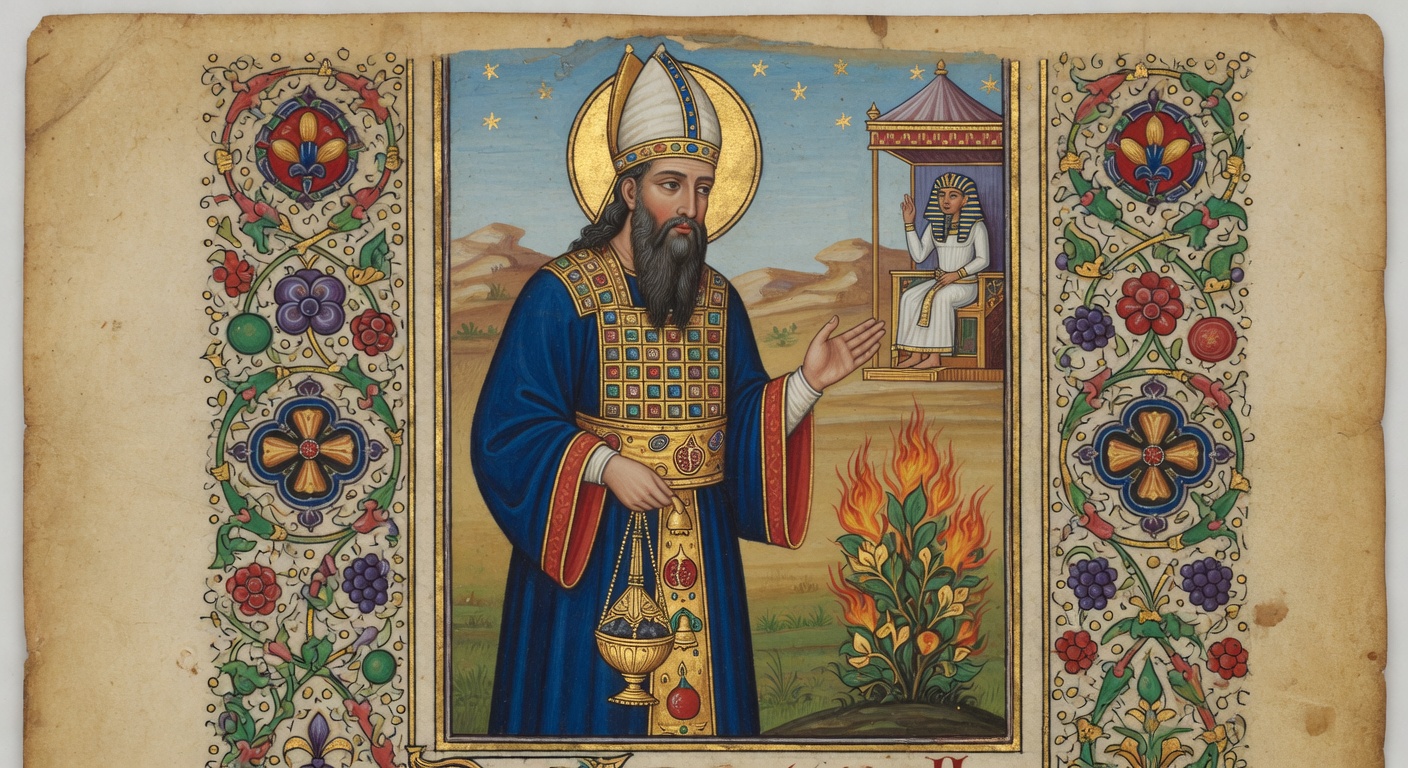
Aaron, the brother of Moses, played a pivotal role in the Exodus narrative as Moses' spokesman before Pharaoh, articulating God's demands for the liberation of the Hebrew slaves from Egypt. Appointed as the first high priest of Israel, he was consecrated along with his sons to perform sacred rituals, offer sacrifices, and maintain the tabernacle, thereby instituting the hereditary Aaronic priesthood from the tribe of Levi. This position held lasting significance in Scripture by establishing a structured system of mediation and atonement that defined Israel's worship and covenant relationship with God throughout the wilderness period and beyond.
Biography
- Born
- c. 1529 BC, Egypt
- Died
- c. 1406 BC, Mount Hor
- Age
- 123 years
- Occupation
- High Priest
- Tribe
- Levi
- Father
- Amram
- Mother
- Jochebed
- Spouse
- Elisheba
- Children
- Nadab, Abihu, Eleazar, Ithamar
- Era
- Exodus
- Nationality
- Hebrew
Family
Did You Know?
Aaron's budding rod was not only a sign during Korah's rebellion but was later stored in the Ark of the Covenant alongside the stone tablets and a jar of manna, serving as an enduring witness to God's choice of the Aaronic priesthood.
In the Exodus narrative, Aaron used his staff to initiate three of the ten plagues, including turning the Nile into blood and summoning frogs and gnats, underscoring his pivotal role as Moses' partner in confronting Egyptian power.
The high priestly garments designed for Aaron included a breastplate with twelve precious stones representing the tribes of Israel and an ephod woven with gold thread, reflecting both tribal unity and divine craftsmanship in ancient Israelite worship.
Following the deaths of his sons Nadab and Abihu for offering unauthorized fire, Aaron was instructed to remain silent and not mourn publicly, emphasizing the sacred boundaries separating priestly duties from personal grief.
Aaron and his sister Miriam once challenged Moses' unique authority, resulting in Miriam's temporary leprosy, while Aaron escaped similar punishment possibly due to his future role in the priesthood, revealing complex family dynamics in the wilderness period.
Key Passages
Aaron Speaks for Moses
Exodus 4:14-16
God accommodates Moses' weakness by appointing Aaron as his spokesman, showing that God works through human partnerships and that leadership need not be solitary.
 14nd the anger of the LORD was kindled against Moses, and he said, Is not Aaron the Levite thy brother? I know that he can speak well. And also, behold, he cometh forth to meet thee: and when he seeth thee, he will be glad in his heart.
The Golden Calf
Exodus 32:1-6
Aaron's catastrophic failure reveals how quickly spiritual leaders can compromise under pressure. His excuse - 'the calf just came out' - is a timeless example of refusing responsibility.
1nd when the people saw that Moses delayed to come down out of the mount, the people gathered themselves together unto Aaron, and said unto him, Up, make us gods, which shall go before us; for as for this Moses, the man that brought us up out of the land of Egypt, we wot not what is become of him.
Aaron's Priestly Garments
Exodus 28:1-5
The elaborate priestly garments symbolize the holiness required to approach God and the mediatorial role of the priest who bears the people's names before the Lord.
1nd take thou unto thee Aaron thy brother, and his sons with him, from among the children of Israel, that he may minister unto me in the priest’s office, even Aaron, Nadab and Abihu, Eleazar and Ithamar, Aaron’s sons.
Aaron's Rod Buds
Numbers 17:1-11
God settles the question of priestly authority by causing Aaron's dead staff to bloom - confirming that spiritual leadership is divinely appointed, not humanly seized.
1nd the LORD spake unto Moses, saying,