Joseph
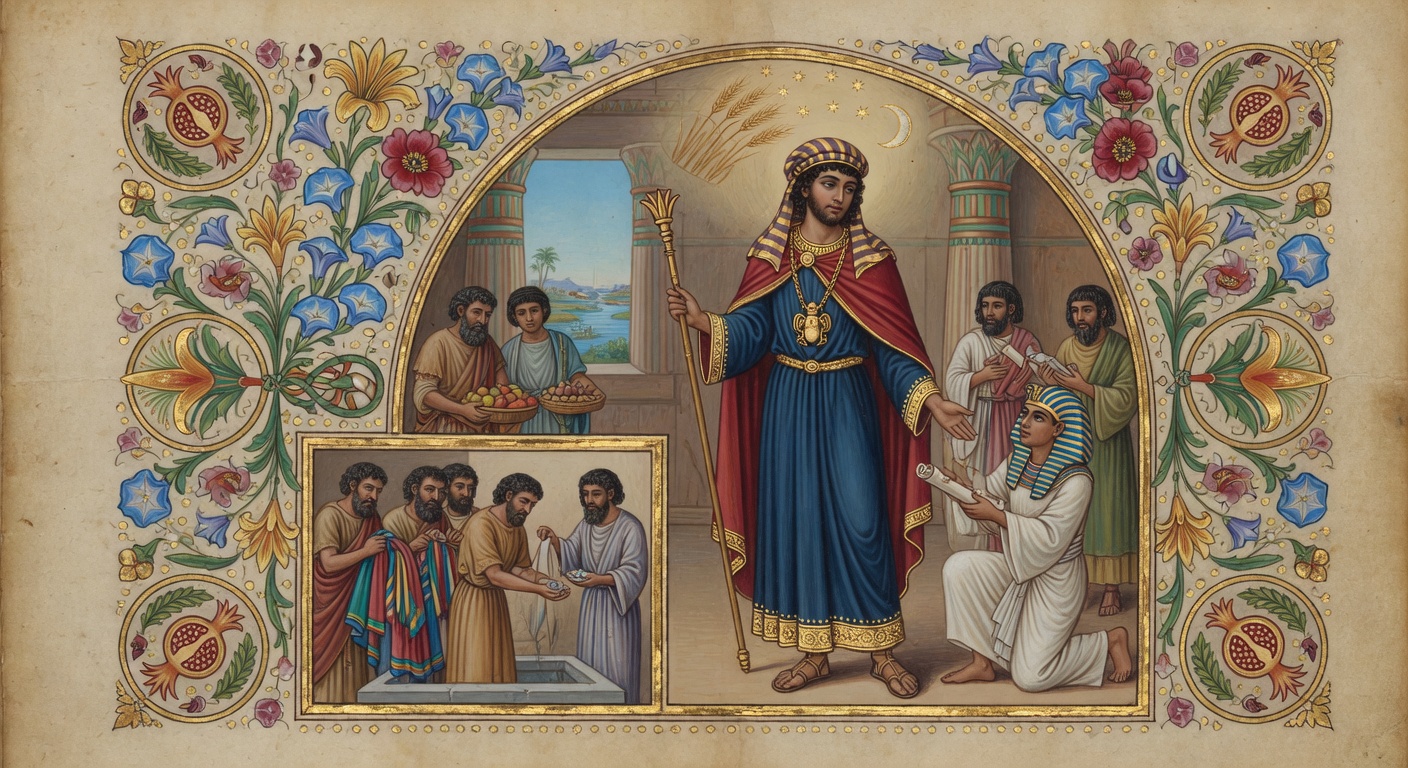
Joseph, the favored son of Jacob, aroused such jealousy in his brothers that they sold him into slavery in Egypt, where he endured false accusation and imprisonment. Through his God-given ability to interpret dreams, Joseph rose to become second in command under Pharaoh, organizing the storage of grain that saved Egypt and surrounding nations from a devastating seven-year famine. When his brothers later sought food in Egypt, Joseph forgave them and brought his entire family to safety there, preserving the covenant line that would become the nation of Israel. This account underscores God’s providential care, turning betrayal into blessing and setting the stage for the Exodus narrative.
Video from BibleProject
Genesis Overview (Part 2: Ch. 12-50)
Joseph's story shows how God works through human failure to accomplish his purposes.
BibleProject is the author and owner of this content. To find more BibleProject resources, visit bibleproject.com. Bible Navigator is not affiliated with BibleProject.
Biography
- Born
- c. 1915 BC, Paddan-Aram
- Died
- c. 1805 BC, Egypt
- Age
- 110 years
- Occupation
- Vizier of Egypt
- Tribe
- Joseph
- Father
- Jacob
- Mother
- Rachel
- Spouse
- Asenath
- Children
- Ephraim, Manasseh
- Era
- Patriarchs
- Nationality
- Hebrew
- Also Known As
- Zaphenath-Paneah
Family
Did You Know?
Joseph interpreted Pharaoh's dreams at age 30 using a system of symbolic numerology common in ancient Near Eastern oneiromancy, leading to his appointment as vizier and the construction of state granaries that centralized Egypt's agricultural economy.
During the famine Joseph purchased all Egyptian farmland for Pharaoh except priestly estates, transforming freeholders into royal serfs and establishing a precedent for pharaonic land monopoly documented in Egyptian records from the late Middle Kingdom.
Joseph deliberately used an Egyptian interpreter when interrogating his brothers in Genesis 42, concealing his fluency in Hebrew to test their repentance while they remained unaware he understood their private conversation.
His Egyptian wife Asenath, daughter of the priest of On (Heliopolis), bore sons Manasseh and Ephraim whose names reflected Joseph's assimilation yet later became tribes that received Joseph's double inheritance under Jacob's blessing.
Joseph insisted his bones be carried from Egypt at the Exodus, resulting in their eventual burial at Shechem; this request aligned with Egyptian elite burial practices but preserved his patriarchal identity for future generations.
Key Passages
Joseph's Dreams
Genesis 37:1-11
God reveals Joseph's future authority through dreams, but the path to fulfillment will pass through suffering - establishing the biblical pattern that God's exaltation comes through humiliation.
 1nd Jacob dwelt in the land wherein his father was a stranger, in the land of Canaan.
Sold into Slavery
Genesis 37:12-36
Joseph's brothers intend evil, but God uses their betrayal to position Joseph for his future role. This becomes the Bible's clearest illustration of God's sovereign providence over human sin.
12nd his brethren went to feed their father’s flock in Shechem.
Rise to Power in Egypt
Genesis 41:37-57
From prisoner to prime minister in a single day - Joseph's elevation demonstrates God's ability to reverse circumstances instantly and use faithful servants to preserve nations.
37nd the thing was good in the eyes of Pharaoh, and in the eyes of all his servants.
Reunion with Brothers
Genesis 45:1-15
Joseph's tearful revelation to his brothers and his declaration 'God sent me ahead of you' is one of Scripture's most powerful statements of divine providence working through human evil.
 1hen Joseph could not refrain himself before all them that stood by him; and he cried, Cause every man to go out from me. And there stood no man with him, while Joseph made himself known unto his brethren.
Commentary
Joseph: When Betrayal Becomes Redemption
His brothers sold him into slavery. Years later, he forgave them.
Commentary by Bible Navigator.
This commentary is for inspirational and educational purposes only. It is not professional counseling, therapy, medical advice, or a substitute for professional help. If you are in crisis or need support, please reach out to a licensed professional or call 988 (Suicide & Crisis Lifeline).