Potiphar
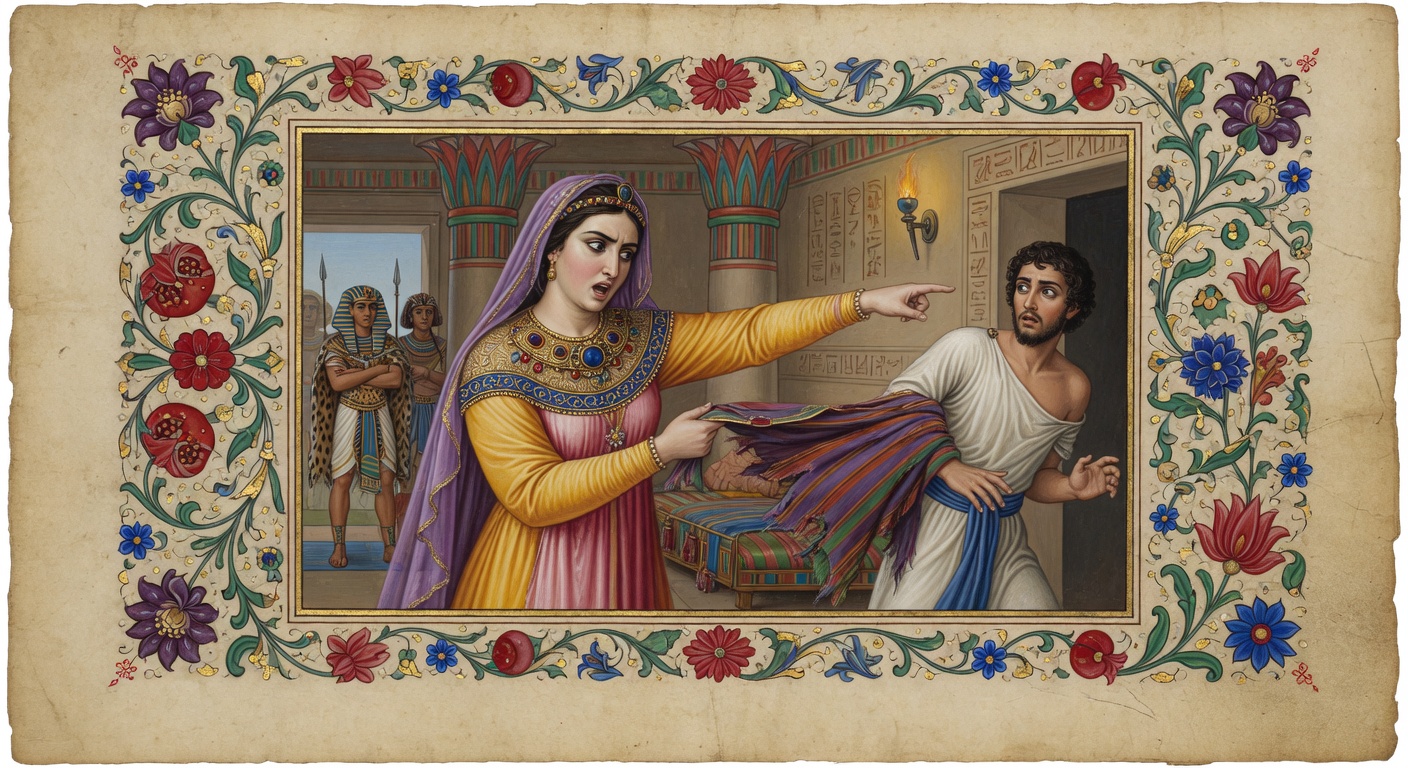
Potiphar served as an Egyptian officer of Pharaoh and captain of the guard, purchasing Joseph as a slave from Midianite traders and eventually entrusting him with oversight of his entire household. When Potiphar's wife repeatedly sought to seduce Joseph and faced repeated rejection, she accused him of attempted assault, resulting in Joseph's immediate imprisonment. This episode forms a critical link in the Genesis narrative, moving Joseph from favored servant to Egyptian prison where he would later interpret dreams for Pharaoh's officials. Its significance lies in illustrating Joseph's steadfast integrity amid injustice and advancing the biblical theme of divine providence directing his eventual rise to power in Egypt.
Biography
- Occupation
- Captain of Pharaoh's Guard
- Spouse
- Potiphar's wife (unnamed)
- Era
- Patriarchs
- Nationality
- Egyptian
Family
Did You Know?
Potiphar's Egyptian name likely derives from Pa-di-pa-Re, meaning "He whom Ra has given," tying him to the sun god Ra whose cult dominated religious life in the Nile Delta during the Middle Bronze Age.
The Hebrew phrase sar ha-tabbachim for his title literally means "chief of the slaughterers," indicating he probably oversaw both Pharaoh's personal guard and the royal kitchens or executions rather than a purely military role.
Biblical scholars note that Potiphar is described with the word saris, often translated "officer" but also meaning "eunuch," which may explain his wife's pursuit of Joseph and his muted response to the false accusation.
After purchasing Joseph, Potiphar placed the Hebrew slave in charge of his entire household economy, reflecting the common Egyptian practice of granting trusted foreign slaves significant administrative authority in elite homes.
The same official title reappears when Joseph later interprets dreams for Pharaoh's imprisoned cupbearer and baker, suggesting Potiphar may have directly committed Joseph to the royal prison under his own guard authority.
Key Passages
Joseph in Potiphar's House
Genesis 39:1-20
This passage shows how God's presence empowers us to stay faithful amid temptation and injustice, turning trials into steps toward His greater purpose.
 1nd Joseph was brought down to Egypt; and Potiphar, an officer of Pharaoh, captain of the guard, an Egyptian, bought him of the hands of the Ishmeelites, which had brought him down thither.