Veil of the Temple
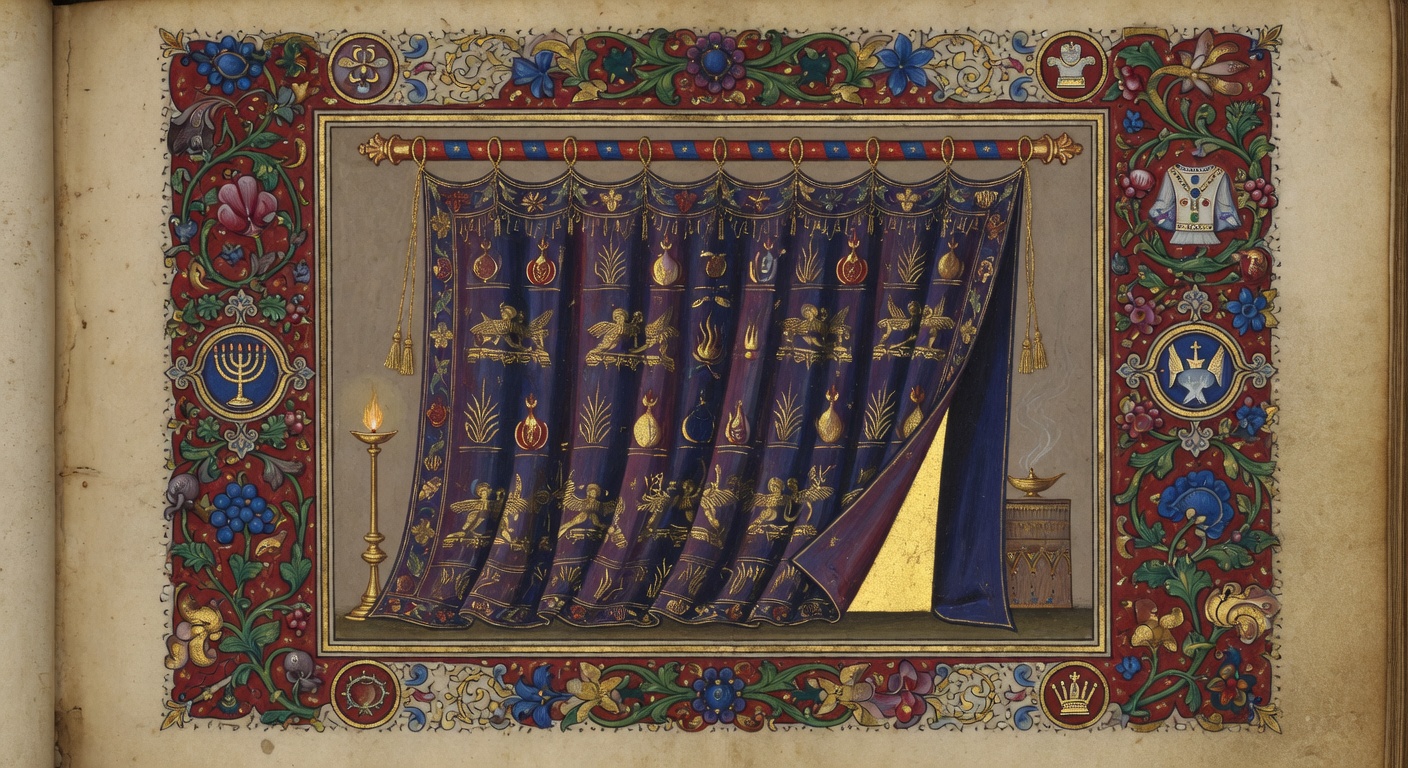
The Veil of the Temple was a thick curtain that separated the Holy Place from the Holy of Holies, the innermost sanctuary representing God's presence in both the Tabernacle and later the Jerusalem Temple. This barrier underscored the separation between a holy God and sinful humanity, permitting only the high priest to pass through once a year on the Day of Atonement to offer blood sacrifices for Israel's sins. At the moment of Jesus Christ's death on the cross, the Gospels record that the veil was torn in two from top to bottom, an event witnessed in the Temple and signifying the removal of that barrier through his atoning sacrifice. This act holds central significance in Scripture as it illustrates the new covenant's provision of direct access to God for all believers, a theme further explained in the Epistle to the Hebrews.
Details
- Significance
- Torn from top to bottom at Christ's death - God opened access to His presence for all believers.
- Materials
- Blue, purple, and scarlet thread with fine linen, embroidered with cherubim
Key Passages
The Veil Described
Exodus 26:31-33
 31nd thou shalt make a vail of blue, and purple, and scarlet, and fine twined linen of cunning work: with cherubims shall it be made:
Torn at Crucifixion
Matthew 27:51
51nd, behold, the veil of the temple was rent in twain from the top to the bottom; and the earth did quake, and the rocks rent;