Fall of Jerusalem (586 BC)
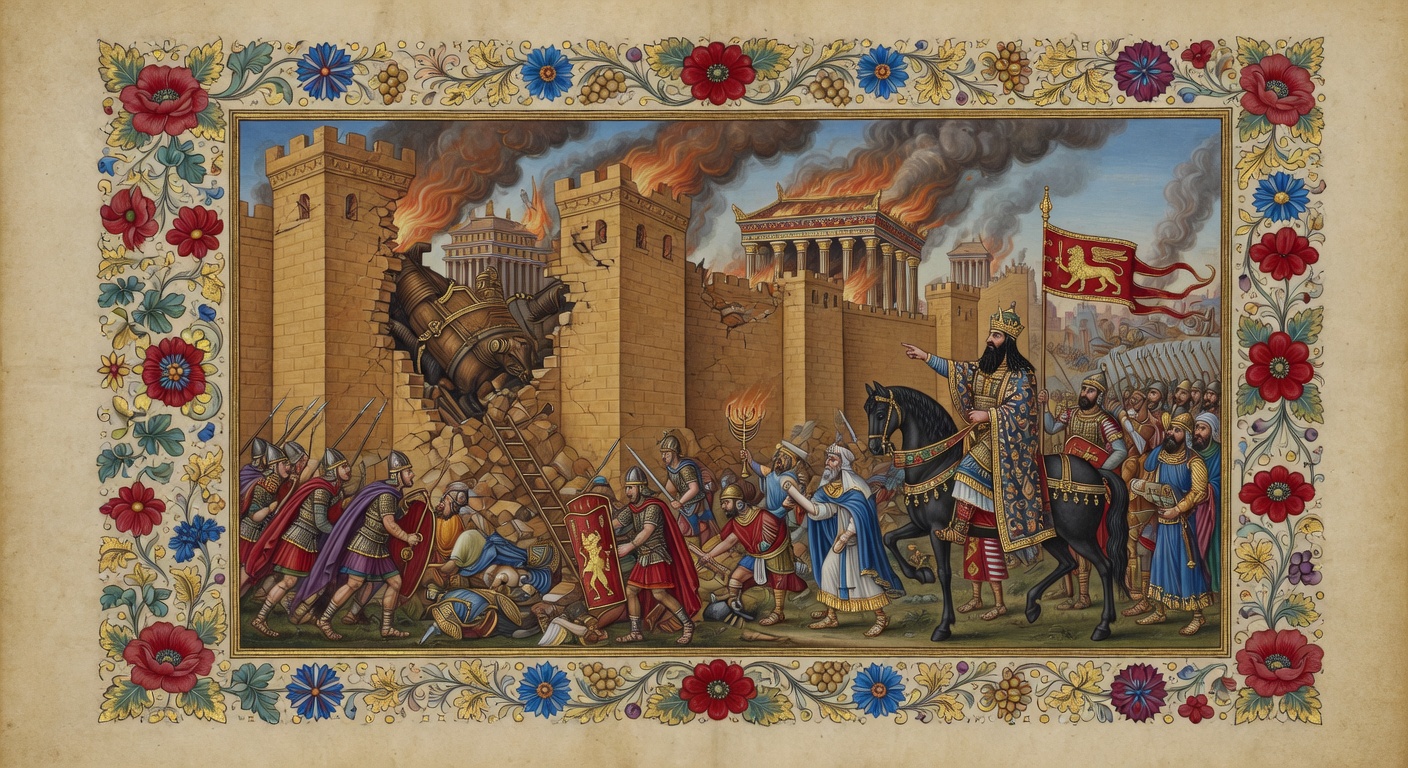
The Fall of Jerusalem in 586 BC occurred when Babylonian forces under King Nebuchadnezzar II breached the city's walls after an 18-month siege, leading to the destruction of Solomon's Temple and the razing of much of the capital. This conquest took place during the reign of Judah's last king, Zedekiah, amid the broader Babylonian campaigns against rebellious vassal states in the Levant. In Scripture, the event is depicted as divine judgment for Judah's covenant unfaithfulness, idolatry, and rejection of prophetic warnings from Jeremiah and others. Its lasting significance lies in ending the independent Davidic monarchy, initiating the Babylonian exile, and establishing central biblical themes of judgment, repentance, and future restoration.
Details
- Era
- Exile & Return
- Category
- Exile
- Participants
- Babylon vs. Judah
- Outcome
- Jerusalem destroyed, temple burned, Judah exiled
- Divine Intervention
- No
Key Passages
The Fall
2 Kings 25:1-12
 1nd it came to pass in the ninth year of his reign, in the tenth month, in the tenth day of the month, that Nebuchadnezzar king of Babylon came, he, and all his host, against Jerusalem, and pitched against it; and they built forts against it round about.
Did You Know?
The siege lasted 18 months. Famine became so severe that people resorted to cannibalism.
Jeremiah had warned of this destruction for 40 years. He was ignored and imprisoned for it.
The Temple treasures were carried to Babylon. Some were later used at Belshazzar's feast.