Jabbok
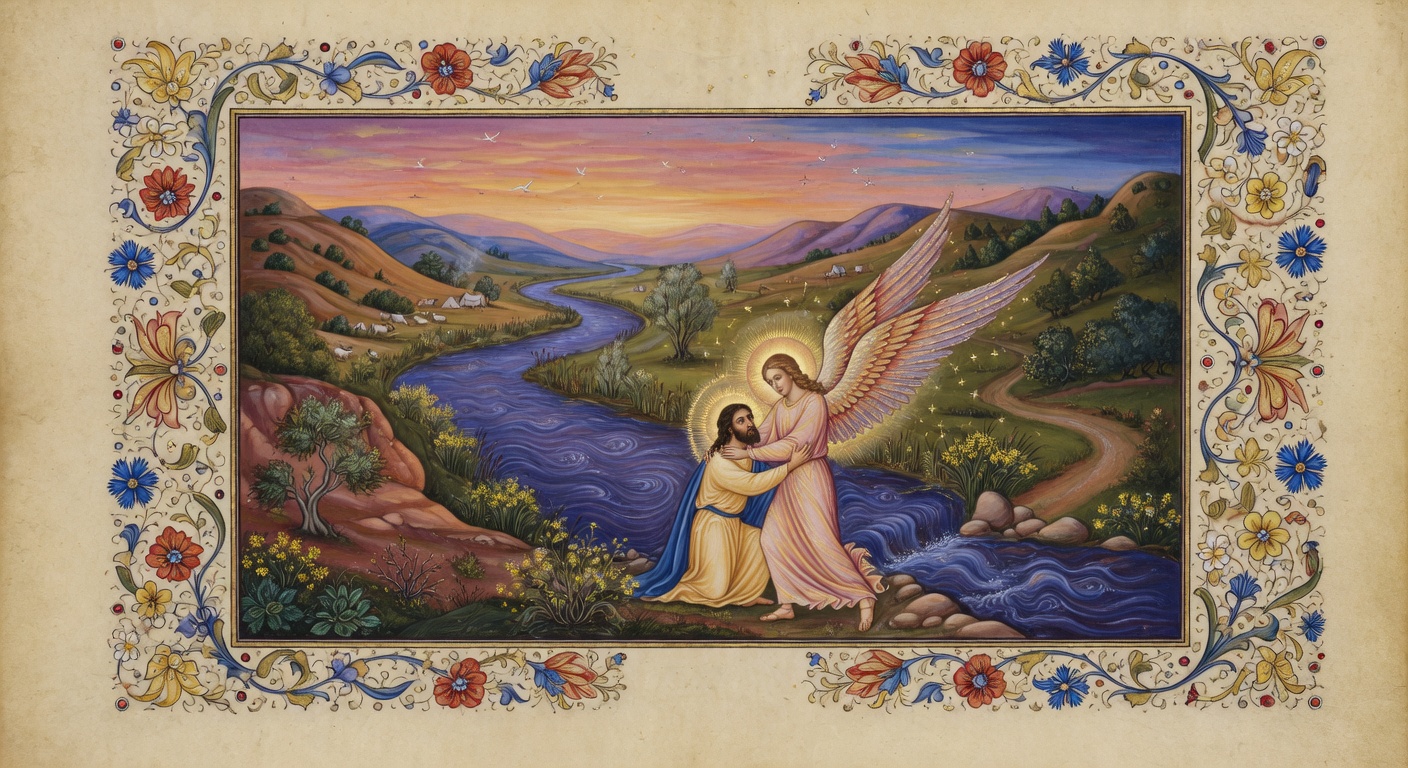
The Jabbok River served as a key geographical boundary east of the Jordan, delineating territories associated with ancient peoples such as the Ammonites and later marking divisions in the land allotted to Israelite tribes. In Genesis 32, Jacob crossed the river alone at night and wrestled until dawn with a mysterious figure, widely understood as an angel or divine representative, who dislocated his hip and renamed him Israel to signify his prevailing with God and humanity. This event proved pivotal in Scripture, transforming Jacob's identity and foreshadowing the nation of Israel while illustrating themes of struggle, blessing, and covenant relationship. The river appears elsewhere in the Old Testament as a strategic landmark in narratives of conquest and tribal inheritance.
Details
- Region
- Transjordan
- Modern Location
- Zarqa River, Jordan
Key Passages
Jacob Wrestles at the Jabbok
Genesis 32:22-32
Jacob crosses the Jabbok, wrestles with an angel through the night, and receives the name Israel.
 22nd he rose up that night, and took his two wives, and his two womenservants, and his eleven sons, and passed over the ford Jabbok.
Boundary of Sihon's Kingdom
Numbers 21:24
The Jabbok served as the northern border of the Amorite territory defeated by Israel.
24nd Israel smote him with the edge of the sword, and possessed his land from Arnon unto Jabbok, even unto the children of Ammon: for the border of the children of Ammon was strong.
Territory Allotted to Reuben and Gad
Deuteronomy 3:16
The Jabbok is named as the boundary of land given to the tribes of Reuben and Gad.
16nd unto the Reubenites and unto the Gadites I gave from Gilead even unto the river Arnon half the valley, and the border even unto the river Jabbok, which is the border of the children of Ammon;