Athens
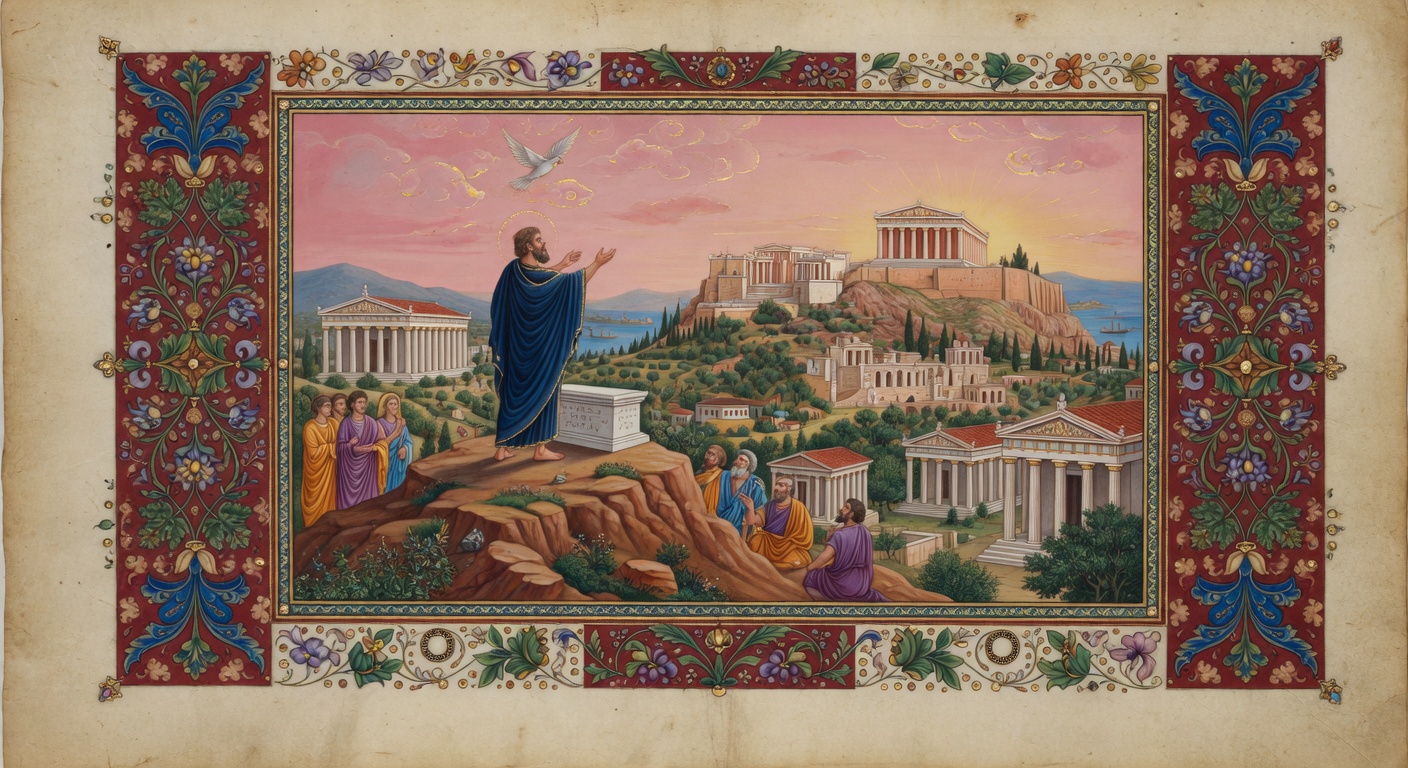
Athens served as the intellectual and cultural hub of the ancient world during the first century, filled with idols and philosophical schools that reflected its pagan religious practices. In Acts 17, the apostle Paul visited the city and delivered a notable sermon at the Areopagus, also known as Mars Hill, where he addressed the Athenians' altar to an unknown god and proclaimed the one true God who does not dwell in temples made by hands. This event is significant in Scripture as it demonstrates Paul's strategy of contextualizing the gospel message for a Gentile audience steeped in Greek philosophy, resulting in a few conversions including Dionysius and Damaris. The account underscores the early church's mission to reach diverse cultures with the message of Jesus Christ.
Details
- Region
- Greece/Rome
- Modern Location
- Athens, Greece
Key Passages
Paul on Mars Hill
Acts 17:22-34
Paul engages Greek philosophy at the Areopagus - finding common ground in their 'unknown god' before proclaiming the resurrection, modeling cross-cultural evangelism.
 22hen Paul stood in the midst of Mars’ hill, and said, Ye men of Athens, I perceive that in all things ye are too superstitious.
Did You Know?
Paul's sermon on Mars Hill is one of the greatest examples of contextual evangelism in Scripture.
Athens had so many idols that one ancient writer said it was easier to find a god than a man there.
The 'unknown god' altar Paul referenced was a real Athenian practice to avoid offending any deity.