Pergamum
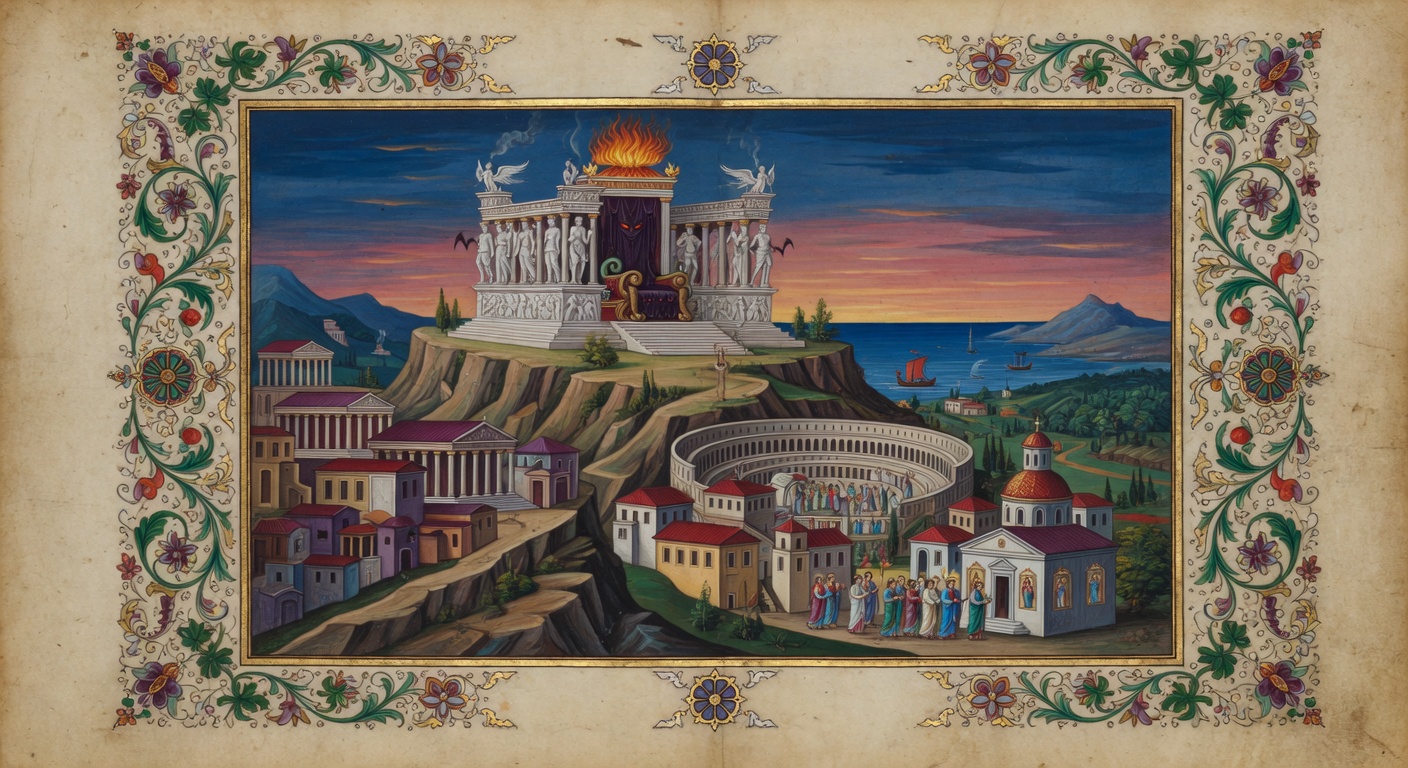
Pergamum was an ancient city in Asia Minor known for its prominent altar to Zeus and other centers of pagan worship that reflected strong ties to Roman imperial authority. In Revelation 2:12-17, the risen Christ addresses its church, identifying the location as the site of Satan's throne due to the intensity of idolatry and opposition faced by believers. The congregation received praise for holding fast to Christ's name and refusing to deny the faith, even after the martyrdom of Antipas, though it was also warned against tolerating false teachings. This letter underscores the broader New Testament theme of perseverance amid cultural and spiritual hostility in the early church.
Details
- Region
- Asia Minor
- Modern Location
- Bergama, Izmir Province, Turkey
Key Passages
Letter to Pergamum
Revelation 2:12-17
Christ addresses the church living 'where Satan's throne is' - commending their faithfulness under extreme pressure while warning against doctrinal compromise.
 12nd to the angel of the church in Pergamos write; These things saith he which hath the sharp sword with two edges;