Ahab
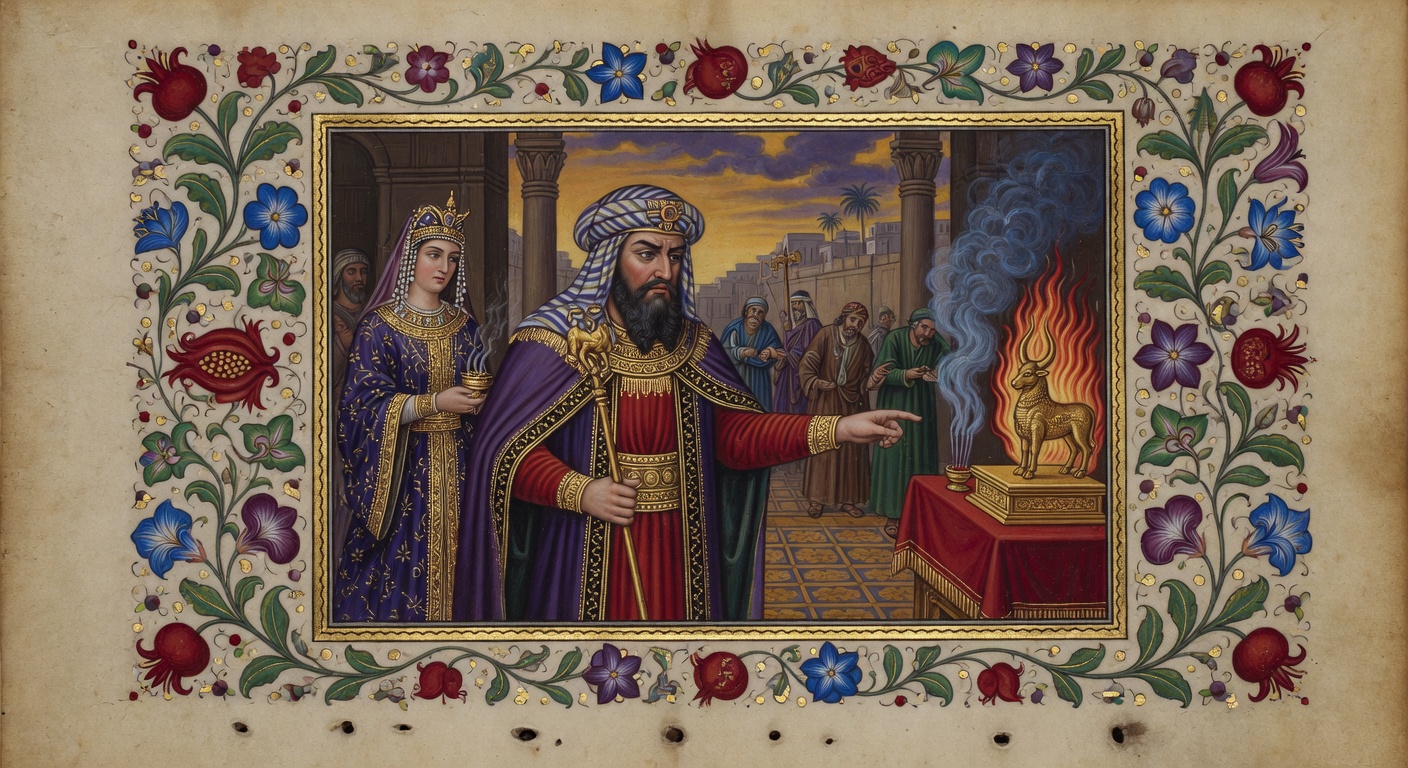
Ahab ruled as king of the northern kingdom of Israel in the ninth century BC and is portrayed in Scripture as one of its most corrupt rulers because of his marriage to the Phoenician princess Jezebel. Influenced by her, he systematically promoted Baal worship by building temples, erecting Asherah poles, and encouraging idolatry that directly violated Israel’s covenant with Yahweh. These actions provoked prophetic confrontations, most notably with Elijah, including a prolonged drought and the contest on Mount Carmel that demonstrated God’s supremacy over Baal. Ahab’s reign in the books of Kings thus illustrates the national and spiritual consequences of covenant unfaithfulness, serving as a recurring warning against syncretism and leadership that leads people away from God.
Biography
- Died
- c. 853 BC, Ramoth-Gilead (battle)
- Occupation
- King of Israel (Northern)
- Father
- Omri
- Spouse
- Jezebel
- Children
- Ahaziah, Joram
- Era
- Divided Kingdom (c. 874-853 BC)
- Nationality
- Israelite
Family
Did You Know?
Ahab appears in the Kurkh Monolith of Assyrian king Shalmaneser III as a leading member of the anti-Assyrian coalition at the Battle of Qarqar in 853 BC, where he reportedly fielded two thousand chariots, more than any other participant.
Archaeological excavations at Samaria have uncovered fragments of carved ivory plaques that likely adorned the "ivory house" Ahab constructed, reflecting Phoenician artistic influence introduced through his marriage to Jezebel.
Ahab fathered seventy sons, a figure preserved in 2 Kings 10 that points to the scale of royal polygamy and diplomatic marriages used to secure alliances across the northern kingdom.
After Elijah pronounced judgment over Naboth's vineyard, Ahab dramatically repented by fasting and wearing sackcloth, leading Yahweh to delay the prophesied fall of his dynasty until after his son's reign.
Despite his condemnation in the biblical text, Ahab expanded Israelite territory and influence enough to join a rare multi-kingdom alliance that temporarily halted Assyrian westward expansion during the Divided Kingdom period.
Key Passages
Ahab's Wickedness
1 Kings 16:29-33
Ahab's reign shows how one leader's idolatry and evil choices can corrupt a nation and grieve God's heart, urging us to choose faithfulness.
 29nd in the thirty and eighth year of Asa king of Judah began Ahab the son of Omri to reign over Israel: and Ahab the son of Omri reigned over Israel in Samaria twenty and two years.
Naboth's Vineyard
1 Kings 21:1-16
This passage shows how greed and misused power harm the innocent, reminding us that God always sees and upholds justice.
1nd it came to pass after these things, that Naboth the Jezreelite had a vineyard, which was in Jezreel, hard by the palace of Ahab king of Samaria.
Death of Ahab
1 Kings 22:34-38
Ahab's death shows God's word always comes true, reminding us His justice and plans prevail despite our resistance.
34nd a certain man drew a bow at a venture, and smote the king of Israel between the joints of the harness: wherefore he said unto the driver of his chariot, Turn thine hand, and carry me out of the host; for I am wounded.