Jethro
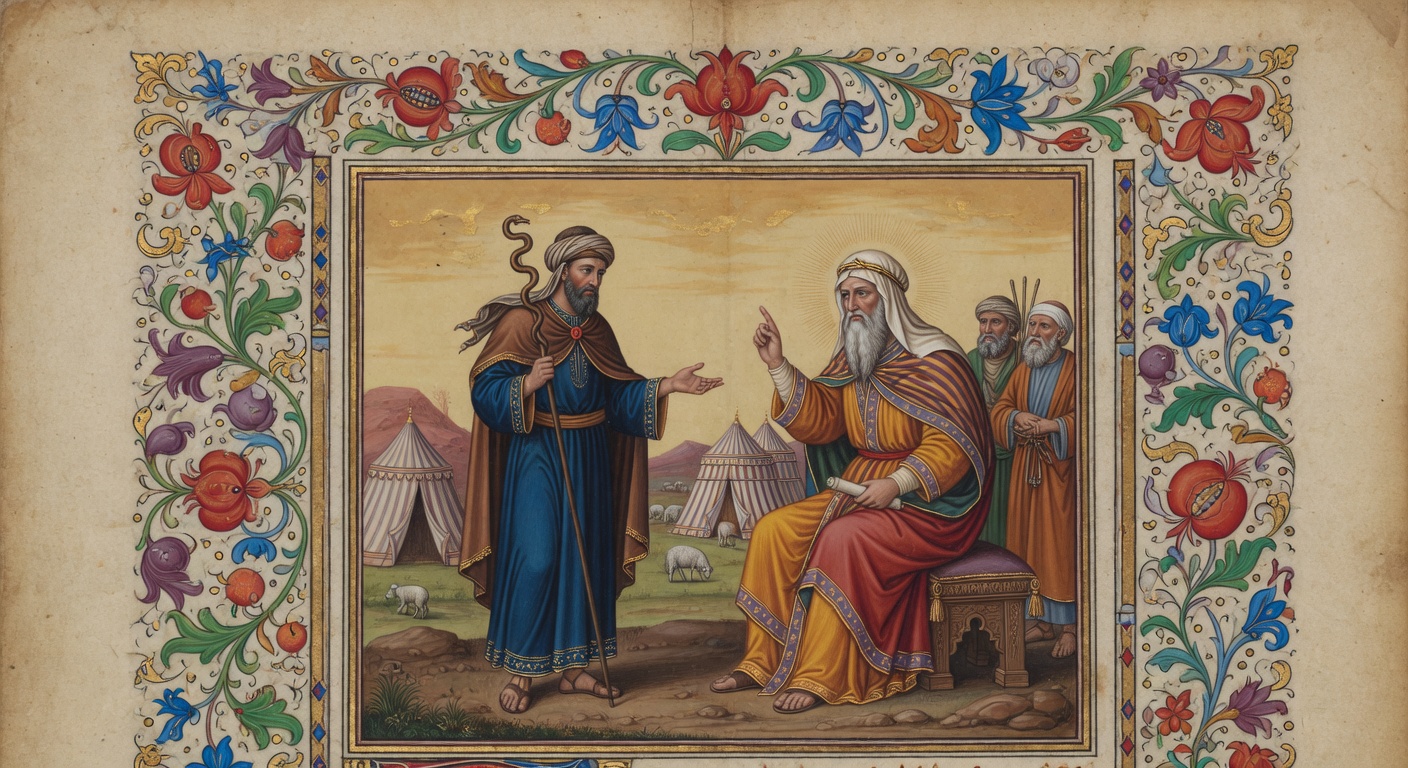
As Moses father-in-law and a priest of Midian, Jethro witnessed the overwhelming task of leading and judging the vast assembly of Israel in the wilderness. He wisely advised Moses to select trustworthy men to serve as judges over smaller groups, thereby sharing the load and allowing Moses to focus on weightier issues brought before God. This counsel proved instrumental in organizing the people for their covenant journey, illustrating how divine wisdom can come through unexpected sources to support the redemptive mission of Gods chosen leader.
Biography
- Occupation
- Priest of Midian
- Era
- Exodus
- Nationality
- Midianite
Did You Know?
Jethro, also called Reuel in earlier Exodus passages, belonged to the Midianites who descended from Abraham through Keturah, establishing him as a distant kinsman to the Israelites he later advised.
After the Exodus, Jethro publicly affirmed Yahweh's superiority over all other gods upon hearing the account of Israel's deliverance, marking a notable acknowledgment of monotheistic power by a Midianite priest in a polytheistic region.
Jethro's detailed organizational plan, dividing judicial responsibilities among leaders of thousands, hundreds, fifties, and tens, was adopted verbatim by Moses and formed the structural basis for Israel's pre-monarchic legal system.
Biblical genealogies link Jethro's Kenite descendants to later Israelite figures such as the scribe families and metalworkers who settled among the tribes of Judah, illustrating long-term cultural integration after his visit.
Jethro participated in a covenant meal with Moses and the Israelite elders before an altar, an act of shared worship that stands out as one of the few instances where a non-Israelite priest is shown offering sacrifices accepted within the emerging Yahwistic tradition.
Key Passages
Jethro's Wise Counsel
Exodus 18:17-23
This passage shows how humble leaders grow wiser and stronger by welcoming sound advice and sharing their burdens with capable others.
 17nd Moses’ father in law said unto him, The thing that thou doest is not good.