Matthew (Apostle)
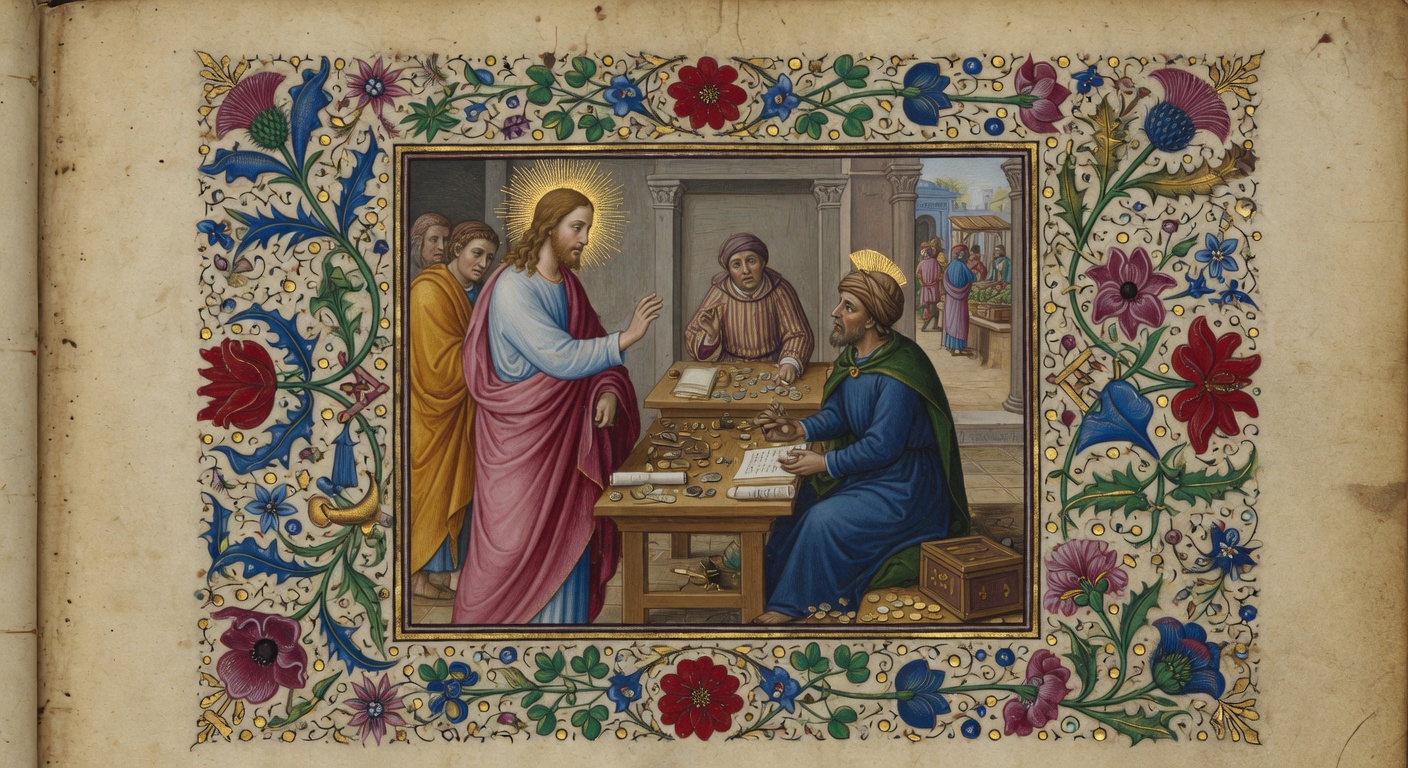
Matthew, originally a tax collector named Levi working in Capernaum, was called directly by Jesus while sitting at his booth to become one of the twelve apostles, an act that highlighted Jesus' outreach to those marginalized by Jewish society. In response, Matthew hosted a banquet for Jesus attended by fellow tax collectors and sinners, drawing criticism from the Pharisees and prompting Jesus to declare that he had come to call sinners to repentance rather than the self-righteous. As an eyewitness to Jesus' ministry, crucifixion, and resurrection, Matthew is traditionally recognized as the author of the Gospel bearing his name, which emphasizes Jesus as the Messiah fulfilling Old Testament prophecies and was written primarily for a Jewish-Christian audience to affirm the continuity between the covenants.
Biography
- Occupation
- Tax Collector, Apostle, Author
- Father
- Alphaeus
- Era
- New Testament
- Nationality
- Jewish, Galilean
- Also Known As
- Levi
Family
Did You Know?
Matthew, also called Levi son of Alphaeus, was a tax collector in Capernaum whose profession placed him among the most despised figures in Jewish society for collaborating with Roman authorities and often overcharging locals.
The Gospel of Matthew alone records that the apostle immediately hosted a large banquet for Jesus attended by other tax collectors and sinners after his calling, underscoring the social reversal central to Jesus' ministry.
Early Christian tradition, recorded by Papias around 110 CE, states that Matthew compiled the sayings of Jesus in Hebrew or Aramaic before they were translated, though the canonical Gospel we have is a polished Greek composition aimed at a Jewish-Christian audience.
Matthew's name, derived from the Hebrew Mattityahu meaning 'gift of Yahweh,' appears last in some apostolic lists, possibly reflecting his late inclusion among the Twelve due to his prior occupation.
Scholarly analysis notes that the Gospel attributed to Matthew contains more Old Testament fulfillment citations than any other, a feature likely shaped by the apostle's own background as a literate Jewish administrator familiar with scriptural proof-texting.
Key Passages
The Calling of Matthew
Matthew 9:9-13
Jesus calls a despised tax collector to follow Him, scandalizing the religious establishment - demonstrating that no one's past disqualifies them from discipleship.
 9nd as Jesus passed forth from thence, he saw a man, named Matthew, sitting at the receipt of custom: and he saith unto him, Follow me. And he arose, and followed him.
Listed Among the Twelve
Matthew 10:2-4
Matthew's inclusion among the twelve apostles confirms his full restoration and equal standing - the tax collector now numbered among the foundation stones of the church.
 2ow the names of the twelve apostles are these; The first, Simon, who is called Peter, and Andrew his brother; James the son of Zebedee, and John his brother;