Pharaoh's Daughter
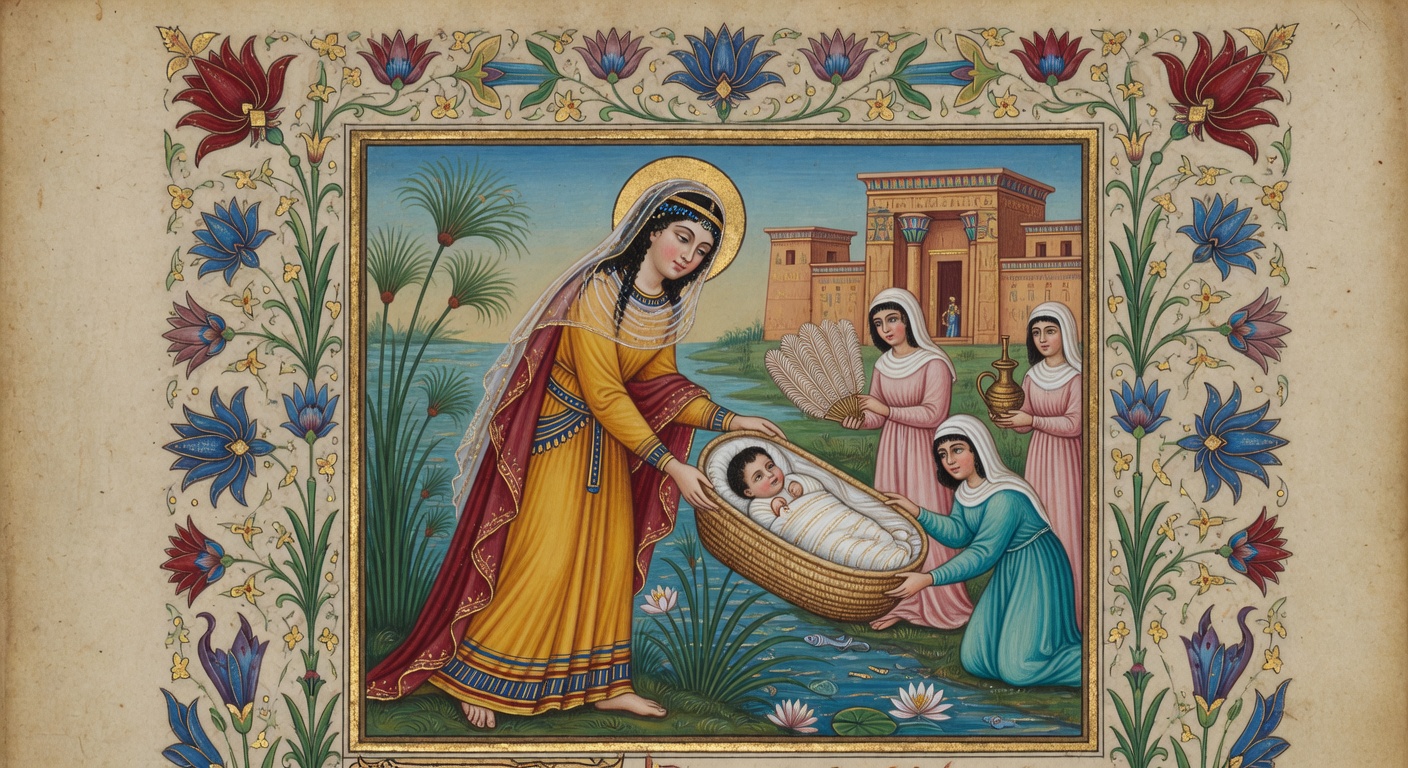
Pharaoh's daughter discovered the infant Moses floating in a basket on the Nile River, an act set against her father's decree to drown all newborn Hebrew boys in an effort to curb the growing Israelite population. Moved by compassion, she chose to adopt him as her own son, arranging for his biological mother to serve as his nurse while raising him within the royal palace of Egypt. This upbringing granted Moses access to Egyptian education and privilege, equipping him for leadership despite his Hebrew origins. In Scripture, her intervention underscores God's providential care, preserving the future deliverer of Israel through an unlikely ally from the house of their oppressor.
Biography
- Occupation
- Egyptian Princess
- Father
- Pharaoh of Egypt
- Children
- Moses (adopted)
- Era
- Exodus
- Nationality
- Egyptian
Family
Did You Know?
The Bible never names Pharaoh's daughter, yet first-century historian Josephus and later rabbinic texts identify her as Thermuthis or Bithiah, the latter meaning 'daughter of God' and implying her later embrace of Israel's deity.
Her decision to bathe in the Nile occurred amid Pharaoh's own death edict against Hebrew boys, an act that may reflect ritual use of the river's waters rather than mere hygiene and directly defied royal policy.
By hiring the child's biological mother as his wet nurse, she arranged for Moses to receive both Hebrew nurture and eventual Egyptian royal education, creating a unique dual identity no other biblical figure shares.
Scholars note that her adoption of Moses parallels Egyptian practices where childless royal women, such as possible links to Hatshepsut, secured heirs through foreign foundlings to maintain dynastic stability.
The Hebrew etymology she supplies for Moses' name ('I drew him out of the water') preserves the Egyptian princess's own words, embedding an act of foreign mercy at the heart of Israel's foundational narrative.
Key Passages
Finding Moses
Exodus 2:5-10
This passage shows God’s providence at work, using an unlikely rescuer to protect baby Moses and preserve His plan of deliverance.
 5nd the daughter of Pharaoh came down to wash herself at the river; and her maidens walked along by the river’s side; and when she saw the ark among the flags, she sent her maid to fetch it.