Sabbatical Year (Shmita)
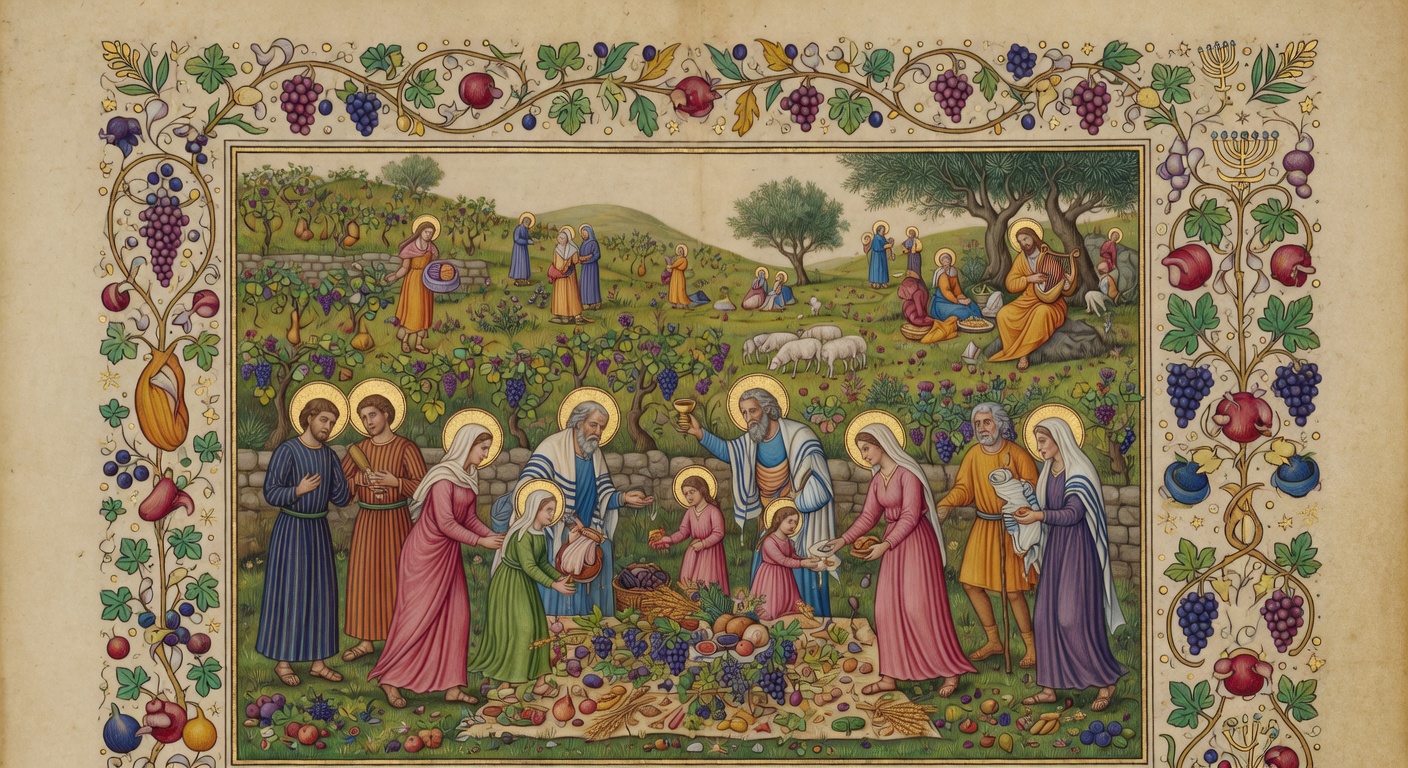
Every seventh year the people of Israel were commanded to let their fields lie fallow, refraining from sowing or pruning so that the land itself might enjoy rest and whatever grew of its own accord could be freely gathered by all. This practice cultivated a profound trust in God's promise to provide abundantly from the previous year's harvest, while also releasing debts among fellow Israelites to prevent the cycle of permanent poverty and indebtedness. In this way the Sabbatical Year wove together ecological renewal, communal generosity, and reliance on divine faithfulness within the ongoing story of redemption.
Details
- Category
- Sabbatical Cycles
- Hebrew Name
- Shmita
- Timing
- Every 7th year
- Calendar
- Full year, Every 7th year
- Season
- Full year
- Observance
- No agricultural work, land lies fallow, debts released, public reading of the Law.
Significance
Demonstrated trust in God's provision and gave the land ecological rest. Prevented permanent indebtedness.
New Testament Fulfillment
Points to the ultimate rest and provision found in Christ. God promised a triple harvest in the sixth year to provide.
Key Passages
The Command
Leviticus 25:1-7
 1nd the LORD spake unto Moses in mount Sinai, saying,
God's Promise of Provision
Leviticus 25:20-22
20nd if ye shall say, What shall we eat the seventh year? behold, we shall not sow, nor gather in our increase:
Debt Release
Deuteronomy 15:1-6
1t the end of every seven years thou shalt make a release.