Feast of Trumpets
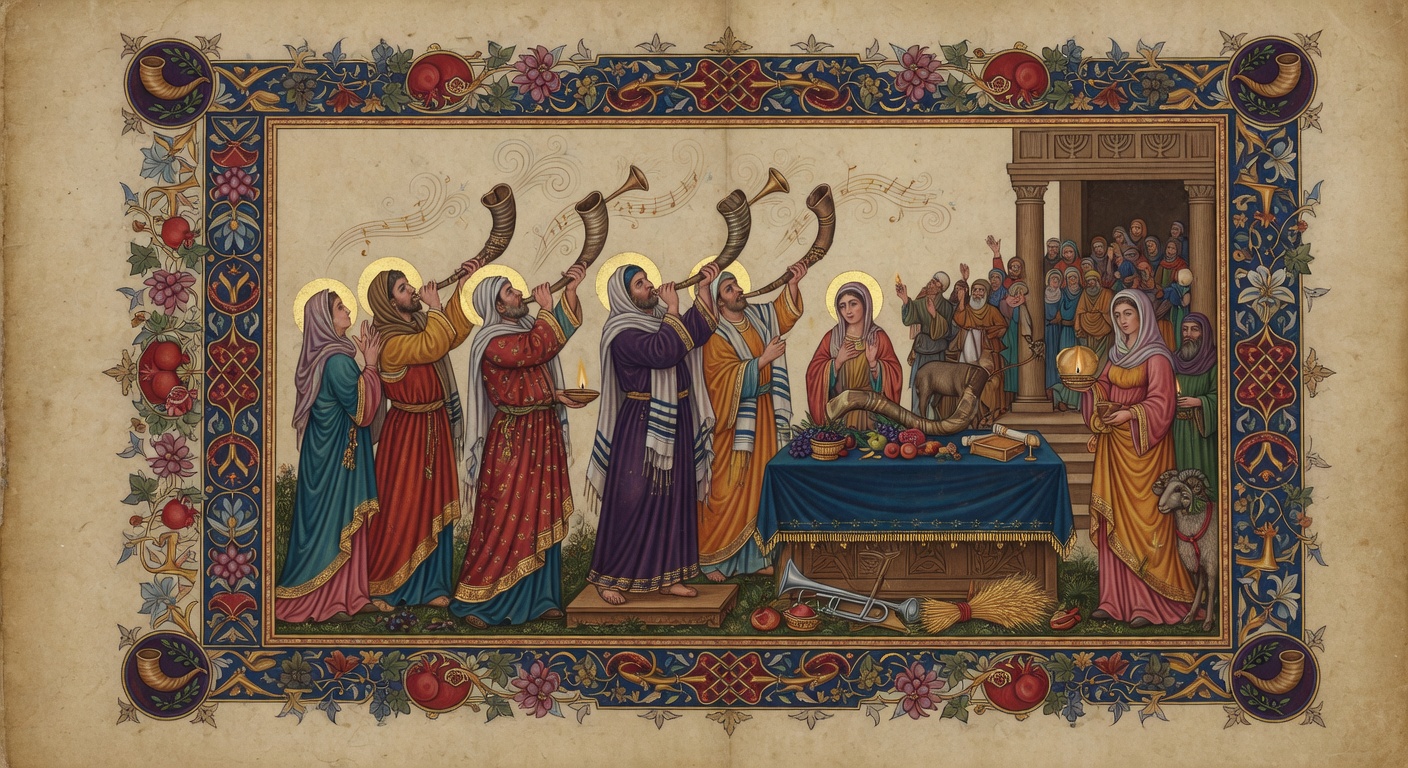
The Feast of Trumpets, commanded in Leviticus 23:23-25 and Numbers 29:1-6, is observed on the first day of the seventh month as a sacred assembly and day of rest marked by the blowing of trumpets or shofars. This festival marks the start of the civil new year in the Hebrew calendar and initiates the ten Days of Awe, a period of repentance and reflection leading to the Day of Atonement. In Scripture the trumpet blasts functioned as a public summons to worship and remembrance before God, highlighting themes of renewal and preparation for judgment. Its enduring significance lies in calling the community to spiritual readiness and reconciliation ahead of the high holy days.
Details
- Category
- Fall Feasts
- Hebrew Name
- Rosh Hashanah / Yom Teruah
- Timing
- 1st of Tishri (September/October)
- Calendar
- Tishri (7th month), 1st
- Season
- Fall
- Observance
- Complete rest from work, holy assembly, blowing of trumpets, special sacrifices.
Significance
A wake-up call to repentance and preparation for judgment. The trumpet blast signals a new beginning.
New Testament Fulfillment
Many believe this pictures the rapture/return of Christ, announced by the trumpet of God. The dead in Christ shall rise at the last trumpet.
Key Passages
The Command
Leviticus 23:23-25
 23nd the LORD spake unto Moses, saying,
The Last Trumpet
1 Corinthians 15:51-52
 51ehold, I shew you a mystery; We shall not all sleep, but we shall all be changed,
Trumpet of God
1 Thessalonians 4:16-17
 16or the Lord himself shall descend from heaven with a shout, with the voice of the archangel, and with the trump of God: and the dead in Christ shall rise first:
Did You Know?
The Feast of Trumpets (Rosh Hashanah) begins the Jewish civil new year.
100 trumpet blasts are sounded. The last one is called 'the last trump' (compare 1 Corinthians 15:52).
This is the only feast whose exact day was unknown. It depended on sighting the new moon.
Many believe this feast prophetically represents the rapture or Christ's second coming.