The Lord's Prayer
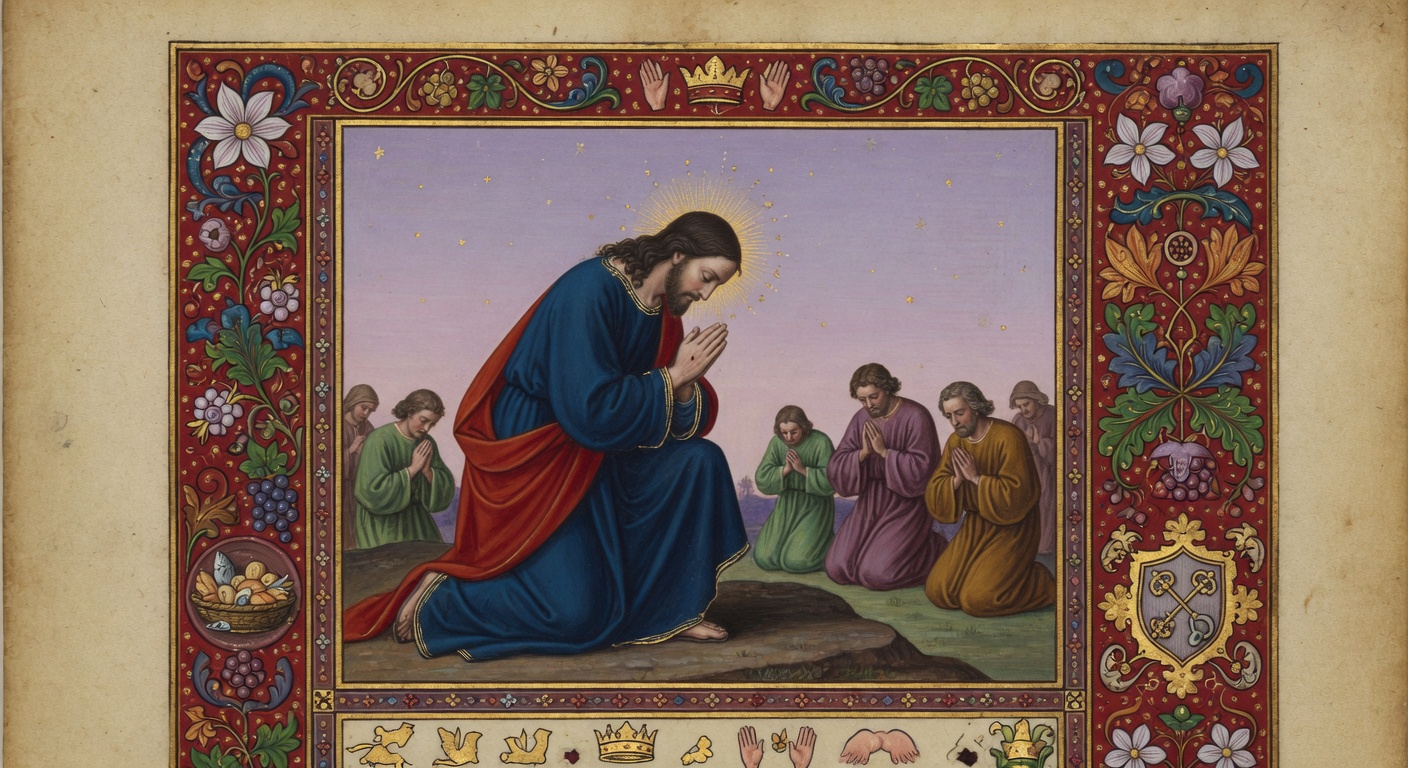
The Lord's Prayer, also known as the Our Father, was taught by Jesus to his disciples during the Sermon on the Mount in Matthew 6 and again in Luke 11 in response to their direct request for instruction on how to pray. It functions as a concise model that incorporates core elements of worship through adoration of God's name, submission to his kingdom and will, dependence on him for daily provision, mutual forgiveness of sins, and protection from temptation and evil. This teaching holds particular significance in Scripture because it comes directly from Jesus as a practical guide rather than a rigid formula, emphasizing relational prayer to God as Father. As a result, it has shaped Christian doctrine, liturgy, and personal devotion for centuries by demonstrating balanced priorities in approaching God.
Details
- Category
- Model Prayers
- Prayed by
- Jesus (teaching)
Key Passages
Matthew's Account
Matthew 6:9-13
 9fter this manner therefore pray ye: Our Father which art in heaven, Hallowed be thy name.
Luke's Account
Luke 11:2-4
2nd he said unto them, When ye pray, say, Our Father which art in heaven, Hallowed be thy name. Thy kingdom come. Thy will be done, as in heaven, so in earth.
Luke's Shorter Version
Luke 11:2-4
2nd he said unto them, When ye pray, say, Our Father which art in heaven, Hallowed be thy name. Thy kingdom come. Thy will be done, as in heaven, so in earth.
Did You Know?
The Lord's Prayer contains only 66 words in English. Yet covers all aspects of prayer.
It appears in two versions: Matthew 6:9-13 (longer) and Luke 11:2-4 (shorter).
The phrase 'Give us this day our daily bread' uses a Greek word found nowhere else in ancient literature.
Early Christians prayed it three times daily according to the Didache (c. AD 100).