Ecclesiastes 6 KJV
The Futility of Wealth
Ecclesiastes Chapter 6: The Futility of Wealth
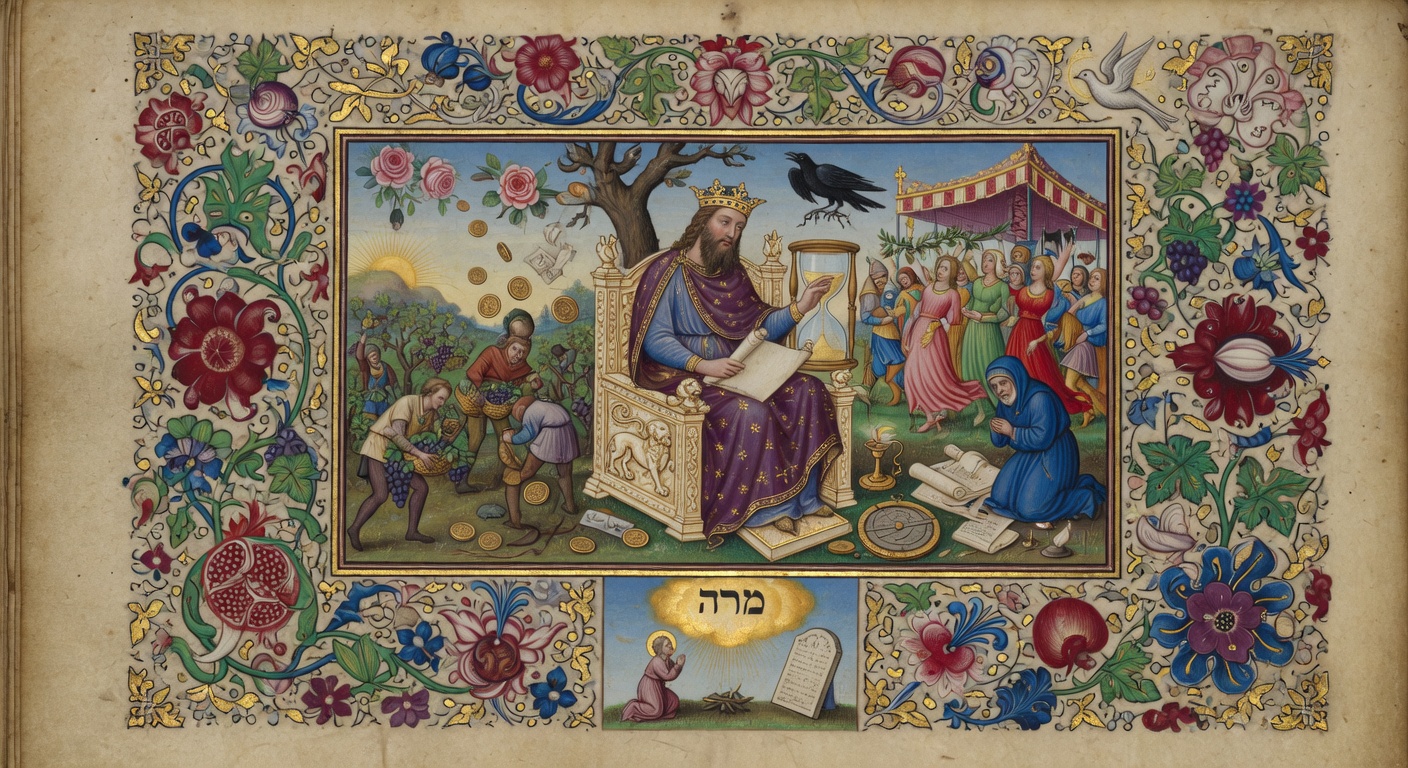
The chapter inverts traditional wisdom motifs by declaring that a stillborn child, despite never seeing the sun, has more rest than a man who sires a hundred children yet fails to enjoy his prosperity, challenging the Deuteronomic promise of blessings through offspring.
 1here is an evil which I have seen under the sun, and it is common among men:
2 A man to whom God hath given riches, wealth, and honour, so that he wanteth nothing for his soul of all that he desireth, yet God giveth him not power to eat thereof, but a stranger eateth it: this is vanity, and it is an evil disease.
3 If a man beget an hundred children, and live many years, so that the days of his years be many, and his soul be not filled with good, and also that he have no burial; I say, that an untimely birth is better than he.
4 For he cometh in with vanity, and departeth in darkness, and his name shall be covered with darkness.
5 Moreover he hath not seen the sun, nor known any thing: this hath more rest than the other.
6 Yea, though he live a thousand years twice told, yet hath he seen no good: do not all go to one place?
7 All the labour of man is for his mouth, and yet the appetite is not filled.
8 For what hath the wise more than the fool? what hath the poor, that knoweth to walk before the living?
9 Better is the sight of the eyes than the wandering of the desire: this is also vanity and vexation of spirit.
10 That which hath been is named already, and it is known that it is man: neither may he contend with him that is mightier than he.
11 Seeing there be many things that increase vanity, what is man the better?
12 For who knoweth what is good for man in this life, all the days of his vain life which he spendeth as a shadow? for who can tell a man what shall be after him under the sun?
← → arrow keys to navigate chapters · spacebar to play/pause audio
Did You Know?
The chapter inverts traditional wisdom motifs by declaring that a stillborn child, despite never seeing the sun, has more rest than a man who sires a hundred children yet fails to enjoy his prosperity, challenging the Deuteronomic promise of blessings through offspring.
Ecclesiastes 6 emphasizes divine sovereignty by noting that God may withhold the "power to eat" of one's riches, illustrating that material abundance without God's gift of enjoyment leads to a stranger consuming one's labor, a theme resonant with ancient Israelite concerns over inheritance and dispossession.
The text employs the rhetorical device of naming what "has been" to underscore human finitude, arguing that whatever exists has already been designated, limiting human contention against greater powers and echoing deterministic elements in Qoheleth's philosophy.
A subtle connection to Genesis appears in the motif of eating from one's labor being frustrated, paralleling the post-Edenic curse where toil yields no lasting satisfaction, thus framing wealth's futility within the broader narrative of the fall.
The prohibition against striving with one stronger than oneself in verse 10 serves as a pragmatic theological insight, advising acceptance of one's allotted portion rather than futile resistance, which aligns with the chapter's call to recognize human limitations under divine authority.