Nahum 1 KJV
The Lord's Anger Against Nineveh
Nahum Chapter 1: The Lord's Anger Against Nineveh
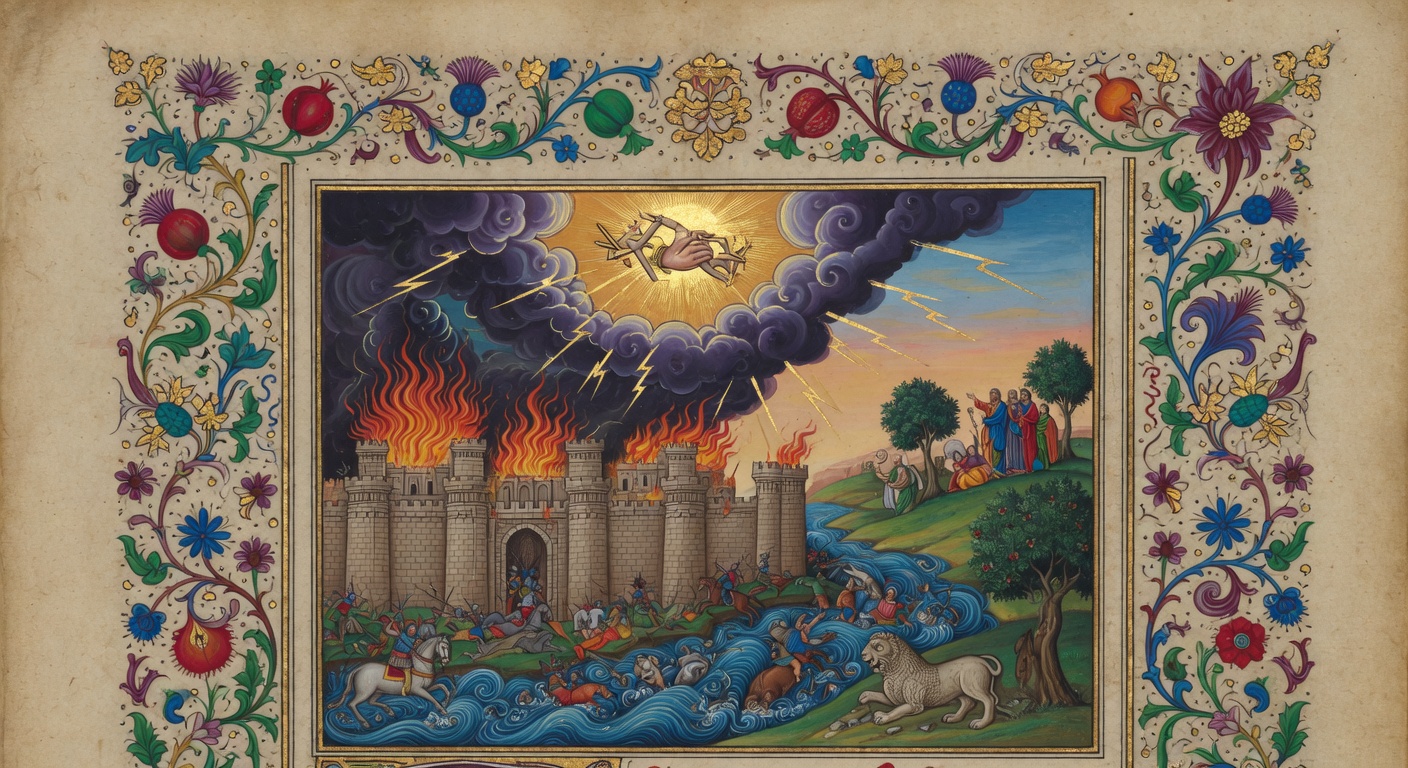
The opening theophany in verses 2-6 adapts the covenant formula from Exodus 34:6-7 by preserving 'slow to anger' while shifting emphasis to unyielding judgment, portraying Yahweh's character as paradoxically both patient and inexorably powerful against Assyria.
 1he burden of Nineveh. The book of the vision of Nahum the Elkoshite.
2 God is jealous, and the LORD revengeth; the LORD revengeth, and is furious; the LORD will take vengeance on his adversaries, and he reserveth wrath for his enemies.
3 The LORD is slow to anger, and great in power, and will not at all acquit the wicked: the LORD hath his way in the whirlwind and in the storm, and the clouds are the dust of his feet.
4 He rebuketh the sea, and maketh it dry, and drieth up all the rivers: Bashan languisheth, and Carmel, and the flower of Lebanon languisheth.
5 The mountains quake at him, and the hills melt, and the earth is burned at his presence, yea, the world, and all that dwell therein.
6 Who can stand before his indignation? and who can abide in the fierceness of his anger? his fury is poured out like fire, and the rocks are thrown down by him.
7 The LORD is good, a strong hold in the day of trouble; and he knoweth them that trust in him.
8 But with an overrunning flood he will make an utter end of the place thereof, and darkness shall pursue his enemies.
9 What do ye imagine against the LORD? he will make an utter end: affliction shall not rise up the second time.
10 For while they be folden together as thorns, and while they are drunken as drunkards, they shall be devoured as stubble fully dry.
11 There is one come out of thee, that imagineth evil against the LORD, a wicked counsellor.
12 Thus saith the LORD; Though they be quiet, and likewise many, yet thus shall they be cut down, when he shall pass through. Though I have afflicted thee, I will afflict thee no more.
13 For now will I break his yoke from off thee, and will burst thy bonds in sunder.
14 And the LORD hath given a commandment concerning thee, that no more of thy name be sown: out of the house of thy gods will I cut off the graven image and the molten image: I will make thy grave; for thou art vile.
15 Behold upon the mountains the feet of him that bringeth good tidings, that publisheth peace! O Judah, keep thy solemn feasts, perform thy vows: for the wicked shall no more pass through thee; he is utterly cut off.
← → arrow keys to navigate chapters · spacebar to play/pause audio
Did You Know?
The opening theophany in verses 2-6 adapts the covenant formula from Exodus 34:6-7 by preserving 'slow to anger' while shifting emphasis to unyielding judgment, portraying Yahweh's character as paradoxically both patient and inexorably powerful against Assyria.
Verses 2-8 constitute a partial alphabetic acrostic in Hebrew (spanning aleph to kaph), imposing literary order on chaotic imagery of storm, earthquake, and flood to depict divine wrath as a structured cosmic reversal of creation.
The phrase 'a wicked counsellor' in verse 11 echoes Rabshakeh's speech during Sennacherib's siege of Jerusalem (2 Kings 18-19), subtly framing Nineveh's doom as poetic repayment for Assyrian psychological warfare against Judah.
Verse 7's declaration that 'the LORD is good, a stronghold in the day of trouble' functions as a rare pastoral aside amid judgment oracles, offering covenant reassurance to Judah while the surrounding verses dismantle Assyrian claims to invulnerability.
The chapter's storm-god imagery (clouds as dust, sea rebuke, mountains melting) deliberately borrows and subverts Canaanite Baal motifs, asserting Yahweh's supremacy over the very natural forces once attributed to deities worshipped in the Assyrian sphere.