Proverbs 31 KJV
The Virtuous Woman
Proverbs Chapter 31: The Virtuous Woman
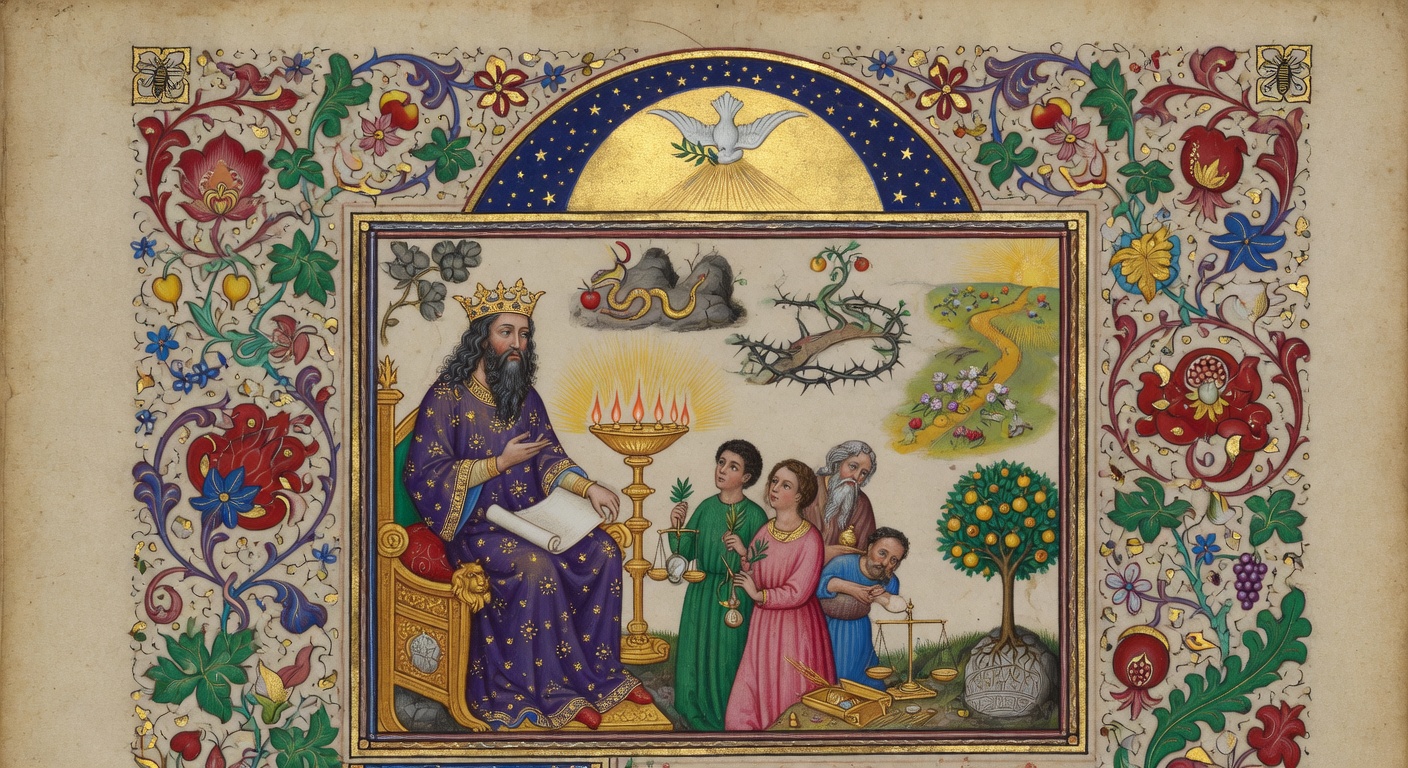
This chapter explores themes of Justice. The opening section (vv. 1-9) is framed as maternal instruction to King Lemuel, a rare instance in Proverbs where royal wisdom is explicitly credited to a woman rather than to Solomon or other male sages.
 1he words of king Lemuel, the prophecy that his mother taught him.
2 What, my son? and what, the son of my womb? and what, the son of my vows?
3 Give not thy strength unto women, nor thy ways to that which destroyeth kings.
4 It is not for kings, O Lemuel, it is not for kings to drink wine; nor for princes strong drink:
5 Lest they drink, and forget the law, and pervert the judgment of any of the afflicted.
6 Give strong drink unto him that is ready to perish, and wine unto those that be of heavy hearts.
7 Let him drink, and forget his poverty, and remember his misery no more.
8 Open thy mouth for the dumb in the cause of all such as are appointed to destruction.
9 Open thy mouth, judge righteously, and plead the cause of the poor and needy.
10 Who can find a virtuous woman? for her price is far above rubies.
11 The heart of her husband doth safely trust in her, so that he shall have no need of spoil.
12 She will do him good and not evil all the days of her life.
13 She seeketh wool, and flax, and worketh willingly with her hands.
14 She is like the merchants’ ships; she bringeth her food from afar.
15 She riseth also while it is yet night, and giveth meat to her household, and a portion to her maidens.
16 She considereth a field, and buyeth it: with the fruit of her hands she planteth a vineyard.
17 She girdeth her loins with strength, and strengtheneth her arms.
18 She perceiveth that her merchandise is good: her candle goeth not out by night.
19 She layeth her hands to the spindle, and her hands hold the distaff.
20 She stretcheth out her hand to the poor; yea, she reacheth forth her hands to the needy.
21 She is not afraid of the snow for her household: for all her household are clothed with scarlet.
22 She maketh herself coverings of tapestry; her clothing is silk and purple.
23 Her husband is known in the gates, when he sitteth among the elders of the land.
24 She maketh fine linen, and selleth it; and delivereth girdles unto the merchant.
25 Strength and honour are her clothing; and she shall rejoice in time to come.
26 She openeth her mouth with wisdom; and in her tongue is the law of kindness.
27 She looketh well to the ways of her household, and eateth not the bread of idleness.
28 Her children arise up, and call her blessed; her husband also, and he praiseth her.
29 Many daughters have done virtuously, but thou excellest them all.
30 Favour is deceitful, and beauty is vain: but a woman that feareth the LORD, she shall be praised.
31 Give her of the fruit of her hands; and let her own works praise her in the gates.
← → arrow keys to navigate chapters · spacebar to play/pause audio
Did You Know?
The opening section (vv. 1-9) is framed as maternal instruction to King Lemuel, a rare instance in Proverbs where royal wisdom is explicitly credited to a woman rather than to Solomon or other male sages.
The Hebrew text of verses 10-31 forms a perfect alphabetic acrostic; each successive line begins with the next letter of the alphabet, a device that conveys both literary artistry and the idea of exhaustive moral completeness.
The poem uses the same Hebrew root for 'strength' (ḥayil) that appears in the mother’s warning against dissipating royal power among women (v. 3), creating an ironic reversal that redefines strength as industrious virtue rather than sexual conquest.
Economic agency is repeatedly ascribed to the woman. She buys a field, plants a vineyard, and sells her own linen garments. Portraying a wife whose independent commercial activity directly increases household wealth, an unusual emphasis in ancient Near Eastern wisdom texts.
The final verse shifts from third-person description to direct communal exhortation ('give her of the fruit of her hands'), transforming the portrait into a liturgical or didactic model that later Jewish tradition associated with readings on the Sabbath or at weddings.