Herod the Great
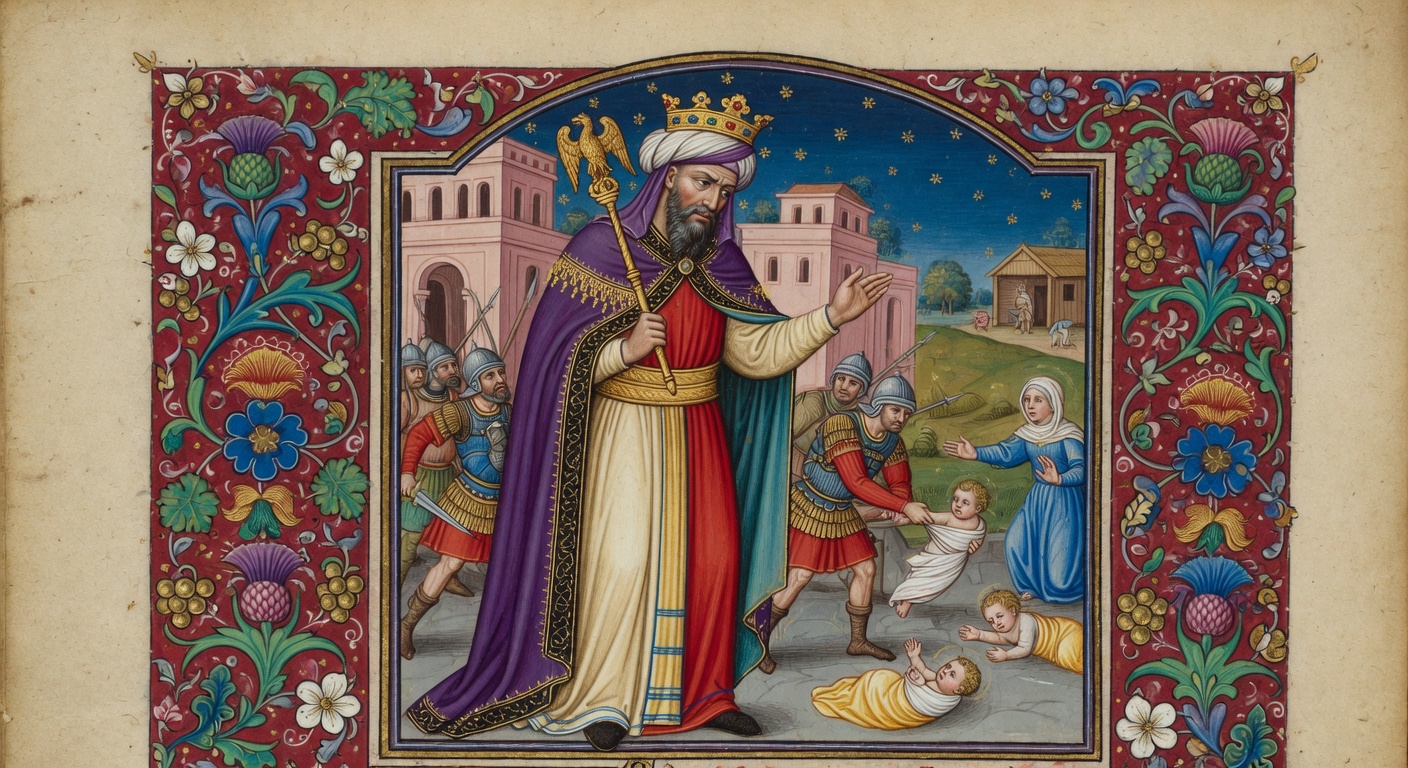
Herod the Great ruled as the Roman-appointed king of Judea from 37 to 4 BC, a period that overlaps with the traditional dating of Jesus' birth in Bethlehem. In the Gospel of Matthew, wise men from the East informed him of a prophesied new king of the Jews, prompting Herod to order the massacre of all male infants in Bethlehem under the age of two in an attempt to eliminate the perceived threat. This event, referred to as the Massacre of the Innocents, led Joseph to take Mary and Jesus to Egypt for safety until Herod's death. The narrative illustrates early opposition to the Messiah from political powers and ties into scriptural themes of innocent suffering and divine protection.
Biography
- Born
- c. 73 BC, Idumea
- Died
- c. 4 BC, Jericho
- Age
- ~69 years
- Occupation
- King of Judea
- Father
- Antipater the Idumaean
- Mother
- Cypros
- Spouse
- Mariamne I, and others (10 wives)
- Children
- Archelaus, Antipas, Philip, and others
- Era
- New Testament (c. 37-4 BC)
- Nationality
- Idumaean/Jewish
Family
Did You Know?
Herod was an Idumean of Edomite descent rather than a native Jew, making his appointment as king by Rome a source of deep resentment among the Jewish population he ruled.
Despite his reputation for brutality, Herod undertook massive renovations to the Second Temple in Jerusalem, expanding the Temple Mount platform to roughly double its size and adorning it with white marble and gold that made it visible for miles.
The Gospel of Matthew notes that Herod secretly summoned the Magi to learn the exact time the star appeared, a detail that reveals his calculated attempt to pinpoint and eliminate the child without alerting potential rivals.
Herod's will divided his kingdom among three sons, and the biblical account in Matthew 2:22 specifically names Archelaus as ruler of Judea, prompting Joseph to settle instead in Galilee under Antipas.
Historical records indicate Herod died in 4 BC after a prolonged illness involving intense itching, intestinal pain, and gangrene, aligning with the timeline that places Jesus' birth shortly before this event.
Key Passages
The Wise Men Visit Herod
Matthew 2:1-8
This passage shows how Jesus' birth as true King unsettles earthly powers like Herod, inviting humble seekers to trust God's unfolding plan.
 1ow when Jesus was born in Bethlehem of Judaea in the days of Herod the king, behold, there came wise men from the east to Jerusalem,
Massacre of the Innocents
Matthew 2:16-18
This passage shows how Christ's coming stirred fierce opposition, yet God's redemptive plan advanced even through heartbreaking loss and innocent suffering.
 16hen Herod, when he saw that he was mocked of the wise men, was exceeding wroth, and sent forth, and slew all the children that were in Bethlehem, and in all the coasts thereof, from two years old and under, according to the time which he had diligently enquired of the wise men.