Judas Iscariot
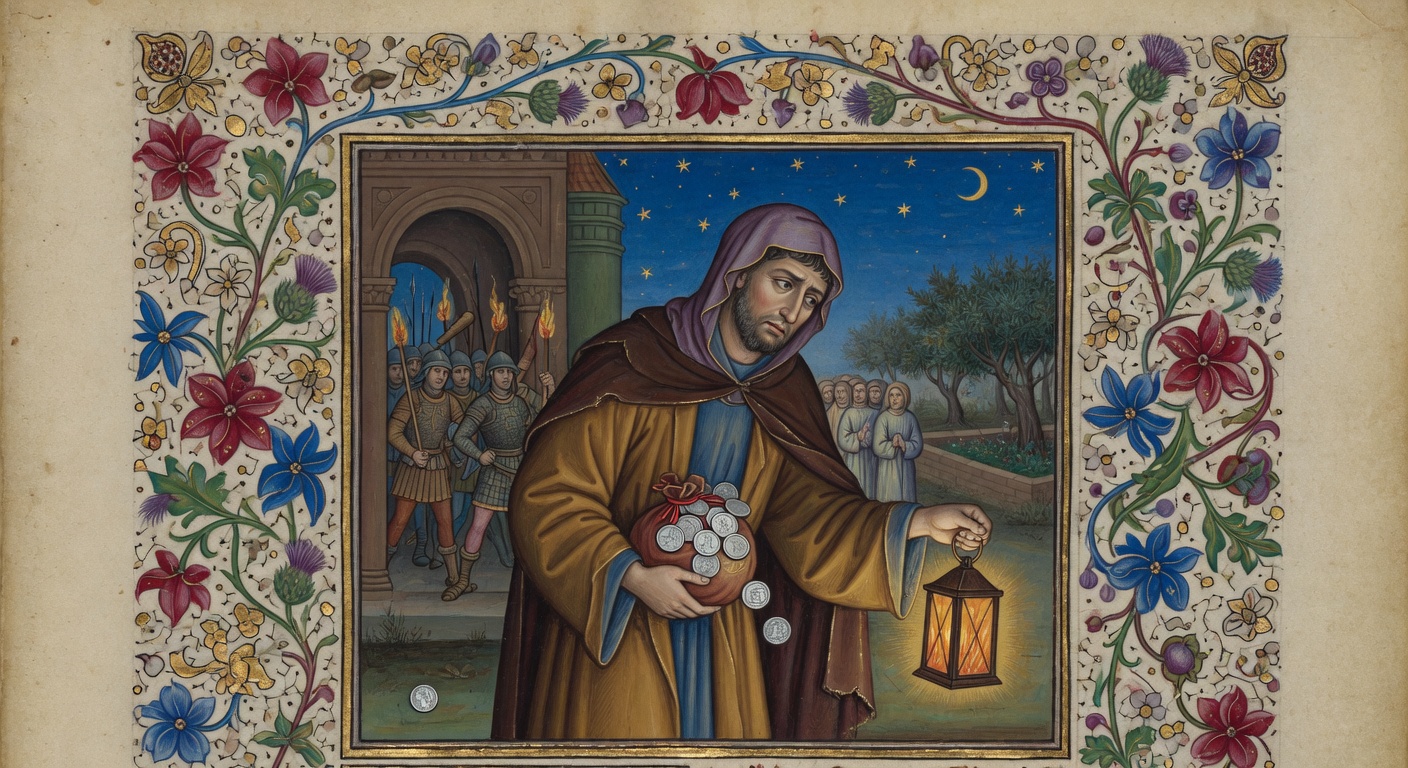
Judas Iscariot served as one of the twelve apostles selected by Jesus during his earthly ministry. Motivated by greed, he negotiated with the chief priests to betray Jesus for thirty pieces of silver and later identified him with a kiss in Gethsemane, resulting in Jesus' arrest by Roman and temple authorities. Overcome by remorse, Judas returned the silver and took his own life, an outcome recorded in the Gospels as fulfilling Old Testament prophecies concerning betrayal. The account underscores key scriptural themes of human frailty, divine sovereignty in the Passion narrative, and the path to Jesus' crucifixion and resurrection.
Biography
- Died
- c. AD 30-33, Jerusalem (suicide)
- Occupation
- Apostle, Treasurer
- Father
- Simon Iscariot
- Era
- New Testament
- Nationality
- Jewish, Judean
Family
Did You Know?
Judas Iscariot served as the group's treasurer and was secretly a thief who regularly stole from the common moneybag, a detail revealed only in John's account of the anointing at Bethany.
Jesus explicitly identified Judas as demon-possessed, calling him a devil more than a year before the betrayal, according to John 6:70.
The thirty pieces of silver Judas received matched the exact valuation placed on a slave in Exodus 21 and fulfilled Zechariah 11:12-13, which the chief priests later recognized when they used the returned coins to buy the potter's field.
Matthew records that Judas later repented, returned the money, and hanged himself, after which the priests purchased the Field of Blood; Acts 1:18 gives a differing account of his death by falling headlong and bursting open in the same field.
Judas was the only apostle identified by a geographic surname suggesting origin in Kerioth of Judea, making him the sole non-Galilean among the Twelve.
Key Passages
Judas Agrees to Betray Jesus
Matthew 26:14-16
This passage gently warns how unchecked greed can turn even a close follower against Jesus, urging us to choose faithful devotion instead.
 14hen one of the twelve, called Judas Iscariot, went unto the chief priests,
The Betrayal
Matthew 26:47-50
This passage reveals Jesus meeting betrayal with steady compassion, underscoring his sacrificial love amid human failure.
 47nd while he yet spake, lo, Judas, one of the twelve, came, and with him a great multitude with swords and staves, from the chief priests and elders of the people.
Death of Judas
Matthew 27:3-10
This passage shows how unrepented sin leads to despair, while God sovereignly fulfills prophecy even through betrayal.
3hen Judas, which had betrayed him, when he saw that he was condemned, repented himself, and brought again the thirty pieces of silver to the chief priests and elders,