Obadiah (Servant of Ahab)
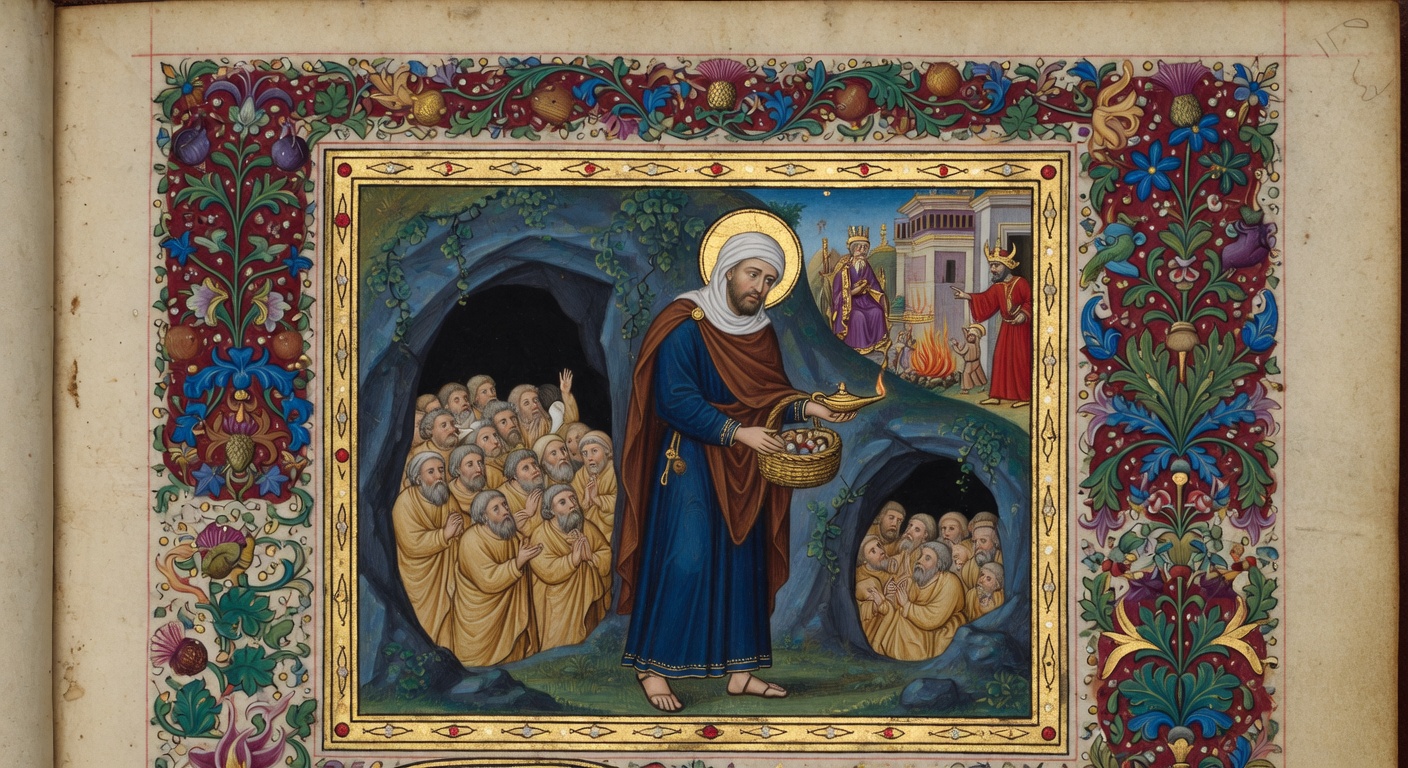
Obadiah served as the palace administrator under King Ahab of Israel, a ruler known for his idolatry and marriage to the pagan queen Jezebel. Despite his position in a corrupt court, Obadiah remained devout and risked his life by hiding one hundred prophets of the Lord in caves, supplying them with food and water during Jezebel's campaign to exterminate them. This act of faith occurred amid a severe drought prophesied by Elijah, and Obadiah later encountered the prophet while searching for him on Ahab's orders, demonstrating his fear of the Lord even when facing potential danger. In Scripture, Obadiah's story highlights the possibility of godly living and courageous protection of the faithful within hostile environments, underscoring themes of divine providence and remnant faithfulness during Israel's period of apostasy.
Biography
- Occupation
- Governor of Ahab's household
- Era
- Divided Kingdom (c. 870 BC)
Did You Know?
Obadiah's name, meaning 'servant of Yahweh,' stood in direct contrast to his role as palace governor under Ahab, highlighting how some devout Israelites maintained high administrative positions in the northern kingdom's corrupt court around 870 BC while covertly defying royal policy.
To protect the prophets from Jezebel's systematic execution campaign, Obadiah divided the 100 men into two separate groups of fifty and hid them in remote caves, a logistical decision that required coordinating secret food deliveries during the three-year famine.
When Elijah instructed Obadiah to inform Ahab of his location, Obadiah protested by recounting how he had already risked his life searching for the prophet across multiple kingdoms, fearing Ahab would execute him if Elijah vanished again before the meeting.
As overseer of Ahab's household, Obadiah controlled palace resources yet diverted portions of them to sustain the hidden prophets with bread and water, an act of embezzlement that could have been punished as treason under Ahab's regime.
The narrative in 1 Kings 18 presents Obadiah's faithful actions as occurring before Elijah's public confrontation on Mount Carmel, underscoring an earlier, lesser-known phase of resistance to Baal worship that operated entirely within Ahab's own administration.
Key Passages
Hid 100 Prophets
1 Kings 18:3-4
Obadiah shows how God uses faithful people in difficult positions to quietly protect and preserve His servants.
 3nd Ahab called Obadiah, which was the governor of his house. (Now Obadiah feared the LORD greatly: