Philemon
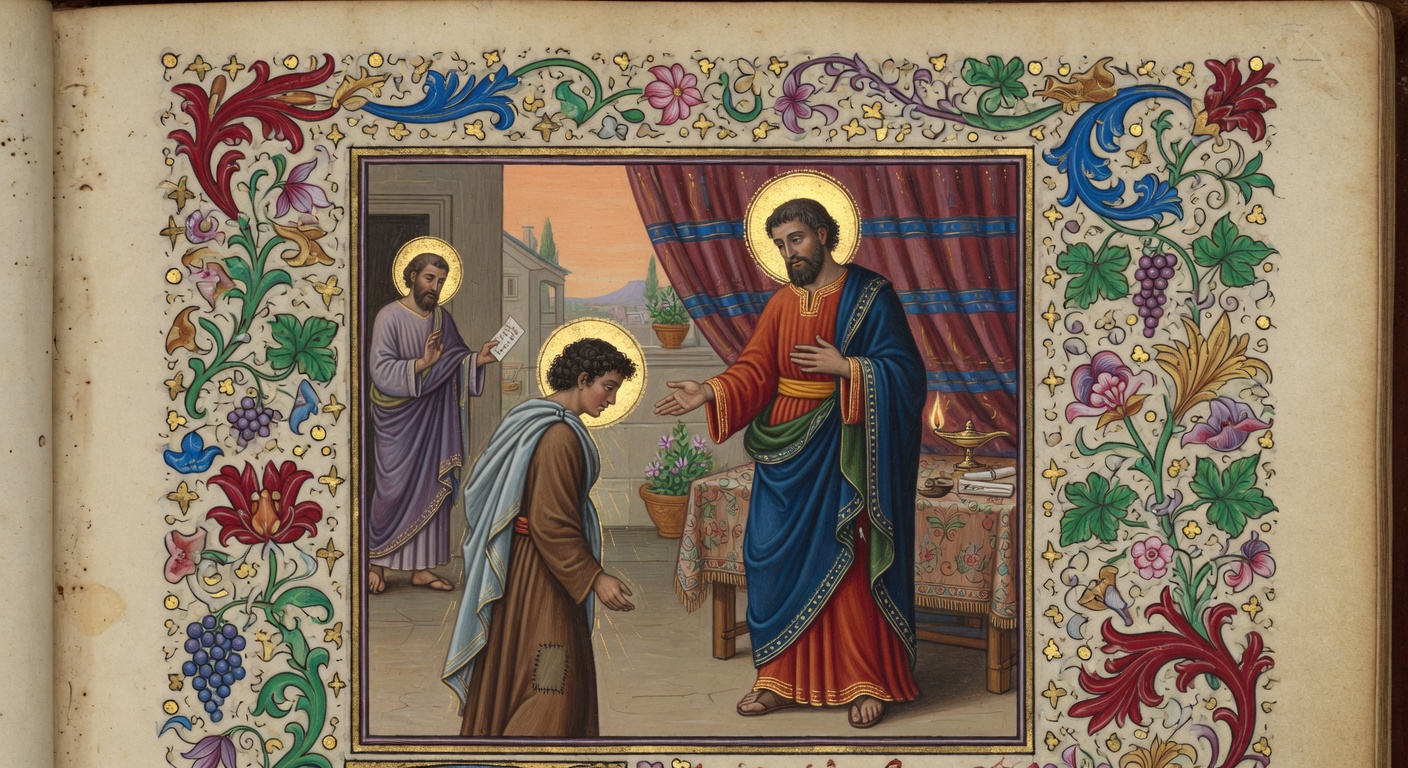
Philemon was a wealthy Christian in Colossae who hosted a church in his home and supported Paul’s ministry. While imprisoned, Paul wrote a brief personal letter to him concerning Onesimus, Philemon’s runaway slave, who had met Paul, become a Christian, and was now returning. Paul appealed to Philemon to welcome Onesimus back not as a slave but as a brother in Christ, even offering to repay any debts himself. The letter illustrates the practical outworking of the gospel in first-century social relationships, emphasizing forgiveness, reconciliation, and the equality of believers.
Biography
- Occupation
- Wealthy Landowner, Church Leader
- Spouse
- Apphia
- Children
- Archippus (possibly)
- Era
- New Testament (c. AD 60)
- Nationality
- Greek (Christian)
Family
Did You Know?
Philemon hosted a house church in Colossae that met in his home, a common practice among wealthy first-century Christians who provided both resources and leadership for scattered congregations under Roman rule.
Paul deliberately avoided using his apostolic authority to order Philemon, instead framing his request as a voluntary act of love that would reflect the transformed relationships within the Christian community.
The letter identifies Philemon as a convert directly won through Paul's ministry, establishing a spiritual kinship that extended equally to the runaway slave Onesimus and undercut prevailing Roman social hierarchies.
By volunteering to cover any financial loss from Onesimus's absence or theft, Paul engaged Roman legal customs of debt and restitution while modeling self-sacrificial intercession for a marginalized believer.
Early manuscripts and the letter's greeting to Apphia and Archippus suggest Philemon's household formed an influential Christian network in the Lycus Valley, linking domestic, economic, and ministerial spheres in a single family setting.
Key Passages
Paul's Appeal for Onesimus
Philemon 1:8-21
This passage shows how the gospel transforms relationships by calling us to forgive and welcome others as brothers in Christ.
 8herefore, though I might be much bold in Christ to enjoin thee that which is convenient,