Phoebe
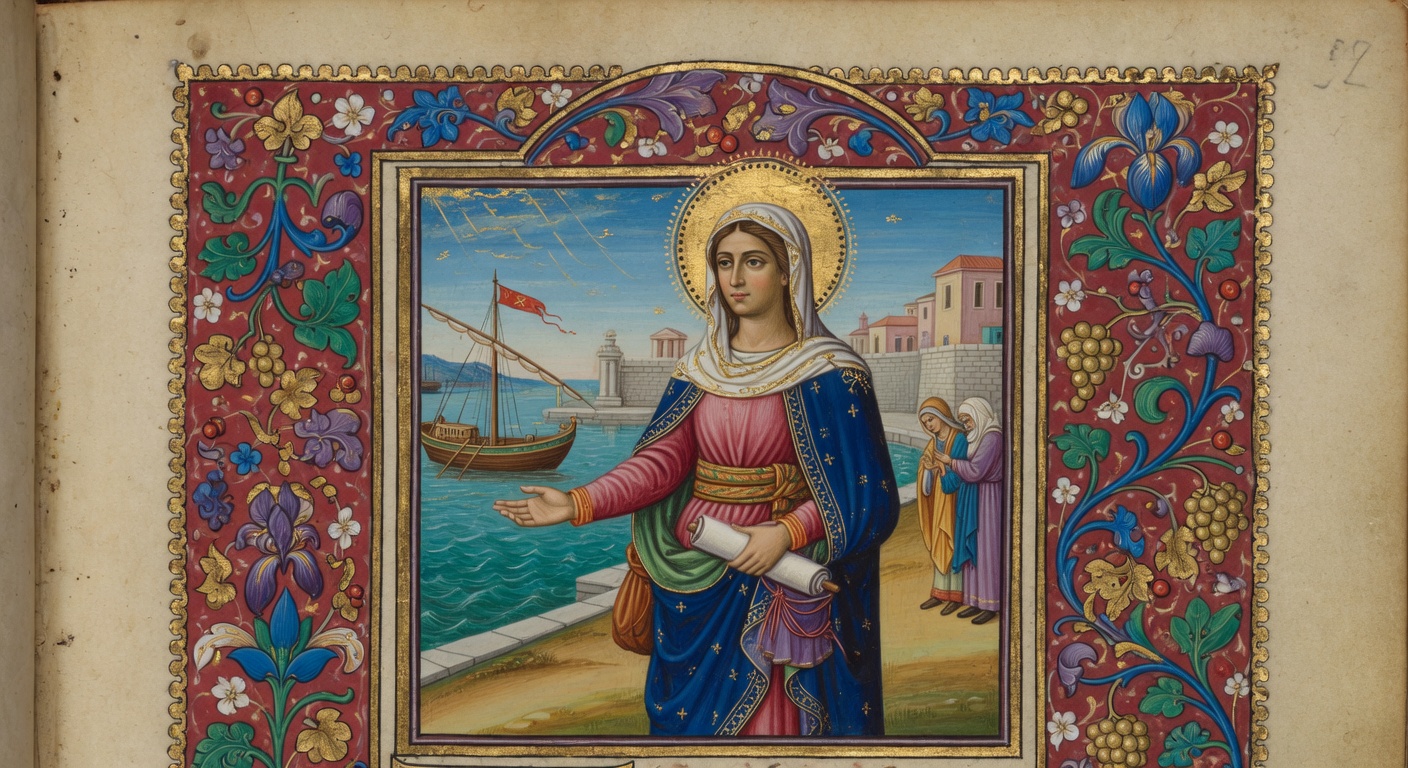
Phoebe served as a deacon in the church at Cenchreae, a port near Corinth, in the mid-first century. The apostle Paul commended her in Romans 16:1-2 as a trusted servant and benefactor who had assisted many believers, including himself, and he urged the Roman Christians to welcome and support her. Scholars widely hold that she carried and delivered Paul’s letter to Rome, a task that required reliability and standing within the early Christian network. Her brief appearance in Scripture illustrates the active leadership and patronage exercised by women in the apostolic churches.
Biography
- Occupation
- Deaconess, Patron
- Era
- New Testament (c. AD 56-57)
- Nationality
- Greek
Did You Know?
Phoebe is the first individual Paul names in Romans 16 and receives the same Greek title diakonos he applies to himself and other male ministers, indicating she held an official leadership role in the Cenchreae congregation around AD 56.
Paul describes Phoebe with the rare term prostatis, a Greco-Roman title for a wealthy patron who financially and legally supported religious associations, revealing her high social standing and role as a benefactor to many believers including Paul himself.
As the likely courier of the Epistle to the Romans, Phoebe would have traveled roughly 800 kilometers by sea and road from Corinth’s port of Cenchreae to Rome, an arduous journey that positioned her to publicly read and explain the letter to house churches there.
Unlike most women Paul greets who are identified through male relatives, Phoebe is commended solely on her own merits without mention of a husband, suggesting she was an independent widow or single woman of means who led her own household.
Cenchreae’s location as Corinth’s eastern harbor placed Phoebe’s church at a strategic crossroads of trade and travel, allowing her to host and assist missionaries crossing between Asia Minor and Italy long before Paul wrote his letter.
Key Passages
Paul Commends Phoebe
Romans 16:1-2
This passage shows how the early church honored faithful women like Phoebe and calls us to support one another in love.
 1 commend unto you Phebe our sister, which is a servant of the church which is at Cenchrea: