Simon the Zealot
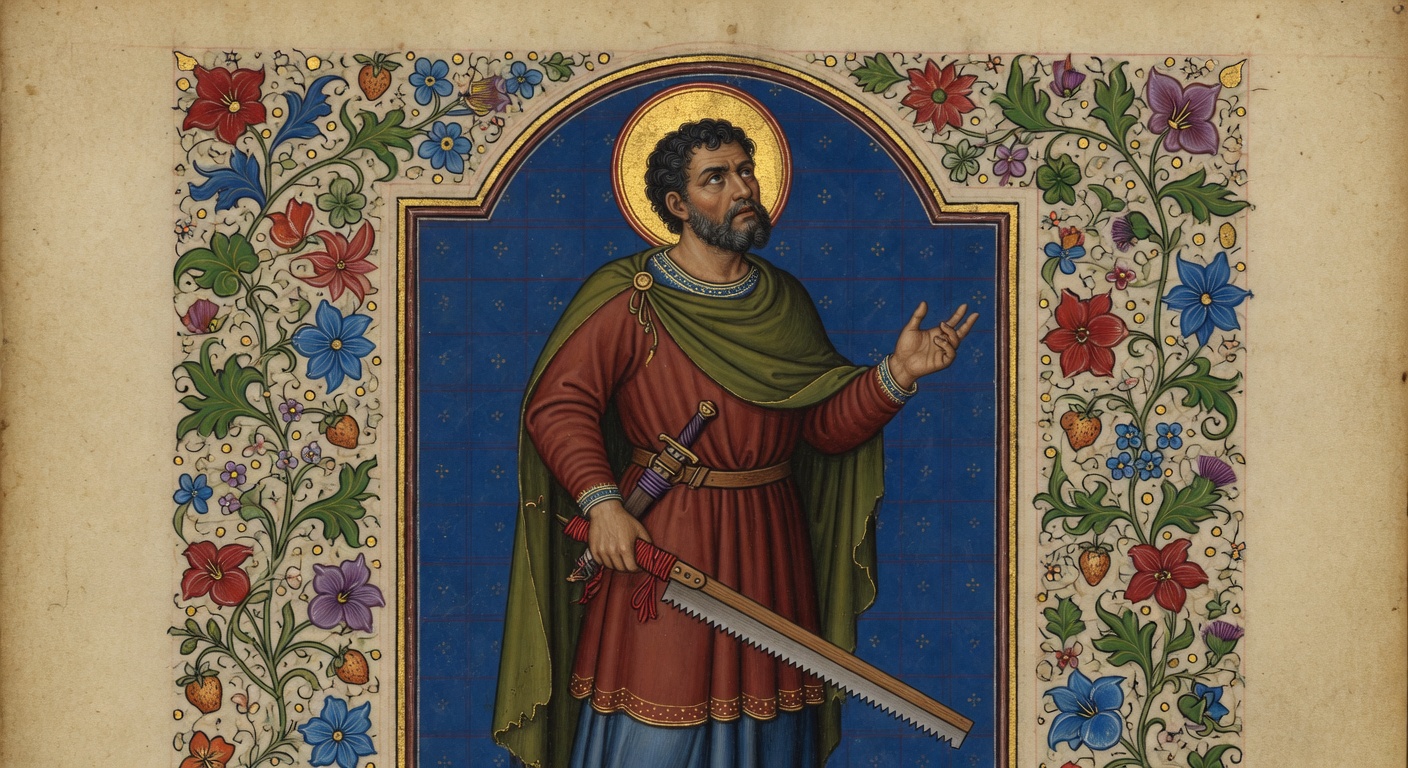
Simon the Zealot was one of the twelve apostles chosen by Jesus, distinguished from Simon Peter in the Gospel lists by his association with the Zealot movement, a first-century Jewish faction that resisted Roman rule through fervent nationalism. This background indicates Jesus deliberately called individuals from opposing political and social spheres, including potential revolutionaries, to form his inner circle. Though Scripture records little about Simon’s specific deeds after his calling, his inclusion among the apostles highlights the radical inclusivity of Jesus’ ministry. It demonstrates how the gospel transformed diverse followers into unified witnesses, laying the foundation for the early church as recounted in the Gospels and Acts.
Biography
- Occupation
- Apostle
- Era
- New Testament
- Nationality
- Jewish
- Also Known As
- Simon the Canaanite
Did You Know?
Simon is identified in Matthew and Mark as "the Cananaean," an Aramaic term denoting a "zealous one," which Luke renders in Greek as "the Zealot," pointing to possible ties with anti-Roman Jewish radicals rather than mere personal zeal.
No words, deeds, or individual episodes are attributed to Simon the Zealot anywhere in the canonical Gospels or Acts, making him the apostle about whom the biblical text is most silent.
His pairing with Matthew the tax collector in apostolic lists juxtaposes a likely anti-Roman activist with a Roman collaborator, underscoring the socially incongruous composition of Jesus' inner circle.
Simon appears in the post-ascension gathering of apostles in the upper room (Acts 1:13), confirming his presence among the core group that selected Matthias to replace Judas.
The epithet "Zealot" aligns him with a movement whose militant wing later fueled the First Jewish-Roman War, illustrating how Jesus recruited from politically charged factions in first-century Galilee.
Key Passages
Listed Among the Twelve
Matthew 10:2-4
Jesus calls unlikely people from every background, even a political zealot, into his closest circle to help spread his kingdom.
 2ow the names of the twelve apostles are these; The first, Simon, who is called Peter, and Andrew his brother; James the son of Zebedee, and John his brother;
In the Upper Room
Acts 1:13-14
This passage shows how Jesus transforms even passionate revolutionaries into devoted members of a unified, praying community.
 13nd when they were come in, they went up into an upper room, where abode both Peter, and James, and John, and Andrew, Philip, and Thomas, Bartholomew, and Matthew, James the son of Alphaeus, and Simon Zelotes, and Judas the brother of James.